Kenneth Booth

Property management industry worth £30bn+

Research by Warwick Estates reveals that the UK’s property management services industry is on track to have a market value of more than £30 billion by 2025 as a pandemic slump makes way for consecutive years of steady growth.  The property management services industry covers all businesses that provide third-party

Read More »

How green are modular homes?

With a national housing shortage and ambitious housebuilding targets for developers and local councils to meet, is now really the time to put the pressure on the industry to explore more sustainable methods of construction? The answer is a very clear yes from Wayne Oakes, a director at the sustainable

Read More »

Everton stadium: so good they built it twice!

Workers at Laing O’Rourke are confident that Everton Stadium will have the ‘wow’ factor – because they have already built it once! Craig Wallace, a Digital Engineer for Laing O’Rourke, is one of a select few with the responsibility for ensuring the project’s approach towards ‘digital’ uses leading processes, technology

Read More »
APM responds to the Government’s ‘mini budget’

APM responds to the Government’s ‘mini budget’

Energy price cap for business welcomed to support project stability  Association for Project Management, the chartered membership organisation for the project profession, responds to the Government‘s ‘mini budget’ today.   Speaking after the Chancellor, Kwasi Kwarteng, announced tax changes for individuals and businesses, APM’s Head of Public Affairs, Andrew Baldwin, commented: 

Read More »

Beard completes stunning restoration of UK’s oldest lido

Beard Construction has completed a meticulous £6.2m restoration of Cleveland Pools in Bath, the UK’s oldest lido. As well as calling on Beard’s expertise in heritage restoration, the 15-month project to restore the decaying, 207-year-old Georgian site to its former glory had significant logistical challenges – as all plant and

Read More »
Latest Issue
Issue 334 : Nov 2025

Kenneth Booth

Property management industry worth £30bn+

Research by Warwick Estates reveals that the UK’s property management services industry is on track to have a market value of more than £30 billion by 2025 as a pandemic slump makes way for consecutive years of steady growth.  The property management services industry covers all businesses that provide third-party or outsourced services to oversee the management and maintenance of property, as well as tenant relations, on behalf of owners or landlords. Today, the industry is made up of 22,245 businesses employing 309,172 members of staff, combining to generate a market value of £27.7 billion. This value represents an increase of 5.3% since last year but still isn’t enough to bring market value back to where it was prior to the pandemic. The current market remains -4.9% down on 2019 when its value peaked at £29.1 billion, but there needn’t be too much cause for concern because today’s value is still 26.8% higher than it was a decade ago.  Furthermore, projected figures suggest that 2022’s start towards post-pandemic recovery is paving the way for at least three years of continuous market growth culminating in 2025 when the property management services industry is expected to be worth £30.4 billion; a 9.8% increase on today’s value.  If this comes to fruition, it will mean that the market reaches a higher value that at any other point in the past decade, including its pre-pandemic peak of 2019.  Data tables Data tables and sources can be viewed online, here.

Read More »

CONSTRUCTION’S ‘DIRTY’ IMAGE IS KEY BARRIER TO SOLVING SKILLS SHORTAGE, SAYS SURVEY

A new survey by UK Construction Week Birmingham has revealed that those who work in the industry believe better school careers advice and improving the sector’s ‘dirty’ image are key steps to resolving the current skills gap in construction. With just two weeks before the three-day show returns to the NEC on October 4th, the survey polled over 1,100 people across the sector, including architects, engineers, housebuilders, installers, joiners, contractors and consultants. It found over a quarter (26%) of respondents felt the solution to fixing the skills gap was ‘better career advice at school/college to paint a more attractive picture of construction to young people’, while 24% said the answer was ‘a long-term strategy to attract and retain talent, not just a short fix’. Key barriers to young people pursuing a career in construction were seen as the industry being perceived as ‘dirty job’ (23%), lack of careers advice (19%), and the sector being seen as male-dominated (15%). Other survey results included: The main barriers to people’s own advancement in construction was due to lack of training support from their employer (18%); poor careers advice (18%); and lack of funding (17%) 57% of respondents thought the skills gap had either worsened or stayed the same in the last two years, with ‘the great resignation’ (19%); uncertainty (17%); and long lead times and the rise of materials and product costs (17%) being the principal causes Respondents said the best things about working in construction are the tangible results (25%); learning new skills (20%); and the fact that no two days are the same (15%) When asked what the construction industry workforce will look like in 2050, the most popular responses included ‘a more diverse/female workforce’; ‘more use of AI’; ‘increase in mechanisation/robotics’; and ‘it will be more lucrative and attractive to graduates’ 84% of respondents said flexible/hybrid working was now an option in their role, with the key reasons for the 16% who don’t have that flexibility being ‘not practical – we need to be on site at all times’ (52%); ‘the directors do not like it’ (18%) and ‘it’s never been discussed’ (16%) Nathan Garnett, UKCW Birmingham’s event director said: “Our survey is a clarion call to both the government and construction sector, and outlines what we need to change if we are to tackle the skills crisis we currently face. We plan to use our event in just two weeks’ time to set out some of the solutions that our survey points to so we can create real culture change.  “Our survey not only highlights the challenge, but it also illustrates the variety and truly rewarding nature of being part of the built environment – a message we will get across loud and clear.” Andy Street, Mayor of the West Midlands, said: “As we continue to work hard to supercharge our region’s economic recovery, the construction sector will play a key role. Many of our young people – and indeed local job seekers of all ages – have recognised that joining this industry can offer an exciting, practical and well paid career path for those willing to grasp the opportunity.  “However, it’s clear from the survey that we have more work to do to change perceptions and highlight the positive side of this booming sector which will shape the West Midlands for many years to come. I hope to play my part in fostering interest in construction – working together with the industry and other bodies like CITB – not only to connect local residents with great jobs but also to alleviate the skills shortage in the sector which is essential if we are to reach our full potential.” Tim Balcon, Chief Executive, CITB (Construction Industry Training Board) said: “We welcome this insight, which highlights the challenge that is being faced to attract and retain talent and to address the skills gap. We need to work collaboratively across industry to strengthen the entire talent pipeline and increase the number of people joining and staying in construction. “By investing over £233m across the sector this year, we’re doing all that we can to facilitate key routes into industry such as apprenticeship and employer grants, occupational traineeships, and onsite experience hubs. In short, we’re working hard to support the construction industry to address the gap highlighted in this report so that we can build a skilled, competent and inclusive workforce both for now and in the future.” This year UKCW Birmingham is expecting around 25,000 attendees, will officially be opened by Channel 4 presenter George Clarke and features guest speaker Andy Street, Mayor of the West Midlands. Celebrating culture change in the construction industry with an exciting programme of debate and discussion from top speakers, the show will also shine a spotlight on over 6,000 products from more than 300 exciting exhibitors. Visitors will also be able to find sections dedicated to Net Zero, Building Materials, Digitalisation, Infrastructure, Surface & Materials, Offsite Construction, and Skills & Careers. Register for free here, UKCW Birmingham registrations and if you are part of an industry group or community and you’d like to host your own networking event please get in touch via info@ukconstructionweek.com.  Follow on social media @uk_cw #UKCW2022

Read More »

Central Building Block of the Energy Transition: “multiTESS” Ceremonially Opened

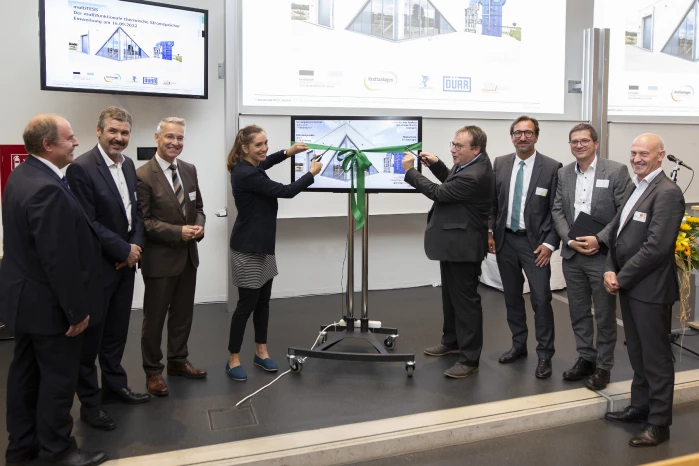
Green power replaces natural gas and coal in process heat generation (high-pressure steam, thermal oil, hot air) with the use of the power-to-heat storage Green Heat Module Together with the Solar Institute Jülich and industrial partners, Kraftanlagen Energies & Services has for the first time researched, developed and demonstrated an experimental plant operating at 1000 degrees Celsius in the multiTESS project Focus on CO2-free and base-load-capable heat and power supply from regional sources Green Heat Module The reliable and CO2-free supply of heat and electricity from regional renewable energy sources is a complex problem in industry. Kraftanlagen Energies & Services solves it as a general contractor with its new Green Heat Module (GHM) product. In order to decarbonise an even greater number of industrial processes, Kraftanlagen Energies & Services, together with the Solar Institute Jülich of Aachen University of Applied Sciences (SIJ) and consortium partners Otto Junker and Dürr Systems, developed a so-called power-to-heat storage system in the multiTESS project, which operates at a temperature level of 1000 degrees Celsius. This allows energy to be stored in the form of high-temperature heat (“loaded”) and this heat to be converted back into electricity when needed (“unloaded”). In addition, external heat sources – such as waste heat from industrial processes – can also be included. It is also conceivable to use the stored heat not only to produce electricity, but also to feed it into public district heating networks or to provide process heat for (heavy) industry. To make this possible, the test facility has now been opened in Jülich. At the opening ceremony, Oliver Krischer, Minister for the Environment and Transport of the State of North Rhine-Westphalia, said that the multiTESS technology could become a model for many residential areas as well as commercial and industrial zones. The energy supply of the future must be based on renewable energies. Jeanette Lemmes (Federal Ministry for Economic Affairs and Climate Action) affirmed that the common goal must be to ensure security of supply, prosperity and climate protection. The centrepiece of the plant in the Jülich Brainergy Park is a six-metre-high chimney extension painted bright blue. Inside are several layers of ceramic honeycomb bricks that have vertical ventilation channels. Air flows through these stones – when they are loaded, 1000-degree hot air is introduced from above, which releases its energy to the stones on its way down. When unloading, cooler air is introduced from below and flows upwards, absorbing the heat energy. The actual building houses the electric heating system, which heats the air to up to 1000 degrees, and turbines to generate electricity. CO2-free base load supply The temperature range above heat pumps – i.e. between 150 and 1000 degrees – has so far posed a major technical and economic problem for CO2-free base load supply. It is precisely this problem that is being successfully addressed for the first time at 1000 degrees in the multiTESS project. This is also the first time that an electric high-performance heater is used in conjunction with a high-temperature storage tank and heat utilisation as a complete system at a nominal temperature of 1000 degrees. The process couples the electricity sector with the heat sector. In doing so, the power-to-heat storage system enables the use of cheap but volatile renewable energies for a compellingly demand-controlled industrial heat and coupled power supply. Due to the very high efficiency, multiTESS systems can make a relevant contribution to supply security and decarbonisation in connection with renewable energies. Due to the use of existing standard components that have been used industrially for decades, multiTESS systems can already be used in industry today at lower temperatures of around 750 degrees, for example, for a CO2-free process heat supply. With parallel integration to existing heat generators, storage capacities of about 1 GWhth and thermal discharge capacities of 1 to 200 MWth can already be realised at these lower temperatures. In the future, the processes will also be operated at higher temperatures. Industry and science worked hand in hand in the planning and construction of the plant. The high-temperature heating system was designed and built by Otto Junker GmbH, Dürr Systems AG built the ceramic heat storage system and an ORC plant, and Kraftanlagen Energies und Services GmbH was responsible for the overall planning. Alfons Weber (CEO Kraftanlagen Energies & Services) sums up: “We are facing a historic turning point in industrial heat supply: Increasingly, power generation from renewable energy sources is cheaper than fossil fuels such as coal, oil and natural gas. Our Green Heat Module product takes advantage of this game change. It produces and stores process heat in a way that serves the grid, namely whenever renewables are available at a favourable price, thus enabling a CO2- and emission-free base load supply. The GHM shows a high potential for reducing fossil fuels, and thus reducing import dependencies and climate-damaging emissions, because it is available now and scalable for storage capacities of gigawatt hours.”

Read More »

How green are modular homes?

With a national housing shortage and ambitious housebuilding targets for developers and local councils to meet, is now really the time to put the pressure on the industry to explore more sustainable methods of construction? The answer is a very clear yes from Wayne Oakes, a director at the sustainable engineering consultancy, Dice. He believes a greener modular building approach can increase sustainability, reduce construction time and begin to tackle the huge volumes of waste generated by the construction industry.  The UK’s housing crisis is well documented, with ambitious targets set by the government of 300,000 new homes a year.   With that comes a secondary problem, that of construction waste. A DEFRA report highlighted that in 2018, construction, demolition and excavation accounted for 62% of the UK’s total waste.  So how do developers continue to build at speed, reduce the volume of waste materials and create more sustainable methods of construction?  The answer is staring us all in the face – modular homes.  Modular homes are designed to be energy efficient and very efficient to manufacture. They’re created off site – where waste can be kept to a minimum – and different elements of a build can all be happening at the same time.  Offsite construction enables phases of work to be undertaken concurrently. Onsite substructure and infrastructure work can be taking place whilst the superstructure is being built in a factory. Factory conditions also mean that there are no delays due to inclement weather.  And there are environmental benefits to working offsite, helping us to fight the climate crisis. It is more straightforward to manage waste in a factory environment rather than on a construction site. It allows for far more control meaning less contamination, more recycling and less overall waste.  Another large contributor to climate change is pollution and energy output. Modular designs see a 40% reduction in HGV movement at construction sites, and manufacturing off site also minimises the time and energy spent on site.   This cuts travel and transport, as workers are more likely to be concentrated around a specific factory. Due to these factors, overall pollution is reduced.   Recycling is another big focus across every sector. Materials in traditional construction like timber, brick and concrete, are very rarely re-used and it can be hard work to do so. The volumetric and panelised systems found in modular building lend themselves to recycling in a much more practical and efficient way.   There are challenges, as there are with every construction project, and they do require a different approach to traditional methods of construction.  Modular projects and units do differ from the traditional, standard residential units. They have specific requirements in terms of their sub-structures and external works. This is particularly the case in sites with gradients and water management requirements.  On our first modular project, we worked very closely with the manufacturer on specific design standards, in particular with regards to the National Housebuilding Council’s requirements for the substructure.  This was a condition of the offsite manufacturing partner, to ensure that each of the plots met the requirements of building control.   As engineers, we need to be agile, responsive to site specific needs and challenge design to ensure modular methods of construction get the recognition they deserve.  We’ve realised technology’s potential and are driving the change.  It’s our duty to think creatively to develop new, more sustainable ways of construction and ultimately living.  

Read More »

Everton stadium: so good they built it twice!

Workers at Laing O’Rourke are confident that Everton Stadium will have the ‘wow’ factor – because they have already built it once! Craig Wallace, a Digital Engineer for Laing O’Rourke, is one of a select few with the responsibility for ensuring the project’s approach towards ‘digital’ uses leading processes, technology and data. One of the ways this is evident is through a process known as Building Information Modelling (BIM), which has provided Laing with the opportunity to build the project twice – virtually, and now in reality. As such, the 52,888-seater stadium has already been completed in digital form, in mind-boggling and minute detail, from the millimetre-accurate assembly of steelwork, prefabricated concrete walls and giant roof trusses, through to pinpoint positioning of wiring, plumbing, light switches and plug sockets. “We like to think we have already built Everton Stadium,” explained Craig, who works within the offices at Bramley-Moore Dock. “It’s been built virtually on screen in a simulated environment, and now physically on site. “The real benefit is that this enables us to resolve issues upfront, in a simulated environment, before work begins on-site. “That promotes efficiency gains, reduction in risks, leads to programme and cost benefits and provides certainty throughout the life-cycle of the build. “It took some teamwork to pull together and it’s a real collaborative effort, in that our entire supply chain contribute to the model. “All of the different disciplines, such as electrical, mechanical, structural and architectural, develop their own 3D model, involving their scope of work, and then share them with us on a collaborative online platform. “That provides us with around 1,500 shared model files, which we then combine into a master model for the entire team to use. “From that, the entire project team can work to co-ordinate the build and ensure there are no clashes within the disciplines.” The 3D model, representing what will be constructed in terms of the design, incorporates the three dimensions of width, depth and height. Then, by introducing the vital dimension of time and linking model elements to the construction programme activities, the cutting-edge 4D model allows the Laing O’Rourke team to visualise the construction sequence and assess potential risks or clashes in the programme, along with opportunities that might not have been seen using more traditional methods. “What you might see in the industry is the model being linked to the programme and that shows the sequencing of the build,” explained Craig. “In addition to this, we focus on including elements such as coordinating mobile cranes, storage zones, engineering controls, walking routes and more. “That really helps to drive what we do on site and how we can coordinate different pieces of work safely. This is our highest value.” The rolling model can be accessed by the workforce on site, via screens or mobile phones, enabling them to undertake the precise workloads and feedback on progress to keep the information flow going. “Working with our supply chain, we can use the model and embedded data to visually track the progress of the build and then communicate this through dashboard reporting,” added Craig. “The model is integral to dictating, with precise detail, the just-in-time delivery slots for tonnes of steelwork and the thousands of concrete wall panels, pillars and beams. “The model is accurate as it can be, and by coordinating the disciplines we can then increase the accuracy as the design progresses. “Out of the models we can then extract the drawings and then they, along with the 3D models, can be used in parallel by the workforce.” CLICK TO SEE VIDEO – https://evertonfc.sharefile.com/d-s20d9a1b82c3d426c817084986d914c26

Read More »
APM responds to the Government’s ‘mini budget’

APM responds to the Government’s ‘mini budget’

Energy price cap for business welcomed to support project stability  Association for Project Management, the chartered membership organisation for the project profession, responds to the Government‘s ‘mini budget’ today.   Speaking after the Chancellor, Kwasi Kwarteng, announced tax changes for individuals and businesses, APM’s Head of Public Affairs, Andrew Baldwin, commented:   “The Chancellor’s update was primarily focused on tax cuts and helping households and businesses navigate the energy crisis. We acknowledge the importance of this, at a time when many people and businesses have been financially impacted.    “Organisations need stability to ensure projects are delivered on scope, on time and on budget, so the Government’s energy price cap is welcome; particularly because so many project costs will have been defined before the energy price hikes.   “However, given the project costs, and indeed scopes, are defined at the start, the decision to bring in a sunset clause on all EU-derived legislation, unless otherwise preserved, through the Retained EU Law (Revocation and Reform) Bill could cause much confusion, particularly for those companies delivering projects across the UK and the EU. Projects being considered now need to know the regulations they will be expected to deliver against in the future.  “APM research has shown the crucial role that projects and project professionals play in both economic and societal growth.  We therefore urge the Government to further commit to ongoing investment in the projects that are needed to boost economic growth and deliver net zero, including nuclear, solar and wind power generation.   “The list of transport and infrastructure projects due to be streamlined and ‘prioritised for acceleration’ shows some commitment to that, although the precise details of what streamlining entails needs to be set out; we are keen to work with the Government to enhance the new Planning and Infrastructure Bill.” 

Read More »

Giant HS2 TBM cutterhead’s impressive journey back to start second dig in Warwickshire

Night-time operation in Warwickshire takes the giant ‘Dorothy’ Tunnel Boring Machine’s cutterhead back to Long Itchington Wood Tunnel north portal Impressive sight as the 160 tonne cutterhead was moved upright on a 12 metre-long, 48-wheel Self Propelled Trailer (SPT) on its 2.5 mile journey Once reassembled, ‘Dorothy’ will start her second tunnel bore later this year Dramatic photos and video capture the night-time transportation of HS2’s Long Itchington Wood Tunnel TBM’s giant cutterhead back to the tunnel’s north portal site in Warwickshire. After HS2’s first tunnel breakthrough by Tunnel Boring Machine ‘Dorothy’ at the south portal site in July this year, the front part of the TBM has been dismantled and transported back to the tunnel’s north portal in a 24/7 intricate operation, managed by the plant and logistics team at HS2’s contractor Balfour Beatty VINCI (BBV). The cutterhead, weighing 160 tonnes and with a 10-metre diameter, was moved during the night of Wednesday 21 September. Standing upright on a 12 metre-long, 48-wheel Self Propelled Trailer (SPT), it was transported from the south portal site, along the A425, through the village of Ufton and onto HS2’s north portal site.  The TBM’s 120 tonne tail skin, also 10 metres in diameter, was also moved in the same operation. The 2.5-mile journey took 180 minutes, with the loads arriving at their destination at 03.00 hours on Thursday 22 September. Eight other large pieces from the TBM’s front shield and middle shield, have already been transported by specialist equipment, which was used specifically to avoid any temporary alterations to the road layout through Ufton. The rest of the 120-metre long TBM will be pulled back through the one-mile tunnel by a special ‘caterpillar’ system, at a pace of 150 metres per day. Once all the parts are back at the north portal, the TBM will be reassembled before starting the second bore later this year. Tom Comer, Balfour Beatty VINCI’s Logistics Manager said: “This has been an intricately planned operation, using specialist equipment to transport these large, heavy pieces of machinery safely and carefully, over a 2.5-mile route, and onto our north portal site. The whole team was proud to see the operation culminate in such an impressive sight, as the huge TBM cutterhead completed its short journey. “We worked closely with the local authority, Warwickshire Police and British Transport Police, and would like to thank them for helping us ensure a safe operation, carried out at night to minimise disruption to the local community as much as possible.” Alan Payne, HS2’s Senior Project Manager said: “The BBV logistics and site teams have done a great job to make this a safe and successful operation. We’re now looking forward to the reassembly of the TBM over the coming weeks, and the start of the second bore of the tunnel later this year. When we celebrate the breakthrough next summer, this will be the first fully completed twin bore tunnel on the HS2 project.”

Read More »

Beard completes stunning restoration of UK’s oldest lido

Beard Construction has completed a meticulous £6.2m restoration of Cleveland Pools in Bath, the UK’s oldest lido. As well as calling on Beard’s expertise in heritage restoration, the 15-month project to restore the decaying, 207-year-old Georgian site to its former glory had significant logistical challenges – as all plant and materials could only be brought to the site by boat on the adjacent River Avon.  Machinery, building materials, equipment and everything else required to carry out the major refurbishment work on the Grade II* listed site was loaded up at the nearby Avon Rugby Club, which was used as a base, and carried up-river by barge. The barge was limited to carrying five tonnes of material per trip and made about six trips a day -navigating around everything from pleasure craft to the canoeists and kayakers who shared the river.  The work saw the creation of a new crescent-shaped waterproof concrete main pool within the footprint of the original, listed red-brick pool, which was preserved beneath it. Work began with the draining of the existing pool, followed by the installation of a system of drainage crates to allow natural spring water to continue to flow into the listed pool and around the shell of the new one. The existing children’s pool walls were temporarily held in place while the team excavated out the base to construct the waterproof, below-ground plantroom which is now home to the pool filtration equipment, along with hi-spec water source heat pumps which will be used to heat the pool water.  A refreshment kiosk and seating area is now housed above the plantroom. Curving around one length, the original Georgian changing rooms and a central cottage with archway were made structurally safe, restored, stripped of centuries of paint back to their original Bath stone and re-roofed in Welsh slate – some of which was reclaimed from the original roofs. New terrace seating was also added, as well as a new toilet and shower block. Outdoor chrome showers also flank both pools. As well as allowing for access, water from the river will feed the water source heat pumps, providing the Pools with a sustainable heating solution when the pool fully re-opens to the public in spring next year and heating the pool to 28 degrees centigrade. The pool is now ready to welcome its first swimmers. Hundreds entered a competition to be the first to swim and the winning 100 will do so on Saturday, September 10 – from when the pool will be open to the public for a preview, cold-water season. The restoration is the culmination of an extraordinary 18-year community campaign by the Cleveland Pools Trust, supported by thousands of Bathonians. The trust’s tireless campaign has taken the 207-year-old, Grade II* listed site from the lows of its closure in 1984 and a threat of demolition in 2003, to the highs of its stunning, present-day restoration. The overall cost of the project is £9.3m, £6.47m of which came from The National Lottery Heritage Fund. The project has also had significant support from the DCMS Capital Kickstart Fund, Historic England and Bath and North East Somerset Council. Bath-based architectural practice Donald Insall Associates were lead designers on the project with Hydrock carrying out the structural design. The restoration has been led by project director Anna Baker, a chartered architect who specialises in historic buildings. Anna said: “I am proud to have played a part in a restoration that many didn’t believe was possible. It’s been complex and very challenging. But it’s also been unique, the project of a lifetime. “We are a small project team and could not have done it without the help of our hundreds of volunteers. It’s been a real privilege to work on such a community-driven undertaking. “I’ve especially enjoyed taking this from a community heritage scheme to a project which engages with wellbeing, culture, sustainable energy and the natural environment.” Beard’s project manager Mark Tregelles added: “This has been a rare opportunity to restore a heritage building to its original use. Although logistically challenging, the overriding theme of this project has been collaboration. Working together with Anna, her team, volunteers and local residents has meant that no problem has been insurmountable. “Having access only by river has really tested our initiative, not only getting materials in and out of the project but also in the method of construction, given the limited plant and equipment that we could get to the site. Overall, it has been an honour to breathe new life into an historic landmark which can now be enjoyed for generations to come.” David Barnes, associate director at Donald Insall Associates, said: “We are delighted to have had the opportunity to lead the design team for the restoration of this precious historic outdoor public pool. The restored and updated facilities at Cleveland Pools present a new and exciting chapter for continued enjoyment of this much-loved site that is inescapably part of Bath’s rich bathing heritage”.

Read More »

Building College Launches Innovative Commercial Gas Engineering Apprenticeship

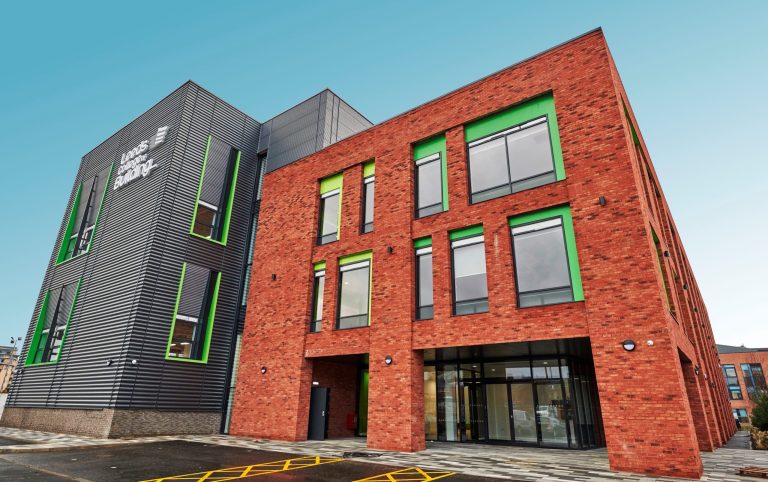
A new apprenticeship for Commercial Gas Engineering Operatives has officially launched at Leeds College of Building.  The apprenticeship is the first of its kind in Yorkshire, and the first time the College has offered a commercial rather than domestic pathway for gas engineers. The training is aimed at individuals employed by gas, heating, and ventilation firms who specialise in business services. Jim Branney, Curriculum Manager for Gas and Short Courses at Leeds College of Building, explained: “Since changes were made to the entry requirements to allow people work in the gas industry, employers have been unable to easily tap into this kind of commercial gas engineering training. We have therefore been responsive to employer feedback and adopted a BPEC curriculum framework, endpoint assessment, and accredited certification specifically for these apprentices working in commercial organisations. “The training is a little different to the domestic route as it’s not a qualification – it’s a managed learning programme leading to Gateway. The outcome is still an End Point Assessment and ultimately an apprenticeship certificate. Training is designed for those who need to know theories and safety procedures involved in the commercial installation, commissioning, decommissioning, or service and repair of gas appliances and associated equipment.” Jim continued: “This is probably one of only a handful of apprenticeship routes regionally into the commercial gas industry, yet there is a huge demand for trained professionals needed for thousands of opportunities nationally. This apprenticeship is an ideal route for individuals looking to specialise as commercial gas engineers.” The new apprenticeship will cover statutory requirements such as health, safety and environmental legislation and regulation, along with maintenance of gas installations and appliances in accordance with industry standards. Apprentices also learn about electrical and mechanical principles, energy efficiency, products, company rules, policies and procedures, risk assessments, tool maintenance, personal protective equipment (PPE), working on customer premises, effective communication, working with different trades, flue testing, pipework installation, ambient air testing, and identifying faults. In the final three months of the apprenticeship, trainees submit a portfolio consisting of a Gas Safe® registration certificate, competency test, and work-log review which includes an interview with a Technical Expert. On achieving a pass or distinction, apprentices will be eligible for membership with the Institution of Gas Engineers and Managers (IGEM) professional registration as an Engineering Technician (EngTech). Applicants should be aged 16 or over and ideally already be employed or have secured a work placement. Those unable to find an apprenticeship can apply for a study programme at Leeds College of Building and switch over to an apprenticeship at any point when a vacancy becomes available.  Visit the Leeds College of Building website for more details about how to apply or to enquire about training your employees.

Read More »

Key Milestone reached as Glencar’s new regional office in Manchester officially launched.

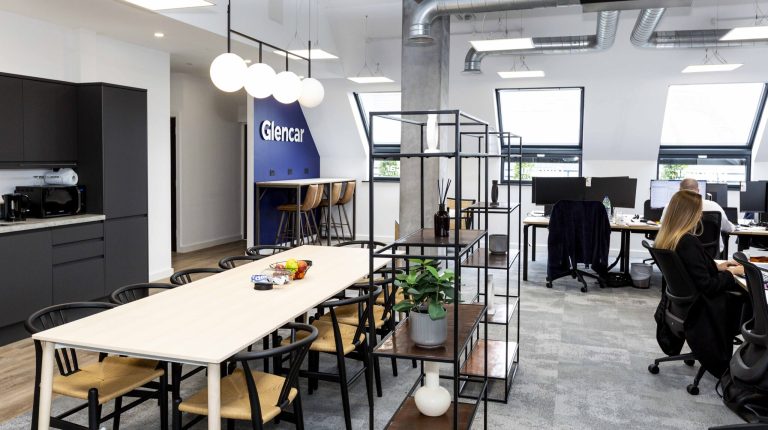
Significant recent project wins at sites across the Northwest and Yorkshire now brings the Glencar order book in the region to over £100M. Glencar, a leading UK construction company that was recently ranked amongst Europe’s fastest growing businesses, has today revealed it has reached a key milestone with its order book in the Northern region now topping £100M. To celebrate this growth the business has expanded to its new Manchester office headquarters which it moved into in August following a move from its previous location in the Neo building which it opened in May 2021.  The office located within the One St. James building, right in the heart of Manchester’s central business district is testament to the expansion of the region following a number of successful contract wins. The office is currently working on projects in Crewe, Wigan, Rochdale, Sheffield and Stafford for clients including PLP, RULA, Trammell Crow Company, Firethorn and Wilson Bowden Developments where Glencar are onsite building in excess of 1.4 million sq ft. Talking about the opening of the new office, Pete Goodman Glencar Managing Director Midlands and North said: “Since we established our office in Manchester in May 2021, the region has gone from strength to strength and is now home to over 40 Glencar colleagues.  As part of our strong customer first ethos, the office has enabled us to be closer to our customers and continue our strong growth in this fast-growing area. In addition to our notably strong industrial/logistics project order book across the North we are also seeing strong growth in the retail/leisure, commercial, storage and manufacturing sectors and will look to continue expanding our offering during the coming months”.

Read More »