Products & Materials : Building Trade Materials News

BrandZ Names Dulux as the UK’s Most Innovative Brand

Dulux has been named the UK’s most innovative brand by BrandZ, the largest global brand equity platform, in its second annual review. The 2018 BrandZ list places the paint brand ahead of names such as Dyson, Brewdog, Innocent and Sky, hailing its innovation in product development, its world leading colour

Read More »

A taste for the high life: Industry urged to embrace concrete innovations in high-rise building design

With a record number of skyscrapers under construction in the UK, Aggregate Industries is reminding contractors that innovative concrete solutions such as Lytag are proving increasingly essential to achieving world-class sustainable building design for high-rise structures. According to the latest report by the Council on Tall Buildings and Urban Habitat,

Read More »

VISTA ENGINEERING GROUP ACQUIRES BPC BUILDING PRODUCTS

Wakefield-based manufacturer of steel construction connectors, BPC Building Products Ltd, has joined Vista Engineering, in a move which sees the group strengthen its position in the UK market and significantly enhance the product range offered to its customers. “There is a tremendous amount of synergy between BPC and Vista, and

Read More »

Buildbase launches Plumbingbase

Builders’ merchant, Buildbase is launching a dedicated plumbing and heating business within 44 branches from September 2018. Plumbingbase will be clearly branded alongside Hirebase, Electricbase and, Kitchen and Bathroom Showrooms in Buildbase branches, completing the merchant’s comprehensive offering of everything a tradesperson needs under one roof. Aimed at builders, plasterers,

Read More »

The Benefits Of Using Steel As A Building Material

When you are choosing a material for your new construction project, it is important that you think about the benefits of the different types. One of the most popular building materials for construction projects recently is steel. This is because steel is a very durable and cost-effective material. In this

Read More »

ARCHITECTURE & ENGINEERING CONSULTANCY ANNOUNCES RAFT OF PROMOTIONS

BE DESIGN, the multi-disciplinary architecture and engineering practice, has announced four new promotions across its technical team. With 40 years’ combined experience, Dan Edwards, Rhys Bevins, Shawn Loo and Rafail Tsartsaris will now support the senior team directly with project design and client management whilst mentoring and developing the next generation

Read More »

AluFoldDirect Brings ‘Everything Aluminium’ to Build Show

AluFoldDirect will be proving to the entire construction industry that aluminium glazing can be problem-free by featuring ‘Everything Aluminium Without the Pain’ on the PiGS Product Pavilion at The Build Show, part of UK Construction Week. “The aluminium glazing market is more buoyant than ever which is why it’s crucial

Read More »

Connected lighting project at brick factory saves 50% on energy costs

Abtec Building Technologies (Abtec BT) has recently completed a project to install a connected lighting system at a newly constructed brick factory in the East Midlands. Ibstock Brick, an Ibstock PLC company, has built a new factory capable of producing 100 million bricks a year, helping to address the UK’s housing shortage.

Read More »

Timber marketing summit to focus on health and wellbeing

The timber industry is invited to take on the health and wellbeing agenda this autumn at the Wood for Good Marketing Summit. Aimed at timber marketing and communications professionals, the event ‘Marketing Timber for the Health and Wellbeing Agenda’ will take place on Thursday 20 September at Headspace in Farringdon,

Read More »

3 Troublesome Building Materials from Around the UK

Have you fallen in love with a historic property? Are you curious about how period homes always seem so quirky and unusual? The secret is usually woven into the building itself, thanks to construction techniques that have become unconventional to use today. While strange-looking façades help old buildings stand out

Read More »
Latest Issue
Issue 337 : Feb 2026

Products & Materials : Building Trade Materials News

BrandZ Names Dulux as the UK’s Most Innovative Brand

Dulux has been named the UK’s most innovative brand by BrandZ, the largest global brand equity platform, in its second annual review. The 2018 BrandZ list places the paint brand ahead of names such as Dyson, Brewdog, Innocent and Sky, hailing its innovation in product development, its world leading colour expertise, its approach to sustainability and its commitment to new technology. Five specific developments were highlighter, including Dulux’s expertise in the art and science of colour, as represented by its annual Colour of the Year and ColourFutures™ 2019. The second was the brand’s pioneering stance on sustainability in moving appliers, specifiers and homeowners away from solvent-based paints by providing proactive education on the benefits of water-based formulas. The third development was Dulux’s commitment to technology to support homeowners, naming the Dulux Visualizer, specifically, for allowing any room to be ‘virtually’ decorated in any Dulux colour in an instant. Fourthly was the success of the Dulux Academy – launched in March 2017 and now in numerous locations UK-wide – in continuing to upskill the trade in new techniques such as spray and urban effects. Finally, the list also praised the brand’s dedication to quality, with the production of Dulux materials in the UK coming from the world’s most advanced and sustainable paint factory in Ashington, Northumberland, which opened in 2017. At the heart of the Dulux brand is our mission to add colour to people’s lives, because we know – when used effectively – it can be absolutely transformative,” said Kathryn Ledson, marketing director of Dulux. “Today’s accolade is testament to a UK-wide team of experts who work everyday to make a meaningful difference, ensuring we are continuously raising the bar when it comes the quality of our products, our leadership in colour and our commitment to cutting-edge consumer solutions. As a result of this tireless dedication to innovate, we ensure that – as a brand – our tools, services and expertise has the power to transform spaces and improve lives,” she added. All these innovations saw the brand value of Dulux, owned by Dutch paints and coatings company AkzoNobel, rise by almost a fifth (18%) year on year in the BrandZ list, which is run by advertising giant WPP, in association with market data group Kantar. This saw it place 50th overall in the list of the UK’s most valuable brands.

Read More »

A taste for the high life: Industry urged to embrace concrete innovations in high-rise building design

With a record number of skyscrapers under construction in the UK, Aggregate Industries is reminding contractors that innovative concrete solutions such as Lytag are proving increasingly essential to achieving world-class sustainable building design for high-rise structures. According to the latest report by the Council on Tall Buildings and Urban Habitat, more high-rise towers are being built in the UK in 2018 than in the previous ten years1, with a record 510 tall towers at more than 20 storeys high, currently planned or under construction in London alone2. With this in mind, Aggregate Industries is advising the industry that using lightweight concrete solutions – often more cost effective and sustainable than standard options – has never been more crucial, particularly for meeting the complex design challenges of the UK’s most high-profile construction projects. Barry Mellor, Lytag commercial manager, comments: “The task for the modern structural engineer or contractor is not an easy one. Given the growing trend for high-rise developments across the UK, the onus is on creating cost-effective and sustainable structures which, at the same time, provide scope for greater design freedom than ever before. “As such, lightweight concrete solutions such as Lytag, a secondary aggregate up to 50% lighter than natural aggregate, can help developers to make the seemingly ‘impossible’ possible by enabling them to achieve remarkable architectural feats. Providing the same level of structural performance as standard weight aggregate used in concrete formulation, Lytag is ideal for reducing the number and size of columns in order to create bigger structures with greater spans, whilst at the same time being able to reduce the total load of their builds. Essentially, it reduces the volume of foundation needed by using less concrete and steel during the construction process.” What’s more, Lytag is made from fly ash generated by coal fired power stations. Being a secondary aggregate means it can drastically improve the green credentials of a build as seen during the construction of the £135m 70 St Mary Axe landmark development – the latest skyscraper set to transform London’s skyline. Lytag was instrumental in helping the tower recently receive an Excellent rating in BREEAM by conforming to clause WST 02 in relation to recycled aggregate. Barry adds: “Pushing boundaries is the cornerstone of pioneering design and, in turn, maintains our status as a world-leading construction company. And at the heart of this is seeking innovation in all areas, including building materials such as concrete, which as the most widely used man-made material in the world, has for far too long been viewed as an everyday, standard construction commodity. “However, since its inception 60 years ago, Lytag has had an incredible track record of helping to create the London skyline – usually on projects considered the first of their kind, which use space wisely, boast impressive aesthetics and keep sustainability at the forefront. “We’d recommend architects, developers and contractors, who haven’t done so already to continue to use Lytag’s unique capabilities to achieve the gold standard in high-end, intelligent and sustainable building design.” For more information on Lytag call 01904 727922 or visit www.lytag.com

Read More »

VISTA ENGINEERING GROUP ACQUIRES BPC BUILDING PRODUCTS

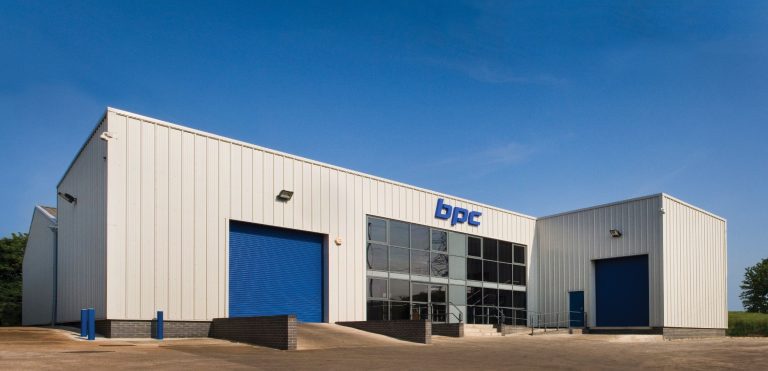
Wakefield-based manufacturer of steel construction connectors, BPC Building Products Ltd, has joined Vista Engineering, in a move which sees the group strengthen its position in the UK market and significantly enhance the product range offered to its customers. “There is a tremendous amount of synergy between BPC and Vista, and bringing the two companies closer together will generate additional benefits for both sets of customers,” explains BPC Managing Director, Gareth Simister. “This is great news for customers of both businesses. The acquisition will allow access to a wider range of products together with improved technical support and customer service levels.” “We’re delighted to welcome BPC as part of the expanding Vista group,” adds Vista managing director, Phil Travis. “We have worked together as distribution partners for many years, and look forward to strengthening the relationship we’ve already established. “Vista is a proudly British company which offers high quality products. We combine the best quality raw materials and state-of-the-art technology with over 40 years of experience, and would only ever consider forging a closer relationship with a company like BPC which shares our high standards and aims for the future.” For more details please visit either www.vistaeng.co.uk, email sales@vistaeng.co.uk or call 01663 736700 or www.bpcfixings.com, email sales@bpcfixings.com or call 01924 364794.

Read More »

Buildbase launches Plumbingbase

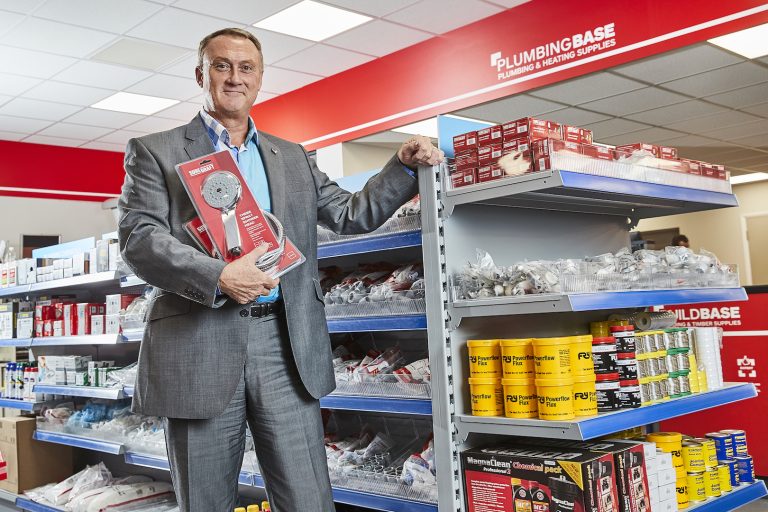
Builders’ merchant, Buildbase is launching a dedicated plumbing and heating business within 44 branches from September 2018. Plumbingbase will be clearly branded alongside Hirebase, Electricbase and, Kitchen and Bathroom Showrooms in Buildbase branches, completing the merchant’s comprehensive offering of everything a tradesperson needs under one roof. Aimed at builders, plasterers, housing developers, and plumbing and heating contractors, a core range of plumbing and heating products will be stocked across all branches, from boilers to waste pipes. A wider breadth of products will be available at larger sites. Plumbing and heating specialists have been recruited to ensure that all branches can provide knowledgeable advice and support. Lyndon Johnson, Buildbase Commercial Director said: “We understand that time is money for our customers. Plumbingbase will complete our ‘one stop shop’ philosophy, reducing the need for customers to go to several merchants for a project, saving time and making their lives easier. “We don’t just sell products, we have fantastic knowledge about everything we supply as many of our staff are former tradespeople themselves. We can help our customers to find the right product for the job and suggest solutions that they may never have considered. Plumbingbase will be no exception.” The Buildbase estate comprises more than 170 branches throughout the UK. Plumbingbase will be rolled out at further locations in 2019. Plumbingbase is in addition to the standalone Plumbase branches that are also part of Grafton Merchanting.   Picture caption: Buildbase Commercial Director, Lyndon Johnson, launches Plumbingbase.

Read More »

The Benefits Of Using Steel As A Building Material

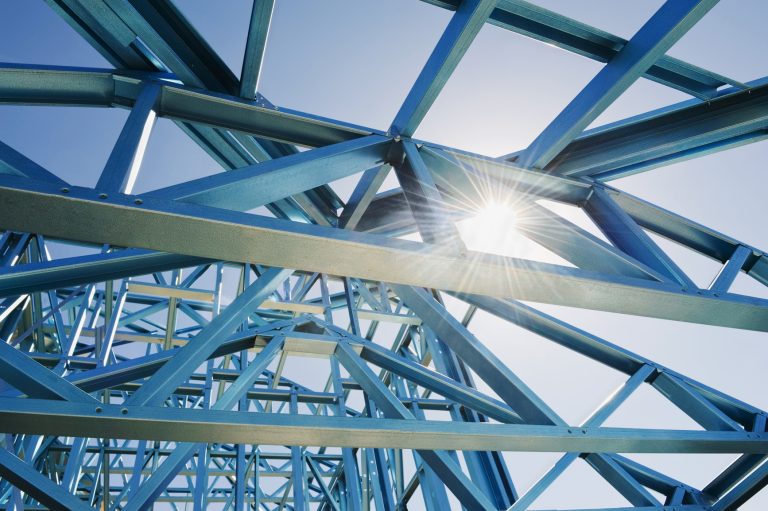
When you are choosing a material for your new construction project, it is important that you think about the benefits of the different types. One of the most popular building materials for construction projects recently is steel. This is because steel is a very durable and cost-effective material. In this article, we are going to discuss the benefits of using steel when designing a building. Make sure to keep reading if you’d like to find out more. Cost Effective Although steel might not be extremely cheap to buy, you will find that it is a very cost-effective way to construct a building in comparison to others. This is often because it is a recycled material and it lasts a long time, so you don’t need to worry about investing in more any time soon. On top of this, steel is lighter than other materials, so it won’t cost as much to transport it and you’ll even save on fuel costs. Durable Steel is a very strong metal and it can last a very long time. The strength of the material also means that it can stay standing when it comes to extreme weather conditions. You don’t need to worry about heavy snow or wind knocking your building down.  The steel building company armstrongsteel.com emphasise on their website that they are made to withstand any extreme weather and are also “non-combustible so it’s unlikely they will be destroyed by fire”. Environmentally Friendly Building materials often cause problems when it comes to keeping the environment safe and so it is important to choose a material that is eco-friendly. This is why steel is a great material to use because it is actually often made from recycled metal. Steel is very recyclable so make sure to use it if you are looking for a building material for your project. Adaptable If you are looking for a building material that is adaptable then you should think about using steel on your next project. Steel can be used for many different projects and is often used on large scale projects that need walls to be repositioned or altered. Having an adaptable material is very important so consider this carefully if you are unsure about which route to take. Design The final benefit of using steel as a building material is the fact that steel buildings can be designed to look great. Steel buildings do not need to have columns and so they often have a lot more space to include other great features. This gives designers the freedom to come up with something brand new and so it is a very good material to work with. Final Verdict If you are thinking about choosing a material for your next big construction project, you should think about choosing steel. This is because of the many great benefits such as the fact that it is extremely durable, it is great for creative design and it is very environmentally friendly. Make sure to invest in some steel if you want to create something really amazing on your next project.

Read More »

ARCHITECTURE & ENGINEERING CONSULTANCY ANNOUNCES RAFT OF PROMOTIONS

BE DESIGN, the multi-disciplinary architecture and engineering practice, has announced four new promotions across its technical team. With 40 years’ combined experience, Dan Edwards, Rhys Bevins, Shawn Loo and Rafail Tsartsaris will now support the senior team directly with project design and client management whilst mentoring and developing the next generation of engineers and architects at BE Design. Shawn is looking forward to helping to develop junior members of the team and enhancing client satisfaction as BE Design’s newly appointed associate. Dan has been part of the BE Design family for almost five years and has now been promoted to senior engineering coordinator and, during which time he worked on transforming a car park used during the London 2012 Olympic Games into an impressive structure. Rhys studied at Nottingham Trent University and, following a placement year at BE Design, returned to work there full time four years ago and is now the practice’s newest senior architectural technologist. Rafail is experienced in Computer-Aided Design (CAD), Revit and Building Information Modelling (BIM) and is proud to see his work influencing others within BE Design in his new role as senior engineering BIM coordinator. “We’re a close family at BE Design – and one which supports one another and rewards hard work and dedication,” said Stephen Oakden, director at BE Design. “Dan, Rhys, Shawn and Rafail have all worked incredibly hard to get to where they are – showing enthusiasm, passion and technical expertise across every project they’ve designed and delivered. I’m proud to announce their promotions and wish them all the best of luck in their new roles,” continued Stephen. BE Design celebrated its fifth anniversary this year and works across numerous sectors – from retail and leisure to residential and industrial – designing projects across the UK and Europe. Find out more about BE Design at www.bedesign.co.uk or join the conversation on Twitter @B_E_Design.

Read More »

AluFoldDirect Brings ‘Everything Aluminium’ to Build Show

AluFoldDirect will be proving to the entire construction industry that aluminium glazing can be problem-free by featuring ‘Everything Aluminium Without the Pain’ on the PiGS Product Pavilion at The Build Show, part of UK Construction Week. “The aluminium glazing market is more buoyant than ever which is why it’s crucial to offer installers Everything Aluminium without the pain, so that installers can take advantage of the sector. By going to The Build Show, we can show more people in the construction industry how we have perfected our manufacturing processes to deliver aluminium glazing right first time, every time,” said Craig Miller, Managing Director at AluFoldDirect. “The range of visitors to The Build Show also means that we can talk to local builders, specifiers and architects about our range, fast delivery times of 1 week for unglazed and 2 weeks for glazed, Aluminium Glazing Design Centre and the new AluFoldDirect Aluminium Installer Training Academy,” he added. AluFoldDirect is one of ten companies featuring on the PiGS Product Pavilion, which is sponsored by Balls2 Marketing. The PIGS Product Pavilion at the Windows, Doors and Glass Show has been created after feedback from visitors to The Build Show 2017 saw lots of requests to see more glazing products. AluFoldDirect is the perfect company to feature on the pavilion, to show visitors how they can get ‘Everything Aluminium Without the Pain’ and make the most of the ever-growing aluminium glazing market. Visitors can find AluFoldDirect and learn about its Everything Aluminium range of products on Stand B515 in Hall 10 at The NEC between Tuesday 9 October and Thursday 11 October 2018.

Read More »

Connected lighting project at brick factory saves 50% on energy costs

Abtec Building Technologies (Abtec BT) has recently completed a project to install a connected lighting system at a newly constructed brick factory in the East Midlands. Ibstock Brick, an Ibstock PLC company, has built a new factory capable of producing 100 million bricks a year, helping to address the UK’s housing shortage. With lighting such a fundamental part of any manufacturing facility, the company wanted to install the latest technologies to help save on costs, energy consumption and CO2 emissions. Ibstock Brick is the UK’s market leader in brick manufacture with 20 factories across the country and a total annual capacity in excess of 750 million bricks. In addition, the firm employs almost 1400 people, with a substantial number in the local Ibstock and Ellistown areas in Leicestershire. Despite the impressive output figures, the UK as a whole is suffering from a housing shortage that is not helped by a lack of bricks. To address the shortfall, it is estimated that a further 400 million bricks will be required annually; a demand that is currently met by imports from continental Europe. In response, Ibstock Brick is increasing its output by constructing one of the most modern brick factories in the world. In fact, the company estimates that the new £54 million facility will increase its production capacity by a further 100 million bricks per annum.   Total connectivity All modern factories call for connectivity, and this includes services such as lighting, for which the company was keen to ensure the latest technologies were utilised. “We were introduced to the project by Siemens as we are a solutions partner for their building technologies division,” explains Dave Watkins, director of Abtec BT, a specialist in bringing cost-saving intelligence to buildings. “After an initial chat with Ibstock, at which we had the opportunity to put forward our ideas, we were asked to tender formally for the project, which we duly won.” The solution proposed by Abtec BT was based on a number of class-leading technologies, including LED sources, open platform functionality, sustainability and, of course, connectivity. This proposal contrasted notably to the original brief, which was based on fluorescent lighting. “We had to justify the technology and why Ibstock should go for it,” states Mr Watkins. “However, the advantages of the proposal were pretty apparent and the company soon placed the order.”   Demonstrating the payback Abtec BT’s alternative to traditional lighting and controls facilitated the potential to build an energy-efficient building management system. Significant payback on the proposed solution was demonstrated, along with CO2 savings to match. In terms of the actual choice of lighting, the nature of the environment within the factory made this task especially challenging. Specialist conditions meant that the system not only had to be energy efficient, but had to be installed to a very specific standard, a factor that called for careful thought in the design of the concept, as well as consideration for future maintenance requirements. “We proposed DALi light fittings, which were rated to a high IP (ingress protection) with no metal exposed,” explains Mr Watkins. “This is important as a combination of brick dust and moisture in the atmosphere can cause incorrectly specified light fittings to corrode. In addition to their suitability for the operating environment, the use of DALi lighting would also provide the control and feedback needed at the management graphics end of the system.”   300 light fittings In total, Abtec BT calculated the need for 300 light fittings above the 295 x 86m factory floor in order to maintain the necessary lux levels. Contamination from the brickmaking process will of course affect lux levels over time, but the nature of the connected lighting solution proposed by Abtec BT means it is possible to account for this eventuality. “At installation, new lights can be dimmed to counter the fact that they will probably emit lux levels that are too high,” says Mr Watkins. “However, as time passes and the lights get contaminated from factory production processes, so we can dim up accordingly. Having a high understanding of issues such as these helped us to secure the Ibstock contract.” The installation undertaken by Abtec of the electrical elements such as the busbar also had to be carefully selected and installed. Due to the challenging height of the building (over 17m), the sensors used and the location required close scrutiny.   Effective energy management Abtec BT’s system has all the elements necessary to provide effective energy management, including presence detection from sensors mounted throughout the factory, automated function and duration testing of emergency lighting, constant daylight control and some scene setting. “Constant light control means that we monitor natural light levels across the whole factory and adjust the DALi lighting accordingly,” says Mr Watkins. “For instance, if the sun comes out and natural light levels improve we can slowly dim the lights [not noticeable by the naked eye], thus generating savings.” In total, energy savings of around 50% are anticipated in comparison with a traditional lighting install, along with an annual CO2 reduction of 170,041 kg. When coupled with the automated emergency testing, further savings are expected, leading to an estimated project payback of less than two years.   Open platform “The system installed is open in its approach to technology; KNX has been used for the field based sensors, BACnet for integration to heating and ventilation, and MODBUS to bring in the metering data,” explains Mr Watkins. Importantly, the entire system links to Abtec’s integrated building energy management system, HYDRA, which allows users to easily navigate and visualise logged events. Built on the latest vector graphics platform (HTML5), HYDRA helps users zoom in to the information they need, whether on a PC, laptop, tablet or smartphone. The HYDRA system, with its supervisor control and data acquisition functions, is a window into the heart of a building, as well as a proactive tool giving information to managers so they can make informed business decisions. HYDRA supports OPC, ModBus and BACnet, and allows integration with third-party systems. Data aggregation

Read More »

Timber marketing summit to focus on health and wellbeing

The timber industry is invited to take on the health and wellbeing agenda this autumn at the Wood for Good Marketing Summit. Aimed at timber marketing and communications professionals, the event ‘Marketing Timber for the Health and Wellbeing Agenda’ will take place on Thursday 20 September at Headspace in Farringdon, London. Health and wellbeing, indoor air quality and the use of healthy building materials are becoming increasingly important in construction and the marketing summit will assess the market potential, demand and drivers for healthy building products. The event will cover innovative approaches and best practice in marketing for the health and wellbeing agenda. An interview style panel debate with speakers including Harry Knibb, principal consultant and healthy buildings expert at WSP, and Olga Turner, director and co-founder of Ekkist. This will be followed by an open audience discussion allowing for speakers and delegates to establish requirements for healthy building products and how to meet them. Christiane Lellig, Wood for Good campaign manager, said: “We’ve had discussions with organisations such as the Construction Products Association, Savills and Legal and General and they’ve all shared that there is currently no particular focus or research on health and wellbeing trends in residential buildings. “To date the focus has been on office buildings with the intention to increase employee retention and performance, but we want to know what the key challenges are for timber marketing and communications professionals catering for the wider health and wellbeing agenda. “For example, how does everyone describe a healthy building material? This is an opportunity for us to come together and unite in our messaging and gain a better understanding of healthy building standards and material databases, so we can communicate this effectively and accurately.” The marketing summit, taking place the day before the Timber Trade Journal Awards, is an essential opportunity for anyone responsible for communicating about timber products and allows for networking with like-minded professionals. The final session on the day will be exclusively for Wood for Good supporters to discuss the main focus for 2019, receive a brief update on 2018 performance, and learn about the new funding strategy. Tickets are free to Wood for Good supporters and a 25% discount is available for British Woodworking Federation and Timber Trade Federation members. Numbers are limited so register for tickets now: https://www.eventbrite.co.uk/e/wood-for-good-marketing-summit-autumn-2018-tickets-48237635065 Subscribe for the latest e-news on timber in design and construction here: www.woodforgood.com/info/sign-up

Read More »

3 Troublesome Building Materials from Around the UK

Have you fallen in love with a historic property? Are you curious about how period homes always seem so quirky and unusual? The secret is usually woven into the building itself, thanks to construction techniques that have become unconventional to use today. While strange-looking façades help old buildings stand out from the crowd, they often come with a plethora of very specific problems. Wattle and Daub Wattle and daub is one of the most traditional property constructions found around the UK. It’s made up of thin wooden strips that are woven into panels (the wattle) and are then coated with a mixture of soil, clay, sand, straw and animal dung (daub). The low-cost, sustainable nature of wattle and daub has meant that, despite being used for at least 6,000 years, it’s seeing a resurgence in popularity as a construction material. Why can wattle and daub be troublesome? Well, as historic building materials go, it’s actually fairly resilient. The slightly flexible nature means that walls can tolerate considerable structural movement and its sturdiness will even support a failing timber structure where other types of infill would not. However, since it became fashionable to leave both the internal and external sides of these timber frames exposed, the performance of wattle and daub walls has been compromised, letting in draughts and occasionally water. This can cause a wider problem with damp, if left untreated. Ideally, the exposed side of the wall should be coated each year with limewash (killing off bacteria and filling in any small cracks), while the other side should be covered in render or weatherboard. The worst thing you can do with a wattle and daub construction – or any timber-framed building – is to cover the historic fabrics with a modern, impermeable material. These prevent the buildings from “breathing”, causing a build-up of moisture and decay. Bungaroosh Bungaroosh (spelled in various ways, including ‘bungarouche’ and ‘bunglarooge’) is a composite material comprising of building site scraps that would be mixed into hydraulic lime. Broken bricks, flint, pebbles, bits of wood and other miscellaneous pieces would be mixed in with a mortar and poured between shuttering to set. Bungaroosh was used almost exclusively in Brighton and Hove, East Sussex, in the 18th and 19th centuries, although some buildings in the nearby towns and villages have bungaroosh features too. If you visit Brighton today, you can see still countless Regency townhouses with an immaculate cream render, many of which are hiding bungaroosh beneath the surface. Although it was a cost-effective way of using up materials, Bungaroosh is not the most reliable building fabric. The mis-mash of textures means that Bungaroosh is generally very porous. This means that it can become brittle when exposed, either becoming too dry crumbling with little resistance, or getting wet and causing solid materials to become loose. Drilling into Bungaroosh is very difficult and can cause serious structural damage. Although many buildings used to feature designated wooden fixing points within bungaroosh walls, these are typically either covered up or in undesirable positions today. Mundic Similar to bungaroosh, mundic (also described as mundic block), is a type of concrete that utilises local waste as an aggregate. In this case, rather than debris from the surrounding building site, mundic is mixed with the leftover materials from nearby mines. Popular between 1900-1950, you will almost exclusively find mundic in Cornwall, although there are areas in West Devon with properties that have been built using mundic materials too. The major problem with mundic is that it’s hard to work out exactly what has been mixed into the wall, and in what quantities. If the aggregate has a high ratio of certain minerals or chemicals from the mine, this can actually degrade the concrete over time and cause serious structural issues. As any surveyor in Devon or Cornwall will explain, this has a huge effect on local property values. All buildings that are suspected to contain mundic will need to be tested, and if the percentage of mundic material is too high, mortgage lenders may refuse to support the purchase.   Sometimes it’s just interesting to know about these unusual construction methods from the past. However, if you’re planning to buy a historic home that might be built using wattle and daub, bungaroosh or mundic, exercise caution. These quirky materials can certainly lend charm and character to your home, just make sure a local surveyor inspects their condition before you commit to a purchase – you could end up with a very expensive pile of rubble!

Read More »