Technology : R&D and Manufacturing News
Type One Energy, Tokamak Energy, and AECOM form the UK Infinity Fusion Consortium to accelerate development of a commercial fusion power plant in the United Kingdom

Type One Energy, Tokamak Energy, and AECOM form the UK Infinity Fusion Consortium to accelerate development of a commercial fusion power plant in the United Kingdom

Type One Energy, Tokamak Energy, and AECOM today announced the UK Infinity Fusion Consortium to pursue development of the first private-sector-led fusion power plant project in the United Kingdom. Together, the companies intend to develop a fusion project that is commercially credible, deployable using existing enabling technologies, and capable of

Read More »
Innovative 3D printed concrete to be used for Teesside carbon capture project

Innovative 3D printed concrete to be used for Teesside carbon capture project

Costain and A E Yates bring on board Hyperion Robotics to deliver 90 3D printed concrete sleepers, providing efficiency, sustainability and safety benefits Costain, the infrastructure solutions company, and A E Yates, the civil and structural engineering delivery specialist, have brought on board Hyperion Robotics to deliver low-carbon concrete sleepers

Read More »
Western welcomes international delegations on R&D mission

Western welcomes international delegations on R&D mission

Western – one of the leading specialist construction companies in the UK and Ireland – has welcomed two sets of international visitors. The delegations from Australia and The Netherlands met with senior executives from Western to review best global practice in offsite modular construction. The visitors also took time to

Read More »
ITP invests in new R&D facility at Yorkshire HQ

ITP invests in new R&D facility at Yorkshire HQ

Building membranes manufacturer, Industrial Textiles and Plastics (ITP) Ltd, is supporting its policy of continual product innovation with investment in a new Product Development and Testing facility at its headquarters in Easingwold, North Yorkshire. The company is redeveloping an old  warehouse unit to house a new laboratory for the ongoing

Read More »
ROCKWOOL secures initial approval for West Midlands manufacturing facility

ROCKWOOL secures initial approval for West Midlands manufacturing facility

ROCKWOOL has secured approval for its first planning submission for a new manufacturing facility that would support hundreds of jobs in the West Midlands. The leading global non-combustible insulation manufacturer ROCKWOOL submitted a Section 73 application to Birmingham City Council requesting permission to vary some of the details in the

Read More »
Latest Issue
Issue 340 : May 2026

Commercial : R&D and Manufacturing News

Type One Energy, Tokamak Energy, and AECOM form the UK Infinity Fusion Consortium to accelerate development of a commercial fusion power plant in the United Kingdom

Type One Energy, Tokamak Energy, and AECOM form the UK Infinity Fusion Consortium to accelerate development of a commercial fusion power plant in the United Kingdom

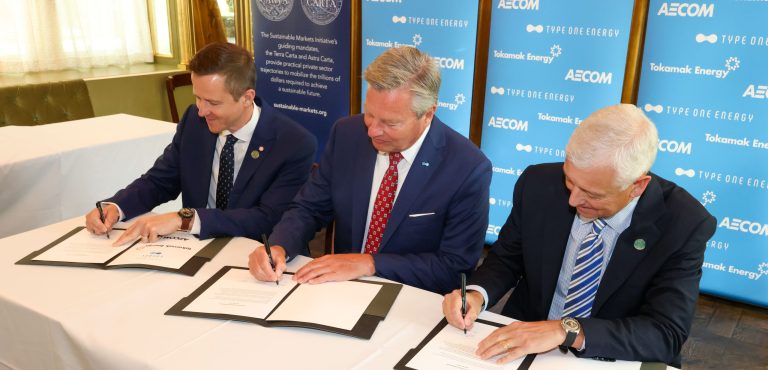
Type One Energy, Tokamak Energy, and AECOM today announced the UK Infinity Fusion Consortium to pursue development of the first private-sector-led fusion power plant project in the United Kingdom. Together, the companies intend to develop a fusion project that is commercially credible, deployable using existing enabling technologies, and capable of attracting private capital —consistent with the long-term goals of the government’s recently announced UK Fusion Strategy.  This announcement comes at a time of increasing U.S.-U.K. bilateral cooperation on fusion. His Majesty King Charles III said during his address to the United States Congress last week that, “Our nations are combining talent and resources in the technologies of tomorrow: our new partnerships in nuclear fusion and quantum computing, and in AI and drug discovery, holding the promise of saving countless lives.” The Consortium partners are all members of the Sustainable Markets Initiative (SMI), a global CEO-led network founded by His Majesty King Charles III with the mandate to lead the private sector in accelerating the transition to a sustainable economy. At its core, the UK Infinity Fusion Consortiumcombines Type One Energy’s 400 MWe Infinity Two stellarator fusion power plant design, AECOM’s leading engineering capabilities, and Tokamak Energy’s HTS magnet technology and manufacturing expertise in the UK. The Consortium will use these capabilities to develop a UK Infinity Two fusion power plant project that will include participation by the broader UK fusion value chain spanning construction, finance, offtake and other supply chain partners. The Consortium will build on the UK’s significant investment in magnetic confinement fusion technology, supply chain capabilities, regulation, and power plant siting for the government’s STEP Fusion programme. It will also capitalize on the synergy and experience gained from the first-of-a-kind (FOAK) Infinity Two fusion power plant project at the Tennessee Valley Authority’s (TVA’s) Bull Run site in the United States, which is targeted for commercial operation in 2034. The TVA Infinity Two project is being supported by the U.S. government’s own fusion programmes and provides a strong technical and programmatic foundation for the UK Infinity Two deployment project. The development of a UK Infinity Two fusion power plant project by the Consortium is aligned with the UK Government’s strategy to move from world-leading fusion science to commercial deployment — a strategy guiding the STEP Fusion programme. The Consortium will create a private-sector-led fusion commercialization pathway complementing the STEP Fusion programme. The UK Infinity Two project further scales growth of the UK fusion supply chain and accelerates time-to-market for this critical new energy source, while strengthening the country’s industrial base. Chris Mowry, Chief Executive Officer, Type One Energy, said:“Fusion needs to be delivered, not just developed. This Consortium brings together the core industrial capabilities in the UK and US required to deploy real-world fusion power plant projects that are commercially viable. By aligning fusion technology, advanced manufacturing, and power plant engineering, we are closing the gap between today’s energy innovation and tomorrow’s energy infrastructure. Our initiative is fully aligned with UK and US ambitions to be leaders in commercial fusion deployment.” Warrick Matthews, Chief Executive Officer, Tokamak Energy, said:“This Consortium puts Tokamak Energy’s transformative magnet technology and manufacturing expertise in the centre of another world-class fusion programme. Together, we can accelerate towards commercialising a new form of limitless, clean energy and, in combination with our role as STEP magnet systems partner, strengthen the UK supply chain’s leadership in global fusion.” Troy Rudd, Chairman and Chief Executive Officer, AECOM, said: “Fusion represents one of the most important long-term energy solutions, offering a clean, safe and reliable source of power for future generations. Delivering on fusion’s potential requires disciplined engineering, well-established infrastructure delivery models and collaboration across the entire energy ecosystem. Through this Consortium, AECOM is bringing its global experience in complex energy infrastructure to help lay the groundwork for commercial fusion projects that can scale with confidence, supporting the UK’s energy system while strengthening its industrial and infrastructure base.” Lord Vallance, UK Minister for Science, Innovation, Research and Nuclear, said: “This government is backing fusion with over £2.5 billion and recently announced a deal with the United States, which includes closer working on fusion research and development, taking us closer to a future powered by limitless clean energy. Our long-term vision and investment in the sector is now helping turn that ambition into reality.” Lord Stockwood, UK Minister for Investment, said: “The UK is a world leader in renewables, and this consortium will play a key role in new fusion projects, creating exciting opportunities for people in local communities. We’re serious about the benefits of clean energy technologies, which is why our modern Industrial Strategy is attracting investment into the sector to boost economic growth as the UK powers towards net zero.” Jennifer Jordan-Saifi, CEO of the Sustainable Markets Initiative (SMI) said: “Type One Energy, Tokamak Energy and AECOM have come together as members of the SMI, demonstrating the SMI’s Terra Carta and Astra Carta mandates in action — business and finance working together to turn breakthrough innovation into measurable progress in building a more sustainable future.” Building, Design & Construction Magazine | The Choice of Industry Professionals About Type One Energy Type One Energy Group is mission-driven to provide sustainable, affordable fusion power to the world. Established in 2019 and venture-backed in 2023, the company is led by a team of globally recognized fusion scientists with a strong track record of building state-of-the-art stellarator fusion machines, together with veteran business leaders experienced in scaling companies and commercializing energy technologies. Type One Energy applies proven advanced manufacturing methods, modern computational physics and high-field superconducting magnets to develop its optimized stellarator fusion energy system. Its FusionDirect™ development program pursues the lowest-risk, shortest-schedule path to a fusion power plant over the coming decade, using a partner-intensive and capital-efficient strategy. Type One Energy is committed to community engagement in the development and deployment of its clean energy technology.  About Tokamak Energy Tokamak Energy is a global leader in high temperature superconducting (HTS) and fusion technologies founded in 2009 as a spin out from UK Atomic Energy Authority. The company


Read More »
Innovative 3D printed concrete to be used for Teesside carbon capture project

Innovative 3D printed concrete to be used for Teesside carbon capture project

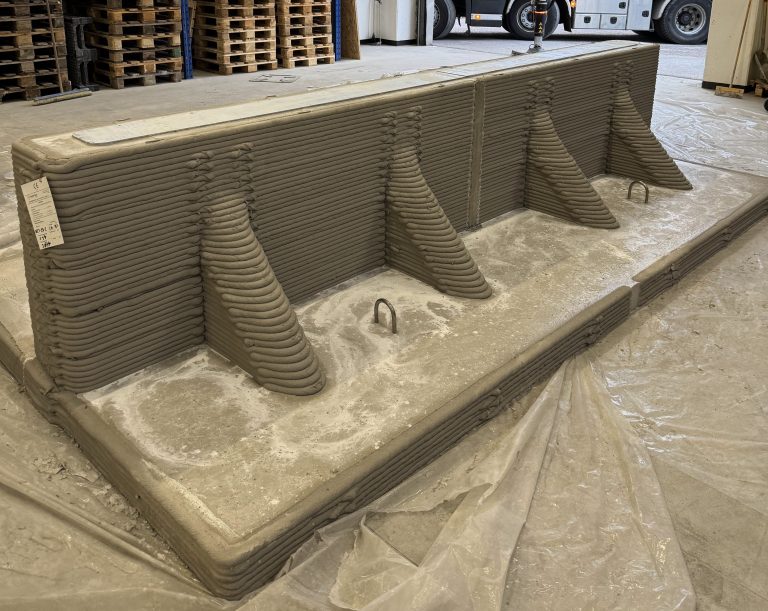
Costain and A E Yates bring on board Hyperion Robotics to deliver 90 3D printed concrete sleepers, providing efficiency, sustainability and safety benefits Costain, the infrastructure solutions company, and A E Yates, the civil and structural engineering delivery specialist, have brought on board Hyperion Robotics to deliver low-carbon concrete sleepers for a landmark East Coast Cluster project on Teesside. Northern Endurance Partnership’s (NEP) onshore CO2 gathering system will provide the CO2 transportation and storage infrastructure for Teesside-based carbon capture projects. Costain is the delivery partner to NEP with A E Yates providing civil engineering services. Costain and A E Yates will work with Hyperion to produce approximately 90 high-strength concrete pipe support bases, or sleepers, along 1.3km of onshore CO2 pipelines across Teesside using its advanced robotic manufacturing and digital technology. Through innovative robotic 3D printing, Hyperion’s technology eliminates formwork and enables precise, repeatable production of the sleepers. This approach, when compared to traditional precast solutions, will require less soil excavation, reduce concrete and steel use by 40% and carbon emissions by up to 50%. The engineering-led solution is up to ten times stronger than traditional structures despite being up to 60% lighter thanks to a thin, reinforced base design. This will enable faster and safer installation of the sleepers, which will also be manufactured offsite to reduce on-site labour and plant. Hyperion will oversee its role in the project from Forge I, its new UK manufacturing facility near Scunthorpe, Lincolnshire. Mark Howard, Programme Director at Costain, said: “Our supply chain serves as a key enabler for innovation, ensuring that we continue to deliver predictable, best-in-class solutions across our projects. Hyperion’s 3D printing solution will provide a myriad of efficiency, sustainability and safety benefits for this important project, while at the same time support economic growth and prosperity across Teesside. “We’re looking forward to collaborating with its team and working together with our other local supply chain partners as we continue to make strong progress in delivering a decarbonisation system that will be critical for creating a sustainable future for the UK.” Sven Till, Chief Executive Officer at A E Yates, said: “As a business, innovation and sustainability are fundamental to how we deliver for our customers, and having the opportunity to bring this innovative solution to Teesside for NEP, in collaboration with Costain and Hyperion, demonstrates this. “We hope that this is the first of many innovative solutions we are able to provide to Northern Endurance Partnership as we deliver the wider OSBL civil engineering works.” Fernando De los Rios, CEO at Hyperion Robotics, said: “Working alongside Costain, A E Yates and the Northern Endurance Partnership on this project shows what is possible when forward-thinking organisations come together to deliver infrastructure in a different way. By combining engineering expertise, digital design and automated manufacturing, we can reduce material use and carbon emissions while meeting the highest standards of quality, performance and code compliance. “This is more than a single project milestone. It is a practical example of how the UK can build critical infrastructure faster, more efficiently and with a lower carbon footprint by bringing together strong delivery partners, advanced technology and local manufacturing capability.” Rich Denny, Managing Director at Northern Endurance Partnership, said: “By working with Costain and Hyperion Robotics to harness advanced manufacturing techniques, we are not only reducing the carbon footprint of construction itself but also supporting the development of a resilient UK supply chain. This kind of collaboration is critical to delivering a world‑class CCS network that will help decarbonise industry, protect jobs and drive long‑term economic growth in the region.” Costain is also the delivery partner for Net Zero Teesside Power (NZT Power), which aims to be the world’s first gas-fired power station with carbon capture and storage. To date, approximately 200 people from Costain are delivering and managing the engineering, procurement and construction (EPCm) elements of the NZT NEP OSBL project, in addition to approximately 100 designers and engineers based in Manchester. Of the subcontractor contracts awarded to date, 90% are with UK-based suppliers. Building, Design & Construction Magazine | The Choice of Industry Professionals

Read More »
Royal Docks circular construction hub opens with ambition to lead Europe

Royal Docks circular construction hub opens with ambition to lead Europe

Plans to establish what is being described as Europe’s largest circular construction hub have moved forward with the official opening of a new facility in London’s Royal Docks. Delivered in partnership with Newham Council and climate charity Tipping Point East, the hub has been created to recycle and reuse construction materials that would otherwise be sent to landfill. Once fully operational, backers say it will form the largest circular construction centre of its kind in Europe. The facility marks the first phase of a broader Circular Economy Village planned for Silvertown over the next five years. Located on Greater London Authority land, the hub is intended to support the delivery of 36,000 new homes and 55,000 jobs across the Royal Docks Enterprise Zone. One of the early beneficiaries is expected to be the Lendlease-led Silvertown development, backed by The Crown Estate, which has planning consent for 7,000 homes, at least 30% of which will be affordable. By capturing materials from construction and demolition projects across the area, the hub aims to retain value within the local supply chain and reduce the environmental impact of new schemes. Supporters estimate that at least 950 tonnes of construction waste will be diverted from landfill over the next five years, alongside reductions in embodied carbon across developments that make use of reclaimed materials. The initiative responds to the significant environmental footprint of the construction sector. Construction accounts for around 62% of total UK waste, generating more than 100 million tonnes each year. While recycling rates are comparatively high, more than five million tonnes of construction waste still ends up in landfill annually. By embedding circular economy principles into one of London’s largest regeneration zones, the Royal Docks hub aims to demonstrate how major urban developments can reduce waste, cut carbon and support more sustainable building practices at scale. Building, Design & Construction Magazine | The Choice of Industry Professionals

Read More »
Western welcomes international delegations on R&D mission

Western welcomes international delegations on R&D mission

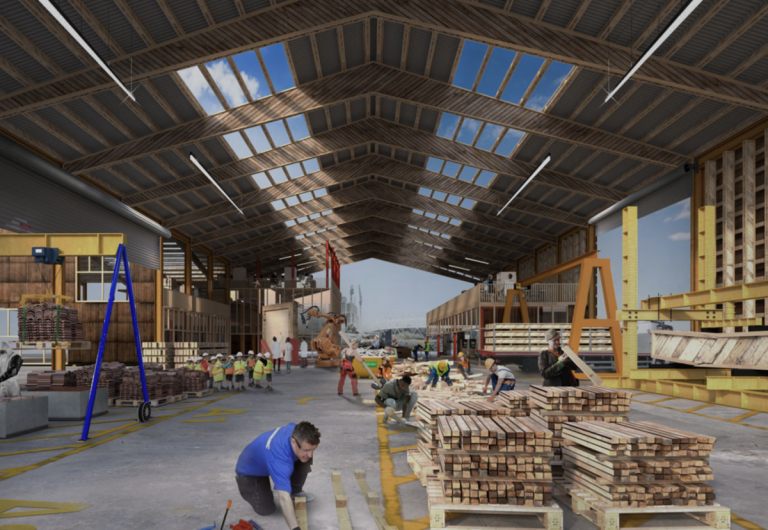
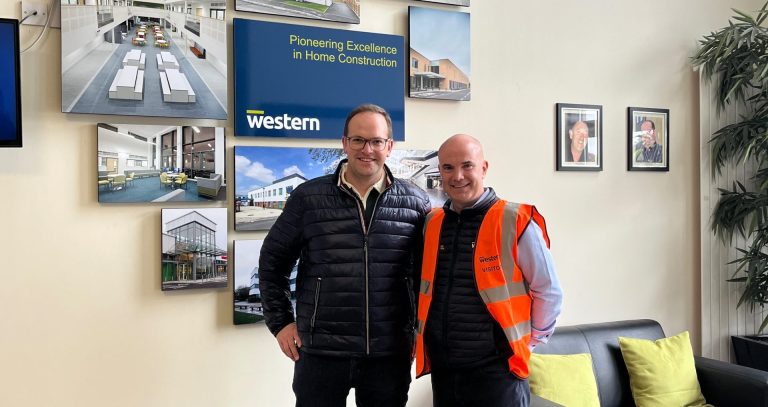
Western – one of the leading specialist construction companies in the UK and Ireland – has welcomed two sets of international visitors. The delegations from Australia and The Netherlands met with senior executives from Western to review best global practice in offsite modular construction. The visitors also took time to tour Western’s extensive manufacturing facilities in Tyrone, which include a new fully automated timber panel production line.   This is the latest acquisition in an ongoing multi-million-pound programme to enhance innovation, operational efficiency and sustainability in construction.  The new timber panel production line brings together the latest automation technology with powerful digital design tools. It has been designed to deliver higher output, greater precision and improved safety alongside the provision of high-performance, energy-efficient building systems.  At the heart of Western’s latest initiative is a suite of next-generation machinery designed for one-person operation, enabling the manufacture of open and closed timber wall panels with minimal manual handling. The new automated timber panel production line will support Western’s ambitious carbon reduction goals. The investment also enhances Western’s ability to meet increasing demand for faster, greener construction in keeping with the UK and Irish government’s drive towards Net Zero buildings.    About Western  Western offers a comprehensive ‘right-fit’ solution for modern construction projects, combining design excellence, digital innovation, and a streamlined / manufacturing delivery model. Their next-generation, fully customisable buildings are designed to exceed compliance standards, creating adaptable and sustainable spaces that empower clients and communities.  Western’s Single Source Supply Chain model means Western can offer end-to-end project in-house supply chain management that ensures cost certainty, adherence to agreed-upon timelines, transparency, and consistent quality.   With a reputation for quality craftsmanship and technical excellence, Western has long been at the forefront of modern methods of construction, using a right-fit approach to a range of projects across the UK and Ireland’s health, education and commercial sectors.  The company has been in business for more than 40 years and blends traditional values with future-ready solutions.  Building, Design & Construction Magazine | The Choice of Industry Professionals

Read More »
ITP invests in new R&D facility at Yorkshire HQ

ITP invests in new R&D facility at Yorkshire HQ

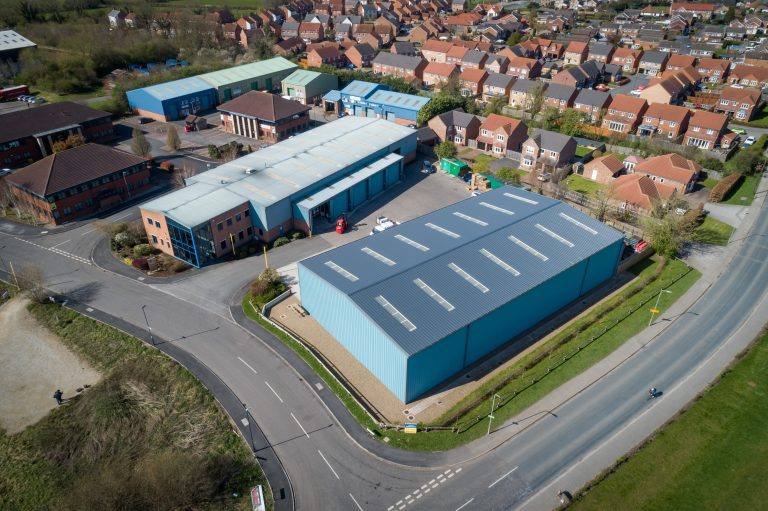
Building membranes manufacturer, Industrial Textiles and Plastics (ITP) Ltd, is supporting its policy of continual product innovation with investment in a new Product Development and Testing facility at its headquarters in Easingwold, North Yorkshire. The company is redeveloping an old  warehouse unit to house a new laboratory for the ongoing development of its diverse product range which includes protective building membranes for roof and wall applications, ground gas barriers, and textiles for temporary site protection. The facility is expected to be fully operational this autumn. ITP Managing Director, Carl Morse, said: “Pioneering advances in engineered protective textiles is part ITP’s DNA. Across four decades in manufacturing, the company has driven innovations in our markets. We have been especially prominent in leading and advocating the development of flame-retardant and chemical-resistant technologies, and fire protection will be a key focus of our R&D in the coming years. The new facility will be a crucial part of our ability to refine product performance and optimise the balance of every metric, from combustibility to water tightness and UV resistance.” ITP Sales Director, Matt Thompson, said: “Enhancing and expanding our ability to carry out initial testing and prototyping in-house will be vital in enabling ITP to develop new products – we will be able to carry out exhaustive R&D before submitting each new product to independent testing bodies to certify their credentials before they are released to the market. ITP has never been one of those manufacturers that merely tries to replicate inferior versions of competitor products – we believe in developing new solutions and setting new standards.” At its facilities in Easingwold include logistics, storage and a wide  range of manufacturing processes, where  it has a UK and international sales team and supplying  products on a global basis. Building, Design & Construction Magazine | The Choice of Industry Professionals

Read More »
It's Time for Industrial Equipment Manufacturers to Embrace Repairability

It’s Time for Industrial Equipment Manufacturers to Embrace Repairability

In a world grappling with climate imperatives, rising costs, and resource scarcity, one message is becoming increasingly clear from consumers: we want the right to repair. Across the consumer market, we are seeing major brands wake up to a shift in public sentiment. People want products that last longer, and when they do break, they want to be able to fix them. One of the most compelling examples comes from Philips, which recently launched its “Fixables” programme. This initiative allows customers to download 3D-printable files for select parts of their products, such as a comb attachment for the OneBlade trimmer. Instead of waiting weeks for a minor replacement or discarding a still-functional product, users can print a new part themselves. It’s a simple concept with profound implications: empower the consumer, reduce waste, and prolong product life. Other manufacturers are following suit. Logitech has partnered with the repair-championing website iFixit to provide spare parts and detailed repair guides, making it easier for consumers to fix their devices rather than replace them. Framework, the modular laptop company, has built its entire business model around repairability, offering laptops with easily swappable components. And Fairphone has long been a pioneer in this space, designing smartphones that allow users to replace batteries, screens, and cameras with basic tools. What unites these companies is a recognition of the growing consumer demand for sustainable, repairable products. They see the value in aligning with a circular economy — one that keeps products and materials in use for as long as possible, reducing waste and saving resources. And yet, when we turn our attention to the world of industrial equipment, this mindset is still relatively rare. There are manufacturers of industrial equipment who embrace repairability; those designing products with ease of repair as a consideration and improving after-sales support with documentation and spares availability. But the scale of adoption feels, to me, to be behind the consumer space. Cynics might point out that EU Right to Repair legislation, introduced as part of the European Green Deal and reinforced by the EcoDesign Directive, currently applies to a specific set of household and electronic appliances, suggesting this is a driver of the change we are seeing in the consumer space. But while the EU’s Right to Repair legislation has primarily targeted household appliances and consumer electronics, there is a clear trajectory toward including industrial equipment such as electric motors and pumps.  At the Association of Electrical and Mechanical Trades (AEMT), we work with a wide range of repair specialists who see first-hand how much valuable equipment is discarded simply because it wasn’t designed to be repaired. This is not only wasteful but also expensive. Repairing industrial machinery can be more cost-effective than replacing it, particularly when considering downtime, installation, and integration costs. Designing for repairability in industrial equipment isn’t just about making spare parts available. It’s about embracing modular design principles, improving documentation, and supporting third-party repairers. It means moving away from closed systems that lock out end-users and toward open, collaborative ecosystems. The consumer sector is showing us the way. Philips’ Fixables programme is just one example of what could be a broader transformation in product design and customer support. If individuals can 3D print a replacement part for a personal trimmer, why shouldn’t a maintenance engineer be able to access similar files or guides for a faulty motor coupling or panel component? We must take inspiration from these developments. Industrial equipment manufacturers have an opportunity — and, I would argue, an obligation — to respond. By prioritising repairability, they not only reduce costs for their customers and help the environment but also future-proof their own businesses in an increasingly sustainability-driven world. The right to repair isn’t just a consumer trend. It’s a cultural shift. It’s time our sector caught up. Building, Design & Construction Magazine | The Choice of Industry Professionals

Read More »
A GROUNDBREAKING robot designed to make bricklaying smarter, faster, safer and greener has arrived in the UK

A GROUNDBREAKING robot designed to make bricklaying smarter, faster, safer and greener has arrived in the UK

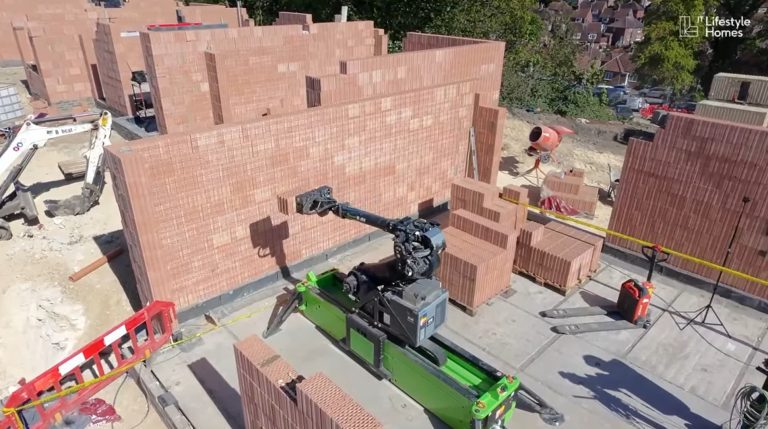
A new era in the construction industry will begin in Durham where the wall-laying terra-based robot – nicknamed WLTR or ‘Walter’ – is being first used on a development of 27 houses by high-quality development company JT Lifestyle Homes. The cutting-edge robot can lay up to 200 square metres of masonry per day – dramatically outstripping human output. It can also construct walls up to 3.5 metres high without scaffolding – with plans underway to increase this to 5 metres – and work in all conditions including wind, rain and extreme temperatures. Bosses estimate one robot could build hundreds of homes a year. Dr Jan Telensky, owner and founder of JT Lifestyle Homes, said: “The construction industry is currently facing severe labour shortages at a time when the government wishes to deliver 1.5 million more homes. “There are simply not enough bricklayers entering the trade to keep up with demand for affordable homes, so we must find new solutions.” Robot Walter was developed in the Czech Republic in partnership with GreenBuild and has been brought to the UK by JT Lifestyle Homes, who specialise in smart, affordable homes and commercial spaces of the future. According to the Office for National Statistics there are currently more than 35,000 job vacancies in the construction industry – the highest rate in any sector. In March, Chancellor Rachel Reeves promised a £600 million government war chest to train 60,000 bricklayers, electricians, engineers and carpenters over the next four years. Dr Telensky said: “The construction industry has an ageing workforce, with an average age of 46, and unfortunately not enough young people are looking for trade jobs. “The government has ambitious plans for growth and housing and we simply don’t have the manpower that’s needed. “Robot Walter’s cutting-edge technology has the potential to ease the burden and also create new, highly-skilled jobs for operators who will still be needed to oversee projects. “As well as building faster, intelligent monitoring means Robot Walter’s bricks are laid with ultimate precision which will enhance the overall build quality.” The Walter robot is currently being used on a development of 27 homes in Durham and will be rolled out to other sites in due course. Other projects by JTLH include a former Post Office building in Hull, a stunning development of one, two, three and four bed homes in Haywood Park, Southampton and an elegant apartment renovation in Eastwood, Nottinghamshire, as well as commercial builds. Once built, the Durham homes will be available under JT Lifestyle Homes’ rent to buy scheme, allowing first-time buyers to use rental payments as a method of saving for a deposit. Dr Telensky, who received the Dahrendorf Responsible Capitalism Award, presented to him at the House of Lords in 2022, continued: “I am committed to providing affordable housing in the UK. With innovative building techniques and an innovative rent to buy scheme we can set people free from a lifetime of renting.” For more information visit jtlh.co.uk Building, Design & Construction Magazine | The Choice of Industry Professionals

Read More »
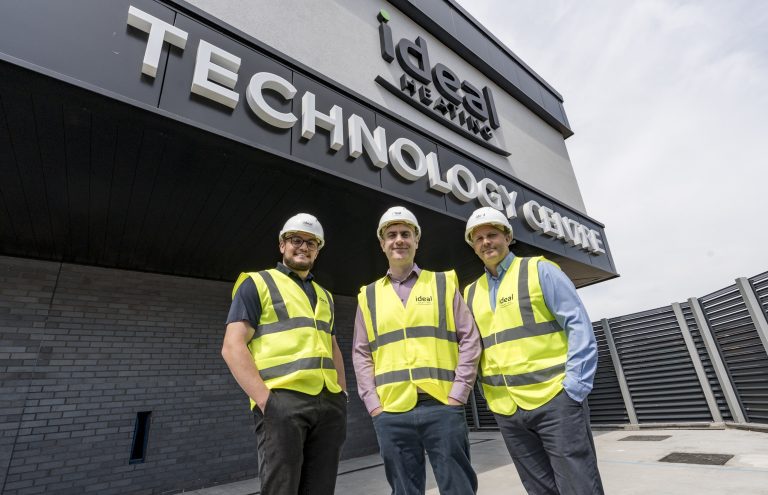
UKTC ideal heating hull

Ideal Heating R&D Team Members Visit UK Technology Centre as Pioneering Facility Nears Completion

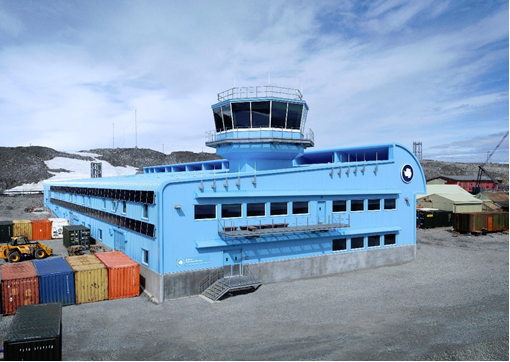
Senior team members have visited their new home-to-be as Ideal Heating fits out its industry-leading research and development centre. The £19.2m UK Technology Centre ( UKTC ), located at Ideal’s headquarters site in Hull, will enhance significantly the company’s R&D capabilities, providing a testbed for both current and future products. The UKTC is due to be operational from September and forms part of a wider £60m investment across the Hull site as the market leader pivots towards technologies which will decarbonise UK heating. The R&D workforce at the Hull site has more than doubled over recent years, reflecting Ideal’s significant investment in its product development capabilities. The new centre will bring together more than 100 R&D and product development specialists who are currently located in various facilities across the site. Stephen Patton, Ideal Heating’s R&D Director (Thermodynamics), toured the facilities as they take shape with colleagues, and said: “The UKTC represents a step change in our in-house R&D and testing capabilities. “Bringing world-class equipment and testing facilities to our site in Hull will accelerate and advance the development of our products. The UKTC brings with it significant benefits in time, cost and efficiency of R&D processes. “The UKTC will be, quite simply, the leading facility of its kind in the UK. Work on the centre is progressing well and we look forward to opening the building later this year.” The UKTC will feature six climatic chambers, with temperature and humidity controlled from -20°C to 50°C. It means Ideal can stress-test products in even the most dramatic and extreme of temperatures and environments. Alongside the climatic chambers are specialist test chambers including hemi-anechoic chambers, which test the noise emissions and sound levels from both boilers and heat pumps, and EMC chambers which test products for electromagnetic interference from other “smart” appliances found in the home. Ideal Heating’s R&D team will relocate from their existing facilities to the UKTC in phases. Product testing in the climatic chambers will begin in September, with anechoic and EMC testing due to commence in early 2026. Jason Speedy, Chief Operations Officer at Ideal Heating, said: “The UKTC is a major statement of intent. It reaffirms our commitment to the energy transition and investing in the technologies which will heat our homes for decades to come. “For more than century, the name Ideal has been synonymous with quality and innovation, as we continually work to meet the ever-changing needs of the heating sector. “The UKTC will enable us to continue to push boundaries, set new standards in heating technology and develop the next generation of products.”  Testing within the UKTC is split into two key areas – performance and reliability. The centre provides Ideal Heating’s R&D team with dedicated work and collaboration spaces directly next to where the testing is taking place. Also located within the UKTC is an in-house training room and a 3D printing facility, which will be used to produce prototype components and parts. The UKTC has been designed and built to BREEAM standard – a world-leading sustainability assessment for the built environment. Key sustainability features include LED lighting and controls, air source heat pumps, a mechanical heat recovery system, sub-metering of electrical distribution, and high-performance building fabric to reduce heat loss. Ideal Heating is also installing new solar panels at its Hull site, which will provide renewable electricity for the UKTC. The UKTC development has been principally delivered by Yorkshire-based contractor Henry Boot Construction.  The project is backed by more than £2m of seed capital funding from Humber Freeport, having been identified as a significant project which will help the Humber region decarbonise its industries and transition to a net zero economy. Building, Design & Construction Magazine | The Choice of Industry Professionals

Read More »
ROCKWOOL secures initial approval for West Midlands manufacturing facility

ROCKWOOL secures initial approval for West Midlands manufacturing facility

ROCKWOOL has secured approval for its first planning submission for a new manufacturing facility that would support hundreds of jobs in the West Midlands. The leading global non-combustible insulation manufacturer ROCKWOOL submitted a Section 73 application to Birmingham City Council requesting permission to vary some of the details in the current planning permission for the Peddimore site, north east of Birmingham. Now approval has been secured, ROCKWOOL plans to submit a more detailed Reserved Matters application later in 2025 or early 2026, which will provide specifics about the design of the facility. If the Reserved Matters application is approved, construction could begin later in 2026 with the facility becoming operational in 2029. ROCKWOOL, which has operated from South Wales since 1979, has strong foundations in the UK and the Peddimore facility would be the company’s second local site, supporting hundreds of construction jobs and creating new, long-term skilled roles. The proposed state-of-the-art insulation manufacturing facility would boost supply capacity for UK and Republic of Ireland customers, whilst also supporting the company’s ambitious global sustainability plans. Engaging with the local community Since plans for the new facility were announced in November 2024, ROCKWOOL has carried out the first phase of a community engagement programme to share initial information and listen to feedback.  ROCKWOOL plans to carry out a second phase of engagement once more detailed plans and designs have been developed. Information about the plans is available to view at www.rockwool.com/uk/peddimore and will be updated as the proposal develops. Nick Wilson, Managing Director of ROCKWOOL UK & Ireland, said: “We are very pleased to have received approval for our Section 73 application and look forward to developing the plans further and sharing them with the community in the months ahead. “We are grateful to everyone who took the time to provide feedback on our initial plans, which we will be considering as we progress. The West Midlands has a skilled, local workforce, a strong manufacturing tradition, and excellent transport links, so we believe the Peddimore site is an ideal location for us to expand our business and bolster our service to customers across the UK and Ireland.” Building, Design & Construction Magazine | The Choice of Industry Professionals

Read More »
FSi Promat cuts carbon emissions in key part of manufacturing process by 50 per cent

FSi Promat cuts carbon emissions in key part of manufacturing process by 50 per cent

Fire stopping specialist FSi Promat has successfully reduced carbon emissions in a key part of its manufacturing process by 52.5 per cent by switching to a demand responsive system. By changing the way that a high-pressure air compressor is used at the company’s Measham factory, FSi Promat has reduced the carbon emissions generated through the system by more than half. A vital part of the production process, the system supplies high pressure compressed air to machinery, used in mixing sealants and coatings. Installing a variable speed air compressor to replace its existing fixed speed one, means that the system is only using energy when it is actively needed, vastly cutting down the energy that was required for the previous ‘always on’ system. Switching the machine is one of a number of changes the company has made to support more environmentally efficient operations, including installing a new system to reduce the amount of low-risk wastewater it generates by approximately 550,000 litres a year, moving to sensor-based lighting and using renewable energy. The manufacturer has also changed shift patterns to support a 30 per cent reduction in energy use by condensing the running time of machinery.  Tim Roe, Engineering and Facilities Manager at FSi Promat, said: “Since starting at FSi Promat two years ago I have been looking for ways to improve the energy efficiency of the operation to support the company’s sustainability goals – and those of the wider Etex company. “This was something I noticed that could make an immediate impact on energy use and that would not have any effect on the manufacturing process at all. The fixed speed air compressor always needed to be on, whether it was being used or not and moving to a variable speed compressor was an obvious choice. “Installed with minimal disruption, this is a like-for-like switch but due to only being engaged when the compressed air is needed it has seen a considerable reduction in the energy used to power it. “While safety must remain at the forefront in passive fire protection products, FSi Promat is constantly looking for ways to support more energy efficient operations. Here a relatively simple upgrade has made a considerable impact, and we continue to look for other changes we could make.” Building, Design & Construction Magazine | The Choice of Industry Professionals

Read More »