Commercial : Mixed-Use News
£500m Truman Brewery Transformation Secures Government Green Light

£500m Truman Brewery Transformation Secures Government Green Light

Plans for a £500m transformation of the historic Truman Brewery estate in east London have been approved by Housing Secretary Angela Rayner, clearing the way for a major new mixed-use destination close to Brick Lane. The decision follows a planning inquiry into four recovered appeals covering a data centre, a

Read More »
AM ALPHA’s Rylands scheme hits key milestone with topping-out ceremony  

AM ALPHA’s Rylands scheme hits key milestone with topping-out ceremony  

Manchester’s pioneering Rylands development hits a major project milestone this week, with stakeholders gathering to celebrate the topping out of the prestigious landmark building, which sits on the site of the former Debenhams store on Market Street.   The site project team, including Domis, Jeffrey Bell, Levrant, JLL, and Barker Proudlove

Read More »
Swansea Waterfront Regeneration to Deliver 140 New Homes and Landmark Aquarium

Swansea Waterfront Regeneration to Deliver 140 New Homes and Landmark Aquarium

Plans have been unveiled to transform Swansea’s long-vacant Civic Centre into a vibrant mixed-use waterfront destination, delivering new homes, commercial space and a landmark visitor attraction while preserving one of Wales’ most distinctive examples of Brutalist architecture. Urban Splash has launched a public consultation on proposals to regenerate the prominent

Read More »
A £24bn Regeneration Partnership Set to Reshape the Future of UK Cities

A £24bn Regeneration Partnership Set to Reshape the Future of UK Cities

One of the UK’s largest regeneration partnerships has officially moved into delivery, with Lendlease and The Crown Estate completing their landmark £24bn joint venture to unlock thousands of new homes and millions of square feet of commercial development across London and Birmingham. The newly formed Impact Partnership Joint Venture establishes

Read More »
Latest Issue
Issue 343 : Aug 2026

Commercial : Mixed-Use News

£500m Truman Brewery Transformation Secures Government Green Light

£500m Truman Brewery Transformation Secures Government Green Light

Plans for a £500m transformation of the historic Truman Brewery estate in east London have been approved by Housing Secretary Angela Rayner, clearing the way for a major new mixed-use destination close to Brick Lane. The decision follows a planning inquiry into four recovered appeals covering a data centre, a wider mixed-use redevelopment, a commercial building and listed building works. The appeals were formally determined by the Ministry of Housing, Communities and Local Government on 29 July 2026. Promoted by Truman Estates and Zeloof LLP, with Grow Places acting as development manager, the masterplan will regenerate approximately 1.3 hectares of the former brewery estate across several sites on and around Brick Lane. The proposals comprise around 35,000 sq m of new and refurbished floorspace across eight buildings, including six new structures and the restoration or extension of two existing buildings. Approximately 2,500 sq m of new public realm will also be created as part of the wider regeneration programme. A broad mix of uses is planned, including offices, affordable workspace, shops, cafés, restaurants, food markets, galleries, exhibition and events facilities, community space, a cinema, a microbrewery and a new data centre at Grey Eagle Street. The development will also provide 44 mixed-tenure homes. Eleven will be designated as affordable housing, including six homes for social rent. The socially rented properties are expected to include larger family homes intended to respond to housing requirements within the surrounding community. Buckley Gray Yeoman has developed the overall masterplan and will design parts of the scheme, working alongside Carmody Groarke, Morris+Company, Henley Halebrown and Chris Dyson Architects. Landscape architect Spacehub and sustainability consultant Arup are also supporting the project, with DP9 advising on planning, Publica providing research and urban design expertise and The Townscape Consultancy advising on heritage and townscape matters. Several important elements of the former brewery will be retained and adapted. Chris Dyson Architects is responsible for proposals involving the Grade II-listed Boiler House, which will be extended and upgraded to provide improved exhibition and events facilities. Carmody Groarke will oversee the transformation of the historic Cooperage building, retaining creative workspace while introducing a new microbrewery. Morris+Company is behind the proposed data centre at Grey Eagle Street, as well as further commercial elements within the masterplan. The Grey Eagle Street proposal attracted particular opposition during the planning process, with Tower Hamlets Council raising concerns about the building’s scale, massing and appearance. However, the Secretary of State concluded that the existing building was severely derelict and that its redevelopment would represent a visual improvement. Although the replacement data centre will be substantially taller and larger than the existing structure, the decision found that its scale would relate reasonably to surrounding buildings and would not cause unacceptable damage to the local townscape or nearby heritage assets. Across the wider masterplan, the new buildings were judged to be appropriately considered in terms of height, scale and massing, with the overall design responding positively to the surrounding Brick Lane and Spitalfields context. The approval effectively overturns Tower Hamlets Council’s opposition to the three main planning applications. Councillors and campaign group Save Brick Lane had argued that the site should deliver significantly more housing, particularly affordable homes, given the borough’s extensive housing waiting list. Concerns were also raised about the potential impact of the development on Brick Lane’s cultural character, independent businesses and the area’s Bangladeshi community. However, ministers concluded that there was insufficient evidence to demonstrate that an alternative, residential-led redevelopment of the brewery estate would be financially viable or deliverable. Tower Hamlets’ emerging Local Plan, which proposes allocating the site primarily for housing, was therefore given limited weight in the final decision. The Secretary of State determined that the scheme’s architectural quality, regeneration benefits, affordable commercial space and new public facilities outweighed the limited heritage impact and conflicts with local planning policy. The project is also intended to reconnect parts of the brewery estate that are currently separated from Brick Lane by walls, gates and underused buildings. Four new entrances are expected to improve movement through the site, creating stronger pedestrian connections between Brick Lane, Spitalfields, Banglatown and surrounding neighbourhoods. Existing businesses affected by the proposals, including Banglatown Cash and Carry and Backyard Market, will be supported through a relocation strategy. The development team has said that successful and well-used parts of the estate will either remain untouched or undergo sensitive refurbishment and extension. Sustainability and material reuse will also form part of the construction strategy. The developer intends to recycle or reuse approximately 30 per cent of materials identified through pre-refurbishment and demolition audits, including materials salvaged from structures removed during the redevelopment. Grow Places chief executive Tom Larsson described the approval as a major milestone for the project and said the development would support the continued evolution of the Truman Brewery, Brick Lane, Spitalfields and Banglatown. Founded in 1666 by Joseph Truman, the brewery became the largest in the world at the height of its operations during the 19th century. Brewing ceased at the site in 1989, after which the estate developed into a destination for independent businesses, creative industries, markets, exhibitions, shops and hospitality operators. Building, Design & Construction Magazine | The Choice of Industry Professionals

Read More »
Crown Estate Advances Landmark West End Regeneration with 169,000 sq ft Mixed-Use Development Programme

Crown Estate Advances Landmark West End Regeneration with 169,000 sq ft Mixed-Use Development Programme

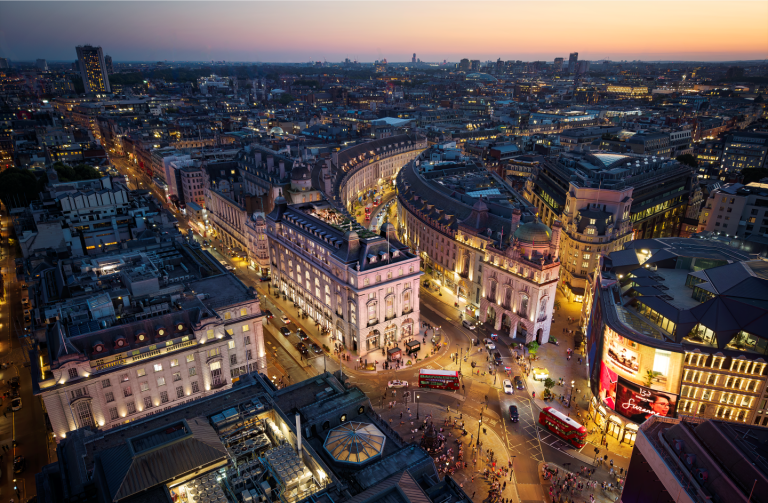
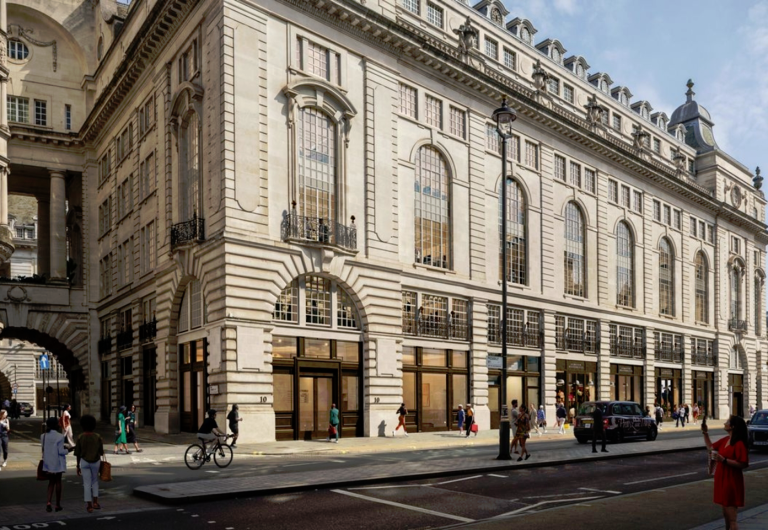
The Crown Estate has unveiled the next phase of its long-term transformation of London’s West End, bringing forward plans to deliver more than 169,000 sq ft of high-quality office, retail and hospitality space through two major regeneration projects in the heart of the capital. The developments at 10 Piccadilly and 21–29 Glasshouse Street form part of the organisation’s wider strategy to enhance its 10 million sq ft central London portfolio while preserving the architectural heritage of one of the world’s most recognisable commercial destinations. At the centre of the programme is the comprehensive refurbishment of 10 Piccadilly, the Grade II listed building that completes the famous curve of Regent Street overlooking Piccadilly Circus. The historic landmark, once home to the Swan & Edgar department store and later Tower Records, will be sensitively restored and repositioned as a vibrant mixed-use destination. The redevelopment will create approximately 90,800 sq ft of accommodation, including 62,700 sq ft of premium office space alongside a 26,400 sq ft hospitality offering spanning the basement, ground and first floors. A further 1,700 sq ft of retail space will front Regent Street, helping to strengthen one of London’s busiest shopping and leisure destinations. Meanwhile, The Crown Estate will deliver a significant retrofit scheme at 21–29 Glasshouse Street by combining two existing office buildings into a single contemporary commercial development. The project will provide around 63,000 sq ft of upgraded workplace accommodation, featuring modernised interiors, an enhanced reception area and a new rooftop space designed to improve occupier wellbeing and amenity. At street level, approximately 15,500 sq ft of retail accommodation will be created across the basement and ground floors, further enhancing the area’s commercial offer. Together, the schemes demonstrate the growing role of retrofit and adaptive reuse in the evolution of central London’s commercial property market. By repurposing existing buildings rather than replacing them, the developments seek to preserve important heritage assets while delivering modern, sustainable workplaces and destination retail and hospitality spaces. The projects also complement wider proposals to improve the public realm across Regent Street, Haymarket and Piccadilly Circus, with The Crown Estate continuing to work in partnership with Westminster City Council to enhance connectivity, accessibility and the overall visitor experience throughout the West End. For the construction and property sectors, the programme highlights the continued investment being made in mixed-use regeneration across London’s prime commercial districts. The emphasis on heritage-led refurbishment, high-quality workplace environments and integrated retail and hospitality uses reflects the changing demands of occupiers and visitors, while supporting the long-term resilience of the capital’s built environment. Kristy Lansdown, Managing Director of Development at The Crown Estate, said: “These developments mark the next step in our long-term vision for the West End, redeveloping historic buildings to reinvigorate an equally historic place. By taking an estate-wide view, we can invest in the places and experiences that help the West End succeed on the global stage – places such as 10 Piccadilly and 21–29 Glasshouse Street, where we are sensitively bringing heritage assets into their next chapter, creating outstanding new office, retail and hospitality spaces for London. “Our ambition is to shape a destination that continues to attract world-class businesses and visitors, while strengthening the city’s future resilience. Through long-term planning and investment, we are working to deliver a West End that will thrive for generations to come.” As demand continues to evolve across London’s commercial property market, the latest developments reinforce The Crown Estate’s commitment to delivering sustainable, mixed-use regeneration that balances heritage conservation with contemporary design, ensuring the West End remains one of the world’s leading destinations for business, retail, hospitality and culture.

Read More »
Kier Secures Landmark Crown Estate Contract for Historic Piccadilly Redevelopment

Kier Secures Landmark Crown Estate Contract for Historic Piccadilly Redevelopment

Kier has been appointed main contractor for the landmark redevelopment of 10 Piccadilly, as The Crown Estate continues to progress its long-term transformation of London’s West End through a series of high-profile mixed-use regeneration projects. The appointment marks the next phase of The Crown Estate’s ambitious development pipeline, alongside the refurbishment of 21–29 Glasshouse Street, where BAM is serving as principal contractor. Together, the two schemes will deliver approximately 169,300 sq ft of high-quality office, retail and hospitality accommodation within one of London’s most prestigious commercial districts. Located at the gateway to Piccadilly Circus, 10 Piccadilly occupies one of the West End’s most recognisable heritage buildings, completing the iconic curve of Regent Street. The Grade II listed property has played a significant role in London’s retail history, having originally housed the famous Swan & Edgar department store before becoming home to Tower Records during the 1980s. Kier will deliver a comprehensive refurbishment of the 90,800 sq ft building, carefully preserving its historic character while creating a contemporary mixed-use destination designed to meet the evolving needs of occupiers and visitors. The redevelopment will provide approximately 62,700 sq ft of premium office accommodation, alongside a 26,400 sq ft hospitality offering spread across the basement, ground and first floors. A further 1,700 sq ft of retail space fronting Regent Street will reinforce the building’s presence within one of the UK’s premier shopping destinations. For the construction and property sectors, the project highlights the continued demand for high-quality retrofit and heritage-led regeneration across central London. Rather than replacing existing buildings, the scheme demonstrates how historic assets can be sensitively adapted to deliver modern, sustainable commercial space while preserving their architectural significance. The development also forms part of The Crown Estate’s wider strategy to enhance its 10 million sq ft London portfolio through long-term investment in mixed-use destinations that combine offices, retail, hospitality and improved public spaces. In parallel with the building projects, The Crown Estate is working in partnership with Westminster City Council to deliver major public realm improvements across Regent Street, Haymarket and Piccadilly Circus, creating a more attractive and accessible environment for businesses, workers, residents and visitors. Kristy Lansdown, Managing Director of Development at The Crown Estate, said: “These developments mark the next step in our long-term vision for the West End, redeveloping historic buildings to reinvigorate an equally historic place. “By taking an estate-wide view, we can invest in the places and experiences that help the West End succeed on the global stage – places such as 10 Piccadilly and 21–29 Glasshouse Street, where we are sensitively bringing heritage assets into their next chapter, creating outstanding new office, retail and hospitality spaces for London. “Our ambition is to shape a destination that continues to attract world-class businesses and visitors, while strengthening the city’s future resilience. Through long-term planning and investment, we are working to deliver a West End that will thrive for generations to come.” The appointment of Kier marks another significant milestone in the ongoing regeneration of the West End, where heritage conservation, sustainable retrofit and mixed-use development continue to reshape one of the world’s most iconic commercial and retail destinations. Building, Design & Construction Magazine | The Choice of Industry Professionals

Read More »
The Crown Estate unveils next major West End projects as part of its largest ever development programme

The Crown Estate unveils next major West End projects as part of its largest ever development programme

Pair of landmark schemes to deliver more than 169,000 sq ft of commercial space in London’s West End The Crown Estate has unveiled the next phase of its West End development pipeline – the largest ever in its history – with two major developments at 10 Piccadilly and 21-29 Glasshouse Street. Together, the schemes push the boundaries of sustainable development, delivering 169,300 sq ft of new office, retail and hospitality space in the heart of this iconic and historic part of London. The projects mark the latest step in The Crown Estate’s long-term vision for its 10 million sq ft London portfolio. Sustainably regenerating heritage-led assets for the future, the developments support the continued evolution of the West End as one of the most globally competitive urban destinations. It also acts as a celebration of the area’s rich history, while providing an opportunity to make it greener, accessible and more inclusive. This latest phase of development reflects The Crown Estate’s long-term, estate-wide approach to investing in places that respond to the needs of businesses, workers, visitors and communities. By bringing together high-quality workplaces with new retail and hospitality uses, the reimagined buildings will support a diverse, resilient mix across the West End, strengthening its appeal as a place to work, visit and spend time. Kristy Lansdown, Managing Director of Development at The Crown Estate, said: “These developments mark the next step in our long-term vision for the West End, redeveloping historic buildings to reinvigorate an equally historic place. By taking an estate-wide view, we can invest in the places and experiences that help the West End succeed on the global stage – places such as 10 Piccadilly and 21-29 Glasshouse Street, where we are sensitively bringing heritage assets into their next chapter, creating outstanding new office, retail and hospitality spaces for London. “Our ambition is to shape a destination that continues to attract world-class businesses and visitors, while strengthening the city’s future resilience. Through long-term planning and investment, we are working to deliver a West End that will thrive for generations to come.” The schemes also complement plans to upgrade the West End’s public realm through the proposed transformation of the public spaces across Regent Street, Haymarket and Piccadilly Circus in partnership with Westminster City Council. By reimagining John Nash’s historic route from St James’s Park to Regent’s Park, the plans would help connect investment in buildings with the spaces between them, creating a more accessible and future-ready West End. At 10 Piccadilly, The Crown Estate will deliver a 90,800 sq ft mixed-use development of the Grade II listed building which completes the iconic Regent Street curve. Facing on to Piccadilly Circus, 10 Piccadilly was the original Swan & Edgar department store, and then home to Tower Records in the 1980s. The refurbishment of the building will deliver a mix of uses, providing 62,700 sq ft of prime office space, alongside a 26,400 sq ft hospitality destination across the ground, basement and first floors, and a further 1,700 sq ft of retail space on Regent Street. At 21-29 Glasshouse Street, The Crown Estate will combine two existing office buildings into one best-in-class commercial scheme. The retrofit project will provide 63,000 sq ft of high-quality workplace, with upgraded interiors, larger and more efficient floorplates, a new rooftop space, and an enhanced reception area. The scheme will also deliver 15,500 sq ft of retail space at basement and ground-floor levels, improving the retail offer on Regent Street and Glasshouse Street and supporting a more vibrant mixed-use environment. The announcement of this latest phase in The Crown Estate’s development pipeline comes after the 124,000 sq ft office redevelopment of nearby One Hanover Street, announced earlier this year and fully pre-let to Ares Management. It also follows three projects announced in 2024 – New Zealand House, 10 Spring Gardens and 33-35 Piccadilly – which together will deliver 250,000 sq ft of commercial space across Regent Street and St James’s. As a long-term custodian of the West End, The Crown Estate is combining future-facing development with the sensitive retrofit of nationally significant heritage assets. 10 Piccadilly will target exceptional sustainability credentials, including NABERS 5 Star, WELL Platinum, BREEAM Outstanding, WiredScore Platinum and EPC A. Across the development pipeline, delivery is designed to support an embodied carbon target of 400kg per sq m, supporting the transition to a more climate-resilient estate. Building, Design & Construction Magazine | The Choice of Industry Professionals

Read More »
AM ALPHA’s Rylands scheme hits key milestone with topping-out ceremony  

AM ALPHA’s Rylands scheme hits key milestone with topping-out ceremony  

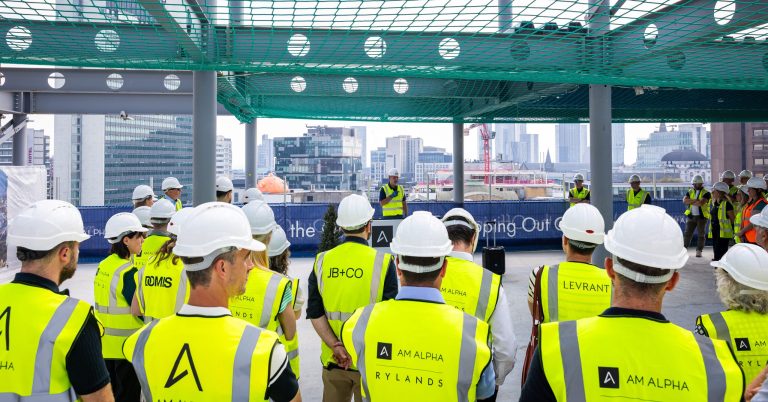
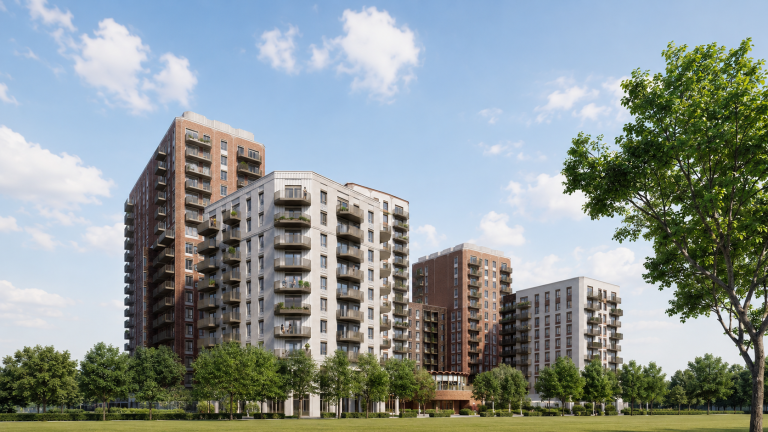
Manchester’s pioneering Rylands development hits a major project milestone this week, with stakeholders gathering to celebrate the topping out of the prestigious landmark building, which sits on the site of the former Debenhams store on Market Street.   The site project team, including Domis, Jeffrey Bell, Levrant, JLL, and Barker Proudlove all marked the occasion with an on-site celebration, followed by a drinks reception at The Edwardian Manchester Hotel to commemorate the fantastic progress to date on such a remarkable project.     The vacant building has been undergoing extensive refurbishment since 2022. Completion is expected in 2027.  The Grade II listed building is undergoing comprehensive redevelopment. Since 2023, AM ALPHA has been transforming the site, including a complete refurbishment of the original structure, conversion of the upper floors into premium office space, and the creation of retail units at ground level.  The scheme also includes a new four-storey contemporary extension, bringing the total number of floors to ten. Once finished, Rylands will offer high-quality office accommodation, retail space, and a leisure area focused on food and beverage.    Market Place Food Hall has already committed to a 15-year lease on the ground floor.   Martin Lemke, CEO of AM Alpha, said: “Reaching this construction milestone is an important achievement for everyone involved in the transformation of Rylands. Working with a listed building of this scale inevitably brings complexity and unexpected challenges. The progress made demonstrates what can be achieved through close cooperation, technical expertise, and a shared commitment to the project.  “Rylands is an important part of Manchester’s architectural and commercial heritage. Our ambition is to preserve that character while creating a modern, sustainable destination that meets the needs of future occupiers and visitors. We would like to thank Domis and the entire project team for their dedication and the significant progress they have made.”  Rory O’Donoghue, Construction Director at Domis Construction said: “The topping out of Rylands is a significant milestone and reflects the monumental effort, collaboration, and shared commitment of everyone involved in the project. We’ve shared AM ALPHA’s ambition from the outset to deliver this iconic building back to the city, and it’s been a privilege for Domis to help bring that vision to life. Transforming a landmark building of this scale and significance has only been possible through the close collaboration of the entire project team. While there’s still plenty of work ahead, reaching this stage is a fantastic achievement and one that everyone involved should be incredibly proud of.”   In keeping with the traditions of a topping out ceremony, a yew tree has been incorporated into the fabric of the building to mark the completion of the highest structural point. As well as a symbol of longevity and good fortune, the tree reflects the project’s commitment to preserving Rylands’ rich heritage, while laying the foundations for its next chapter.   Project team:  Client: AM ALPHA  Contractor: Domis  Architect: Jeffrey Bell Architects  Employer’s Agent and QS: Arcadis  Planning Consultant: Deloitte  Heritage Consultant: Levrant  Structural Engineer: Woolgar Hunter  Services Engineer / Sustainability Consultant: Max Fordham  Services Engineer: NOVO  Fire Consultant: Jensen Hughes / DFC  Acoustic Consultant: BWB / Andrew Jameson  Workspace Agent: JLL  Retail Agent: Barker Proudlove  Marketing & PR Agency: Real Estate Marketing Media  Building, Design & Construction Magazine | The Choice of Industry Professionals
Read More »
Stratford Set for Landmark Three-Tower Regeneration with Homes, Hotels and Cultural Venues

Stratford Set for Landmark Three-Tower Regeneration with Homes, Hotels and Cultural Venues

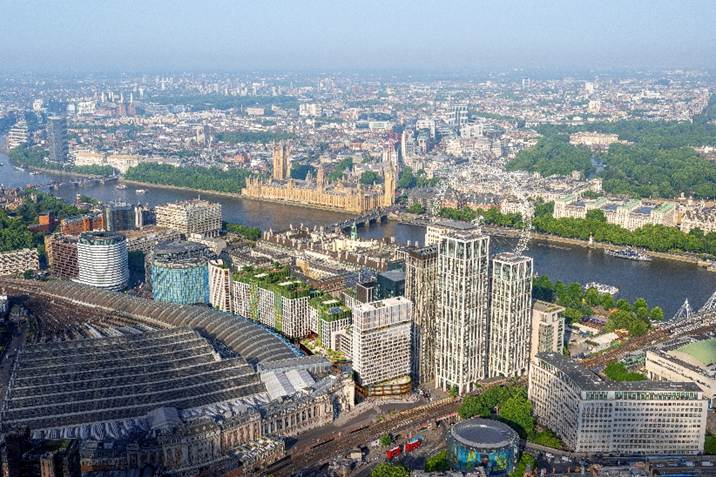
A major new vision for Stratford Junction has been unveiled, with plans to transform the long-vacant former London Sphere site into a vibrant mixed-use destination featuring more than 2,000 homes, 1,600 hotel rooms and a landmark cultural quarter at the heart of east London. Developer Hallmark Property Group has revealed proposals for a striking three-tower development, designed by Squire & Partners, which would replace the previously abandoned entertainment scheme with a dynamic neighbourhood combining residential, hospitality, leisure and public realm. The ambitious masterplan would regenerate the 2.05-hectare site, situated between Stratford Station and Stratford International, which has remained largely unused since serving as coach parking during the London 2012 Olympic Games. Rising between 31 and 47 storeys, the development will comprise around 2,100 shared living homes alongside 1,600 hotel rooms, creating a substantial new residential and visitor destination in one of London’s fastest-growing regeneration areas. At the centre of the proposals is a major cultural offering, with more than 20,000 sq m of immersive attractions, galleries and exhibition space designed to establish Stratford as an international destination for arts, entertainment and events. Two flexible live performance venues accommodating between 1,200 and 4,300 people will support a year-round programme of concerts, performances, festivals and exhibitions. The wider public realm has also been placed at the forefront of the design, with landscaped squares, green spaces, outdoor exhibition areas, art trails and more than 100 public art installations proposed throughout the development. A range of cafés, bars and restaurants would activate the ground floor, creating a lively destination for residents, visitors and local businesses. The project is expected to generate approximately 1,500 jobs while attracting significant visitor spending, complementing the continued expansion of Stratford’s wider cultural and commercial landscape. The scheme would sit alongside the £1.1 billion East Bank development, home to major institutions including V&A East, the V&A East Storehouse and Sadler’s Wells East, further strengthening Stratford’s reputation as one of London’s leading cultural and innovation districts. For the construction and property sectors, the proposals represent another major mixed-use regeneration opportunity, bringing together high-density residential development, hospitality, commercial uses, public realm and placemaking on a strategically important brownfield site with outstanding transport connectivity. Before submitting a planning application to the London Borough of Newham this autumn, Hallmark Property Group will undertake a further round of public consultation later this month to gather feedback from local residents and stakeholders. Subject to planning approval, a temporary meanwhile use is expected to open later this year, featuring food markets and community events while preparations for the permanent development continue. If approved, the Stratford Junction scheme would transform one of east London’s most prominent underused sites into a thriving new neighbourhood, delivering much-needed homes, world-class cultural attractions and significant economic investment while reinforcing Stratford’s position as one of the UK’s premier regeneration success stories. Building, Design & Construction Magazine | The Choice of Industry Professionals
Read More »
Works commence on Vivere Cornbrook as landmark tower rises at Manchester Waters

Works commence on Vivere Cornbrook as landmark tower rises at Manchester Waters

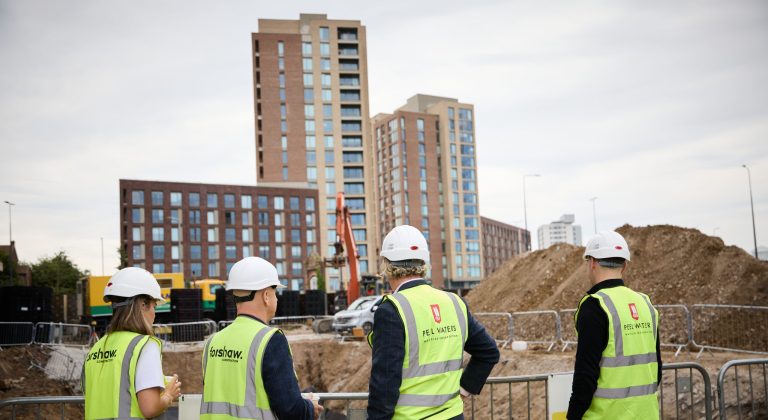
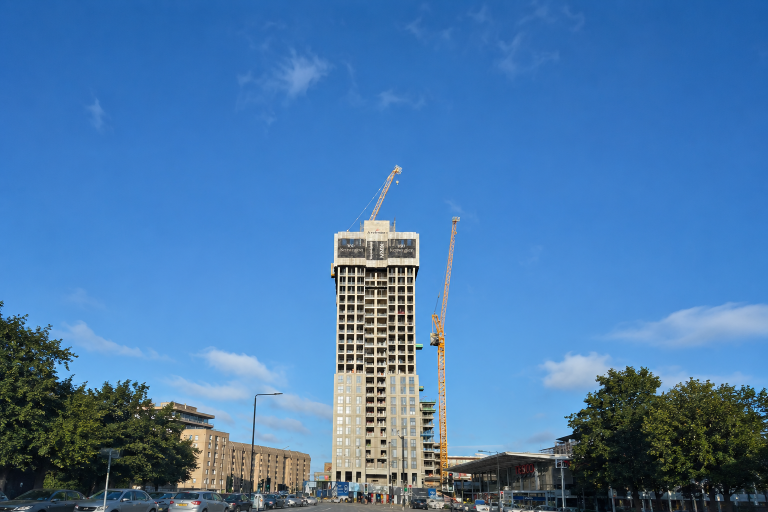
Construction has officially commenced on VIVERE Residences at Cornbrook, a landmark £64.2 million mixed-use development by Forshaw Land & Property Group marking a major milestone in the continued transformation of the Manchester Waters neighbourhood. With enabling works now underway and DOMIS appointed as main contractor, the scheme will deliver 237 luxury apartments, an 88-key VIVERE aparthotel, ground floor commercial space and a range of resident amenities on a prominent gateway site adjacent to Cornbrook Metrolink station. The development will also become the tallest tower delivered to date within Peel Waters’ Manchester Waters masterplan, creating a striking new addition to Manchester’s skyline and reinforcing Cornbrook’s position as an emerging residential and commercial destination between the city centre and Trafford. Through a complex land assembly process, Peel Waters unlocked the opportunity to transform the site at Cornbrook, a key neighbourhood within their wider emerging ‘Manchester Waters’ district, one of the UK’s largest regeneration projects. VIVERE Residences forms part of the wider Manchester Waters vision. The development occupies a strategically important site at the entrance to Pomona Island, the largest neighbourhood within the Manchester Waters masterplan, where Peel Waters is creating a new waterside community featuring new homes, extensive public realm and more than 10 acres of green space. The start on site follows the recent securing of Building Safety Act Gateway 2 approval, together with a £64.2 million development finance facility from Maslow Capital, providing the platform for construction to commence. The scheme will comprise a mix of one- and two-bedroom apartments alongside five panoramic penthouses, designed to meet growing demand for city-centre living. Residents will have access to a comprehensive amenity offering including a 24-hour concierge, gym, co-working lounge, games room, meeting rooms, private dining facilities, cinema and coffee bar. The accompanying VIVERE aparthotel will form part of Forshaw Group’s new VIVERE hospitality brand, supporting Manchester’s growing visitor economy with high-quality short-stay accommodation in a highly connected location. Lyndon Forshaw, CEO of Forshaw Land & Property Group, said: “Breaking ground at VIVERE Cornbrook is a hugely exciting milestone for us and marks the start of our largest residential development to date. This scheme represents a significant investment in Manchester and reflects our confidence in the city’s continued growth and appeal. “Working alongside Peel Waters and DOMIS, we’re bringing forward a landmark development that will deliver high-quality homes, a premium new aparthotel offering and exceptional resident amenities in one of Manchester’s most exciting emerging neighbourhoods. From thoughtfully designed apartments and penthouses to amenity spaces including wellness, co-working and hospitality facilities, our ambition is to create a destination that sets a new standard for living and staying at Manchester Waters.” James Whittaker, Managing Director at Peel Waters, said: “VIVERE Cornbrook is a landmark project in every sense. As the tallest tower delivered within Manchester Waters to date, it will stand as a powerful statement of confidence in the future of this neighbourhood and Manchester as a whole. “What was once underused brownfield land is being transformed into a vibrant waterfront district that will support thousands of homes, jobs and opportunities over the coming years. The start of construction marks another significant step in turning that long-term vision into reality. “Working alongside Forshaw Land & Property Group and DOMIS, we’re creating more than a building; we’re helping to establish a new destination at the gateway to Pomona Island and continuing the evolution of Manchester Waters into one of the UK’s most ambitious regeneration projects.” Kingsley Thornton, Managing Director of DOMIS added: “VIVERE Cornbrook represents a considerable milestone in the wider Manchester Waters masterplan and the continuation of our strong relationship with Forshaw Land & Property Group. “This is a challenging build on a compact city-centre site, but these are exactly the kind of complex projects DOMIS is known for delivering. Our focus is on bringing the scheme forward safely, efficiently and to the highest possible standard, while maintaining the quality and pace required for a development of this scale. “We’re proud to be working alongside Forshaw and Peel Waters to deliver what will become the tallest tower within the masterplan to date, and a landmark development that will make a lasting contribution to Manchester Waters.” Construction of VIVERE Residencies Manchester is expected to be completed by Winter 2028 To find out more about VIVERE Residencies visit: Vivere Residences – VIVERE Residences | Manchester Building, Design & Construction Magazine | The Choice of Industry Professionals
Read More »
Swansea Waterfront Regeneration to Deliver 140 New Homes and Landmark Aquarium

Swansea Waterfront Regeneration to Deliver 140 New Homes and Landmark Aquarium

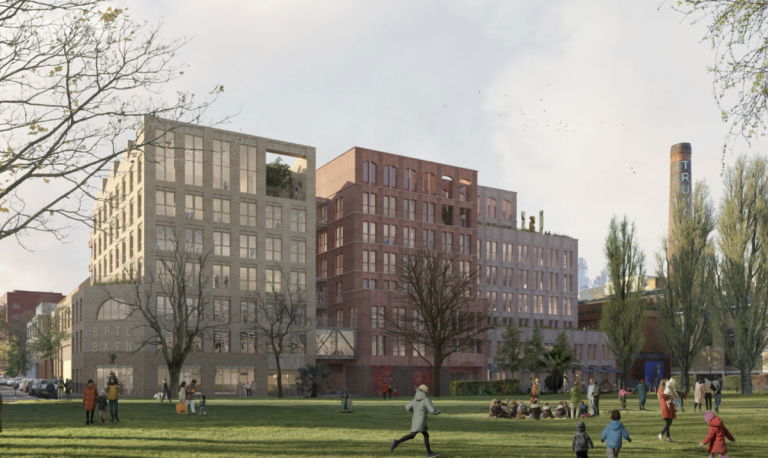
Plans have been unveiled to transform Swansea’s long-vacant Civic Centre into a vibrant mixed-use waterfront destination, delivering new homes, commercial space and a landmark visitor attraction while preserving one of Wales’ most distinctive examples of Brutalist architecture. Urban Splash has launched a public consultation on proposals to regenerate the prominent seafront site in partnership with Swansea Council. The ambitious redevelopment would see the former civic headquarters repurposed rather than demolished, creating a sustainable new neighbourhood that combines residential, leisure, retail and business uses. At the heart of the proposals are up to 140 new waterfront apartments, complemented by cafés, bars, flexible workspace and approximately 15 commercial units. The scheme would also deliver around 59,000 sq ft of retail and business accommodation alongside a striking 20,000 sq ft aquarium, designed to become a major visitor destination and further strengthen Swansea’s tourism economy. The project is backed by £20 million of UK Government funding and forms a key component of Swansea Council’s wider waterfront regeneration strategy, which aims to reconnect the city centre with Swansea Bay through carefully planned mixed-use development, improved public spaces and enhanced visitor attractions. For the construction and property sectors, the scheme demonstrates the growing importance of adaptive reuse and retrofit-led regeneration. Rather than replacing the existing building, Urban Splash intends to retain and refurbish the Civic Centre using a fabric-first approach that preserves much of the structure’s embodied carbon while extending the life of the building for future generations. Originally completed in 1982 as the headquarters of West Glamorgan County Council, the Civic Centre has remained largely vacant since council operations relocated, leaving one of Swansea’s most prominent waterfront buildings significantly underutilised. By retaining the existing structure, the redevelopment is expected to reduce demolition waste, minimise carbon emissions associated with new construction and make more efficient use of existing materials, aligning with the industry’s increasing focus on sustainable development and whole-life carbon reduction. The proposals also reflect the continued evolution of mixed-use regeneration, where residential accommodation is integrated with employment space, leisure facilities, hospitality and public amenities to create active, year-round communities that support long-term economic growth. A planning application is expected to be submitted later this year following the completion of the public consultation process. If approved, the redevelopment would transform a landmark but underused civic building into a thriving waterfront destination, creating new homes, attracting investment and reinforcing Swansea’s long-term regeneration ambitions while demonstrating how thoughtful refurbishment can unlock the potential of significant existing buildings without the need for wholesale demolition. Building, Design & Construction Magazine | The Choice of Industry Professionals
Read More »
£24bn Regeneration Partnership to Deliver Thousands of Homes and Commercial Spaces

£24bn Regeneration Partnership to Deliver Thousands of Homes and Commercial Spaces

A landmark £24 billion regeneration partnership between Lendlease and The Crown Estate is set to transform major urban locations across London and Birmingham, creating tens of thousands of new homes alongside world-class commercial, science and innovation space. The newly established Impact Partnership Joint Venture represents one of the UK’s largest long-term regeneration programmes and will initially focus on three flagship developments at Euston, Silvertown and Stratford Cross in London. Together, these schemes are expected to deliver around 9,000 new homes and more than 7 million sq ft of commercial, research and innovation space, supporting economic growth while helping address housing demand. For the construction sector, the announcement signals a significant pipeline of work spanning residential development, commercial construction, infrastructure, public realm, building services and sustainable placemaking over the coming decade. The construction programme is already moving forward. Work is scheduled to begin in September on 326 affordable homes at the 60-acre Silvertown regeneration scheme in East London, marking the first major delivery phase of the partnership. Meanwhile, plans continue to progress at Euston, where a planning application for the comprehensive redevelopment is expected to be submitted in spring 2027. The partnership has also confirmed that a second phase of expansion will see two further landmark regeneration projects join the joint venture later this summer. Birmingham Smithfield and Thamesmead Waterfront will increase the overall programme to approximately 27,500 new homes and almost 10 million sq ft of commercial floorspace, significantly extending the partnership’s development pipeline. Infrastructure works at Birmingham Smithfield are expected to commence later this year, with temporary market facilities due to open early next year before construction of the first residential buildings begins in 2027. The regeneration will transform one of Birmingham’s most strategically important city centre sites into a vibrant mixed-use destination combining homes, workplaces, retail, leisure and public spaces. The projects reflect the growing emphasis on large-scale mixed-use regeneration, where residential neighbourhoods are integrated with commercial, science and innovation districts to create sustainable, connected communities. Significant investment in transport infrastructure, public realm, green spaces and social infrastructure will also form an integral part of the long-term vision. By combining the development expertise of Lendlease with The Crown Estate’s long-term investment strategy, the Impact Partnership Joint Venture is expected to accelerate the delivery of complex regeneration projects while attracting further institutional investment into the UK’s property and construction sectors. As construction activity gathers pace across multiple sites, the partnership is set to generate extensive opportunities throughout the construction supply chain, supporting contractors, consultants, manufacturers and specialist trades while delivering new homes, commercial space and employment opportunities that will help shape the future of several of the UK’s most important urban regeneration locations. Building, Design & Construction Magazine | The Choice of Industry Professionals
Read More »
A £24bn Regeneration Partnership Set to Reshape the Future of UK Cities

A £24bn Regeneration Partnership Set to Reshape the Future of UK Cities

One of the UK’s largest regeneration partnerships has officially moved into delivery, with Lendlease and The Crown Estate completing their landmark £24bn joint venture to unlock thousands of new homes and millions of square feet of commercial development across London and Birmingham. The newly formed Impact Partnership Joint Venture establishes a long-term development platform focused on delivering some of the country’s most significant mixed-use regeneration schemes. Initially, the partnership will oversee the transformation of Euston, Silvertown and Stratford Cross, creating around 9,000 new homes alongside more than 7 million sq ft of commercial, science and innovation space. The announcement represents a major milestone for the construction and property sectors, providing a significant pipeline of work spanning residential development, commercial offices, life sciences, infrastructure, public realm and sustainable urban regeneration. Construction activity is set to begin almost immediately, with work scheduled to commence in September on the first phase of the 60-acre Silvertown regeneration in East London. This initial package will deliver 326 affordable homes, forming part of a wider mixed-use neighbourhood that will reconnect a long-underutilised section of the Royal Docks with the surrounding community. Elsewhere, plans for the highly anticipated redevelopment of Euston are continuing to progress, with a planning application expected to be submitted in spring 2027. The project is expected to transform one of London’s most strategically important transport hubs into a vibrant mixed-use destination combining homes, commercial space, public realm and enhanced transport connectivity. The partnership’s ambitions extend well beyond the initial three developments. Birmingham Smithfield and Thamesmead Waterfront are expected to join the venture later this year, expanding the overall programme to approximately 27,500 new homes and almost 10 million sq ft of commercial floorspace. Infrastructure works at Birmingham Smithfield are due to begin later this year, with temporary markets opening in early 2027 before construction of the first residential buildings commences. To support delivery, Lendlease and The Crown Estate have established a dedicated development management company responsible for coordinating the complex, multi-phase projects and ensuring consistent standards across the growing portfolio. Andrea Ruckstuhl, Managing Director of Development for UK and Italy at Lendlease, described the launch of the Impact Partnership Joint Venture as a major milestone that creates a long-term platform capable of unlocking some of the UK’s most important regeneration opportunities while delivering lasting value for investors and communities. Dan Labbad, Chief Executive of The Crown Estate, said the partnership would accelerate the delivery of complex regeneration projects while creating a scalable platform capable of bringing forward future housing and commercial developments across the country. For the construction industry, the creation of the Impact Partnership Joint Venture represents a substantial long-term pipeline of opportunities across civil engineering, infrastructure, residential construction, commercial development, sustainability, building services and public realm delivery. As work progresses over the coming decade, the programme is expected to play a significant role in supporting employment, investment and economic growth while delivering high-quality, sustainable places for future generations. Building, Design & Construction Magazine | The Choice of Industry Professionals
Read More »