Public Sector : Government Bodies News
SMD appointed to LCP general works framework

SMD appointed to LCP general works framework

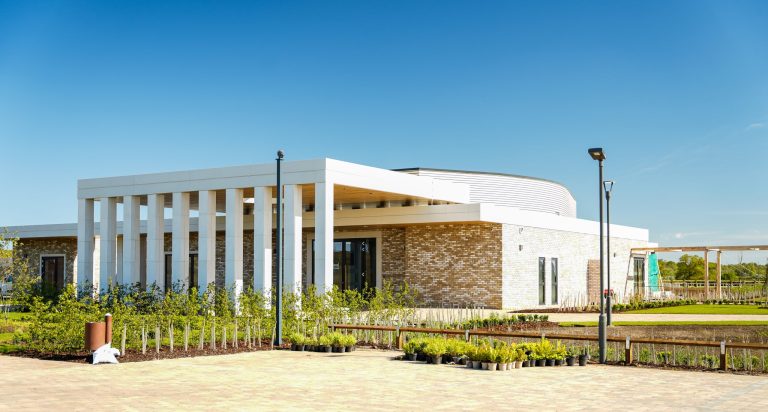
Cambridgeshire-based Spacemaker Developments (SMD) has been appointed to the London Construction Programme (LCP) General Works Framework. The £3bn framework which is procured by the London Borough of Haringey on behalf of LCP, puts SMD in the lineup for public sector projects throughout London and the Home Counties. SMD has been

Read More »
Progress on HS2’s Curzon Street station as new images are released

Progress on HS2’s Curzon Street station as new images are released

Engineers working for the HS2 project completed the last of more than 2,000 concrete piles that will underpin the foundations of Birmingham’s Curzon Street station this week, as new images were published showing how the public spaces around the building will look.  Stretching for more than 400m between Moor Street

Read More »
Barbican set for £231m retrofit as landmark arts centre overhaul wins consent

Barbican set for £231m retrofit as landmark arts centre overhaul wins consent

A £231m transformation of London’s Barbican Arts Centre has secured planning and listed building consent, paving the way for a comprehensive retrofit of one of the UK’s most recognisable post-war cultural landmarks. Approval from the City of London Corporation enables long-awaited works to address ageing building fabric, accessibility constraints and

Read More »
Developer Kier secures £120m Darlington government hub contract

Developer Kier secures £120m Darlington government hub contract

Construction developer Kier has secured a £120m contract from the Government Property Agency to deliver a major new government office building in Darlington. Work is set to begin this month on the new government hub on Brunswick Street, with construction expected to take around two years. The building is scheduled

Read More »
A year of recognition for Forestry and Land Scotland with award wins

A year of recognition for Forestry and Land Scotland with award wins

Forestry and Land Scotland (FLS) and its staff have been recognised with multiple awards in 2025 marking the organisation’s professionalism, forest management, technical expertise, innovation and training.   At the recent Scotland’s Finest Woods Awards 2025 – highlighting the best management of woods and forests across Scotland – FLS picked

Read More »

Kier secures another £250m to expand UK prison capacity

Kier has landed a further £250m of Ministry of Justice work to deliver an extra 480 places across two sites, reinforcing its role as one of the government’s preferred prison builders. Under the Small Secure Houseblocks Programme (SSHP) alliance, Kier will construct four new houseblocks at HMP Northumberland and four

Read More »
New chapter for Wakefield’s Crown Court as transformation gets under way

New chapter for Wakefield’s Crown Court as transformation gets under way

Works have begun to convert Wakefield’s Grade II-listed Crown Court into a new social and cultural venue, marking the latest step in the Civic Quarter’s renewal. Leeds-based Mulberry Construction Group has started on site for Harrogate developer Rushbond, working in partnership with Wakefield Council. Designed by Group Ginger and delivered

Read More »
Latest Issue
Issue 340 : May 2026

Public Sector : Government Bodies News

Fusion21 invites bids for £350 million Responsive Repairs and Void Property Framework

Fusion21 invites bids for £350 million Responsive Repairs and Void Property Framework

Procurement specialist Fusion21 has announced the renewal of its national Responsive Repairs and Void Property Framework, worth up to £350 million over four years, and is inviting bids from suppliers with regional or national reach operating across the UK. The framework is open to all suitably qualified suppliers, from SMEs to Tier 1 organisations, and has been designed to support social housing landlords in delivering quality responsive repairs and void property maintenance services. Shaped through a strategic consultation process, the framework incorporates feedback from members and suppliers to reflect current sector needs and demands, while ensuring compliance with relevant statutory requirements. Offering a faster route to market, it brings together repairs, maintenance, property security and contact centre services in one place. Fusion21 members will benefit from flexible call‑off options, either through competitive selection or direct selection, facilitating more efficient procurement. The framework is structured across five lots: Lot 1: Responsive Repairs and MaintenanceLot 2: Void Property ImprovementsLot 3: Void Property Security, Clearance and Pest ControlLot 4: Disrepair WorksLot 5: Contact Centre Services Set to launch in October 2026, this is the third iteration of Fusion21’s Responsive Repairs and Void Property Framework, procured under the Procurement Act 2023. Previous iterations have delivered 129 contracts to date, with a combined value in excess of £490 million, achieving efficiency savings for members. Peter Francis, Group Executive Director (Operations) at Fusion21, said: “Demand for responsive repairs and void property services has remained consistently strong, and this third iteration reflects the ongoing needs and priorities of the sector. The framework has been strategically shaped to enable members to achieve value for money and high service standards, while embedding social value into every project.” Fusion21 is a trusted and reliable procurement partner with a 24‑year track record of delivering Procurement with Purpose. The organisation works across the housing, local authority, education, blue light and NHS sectors, and is known for helping the public sector to secure better commercial outcomes while delivering measurable social value in communities. Tender applications are welcome from suppliers that meet the criteria set out in the tender documentation. To find out more and apply, click here and select ‘Current opportunities’. Submission deadline: Friday 19 June 2026 at 12 noon Building, Design & Construction Magazine | The Choice of Industry Professionals

Read More »
SMD appointed to LCP general works framework

SMD appointed to LCP general works framework

Cambridgeshire-based Spacemaker Developments (SMD) has been appointed to the London Construction Programme (LCP) General Works Framework. The £3bn framework which is procured by the London Borough of Haringey on behalf of LCP, puts SMD in the lineup for public sector projects throughout London and the Home Counties. SMD has been appointed for projects in three categories: New build construction projects up to £7.5m, new build projects valued between £6m-£15m and refurbishment and retro fit projects up to £7.5m. Moomith Ullah, operations director at SMD said: “We’re proud that SMD has secured a place on the LCP General Works Framework. The appointment reflects the strength of our team, our track record in delivering high-quality projects, and our continued commitment to supporting long-term infrastructure and built environment improvements. “We look forward to working alongside LCP and fellow framework partners to deliver safe, sustainable and value-driven projects across the programme. “Thank you to LCP for putting their trust in SMD and to everyone involved in making this happen.” Frameworks provide many benefits for both contractors and their clients, streamlining the procurement process, with contractors already being pre-approved for works.  Agreements such as this also promote transparency and good communication making the whole construction process easier. To be appointed to the framework SMD proved its technical capability, financial stability and compliance in quality, safety and legal standards and was able to demonstrate the ability to consistently deliver value to public sector clients over several years. SMD is already an approved supplier on several other frameworks including LHC’s (London and South -East Procurement) Modern Methods of Construction of New Homes Framework, the Procurement for Housing Residential Construction Framework and the Southeast Consortium Construction and Development Dynamic Purchasing System, all proving SMD’s status as a solution-focused, proactive, collaborative and secure construction partner. Building, Design & Construction Magazine | The Choice of Industry Professionals

Read More »
Progress on HS2’s Curzon Street station as new images are released

Progress on HS2’s Curzon Street station as new images are released

Engineers working for the HS2 project completed the last of more than 2,000 concrete piles that will underpin the foundations of Birmingham’s Curzon Street station this week, as new images were published showing how the public spaces around the building will look.  Stretching for more than 400m between Moor Street station and Millennium Point, Curzon Street will include seven platforms covered by an enormous arched roof inspired by the railway architecture of the Victorian age. Construction of the new station is now well underway, with engineers this week completing the last of 2,011 piles. These concrete columns – each between 6 and 24 metres deep – have been sunk into the ground to support the foundations of the building. HS2 Ltd’s Senior Project Manager, Alistair Morgan said: “Once complete, Curzon Street will be a new landmark for Birmingham – and provide a fitting city centre terminus for a railway that will improve journeys and free up space on the existing West Coast Main Line. These new images also show how it will be integrated into the rest of the city – with new green spaces, better accessibility and onward public transport links. “It’s great to see how much progress has been made on the foundation works and I’d like to thank everyone who’s been working so hard to get the job done. But we’ve still got a lot of work to do before the first passengers arrive, and I look forward to seeing more significant progress in the year ahead.” At the front of the station, passengers will pass through a paved ‘station square’ edged by gardens facing Moor Street Queensway. The new images released today show recent landscape design refinements that are being submitted to Birmingham City Council for approval. These include improvements to the management of rainwater drainage and improvements to the integration of cycling and walking routes connecting to the wider city. They also show the tree-lined promenade with landscaped terraces that will stretch along the side of the building. A second entrance at the other end of the station – giving access to Digbeth and the east side of the city – will include a tram stop and taxi drop-off points as well as improved cycle access. Next to the eastern entrance, a new square will face the disused Old Curzon Street station building which was built in 1838. A new terrace and gardens will be created to the rear of the old station to complement the setting of the historic building. The piling work, which began in Sept 2024, was delivered by HS2’s construction partner Mace Dragados joint venture (MDJV), working with Keltbray. As part of the project, the team installed an 8m high retaining wall at the western end of the site and excavated 47,000 cubic metres of material to create a level base for the station. Once the earthworks were complete, they brought in CFA piling rigs to install the reinforced concrete piles. MDJV’s Senior Project Manager, Rodger Storey, said: “Completing the foundation works for Curzon Street station marks a major milestone in the delivery of the project. The team is proud of the major achievement represented the extensive piling operation that forms the station’s foundations. “With this crucial phase now finished, we look forward to progressing the construction of the station building itself, which will create further jobs, apprenticeships, and supply chain opportunities as activity on site continues to ramp up.” Following a short pause to allow Network Rail to deliver some essential maintenance to the railway viaduct alongside the site, the final piles were installed during late February and early March 2026. With the piling now complete, the main focus has turned to preparing the way for the Digbeth extension to the West Midlands Metro – which will stop under the station on New Canal Street – and completion of the remaining foundation works. In total, more than 19,000 tonnes of reinforced steel and 69,000 cubic metres of concrete are needed for the sub-surface work, with 7,000 tonnes of reinforcement already installed and 29,000 cubic metres of concrete poured. Elsewhere on the site, progress is also being made on the temporary office block that will be the nerve centre for the next stage of construction. At the peak of the work, more than a thousand people are expected to be employed on the Curzon Street project, both directly and via Mace Dragados’s UK supply chain. Progress is also being made on the viaducts that will carry HS2 services into the city centre, with the massive Curzon 2 viaduct almost complete. This 40-metre-high structure – the tallest on the project – will be slid into place across the Cross City line in the summer. These structures are being built by another of HS2’s contractors, Balfour Beatty VINCI. In total, more than 33,000 jobs are supported by the construction of HS2, with the project recently celebrating the appointment of its 2,000th apprentice, a 19-year-old from Bordesley Green in Birmingham. However, there is still significant work to do across the whole 140 miles between London and Birmingham. Mark Wild, HS2 Ltd Chief Executive, is now leading a comprehensive reset of the project to ensure the remainder of the route is delivered as efficiently as possible and for the lowest reasonable cost. Building, Design & Construction Magazine | The Choice of Industry Professionals

Read More »
Barbican set for £231m retrofit as landmark arts centre overhaul wins consent

Barbican set for £231m retrofit as landmark arts centre overhaul wins consent

A £231m transformation of London’s Barbican Arts Centre has secured planning and listed building consent, paving the way for a comprehensive retrofit of one of the UK’s most recognisable post-war cultural landmarks. Approval from the City of London Corporation enables long-awaited works to address ageing building fabric, accessibility constraints and outdated infrastructure across the Grade II-listed Brutalist complex. The project has been designed by Allies and Morrison in collaboration with Asif Khan Studio and engineer Buro Happold. Crucially, the scheme is entirely retrofit-led. No additional floorspace will be created. Instead, the focus is on repairing, upgrading and optimising the existing structure, preserving the character of the 1980s arts centre while bringing it up to modern standards. A central element of the plans is the full refurbishment of the Barbican Conservatory. Long-standing maintenance issues will be resolved and a new climate-controlled environment introduced to safeguard plant life. A new lift and stair will open up the raised balconies for the first time, creating publicly accessible viewing areas and improving circulation. Accessibility improvements run throughout the wider building. A new lift in the Conservatory will provide step-free access to the fly tower for the first time, while a second lift in the main foyer will enhance routes to the Concert Hall and Theatre. The scheme also includes upgraded wayfinding, additional toilet facilities and a new multi-faith room. Externally, the lakeside terrace and foyers will undergo a careful, sustainability-led upgrade. Original materials, including glazing and paving within the Conservatory, will be retained and reused wherever possible to minimise embodied carbon and protect the integrity of the Brutalist design. The conservation-led approach has received backing from national heritage bodies, including Historic England and the Twentieth Century Society. The City of London Corporation has committed £191m towards Phase 1 of the programme, with further funding to be raised through philanthropy and partnerships. Major on-site works are scheduled to begin in 2027. Between June 2028 and 2029, most Barbican activity will pause to enable the most intensive phase of construction, although Cinemas on Beech Street will remain open and programming will continue with resident partners such as the London Symphony Orchestra and the Royal Shakespeare Company. Opened in 1982 by Queen Elizabeth II, the Barbican welcomes more than one million visitors each year. The approved scheme is intended to secure the building’s fabric, accessibility and cultural relevance for at least the next half century. Building, Design & Construction Magazine | The Choice of Industry Professionals

Read More »
New public underground access to Parliament forms part of the restoration and renewal plan

£3bn early works push aims to unlock historic Parliament restoration

MPs and Peers are being urged to approve a £3bn programme of early works designed to stem the rising cost of repairs at the Palace of Westminster and pave the way for the largest restoration project in its history. A new report from the Parliamentary Restoration and Renewal Client Board sets out a proposed seven-year phase one programme of enabling and preparatory works. The aim is to reduce reliance on costly reactive maintenance, stabilise ageing systems and buy time while Parliament reaches a final decision on how the main restoration should be delivered. Under the plan, preparatory work would begin immediately, narrowing the long-running debate to two remaining delivery options by 2030. The first option would see both the House of Commons and the House of Lords fully decant from the Palace, allowing the building to be stripped back and restored in a single, continuous programme. While politically challenging, this approach is considered the safest and most cost-effective, with an estimated duration of up to 24 years and a projected cost of close to £12bn. The alternative is an enhanced maintenance and improvement option, which would keep Parliament operating within the Palace while works are carried out in multiple phases. This approach would require MPs and Peers to move between temporary chambers, including relocating the House of Lords to the QEII Centre for up to 13 years. The phased approach would significantly extend the programme, potentially running for as long as 61 years, with costs rising towards £39bn. Category Full decant Enhanced maintenance and improvement (EMI+) Comparison Total cost £8.4–11.5bn £11.8–18.7bn EMI+ significantly more expensive overall Total duration 19–24 years 38–61 years EMI+ takes roughly double or more House of Commons chamber decant 8–10 years Up to 2 years in the Lords chamber Longer Commons relocation under full decant House of Lords chamber decant 12–15 years 8–13 years in the QEII Centre Decant periods broadly similar Parliamentary business Delivered with some reduced provision, may require changes to ways of working Delivered with some reduced provision which may require changes to ways of working Operational impact similar Health, safety and fire risk Lowest level of risk Highest level of risk of the options Full decant safer Security risk Lowest level of risk in the Palace Highest level of risk in the Palace Full decant offers strongest security The Client Board warns that further indecision will continue to cost taxpayers heavily. Each year of delay is estimated to add around £70m in wasted option development and reactive maintenance, with construction inflation adding hundreds of millions more to the eventual bill. If approved, procurement for a series of strategic partners covering programme management, technical consultancy and delivery would begin later this year, with appointments expected in 2027. These partners would be tasked with delivering the early works and developing detailed designs, costs and programmes for both delivery options ahead of a final decision by both Houses later in the decade. Phase one would include a number of major enabling projects, such as the construction of a temporary Thames jetty and cofferdam to move materials by river, underground works to release space for new services, early masonry repairs and restoration of key courtyards. The programme would also see temporary power, water and utility systems installed, allowing life-expired infrastructure to be safely taken offline in future phases. Significant remodelling works at the QEII Centre are also planned to support decant arrangements and improve operational resilience during the restoration programme. Building, Design & Construction Magazine | The Choice of Industry Professionals

Read More »
Developer Kier secures £120m Darlington government hub contract

Developer Kier secures £120m Darlington government hub contract

Construction developer Kier has secured a £120m contract from the Government Property Agency to deliver a major new government office building in Darlington. Work is set to begin this month on the new government hub on Brunswick Street, with construction expected to take around two years. The building is scheduled for completion in early 2028. Once finished, the development will become the new home of the Darlington Economic Campus, accommodating more than 1,600 civil servants from departments including HM Treasury, the Office for National Statistics and the Department for Culture, Media & Sport. Early ground remediation works began in September to address pre-construction risks on the town centre site. These works included the removal of legacy fuel tanks and existing concrete slabs, helping to reduce programme risk ahead of main construction. A central element of the scheme is Kier’s use of prefabrication. Key components, including building risers, will be manufactured offsite to minimise disruption and manage logistics in the busy urban location. The building façade will also be formed from pre-cast concrete panels produced offsite. Sean Fenner, managing director of Kier Construction North & Scotland at Kier, said early involvement had enabled closer collaboration with the supply chain and early identification of technical challenges. He added that the advance remediation works had improved understanding of site conditions, helping to de-risk delivery and support a smoother construction process. Fenner said teams across design, mechanical and electrical, and construction had been brought together to deliver the best possible outcome for the project. Simon Hulme, capital projects director at the Government Property Agency, said the development was a key part of the government hubs programme, aimed at creating high-quality workplaces while reducing and modernising the public sector office estate. He said the agency was pleased to continue its partnership with Kier and that, once complete, the Brunswick Street hub would provide a modern, inclusive and digitally enabled workplace that builds on the success of the Darlington Economic Campus and supports greater collaboration across the civil service. Building, Design & Construction Magazine | The Choice of Industry Professionals

Read More »
A year of recognition for Forestry and Land Scotland with award wins

A year of recognition for Forestry and Land Scotland with award wins

Forestry and Land Scotland (FLS) and its staff have been recognised with multiple awards in 2025 marking the organisation’s professionalism, forest management, technical expertise, innovation and training.   At the recent Scotland’s Finest Woods Awards 2025 – highlighting the best management of woods and forests across Scotland – FLS picked up several awards. The organisation was announced as the winner of the award for a Single Stand, Compartment or Small Wood and the Hunter Blair Trophy for Silvicultural Excellence for its Braeval Forest at Aberfoyle. The work at the forest was carried out by the Direct Production Harvesting Team in Aberfoyle and was a continues cover thinning site which focuses on maintaining canopy cover while creating small gaps to promote natural regeneration. This method enhances timber quality, supports wildlife habitats, and improves structural diversity, contributing to recreational appeal and public use. FLS also shared the Woodland Trust Scotland Trophy for New Native Woods with partner agency Transport Scotland for Rest and Be Thankful in Argyll. More than 400000 native trees with a range of species have been planted to maximise slope stability. This will complement the hard engineering and bring other benefits such as improved water quality and biodiversity. The work of FLS Community Rangers was celebrated as part of a win for West Johnstone Early Learning and Childcare Centre’s outdoor education programme also at Scotland Finest Woods Awards 2025. The FLS team worked with the group to help demonstrate the importance of urban woodlands to local communities. Earlier this year, FLS apprentices triumphed at the Lantra Scotland Awards for Land Based and Aquaculture skills. All four FLS apprentices that were in contention for awards – held during Scottish Apprenticeship Week – were recognised as either winners or runners-up in a variety of categories. Other highlights included several awards for Newton Nursery’s groundbreaking redevelopment. These included UK Project of the Year at the Commissioning Specialists Association (CSA) Gala Awards. The award recognised the transformation of the nursery into the largest and most advanced tree-growing glasshouse in the UK. It also championed the exceptional technical achievement and sustainability credentials required to develop such a major contribution to Scotland’s forestry industry, rural communities and climate ambitions. The nursery redevelopment also won the Project and Programme Management Award at the 2025 Scottish Public Services Awards. FLS’ renewables and regional land management teams played a significant role in North Kyle Wind Farm’s recent success at the Scottish Green Energy Awards 2025. The Sustainable Development Award honoured the collaborative work between land managers and the developer to deliver environmental, social and economic benefits through repurposing a former coalfield area into a thriving landscape for clean energy generation, community benefit, and sustainable growth. FLS Director of Land Management and Regions Graeme Prest said: “The range of awards received by FLS is an acknowledgement of the skills, expertise, dedication and commitment of FLS staff and the qualities they bring to the organisation. “From producing high-value sustainable timber, harnessing the benefits of trees and other habitats to mitigate against climate change and biodiversity loss, being at the forefront of innovation and facilitating renewable energy to training the next generation of foresters, FLS and its staff are leaders in professional and industry standards.” Building, Design & Construction Magazine | The Choice of Industry Professionals

Read More »

Kier secures another £250m to expand UK prison capacity

Kier has landed a further £250m of Ministry of Justice work to deliver an extra 480 places across two sites, reinforcing its role as one of the government’s preferred prison builders. Under the Small Secure Houseblocks Programme (SSHP) alliance, Kier will construct four new houseblocks at HMP Northumberland and four at HMP Lancaster Farms, alongside site-wide infrastructure upgrades and improvements to ancillary facilities. Completion is targeted for early 2027. The awards take Kier’s recent justice-sector tally to 30 houseblocks delivered or in delivery for the MoJ and the Scottish Prison Service. The contractor has already completed major programmes at HMP Five Wells and HMP Millsike, and continues to expand HMP Elmley, HMP Bullingdon and HMP Channings Wood. The latter is a £200m expansion under the Accelerated Houseblocks Delivery Programme (AHDP), lifting capacity by around 40%, with the first phase – including new staff facilities – recently handed over. The programme forms part of the government’s drive to create 14,000 additional prison places by 2031. Current delivery models emphasise repeatable design, modern methods of construction and lifecycle value to speed programme and reduce cost in use. Rebecca Boundy, Kier Construction’s managing director (justice), said: “We’re proud to be a trusted delivery partner for the government, supporting transformative expansion across the UK prison estate. We are working in alliance with our partners to focus on repeatability and continuous improvement to drive better performance in delivery and lifecycle costs. Our specialist teams are delivering high-quality, state-of-the-art prison accommodation and facilities that are fit for the future.” Fiona Parker, deputy director for the small secure houseblocks programme at His Majesty’s Prison & Probation Service, added: “The expansions at HMP Lancaster Farms and HMP Northumberland mark a critical step forward in delivering secure, modern, and rehabilitative prison facilities that maintain public protection as part of our wider commitment to increase prison capacity. The new houseblocks and supporting facilities will help ensure prisoners have the opportunity to develop skills.” For the construction supply chain, the next phase will centre on standardised houseblock packages, coordinated MEP systems, low-energy design and robust materials, with site logistics and security interfaces critical to working within live prison environments. Building, Design & Construction Magazine | The Choice of Industry Professionals

Read More »
Henry Brothers starts work on £9 million police station refurbishment

Henry Brothers starts work on £9 million police station refurbishment

Northern Ireland based contractor Henry Brothers has started work on a major refurbishment scheme at Wolverhampton Central Police Station. The renovation on the Bilston Street site will take 16 months to complete. The station will remain open to the public throughout. Once the work is complete, the site will have better victim facilities, provide officers with a modern workplace and safeguard the long-term future of the city centre building. Managing Director of Henry Brothers Construction, Ian Taylor, said: “We are very pleased to be starting work on this scheme to refurbish Wolverhampton Central police station, as we take great pride in working alongside our bluelight clients. The creation of a more modern police station will provide improved facilities for West Midlands Police and allow officers to better service the local community.” Henry Brothers will employ a number of local people including apprentices on the refurbishment scheme, ploughing money back into the local economy. Speaking about the refurbishment, West Midlands Police Chief Constable Craig Guildford, said: “These essential works represent a major investment in policing in Wolverhampton and this iconic building.  “Every penny will be spent wisely, with local businesses and local people benefitting from this injection of cash into the local economy.  “Policing has changed considerably since the station opened 33 years ago, especially our focus on victims – which is more important now than ever. The work which is underway includes improvements to victim care facilities as well as staff areas.” The building – which has not been updated since it was opened by Princess Diana on 31 July 1992 – requires substantial essential work including replacing windows, installing a new heating/cooling system, repairing leaks and damp, creating new victim care rooms, insulating the building, installing solar panels and LED lighting to reduce energy and more. Safety and security systems will be upgraded while an employee café will be built on site and managed by a local non-profit organisation. The aim is for the charity to provide training and work for people who have historically been excluded from the local job market, including people who have experienced homelessness, disabled people and people with no formal qualifications. It’s a model which has been successfully implemented in other areas of West Midlands Police and proven popular with officers. Chief Superintendent Anthony Tagg, responsible for policing across the whole of Wolverhampton, said: “I’ve been really clear that operational policing must not be affected while the refurbishment takes place. Our brilliant officers and staff will be going out of their way to make that happen. “To minimise disruption, some teams have been temporarily moved to Wednesfield and Bilston police bases, where they continue to serve the city’s communities while the remainder continue to work from Wolverhampton Central.” Cash for the £9 million critical works has come from making better use of West Midlands Police’s estate, reducing energy consumption and other cost savings that have made the service more efficient and more effective, such as the introduction of robotics to automate administrative processes and artificial intelligence to answer all non-emergency calls. Money for the works can only be spent on buildings and equipment, and not officers. Police and Crime Commissioner Simon Foster said: “I am pleased that we have secured the long-term future of Wolverhampton police station through this vital investment. This is a clear indication of my commitment to neighbourhood policing, to ensure officers and staff have the facilities they need, to provide the public with an effective and efficient police service. “By modernising the police station, we are not only improving working conditions for our hard-working police officers and staff but also enhancing the service we provide to victims of crime and the wider community. “This investment is part of my wider strategy, to ensure that West Midlands Police is fit for policing in the 21st century, with an accessible, reassuring and visible police presence, based in the communities it serves – preventing and tackling crime and keeping people, families, businesses and local communities safe and secure.” Henry Brothers Construction is part of The Henry Group, which comprises a number of manufacturing and construction sector companies, ranging from external construction through to interiors fit out. In partnership with its valued clients, it has a proven track record in education, defence, commercial, industrial, transport and healthcare sectors. For more information, visit henrybrothers.co.uk/ Building, Design & Construction Magazine | The Choice of Industry Professionals

Read More »
New chapter for Wakefield’s Crown Court as transformation gets under way

New chapter for Wakefield’s Crown Court as transformation gets under way

Works have begun to convert Wakefield’s Grade II-listed Crown Court into a new social and cultural venue, marking the latest step in the Civic Quarter’s renewal. Leeds-based Mulberry Construction Group has started on site for Harrogate developer Rushbond, working in partnership with Wakefield Council. Designed by Group Ginger and delivered by Mulberry, the 25,000 sq ft scheme will reposition the former courthouse as a commercial and cultural destination alongside Rushbond’s nearby residential regeneration, now nearing phase one completion. Built in 1810 and extended in the 19th century, the building has stood vacant since the early 1990s. The plans include a new city-facing entrance and landscaped public terrace; an events space within the former courtroom; a restaurant/food hall with indoor and terrace seating and a café shop; plus co-working and studio spaces. Completion is scheduled for summer 2026. The project forms part of a wider strategy to revitalise Wood Street and the wider Civic Quarter, complementing new homes and the restoration of neighbouring heritage sites, including the former police station, Gills Yard and Gills Mews. The aim is to reinforce Wakefield’s appeal for business, investment and cultural activity. Rushbond founder and chairman Jonathan Maud said the Crown Court is “one of [Wakefield’s] most treasured sites”, adding that the vision is to restore it as a focal point for the city with creative workspace, leisure and event facilities and public art. Cllr Jack Hemingway, cabinet member for regeneration and economic growth, said the restoration would act as a catalyst for growth and help create a vibrant new community in the city centre. Building, Design & Construction Magazine | The Choice of Industry Professionals
Read More »