Products & Materials : Building Hardware News
Robertson Timber Engineering achieves Verified by Cast status

Robertson Timber Engineering achieves Verified by Cast status

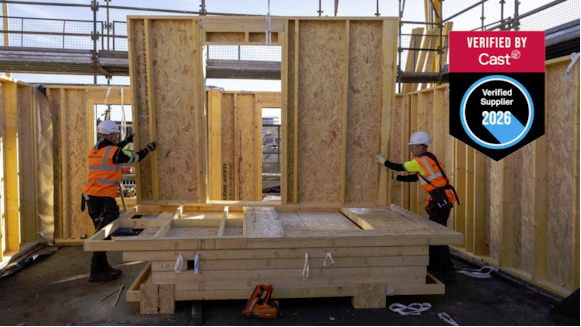
Robertson Timber Engineering (RTE) has achieved Verified by Cast status, providing independent recognition of the company’s capability, performance and delivery credentials within the modern methods of construction (MMC) sector. Verified by Cast is an independent assessment for organisations operating within the MMC market. Conducted by specialist consultancy Cast, the process

Read More »
Expert shares 5 practical ways to improve sustainability in the timber industry

Expert shares 5 practical ways to improve sustainability in the timber industry

Sustainability continues to become a greater priority across the construction and manufacturing sectors, with the timber industry improving their working models with this goal. While responsibly sourced materials are important, adopting more sustainable working practices throughout the production process is equally as vital. The UK is the third largest importer

Read More »
JELD-WEN marks 25 years of Secured by Design membership

JELD-WEN marks 25 years of Secured by Design membership

Secured by Design has recognised timber door manufacturer JELD-WEN for reaching 25 years of membership with the official police security initiative, marking a long-standing commitment to safety, security and product excellence. JELD-WEN has consistently met the performance demands needed to demonstrate its doors meet the rigorous standards required to be

Read More »
Midlands construction firm chooses CaberDek and SterlingOSB Zero for reliable, fast, and high-quality flooring installations

Midlands construction firm chooses CaberDek and SterlingOSB Zero for reliable, fast, and high-quality flooring installations

Leicestershire-based construction business, WP Developments Leicestershire Limited, now in its tenth year of trading, continues to specify West Fraser‘s CaberDek and SterlingOSB Zero as its preferred flooring solutions across new build residential projects. The firm recently completed the flooring works for 20 new-build homes on a David Wilson Homes development in Wigston,

Read More »

Thermally Modified Wood: A High-Performance Natural Material for Contemporary Architecture

As the dialogue around sustainable architecture deepens, a quiet material revolution is underway. Thermally modified wood—celebrated for its dimensional stability, rich tonal qualities, and low environmental impact—is fast becoming a staple in the palette of architects seeking both performance and aesthetic appeal.  Thermally modified wood isn’t new—but its role in

Read More »
Latest Issue
Issue 345 : Oct 2026

Products & Materials : Building Hardware News

Robertson Timber Engineering achieves Verified by Cast status

Robertson Timber Engineering achieves Verified by Cast status

Robertson Timber Engineering (RTE) has achieved Verified by Cast status, providing independent recognition of the company’s capability, performance and delivery credentials within the modern methods of construction (MMC) sector. Verified by Cast is an independent assessment for organisations operating within the MMC market. Conducted by specialist consultancy Cast, the process reviews evidence across three core areas: company performance, product and system accreditation, and customer satisfaction, providing confidence that organisations have demonstrated industry leading capability and credentials. The verification reflects the established track record of RTE, the recognised quality and safety standards of the company, and its commitment to delivering high levels of customer service throughout the construction process. For more than 30 years, RTE has designed, manufactured and erected precision-engineered timber frame structures across the UK. Operating from its manufacturing facility in Elgin, the company combines specialist expertise with advanced digital design and manufacturing technologies to deliver timber frame and mass timber solutions for residential and commercial developments nationwide. The verification process assessed evidence relating to organisational performance, product and system accreditation, and customer satisfaction. RTE demonstrated established management systems, quality assurance processes and a strong track record of project delivery, supported by recognised industry certifications and accreditations including ISO 9001, ISO 14001 and ISO 45001, BOPAS accreditation, Constructionline Gold membership, CATG. CHAS Elite accreditation and robust supply chain assurance processes. The off-site manufacturing approach of RTE helps customers improve cost certainty, reduce waste and increase programme efficiency, while supporting more sustainable construction methods and helping to address skills shortages across the industry. Alongside timber frame solutions, RTE provides mass timber products including CLT (cross-laminated timber) and Glulam (glued laminated timber), supporting growing demand for lower-carbon construction solutions. Timber frame construction can save around five tonnes of CO₂ per home compared with traditional masonry construction. Mike Turner, Managing Director, Robertson Timber Engineering, said: “Achieving Verified by Cast status provides independent recognition of the expertise, capability and standards that underpin our work. “The assessment reflects the strength of our people, the quality of our manufacturing and delivery processes, and our commitment to supporting customers throughout the project lifecycle. “It reinforces for customers, partners and specifiers our ability to deliver high-quality timber engineering solutions, while demonstrating the evidence, experience and credentials behind our approach to modern methods of construction.” Building, Design & Construction Magazine | The Choice of Industry Professionals

Read More »
West Fraser quantifies the climate benefits of choosing timber in building design

West Fraser quantifies the climate benefits of choosing timber in building design

West Fraser’s 2025 Sustainability Report is bringing new clarity to the role timber can play in reducing the climate impact of buildings, revealing that the use of wood products helped avoid an estimated 19.8 million tonnes of CO₂ equivalent emissions in 2025. The figure comes from the company’s latest analysis of “displacement”, the measurable emissions avoided when timber is used instead of more carbon-intensive materials such as steel and concrete. This growing body of evidence arrives at a crucial moment for the construction sector, where attention is increasingly shifting beyond operational energy use to the full lifecycle impact of buildings. Scope 3 emissions, which include those generated across the supply chain, from material production through to end-of-life, often account for a significant share of a building’s total carbon footprint. By quantifying the emissions avoided through material substitution, West Fraser is helping to illustrate how early design decisions can shape these outcomes. The 19.8 million tonnes of CO₂e figure highlights the scale of opportunity. Rather than focusing solely on reducing emissions within manufacturing processes, the report points to the broader system-level benefit of choosing lower-carbon materials in the first place. Timber, as a renewable material that requires less energy to produce than traditional construction materials, offers a practical pathway to reduce embodied carbon while maintaining performance and structural integrity. For architects, engineers and other specifiers, the findings provide a stronger, evidence-based foundation for selecting timber as part of a low-carbon design strategy. As whole-life carbon assessments become more widely adopted across the built environment, the ability to demonstrate reduced Scope 3 emissions is becoming increasingly important, not only for meeting regulatory requirements, but also for satisfying client expectations and aligning with net-zero commitments. The report also reinforces a shift in thinking across the industry, that decarbonisation will depend as much on smarter material choices as on technological innovation. By capturing and communicating the impact of displacement, West Fraser’s analysis moves the conversation forward, helping stakeholders better understand how the materials specified today will influence emissions over decades to come. As pressure mounts on the construction sector to deliver meaningful carbon reductions, timber is emerging as a credible and scalable solution. West Fraser’s latest findings contribute to a growing consensus that, when sourced responsibly and used effectively, wood products can play a critical role in reducing the climate impact of buildings, particularly in addressing the often overlooked Scope 3 emissions that define their full environmental footprint. For further information, call 01786 812 921 or visit Uk.westfraser.com Building, Design & Construction Magazine | The Choice of Industry Professionals

Read More »
West Fraser and Kirkwood Timber Frame strengthen partnership to support UK offsite construction growth

West Fraser and Kirkwood Timber Frame strengthen partnership to support UK offsite construction growth

A strong and reliable supply chain is essential to the continued growth of offsite construction in the UK, and the collaboration between West Fraser and Kirkwood Timber Frame Ltd is a clear example of how aligned partnerships are helping to deliver high-quality timber buildings at scale. Founded in August 2021, Kirkwood Timber Frame has quickly established itself as a dynamic manufacturer of open and closed panel timber frame systems, supplying projects across Scotland, the Highlands and Islands, and Northern England, with reach extending across the wider UK. Today, the business produces around 1,000 plots per year, serving a diverse client base including self-builders, SME developers, housing associations, and national housebuilders. Since partnering with West Fraser in 2023, Kirkwood has standardised on the manufacturer’s panel products, embedding them across its offsite production process. According to Managing Director, Malcolm Thomson, this has been key to maintaining quality and consistency at scale. “West Fraser supplies all our OSB and chipboard flooring. Their products run right through everything we produce – it’s fundamental to our system,” he said. SterlingOSB Zero plays a central structural role within Kirkwood’s systems, used in wall panels, roof applications, floor and roof cassettes. Its consistent performance and reliability support the precision manufacturing environment required for timber frame construction. Alongside this, CaberDek is also used across floor cassette systems, offering a robust, moisture-resistant decking solution with a built-in protective layer, reducing on-site labour, and protecting floors during installation. The products are delivered directly into Kirkwood’s manufacturing facility, where they are incorporated into factory-built kits before being transported to developments across Scotland and Northern England. These systems are used in a wide range of applications, including residential housing, care homes, sports pavilions and community buildings. Included among the company’s recent work, Kirkwood also contributed to the DIY SOS project in Manchester, helping to expand the Joshua Tree Family Centre in Cheshire, doubling the size of the facility to better support families affected by childhood cancer. Kirkwood’s supply relationship with West Fraser is managed through both direct engagement, working with Nigel Morris, and through merchant partners including Jewson and Huws Gray, ensuring a consistent and flexible procurement route. The collaboration was further showcased during the Timber Learning Journey, an industry initiative supported by the Structural Timber Association (STA). Designed to provide a holistic understanding of the timber supply chain, the programme brings together industry professionals to explore each stage of the process – from responsibly sourced raw materials through to manufacturing and installation. As part of the tour, participants visited both West Fraser and Kirkwood Timber Frame, gaining first-hand insight into how engineered wood panels are produced and then transformed into complete timber frame systems. “It really shows how everything connects,” Thomson added. “You see the materials being made, and then how they become finished structures ready for site. With the number of kits we’re producing, everything has to work together,” said Thomson. “West Fraser products allow us to deliver consistently, project after project.” For further information, call 01786 812 921 or visit Uk.westfraser.com Building, Design & Construction Magazine | The Choice of Industry Professionals

Read More »
Expert shares 5 practical ways to improve sustainability in the timber industry

Expert shares 5 practical ways to improve sustainability in the timber industry

Sustainability continues to become a greater priority across the construction and manufacturing sectors, with the timber industry improving their working models with this goal. While responsibly sourced materials are important, adopting more sustainable working practices throughout the production process is equally as vital. The UK is the third largest importer of wood and timber products across the world* and we are slowly moving to a better approach to create sustainable timber. Below, Emily Green, garden maintenance expert at Howarth Timber, shares 5 ways timber suppliers can become more sustainable in 2026. Creating a clear waste strategy can help timber companies better understand exactly how much waste is being produced and where it is coming from. By monitoring waste more efficiently, timber businesses can identify areas for future improvement, reduce unnecessary material loss and set better measurable targets.  Introducing an energy management system allows timber businesses to track utility usage more accurately across operations and sites. This data can then be used to establish intensity metrics, improve efficiency and set realistic long-term sustainability targets for reducing energy consumption and emissions.  Sourcing materials and services locally can help reduce transport emissions while supporting regional businesses. Shorter supply chains can also lead to faster delivery times, improved transparency and a lower overall environmental impact.  Making operational changes such as introducing EV vehicles, upgrading to LED lighting and investing in solar panels can help businesses significantly reduce their carbon footprint. These improvements can also lower long-term energy costs while supporting wider environmental commitments.  Instead of discarding leftover materials and sending them to landfill, timber companies can repurpose offcuts for secondary products, packaging or supply them to other businesses that can reuse the materials. Finding ways to extend the lifecycle of timber wherever possible helps reduce waste and supports a more circular approach to production.  Final thoughts: “Creating a more sustainable future within the timber industry requires businesses to look beyond responsible sourcing and also focus on reducing waste and making better use of resources throughout the production process. From implementing waste and energy management systems to upcycling materials, even small operational changes can make a meaningful difference. “By adopting more sustainable working practices, timber companies can not only reduce their environmental impact, but also build a more resilient and efficient industry for the future. As sustainability expectations continue to grow across construction and manufacturing, businesses that prioritise practical, long-term improvements will be best placed to meet changing industry demands.” Building, Design & Construction Magazine | The Choice of Industry Professionals

Read More »
JELD-WEN marks 25 years of Secured by Design membership

JELD-WEN marks 25 years of Secured by Design membership

Secured by Design has recognised timber door manufacturer JELD-WEN for reaching 25 years of membership with the official police security initiative, marking a long-standing commitment to safety, security and product excellence. JELD-WEN has consistently met the performance demands needed to demonstrate its doors meet the rigorous standards required to be accredited by Secured by Design (SBD) – the only way for companies to obtain police recognition for security. Doors accredited by SBD demonstrate an enhanced level of resistance against opportunistic break-ins to provide peace of mind.  Certification requires PAS24 testing by an independent third-party from a United Kingdom Accreditation Service (UKAS) authority, which ensures measured conformity. This includes rigorous assessments measuring resistance against impact, hardware attack, manipulation, along with testing for endurance. Established more than 60 years ago, JELD-WEN is one of the UK’s largest manufacturers of high-quality internal doorsets, supplying both new build and retrofit projects across a wide range of sectors. With decades of experience and a reputation for craftsmanship, the company manufactures its doorsets in the UK, including specialist fire doorsets, ensuring that security remains central to each stage of development.  JELD-WEN has invested millions of pounds in the development and testing of its doorsets in the UK, reinforcing its commitment to dependable performance. This long-term dedication to reliable, independently verified product performance underpins JELD-WEN’s enduring relationship with Secured by Design. Lisa Ward, Product and Marketing Director for JELD-WEN UK, said: “Ensuring the highest standards of security are built into our doorsets is an absolute priority for JELD-WEN. With rigorous research and development processes backed up by third-party testing, we take every step to ensure optimal standards – and ensure that this has been independently verified. “Doors and the need for security are inseparable, and in aligning with Secured by Design for more than two decades we have demonstrated our commitment to keeping this at the forefront of our product offering.  “We recognise the work SBD does in establishing and reinforcing standards in security for both residential and business properties and are proud to have been a member for the past 25 years.” Alfie Hosker, Secured by Design, commented: “Reaching 25 years with Secured by Design is a significant achievement and reflects JELD-WEN’s sustained commitment to delivering safe, secure and independently tested products. Their continued investment in quality and certification sets a strong example across the industry and we are delighted to recognise this milestone.” Part of the global JELD-WEN group which operates in 19 countries, JELD-WEN UK benefits from extensive industry expertise and operates at scale to meet complex specification requirements, supporting projects in commercial, residential, healthcare, education and hospitality settings, with solutions tailored to individual site and compliance needs. You can find out more about JELD-WEN and their Secured by Design accredited products on their dedicated member page.  Building, Design & Construction Magazine | The Choice of Industry Professionals

Read More »
Midlands construction firm chooses CaberDek and SterlingOSB Zero for reliable, fast, and high-quality flooring installations

Midlands construction firm chooses CaberDek and SterlingOSB Zero for reliable, fast, and high-quality flooring installations

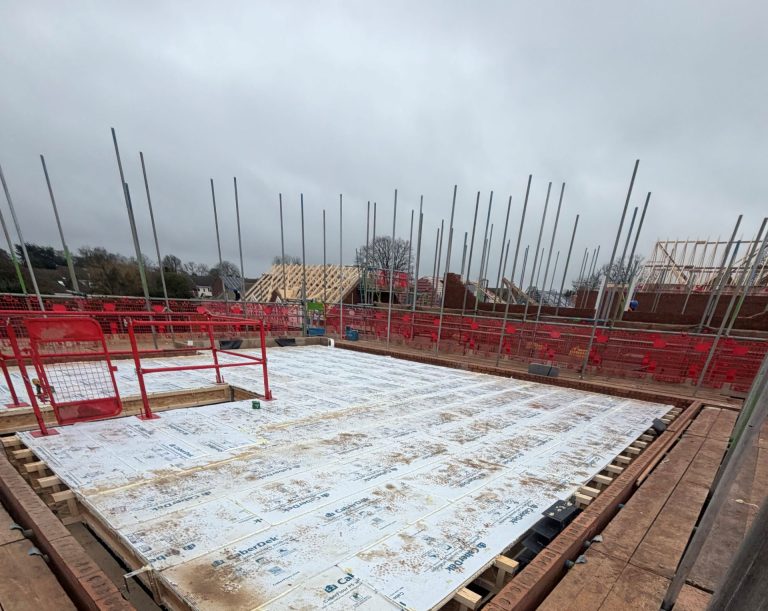
Leicestershire-based construction business, WP Developments Leicestershire Limited, now in its tenth year of trading, continues to specify West Fraser‘s CaberDek and SterlingOSB Zero as its preferred flooring solutions across new build residential projects. The firm recently completed the flooring works for 20 new-build homes on a David Wilson Homes development in Wigston, North Leicestershire. CaberDek and SterlingOSB Zero were used to deck out all joists across the plots, forming the structural base for finished floors and providing a robust working surface for follow-on trades. “Consistency and reliability are key for us, especially on larger multi plot projects,” William Woolhouse explained. “CaberDek and SterlingOSB Zero give us confidence that the finished floor will stand up to site conditions and deliver the performance expected by major housebuilders.  The product quality is consistent, performance on site reliable and we have complete confidence in the finished floor which is obviously crucial. For us, it’s important that sheet materials feel solid underfoot and behave predictably from one board to the next. CaberDek and SterlingOSB Zero deliver exactly that.” In general, there is a host of reasons the company specifies the West Fraser collection. Speed of installation allows the teams to progress quickly and efficiently while the finish is dependable and durable even before the final floor coverings are installed. This combination of speed and predictability helps maintain programme momentum on multi plot developments where efficiency is critical. “They’re easy to handle, cut and fix,” William added. “Because they work so well with our standard workflow, there’s no disruption or need to adapt how we operate.” All West Fraser panel products produced in the UK are net carbon negative and manufactured in mills that have obtained the coveted environmental ISO 14001 accreditation.  Responsibly sourced, the panels are FSC certified and created from locally grown timber, cutting the embodied carbon associated with transportation. For further information, call 01786 812 921 or visit Uk.westfraser.com Building, Design & Construction Magazine | The Choice of Industry Professionals

Read More »
ASSA ABLOY Door Group expands Design 4 Doors platform with SR2 Security and Thermal Door options

ASSA ABLOY Door Group expands Design 4 Doors platform with SR2 Security and Thermal Door options

ASSA ABLOY Door Group has expanded its popular Design 4 Doors platform with the addition of SR2 security doors and high-performance thermal doors, giving trade customers more flexibility, performance assurance and compliance support when selecting steel door sets for commercial and industrial projects. Design 4 Doors is ASSA ABLOY’s innovative approach to simplifying the door specification process, automatically providing the customer with a price and drawing for the configured solution. The software offers clearly defined categories – Fire, Security, Thermal, Personnel and Acoustic – to help trade professionals quickly identify the right product for their application. Now, the platform includes SR2-rated security doors, tested and certified to LPS 1175: Issue 8 standards, offering robust protection against forced entry while maintaining the aesthetic flexibility and manufacturing quality ASSA ABLOY Door Group is known for. The SR2 doors are ideal for critical infrastructure, data centres, defence, utilities, and sensitive commercial applications where enhanced security is a requirement. Alongside this, the introduction of advanced Thermal Doors, which achieve low U-values for optimal energy efficiency, supports customers seeking to meet Part L building regulations and improve sustainability credentials. These doors combine thermal insulation performance with durability and weather resistance, making them well-suited for external installations across a range of sectors. Kevin Campbell, Sales Director at ASSA ABLOY Door Group, said: “We developed the Design 4 Doors concept to make life easier for our trade customers. By organising our steel door offering into clear categories, specifiers and contractors can quickly match doors to project requirements with confidence. “The addition of SR2 and Thermal options strengthens the platform even further, helping customers meet rising expectations around safety, security, and sustainability, all backed by ASSA ABLOY’s rigorous testing and compliance support.” All doors in the Design 4 Doors platform are manufactured in the UK to exacting standards and are available with a wide range of hardware, vision panels, louvres, and finishes to suit the specific needs of each project. To learn more about Design 4 Doors, visit: https://www.assaabloy.com/uk/en/services/project-management-design-and-construction/design4doors To learn more about Door Group and the range of products and services it provides, go to https://www.assaabloy.com/uk/en. Building, Design & Construction Magazine | The Choice of Industry Professionals

Read More »
Selco's natural gas trucks sponsored by West Fraser in joint eco-initiative

Selco’s natural gas trucks sponsored by West Fraser in joint eco-initiative

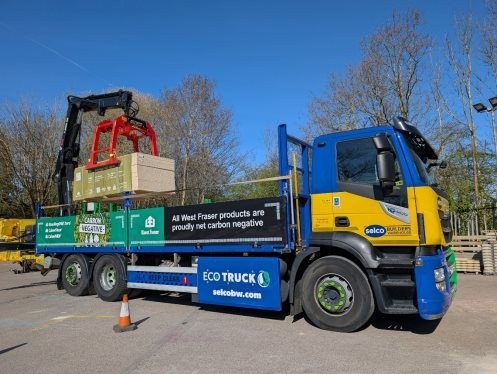
West Fraser is promoting its carbon negative message via eight sponsored natural gas powered ‘eco trucks’, operating from Selco’s Minworth Delivery Hub which covers Birmingham and surrounding areas. Compressed Natural Gas (CNG) vehicles emit up to 25% less carbon dioxide (CO2) and release fewer harmful pollutants into the air than traditionally powered vehicles; the collaboration highlights the connection between Selco’s sustainability goals and West Fraser’s Carbon Negative panels that promote sustainability from “tree to truck”. Daniel Andrew, Senior Account Manager at West Fraser, explains, “West Fraser is proud to collaborate with our valued partner, Selco, and sponsor these new environmentally friendlier trucks. We are highlighting the commitment both our businesses have to decrease the impact we have on our environment, by promoting our net carbon negative wood panels and transporting these on eco trucks. This type of partnership is detailed in West Fraser’s 2024 Sustainability Report, Building Together: People and Partnerships. The report details our collaborative approach and measures West Fraser’s sustainability performance across a variety of environmental, social and governance goals and disclosed targets, and shows West Fraser’s path towards achieving our goal of being a sustainability leader.” Lee Taylor, Category Manager at Selco, elaborates, “At Selco Builders Warehouse, we are firmly focused on continuing to develop a long-term and sustainable business model. We are focused on the effects our operations are having on the environment, and we’ve already made important strides forward, from fitting LED lighting across our entire estate, to beginning an overhaul of our transport system. We have a responsibility, not only to the environment and the local communities in which we operate, but also to manufacturers, suppliers, and hauliers. The Environmental, Social and Governance (ESG) blueprint for what we can achieve over the next decade includes the creation of three UK “Selco forests” which have seen more than 300,000 trees planted which, during their lifecycle, will help to offset some of the carbon generated by customer deliveries.  In addition, we recognise the importance of supplying renewable and sustainable building materials and products.  This is where West Fraser comes in and we are delighted that they are reinforcing our message by sponsoring our CNG trucks. We have started an engagement programme with key suppliers to identify the sustainable products which already feature in our product ranges and identify new opportunities. Specific marketing materials are created to engage both customers and colleagues with these products.” For further information, call 01786 812 921 or visit https://uk.westfraser.com/ Building, Design & Construction Magazine | The Choice of Industry Professionals

Read More »
JELD–WEN bolsters commitment to employee development with volunteer day

JELD–WEN bolsters commitment to employee development with volunteer day

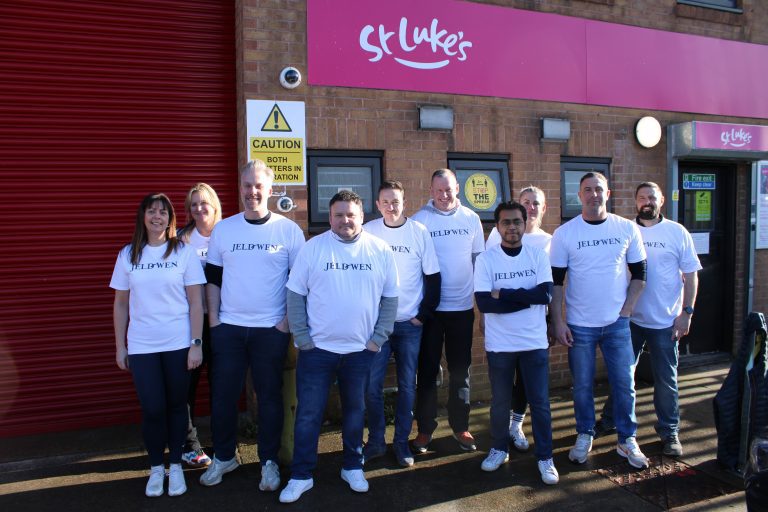
Leading UK manufacturer of high-quality timber door sets, JELD-WEN UK, has underlined its commitment to fostering a positive workplace culture and employee development with a volunteer day at Sheffield charity hospice, St Lukes. Ten members of the JELD-WEN team spent a day volunteering for St. Lukes, a palliative care hospice specialising in supporting patients and their families. The hospice is charity run and relies on donations and support from the local community, with government funding making up only 25% of the £20m it takes to deliver its services. The JELD-WEN team attended the central donation and sorting hub for the charity, and helped sort through public donations of books, toys, furniture and bric-a-brac to be sold in St. Luke’s charity shops. This activity not only delivers a vital source of income for the hospice but provided the JELD-WEN team with an opportunity to work together in a new environment. Sallyann Charlton, Interim Head of HR at JELD-WEN said: “It was interesting to find out about the vital services that St. Luke’s provides to our community. We were pleased to see an enormous amount of public donations for the charity and we enjoyed the opportunity to spend the day helping to sort products that will go on to provide an essential income for the charity. “As a company we are committed to the growth and development of our team. Volunteering together nurtures continuous improvement and a positive workplace culture across the company, to the benefit of the local community.” Courtney Hunt Volunteer Coordinator from St. Luke’s Hospice said: “The team from JELD-WEN were a massive help in sorting through the tonnes of donated items that the public had generously donated. These products will go on to generate vital income to support the patient support services and care that St. Luke’s provides. We are grateful to the JELD-WEN team for giving their time to support the charity and the community in this way.’ Through investment in training and pastoral opportunities, JELD-WEN continues to underline its commitment to the development and growth of its team, delivering on its promise of ensuring reliability and quality in their products and relationships, with an emphasis on continuous improvement. Find out more about JELD-WEN here. Find out more about the work of St.Luke’s hospice here. Building, Design & Construction Magazine | The Choice of Industry Professionals

Read More »

Thermally Modified Wood: A High-Performance Natural Material for Contemporary Architecture

As the dialogue around sustainable architecture deepens, a quiet material revolution is underway. Thermally modified wood—celebrated for its dimensional stability, rich tonal qualities, and low environmental impact—is fast becoming a staple in the palette of architects seeking both performance and aesthetic appeal.  Thermally modified wood isn’t new—but its role in modern architecture is evolving. At its core, the process takes timber and transforms it using nothing more than heat and steam. The result is a material that behaves with the discipline of engineered timber but maintains the soul of natural wood—a blend that is increasingly in demand in both residential and commercial environments.  What Is Thermally Modified Wood?  Thermal modification is a bit like baking bread. The process takes place in a specially designed oven – a thermokiln, where sensors send information into computers that are constantly monitored by thermal modification specialists.  European manufacturers like Thermory have refined this process to achieve consistent results across wood types, producing materials that are not only technically outstanding but visually compelling.  However, all thermal modification producers follow the same principle: within max 48 hours the temperature of the wood is raised up to 215 degrees, reducing the equilibrium moisture content, which is followed by a cooling process. No chemicals are used in the process, only heat and steam.  The high heat alters the wood’s cellular structure, reducing its moisture content and eliminating natural sugars that can attract pests and promote decay.  Species such as ash, pine, spruce, and oak respond particularly well to thermal modification, gaining a deeper hue and greater durability.   A Refined, Stable Material  One of the defining qualities of thermally modified wood is its dimensional stability. Unlike untreated timber, it resists cupping, warping, and shrinking—even in climates with dramatic seasonal shifts. This predictability makes it ideal for applications where tight tolerances are non-negotiable: façade systems, louvered screens, or flush-profile decks.  Architects working with detail-intensive designs appreciate how thermally modified wood responds to fine joinery and clean lines. Whether laid horizontally along a minimalist cabin or used vertically in large-scale commercial structures, the material maintains visual clarity and structural integrity over time.  Aesthetic Depth and Patina  Visually, thermally modified wood offers more than resilience. Its natural tone darkens during the modification process—ranging from warm caramel to deep coffee brown, depending on the species. Left untreated outdoors, it develops a soft silver patina that brings character to contemporary forms without compromising longevity.  While the material can be finished with oils or stains to preserve its tone, many designers choose to let it weather naturally, embracing its slow transformation and organic texture. Thermally modified wood can also be painted or coated to match the architectural brief.  Sustainability and Certification  Thermally modified wood aligns with key principles of sustainable construction. The thermal modification process uses no toxins or added chemicals, relying instead on high temperatures and steam. As a result, the end product is suitable for eco-conscious buildings and 100% recyclable at the end of its life.  Leading manufacturers like Thermory use wood sourced from sustainably managed forests and offer FSC®-certified options. With the growing demand for low-impact materials that don’t compromise on performance, thermally modified wood is a material that supports both aesthetic and environmental goals.  Applications Across Projects  Thermally modified wood adapts seamlessly across architectural projects. In residential architecture, it’s frequently specified for cladding, decking, and soffits—especially in builds that seek harmony with natural surroundings. Its warm tone and low maintenance needs make it a staple in holiday homes, urban rooftops, and lakeside cabins alike.  In commercial and hospitality settings, thermally modified wood lends an approachable elegance to terraces, outdoor seating areas, and façades. It offers the tactile qualities of wood with the durability typically associated with composite or engineered materials—ideal for spaces that welcome heavy footfall.  In public architecture, thermally modified ash and pine are often used in benches, boardwalks, and cladding for schools or cultural centers. Thanks to its resistance to moisture, fungi, and insects, it performs reliably even in exposed or coastal conditions.  Thermally modified wood is also a popular choice in interior applications, particularly in wellness architecture. Its heat tolerance and low thermal conductivity make it well-suited for saunas, spas, and steam rooms—spaces where both function and comfort are essential.  A Material for the Long Term  In a construction landscape driven by durability, beauty, and environmental integrity, thermally modified wood checks all the boxes. For architects and designers, it presents a rare opportunity: a natural material that honors traditional craftsmanship while meeting the demands of contemporary performance.  As the architectural world continues to look for low-impact solutions that don’t sacrifice design ambition, thermally modified wood positions itself as one of the most thoughtful choices on the market. 

Read More »