Business : Training & Skills News
HS2 launches new apprenticeship pathway for the unemployed

HS2 launches new apprenticeship pathway for the unemployed

HS2 is launching a new fast-track training programme to help unemployed West Midlands residents secure a construction apprenticeship on Britain’s new railway. The programme is being led by HS2’s West Midlands construction partners, Balfour Beatty VINCI (BBV) – who are delivering the 90km section of the railway between Warwickshire, Birmingham

Read More »
NFDC Launches 60 Free Demolition Training Pathways

NFDC Launches 60 Free Demolition Training Pathways

Industry initiative will help individuals gain recognised accreditation and begin or progress a career in demolition The National Federation of Demolition Contractors (NFDC), in partnership with the National Demolition Training Group (NDTG), is offering 60 fully funded CCDO Labourer Card pathway places to eligible individuals seeking to start or progress

Read More »
Why the Future Workforce Needs Experienced Beginners

Why the Future Workforce Needs Experienced Beginners

For many people, the word “apprentice” still brings to mind a school leaver entering the workplace for the first time, with their school tie and blazer only just going into retirement. However, apprenticeships are increasingly being explored by people in their 30s, 40s and beyond as a way to change

Read More »
Employer confidence is critical to construction skills package success, NAO says

Employer confidence is critical to construction skills package success, NAO says

The government’s ambitions to build 1.5 million homes, upgrade home energy standards, and deliver a £725 billion long-term infrastructure pipeline will depend on a significant expansion to the construction workforce – and stronger employer involvement in training the next generation of workers, according to a new report from the National Audit Office (NAO) published today.

Read More »
Britain Cannot Build Its Way Out of Crisis if Builders Are Going Bust: Jewson and Stark UK Launch National Campaign Demanding Urgent Government Action.

Britain Cannot Build Its Way Out of Crisis if Builders Are Going Bust: Jewson and Stark UK Launch National Campaign Demanding Urgent Government Action

Britain’s builders, tradespeople and construction businesses have united behind a national campaign calling for urgent government action to prevent the further decline of the country’s most important industries. The newly launched Let’s Get Britain Building – NOW! campaign lead by Stark Building Materials UK and Jewson is warning that the

Read More »
Latest Issue
Issue 343 : Aug 2026

Business : Training & Skills News

HS2 launches new apprenticeship pathway for the unemployed

HS2 launches new apprenticeship pathway for the unemployed

HS2 is launching a new fast-track training programme to help unemployed West Midlands residents secure a construction apprenticeship on Britain’s new railway. The programme is being led by HS2’s West Midlands construction partners, Balfour Beatty VINCI (BBV) – who are delivering the 90km section of the railway between Warwickshire, Birmingham and Staffordshire, and Mace Dragados – who are building Curzon Street Station. The new initiative builds on the success of BBV’s well established routes into employment programmes. In the West Midlands, 2,273 unemployed local residents have already secured a job on HS2 and 885 have started an apprenticeship. Now, for the first time, the two joint ventures are teaming up to deliver a new six-week general operatives training programme, which will equip participants with the skills and health and safety accreditation they need to start working in construction. Candidates who successfully complete the six-week course, and want to progress their career in construction, will automatically qualify for an interview for an 18-month apprenticeship. Julie Venn Morton, HS2 Ltd’s Senior Skills and Inclusion Manager for the region said: “We work exceptionally hard to ensure that local residents benefit from career opportunities on HS2, and it’s great to see our construction partners working together to create more new entry-level jobs for local people. “A project the size and scale of HS2 offers a unique opportunity to upskill the next generation and we’re proud of our achievements to date, with over 2,000 people starting an apprenticeship and over 5,700 unemployed people starting new careers on the programme.” The six-week general operatives training programme will be delivered at South and City College’s Bordesley Green campus and starts on 28 September.  Eight successful candidates will go on to secure an 18-month Level 2 apprenticeship, where they will join the teams delivering the city’s new flagship terminus station. Beatriz Ramos Albert, Communications, Skills & Social Value Lead at Mace Dragados said: “Collaboration is essential to maximising the social value we create through HS2, and this programme is a great example of what can be achieved when partners come together with a shared ambition. We are delighted to be partnering with Balfour Beatty VINCI and are grateful for the expertise and best practice they are bringing to this programme. “As construction of Curzon Street Station progresses, we continue to create opportunities across our city centre project and supply chain, and initiatives like this help to ensure those opportunities are accessible to local residents”. Four candidates will progress onto a Level 2 apprenticeship with BBV, where they will join the teams constructing the railway as it travels through Solihull and Warwickshire. Kam Hundal, Balfour Beatty VINCI’s Skills, Employment and Education Business Partner said: “We’re creating more new apprenticeship opportunities for local people who are currently out of work, as part of our on-going commitment to leave a lasting skills legacy in the West Midlands. “Candidates who successfully complete a six-week training programme are guaranteed an interview for these entry-level roles. Along the way, we’ll equip them with the skills and health and safety accreditation they need to start working in construction.” West Midlands residents who are interested in joining the programme should register their interest with their local Jobcentre Plus. Building, Design & Construction Magazine | The Choice of Industry Professionals

Read More »
Devon builder who's trained five apprentices urges teenagers to consider a  career in construction

Devon builder who’s trained five apprentices urges teenagers to consider a  career in construction

The director of a building firm in Devon that has put five apprentices through their training — every one of them still with the business — is urging teenagers to consider a career in construction. Dale Chadwick, of Dale Chadwick Carpentry & Construction Ltd, has had three apprentices qualify through the company, all achieving distinctions in some or all of their assessments. Two more are now entering their second year. Between them they have represented the firm at regional competitions and area meetings, and one has met the Prime Minister. Dale Chadwick, who runs the family firm in Devon and sits on the Federation of Master Builders’ South West Area Board, said: “For us, apprentices aren’t cheap labour — our work doesn’t allow for that. We need skill. We pay a fair living wage rather than the minimum, and we provide uniform, tools and travel to support them. In return, we’ve kept hold of every apprentice we’ve taken on. “There’s no better way to learn than hands on — working with the materials, adapting to what happens on site, spotting problems as they come up. But there’s a huge skills gap to fill. The multi-generational building families don’t really exist anymore, and the school system is set up so that university is the target everyone’s told to aim for.” His firm is one of thousands across the region taking on young people at a time when demand for skilled trades has rarely been higher. New research from the Federation of Master Builders (FMB) shows the South West is the best-informed part of the UK when it comes to building careers. Polling of over 2,000 UK adults found 90% of people in the region have heard of apprenticeships as a route into construction — the joint-highest figure of any UK region or nation. Awareness of BTECs is also joint-highest in the country at 65%, and just 4% of South West adults could not name a single route into the industry. Iain Kirtley, South Director at the Federation of Master Builders, said:  “Congratulations to everyone celebrating their recent results. Dale’s firm in Devon is exactly what our industry looks like at its best — a small local business investing properly in young people and keeping hold of every one of them. “Our research shows the South West is the best-informed region in Britain on building careers, and that’s something to be proud of. But it raises the stakes. If young people here already know the routes into our industry, the question is no longer whether they’ve heard of an apprenticeship — it’s whether there’s one waiting for them when they go looking. “With ambitious housebuilding targets and real uncertainty about what AI means for other careers, a trade is one of the most secure things a young person can go into. We have the appetite here in the South West. We now need the places to match it.” Luke Moss, Skills and Employer Project Manager at South West Construction Technical Excellence College, Exeter College, concluded:  “As students receive their GCSE results, many will be considering what comes next. For those interested in construction, apprenticeships combined with vocational qualifications offer a practical and highly respected route into the industry. These pathways equip learners with the technical skills and hands-on experience employers are looking for, while creating clear opportunities for long-term career development. Construction offers a wide range of roles and excellent prospects for ambitious young people ready to build their future.” Building, Design & Construction Magazine | The Choice of Industry Professionals

Read More »
Housebuilder inspires next generation of construction workers through education programmes

Housebuilder inspires next generation of construction workers through education programmes

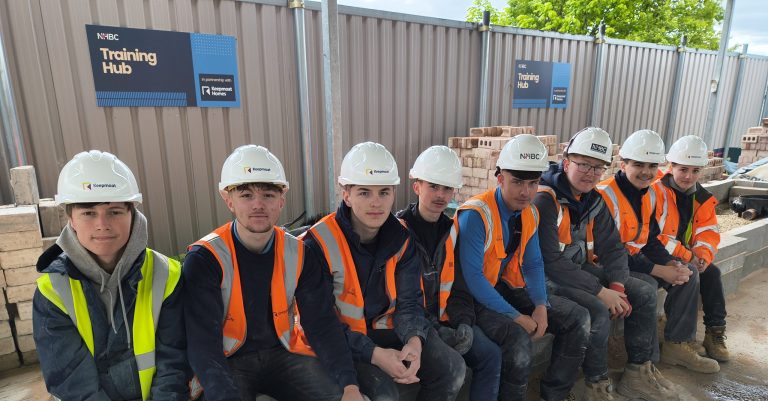
Top 10 UK housebuilder, Keepmoat, is helping to address the construction industry’s skills shortage by investing in the next generation of talent through a programme of careers events and practical skills workshops across the North East. Throughout the academic year, Keepmoat’s North East social value team, based in Newcastle, has worked with local schools, colleges, apprentices and prospective employees, engaging more than 900 young people across the region and providing opportunities to gain practical insight into careers in construction. A key part of the programme has been delivered through Keepmoat’s National House Building Council (NHBC) Training Hub at New Tyne West Development Company’sThe Rise development in Scotswood.  The facility provides a dedicated space for apprenticeships, construction careers days, recruitment events and practical training, giving participants the opportunity to see how the skills they are developing translate into real-world construction projects. A new cohort of bricklaying apprentices recently began their careers with an intensive block of training at the hub, covering the fundamentals of bricklaying, health and safety and the process of obtaining Construction Skills Certification Scheme (CSCS) cards. The training hub has also welcomed groundwork apprentices from Wearmouth Construction and Applebridge, who visited The Rise development to enhance their knowledge and understanding of their vocation. Geoff Scott, Social Value Manager at Keepmoat North East, explains: “At Keepmoat, we’re proud to support the next generation of  young talent across the North East in preparing for long-term career opportunities they’re passionate about. We also understand the construction industry faces a skills shortage, which is why it’s so important that we empower students early and help them understand the breadth of opportunities available. “By collaborating with local schools and colleges, we are able to help students prepare for the world of work. These partnerships allow Keepmoat to offer tailored opportunities where students can visit live sites and gain hands-on experience in a real-world setting.” Keepmoat has also worked alongside NHBC to connect prospective apprentices and members of the local community with employers.  At a recent recruitment day, members of the public, prospective apprentices and supply chain employers visited the hub to learn more about opportunities in construction and see current Keepmoat apprentices put their developing bricklaying skills into practice. Darryl Stewart, Head of Commercial Services at NHBC added: “We’re committed to helping the home-building industry bridge the skills gap and believe strongly in working in partnership with developers to deliver training.  “The UK faces a housing crisis and it’s essential we build more quality homes at pace – that’s why we’re investing £100 million to train up to 3,000 new apprentices every year and are creating 12 new multi skill training hubs across the UK.  “The NHBC Training Hub at The Rise development in Scotswood is an effective, collaborative partnership with Keepmoat designed to immerse apprentices in a realistic working environment. This initiative is equipping the next generation of skilled site workers with hands-on experience to meet the growing demand in the home-building industry.” New Tyne West Development Company (NTWDC) is the regeneration partnership – comprising Newcastle City Council and Keepmoat – behind The Rise development, in Scotswood. The partnership has plans to build 1,800 mixed-tenure homes in the west end of the city and has, to date, delivered over 750 new homes. Works on the latest phase of housing started last year.  Keepmoat is a top 10 UK partnership homebuilder with a track-record of delivering quality new homes across the UK. To date, almost 70 percent of its current developments are on brownfield sites. To find out more please visit: www.keepmoat.com/  Building, Design & Construction Magazine | The Choice of Industry Professionals

Read More »
Construction cannot complain about skills while turning apprentices away

Construction cannot complain about skills while turning apprentices away

As students receive their GCSE results today, many will be deciding whether to continue studying or to begin their careers via an apprenticeship. Nicola Hodkinson, owner and director at Seddon, warns that the shortage of apprenticeship places risks excluding young people who are ready to begin careers in construction. All comments below are authored by Nicola Hodkinson – Owner and director of Seddon “For young people receiving their GCSE results today, this should be a moment of opportunity. But those hoping to begin their careers through an apprenticeship may quickly discover that the route we encourage them to pursue is extremely difficult to access. “At Seddon, we receive thousands of applications for our apprenticeship scheme each year, around 100 for every role. These are young people who want to work, develop practical skills and build long-term careers. Yet there are simply not enough places available to give them that chance. Demand is far outstripping supply “The wider picture is just as concerning. Data reported by the BBC shows that applications for degree apprenticeships through the government’s central platform have risen from 8,100 to 21,800 in three years, while the number of available positions has fallen from 7,300 to 3,700. Although those figures relate specifically to degree apprenticeships, they expose the same gap between young people’s ambitions and the opportunities available to them. “The latest government figures show apprenticeship starts increasing by 8.7% overall, but starts among under-19s fell by 5.4%. Construction apprenticeship starts rose by 5%, which is encouraging, but progress needs to happen much faster if apprenticeships are to become a realistic option for more school leavers. Desperate need for construction skills “This is particularly frustrating because construction desperately needs them. CITB estimates that the industry will require an average of 41,200 additional workers every year between 2026 and 2030. Construction cannot keep complaining about its skills shortage while young people who want to join the industry are being turned away. “Employers have to accept their share of the responsibility. Too much of the industry still relies on a flexible or self-employed workforce and expects somebody else to train the next generation. That may meet an immediate labour need, but it leaves young people without routes into the sector and weakens the workforce we will all depend on in future. Practical steps for creating more places – industry and government responsibility “There are genuine barriers for employers. Training an apprentice is a long-term commitment that involves wages, equipment, structured learning and experienced people dedicating time to passing on their skills. Yet there is very little funding available to employers to offset these wider costs, and what support does exist can be difficult to access, with layers of red tape that many businesses simply do not have the resources to navigate. “The government is beginning to recognise this. The introduction of a £2,000 hiring payment for smaller employers taking on young apprentices is a welcome step, as is the decision to give jobs, skills and apprenticeships greater weight in major public contracts. These changes now need to translate into more opportunities on the ground, with their impact closely monitored and further support introduced if apprenticeship numbers do not keep pace with demand. “This cannot be solved through education policy alone. Giving technical education the same status as academic routes is the right ambition, but that promise will ring hollow if young people reach the end of school and find there is nowhere for them to go. “Results day should open doors. Government, clients and employers now need to make sure construction creates enough of them.” About Nicola: Nicola Hodkinson is owner and director of Seddon and a longstanding advocate for apprenticeships and direct employment in construction. Seddon maintains a significant apprenticeship programme and regularly receives thousands of applications from young people looking to enter the industry. Building, Design & Construction Magazine | The Choice of Industry Professionals

Read More »
NFDC Launches 60 Free Demolition Training Pathways

NFDC Launches 60 Free Demolition Training Pathways

Industry initiative will help individuals gain recognised accreditation and begin or progress a career in demolition The National Federation of Demolition Contractors (NFDC), in partnership with the National Demolition Training Group (NDTG), is offering 60 fully funded CCDO Labourer Card pathway places to eligible individuals seeking to start or progress a career in the demolition industry. The initiative has been created to remove some of the financial barriers that can prevent people from accessing industry-recognised training and employment opportunities. The campaign is part of the NFDC’s wider commitment to supporting the demolition sector, strengthening its workforce and encouraging more people to become appropriately trained and qualified. Each funded pathway includes both the CCDO Labourer training course and Asbestos Awareness training, providing successful learners with the qualifications required to apply for a CCDO Labourer Card. Before attending the training, applicants must have passed the required Operative Health, Safety and Environment test. Candidates are encouraged to complete the appropriate test through CITB or NOCN. Applicants must also be able to understand, communicate and read English to the level required to participate safely and successfully in the training. Courses will take place during September, October and November 2026 and will be delivered either live online or at the NDTG training centre in Hemel Hempstead. Adrian Corrigan, President of the NFDC, said: “Supporting people into demolition and helping them gain recognised industry accreditation is an important part of our role as a Federation. “This initiative is about creating opportunities, supporting the future workforce and helping more people enter the industry with the knowledge and qualifications they need to work safely and responsibly. “Demolition offers a wide range of long-term career opportunities, and we hope these funded places will provide a valuable first step for people who may not otherwise have been able to access the training.” Whether applicants are considering a completely new career or are already working in construction and want to develop specialist demolition skills, the opportunity offers a chance to join one of the built environment’s most dynamic and highly skilled sectors. Building, Design & Construction Magazine | The Choice of Industry Professionals

Read More »
Why the Future Workforce Needs Experienced Beginners

Why the Future Workforce Needs Experienced Beginners

For many people, the word “apprentice” still brings to mind a school leaver entering the workplace for the first time, with their school tie and blazer only just going into retirement. However, apprenticeships are increasingly being explored by people in their 30s, 40s and beyond as a way to change industries, develop new skills and gain qualifications while continuing to earn. In England, more than half of apprenticeship starts are now made by people aged 25 and over. Mature apprentices are no longer a minority; they are a significant part of the workforce. In a working life that may span four or five decades, taking time to retrain should not be viewed as a step backwards. For many people, it can be one of the most valuable investments they make in themselves. Mature apprentices may be new to a role or industry, but they are rarely new to work. They bring transferable skills, reliability, resilience and experience of managing responsibilities. They also often have a clear understanding of why they are making a change and what they want to achieve. At United Infrastructure, Craig Lloyd’s career journey demonstrates just how effective a mature apprenticeship can be. Craig was in his late 30s, living locally in Wolverhampton, working full-time and regularly taking on overtime to support his family. Despite the additional hours, he was still living from payday to payday, with little opportunity to progress in his role as a salvage yard operative.  More importantly, the extra hours were taking him away from his wife and children at a time when he felt they were growing up far too quickly. He was missing important moments in their lives, from his sons first steps, and trips to the local park, family days out, and homework with his older children, to the everyday bedtime routines that mattered just as much. Craig commented: “This situation motivated me to look for a new career path that would offer better prospects and a more rewarding future.” His route into construction began unexpectedly during improvement works to his kitchen. A conversation with the site manager overseeing the works led Craig to explore an apprenticeship opportunity at United Infrastructure. Craig said: “I wanted to create a better life for my wife and children. At the time, I felt stuck financially and mentally. I couldn’t see any opportunities for progression or personal development, and the overtime meant I was missing important moments with my family.” Making the change required Craig to accept an initial pay cut and return to the classroom for the first time in 25 years. Having left school with poor grades, he was nervous about returning to education and learning alongside people much younger than himself. However, the opportunity to gain a recognised qualification and prove what he was capable of became one of his greatest motivations. Craig’s experience highlights one of the most important qualities mature apprentices can bring to a business – determination. Adults changing careers may have mortgages, families and significant financial responsibilities. Choosing to begin again is rarely an easy decision. Those who make that leap often bring a strong sense of purpose and a genuine commitment to making the opportunity work. They also bring skills developed through previous roles and life experience. Communication, teamwork, problem-solving and accountability are all valuable qualities that can transfer between industries, even when technical knowledge still needs to be developed. This does not mean employers should choose mature apprentices instead of younger people. Industries such as construction and infrastructure need both. Young apprentices bring energy, fresh perspectives and the opportunity to develop skills from the beginning of their working lives. Mature apprentices bring broader experience, established workplace behaviours and a different outlook on learning and development. The strongest teams make space for people of different ages, experiences and backgrounds to learn from one another. However, attracting mature apprentices requires more than simply advertising an attractive vacancy. Employers must recognise the barriers adults can face when considering a career change. Returning to education can be daunting, particularly for someone who did not enjoy school or has spent decades believing academic qualifications are beyond their reach. Apprentice salaries may also be difficult for people with significant and already established financial commitments. It is also important to recognise the level of commitment an apprenticeship requires. Apprenticeships are full-time roles, with adult apprentices typically working around 30 hours a week, including time spent completing their training. Many will also need to study for assessments outside those hours. Depending on the role and qualification, an apprenticeship can take between one and four years to complete. They are not an easy alternative to traditional employment or education; they demand hard work, discipline and a sustained commitment to learning. Businesses like United Infrastructure are therefore providing clear progression routes, supportive managers and an environment in which people feel comfortable asking questions, learning from mistakes and building their confidence. For Craig, that support helped him overcome challenges both inside and outside the classroom. During his first three months with United Infrastructure, he climbed to the top of scaffolding and walked across the roof of a 21-storey block of flats in central Wolverhampton. Before beginning his apprenticeship, his fear of heights meant he would not climb beyond the third step of a stepladder. Craig has since completed his Level 4 qualification, begun studying for a Bachelor of Science with Honours, in Construction Management and been promoted to Assistant Site Manager within the Heath Town Estate redevelopment in Wolverhampton. The change has given him far more than a new job. He now has a clear career path, greater responsibility and opportunities to continue developing, while also having more time for one more bedtime story with his children. “I’m much happier now, and that’s something my wife and family have noticed,” Craig said. “I’m able to spend more time with them and make the most of family life. I’m proud of how far I’ve come and excited about the opportunities still ahead.” As the UK works

Read More »
Employer confidence is critical to construction skills package success, NAO says

Employer confidence is critical to construction skills package success, NAO says

The government’s ambitions to build 1.5 million homes, upgrade home energy standards, and deliver a £725 billion long-term infrastructure pipeline will depend on a significant expansion to the construction workforce – and stronger employer involvement in training the next generation of workers, according to a new report from the National Audit Office (NAO) published today. The watchdog examined the government’s progress in delivering its £625 million construction skills package, announced in March 2025, which aims to support up to 60,000 more construction workers by 2029.1 The package combines tried and tested initiatives, alongside newer initiatives, including Skills Bootcamps, and new foundation apprenticeships, and construction technical excellence colleges.  However, the package is not designed to meet all future workforce needs, with government estimates showing that between 201,000 and 755,000 extra workers could be required by 2030, before accounting for those who leave the sector for other jobs. This comes as statistics show the construction sector had the highest rate of hard-to-fill vacancies due to skills shortages — 45% compared with a 27% national average.2 Employer engagement is a critical delivery risk for the construction package. The government hopes that 42% of the additional construction workers will follow from further education students completing industry placements. Businesses make recruitment and training decisions depending on the expected pipeline of work, costs and market competition – but tough economic conditions are affecting employers’ confidence to invest and take new employees and apprentices on board. In 2024, employer investment in training per construction trainee was at its lowest level in 10 years. Foundation apprenticeships are intended to help young people move into entry-level construction jobs, but by April 2026 only 74 young people had started, against DWP’s assumption of 1,000 in 2025-26. The NAO concludes that the government’s construction skills package is a positive step, and that it now has in place a clearer framework to track delivery.  However, delivery is not guaranteed. To achieve its aspiration of up to 60,000 workers — and support its housing and infrastructure commitments — government will need better data, to prioritise resources, and to get employers’ buy in. Without this, skills shortages could drive up costs and put major delivery commitments at risk. The NAO now recommends: Gareth Davies, head of the NAO, said:“The government is taking action to address shortage of skilled construction workers as part of its ambitious commitments for housing, infrastructure and energy efficiency. Success will depend on employers having the confidence and capability to offer placements, apprenticeships and jobs.” Building, Design & Construction Magazine | The Choice of Industry Professionals

Read More »
Britain Cannot Build Its Way Out of Crisis if Builders Are Going Bust: Jewson and Stark UK Launch National Campaign Demanding Urgent Government Action.

Britain Cannot Build Its Way Out of Crisis if Builders Are Going Bust: Jewson and Stark UK Launch National Campaign Demanding Urgent Government Action

Britain’s builders, tradespeople and construction businesses have united behind a national campaign calling for urgent government action to prevent the further decline of the country’s most important industries. The newly launched Let’s Get Britain Building – NOW! campaign lead by Stark Building Materials UK and Jewson is warning that the construction sector has reached a critical tipping point due to a combination of thousands of companies ceasing trading and sole traders shutting up shop, housing delivery falling dramatically short of demand and chronic skills shortages. Campaign leaders are calling on the government for an emergency package of measures to restore confidence, stimulate demand and remove barriers preventing the industry from delivering the new and improved homes, jobs and economic growth Britain desperately needs. Alongside a public petition – the construction industry is set to escalate its grave concerns to Parliament to secure a national debate on the future of Britain’s construction industry. Today’s warning comes at a time when the gap between housing need and housing delivery continues to widen. Construction leaders estimate Britain is now facing a housing shortfall of approximately 6.5 million homes. To close that gap by 2040, around 565,000 homes would need to be built every year. Yet current projections suggest that annual housing delivery is likely to reach only around 305,000 homes by 2029. More than 630,000 properties in England sit empty and ripe for retrofitting into quality homes, but VAT and planning constraints are blocking progress. At the same time, the businesses responsible for building those homes are disappearing at an alarming rate. Nearly 4,000 construction firms became insolvent in the year to February 2026, making construction the worst-affected sector in the country’s economy in terms of business failures. Small and medium-sized housebuilders, once responsible for a significant share of housing delivery, have seen their numbers collapse from around 12,000 businesses in the late 1980s to fewer than 2,000 today. Kieran Griffin, Divisional Managing Director at Jewson, says: “The economics of building have become increasingly difficult, as the costs associated with more regulation, taxes and levies mount up for every new home built. Material costs have risen by around 40 per cent since 2020 and are expected to increase further in the years ahead. Combined with rising borrowing costs, planning delays and weaker consumer confidence, many projects that would once have been financially viable are now being postponed or abandoned altogether. “This is no longer a future challenge; it is a present-day emergency,” said Griffin. “Construction sits at the heart of the British economy and infrastructure. It delivers homes, jobs and investment in every town across Britain, yet the sector is under enormous pressure from every direction. Businesses are closing, projects are stalling, and skilled workers are leaving the industry. If the government wants growth, it needs to support the people and businesses that are physically building the country.” Ashley Woodcock, a painter and decorator from Bolton, says he has had to take on a second job as a milkman to supplement his income in construction. His day begins at 2.30 am, delivering milk before he heads to decorating jobs later in the morning. Ashley says he sees the impact of delays, uncertainty and workforce shortages every day. “Everyone agrees Britain needs more homes, but the reality on the ground is that it is becoming harder and harder for tradespeople,” he said. “Projects are delayed, costs continue to rise, and there aren’t enough skilled people entering the industry. Most of us want to get on with the work, but we need the right support and conditions to make that possible.” At the centre of the campaign are three urgent policy demands that organisers believe would have an immediate impact on the industry’s ability to grow. Campaign leaders argue that there has been no meaningful replacement for previous support schemes that helped buyers enter the market and are calling for targeted financial incentives for homebuyers and homeowners, including measures to reduce deposit requirements and expand mortgage access. They also want ministers to consider stamp duty relief and other fiscal measures to encourage transactions and boost market confidence. Another request is the removal of VAT on building materials and the refurbishment and retrofit of existing homes. Currently, new-build homes benefit from zero VAT, yet renovation projects often face additional costs that discourage investment. They believe removing VAT could unlock significant activity, especially in relation to the thousands of vacant properties across the country that could be renovated and used as housing. There are also calls for reform of the planning system, which campaigners describe as slow, costly and unpredictable. Only a small proportion of major planning applications are currently decided within statutory timeframes, while delays on smaller projects continue to frustrate homeowners and builders alike. Justin Gilbert, CEO Gilbert Homes said: “As a company owner for over thirty years I have never experienced such negative planning policies that we face today. The majority of potential new housing sites are unviable due to the various levies. The planning system is a complete farce.” The campaign is calling for a simpler, more transparent planning system that relies on clearer rules rather than subjective preferences, faster decision-making, and greater use of digital technology. Organisers believe artificial intelligence could play an important role in streamlining at the very least the early stages of planning applications and reducing administrative burdens on local authorities. They also want a moratorium on additional policy requirements that increase costs and complexity without accelerating housing delivery. Another key policy is tackling what campaigners describe as a construction skills emergency. More than 35,000 vacancies currently exist across the sector, and the industry is expected to require around 225,000 additional workers by 2027, but approximately one-quarter of the existing workforce is expected to retire over the next five years. Campaign leaders are therefore calling for expansion and an acceleration of apprenticeships, training programmes and industry-led education initiatives. They want greater support for small and medium-sized businesses that train and to retain apprentices and closer collaboration between employers,

Read More »
Roofing apprentices say mentor support is key to building confidence in the trade

Roofing apprentices say mentor support is key to building confidence in the trade

Roofing apprentices are opening up about the role that mentor support plays in building their confidence, enhancing their skills, and helping them progress within the trade. The insight comes from applications submitted to the 2026 BMI UK & Ireland Apprentice of the Year competition, which this year received a record number of entries from apprentices.  Among the 68 applicants across pitched and flat roofing categories, more than two-thirds (68%) said they would first turn to a mentor, manager or experienced colleague when faced with a challenge on site, highlighting the importance of day-to-day support in helping apprentices develop both technically and professionally. “I feel very confident and comfortable asking the people I work with,” one applicant shared, emphasising the vital role mentors play in apprenticeships. “I always ask my manager or others on site for help.” Another apprentice added: “I feel lucky, my boss is always happy to show me what to do and teach me new things. I know I can always ask for help in my company.” The findings suggest that apprentices prefer learning the trade through peer-to-peer interactions, alongside formal training routes, particularly when developing confidence on-site and learning to handle real-world challenges.  When peer support is unavailable, 20% of applicants indicated they would turn to free online resources, including Instagram, YouTube, and manufacturer-led content to learn from other skilled professionals. This suggests that practical learning, whether in person or online, is still highly valued in the trade, especially given the ongoing concerns about skills shortages. “As a young person, I use YouTube to see if I can gain any knowledge there,” explained one apprentice. The findings come at a time when the roofing industry continues to face significant recruitment and retention challenges. According to the National Federation of Roofing Contractors (NFRC), the UK will need an additional 3,800 roofers by 2029. However, current training routes are projected to deliver only 1,550, resulting in a shortfall of over half.  Completion rates further compound this issue. The latest ‘Apprenticeship Gap Report’ reveals that the completion rate for roofing apprenticeships is just 28%, the lowest among construction trades, meaning nearly three in four roofing apprentices do not finish their training.  Several applicants also expressed ambitions to progress into leadership positions or eventually establish their own roofing business, reflecting the long-term career aspirations emerging across this year’s cohort. The findings suggest strong workplace support and positive site cultures could play an important role in supporting these ambitions and improving retention within the industry. Stuart Farnell, Lead Technical Trainer at BMI Academy, said: “What stands out from this year’s applications is how much apprentices value having experienced people around them who are willing to support, teach and share their knowledge on site. “Technical training is essential, but confidence, encouragement and practical guidance also play a huge role in helping apprentices develop successful long-term careers in roofing. Creating supportive environments where people feel able to ask questions and continue learning is incredibly important for the future of the industry.” The final of the Apprentice of the Year competition will be held on July 22nd and 23rd, 2026, at the BMI Academy in Gloucestershire. To find out more about the event or training courses provided by the academy, visit: https://www.bmigroup.com/uk/bmi-academy/?utm_source=PR&utm_medium=Release&utm_campaign=Insights&utm_id=insights Building, Design & Construction Magazine | The Choice of Industry Professionals

Read More »
Multibillion-pound theme park will inspire youngsters to pursue construction careers, hopes Actis

Multibillion-pound theme park will inspire youngsters to pursue construction careers, hopes Actis

The buzz surrounding the planned creation of a multibillion-pound theme park in Bedfordshire is to be used to encourage children to consider careers in the construction industry when they leave school. That’s the aim of insulation specialist Actis, a long-term champion of encouraging young people into the sector, often via outreach sessions in schools and colleges. And with developers Comcast NBCUniversal promising to provide training and apprenticeships via colleges and universities throughout the construction and resort phase, the development of the newly named Universal United Kingdom Resort should be good news for the wider construction industry, believes Actis. The US entertainment giant, which says it will invest an initial £5 billion into the resort and a further £1bn over its first decade, wants the theme park to become the most visited in Europe. It says the work will generate around 20,000 jobs during the construction period, with a further 8,000 created after its opening in 2031. The government will support the surrounding infrastructure development and transport links to the tune of £1.3 billion. Actis East and Scotland regional sales director, Steven Ellis, who lives near the planned theme park, is due to take part in a ‘careers and aspirations’ day at a village school literally a stone’s throw from the site in the coming weeks. He plans to reference the resort as an example of the kind of imaginative project open to those choosing a construction career path. “The popular appeal and glamour of a theme park is a tangible and exciting example of the kind of project likely to strike a chord with those still at school. I’m hoping it will give them a real passion to be involved in an industry which can bring so much joy to millions of people all over the world,” he said. “With the theme park’s creators predicting there will be 8.5 million visitors a year initially, rising to 12 million within 20 years of opening, the magnitude of the resort points to a great need for skilled tradespeople and apprentices. “These will be required to work not only on the 476-acre theme park but also on the road and rail links being created and upgraded to allow access to the site. This is a career opportunity on their doorstep and I’m hoping they will share my enthusiasm!” Building, Design & Construction Magazine | The Choice of Industry Professionals

Read More »