Kenneth Booth

Knauf Insulation launches Housebuilders Hub to support Part L compliance

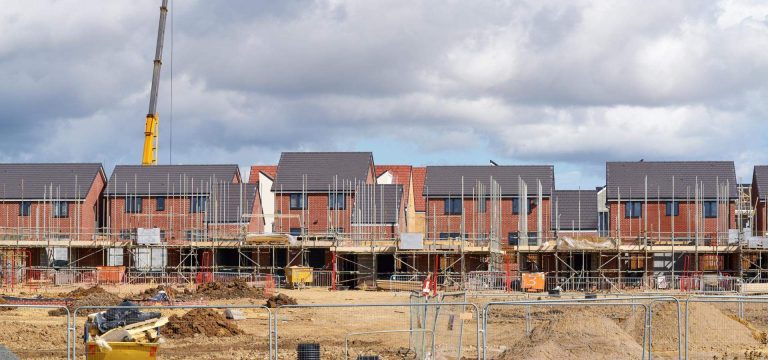
Knauf Insulation has launched its new online ‘Housebuilders Hub’, providing tools and guidance to help housebuilders comply with the updated Approved Document L (ADL) building regulations. The Hub is accessible via Knauf Insulation’s website, where housebuilders and their suppliers will find a range of free, practical resources, including example ADL-compliant

Read More »

Designers of Residential Builds – Beware!

A brand new UK building regulation is here. Coming into effect on 15th June 2022, Part O deals with the growing issue of buildings being designed and constructed without due consideration to the building’s potential internal temperature, during our warmest months. Importantly, and in difference to many other updates to

Read More »

GLP begins earthworks on G-Park Ashby-de-la-Zouch

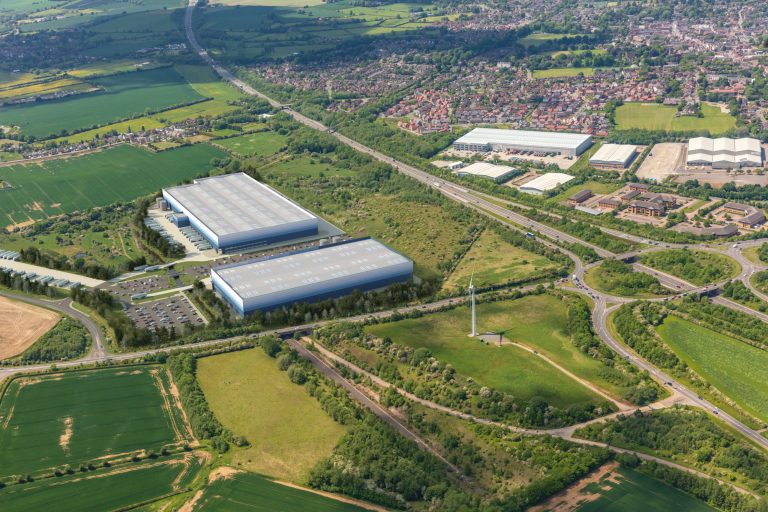
GLP, a leading investor and developer of logistics warehouses and distribution parks, today announced that it has begun earthworks on the site of G-Park Ashby-de-la-Zouch. G-Park Ashby is a 48-acre development site benefitting from an outline planning permission to deliver build-to-suit logistics warehouse opportunities of up to 736,487 SQ FT.

Read More »

DMA wins planning consent for Kensington student accommodation

Dexter Moren Associates (DMA) has achieved planning permission for the refurbishment and extension of 19th century More House in Kensington, London, to provide contemporary student accommodation. Situated at 51-55 Cromwell Road, close to the art and museum centre of London, More House is named after St Thomas More and has

Read More »

GRAHAM delivers new £76 Million M11 Junction 7A project in Essex

Civil engineering firm GRAHAM has completed work on a new junction on the M11, delivering one of the biggest highways infrastructure projects in Essex. The £76 million M11 Junction 7A scheme opened to the public ahead of schedule on Friday (10 June) and has created much-needed new access into Harlow

Read More »
Latest Issue
Issue 344 : Sep 2026

Kenneth Booth

Maynard Design Group welcomes the Elizabeth line (Crossrail) head of Architecture on board

As part of its international growth strategy The Maynard Design Group are pleased to welcome Julian Robinson, former Head of Architecture at The Elizabeth line (Crossrail) as a consultant to the team.  He joins with 30 years’ experience in transport design having previously worked on other flagship transport projects such as the Jubilee Line Extension and St Pancras International station. The Maynard Design Group, was a key part of the team responsible for the Line wide design of The Elizabeth line (Crossrail) which launched to a public fanfare on 24 May 2022 with some 500,000 users on the first day, and two million in the first week. Julian’s new role will be to bring his strategic knowledge and delivery experience to the group and future clients. Julian Maynard, Managing Director of Maynard Design Group, said: “I have known Julian for 25+ years since we worked side by side on the Jubilee Line Extension under the renowned architect Roland Paoletti. I led the Line wide team and Julian was the Architect at Canning Town Station. Crossrail gave us the opportunity to work together again, this time with Julian as our client. “I am looking forward to this collaboration which will help us in the next steps of our growth strategy within the transport sector.” Julian Robinson said: “Delivering the Elizabeth line has been an incredibly enjoyable and rewarding experience. Julian and I hold great respect for each other having worked together in various guises since 1995, and I’m pleased to be able to continue working alongside him and supporting the talented Maynard Design Group of businesses.” Maynard Design Group announced in March that it had acquired Transport Design Consultancy (TDC) in a major merger for the global transport design industry. With the Elizabeth line (Crossrail) launching last month, the projects the Group have worked on now serve over 3.5 billion passenger journeys per year globally including major hubs in Australia, New Zealand, the Middle East, India, the Far East and several flagship schemes in the UK.

Read More »

Knauf Insulation launches Housebuilders Hub to support Part L compliance

Knauf Insulation has launched its new online ‘Housebuilders Hub’, providing tools and guidance to help housebuilders comply with the updated Approved Document L (ADL) building regulations. The Hub is accessible via Knauf Insulation’s website, where housebuilders and their suppliers will find a range of free, practical resources, including example ADL-compliant whole-house recipes*, a Part L Guide, a U-value calculator and advice on different approaches to achieving compliance. Further resources will be added to the Hub over the coming months and visitors have the option to register for alerts, as these become available. In the long-term, the business plans to develop the platform further, and provide expert insights and practical information around a range of key industry topics, such as innovation and sustainability. The Hub forms part of Knauf Insulation’s ‘partnership’ approach, which offers support services to housebuilders, alongside the products they know and trust. “With changes to the regulations now in force, housebuilders are under pressure to adapt quickly”, explains James Hulbert, Head of Housing for Knauf Insulation. “We understand that different projects have different needs, so we’ve taken the opportunity to extend our support, by offering compliance advice and solutions to suit a broad range of scenarios.” The Knauf Insulation Housebuilders Hub can be accessed at: https://www.knaufinsulation.co.uk/Housebuilders-hub

Read More »

Designers of Residential Builds – Beware!

A brand new UK building regulation is here. Coming into effect on 15th June 2022, Part O deals with the growing issue of buildings being designed and constructed without due consideration to the building’s potential internal temperature, during our warmest months. Importantly, and in difference to many other updates to the Building Regulations, Part O will be applied retrospectively, regardless of when a planning application was submitted or approved, if projects have not actually started construction before 15th June 2023 they will be required to comply with Part O. This 12-month transition period allows for designers and developers to make changes to planned projects to ensure they comply before their construction commences. Overheating of buildings is not a new issue. Previously, it has been partially addressed with assessment tools and guidance by various bodies, but for the first time, the UK Government, in the form of the Department for Levelling Up, Housing and Communities (DLUHC) has firmly addressed the issue. The management of solar gains in buildings is to be enforced under the revised Building Regulations 2022, specifically the new Part O, which comes into effect on 15th June 2022. What is Part O? Approved Document O covers the overheating mitigation requirements of the building regulations; designing and constructing buildings to limit unwanted solar gains in summer and provide an adequate means of removing excess heat from the indoor environment. It applies to all residential and institutional dwellings, including care facilities and student accommodation, anywhere you would stay overnight (but excluding hotels), ranging from a single storey house to a high-rise apartment block. Make no mistake, this is a significant change that will need to be acknowledged and adopted by all developers and designers with immediate effect, to avoid the risk of new homes failing to pass building regs. Since December 2021 when Part O was released, Smartlouvre have been gathering feedback from those affected including house builders and housing associations. They have written a whitepaper to respond to this feedback, with input from designers, building physicists, simulation experts and members of CIBSE. They have also been in contact with the Department of Levelling Up, Housing and Communities to ensure what they create is a rounded document, which de-mystifies the regulation and provides unbiased advice, whilst giving thought provoking comment as to how we in the construction sector can design in consideration of user comfort and health as a primary consideration. To read the whitepaper visit www.smartlouvre.com (url to be set live on Friday 17th June).

Read More »

GLP begins earthworks on G-Park Ashby-de-la-Zouch

GLP, a leading investor and developer of logistics warehouses and distribution parks, today announced that it has begun earthworks on the site of G-Park Ashby-de-la-Zouch. G-Park Ashby is a 48-acre development site benefitting from an outline planning permission to deliver build-to-suit logistics warehouse opportunities of up to 736,487 SQ FT. Earthworks are progressing rapidly and are expected to be finished by early 2023, with the full development set to complete by Q1 2024. The site has a prime location in the Midlands logistics hub, in the heart of the Golden Triangle. G-Park Ashby is conveniently situated adjacent to the A42 and A511, providing access to the M42 to the South and the M1 10 miles to the North East.  Urban hubs Birmingham, Nottingham and Leicester are all close by, with Manchester, Liverpool and London also easily accessible. East Midlands Airport, only 10 miles away, and Birmingham International Airport, 29 miles away, also provide convenient air links for transportation. The site can be developed as either one single unit or two units, depending on customer requirements, with clear internal heights of up to 18 metres. As with all GLP’s developments, the units will be built to enhanced specification and will follow GLP’s rigorous ESG standards. The development will be BREEAM Excellent and WELL ready, and will feature a range of sustainability features including rainwater harvesting and energy tracking and consumption tools for customers. The development is a prime example of the care taken by GLP to respect and nurture the natural environment. For example, a colony of great crested newts was discovered on the site, which GLP has taken significant time and consideration to rehome, delaying progression with the earthworks until the colony was safely relocated. There will also be an extensive green outdoor space for landscaping and nature, including ecological ponds. Adrienne Howells, Senior Development Director at GLP, said: “G-Park Ashby is an exciting addition to our portfolio in the Midlands and indicates our ongoing confidence in opportunities in the Golden Triangle, following the success of projects such as Magna Park Lutterworth. Trends such as e-commerce have buoyed already high demand for prime logistics space, particularly high-quality, conveniently-located, sustainable facilities such as this.” Not only will this new development bring excellent opportunities for our customers; it will also boost employment in the region, creating almost 1000 new jobs and providing major benefits for the local economy. Once again, we are planning our development with place-making as a priority, focusing on environmental features such as our ponds, green open spaces and our G-Hive bee programme.”

Read More »

The importance of cultural change within the industry – Marking the fifth anniversary of the Grenfell Tower fire

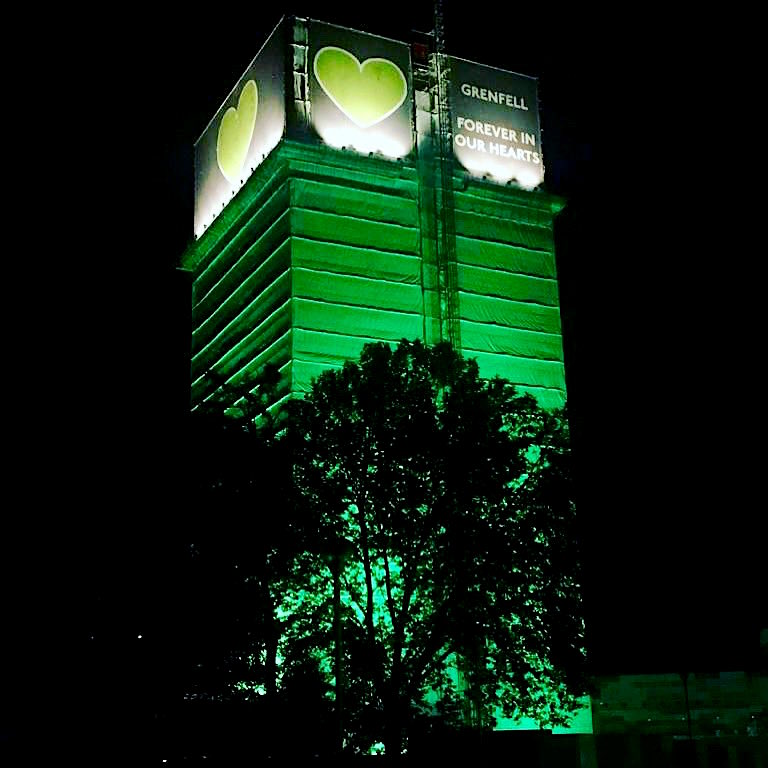
On 14 June 2017, a fire started in the kitchen of a fourth floor flat in West London. Within minutes, the fire spread via the exterior of the building reaching all four sides of the 24-storey tower block and in two hours, most of the upper floors had been engulfed in fire. The fire which destroyed Grenfell Tower saw the loss of 72 lives and has been named as “one of the UK’s worst modern disasters.” Factors that played part in the disaster Grenfell Tower had a ‘stay put’ fire policy which assumes that fire compartmentation works in the event of a fire. Being an important element of passive fire protection, its purpose is to contain the fire to its area of origin for as long as possible meaning that effectively, the fire and rescue services can bring the fire under control, and residents can evacuate safely. Many of Grenfell’s residents followed this policy and stayed put only to become trapped by the fire that gained momentum around them; others ignored this policy and managed to escape to safety. It is quite incomprehensible just how many things went wrong during the early hours of that Wednesday morning. Fire safety engineer Dr Barbara Lane, in a report to the Grenfell Tower Inquiry, discovered that the fire started spreading vertically up the tower block, and “laterally along the cladding above and below the window lines (and) the panels between windows.” The fire reached the top floor of the east side at approximately 01:26, evidenced by mobile footage, and had spread to the north side by 01:42. There were many factors that played a part in the fast spread of fire, but in his report to the Inquiry, Professor Luke Bisby said that evidence “strongly supports” that the external cladding was the main cause. He said: “The ACM (aluminium composite material) product on Grenfell Tower incorporates a highly combustible polyethylene polymer filler which melts, drips, and flows at elevated temperature. The polyethylene filler material is expected to release large amounts of energy during combustion”. However, Bisby found that other factors may have contributed to this such as other flammable materials for example, a polyurethane polymer foam insulation board, whilst Lane identified combustible materials in the windows, exposed gas pipes and flat doors not meeting current fire resistance standards. An important factor: current practices in the industry In light of the fifth anniversary of Grenfell Tower, a day to remember the people who lost their lives and hold in thought all of the family members and survivors, it is important to reflect on the years that have passed and why a cultural change is needed. Dame Judith Hackitt has been the driving force behind the construction industry’s next steps in building a safer future. Current practices show that the industry, often, focusses on sales and profit; cheaper products and money saved; quantity of content rather than the quality of content, over the safety of a building and its residents. Until the industry wholeheartedly embraces change and separates itself from old practices, the risk of destructive fire is inevitable. The industry’s culture has been resisting change for decades, suggesting that most parties are reluctant to take the lead and admit that it needs to improve with immediate effect. It has taken the tragedy of Grenfell for the culture of the industry to come under hard scrutiny in what Hackitt explains as “lack of ownership and responsibility, the system is gamed, and corners are cut wherever possible.” The Building Safety Bill received royal assent on 28 April 2022, meaning that it is now an act of parliament (BSA). Although many of the requirements will not come into force for another 12-18 months, Hackitt senses the mood may have shifted. She said: “The construction industry is waking up to the reality that this is really going to happen. I am delighted to hear […] that more than 300 organisations have now signed up to the Building a Safer Future charter and a similar number to the Code for Construction Product Information (CCPI).” Why is cultural change important? Although five years on, there is still a long way to go in terms of embracing innovation and rebuilding the trust and confidence lost in the construction industry. Legislation will help to change behaviours and force people into doing the right thing, but it cannot create a cultural change alone. It needs leaders and professionals within the industry to stand up and be counted but ultimately, encourage other individuals to do the same. If the practices displayed in the Grenfell Tower Inquiry have shown anything, it is that there is no better time than now for all parties to start utilizing guidance provided from relevant sectors and begin changing the way they work. With the ongoing push for reform, it has never been more vital for individuals to have the correct training, experience, and knowledge in their sectors. One main problem highlighted was the lack of well-trained workers. Sir Martin Moore-Bick, chair of the Grenfell Inquiry, stated: “Four members of the first [firefighter] crews to have fought the blaze had 52 years of combined experience. However, they had not received any training on the risks posed by exterior cladding or the techniques to be deployed in fighting fires involving cladding, the report found.” This suggests that when it comes to fire safety, every party needs to be involved from architects, who design a building, to fire and rescue services who are the first point of call in the event of a fire. By employers becoming influencers in the development of their organisation, alongside workers wanting to do the right thing for a safer future, this will ensure competency and ultimately, help create safer living spaces for residents in high-rise buildings. For any cultural change, there must be someone willing to take the lead. The construction industry is guilty of waiting for regulations to come into force before taking any action, but it is not enough to wait for government


Read More »

DMA wins planning consent for Kensington student accommodation

Dexter Moren Associates (DMA) has achieved planning permission for the refurbishment and extension of 19th century More House in Kensington, London, to provide contemporary student accommodation. Situated at 51-55 Cromwell Road, close to the art and museum centre of London, More House is named after St Thomas More and has welcomed students between 1952 and 2020. The 38,000sq ft building was vacant when bought by SAV Group, who specialise in refurbishing and repositioning complicated sites into income-generating residential properties. Sustainability has formed a major part of DMA’s design, with every effort made to retain as much of the existing structure as possible in order to limit the embodied carbon emissions of the project. Located in the Queens Gate Conservation Area, DMA’s design team has collaborated closely with heritage consultant Montagu Evans to ensure the proposal remains in line with the character of the conservation area, whilst successfully reconfiguring the internal layout to provide as much accommodation as possible within the constraints of the existing building envelope. Mark Wood, Partner at DMA, says: “With this project, we needed to achieve a lot within the 19th century fabric; upgrading and extending the accommodation to meet the needs of 21st century students whilst maintaining the building’s heritage values by returning it, where possible, to its original appearance. We have been able to apply the skills honed across our varied portfolio, including hospitality refurbishments, to sympathetically enhance More House’s appearance, sustaining the life of the building and making a positive contribution to the conservation area in which it stands.” The design team has given careful consideration to the material selection to ensure a calm, neighbourly design proposal that sits in its context seamlessly. DMA’s subtle interventions include a new mansard roof whose natural slate tile finishes reintegrates with the original design of the building and maintains the rhythm of the roofscape. With discreet infill extensions to the rear and the restoration of hipped roofs adding space for internal mezzanines in the closet wings, additional communal areas and reconfigured bedroom spaces have also been created. The similarly successful change of use for the mews garage to a new ancillary area adds yet more useable space. Lightwells breathe new life into the lower accommodation of the building by maximising light ingress. The design of the lightwell is influenced by the art galleries and museums near More House. It is intended that sculptures will form the focal point of the lightwell to create interesting yet calming spaces. DMA envisions the student residents actively collaborating to inform the design of these sculptural centrepieces within the lightwell, creating a clear sense of unity and belonging as they get this unique opportunity to express themselves through the decoration and celebration of their new home. Mark Wood, Partner, DMA, concludes: “We have worked closely with our client SAV Group to repair and restore the existing fabric, whilst modest and carefully considered extensions and reconfigurations add new bedrooms, as well as ensuites to all rooms. DMA’s carefully crafted layouts also add value with communal areas for studying, meeting and cooking, which help create a sense of connection for the residents, as they get to share spaces to study and relax in together. Furthermore, the design helps to future proof the building by creating areas that are fit for multiple different uses, enabling the building to change functionality should there ever be a need to do so.”

Read More »

GRAHAM delivers new £76 Million M11 Junction 7A project in Essex

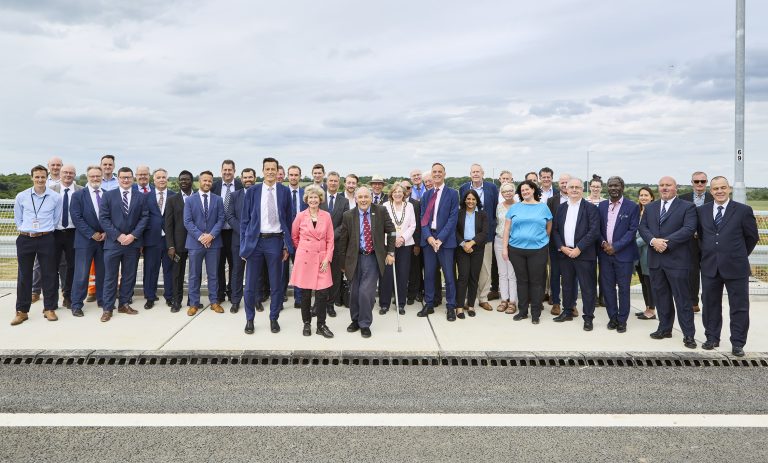
Civil engineering firm GRAHAM has completed work on a new junction on the M11, delivering one of the biggest highways infrastructure projects in Essex. The £76 million M11 Junction 7A scheme opened to the public ahead of schedule on Friday (10 June) and has created much-needed new access into Harlow and included widening and improvement of Gilden Way, plus a new link road connecting Gilden Way and the junction via new roundabouts on either side of the motorway. As part of the project, GRAHAM, in collaboration with Essex County Council, has built a new bridge over the motorway, constructed slip roads for both northbound and southbound traffic, and improved walking and cycling access on Gilden Way. Funded by the council and National Highways, the new junction completes a project that started in summer 2020.  Discussing the project on the day of its opening, Cllr Lesley Wagland, Essex County Council’s Cabinet Member for Economic Renewal, Infrastructure and Planning, said: “Today marks the opening of one of the largest highways infrastructure projects in the county and it is testament to all involved that, despite the challenges of the last two years, the project has been delivered ahead of schedule. “We have created a much-needed new east-west link, significantly improving access to the M11 at Harlow. This, in turn, will help reduce congestion on the A414 and other routes in the town and also support future growth, including the potential creation of up to 3,000 new jobs.” Matt Stafford, National Highways Regional Delivery Director, said: “We understand how important the M11 is to thousands of road users every day.  “The road is a vital link for work journeys, visits to friends and family, and the movement of goods and services between London and East Anglia, and we’re pleased to have worked in partnership with Essex County Council to deliver this scheme. “A huge amount of work has gone in to get to this point and I am delighted to see the last piece of the jigsaw put in place with the opening of this new junction.” The junction opened to traffic on Friday evening, following a formal opening event the previous day. The public, whom the council thanked for their patience during construction of the scheme, was also given a unique opportunity to see the final scheme up close before it opened to traffic during a 5km charity fun run, which was supported by Harlow Running and Tri Club and Active Essex.  The fun-run, which raised money for a local charity supporting children living with cerebral palsy and St Clare Hospice, saw more than 500 participants run from the London Road Roundabout to the new junction and back. With match-funding from GRAHAM, their efforts raised over £9,000. Dave Brown, Highways Director for GRAHAM Civil Engineering, added: “We’re pleased to have completed construction and delivered this important project in the region. The team has worked tirelessly during the programme, which included a challenging bridge beam installation over two weeks, involving four overnight closures to minimise disruption to road users. The new junction is a testament to our team’s civil engineering expertise and another addition to our growing highways portfolio.” For more information about the scheme and the new junction, visit www.essex.gov.uk/junction7a.

Read More »

Spencer Group appointed to major construction programme by ports operator ABP

Leading civil engineering and construction contractor Spencer Group has been appointed by Associated British Ports (ABP) to be part of a major national investment programme. Spencer Group has been appointed to the Industrial Buildings Framework Contract to build large-scale industrial buildings for ABP in four out of five regions across the UK where the port owner operates – South East and North West England, Scotland and Wales. ABP is the UK’s leading ports group and its network of 21 ports supports 119,000 jobs and handles about a quarter of the UK’s seaborne trade, worth £150bn annually. The framework will run for five years, with scope to extend to a further two years. ABP plans to invest a significant value across the four regions with specific projects determined by port requirements in each location. The success for Spencer Group’s industrial division follows an extensive competitive tendering selection process involving both regional and national contractors across the UK. Spencer Group Off Site Construction Director Richard Green-Morgan, who leads the industrial division of the business, said: “We’re delighted to be appointed to this framework. This is a very significant contract for us and a positive continuation of our strong working relationship with ABP. “Being appointed by ABP in each of these regions is further evidence of our excellent reputation as a leading provider of multi-disciplinary engineering and construction projects across the UK. “It will also strengthen our presence and position these locations, undoubtedly creating opportunities to work with new partners and SMEs to jointly support ABP’s ambitious plans for the future. “We’re looking forward to getting started and working with ABP on these important projects.” Spencer Group has undertaken a number of schemes over the past year providing consultancy and construction services to develop and support a variety of capital projects in various ports. Spencer Group Managing Director Gary Thornton said: “Our appointment to the Industrial Buildings Frameworks Contract is very positive news for Spencer Group. “The framework is yet another example of our developing relationship with ABP, which started over 30 years ago. Our ability to provide technical support, design and delivery capabilities to provide new and enhanced existing assets and infrastructure mean we are able to support ABP’s investment decisions and meet their customer demands. “We’re proud of the faith shown in us by ABP and are looking forward to starting work under this new framework to deliver exceptional value to ABP and their customers.” Spencer Group delivers innovative engineering and construction solutions in the transport, infrastructure, materials handling, energy and industrial sectors. To find out more about the company’s work, visit www.thespencergroup.co.uk.

Read More »

50 projects for a better future – celebrating five decades of projects making a difference

The 50 most inspiring projects from the past 50 years have been revealed by the Association for Project Management (APM), the chartered membership organisation for the project profession – in celebration of its 50th anniversary.  Entitled ’50 Projects for a Better Future’, the list features iconic projects from around the globe and across the fields of construction and engineering, technology, healthcare, sports and nature, arts and media. More than 600 projects were nominated for inclusion in the list by a panel made up of APM members, board members and industry experts. Projects were selected based on the transformative impact they have had on society, the economy and environment since their launch within the past 50 years. Canary Wharf, the Channel Tunnel, the London 2012 Olympic and Paralympic Games, Angel of the North, the Eden Project, Guggenheim Bilbao Museum, Øresund Bridge, Wikipedia, the World Wide Web, the UK Covid-19 vaccine rollout, In vitro fertilisation (IVF), the Hubble Space Telescope, the Large Hadron Collider and Mars Perseverance Rover all make it onto the list.  The full list including project descriptions is available at apm.org.uk/50projects Professor Adam Boddison, Chief Executive of APM, says: “To mark our 50th anniversary we wanted to celebrate and recognise the impact that projects have had on the world, and the important role that project professionals play in embracing change and opportunity. The 50 projects on this list all have their own legacy in the impact they have had on society, the economy and environment, as well as acting as a catalyst for other projects which followed and will follow them in the future.” The 50 projects by sector:  Construction and Engineering: Hong Kong International Airport – 1998 The Channel Tunnel – 1994 The Øresund Bridge – (Sweden/Denmark) – 2000 Canary Wharf – London – 1991 The Thames Barrier – London – 1984 The Falkirk Wheel – Scotland – 2002 Maeslant Barrier (Netherlands) – 1997 Unisphere (United States) – 2018 Madrid Metro Extension – 1995-2003 The Peace Bridge (Northern Ireland) – 2011 Sports, Media and Arts: Angel of the North – 1998 Guggenheim Bilbao Museum – 1997 BBC Children in Need – 1980 Hamiliton – 2015 Tate Modern – 1994 FIFA Women’s World Cup – 2019 London Olympic and Paralympic Games – 2012 Parkrun – 2004 Forest Green Rovers – 2010 Healthcare and Education: HIV antiretroviral therapy – Mid 1990s EPS Electronic Prescribing Service – 2013 Global Polio Eradication – 1988 HPV Vaccination – 2008 Human Genome Project – 1990-2003 In Vitro Fertilisation (IVF) – 1978 (first IVF baby born) Tackling Poverty in Renfrewshire Programme – 2014 Vaccine taskforce & development – 2020 Educating girls in the Swat Valley – 2013 Netherlands cycling revolution – 1970s Nepal earthquake response – 2015 Science and Nature: International Space Station – 1998 Howdon and Bran Sands Gas to Grid plants – 2012 Hubble Space Telescope – 1990 Kielder Reservoir – 1982 Large Hadron Collider – 2008 The Mars Perseverance Rover – 2020 Svalbard Global Seed Vault  – 2008 The Eden Project – 2001 Cloning of Dolly the Sheep – 1996 The Voyager spacecraft programme – 1977 Technology: Amager Bakke – 2017 Global Positioning System (GPS) – 1973 The PACUNAM Lidar Initiative (discovery of Mayan cities) – 2016 Landsat – 1972 Raising the Mary Rose – 1982 The Train Protection and Warning System (TPWS) – 2003 The Eurofighter Typhoon – 1983 Wikipedia – 2001 World Wide Web – 1989 SWIFT banking service – 1977 To see the full list of APMs ’50 Projects for a Better Future’ visit apm.org.uk/50projects

Read More »

GMG Energy pounces on 400 acres of forestry in the north-east of Scotland to build in resilience and ensure continuity of supply

Sustainable biomass supplier and timber products specialist GMG Energy has made a strategic purchase of a substantial swathe of forest in the far north-east of Scotland to protect future supply and increase its resilience to market shocks. The resource-rich company, which originated on a farm in the Strath of Halladale in Sutherland, has acquired 400 acres of softwood-planted land at Quintfall Forest, towards the east coast south of John O’Groats. The forest contains 21,000 tonnes of productive timber, very roughly equivalent to 90,000 tree-sized logs. The sawmill at GMG Energy’s production facility currently processes in the region of 2,000 tonnes a year, meaning that the purchase has created security of supply for the foreseeable future. As a major plank of its business model, the company is committed to replacing every log of timber that it uses, and plants 10,000 new trees a year, which grow to maturity in 35 years. It far exceeded this target last year, planting in the region of 20,000 trees. Malcolm Morrison, Director of GMG Energy, said: “It has been our policy up until now to buy our raw materials on the open market, from established local suppliers, but this deal will ensure continuity of supply in an increasingly volatile environment. “Quintfall is just over 20 miles from our base of operation at Bighouse Farm, so it will not add to the road miles burden and the acquisition will chime with our wish to invest locally and provide a reliable resource for other local companies. “The purchase will not affect our ongoing planting programme, as replenishment is the key to sustainability, and we will continue to try to reduce our impact on the environment by not wasting any of the product with which we work.” At the same time as the Quintfall purchase, GMG Energy has invested £150,000 in state-of-the-art sawmill equipment which takes its larger timber and processes it into posts, rail, cladding and purlins, or structural roof members. It also plans a spend of in the region of £100,000 on timber treatment equipment which will open up new markets among construction companies and farm businesses which require treated and stress-tested products. Carbon-aware GMG Energy is also investigating the possibility creating heat and steam from wood waste to turn a turbine in order to self-generate the electricity it uses and to further minimise its environmental impact. GMG Energy is sited at Bighouse, where Mr Morrison’s Sutherland-born mother still lives in the farmhouse. The company increased turnover in the year to August 2021 to just over £2 million, up from £1.7 million the previous year.

Read More »