Utilities & Infrastructure : Energy News
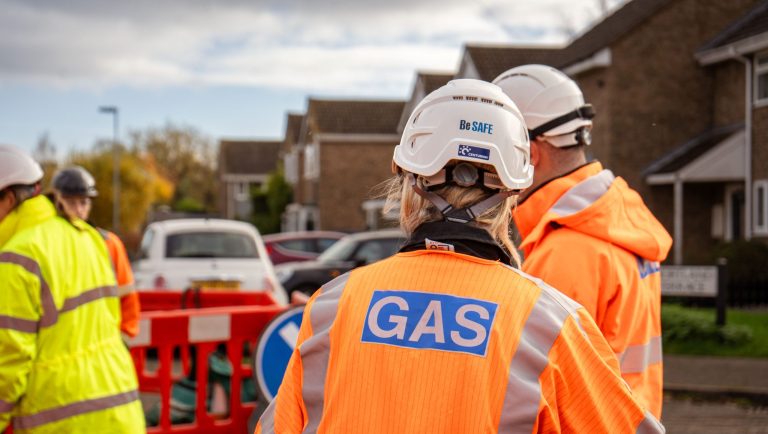
Costain hits milestone with 1625km of gas pipeline upgraded for Cadent

Costain hits milestone with 1625km of gas pipeline upgraded for Cadent

Continues Costain’s track record of delivering predictably as it upgrades pipeline through to 2029 Costain, the infrastructure solutions company, has marked the completion of five years of its Contract Management Organisation (CMO) contract with Cadent by delivering 1625km of gas main line. Cadent is the UK’s largest gas distribution network

Read More »
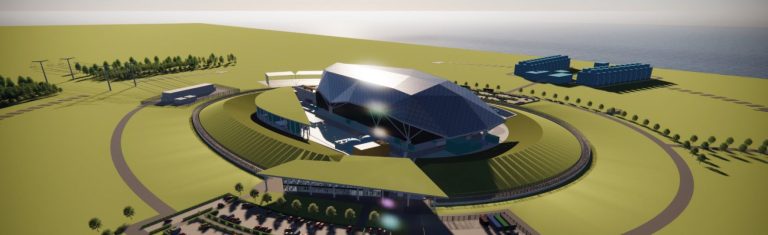
Arup joins team shaping Britain’s first small modular reactor

Arup joins team shaping Britain’s first small modular reactor

Engineering consultancy Arup has been appointed to carry out early-stage design and engineering work for the UK’s first small modular reactor (SMR), planned for the Wylfa site on Anglesey. Great British Energy – Nuclear (GBE-N) confirmed that Arup will provide early-phase foundation engineering and design support as the landmark project

Read More »
Ofgem approves investment into UK energy networks

Ofgem approves investment into UK energy networks

Ofgem has approved an initial £28 billion package for Britain’s energy networks to reinforce safety, security and resilience, while upgrading and enlarging capacity to meet rising demand. The programme will modernise electricity and gas infrastructure and help shield consumers from volatile global energy prices. The largest share, £17.8 billion, is

Read More »
Anglesey chosen for UK’s first small modular reactors

Anglesey chosen for UK’s first small modular reactors

Wylfa on the Isle of Anglesey in North Wales has been selected as the site for the UK’s first small modular reactor (SMR) nuclear power station. The government has confirmed that publicly owned Great British Energy-Nuclear will develop three SMR units at Wylfa, with Rolls-Royce named as the preferred technology

Read More »

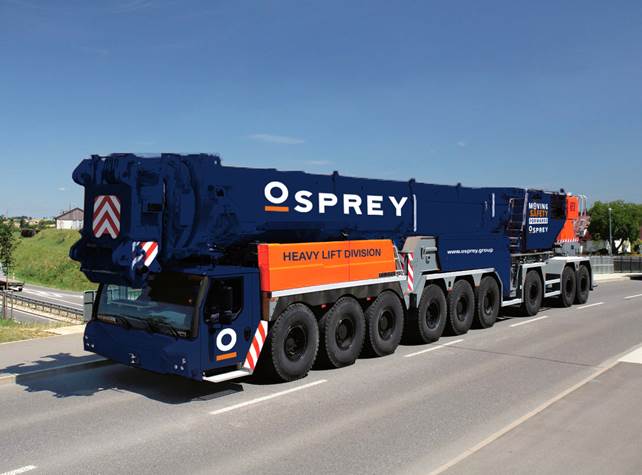
Osprey Strengthens Onshore Wind Capabilities with New 800-Tonne Mobile Crane

Osprey is expanding its heavy-lift fleet with the addition of the Liebherr LTM 1750-9.1, an 800-tonne all-terrain mobile crane arriving in November. This investment increases Osprey’s capability to deliver complex lifting operations for onshore wind, civil infrastructure, bridges, ports, and highways projects. To date, Osprey has contributed to projects delivering

Read More »
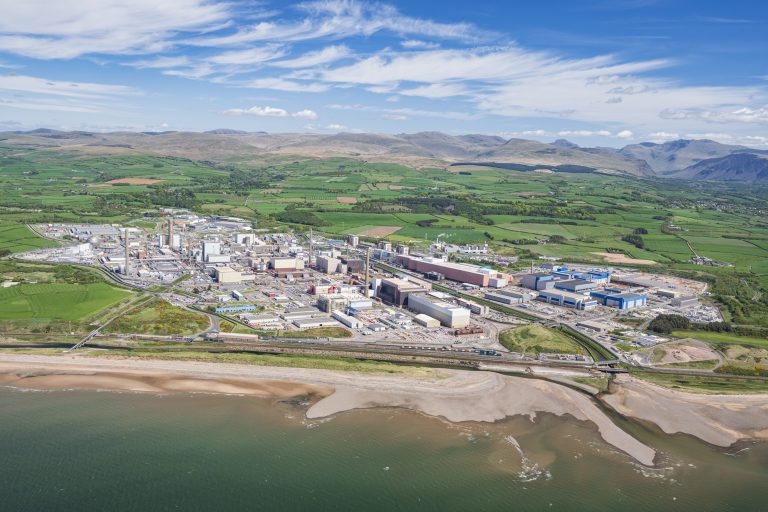
Costain chosen for major infrastructure delivery partner role at Sellafield

Costain chosen for major infrastructure delivery partner role at Sellafield

Billion-pound, 15-year contract award will deliver critical utilities infrastructure upgrades at Cumbria decommissioning site. Costain, the infrastructure solutions company, has been selected by Sellafield for a significant role on its long-term Infrastructure Delivery Partnership (IDP). The total value of Sellafield’s IDP is worth up to £2.9bn, split into three lots.

Read More »
Latest Issue
Issue 339 : Apr 2026

Utilities & Infrastructure : Energy News

Costain hits milestone with 1625km of gas pipeline upgraded for Cadent

Costain hits milestone with 1625km of gas pipeline upgraded for Cadent

Continues Costain’s track record of delivering predictably as it upgrades pipeline through to 2029 Costain, the infrastructure solutions company, has marked the completion of five years of its Contract Management Organisation (CMO) contract with Cadent by delivering 1625km of gas main line. Cadent is the UK’s largest gas distribution network managing more than 131,000km of pipes and transporting gas to 11 million customers. Since 2021, Costain has been tasked with upgrading more than 300km of gas mains each year in Cadent’s East of England network.   The progress, which has involved more than 230,000 reinstated excavations and 160,000m3 tonnes of backfill and top material, means that 168,000 homes have now had new gas mains and supplies installed. The upgrades support a more resilient energy network by reducing the risk of supply disruption to households and businesses in the region. Costain has consistently ensured best-in-class results in health and safety, programme management, commercial and operational excellence, and customer satisfaction scores. This strong performance led to Costain in 2024 seeing the initial five-year contract being extended to run to eight years, through to 2029. Alan Cheung, Energy Sector Director at Costain, said: “This is a fantastic milestone that is testament to Costain’s reputation of delivering predictably and efficiently. Over the last five years we have cultivated productive and collaborative working relationships with Cadent and our local supply chain teams, which have enabled us to maintain the highest safety, quality and efficiency standards and achieve record customer satisfaction scores. “As we embark to the next phase of the project, we’ll be working closely with Cadent to ensure this transformative scheme continues to improve the lives of millions of people in the East of England whilst making the UK’s energy system more resilient for future generations.” Victoria Grieve, Network Director for the East of England at Cadent said: “Costain has been a trusted partner to Cadent for years. It is helping us deliver our major investment programme to enhance the gas network, keeping millions of people warm in their homes and supporting the transition to lower-carbon gases.“The last five years have seen the network undergo significant enhancements and this milestone illustrates the collaborative partnership between ourselves, Costain and its supply chain, and we’re excited to continue pressing on with these upgrades together.” Building, Design & Construction Magazine | The Choice of Industry Professionals

Read More »
Rolls-Royce SMR secures landmark deal to deliver UK’s first small nuclear plants

Rolls-Royce SMR secures landmark deal to deliver UK’s first small nuclear plants

Rolls-Royce SMR has signed a pivotal contract with Great British Energy – Nuclear to deliver the UK’s first generation of Small Modular Reactors, marking a major milestone for both the energy and construction sectors. The agreement follows the company’s selection as preferred technology partner in June last year, with £2.6 billion earmarked in the 2025 Spending Review to support the wider rollout of the programme. The first project is set to be developed at Wylfa on Anglesey in North Wales, where construction is expected to support around 3,000 jobs at peak delivery, alongside thousands more across the national supply chain. The scheme represents a significant pipeline of work spanning advanced manufacturing, infrastructure delivery and specialist engineering. Under the terms of the contract, Rolls-Royce SMR will progress site-specific design, regulatory approvals and planning activities, moving the project closer to a final investment decision. The programme is based on a standardised, factory-built approach, aimed at improving cost efficiency and programme certainty compared with traditional nuclear construction. The company plans to deliver three SMR units in the UK, with each facility capable of generating enough electricity to power approximately one million homes. The modular nature of the technology is expected to drive demand for off-site manufacturing, logistics hubs and highly specialised industrial facilities. A consortium including BAM Nuttall, Laing O’Rourke and Atkins is supporting the development of the SMR design, bringing together expertise across engineering, construction and project delivery. Chris Cholerton, chief executive of Rolls-Royce SMR, said the agreement provides clarity and momentum for the programme, enabling the transition from planning into delivery. He added that the scheme will play a key role in strengthening the UK’s energy security while creating long-term opportunities for the construction sector and domestic supply chain. The deal highlights the growing importance of nuclear-led infrastructure in driving industrial development, with SMRs positioned to reshape how large-scale energy assets are designed, manufactured and delivered across the UK. Building, Design & Construction Magazine | The Choice of Industry Professionals

Read More »
Arup joins team shaping Britain’s first small modular reactor

Arup joins team shaping Britain’s first small modular reactor

Engineering consultancy Arup has been appointed to carry out early-stage design and engineering work for the UK’s first small modular reactor (SMR), planned for the Wylfa site on Anglesey. Great British Energy – Nuclear (GBE-N) confirmed that Arup will provide early-phase foundation engineering and design support as the landmark project begins to take shape. Small modular reactors are designed to accelerate the construction of new nuclear power generation. Their smaller, factory-built components are intended to simplify construction compared with traditional nuclear plants. SMRs are also expected to play a key role in supporting intermittent renewable energy sources such as wind and solar, helping to maintain electricity supply during periods of low generation, sometimes referred to as a dunkelflaute or “dark doldrums”. They could also provide direct power connections for major industrial energy users. Plans for the Wylfa scheme were confirmed in November 2025, when GBE-N announced proposals to build three reactors at the site in Ynys Môn, Wales, using technology developed by Rolls-Royce. The project is backed by £2.5bn of UK government funding. Earlier this year, US engineering firm Amentum was selected to lead the delivery programme. It is being supported by a team including Turner & Townsend, Hochtief, Mace Consult and Unipart. Arup’s appointment brings together a group of specialist partners working on the early stages of the project. Landscape architects and master planners LDA Design are involved in shaping the wider site vision, while nuclear safety specialists TÜV SÜD Nuclear Technologies will provide safety expertise. Gleeds has been appointed to focus on cost engineering during the initial phases of site and infrastructure development. Simon Roddy, chief executive of GBE-N, said delivering a safe and integrated design for the UK’s first SMR would require close collaboration between engineering and technology partners. He said the project would rely on strong technical decision-making and innovation, adding that Arup and its partners would play a key role alongside GBE-N and Rolls-Royce SMR. Jeremy Stain, Arup’s nuclear business lead, said the project represented the first step towards a potential fleet of small modular reactors across the UK. He said the development aligned with national energy policy and the drive to reduce carbon emissions while strengthening energy security, with nuclear expected to remain a vital part of the future energy mix. Stain added that Arup was pleased to bring its multidisciplinary engineering expertise and local knowledge to the landmark project. Building, Design & Construction Magazine | The Choice of Industry Professionals

Read More »
Ofgem approves investment into UK energy networks

Ofgem approves investment into UK energy networks

Ofgem has approved an initial £28 billion package for Britain’s energy networks to reinforce safety, security and resilience, while upgrading and enlarging capacity to meet rising demand. The programme will modernise electricity and gas infrastructure and help shield consumers from volatile global energy prices. The largest share, £17.8 billion, is earmarked to operate, maintain and replace assets across Britain’s gas networks, keeping them among the safest and most resilient worldwide. A further £10.3 billion will go into electricity transmission to boost reliability and unlock extra capacity for electrification and economic growth. Across both gas and electricity, the overall investment is expected to reach around £90 billion by 2031. Acting now, Ofgem says, is the most cost-effective way to harness more domestic clean power, support growth and reduce exposure to gas price shocks like those in 2022. As day-to-day operations, asset replacement and maintenance costs flow through to bills faster than long-term expansion, these near-term outlays will contribute more quickly to customer bills even though they form a smaller portion of the total £90 billion programme. By 2031, network charges are projected to add £108 to typical dual-fuel household bills (£48 for gas and £60 for electricity). Factoring in the benefits of grid expansion, Ofgem estimates households would save about £80 compared with not building out the grid, leaving a net impact of roughly £30 overall, or under £3 per month. Electricity grid expansion alone is forecast to cut bills by £50 by 2031 by curbing reliance on imports and reducing constraint costs. Jonathan Brearley, Ofgem CEO, said: “The funding announced today will keep Britain’s energy network among the safest, most secure and resilient in the world. The investment will support the transition to new forms of energy and support new industrial customers to help drive economic growth and insulate us from volatile gas prices. “But this is not investment at any price. Every pound must deliver value for consumers. Ofgem will hold network companies accountable for delivering on time and on budget, and we make no apologies for the efficiency challenge we’re setting as the industry scales up investment. We’ve built strong consumer protections into these contracts, meaning funds will only be released when needed and clawed back if not used. Households and businesses must get value for money, and we will ensure they do.” Throughout 2025, the regulator scrutinised spending plans from electricity transmission owners, National Gas and gas distribution companies to secure the best deal for billpayers. Ofgem has set firm delivery milestones, demanded greater efficiency and rejected proposals not in consumers’ interests, delivering potential savings of over £4.5 billion (15%) versus initial £33 billion submissions. The final package will back 80 electricity transmission projects and related works over the next five years, adding new lines, substations and technologies to increase capacity and move clean, domestic power efficiently to homes and businesses, supporting growth. Building, Design & Construction Magazine | The Choice of Industry Professionals

Read More »
Costain awarded five-year contract to continue delivering nuclear services at EDF

Costain awarded five-year contract to continue delivering nuclear services at EDF

Award of £75m Project Control Resources Framework will take Costain and EDF’s partnership to 2030 Costain, the infrastructure solutions company, has been awarded a new five-year framework contract by EDF to continue providing project controls services at EDF’s eight nuclear power stations across the UK. Costain has been working with EDF since 2017, when it was first named on EDF’s Project Controls Resources Framework to support the safe operation, plant life extension, and preparations for the defueling and decommissioning of EDF’s UK nuclear power stations. The extension of the Framework, which is worth £75m to Costain over five years, will take Costain and EDF’s partnership through to 2030. The framework was also extended in 2021 and 2023. Costain’s award winning project controls team will continue to apply its expertise in areas including programme management and quality and safety to grow EDF’s core project controls capabilities, providing specialist capabilities to improve project performance, deliver cost efficiencies, and support strategic resource planning. Costain will also support EDF on its transition from generation to defueling of Advanced Gas Reactors.  Costain manages over 400 projects on the Framework, which are delivered by a workforce of more than 170 integrated project controls professionals, 50 of which are trainees and juniors, supporting the growth of skills in the complex, highly regulated nuclear energy sector. Bob Anstey, sector director, defence and nuclear energy at Costain, commented: “The extension of our relationship with EDF is testament to our established position in the UK’s civil nuclear energy market and our delivery of predictable, best-in-class nuclear decommissioning and project controls services. “We’ve been a trusted partner to EDF since 2017, during which time we have consistently delivered and increased the breadth of our services, and we’re very happy to be continuing our partnership for another five years. We’ll continue to deliver projects across a range of complex working environments to the highest safety standards, whilst supporting the development of skills in the sector to help futureproof the workforce and support local prosperity.” Rohan Mulvaney, head of nuclear decommissioning PMO at EDF, said: “EDF is a leader in the UK’s nuclear energy sector and we demonstrate a long-term commitment to low-carbon sources of electricity to power economic growth and deliver energy security. Costain has been a reliable partner to us for many years, and this contract award will support the continued project control services for safe operations and decommissioning activities at our nuclear power stations.” The framework extension comes following a period of success for Costain in the nuclear energy sector. Costain recently secured contracts to deliver utilities infrastructure upgrades at Sellafield and decommissioning work at Trawsfynydd nuclear power station in North Wales. Earlier this year it was also awarded contracts to provide expertise for the construction of Sizewell C and to design Urenco’s advanced nuclear fuels production facility in Cheshire. Building, Design & Construction Magazine | The Choice of Industry Professionals

Read More »
Anglesey chosen for UK’s first small modular reactors

Anglesey chosen for UK’s first small modular reactors

Wylfa on the Isle of Anglesey in North Wales has been selected as the site for the UK’s first small modular reactor (SMR) nuclear power station. The government has confirmed that publicly owned Great British Energy-Nuclear will develop three SMR units at Wylfa, with Rolls-Royce named as the preferred technology supplier, subject to final contract agreements. Great British Energy-Nuclear is expected to begin activity on site in 2026. While the initial development is for three reactors, the site has the potential capacity for up to eight SMR units in total. The ambition is for Wylfa’s small modular reactors to begin supplying electricity to the grid from the mid-2030s. The £2.5bn scheme is projected to support up to 3,000 skilled jobs at peak construction, providing a significant boost to the local economy. Prime minister Keir Starmer said that the project marks a turning point for both Anglesey and the UK’s nuclear sector, noting that the country had once been a global leader in nuclear power but had suffered from “years of neglect and inertia”. He added that the government is cutting red tape, reforming planning rules and backing growth to deliver the first SMR in North Wales. Simon Bowen, chair of Great British Energy-Nuclear, said the Wylfa project would establish the foundation for a fleet-based approach to nuclear development in the UK, enhancing energy security while driving long-term investment into the surrounding area. Chris Cholerton, chief executive of Rolls-Royce SMR, described Wylfa as the starting point for the company’s UK fleet programme. He said the scheme represents the first step in a 100-year commitment to clean energy, innovation and partnership with the local community. Cholerton added that the SMRs would be delivered using a high degree of modularisation and factory-built components, reducing disruption for local residents during construction. The decision has, however, disappointed the US government, which had hoped to see Westinghouse selected to deliver a larger-scale nuclear reactor at Wylfa. Warren Stephens, US ambassador to the UK, said the United States was “extremely disappointed” by the move, arguing that alternative options could provide clean, safe energy at the site more quickly and at lower cost. He suggested there remained “a different path” for large-scale nuclear projects and stressed that high energy costs could hinder the UK’s ability to act as a strong ally to the United States. Building, Design & Construction Magazine | The Choice of Industry Professionals

Read More »

Osprey Strengthens Onshore Wind Capabilities with New 800-Tonne Mobile Crane

Osprey is expanding its heavy-lift fleet with the addition of the Liebherr LTM 1750-9.1, an 800-tonne all-terrain mobile crane arriving in November. This investment increases Osprey’s capability to deliver complex lifting operations for onshore wind, civil infrastructure, bridges, ports, and highways projects. To date, Osprey has contributed to projects delivering over 5,000 megawatts of clean energy, installing hundreds of onshore wind turbines and handling major offshore components. The company’s heavy-lift experience extends from turbine erection and maintenance to the testing and transport of next-generation nacelles and blades, reinforcing its role in the UK’s transition to low-carbon energy. Dean Graham, Heavy Lift Director at Osprey, explains: “The LTM 1750-9.1 adds real flexibility to our operations. It’s quick to set up, easy to move, and efficient to run. For clients, that means we can shorten programmes, reduce vehicle movements, and complete lifts in tighter spaces.” Efficient Set-Up and Mobility The LTM 1750-9.1 features a 52-metre telescopic boom, a maximum hoist height of 152 metres and a maximum working radius of 116 metres. Its self-rigging design allows it to be ready for work in approximately four to five hours, without the need for a separate rigging crane, depending on the selected configuration. With nine axles, the crane spreads its load over a larger footprint, reducing ground pressure and allowing access to areas where heavier crawler cranes or eight-axle models might struggle. “It rigs itself using its own boom and can move between pads while part-rigged,” says Graham. “That makes it well suited to turbine maintenance or construction work where space is limited.” The crane is supplied with the full complement of components, enabling multiple boom and luffing jib configurations as well as the Y guy system to brace the boom to increase lifting capacity to meet a wide range of heavy lift requirements. This flexibility allows Osprey to optimise the crane setup for each project, maximising lifting capacity, improving efficiency, and ensuring the right configuration is available for every site condition. Reduced Environmental Impact The crane is fitted with the latest Euro-compliant engines and is HVO-ready, allowing it to run on renewable fuels. Liebherr’s ECOdrive and ECOmode systems optimise fuel use and lower emissions, supporting Osprey’s goal to make heavy lifting operations cleaner and more efficient. Improving Onshore Wind Delivery The new crane is particularly relevant for onshore wind sites, where equipment needs to be both powerful and mobile. The ability to rig quickly and travel between turbines without full de-rigging can save several days per project, helping turbines generate power sooner and reducing local disruption. “It’s a practical addition to the fleet,” Graham adds. “As sites become more congested and access gets tighter, we need cranes that can do more with less time, less space, and lower ground loadings.” Osprey has a long history supporting the UK’s renewable energy sector, delivering logistics for offshore wind and tidal power projects both in the UK and internationally. Osprey has transported every major offshore wind farm component, including jackets, monopiles, nacelles, and blades using Osprey-owned cranes, self-propelled modular transporters (SPMTs), and barges. Civils Construction Sites With increasingly congested sites and tightly managed delivery schedules, the reduced rigging times of the LTM 1750-9.1 enable Osprey to meet demanding programme requirements and meet tight deadlines. Its ability to self-rig and work within confined areas makes it particularly well suited to urban civil engineering projects, where minimising disruption to the public and surrounding infrastructure is essential. This addition strengthens Osprey’s existing fleet of heavy mobile and crawler cranes, extending the company’s capability across complex bridge and infrastructure installations. Osprey’s heavy-lift teams are known for engaging early with clients to refine lift plans, reduce risk, and shorten build times. Osprey has applied the same engineering approach across a wide range of civil infrastructure projects, including the A45 Whitley South Bridge, M1 Kegworth Bypass and M4 Monkey Island Lane The company has also supported Network Rail on several bridge installations and replacements notably at Gipsy Patch Bridge, Penstone Bridge, Warrington Bridge, and Whaley Bridge, where precise heavy-lift coordination and minimal disruption were critical to project success. Complementary Services: Port Marshalling and Freight Forwarding The LTM 1750 complements Osprey’s existing offering of heavy mobile and heavy crawler crane fleet, including port marshalling and freight-forwarding operations. At the Port of Blyth, Osprey has delivered over 1,000 heavy lifts, supporting modular construction and offshore wind projects. Using cranes such as the Liebherr LG 1750 and Tadano CC3800, together with modular SPMTs, the company’s teams have managed complex manoeuvres and tight schedules across confined portside environments. These port operations form part of Osprey’s integrated approach to project delivery, combining heavy-lift engineering, transport planning, and marine logistics. This ensures clients benefit from safer, more efficient operations for large-scale renewable and infrastructure projects. Building, Design & Construction Magazine | The Choice of Industry Professionals

Read More »
Costain chosen for major infrastructure delivery partner role at Sellafield

Costain chosen for major infrastructure delivery partner role at Sellafield

Billion-pound, 15-year contract award will deliver critical utilities infrastructure upgrades at Cumbria decommissioning site. Costain, the infrastructure solutions company, has been selected by Sellafield for a significant role on its long-term Infrastructure Delivery Partnership (IDP). The total value of Sellafield’s IDP is worth up to £2.9bn, split into three lots. Costain has been confirmed as Utilities Delivery Partner (Lot 3), worth up to £1bn to the company. The contract consists of an initial term of nine years with an option to extend by a further six years, either in a single extension or multiple smaller extensions. As Utilities Delivery Partner, Costain’s role will include the completion of detailed design and all procurement, installation, construction, commissioning and handover activities that form part of the contract delivery. Drawing on its extensive cross-sector experience delivering complex infrastructure programmes in the water, energy and transportation sectors, Costain’s responsibilities will involve refurbishing and replacing a variety of on-site and off-site utility distribution systems and services, including steam, water supply, water treatment, compressed gas and other essential utilities serving Sellafield. Alex Vaughan, chief executive officer of Costain, commented: “This new contract award with Sellafield, with whom we have been working with since 2005, is testament to our strategy of developing long-term relationships with tier 1 customers, building strong and collaborative partnerships, broadening our service offering, and maintaining consistency and continuity of workflows. “This long-term award further demonstrates our integral position in the UK’s civil nuclear energy market. The Government is clear that the safe and responsible decommissioning of the UK’s nuclear legacy is a critical part of creating a sustainable future and delivering local and national economic prosperity. As one of Sellafield’s trusted partners we will deliver safe, high-quality utilities upgrades in a complex working environment.” James Riddick, Sellafield Ltd chief supply chain officer, said: “Our job at Sellafield is to create a clean and safe environment for future generations. That means safely, securely, and cost effectively dealing with the legacy of historic operations on our site. To deliver this we need robust and reliable infrastructure to support our nuclear decommissioning and waste management activities. “IDP is a long-term strategic partnership designed to provide that support while unlocking investment and opportunities for our local community anddelivering sustainable value for money to the taxpayer. We’re excited to welcome our new partners, and we look forward to working together to progress our mission while creating transformational and enduring social value.” The contract award builds on Costain’s decades of experience delivering best-in-class infrastructure solutions in the highly regulated nuclear energy sector. Costain has worked with Sellafield since 2005, including on the Evaporator D project and as part of the Decommissioning Delivery Partnership. Costain was recently selected to carry out the next phase of decommissioning work at Trawsfynydd nuclear power station in North Wales, and it also provides project controls services at EDF’s eight UK nuclear power stations. Earlier this year, Costain was chosen to design Urenco’s new state-of-the-art advanced nuclear fuels production facility in Cheshire, and was also awarded a place on a multi-million-pound framework to provide expertise for the construction of Sizewell C. Building, Design & Construction Magazine | The Choice of Industry Professionals

Read More »
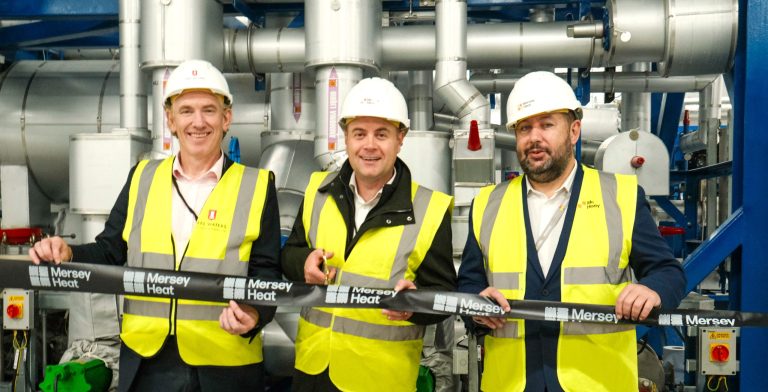
Providing a low carbon future for Liverpool, the new Mersey Heat Energy Centre opens today

Providing a low carbon future for Liverpool, the new Mersey Heat Energy Centre now open

Yesterday marked a significant milestone for Liverpool and its journey to achieving net zero, as The Peel Group, together with district heat network specialist Ener-Vate, officially opens the new Mersey Heat Energy Centre. Located within Liverpool Waters, the project received £7.5m Heat Networks Investment Project (HNIP) funding towards the Energy Centre and network, which will deliver reliable, energy-efficient heating and hot water to a growing number of residential, commercial, and public buildings at the Liverpool Waters development and across the city. Businesses based within No. 8, No. 10, and No. 12 Princes Dock made history by being the first commercial office buildings in Liverpool to connect their heating and hot water supply to the multi-million-pound Mersey Heat network and Energy Centre. Running through Liverpool Waters, the heat network provides further sustainable infrastructure to serve Peel Waters’ wider regeneration plans for its growing Liverpool Waters District. The Titanic Hotel, Tobacco Warehouse and Torus Housing’s Hartley Locks scheme are now also connected to the Mersey Heat Network with the Cunard Building, George’s Dock Building and Museum of Liverpool now committed to connect as part of Mersey Heat’s southerly expansion. Designed and built by leading renewable energy company Vital Energi, the new Energy Centre houses one of the UK’s largest two-stage water source heat pumps provided by Star Refrigeration. Harnessing heat from the nearby Leeds and Liverpool Canal and distributing it through the 6km district heating network, the system supplies surrounding homes and businesses with low carbon heat and hot water, while cutting carbon emissions by an impressive 4,200 tonnes each year. The Mersey Heat Energy Centre was officially launched at an event with Cllr Liam Robinson, Leader of Liverpool City Council and Cllr Anthony Burns, Liverpool City Region Cabinet Member for Net Zero, as well as James Whittaker, Managing Director of Peel Waters. The Liverpool City Region was the first to declare a climate emergency back in 2019 and set the ambitious target to be carbon neutral by 2035 or sooner. Since 2005, carbon emissions in the city region have dropped by 40%. Cllr Anthony Burns, Liverpool City Region Cabinet Member for Net Zero, commented: “Building a cleaner, greener future isn’t just about meeting targets – it’s about improving people’s lives. The Mersey Heat Energy Centre is a fantastic example of how we can use our region’s strengths and ingenuity to cut carbon, lower energy bills, and support jobs in the industries of the future. “I know the scale of the challenge we’re facing – but also the scale of the opportunity. Projects like this show that we’re serious about hitting our target to be net zero by 2035, at least a decade ahead of the rest of the country, and that the Liverpool City Region is leading the way.” David Tatton, Investment Director – District Heat, Peel Group, said: “With the UK’s target to reach net zero by 2050, today is an important milestone for Liverpool’s journey to decarbonisation. Projects like this not only play a vital role in helping the country meet its carbon reduction goals, but it also demonstrates what can be achieved through innovation, collaboration and a commitment to a cleaner future.” Jo Longdon, Strategy and Development Director, Ener-Vate, said: “The Ener-Vate team is thrilled to have been part of this exciting project from the very beginning and officially opening the new Mersey Heat Energy Centre today marks a huge milestone for us and for Liverpool. The city is leading by example, paving the way for decarbonisation and for other cities to follow suit in leaving fossil fuels behind and delivering low carbon sources of heat.” The new Energy Centre will deliver 20GWh of heat every year, which will serve up to 6,700 homes and 1.3 million square feet of commercial space. However, there is planning permission in place to expand the project to supply around 45GWh, which is the equivalent of supplying 17,000 new homes with low carbon heating and hot water. Andrew Wightman, Regional Director, Vital Energi said: “We are pleased to see the new Mersey Heat Energy Centre now officially open, and proud to have played a pivotal role in the design, build, and maintenance of this network, which will be delivering low-carbon infrastructure for the city. It is a showcase project for Liverpool, and other areas across the UK looking to achieve their net zero aspirations.” Cllr Liam Robinson, Leader of Liverpool City Council, said: “The launch of the Mersey Heat Energy Centre is a landmark moment in Liverpool’s journey towards a cleaner, greener future. It is a visible example of how Liverpool is leading the way on low carbon infrastructure, protecting historic buildings, cutting emissions and creating long term green value for our communities. “Liverpool has long been a leader in climate action, and this project reinforces our commitment to achieving net zero. It’s not just about infrastructure, it’s about creating a legacy of sustainability that benefits our communities, our economy, and our environment. “I’m proud to see this vision and investment come to life, creating jobs in the emerging green economy. I want to thank all the partners involved for helping Liverpool take another bold step towards a low carbon future.” For more information about the new Mersey Heat Energy Centre visit www.merseyheat.co.uk Building, Design & Construction Magazine | The Choice of Industry Professionals

Read More »
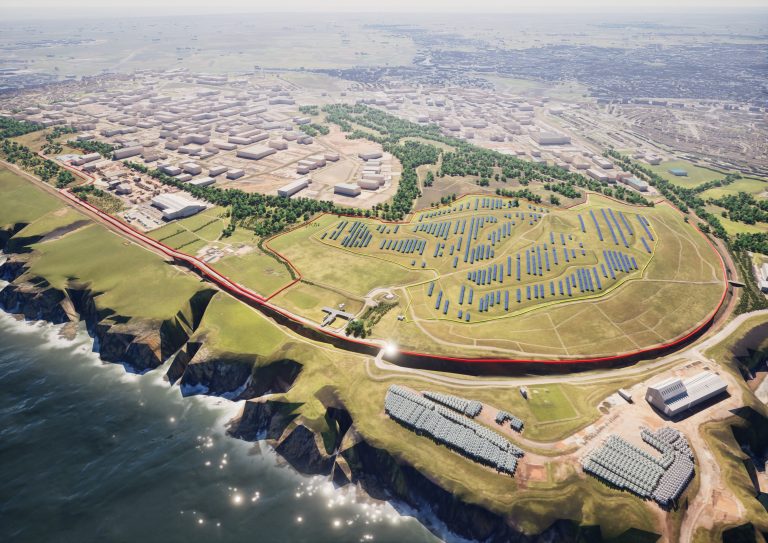
Former Aberdeen landfill to be redeveloped as home to solar power and hydrogen project

Former Aberdeen landfill to be redeveloped as home to solar power and hydrogen project

A historical landfill site is to be redeveloped to create a solar farm as part of the first phase of a green hydrogen infrastructure initiative being delivered by bp Aberdeen Hydrogen Energy Limited (bpAHEL), a joint venture between Aberdeen City Council and bp. RSK Renewables, an RSK Group company, will work with bpAHEL on the project on the former Ness Landfill site, located on Coast Road in Aberdeen, adjacent to Nigg Bay. Engineering design work has started at the site, with construction expected to start early in the new year. RSK Renewables Managing Director Adrian Strudwick said the team was excited about contributing to a project that redevelops a historical landfill site to produce renewable energy. He noted that it was also part of the first phase of a green hydrogen infrastructure initiative being delivered by the bpAHEL joint venture. This will provide power for a hydrogen production facility and refuelling station for buses and trucks. Adrian said: “RSK Renewables is responsible for the engineering, procurement, construction, commissioning and testing of the planned 8 MW solar farm. Guided by our in-house design and structural engineering teams, we identified a custom ‘tree-type’ mounting system as the optimal solution. This innovative design minimises ground disturbance, preserving the integrity of the former landfill’s protective capping while securely and efficiently supporting the solar array. With this solution also not requiring concrete or ballasted foundations, it enables the project to be built with a reduced CO₂ impact.” At the peak of the project, the team expects to have 50 to 60 people on-site, including civil engineering and electrical specialists. RSK Renewables will also remain with the project for two years as part of the operating and maintenance contract associated with the project. The solar farm will feature: Other RSK Group companies contributing to the project include RSK Advantage (pre-contract services) and RSK Asbestos (providing on-site monitoring services in relation to the former landfill site). Building, Design & Construction Magazine | The Choice of Industry Professionals
Read More »