Products & Materials : Civil Products News
PERI UK and VEMAVENTURI tackle the hidden cost of uncertainty in concrete construction

PERI UK and VEMAVENTURI tackle the hidden cost of uncertainty in concrete construction

Formwork manufacturer PERI and concrete monitoring specialist VEMAVENTURI are offering contractors real-time insight into the concreting process, enabling pours to proceed faster and formwork to be struck earlier with confidence. Key takeaways When people think about risk during concreting, they often picture dramatic failures: blow-outs caused by excessive formwork pressure, hidden

Read More »
Made in UK: United Infrastructure and Rotork Mark Major Manufacturing Milestone with Highly Skilled British Workforce

Made in UK: United Infrastructure and Rotork Mark Major Manufacturing Milestone with Highly Skilled British Workforce

United Infrastructure’s CO₂ Transportation and Storage (T&S) project in Liverpool Bay marks significant step in this decarbonisation programme. United Infrastructure and Rotork celebrated the completion of the first batch of IQ3 Pro intelligent electric actuators rolling off the production line for deployment on Liverpool Bay CCS Limited’s (LBCCS) CO₂ Transportation

Read More »
DW Windsor helps to preserve Victoria Embankment’s lighting heritage 

DW Windsor helps to preserve Victoria Embankment’s lighting heritage 

The Thames Tideway Tunnel is a £4.6 billion infrastructure project designed to modernise London’s ageing sewer network. As part of the project, several sites along the Thames were expanded to accommodate the additional infrastructure required for the tunnel, creating new riverside public spaces and prompting upgrades to existing lighting assets. 

Read More »
Wetter winters and major infrastructure drive demand for temporary roadway mats

Wetter winters and major infrastructure drive demand for temporary roadway mats

Large UK infrastructure projects, particularly across the renewables and water sectors, are driving increased demand for temporary roadway mats as more frequent and prolonged wet ground conditions continue to affect site access and construction programmes. Ground engineering and geotechnical specialist Spencer Quantum, part of RSK Group, has expanded its temporary

Read More »
New applications brochure from Polypipe Building Services simplifies water system designs

New applications brochure from Polypipe Building Services simplifies water system designs

Polypipe Building Services has launched a new applications guide designed to help specifiers, consultants, contractors and any other party involved navigate the complexity of water supply system design, with a clear, practical route to selecting high-performance, sustainable solutions.  Titled ‘A guide to water supply applications’, the brochure matches common system

Read More »
Wrekin products becomes first UK manufacturer to achieve CCPI assessed status for ductile iron range

Wrekin products becomes first UK manufacturer to achieve CCPI assessed status for ductile iron range

WREKIN PRODUCTS has become the first civil engineering product manufacturer in the UK to achieve Code for Construction Product Information (CCPI) assessed status for its ductile iron range, reinforcing its position as a trusted and transparent partner to the construction sector.  The CCPI is an industry-led initiative developed to raise the standard of product information across the construction industry. Achieving assessed status

Read More »
Doka Intelligent Heated Formwork to make its UK debut at the UK Concrete Show

Doka Intelligent Heated Formwork to make its UK debut at the UK Concrete Show

The stage is set for Doka to showcase its Intelligent Heated Formwork prototype at this year’s UK Concrete Show. The formwork and scaffolding specialist’s next-generation system sets a new standard in automated formwork, enabling safe, efficient use of CO2reduced concrete all-year-round. The two-day UK Concrete Show (25-26 March)  at NEC Birmingham

Read More »
Latest Issue
Issue 343 : Aug 2026

Products & Materials : Civil Products News

PERI UK and VEMAVENTURI tackle the hidden cost of uncertainty in concrete construction

PERI UK and VEMAVENTURI tackle the hidden cost of uncertainty in concrete construction

Formwork manufacturer PERI and concrete monitoring specialist VEMAVENTURI are offering contractors real-time insight into the concreting process, enabling pours to proceed faster and formwork to be struck earlier with confidence. Key takeaways When people think about risk during concreting, they often picture dramatic failures: blow-outs caused by excessive formwork pressure, hidden voids, or structural defects. However, most projects experience something less visible. A wall is poured more slowly than necessary because actual pressure can’t be seen. Formwork remains in place longer because strength can’t yet be confirmed. A crane waits, follow-on trades are delayed, and equipment stays on hire for another day. Individually, none of those consequences seem that significant, but together they become a hidden cost that many concrete projects pay. For decades, that has simply been accepted as part of construction. The question is whether it still has to be. Turning hidden conditions into visible information Enter VEMAVENTURI, originally a Swedish start-up and now part of the PERI Group, specialising in technologies that enable contractors to see exactly what is happening inside formwork in real-time. Fresh concrete quality can be verified before it even enters the formwork. Concrete pressure can be monitored during a pour rather than estimated from theoretical assumptions so it can proceed at the optimal speed. Filling and compaction can be confirmed in areas where visual inspection isn’t possible, avoiding expensive rework or long-term quality issues. Concrete strength can be tracked as it develops rather than inferred from time alone, so formwork can be struck as soon as the structure is ready, not simply because a certain amount of time has passed. And all this information is brought together in a single digital platform. “Contractors naturally build in extra time and capacity to protect safety and quality,” explained Aaron Lucid, global partnership and channel manager at VEMAVENTURI. “However, real-time concrete data eliminates the need for overly conservative margins. It allows them to fully leverage the engineering built into their formwork investment, unlocking major time and cost savings without ever compromising structural integrity.” Proven on UK construction sites On major infrastructure projects, the value of monitoring is not always about increasing speed. Sometimes it is about giving teams confidence in conditions they cannot see. As part of the HS2 programme, Balfour Beatty VINCI installed the A46 Bypass Bridge near Kennilworth using an innovative bridge slide technique that moved the 14,500 tonne concrete structure into position in just 18 days. Once the bridge was in place, concrete infill was required on either side of the structure. However, the design included tall, enclosed voids with no direct line of sight, making it impossible to visually confirm whether concrete had fully reached every area. Working with PERI UK and VEMAVENTURI, the project team deployed 24 PHONO sensors linked wirelessly to a cloud-based monitoring platform. The system provided live visibility of concrete movement during the pour, allowing the team to confirm full coverage, switch pump lines when required, and maintain the required rate of rise throughout the three-day concreting operation. In total, more than 800 m3 of self-compacting concrete was monitored, creating a digital record to support quality assurance and compliance. The result was not simply a smoother pour but verified evidence that the concrete had fully filled the required areas during a critical phase of the project. “The PERI/VEMAVENTURI void sensors proved to be an invaluable addition to our quality assurance and control processes during the A46 bridge slide and associated pours,” said Maurice Dowling, works manager at Balfour Beatty VINCI. “They gave us the confidence, control, and traceability needed for a critical and complex operation.” At the forefront of global innovation It’s not all about speed. Construction projects are becoming more complex at the same time as regulations are tightening and demands on documentation are growing. Information that once disappeared with the concrete is increasingly expected to form part of the project’s quality record. This trend is reflected in the strong demand for VEMAVENTURI’s SONO Hub digital water content monitoring system in South Korea, where a series of high-profile structural failures led the government to mandate water-content testing of fresh concrete. By replacing time-consuming manual testing with rapid digital measurement, contractors can verify concrete quality before it enters the formwork. Meanwhile, the PHONO monitoring system was developed, to enable contractors to better detect incomplete filling and inadequate compaction inside complex formwork. The technology provides real-time confirmation that concrete has reached difficult-to-observe areas while also monitoring vibration, helping reduce the risk of hidden voids and ‘honeycombing’. Certainty doesn’t end when the pour does While these technologies are not yet widely specified in the UK, demand is growing as contractors seek greater confidence in quality, stronger documentation, and improved programme certainty, particularly on major infrastructure projects and high-rise developments. Monitoring creates a valuable digital audit trail. Project teams can demonstrate the conditions that existed during a pour, explain why key engineering decisions were made, and retain evidence that supports quality assurance long after the concrete has cured. That information may prove just as valuable years later if workmanship, compliance or engineering decisions are ever questioned. A different way to think about cost One of the most common misconceptions about concrete monitoring is that it represents an expensive project add-on, especially if it’s not yet mandated as in some markets. Several of VEMAVENTURI’s monitoring solutions are designed to be reused across multiple pours and projects, so that contractors continue extracting value from the hardware over time. However, a more important consideration is the cost of uncertainty. How much programme time is lost waiting for the confidence to proceed? How much plant, labour, or temporary works remain on site because the safest decision is to wait? What is the cost of discovering a quality issue only after the concrete has hardened? What is the value of having objective evidence if a decision is questioned months or years later? Formwork and monitoring working hand in hand Most of the time, things go well. Contractors apply a wealth of experienced judgment and expertise to the concreting process, often only getting in touch for help with monitoring when they run into a specific site problem. “Certainly, we can

Read More »
Made in UK: United Infrastructure and Rotork Mark Major Manufacturing Milestone with Highly Skilled British Workforce

Made in UK: United Infrastructure and Rotork Mark Major Manufacturing Milestone with Highly Skilled British Workforce

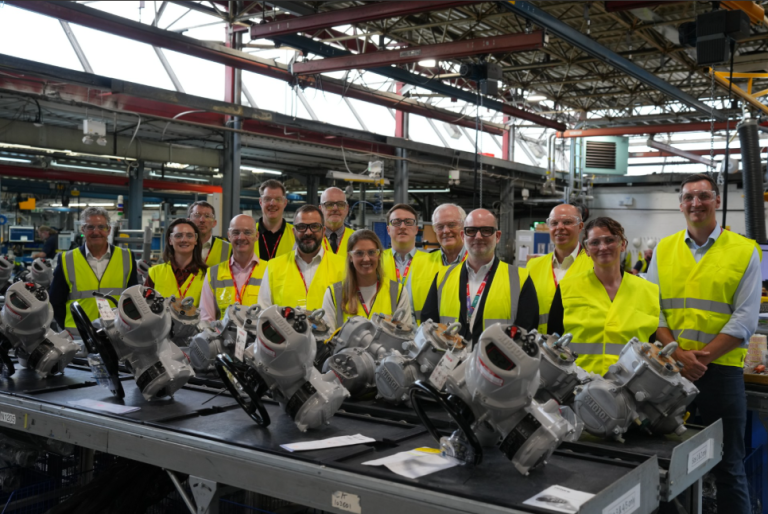
United Infrastructure’s CO₂ Transportation and Storage (T&S) project in Liverpool Bay marks significant step in this decarbonisation programme. United Infrastructure and Rotork celebrated the completion of the first batch of IQ3 Pro intelligent electric actuators rolling off the production line for deployment on Liverpool Bay CCS Limited’s (LBCCS) CO₂ Transportation and Storage (T&S) project, a critical component for the project. The milestone was celebrated during a visit to Rotork’s manufacturing facility in Bath by project partners and stakeholders showcasing how UK manufacturing, engineering excellence and collaboration are supporting the delivery of critical infrastructure that will support net zero ambitions. United Infrastructure is delivering critical elements of the Liverpool Bay CO₂ Transportation and Storage (T&S) project, on behalf of LBCCS. Rotork is supporting this nationally significant infrastructure through the design and manufacture of its IQ3 Pro electric actuators in Bath, ensuring the safe and efficient operation of the CO₂ transportation network that will transport captured carbon dioxide for permanent offshore storage beneath Liverpool Bay. Manufactured in the UK by a highly skilled British workforce, the actuators represent far more than a production milestone. They demonstrate the strength of the UK’s engineering and manufacturing sector, supporting domestic supply chains, creating high-value employment, investing in apprenticeships and developing the next generation of engineering talent. The Liverpool Bay CO₂ Transportation and Storage (T&S) project forms the backbone of HyNet, one of the UK’s first low-carbon industrial clusters. Once operational, it will enable carbon emissions from industries across the North West of England and North Wales to be safely transported and permanently stored, helping decarbonise some of the country’s most energy-intensive industries while supporting economic growth, inward investment and industrial competitiveness. United Infrastructure and LBCCS were joined by other trade partners, including valve supplier LFF Valvenco and the trade association Energies Industry Council (EIC), who met the teams at Rotork responsible for designing and producing the IQ3 Pro actuators. Guests viewed the first units being prepared for the Liverpool Bay project before discussing the next phase of delivery. Griff Thomas, United Infrastructure’s Executive Director of Energy Transition and External Affairs said: “I’m delighted to see the first actuators come off the production line for the Liverpool Bay CO2 Transportation and Storage project. At United Infrastructure, we are committed to investing in a UK workforce, and not just with our own staff, but wherever we can, we will try to source UK-manufactured parts and components so that we can ensure the next generation of the much-needed, highly skilled workforce is available in the UK for the infrastructure revolution that we are going through.” Ross Pascoe, Chief Technology Officer at Rotork, commented: “It’s fantastic to celebrate this manufacturing milestone alongside our customers and project partners. Seeing products designed and manufactured by our teams in the UK being deployed on a project of this significance is a real source of pride. The Liverpool Bay CO₂ Transportation and Storage project demonstrates how collaboration, engineering expertise and manufacturing excellence can come together to support the infrastructure needed for a lower-carbon future and the UK’s net zero ambitions.” Bath MP Wera Hobhouse said: “Congratulations to Rotork on this significant milestone. Rotork is part of the crown jewels of Bath business, and I am absolutely delighted to celebrate their continued success. Their investment in local manufacturing capability, engineering excellence and skills development, alongside supporting high-value jobs, apprenticeships and early careers opportunities in our city, makes me incredibly proud. “On a national level, their design and manufacturing work within the CO₂ transportation network is not only a vital contribution to the infrastructure’s safe and efficient operation, but also to the UK’s critical decarbonisation and net zero aspirations. I applaud their commitment and vision, and that of their partners United Infrastructure and Liverpool Bay CCS Limited.” As the Liverpool Bay CO₂ Transportation and Storage (T&S) project progresses, the collaboration between LBCCS, United Infrastructure and Rotork demonstrates how investment in UK infrastructure is creating opportunities far beyond individual projects. From supporting British manufacturing and engineering excellence to creating skilled employment and developing future talent, the project is helping build the industrial capability required to deliver a lower-carbon economy. The UK-manufactured IQ3 Pro actuators rolling off the production line represent an important milestone -not only for the Liverpool Bay CO₂ Transportation and Storage (T&S) project and the wider HyNet programme, but for the UK supply chain that will underpin the country’s transition to net zero. Building, Design & Construction Magazine | The Choice of Industry Professionals

Read More »
DW Windsor helps to preserve Victoria Embankment’s lighting heritage 

DW Windsor helps to preserve Victoria Embankment’s lighting heritage 

The Thames Tideway Tunnel is a £4.6 billion infrastructure project designed to modernise London’s ageing sewer network. As part of the project, several sites along the Thames were expanded to accommodate the additional infrastructure required for the tunnel, creating new riverside public spaces and prompting upgrades to existing lighting assets.  At Tyburn Quay and Bazalgette Embankment, these works brought two distinctive heritage lighting installations into focus. Delivered for Transport for London and the City of London Corporation respectively, the schemes formed part of Tideway Central, led by FLO Joint Venture, with FM Conway and consultant WSP among the wider project team.  Drawing on its long-standing experience working with historic lighting across central London, DW Windsor supported the delivery of both schemes, retaining the defining features of each installation while introducing the structural, lighting and control technologies needed for their continued use.  The road running alongside Tyburn Quay is lined with a mix of original Grade II-listed cast column bases and a number of later replicas. Dating from 1900, the original bases feature dolphins, floral detailing and representations of Britannia.  While the project required the lighting installation to be upgraded, preserving these historic bases was an important part of the brief. Each casting was removed from site and transported to DW Windsor’s Hertfordshire factory, where the company’s specialist restoration team repaired and repainted the decorative finishes in their distinctive combination of black, red and gold.  As part of the upgrade, new reinforced steel columns designed to retain the proportions and appearance of the originals were installed. These were completed with traditional scroll brackets and finials finished in a custom gold paint to complement the decorative elements on the bases. Strand lanterns were then fitted as a like-for-like replacement for the previous luminaires, preserving the familiar appearance of the lighting.  The lanterns incorporate efficient LED lighting technology and Zhaga sockets, currently fitted with Zhaga photocells. This future-proofs the installation by allowing CMS nodes to be added should Transport for London adopt a central management system at a later date.  Once the work was complete, DW Windsor worked alongside FM Conway to transport the restored column bases back to site and assist with their reinstallation, helping to minimise handling and protect these important heritage assets.  At Bazalgette Embankment, the project team faced a different heritage challenge. The existing lighting featured George Vulliamy’s iconic dolphin pedestal design, better known to many as the Sturgeon lamp post, originally created for the Victorian Embankment works and now one of the riverside’s most recognisable features. While the sculptural bases and cradles were retained for their architectural and historic significance, the globe lanterns above required replacement.  DW Windsor was tasked with recreating the original appearance while developing a completely new internal lighting system. The solution needed to deliver modern performance, improved control and easier maintenance without detracting from the character of the historic installation.  The age of the cradles made this particularly challenging. Created using historic manufacturing methods and exposed to decades of weathering, the individual structures varied in dimension and condition. Working with specialist installer London and Kent, DW Windsor developed an adjustable mounting system that allowed each new globe lantern to be fitted securely within its existing cradle.  Inside the recreated globe, two separate LED systems perform distinct roles. A CoB LED provides the principal downward illumination, with a rear shield helping to reduce light spill back towards the Thames, while a second light source softly illuminates the upper section and opal lid, preserving the characteristic glow and visual presence of the original globe.  Specified at 2700K, the new lighting produces a warm appearance suited to the historic riverside setting. Urban Control’s CMS technology was also incorporated discreetly within the globe, with the antenna concealed inside the fitting so that the external appearance remained unchanged.  Both Tyburn Quay and Bazalgette Embankment highlight the importance of balancing heritage preservation with modern lighting requirements. By retaining significant original features wherever possible and replacing only those elements requiring renewal, the schemes preserve the established character of Victoria Embankment while introducing improved performance and control.  Robert Maisey, Operations Director at DW Windsor, said: “At Tyburn Quay, the priority was to retain the character of the original installation. Restoring the bases and upgrading the columns, brackets and lanterns allowed us to bring the scheme back to life while introducing the structural strength and technology needed for the future.”  Alex Winship, Specials Product Design Manager at DW Windsor, added: “The challenge at Bazalgette Embankment was to recreate the appearance of the original globes while completely redesigning their internal lighting architecture. By combining two light sources, discreet CMS integration and an adjustable mounting system, we were able to preserve their familiar glow while delivering modern lighting performance.”  The schemes form part of DW Windsor’s wider contribution to the Thames Tideway project, which has included the supply of heritage and contemporary lighting across several locations.  Building, Design & Construction Magazine | The Choice of Industry Professionals Clients and partners  Clients – Transport for London / City of London Corporation  Main Contractor – FM Conway  Joint Venture – FLO (Ferrovial Construction and Laing O’Rourke)  Consultant – WSP  Specialist Installer (Globes) – London and Kent 

Read More »
GRAF UK’s new-look rainwater harvesting range maximises the use of free water

GRAF UK’s new-look rainwater harvesting range maximises the use of free water

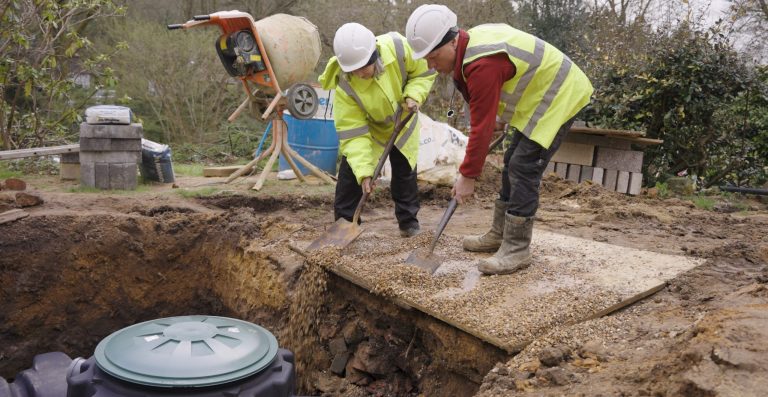
Sustainability is optimised by GRAF UK’s new-look rainwater harvesting systems. A range of award-winning rainwater harvesting systems that maximise the use of free rainwater rather than rely on mains water top-ups has been launched by GRAF UK. The specialist water management company’s AA rainwater harvesting range bucks the trend for most such systems to top up underground tanks with mains water, which means the space set aside for free rainwater is compromised by water the homeowner is already paying for. In the new GRAF UK systems, the mains water feeds directly into the plumbing rather than via the tank, so full tank capacity is preserved for rainwater. This also makes the systems compliant with the AA part of the Water Supply (Water Fittings) Regulations 1999 which demand an air gap as non-mechanical backflow protection. Failure to comply with these regulations can lead to enforcement action, as they are crucial for preventing water contamination. GRAF UK’s new range is so versatile that only two products or systems are required – the standard AA Eco-Plus and the advanced AA Silentio – with the tanks sustainably manufactured from 100% recycled plastic and built to hold between 1,500 and 7,500 litres. Both systems are designed for non-potable uses throughout the property, providing an efficient and reliable supply of rainwater for toilet flushing, washing machines, garden irrigation, and general outdoor cleaning. If the stored rainwater level becomes low, the system automatically switches to mains water via an integrated cistern beneath the pump unit, ensuring an uninterrupted supply without topping up the main tank. By keeping mains water separate from the tank, the system preserves full capacity for collected rainwater, maximising overall efficiency. Rainwater is gathered from the roof and channelled through downpipes into the underground tanks which are specially designed for shallow installation and ease of access – especially useful for refurbishment/renovation projects. As the water enters the tanks, it passes through GRAF UK’s award-winning high-performance filters, ensuring stored water remains free from leaves and debris. An external pump and control unit installed within the property draws water from the tank as needed using a floating intake which ensures extraction from the cleanest layer below the water’s surface. The external pump unit incorporates a Family Type AA air gap, providing protection in line with the water regulations. The tanks’ flat, shallow profile and ability to be backfilled with gravel rather than concrete help reduce excavation depth and installation time. Free UK mainland delivery is included as standard for even greater value. Both the AA Eco-Plus and AA Silentio systems are supplied with a telescopic dome shaft and pedestrian lid, with the option to upgrade to a vehicle-loading lid for driveways or areas with traffic. In addition, theAASilentio system also comes with a reversible flow filter and a digital display which gives the property owner an accurate level of how much rainwater is left in the tank. For more information on GRAF UK’s new AA rainwater harvesting range, please go to https://aasystems.grafuk.com/. Building, Design & Construction Magazine | The Choice of Industry Professionals

Read More »
Wetter winters and major infrastructure drive demand for temporary roadway mats

Wetter winters and major infrastructure drive demand for temporary roadway mats

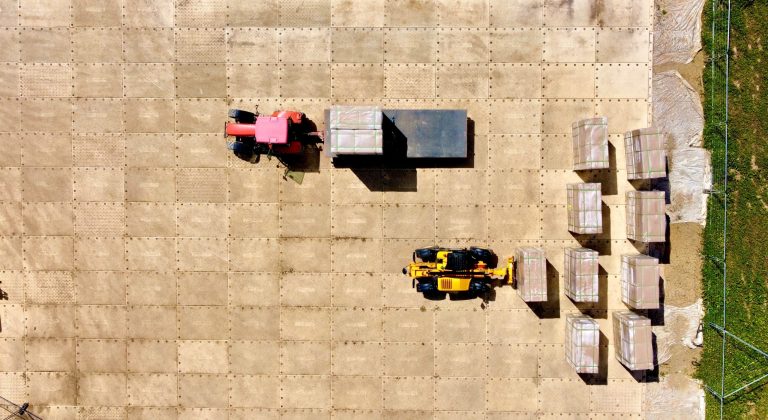
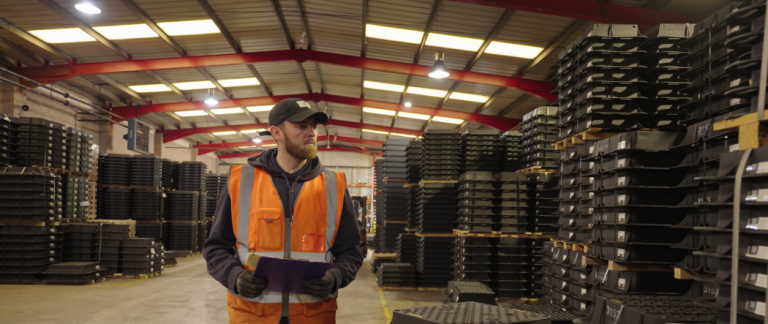
Large UK infrastructure projects, particularly across the renewables and water sectors, are driving increased demand for temporary roadway mats as more frequent and prolonged wet ground conditions continue to affect site access and construction programmes. Ground engineering and geotechnical specialist Spencer Quantum, part of RSK Group, has expanded its temporary mat fleet over the past decade. This includes an accelerated investment of more than £5 million in the last three years in response to sustained demand and increasingly challenging ground conditions. The business now operates one of the UK’s largest temporary access mat stocks, supporting projects across the highways, utilities, and environmental sectors, with around 12,000 mats creating up to 15 miles (24 km) of roadway. Managing director Ross McDermott said growth in solar farm development across the UK is a key driver, alongside wider major infrastructure activity. The business has also supplied temporary roadway mats for music and arts festivals. The versatile mat system is manufactured from strong, durable high-density polyethylene (HDPE), enabling it to withstand significant loads and high volumes of traffic while remaining light enough for efficient handling and transport. This makes the system suitable for a wide range of applications, including temporary pedestrian walkways, special events, concerts, film sets, heavy construction, and crane lift pads. Ross said: “In the past, creating access routes often required excavation of topsoil, extensive use of plant and machinery, importing hauled stone and subsequent reinstatement works. Temporary roadway mats provide a more efficient alternative, reducing both programme time and cost. “With a lifespan of 15 years or more when used correctly, the mats are also a more sustainable option than traditional haul roads, with less impact on the environment. “Each mat weighs around 219 kg, and our installation teams can lay up to 150 mats per day, enabling rapid creation of access routes and haul roads. This is particularly valuable on constrained or environmentally sensitive sites, as well as for emergency or reactive works. “The system works by distributing loads across a wider surface area, helping to reduce ground pressure and minimise rutting, settlement and damage to underlying soils during construction and installation.” Ross added that the mats maintain ground integrity even under significant plant and vehicle movements on soft or unstable ground, with the capacity to support loads of up to 280 tonnes per square metre. Building, Design & Construction Magazine | The Choice of Industry Professionals

Read More »
New applications brochure from Polypipe Building Services simplifies water system designs

New applications brochure from Polypipe Building Services simplifies water system designs

Polypipe Building Services has launched a new applications guide designed to help specifiers, consultants, contractors and any other party involved navigate the complexity of water supply system design, with a clear, practical route to selecting high-performance, sustainable solutions.  Titled ‘A guide to water supply applications’, the brochure matches common system requirements, including boosted cold water, domestic hot water, heating systems and chilled water, with the best-suited solutions from its MecFlow supply systems range. By aligning product selection with real-world applications, the guide aims to simplify decision-making across a wide range of building types.  The guide responds directly to the challenges faced on modern construction projects, from labour shortages and tighter site constraints to evolving regulatory and sustainability requirements. And with pressures around carbon reduction, water quality and long-term system performance continuing to grow, it demonstrates how the pipework specification can directly influence the efficiency, sustainability, and reliability of water supply systems.  As well as outlining key considerations for each application, the brochure highlights how plastic pipe systems can support the long-term health of a system and how material selection can contribute to more efficient, lower-maintenance solutions, supporting both operational performance and whole-life sustainability.  “Specifying water supply systems is becoming increasingly complex, with more variables to consider across performance, compliance and sustainability,” explained Scott Clark, Senior Product Manager at Polypipe Building Services. “This guide is designed to bring clarity to that process, helping our customers  match the right solution to the demands of each application, while also considering long-term system health and efficiency.” The brochure features Polypipe’s MecFlow Press and MecFlow Fusion systems, both engineered to support reliable, high-performance installations across a range of applications.  To learn more, read the new brochure here: https://www.polypipebuildingservices.com/applications/application-brochure/ Building, Design & Construction Magazine | The Choice of Industry Professionals

Read More »
What Are the Top-Rated Solutions for Improving the Durability of Asphalt Pavements?

What Are the Top-Rated Solutions for Improving the Durability of Asphalt Pavements?

Asphalt pavements have to handle far more stress today than they did decades ago. Heavier freight traffic, fluctuating temperatures, moisture intrusion and tighter municipal budgets have all placed additional pressure on road networks. Therefore, building asphalt pavements that last can be challenging. You need the right product that can extend pavement life, reduce maintenance costs and improve long-term return on investment. Here are the top-rated solutions for improving the durability of asphalt pavements. 1. Reinforcement Fiber by FORTA FORTA introduced synthetic reinforcement fibers to the U.S. in 1978 and has been developing the technology ever since. Its asphalt solution, FORTA-FI, remains one of the most recognized solutions for improving the durability of asphalt pavements. Designed for airports, highways, streets, and industrial parking lots, FORTA-FI creates a three-dimensional reinforcement matrix within asphalt mixes to help reduce thermal, reflective, and fatigue cracking, as well as rutting and raveling. The synthetic fiber blend can extend pavement life by up to 50% and has a tensile strength five times that of steel. It also integrates into existing batch and drum plant operations without disrupting production efficiency. Key Features 2. Polymer Modified Asphalt Binders by Dow Dow offers polymer-modified asphalt technologies, ideal for roads that need to survive heavy traffic, changing climates and constant wear without demanding endless maintenance. Its award-winning ELVALOY RET Polymers improve asphalt flexibility, cracking resistance and rutting performance. The company also incorporates post-consumer recycled plastics into its asphalt solutions, turning waste into high-performance pavement additives that support circular-economy goals. These technologies are already used in projects across the U.S., Indonesia and India as part of its ambition to help collect, reuse or recycle a million tons of plastic by 2030. Key Features 3. Geogrid Reinforcement Systems by Tensar Tensar is improving the durability of asphalt pavements by strengthening what sits beneath the surface. Its GlasGrid and GlasPave systems act as a hidden reinforcement layer between asphalt courses, helping pavements resist reflective cracking, moisture intrusion and long-term fatigue. Traditional overlays typically delay cracking by only about one year per inch of asphalt applied, but Tensar’s interlayer systems may extend service life far more efficiently. The open grid structure allows strong bonding between asphalt layers and transfers stress more efficiently across the pavement system. GlasPave paving mats also create a moisture barrier by limiting water infiltration into lower pavement layers. Key Features 4. Warm Mix Asphalt by BoDean Company BoDean Company’s Warm Mix Asphalt (WMA) technology proves that cooler can sometimes be better. While traditional asphalt is typically produced at temperatures above 320° Fahrenheit, the company lowers production temperatures to below 275° Fahrenheit by injecting atomized water molecules into hot binder oil. That reduction helps eliminate blue smoke, cuts CO2 emissions and lowers energy consumption, but still preserves the asphalt binder against excessive oxidation. Because WMA cools more slowly than traditional hot mix asphalt, your crews can pave more effectively in colder weather and transport material farther without worrying about rapid temperature loss. Plus, it requires fewer roller passes for compaction, which enhances productivity and worker safety. Key Features 5. Asphalt Rejuvenators by Pavement Technology, Inc. Pavement Technology, Inc. has focused on asphalt rejuvenation since 1972, when it began refining the application of Reclamite, the original maltene Deplacement Technology. Instead of simply coating pavement surfaces, Reclamite chemically restores the maltene components that asphalt loses over time. Therefore, it helps improve flexibility, adhesion and durability. The company later expanded into sustainability-focused preservation with A.R.A.-1 Ti/PlusTI Asphalt Rejuvenator, introduced in 2017 as America’s first titanium-dioxide-enhanced asphalt rejuvenator. Along with slowing pavement oxidation, the technology can reduce nitrogen oxides, volatile organic compounds and heat absorption linked to urban heat effects. Key Features Quick Comparison Table of the Top Asphalt Durability Products The following is how the top-rated solutions for improving the durability of asphalt pavements compare side by side. Company Solution Type Product Main Benefit FORTA Reinforcement Fiber FORTA-FI Tensile strength is five times that of steel, and can extend pavement life by up to 50% Dow Polymer Modified Asphalt Binders ELVALOY RET Improves flexibility and resistance to aging Tensar Geogrid Reinforcement Systems GlasGrid and GlasPave systems Reinforces overlays and mitigates reflective cracking BoDean Company Warm Mix Asphalt Warm Mix Asphalt Lowers oxidation and improves compaction Pavement Technology, Inc. Asphalt Rejuvenators Reclamite/PlusTi Restores asphalt flexibility and slows oxidation Criteria of the Solutions for Improving the Durability of Asphalt Pavements The companies and solutions in this list meet several factors, including: Frequently Asked Questions Here are some commonly asked questions about asphalt pavements. Q: How long should a well-designed asphalt pavement last? A: A well-designed asphalt pavement can last anywhere from 15 to 30 years, depending on traffic loads, climate conditions, drainage quality and maintenance practices. Preventive maintenance and reinforcement technologies can significantly extend service life. Q: What causes asphalt pavements to fail prematurely? A: Poor drainage, insufficient compaction, heavy traffic loads, thermal cracking, oxidation and weak subgrade conditions typically cause premature pavement failure. Q: Why is compaction important for asphalt durability? A: Proper compaction reduces air voids within the pavement. Excessive voids allow moisture infiltration and oxidation, both of which accelerate pavement deterioration. Paving the Way Forward The five solutions for improving the durability of asphalt pavements on this list can help roads last longer while facing heavier traffic, harsher environmental conditions and tighter maintenance budgets. Choosing the right one for your needs can lead to fewer repairs, lower life cycle costs and more resilient infrastructure that performs better for years to come.

Read More »
Wrekin products becomes first UK manufacturer to achieve CCPI assessed status for ductile iron range

Wrekin products becomes first UK manufacturer to achieve CCPI assessed status for ductile iron range

WREKIN PRODUCTS has become the first civil engineering product manufacturer in the UK to achieve Code for Construction Product Information (CCPI) assessed status for its ductile iron range, reinforcing its position as a trusted and transparent partner to the construction sector.  The CCPI is an industry-led initiative developed to raise the standard of product information across the construction industry. Achieving assessed status means Wrekin’s ductile iron product information has been independently assessed against the Code’s requirements, with a focus on the quality and management of that information rather than product performance alone. In practice, this means documentation has been reviewed to provide greater confidence that it is clear, accurate, accessible and up-to-date, as well as structured to support better decision-making across specification, installation and long-term asset management.  Wrekin’s ductile iron range was prioritised internally for assessment because it’s the company’s largest and most safety-critical offering, reflecting a commitment to ensuring that the products most relied upon by specifiers and installers are held to the highest standards of information quality.  John Kiernan, product manager at Wrekin Products, said: “Achieving CCPI assessed status is about more than a mark of quality. It is about giving our customers greater confidence that the information we provide can be trusted. It is very easy for manufacturers to make claims about their products, but being able to back those claims up with independent assessment adds a level of credibility that we believe is increasingly important in this industry. We want customers to know that what we tell them is accurate, consistent and reliable.  “This is an important step forward in how we manage and communicate our product information, and we see it as part of a longer journey. We are committed to continually improving how our product information is presented and maintained, so that we are contributing to higher standards across the construction industry.   “We encourage other manufacturers to explore what CCPI assessment involves. The process itself drives real improvements in how you present and maintain your information, and the benefits go well beyond the accreditation.”  Wrekin’s ductile iron product range includes manhole covers, gully gratings, through to kerb units, surface boxes and accessories, which are used across several sectors such as highways, housing and utilities.   Further information about Wrekin’s CCPI assessed products, including a full product finder, is available at https://www.wrekinproducts.com/ccpi   Building, Design & Construction Magazine | The Choice of Industry Professionals

Read More »
Cidon Construction relies on NPC croppers for Sheffield industrial facility upgrade

Cidon Construction relies on NPC croppers for Sheffield industrial facility upgrade

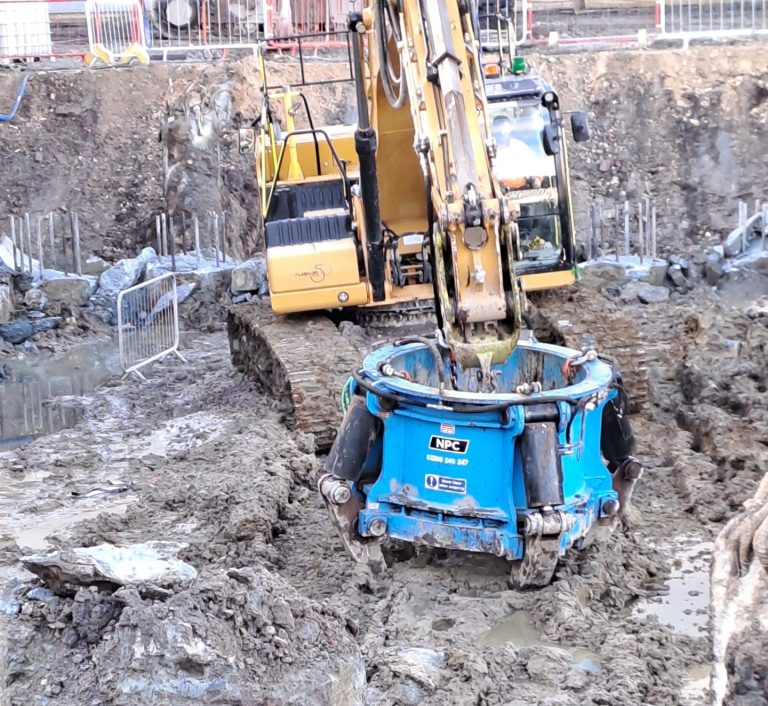
Rapid construction at a major heavy-duty Sheffield industrial facility has seen main sub-contractor Cidon Construction continue with advancing the development. In order to facilitate high quality work, rapidly, efficiently and safely, the company has been working with National Pile Croppers (NPC), which has supplied Quad L and QXL pile croppers and round the clock support for the project. The ongoing redevelopment of a heavy-duty industrial facility in Sheffield is part of a contract valued at £138 million, which will support construction of a 13,800m2 building. VINCI Building will deliver the project to provide foundations, a 40 metre high superstructure and building service solutions for the facility, alongside teams of subcontractors and supply chain partners. Due to the structure of the building, with its high load bearing walls and superstructure, secant piles were initially chosen due to their ability to be constructed and form excavations in areas of high-water table. They are also able to be high load carrying whilst suffering from less vibration during construction. These were cropped by VINCI Building using a NPC monster cropper, the QXXL, which proved ideal for dealing with the 1,050mm piles. Next stage and more cropping The initial cropping of the secant piles was undertaken using a NPC Quad XXL, which has been designed and developed to deal with piles of between 1,050mm and 1,200m.  “The development of the Quad XXL has proved to be the ideal tool for this project. It has the size to get over the 1,050mm piles and reduce them effectively. It is the only piece of kit capable of fitting in between the primary/secondary piles that have a range of 1,050mm – 1,200mm. Piles of this size often come oversized generally at the top,” explains NPC company director Scott Fitchett. This work was undertaken by VINCI Building working in conjunction with NPC. The pile cropping of the other non-secant tiles is being undertaken by sub-contractor, Barnsley headquartered Cidon Construction, which is a specialist reinforced concrete contractor with over 20 years’ experience in the delivery of complex concrete structures. For dealing with the smaller 600mm to 750mm bearing piles until the end of Jan 2026 an NPC QL was used.  Following on from that, and for cropping the larger 750mm to 950mm piles, an NPC QXL will be used.  Quad designed to be productive All three members of the NPC Quad family work in a similar fashion.  The cropper is lowered over the top of the pile to recommended height – on ‘de-bonded’ piles this could be 500mm or more. The jaws are closed until a pile section pops free, with the reinforcement bars being kept straight for ease of removal, with the broken pile section easily lifted to dumper or an identified safe area. The Quad family uses four powerful and fully synchronised rams with specially designed blades to give a superb pile cut. Best utilised on piles with ‘debonded’ reinforcement bars, the Quad design gives it a very small footprint to enable access into tight spaces. “The Quad family has certainly delivered on the Sheffield project. Both VINCI Building and Cidon Construction have been impressed with the performance. It’s been a pleasure to work with both companies on what has proved to be a demanding project,” concludes Scott Fitchett. Building, Design & Construction Magazine | The Choice of Industry Professionals

Read More »
Doka Intelligent Heated Formwork to make its UK debut at the UK Concrete Show

Doka Intelligent Heated Formwork to make its UK debut at the UK Concrete Show

The stage is set for Doka to showcase its Intelligent Heated Formwork prototype at this year’s UK Concrete Show. The formwork and scaffolding specialist’s next-generation system sets a new standard in automated formwork, enabling safe, efficient use of CO2reduced concrete all-year-round. The two-day UK Concrete Show (25-26 March)  at NEC Birmingham provides the Intelligent Heated Formwork with its first UK demonstration, following its successful unveiling at last year’s Bauma international construction trade fair. Using targeted electrical heating, the intelligent formwork accelerates low-carbon concrete curing in walls and slabs. This supports greater building schedule certainty and leads to potential CO2 savings of circa one-third compared to a standard concrete mix. Robert Hauser, Doka CEO, said: “CO2-reduced concrete is a key driver of change, and Doka is committed to supporting a lower carbon construction future. This aligns with our own ambitious goal of achieving net zero by 2040.” Concrete and cement are significant contributors to construction’s global CO2 impact. The development of low-carbon concrete mixes helps to reduce carbon emissions, but their potentially lengthy setting time – particularly in cold weather – negates some of their sustainable value. Doka’s Intelligent Heated Formwork, which has been successfully trialled in research projects and on live construction sites, addresses that issue. The system maintains a moderate temperature to protect concrete from changes in weather and temperature. Therefore, even in winter, setting times continue unaffected, saving costly building delays and increasing project sustainability. Alongside the Intelligent Heated Formwork prototype, Doka will also showcase its proven digital solutions, Concremote and DokaXact, which are already delivering value on construction sites worldwide. These sensor-based technologies provide real-time data on concrete temperature, strength development, and formwork pressure, enabling contractors to make informed decisions throughout the pouring and curing process. By improving visibility over key performance indicators, they support safer operations, optimise stripping times, and help maintain project schedules. In the context of low-carbon concrete, where slower strength development and increased sensitivity to environmental conditions present new challenges, digital monitoring becomes increasingly critical. Concremote and DokaXact allow teams to accurately track in-situ behaviour, reducing uncertainty and mitigating risks associated with extended curing times or fluctuating temperatures. Together with Intelligent Heated Formwork, these solutions form part of a comprehensive approach to enabling the safe, efficient, and scalable use of CO2-reduced concrete in real-world conditions. James Hurst, Product & Marketing Director UK, added: “The UK Concrete Show is the ideal platform to bring this technology in front of the people who will shape the next generation of construction in Britain. Intelligent Heated Formwork represents a real step forward — not just for how we build, but for how responsibly we build. We look forward to welcoming visitors to stand B50 and showing what the future of low-carbon concrete construction looks like in practice.” Doka will be exhibiting its Intelligent Heated Formwork prototype on stand B50 at the UK Concrete Show on Wednesday 25th and Thursday 26th March 2026 at the NEC Birmingham. Building, Design & Construction Magazine | The Choice of Industry Professionals

Read More »