Kenneth Booth

Opportunity “to make cities a better place” says Belgian Minister H.E. Pascal Smet at London visit 

H.E. Pascal Smet, Secretary of State for the Brussels-Capital Region, spoke last Friday at a net-positive cities event in London jointly organised by hub.brussels and the Urban Land Institute (ULI) addressing over 120 businesses and experts, and stated that, “We have to transform our cities into zero-net cities and that’s not going to be too easy. There are two

Read More »

Homes take shape at Salford’s new Neighbourhood development

New homes are starting to take shape at the ambitious Neighbourhood development being built on brownfield land in Salford that has stood empty for more than a decade. Housing association Salix Homes and partner developer Step Places are building 157 new homes on two parcels of vacant land off Kara

Read More »

CIOB welcomes focus on built environment in Queen’s Speech

This Tuesday marked the official State Opening of Parliament, with the Queen’s Speech setting out the Government’s agenda for the 2022-23 session, outlining key policies and proposed legislation. This year, for the first time, the speech was delivered by the Prince of Wales in the Monarch’s absence. During the address,

Read More »

A design-led boutique hotel with a nod to the Victorian era.

A bespoke hotel design that sets itself apart in a sea of monotonous modern structures. Spinningfields is a vibrant district in the centre of Manchester. The river Irwell defines its western edge and history, as the focus of docks and warehouses in the eighteenth century. The traditional pattern of historic

Read More »
Latest Issue
Issue 344 : Sep 2026

Kenneth Booth

Morgan Sindall Construction and SCAPE achieve CHAMPION level compliance to the Carbon Reduction Code

Morgan Sindall Construction and public sector procurement authority SCAPE have achieved CHAMPION level of the Carbon Reduction Code for the Built Environment, joining HS2 (the project)and Skanska UK in this highest category level. The Code, which is a commitment scheme designed to facilitate action and collaboration in the built environment towards reducing carbon emissions (CO2eq) related to design, construction, maintenance, operation and decommissioning of built assets, forms part of the Construction Leadership Council’s Construct Zero initiative. The Code is structured around commitments that stimulate action in different aspects of carbon reduction. All organisations who comply to the Code must set out and publish plans to meet Net Zero by 2045, including annual targets, recognising that the majority of cuts need to be made by 2030, and publish progress against it annually. This is the minimum commitment for achieving PLEDGER status. There are three levels of compliance to the Code, PLEDGER, SIGNATORY, and CHAMPION. To comply with the criteria required to achieve CHAMPION level, an organisation must sign up to all of the Further Commitments of the Code in addition to the core commitments. “We are delighted that Morgan Sindall Construction and SCAPE have achieved CHAMPON level of the Code. They join fellow CHAMPION organisations HS2 and Skanska UK, and PLEDGER level organisations – the National Association of Construction Frameworks (NACF), City Building Engineering Services (CBES), Interclass and SCF Construct,” said Dr Jennifer Schooling OBE, Director of CSIC which hosts the Code. “There are already a number of additional organisations in the Code pipeline which is promising because carbon reduction is more likely to happen when all organisations within a value chain are committed to reducing their footprint and saving costs. The Code provides a framework for organisations to make a public commitment to and report on progress towards achieving Net Zero.” Pat Boyle, Managing Director of Morgan Sindall Construction said: “We are delighted to have been recognised as a Champion according to the Carbon Reduction Code, which raises the bar for organisational carbon management standards. Our commitment to be a Champion of the Code highlights the relevance of our Decarbonising Communities approach, and underlines our ongoing efforts to work openly and collaboratively with stakeholders across the value chain to deeply decarbonise our own operations and the assets we deliver for our customers.” Mark Robinson, chief executive of SCAPE commented, “Addressing the climate emergency with practical action is a national imperative, and it is one we take very seriously at SCAPE. The Carbon Code is a hugely important initiative, and so I am absolutely thrilled that our team has achieved Champion status. The code is vital to driving the systemic and behavioural change needed within construction and will serve as a barometer against our ambitious plans to enable a direct response to the climate challenge through procurement, design and delivery innovation.  With the support of our passionate delivery partners, our talented teams and the robust governance that has been laid out in the Carbon Code, we are committed to working hand in glove with industry to chart a course that will improve the environmental performance of the public estate. Building Design and Construction Magazine | The Home of Construction & Property News

Read More »

Opportunity “to make cities a better place” says Belgian Minister H.E. Pascal Smet at London visit 

H.E. Pascal Smet, Secretary of State for the Brussels-Capital Region, spoke last Friday at a net-positive cities event in London jointly organised by hub.brussels and the Urban Land Institute (ULI) addressing over 120 businesses and experts, and stated that, “We have to transform our cities into zero-net cities and that’s not going to be too easy. There are two domains in which we have to act, in the mobility issue and the building issue.”  “We have an opportunity to make our cities a better place to live […] The public and the private sector have to work together in order to build these better cities.”  Welcoming guests to the event, Chair of the Urban Land Institute of Belgium and Luxembourg, Gabriel Uzgen, warned, “We will soon reach critical thresholds [of greenhouse gas emissions], consequences which we cannot reverse.”  He went on to say that, “We need to reconceive our buildings and redesign them to be more sustainable. Because of the scale of these issues, it is critical that city officials and businesses work together to achieve this change.  “There is no longer time for procrastination or asking questions. It’s time for action. We need to work together to share knowledge and find solutions.”   In her keynote speech, Director of Savills Earth Advisory, Marylis Ramos, echoed his sentiment stating, “The data is clear: the direction of travel is away from fossil fuels but not everyone will admit that the train has left the station, let alone how fast that train is travelling or that it may skip some stations along the way.”  Minister Smet is visiting the UK as part of the Belgian Economic Mission, a 4-day trade and political visit presided over by HRH Princess Astrid, organised to strengthen the economic and diplomatic ties between the two countries.   The UK could benefit greatly from Belgian learnings in green architecture and construction, as Belgian policy is some years ahead in this area. Both countries hold huge potential for innovation, with 40% of the UK’s carbon emissions estimated to come from the built environment and an increasing preference in Belgium for buildings made from circular concrete or sustainable timber.   Later in the event, experts covered industry issues and trends such as:  The potential for retrofitting homes to make them more energy efficient – Annette Simpson, Director of Development and Partnerships at Legal & General  Wooden buildings for environmental and social benefit – Pertti Vanhanen, Managing Director of the Cromwell Property Group  The development of flexible timber to meet changing building needs – Ana Gatóo, a PhD candidate at the Centre for Natural Material Innovation in the Department of Architecture at Cambridge   Creating a local value chain for wood from urban forests – Stephan Kampelmann, Ecological Economist and Founder of the Sonian Wood Coop  Reducing inequality through affordable and sustainable housing solutions – Annette Simpson, Director of Development and Partnerships at Legal & General   The Belgian Economic Mission is hosted from 9th – 12th May 2022. Belgian Ministers, HRH Princess Astrid and 406 business leaders are visiting the UK. A key international economic player, Belgium is ranked 13th in the world for both exports and imports by the World Trade Organisation in 2021. The country’s central European location matched by its prosperous ports makes it an ideal gateway for UK businesses looking to trade in Europe – it makes up 75% of the EU market (GDP) and 40% of consumers.  For more information on the Belgian Economic Mission and its upcoming events please visit belgianeconomicmission.be. For any questions or commentary from H.E. Smet, or any other speakers from the event, please contact Whitehouse Communications using the details below.  

Read More »

Homes take shape at Salford’s new Neighbourhood development

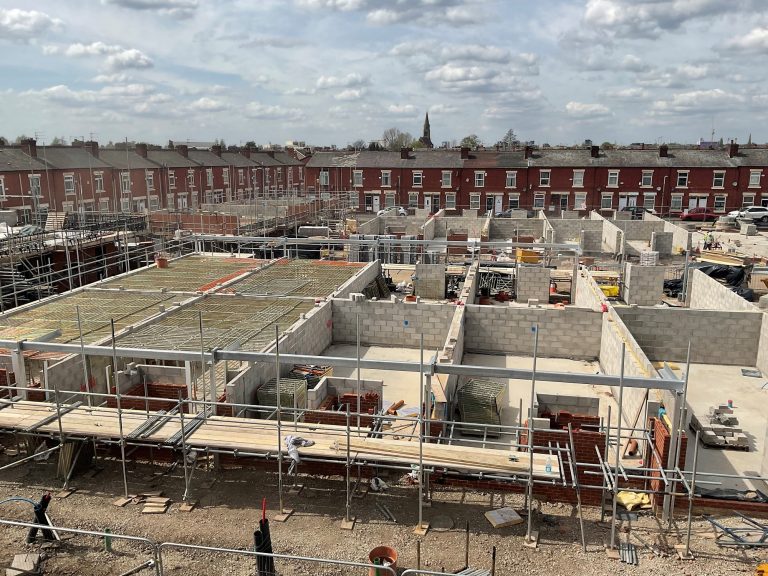
New homes are starting to take shape at the ambitious Neighbourhood development being built on brownfield land in Salford that has stood empty for more than a decade. Housing association Salix Homes and partner developer Step Places are building 157 new homes on two parcels of vacant land off Kara Street and Liverpool Street in Seedley South. The eco-friendly development, comprising social housing, homes for affordable rent and properties for shared ownership and outright sale, is on track for completion in summer 2023. Terry McBride, development manager at Salix Homes, said: “Neighbourhood will bring a new era of housing to Salford and complement the wider regeneration taking place in the area, so it’s great to see these new homes starting to take shape. “This brownfield land has stood empty for over a decade and we’re very proud to see our long-awaited vision to breathe new life into the area and deliver much needed housing, start to become reality. “With housing in such short supply, we’re confident that Neighbourhood will deliver more of the right types of homes that people need in Salford, including social and affordable housing, creating a vibrant, sustainable and aspirational community of modern, high-quality and energy efficient homes.” The community-focussed development is a mix of two, three and four-bedroom homes and one and two-bedroom apartments, and Salix Homes is working with Salford-based contractor Watson Homes to deliver its part of the scheme. The housing association has secured funding from Homes England to help finance the multi-million-pound project. Manchester poet Tony Walsh marked the start of work at Neighbourhood last year, when he penned a new poem – Salford Keys – to honour the spirit of Salford and commemorate a new era of housing and regeneration in the city. The honorary Salfordian, also known as Longfella, has a close affinity to the area, having previously worked in the Seedley and Langworthy communities as a regeneration manager. Speaking at the development launch last year, he said: “I have an association with Salford going back 40-years and know every back alley of this area in particular. Having worked on the regeneration project 15 years ago, it’s great to see what was planned back then finally come to fruition and the new Neighbourhood development will be central to the regeneration of the area.” The innovative design of Neighbourhood is a modern take on the traditional terrace house, complete with raised terrace gardens for some of the properties. There will be a public green space at the heart of the development, 86 trees planted, and all houses will have cycle storage and electric car charging points. Harinder Dhaliwal, managing director of Step Places, added: “It’s a great scheme of mixed tenures and innovative house types with sustainability high on the agenda. In the current climate of rising energy prices, the air source heat pumps and highly insulated homes will be a real benefit for occupiers” In total, 91 of the properties at Neighbourhood will be shared ownership, affordable rent or social housing, while 66 will be available for market sale, with Help to Buy support available. Salford Council is purchasing 25 of the homes for social rent, while a further five properties will go to Inspiring Housing Community Land Trust for a community-led housing model, which aims to support affordable homes for local people. Salford City Mayor Paul Dennett said: “It is fantastic to see this vacant site being brought back to life and it is very positive news this new development is eco-friendly. I look forward to joining the celebrations when the site is finished next year and people can move in. “These homes are provided against a backdrop of a national housing crisis with people on our housing lists that are desperate for affordable homes. We need to continue to work together to provide many more affordable homes in the city that local people can live in.” The 32 affordable rent homes will be allocated via Salford Home Search, while the remaining properties will be available via Salix Homes’ affordable home ownership brand – Willo Homes. The first phase of 47 homes at Neighbourhood, have already been reserved, with a further 20 homes released this month. Properties available as part of the Shared Ownership scheme are due to be released this summer, and people are urged to register their interest with Willo Homes now. For more information about homes available, email neighbourhood@salixhomes.co.uk or visit Neighbourhood Salford. Building Design and Construction Magazine | The Home of Construction & Property News

Read More »

CIOB welcomes focus on built environment in Queen’s Speech

This Tuesday marked the official State Opening of Parliament, with the Queen’s Speech setting out the Government’s agenda for the 2022-23 session, outlining key policies and proposed legislation. This year, for the first time, the speech was delivered by the Prince of Wales in the Monarch’s absence. During the address, the Prince declared that Government’s priorities are to “grow and strengthen the economy, and help ease the cost of living for families”, as well as to “level up opportunity in all parts of the country, and support more people into work”. In total, thirty-eight Bills were announced, including legislation to drive sustainable investment in public services and empower local economic growth through regeneration. Five existing Bills were also carried over from the 2021-22 parliamentary session, such as the High-Speed Rail (Crewe – Manchester) Bill. CIOB (the Chartered Institute of Building) welcomes the Government’s focus on the built environment in the legislative programme for 2022-23, most notably the alignment of net zero and sustainability priorities, with the Levelling Up and Regeneration Bill. The Bill is wide-ranging and contains devolution measures, a government duty to report annually on the twelve levelling up missions, metrics of inequality across the UK and elements from the Planning Bill, which stalled following internal disagreements within the Conservative Party on proposed reforms to the planning system in England. CIOB is also pleased to see enhanced focus on cultivating the development of greener and smarter placemaking, whilst simultaneously seeking to address quality, sustainability and safety in the sector. The new Energy; Leaseholder Reform; and Transport Bills all afford opportunities for the construction sector to lead the way in safety and quality, while hitting the UK’s net zero ambitions and housing needs. Responding to the announcement, Caroline Gumble, Chief Executive of CIOB, said:“CIOB is pleased that the built environment is a focal point for the Government’s legislation agenda and will play a pivotal role in addressing the UK’s social, economic and environmental ambitions. The aims of the new Levelling Up and Regeneration Bill, particularly through increased community involvement in planning proposals and redevelopment projects are sound, but the absence of an Employment Bill to support these initiatives could be a missed opportunity. The Covid-19 pandemic has clearly exacerbated persistent labour and skills shortages across the construction sector which has implications for those employed and seeking employment. Without a future pool of talent coming into the sector, any ambitions to build the necessary homes and infrastructure as part of the Government’s levelling up agenda will cost more and potentially reach a hard stop within a short space of time. Separately, questions remain on changes to permitted development rights (PDR), which – if implemented without significant safeguards – could lock in unacceptable standards of development, going against the fundamental desire to improve building quality and safety as set out in the recent Building Safety Act. The Government must therefore be explicit about links to existing and proposed legislation. We also welcome the announcement of a Procurement Bill, aimed at making it simpler for smaller businesses – who often struggle to secure local authority projects – to bid for public sector contracts. As part of this, Government should recognise the role of qualified professionals in ensuring professionalism, quality and value in public sector projects and programmes, and work with the sector to embed value-based outcomes as part of qualifying for public sector contracts. CIOB continues to champion these mechanisms for enhancing social value and how it can be used as a lever for improving quality, enhancing energy efficiency, promoting business best practice and improving access to the profession.” To read the transcript of the Queen’s speech, click here.

Read More »

Major green milestone for HS2 as project announces first diesel-free construction site

Canterbury Road Vent Shaft site in South Kilburn becomes HS2 Ltd’s first completely diesel-free construction site Major moment for the project in its journey towards net-zero carbon emissions by 2035 HS2 Ltd – the company building Britain’s new high speed, low carbon railway – has today [Thursday 12 May] announced its first completely diesel-free site is the Canterbury Road Vent Shaft site in South Kilburn, where HS2’s civils contractor Skanska Costain STRABAG joint venture (SCS JV) have introduced a range of diesel-free technologies and greener equipment. Earlier this year, HS2 Ltd announced that the project aims to be net-zero carbon from 2035, with the target of achieving its first diesel-free construction site in 2022, and all of its construction sites being diesel-free by 2029. HS2 Minister Andrew Stephenson said: “HS2 is boosting transport across the UK, creating thousands of jobs and levelling up communities throughout the North and Midlands, all while leaving the environment better off than how we found it. “This, the first of many diesel-free sites, is another example of how the country’s biggest infrastructure project not only delivers on its commitment to be Net Zero from 2035, but is a pioneer in leading the whole industry to cleaner, greener construction.”    Innovations on this site include one of the UK’s first 160 tonne emissions-free fully electric crawler cranes; the use of biofuels (Hydrogenated Vegetable Oil) to power plant and machinery on site; an electric compressor; and access to mains power on a 100% renewable energy tariff. HS2’s Net Zero Carbon Plan sets out how HS2 will achieve new carbon reduction milestones, support the decarbonisation of the UK construction sector and reduce the carbon footprint of the programme. Other sites are set to follow suit, with innovations including retrofit technologies, biofuels, hydrogen and solar power helping to cut carbon across the whole of the route. Peter Miller, HS2’s Environment Director said: “We’re delighted to reach this key milestone in our Net Zero Carbon Plan. HS2 is playing a major role in the decarbonisation of the construction industry, collaborating with the industry and our supply chain to accelerate innovation in low-carbon technologies. Reducing emissions and improving air quality on HS2 construction sites is crucial for both the environment and surrounding communities.” James Richardson, Managing Director of SCS said: “We’re thrilled that Canterbury Road Vent Shaft has become the first diesel-free site on the HS2 project. We’re working hard with our supply chain to introduce renewable energy, green hydrogen and sustainable biofuels to help us remove diesel entirely from our sites by 2023.” Innovations being trialled and introduced on other sites include: ‘Clean Air Gas Engine’ funded through Innovate UK and led by OakTec, which replaces diesel power with ultra-low (bio-LPG) emission engines in Advante Welfare units and standalone units. ‘EcoNet’ developed by Invisible Systems, Balfour Beatty and Sunbelt which controls and reduces energy output from key appliances, reducing power demand by 30%. Non-Road Mobile Machinery retrofit solutions which adds pollution control equipment onto older vehicles as an alternative to replacing the machine or the engine, reducing emissions. CESAR Emissions Compliance Verification which is a resilient system to show the EU Stage engine emission class of all construction plant. Proactive dust management solutions reducing impacts associated with on-site activities. Fully Electric Renewable Energy using solar and wind to power noise and air quality monitors, site security cameras and site briefing areas and solar pods powering sites by combining solar PV, battery storage and a back-up generator. Hydrogen Technology trials across sites considering both fuel-cell technology and combustible hydrogen solutions.

Read More »

Panattoni acquired new site to serve Crawley, Brighton and South Coast markets

Panattoni, the largest industrial real estate developer in Europe, has acquired a 22-acre site in an established industrial location in West Sussex for a last-mile logistics development. The site, which Panattoni has just acquired is located at Burgess Hill, fronting the A2300 dual carriageway and providing fast access to the A23/M23, Crawley, Brighton and the south coast markets. The new speculative park is already home to DPD and Roche. Panattoni is intending to speculatively develop the whole site, called Panattoni Park Burgess Hill, which will provide facilities from 7,466 sq ft to 141,460 sq ft, although design and build opportunities with a number of occupiers already showing interest bespoke units. Panattoni expects to start construction in the fourth quarter of this year with the intention of delivering units to a BREEAM rating of ‘Excellent’ and an EPC rating of ‘A’ in the middle of 2023. It will take advantage of the site’s outline planning consent to build the units quickly offering opportunities for both B2 and B8 occupiers. Panattoni vast experience of buy, build and let was recently demonstrated at the former Benthalls site in Farnborough, which it bought, built and let in just 11 months. Tony Watkins, Development Director at Panattoni, said: “This well-located site provides us with the opportunity to meet the high occupier demand for logistics space in the Crawley, Brighton and south coast markets, where the supply of available space is very low. We will be offering a wide range of unit sizes to occupiers in an area where there is a critical lack of stock to serve such a big market of consumers”. Letting agents are DTRE, Lambert Smith Hampton and SHW. Building Design and Construction Magazine | The Home of Construction & Property News

Read More »

PREMIER MODULAR DELIVERS FIRST PHASE OF A NEW MODULAR CAMPUS AT CANADA WATER

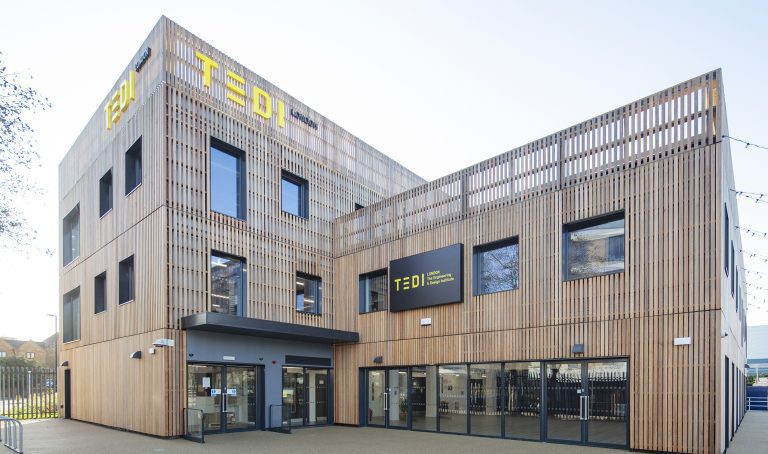
Premier Modular, one of the UK’s leading offsite specialists, has delivered a £2.6m contract to provide a bespoke, sustainable higher education facility at Canada Water in London. Occupied by The Engineering and Design Institute London (TEDI-London), the building is the first phase of an innovative new modular campus for research and development. The new facility was designed and built in just nine months in time for the first cohort of students. Premier’s modular solution allowed its rapid and sustainable construction, whilst minimising disruption to the local area. Designed by internationally-renowned architects Hawkins\Brown, the building will be in use for the next seven years to allow British Land to work with TEDI-London to develop a permanent home for its students within the Canada Water masterplan. Minimising impact on the environment was therefore a key part of the project brief. David Walters, Programme Director at British Land, said, “We are using modular construction in a really different way on this campus. It is enabling our tenants to grow with us, only taking the space they need at any one time, with the knowledge that we can respond rapidly to expand the building when they need to add more space. This is achieved with the least possible disruption, and an architectural quality that enhances the surroundings enormously.” “This project successfully demonstrates excellent design, a highly efficient building system, and outstanding collaboration at every stage.” “The partnership between Premier and Hawkins\Brown continues to work exceptionally well and has definitely added value to the project. We can utilise all the benefits of offsite – speed, less impact on the environment, ease of expansion, and less disruption – whilst creating a high-quality education facility which looks fantastic.” “The first cohort of students was able to occupy the building after just nine months, which is an impressive achievement.” Sarah Whittaker-Gilbey, Head of Facilities, Health and Safety at TEDI-London said, “This is a wonderful building. All the feedback has been so positive – from other higher education providers to property developers, staff, students, and the local community. It flows really well and has been designed with disability and inclusion in mind. It encourages interaction and collaboration, and has a strong community feel – exactly what we wanted. We all just love it!” Andrew Tindale, Associate at Hawkins\Brown, said, “This project has been a huge success and we love the finished building. It has really brought a brownfield site to life and has created significant social value and a sense of community. This is a welcoming, safe, and inspiring learning environment that TEDI-London and its students can be genuinely proud of.” “It has been a pleasure working alongside Premier and main contractor Galldris to design and deliver the building and landscape within the budget and time constraints. We believe this working relationship was critical to the project’s success.” “Both Hawkins\Brown and Premier have also been working as industry partners to the Institute, contributing to the curriculum by setting and participating in an engineering challenge.” David Harris, Managing Director of Premier Modular, added, “This use of modular construction brought a number of important environmental benefits to the project. As with all our buildings, this scheme was manufactured by Premier generating zero waste to landfill. When the Institute relocates to its permanent home, the modular structure can then be dismantled for sustainable re-use or recycling.” “The lightweight nature of the Premier steel-framed offsite system also meant the campus building could be sited on the existing concrete base of a disused carpark, avoiding the need for intrusive deep pile foundations.” Other environmental features include low energy LED lighting with PIR sensors, highly efficient heating and cooling using air source heat pumps and mechanical heat recovery ventilation, and Siberian larch cladding which can be re-used or recycled when the building is dismantled. The modules were engineered to create a large double span exhibition, events, and cafeteria space. There are four large ‘makerspaces’ for practical learning, viewing galleries, smaller conference-style meeting and teaching rooms, a full-height glazed entrance, offices and student common room. One corner of the building was extended to three storeys to add visual interest and to create a large roof terrace for social interaction and with views over the Rotherhithe peninsula. Services in the ceiling are exposed to allow students to understand the complexities of the building as part of their learning experience. The Canada Water masterplan is a 53-acre regeneration scheme which is owned in a 50:50 joint venture by leading UK property company, British Land and AustralianSuper, Australia’s biggest profit-to-member pension fund. The masterplan will deliver a new town centre for London including around 3,000 homes, alongside a mix of commercial, retail and community space. TEDI-London is a new engineering higher education enterprise founded by three global universities – Arizona State University, King’s College London, and UNSW Sydney. For further information, visit www.premiermodular.co.uk, call 0800 316 0888 or email info@premiermodular.co.uk. Building Design and Construction Magazine | The Home of Construction & Property News

Read More »

A design-led boutique hotel with a nod to the Victorian era.

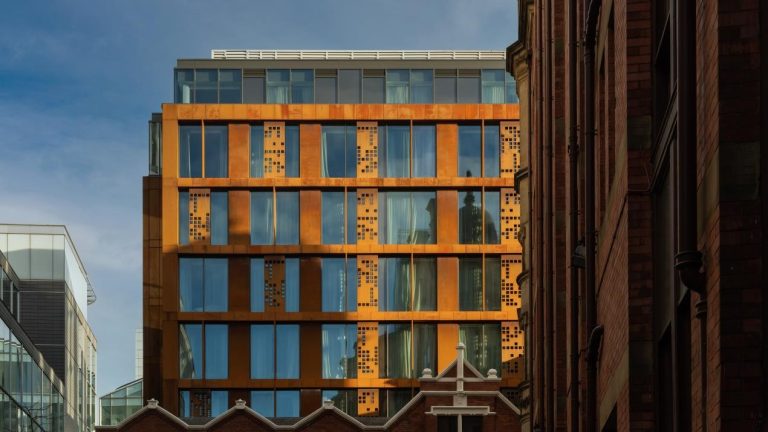
A bespoke hotel design that sets itself apart in a sea of monotonous modern structures. Spinningfields is a vibrant district in the centre of Manchester. The river Irwell defines its western edge and history, as the focus of docks and warehouses in the eighteenth century. The traditional pattern of historic narrow streets is relieved by dramatic modern public spaces. Corporate headquarters, shops, fine dining and street food, bars and libraries, nightclubs and opera houses all coexist in this diverse and eclectic neighbourhood that is always busy.  Given its 24-hour economy, it’s surprising that Spinningfields has never had a hotel. It’s not surprising however that KE Hotels acquired a site right at the heart of Spinningfields which had been destined to be another corporate headquarters. They had the vision to develop a hotel and started to explore opportunities with hotel designers Ica. The first challenge was getting a hotel layout to work. The site was very deep and square with low rise listed buildings including Invicta House, an eighteenth-century former textile warehouse. Ica maximised the space and included an entire additional floor level within the existing planning consent, condensing 147 guestrooms into the tight 750sqm plot. The hotel also features a living-room-style lobby and a stylish bar. “Ica’s knowledge of the main hotel brands is second to none. They’ve got a great track record in providing creative solutions as and when challenges arise on projects. Having worked with them for over five years, I’ve found them to be of the highest calibre, consistently delivering top quality, cost-effective schemes.”    Anil Khanna, Director KE Hotels.  KE Hotels found the perfect brand in Moxy by Marriott, a playful concept for the young at heart. The depth of expertise and research delivered by Marriott alongside this non-conforming rebel brand allowed Ica to complete the design with a very strong theme.  After the design was refined and perfected, delivery of the hotel on-site was the next challenge. An incredibly tight site surrounded by narrow lanes and buildings, as well as restricted vehicle access, a tall building, façade retention and listed buildings. This was going to be a challenge to build and a challenge to estimate and price. Ica introduced the client to Gilbert Ash as a trusted construction partner with experience in hotels as well as historic and high-profile landmark buildings. They quickly produced a well-considered construction strategy at a competitive price which was negotiated to allow work to start on site quickly. Despite the Covid pandemic, work progressed, and Ica delivered the finished hotel faithful to the original design and vision.  This hotel emerges with optimism and energy in a crucial year for hospitality as society looks forward to doing business and having fun! 

Read More »

Planning approval for 93 luxury apartments on The Bishops Avenue by Hampstead Heath

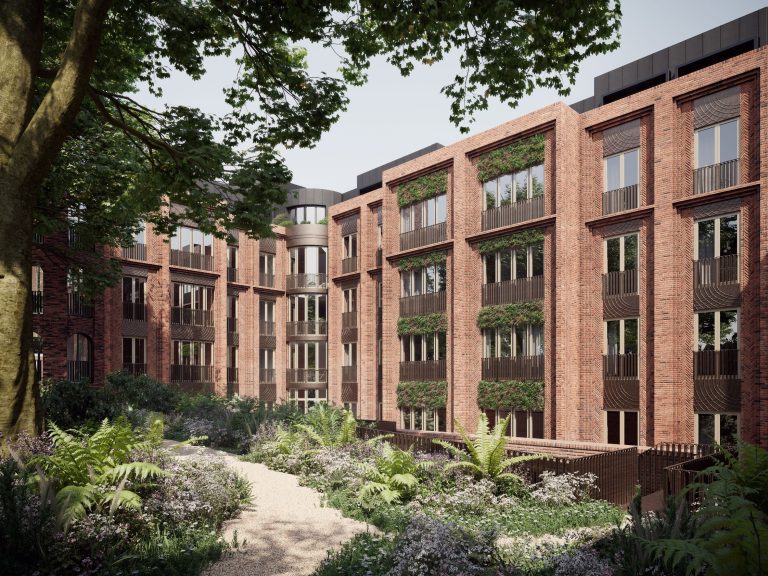
APPROVAL FOR SUSTAINABLE APARTMENTS BY HAMPSTEAD HEATH Planning permission has been granted for a luxury residential development of 93 sustainable apartments for over 65s on The Bishops Avenue, by Hampstead Heath. Designed by multi-disciplinary design practice, rg+p for retirement living developer, Riverstone, the approved scheme comprises a four-six storey building. The 93 apartments are a mix of one-four bedroom properties together with extensive amenities including swimming pool, sauna and steam room; ballroom; gym; cinema; salon and treatment rooms; concierge and coffee lounge; restaurant and bar with outdoor terrace; library; cycle storage and off-street parking. The interior concept and design have been prepared by Bowler James Brindley. Widely considered one of the most exclusive streets in London, The Bishops Avenue falls just outside the Hampstead Garden Suburb Conservation Area so rg+p’s design has been devised to respond to the neighbourhood. Grant Giblett, rg+p’s London director, explains: “In keeping with nearby properties, the front of the scheme follows a mansion house appearance with ground floor arched windows and decorative chimneys that compliment rich brick detailing that is synonymous with the arts and crafts movement. The rear of the property takes a more playful approach inspired by subterranean vaults and architectural follies.” Ben Walton, rg+p’s design director and the project’s lead architect continues: “The rear of the development uses a simplified language which retains the high level of workmanship and crafted details from which the project takes its inspiration. Comprising two distinct elements united with a glazed shadow gap, these share a common material palette encompassing red brick and a bronze metal panel featuring a motif that flows into metalwork balustrades.” One of the focal points for the scheme is an oak framed entrance canopy, designed to create a sense of arrival. This entrance references a more traditional porch and features a living wall system and biodiverse roof to connect the building to its natural woodland landscape and soften the overall aesthetic. Three further biodiverse roofs are also included. The scheme’s landscape design was heavily influenced by existing mature trees and ferns, which are being retained, and features a woodland walk concept devised by Chelsea Flower Show winner, Andy Sturgeon Garden Landscape & Design. This will optimise the natural setting and enhance biodiversity, with targeted bird, mammal and insect habitats, nature pond and regenerated historic native woodland. Paul Vesty, chief development officer, Riverstone, comments: “The successful acquisition of Riverstone’s third residence marks another important milestone as we prepare to open Riverstone Kensington in June and Riverstone Fulham in late summer 2022. The approved, 230,000 sq ft project at The Bishops Avenue is focused on an all-electric energy strategy targeting a net zero carbon plan. “There will be habitat creation and improvement to the mature landscape, together with green walls to enhance biodiversity, renewable energy generation with bio-solar roof panels, electric vehicle charging points for every parking space, heat recovery technology, heightened thermal performance and rainwater harvesting for landscape irrigation. Modern methods of construction will also be used to reduce waste and time on-site. We look forward to expanding Riverstone’s mix of prime London locations, wide ranging amenities and expert team to include sector-leading sustainability and social value credentials.” The Bishops Avenue marks the third scheme for rg+p with Riverstone, following on from the successful delivery of Riverstone Kensington and Riverstone Fulham. The first apartments are expected to be ready for occupancy by 2025.

Read More »

Johnson Controls Spearheads Sustainability and Innovation at Global Headquarters in Cork, Ireland

Johnson Controls (NYSE: JCI), the global leader for smart, healthy and sustainable buildings today announced that it will open an OpenBlue Innovation Centre in its global HQ at One Albert Quay, Cork, Ireland. The OpenBlue Innovation Centre in Cork aims to create a future-ready built environment for both local and global customers and is part of an international network of OpenBlue Innovation Centres working to pioneer new ways to provide smart, healthy and sustainable spaces for customers. “We are very pleased to be launching our OpenBlue Innovation Center in Cork. This centre will be focused on working with our customers to identify solutions for them to hit decarbonisation and renewable energy goals while optimising building performance,” said Tomas Brannemo, vice president and president, Building Solutions EMEALA at Johnson Controls. “This centre will serve as our regional centre of excellence to bring clients to see Johnson Controls’ latest cutting-edge innovations on how to solve for net zero”. Fitted with the most advanced Johnson Controls building technology solutions, the OpenBlue Innovation Centre will be a showcase of the latest and most innovative solutions from the company in a live environment. The research and development grant Johnson Controls received from the Irish government will support engineering activities at the centre, including developing a professional services hub for the Europe, Middle East, Africa and Latin America region over a two-year period. Johnson Controls’ research and development presence has grown substantially in recent years and it is expected that 18 new research and development roles will be created as a result of the OpenBlue Innovation Center, in addition to 40 roles already in place working on the next generation solutions for Johnson Controls and its customers. Research and development at the OpenBlue Innovation Centre will focus on the global priority to reduce carbon emissions in the building sector. The building sector accounts for nearly 40 percent of global annual CO2 emissions, making it a key focus area in the pursuit of a net zero world. “Our partnership with the Irish government through IDA Ireland shows how governments and industry can drive real change. The financial support will allow us to increase our headcount, which will contribute not only to the local economy, but also to the development of our OpenBlue net zero solutions globally to have a positive impact on climate change,” said Eamonn Hughes, vice president and general manager, Digital Solutions EMEALA at Johnson Controls. Welcoming the investment, IDA Ireland’s Head of Engineering and Green Economy, Eileen Sharpe added: “IDA Ireland is committed to supporting the work of world class companies such as Johnson Controls to utilise the latest developments in AI, Data Analytics and Cloud Architecture to build new technologies to enable a more sustainable world. This is a most welcome investment for Cork and for Ireland and is in line with our strategy aim to develop Ireland as a leading location for Sustainability Engineering solutions.” OpenBlue, Johnson Controls’ suite of connected solutions, is a key enabler changing the face of sustainability for customers today, through smart buildings technologies designed for operational energy efficiency, occupant comfort and sustainability. Cutting-edge solutions such as OpenBlue Net Zero Buildings can help drive significant improvements in energy efficiency and corresponding carbon emissions. The OpenBlue Innovation Centre in Cork will launch on May 12, 2022. Building Design and Construction Magazine | The Home of Construction & Property News

Read More »