Business : Testing, Certification & Business Tools News
FIS relaunch integrated management standard to support organisational capability

FIS relaunch integrated management standard to support organisational capability

The Finishes and Interiors Sector (FIS) has relaunched its Integrated Management Standard (IMS) as part of a comprehensive new Organisational Capability Toolkit, to help businesses in the construction industry streamline their operations, enhance their organisational capability, and comply with the latest Building Regulations. Recent updates to the Building Regulations now

Read More »
Star Power Secures ISO Re-Accreditation for 2025

Star Power Secures ISO Re-Accreditation for 2025

Temporary power solutions specialist, Star Power, has successfully achieved re-accreditation for three key international standards: ISO 9001:2015, ISO 45001:2018, and ISO 14001:2015. This reaffirmation underscores the company’s dedication to maintaining business quality, health and safety, and environmental management systems. The rigorous three-day audit, conducted by the British Assessment Bureau, covered

Read More »
RICS Introduces New Global Standards for Property Agency and Management

RICS Introduces New Global Standards for Property Agency and Management

The Royal Institute of Chartered Surveyors (RICS) has announced a comprehensive new set of standards for property professionals: the ‘Property Agency and Management Principles’. This global guideline is set to redefine best practices in property agency and management, applying to RICS members and RICS-regulated firms across residential, commercial, auctioneering, and

Read More »
NBS and CPI announce partnership

NBS and CPI announce partnership

NBS and CPI set to improve the quality and standard of product information within the construction industry Yesterday, NBS, a leading specification and construction product platform for the construction industry, announces its partnership with CPI Ltd, the independently governed, not-for-profit organisation responsible for the Code for Construction Product Information (CCPI).

Read More »
Structural Soils to investigate Future Circular Collider Site at CERN

Structural Soils to investigate Future Circular Collider Site at CERN

Geotechnical and geoenvironmental ground investigation services company Structural Soils will carry out site investigation work as part of a feasibility project supporting the Future Circular Collider study at CERN, the European Laboratory for Particle Physics. CERN’s Large Hadron Collider has a circumference of 27 km. The Future Circular Collider is

Read More »
Post-Grenfell Best Practice: CIAT Issues Recommendations for Architectural Technologists

Post-Grenfell Best Practice: CIAT Issues Recommendations for Architectural Technologists

Following the Grenfell Tower Inquiry, the Chartered Institute of Architectural Technologists (CIAT) has released a briefing, offering vital guidance for professionals in architectural technology. The report examines the recommendations from the inquiry’s Phase 2 findings and aims to establish best practices in the evolving regulatory landscape. A Focus on Building

Read More »
TALO announces UK expansion plans and new MMC accreditation

TALO announces UK expansion plans and new MMC accreditation

Offsite manufacturing specialist, TALO, is expanding its transformational timber superstructure systems for low rise housing in the UK. Developed in Finland and widely used across the Nordic countries for over 40 years, TALO’s offsite manufacturing solutions can eradicate energy bills for homeowners and residents of social and affordable housing. As

Read More »
Latest Issue
Issue 335 : Dec 2025

Business : Testing, Certification & Business Tools News

Construction professionals called on to pay due diligence amid growing Legionella risk

Construction professionals called on to pay due diligence amid growing Legionella risk

Amid rising concern about the globally increasing risk of Legionella, leading Legionella rapid testing expert Hydrosense is calling construction professionals to take a proactive approach to reducing the risk.  It comes as experts warn that the UK is facing an increased Legionella risk fuelled by climate change and warmer temperatures, providing an ideal breeding ground for Legionella bacteria. It’s estimated that there are between 4,000-6,000 cases of Legionnaires’ disease in the UK each year, killing between 7-12 percent of all those infected.1 In light of this, Hydrosense has revealed some thought-provoking new findings which advocates the need for a faster, more agile and more accurate approach to detect the full spectrum of Legionella pneumophila risk, the main cause of Legionnaires’ disease The extensive 3rd party study2, conducted by the CDC ELITE laboratory Chemicals Incorporated (CHEM Inc.) of CA, USA, saw Legionella samples using CDC reference Legionella materials tested using both the traditional lab-culture testing (CDC method) and the Hydrosense PRO rapid testing kit. One complete set of samples was processed using the lab culture method – where a culture medium is controlled and observed under laboratory conditions – which took seven days. A further three complete sets of samples were processed using the Hydrosense PRO lateral flow test method, taking just 25 minutes. The results revealed that the Hydrosense method was 100 percent accurate in identifying both L. pneumophila serogroup 1 and serogroups 2-15 from blind samples and gave comparable results to the traditional lab culture testing method but in a much quicker time. All work was completed at CHEM Inc.’s CDC ELITE and ISO/IEC 17025:2017 certified testing laboratory. For Hydrosense, the inference of this insight is that it is clear that the need for an alternative and faster method for Legionella bacteria detection can no longer be ignored. Greg Rankin, CEO at Hydrosense comments: “The statistics show that the scale and severity of Legionella cases happening in the USA, the UK and Europe are all increasing at alarming levels. With an alarming 1000% increase in the US since 20003 and only recently, the EU observed its highest annual notification rate of Legionnaires’ disease to date.4 Clearly continuing to do what we have previously done is simply not good enough.“As such, there has never been a more appropriate time for businesses, employers, property owners, construction professionals and the like to act and review how they assess, test and control the risk of exposure to Legionella bacteria.” Despite being the oldest and most widely accepted technique for the detection of Legionella bacteria, it is well documented that lab culture testing has many limitations. Foremost, most lab culture tests take 7-10 days to return results. Yet Legionella can double in a day. This large time lag means increased exposure and risk for businesses, employees and the public. Water samples can also get damaged in the transportation process, killing the Legionella inside and increasing the risk of a false negative result. Moreover, lab culture testing is also unable to detect Viable but Non-Culturable (VBNC) – which though dormant can still be incredibly dangerous – further compromising the validity of the end result. As a direct response to this issue, the breakthrough Hydrosense Legionella testing kit was developed to provide an easy and quick testing of water; on-site and without training or experience, with accurate results delivered in just 25 minutes. The result is a huge opportunity for duty managers, water management professionals and installers on the job to take a proactive approach in reducing the growing risk of Legionnaires’ disease. Greg adds: “To consider the vast progress that has been made in so many areas of medical science over recent years, it appears unfathomable that we still remain very much in the dark ages when it comes to Legionella detection. By moving away from the reliance on traditional lab methods, which take up to two weeks to provide results and ignore some dangerous forms of Legionella bacteria, to more holistic testing regimes that incorporate methods that are much faster, and better at detecting even non-culturable bacteria we have a real opportunity to reduce exposure and protect lives. “These are unprecedented times. Global temperatures are rising, water systems are becoming increasingly complex and the way we use buildings is changing, which means we must take up the mantle and find better and more effective ways to control what is becoming an increasing Legionella risk.”For further information please visit: https://hydrosense-legionella.com/ Building, Design & Construction Magazine | The Choice of Industry Professionals

Read More »
FIS relaunch integrated management standard to support organisational capability

FIS relaunch integrated management standard to support organisational capability

The Finishes and Interiors Sector (FIS) has relaunched its Integrated Management Standard (IMS) as part of a comprehensive new Organisational Capability Toolkit, to help businesses in the construction industry streamline their operations, enhance their organisational capability, and comply with the latest Building Regulations. Recent updates to the Building Regulations now require businesses to demonstrate their organisational capability, ensuring that all team members are competent and supported by effective process controls. While managing foreseeable risks has always been a legal obligation, this heightened focus from clients and Building Control officers now demands clearer evidence that companies’ processes meet required standards. The FIS Integrated Management Standard (IMS), now part of a newly developed Organisational Capability Toolkit, will help companies implement tried and proven methods of streamlining their company for the benefit of their business and its stakeholders. It will help to link and contextualise the wealth of information that FIS members have available to support compliant business management and how they can use their membership to support claims of organisational capability. This IMS sits as a central resource to help align and control resources. It provides a framework for implementing risk management systems (supported by the FIS Product, Process, People Quality Framework) that will help organisations to meet statutory and legislative requirements. On relaunching the standard at the FIS Conference and AGM in November, FIS CEO Iain McIlwee said: “This standard was developed originally to support the FIS vetting process, but really comes into its own in this new environment. It is clear in our work with members that many construction firms have great processes in place, but there can be a real disjoin between these processes. “Across the sector we see design, procurement, contracts and legal, and construction processes that should complement and support each other. However, procedures often clash, cause confusion and conflict and ultimately undermine delivery. This toolkit is a great opportunity to start to look collectively at how we cannot just hit the baseline of compliance, but help to raise standards, promote professional businesses and support the ‘Responsible No’”. The new FIS Organisational Capability Toolkit is available here https://www.thefis.org/knowledge-hub/product-process-people/ . For further information or for any questions please contact the FIS at info@thefis.org or call 0121-707-0077. Building, Design & Construction Magazine | The Choice of Industry Professionals

Read More »
EDUCATING BUILDING OWNERS ON THE MISCONCEPTIONS OF FIRE SAFETY IN RISER SHAFTS NEEDS TO HAPPEN NOW

Educating building owners on the misconceptions of fire safety in riser shafts needs to happen now

By Alex Bardett, Managing Director at Ambar Kelly With the Grenfell Tower tragedy bringing fire safety in higher risk buildings (HRB) sharply into focus, the role of riser shafts in reducing fires and improving safety has never been more important. However, they still face many misconceptions. Alex Bardett, Managing Director of Ambar Kelly, underlines the importance of educating the industry on the truth behind these misconceptions and the vital role that modular riser flooring can play in improving HRB fire safety. When it comes to fire safety, the construction industry faces many challenges, not least a lack of understanding of the perils of installing combustible materials in any UK buildings. This is exacerbated by the perceived notion that non-combustible materials are more expensive. As the Grenfell Tower inquiry highlights, the chosen material can have a significant impact on the spread of fire and smoke throughout any building – especially HRBs. In fact, the tragic Grenfell Tower fire in 2017 involved a combustible material being lit and then, amongst other things, a fire rising in a void and forming a vertical shaft due to the lack of a horizontal fire break. Furthermore, the King’s Cross station fire of 1987 involved a shaft ‘trench effect’, when a discarded match lit a combustible material and then developed into a ‘flash over’ due to the fire rising in the ‘trench’ of the wooden escalators. While upcoming Building Regulation changes are set to sharply focus attention on fire testing and certification, more education is needed on the vital roles that non-combustible products play in improving fire safety in HRBs. Upcoming changes to building regulations and fire safety The Ministry of Housing, Communities, and Local Government (MHCLG) recently issued a new parliamentary statement that will see changes to fire safety and evacuation provisions, including Approved Document B. Fire safety information must be given to the relevant dutyholder when the project is complete or when the building is first occupied. To further support enhanced fire safety from 2nd March 2025 onwards, the new updates will remove references to the national classification system for fire resistance, known as BS476. Parts 6 and 7 will require construction products to be classified in accordance with EN13501-1, with performance classes A1 and A2 for non-combustible products and B, C, D, and E for combustible products.   Non-combustible products are believed to be more expensive Non-combustible steel plate materials, featuring pre-cut holes for M&E services that are covered by a lid, are often seen as being too expensive. While the initial cost will typically be more, that cost won’t increase as the project progresses. However, the outlay for combustible GRP grating riser flooring options will increase over time, due to post-installation works. For example, GRP grating has to have holes cut into it to account for any services being fed through. Temporary fire doors will need to be fitted on every floor to meet codes of practice and prevent the spread of fire during construction, as by its very nature, grating allows smoke and flame to pass through. This increases the overall project cost. Products are often labelled as having a fire rating – that doesn’t mean they’re not combustible Specifiers will often see suppliers promoting products that have a BS476 Part 6 & 7 fire rating, which is actually a measure of the spread of flame. This is typical for GRP grating used by UK contractors as a riser flooring solution. However, all GRP grating is combustible and will add fuel to any fire that occurs in a riser shaft. The Grenfell Tower inquiry found this surface spread of flame test (BS476 Part 6 &7) does not measure combustibility, hence why it’s being withdrawn on March 2025. If the designed product for riser flooring in an HRB is specified as non-combustible at Gateway 2, contractors may believe the GRP grating has the required ‘fire rating’ and attempt to hand the project over to ‘Gateway 3’. However, despite it having a BS476 Part 6 or 7 declaration, it is combustible, meaning it will likely be rejected. Which leads us to… Mistaken assumptions of responsibility (or lack of) Often, a contractor will be under the impression that the product’s supposed fire rating is correct, handing over the project to the next person in the chain. Indeed, there are many occasions when a main contractor will say ‘The sub-contractor has bought it and said it’s fire rated, so it’s not my problem.’ However, the situation isn’t always that straightforward. Unfortunately, the main contractor will often hold all the risk and they won’t even realise they’re in this position. Additionally, if a non-combustible class A1 steel riser flooring product is specified in Gateway 2 and replaced by a combustible Class C GRP product, this needs to be recorded in the change control plan so the impact of these combustibility changes can be considered by the relevant teams. Furthermore, it must be documented before the Building Safety Regulator (BSR) signs off the building for handover at Gateway 3. Education is essential Helping suppliers and main contractors understand the benefits of non-combustible materials will go a long way towards improving fire safety in the built environment. The Golden Thread will ensure that anyone involved has up-to-date information readily available, ensuring a better understanding of the fire risks of using certain materials and the earlier identification of issues.    Industry leaders and the government also need to ensure quality standards are adhered to and regulations met. This will improve the quality of materials being used in construction for the benefit of the end user. While it’s essential that contractors know their responsibilities if they change a specified non-combustible product for a cheaper combustible alternative, suppliers also play a huge role. Their products must be tested and certified to EN13501-1 to allow design teams and contractors to make an informed comparison between products. With fire safety a vital aspect of any building’s construction, it’s imperative contractors are aware of the non-combustible opportunities, and associated benefits, available to them.

Read More »
New CIBSE approved CPD from Ideal Heating Commercial explains heat pump refrigerant types

New CIBSE approved CPD from Ideal Heating Commercial explains heat pump refrigerant types

Ideal Heating Commercial has released a new CIBSE approved CPD: Understanding refrigerants & how they affect the choice of commercial heat pumps. It addresses both synthetic and natural refrigerants, and provides valuable advice for customers seeking the most energy efficient commercial heat pump. A concise CPD, ideal for a lunchtime session, it opens with a brief introduction to heat pumps and how they operate, including the refrigerant cycle and key principles such as co-efficient of performance (COP) and global warming potential (GWP).  It then proceeds to explain the different refrigerant types (synthetic and natural) and their key features, and the factors to take into account when designing an efficient heating system using the different refrigerants.  The CPD also addresses decarbonisation in the heating sector and refrigerant phase-down, and closes by touching on the future of refrigerants. The new ‘Understanding refrigerants & how they affect the choice of commercial heat pumps’ CPD was officially launched at the BESA Annual Conference on 17th October, where it was presented by Ideal Heating Commercial Head of Specification Richard Brown. The new CPD has been introduced to raise awareness of refrigerant types, following the recent expansion of Ideal Heating Commercial’s ECOMOD range of commercial heat pumps to include natural refrigerant models for the first time. ECOMOD heat pumps are now available with R32 refrigerant, and with natural refrigerants R290 (ECOMOD 290HT) and R744 (ECOMOD CO2) which are capable of delivering high temperatures while providing ultra-low GWPs. This latest CPD joins Ideal Heating Commercial’s expanding collection, which covers the latest industry developments and provide advice of new ways to add value, performance and efficiency to customer projects.  Further CPDs address low carbon systems, heat networks and heat interface units, plant room surveys, and boiler heat exchanger materials. For more information on any of Ideal Heating Commercial’s CPD, and to book a place, go to https://idealcommercialboilers.com/cpd-courses. CPDs are delivered by Ideal Heating Commercial’s specification team managers either online or in person nationwide. Building, Design & Construction Magazine | The Choice of Industry Professionals

Read More »
Star Power Secures ISO Re-Accreditation for 2025

Star Power Secures ISO Re-Accreditation for 2025

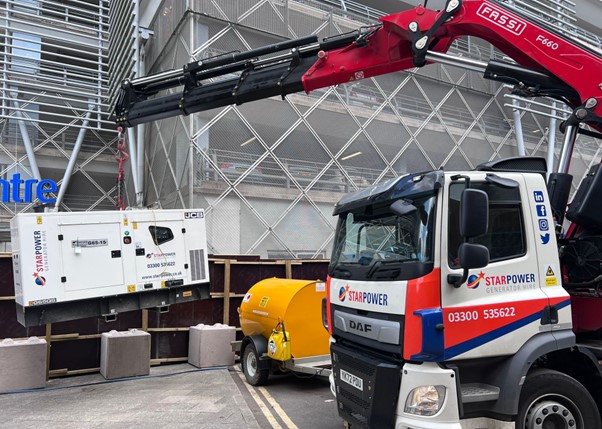
Temporary power solutions specialist, Star Power, has successfully achieved re-accreditation for three key international standards: ISO 9001:2015, ISO 45001:2018, and ISO 14001:2015. This reaffirmation underscores the company’s dedication to maintaining business quality, health and safety, and environmental management systems. The rigorous three-day audit, conducted by the British Assessment Bureau, covered multiple Star Power locations across the country, including its key operational depots. The audit concluded with no non-conformances or corrective actions. Del Patterson, QHSE Manager at Star Power, said: “Our teams have worked tirelessly to maintain the standards required for these ISO certifications. The auditors were highly impressed with the systems we have in place, and this reaccreditation shows our seriousness about upholding these important standards for quality, safety, and environmental performance.” The ISO 9001:2015 accreditation affirms Star Power’s focus on customer satisfaction and continual improvement, ensuring that quality is integrated into all aspects of its business. ISO 45001:2018 reflects the company’s ongoing efforts to ensure a safe and healthy working environment, while ISO 14001:2015 highlights Star Power’s commitment to reducing its environmental impact. Patrick Gallagher, Operations Director at Star Power, commented on the achievement: “These accreditations are not just badges; they are a testament to the ongoing dedication of our teams to maintain the highest standards in everything we do. By meeting these internationally recognised standards, we are showing our clients and stakeholders that we are committed to delivering high-quality, safe, and environmentally conscious services.” Star Power provides a full range of temporary power and site solutions across the UK, including generator hire, sales, maintenance, and water bowser hire. The company remains dedicated to upholding the highest levels of health, safety, and sustainability across its operations. Building, Design & Construction Magazine | The Choice of Industry Professionals

Read More »
RICS Introduces New Global Standards for Property Agency and Management

RICS Introduces New Global Standards for Property Agency and Management

The Royal Institute of Chartered Surveyors (RICS) has announced a comprehensive new set of standards for property professionals: the ‘Property Agency and Management Principles’. This global guideline is set to redefine best practices in property agency and management, applying to RICS members and RICS-regulated firms across residential, commercial, auctioneering, and mixed-use real estate. These standards, mandatory from 1 January 2025, aim to address the evolving demands of the real estate industry, with a strong focus on transparency, integrity, and customer confidence. A core objective of the new guidelines is to protect consumer interests and bolster the reputation of surveyors, reinforcing trust in the profession. Guiding Principles: RICS Rules of Conduct The principles draw from five essential RICS rules of conduct: Developing a Standard of Excellence The standard was developed by a team led by Kelly Smith, COO of letting and management at Allsop, with RICS senior property specialist Mairéad Carroll serving as lead author. Carroll commented, “This important standard sets clear expectations for RICS professionals when providing property agency and management services. These mandatory standards will enhance customer service and confidence in the essential services surveyors provide worldwide.” To support members in implementing these new guidelines, RICS will offer webinars and educational resources in the months leading up to the 2025 launch. Through this proactive approach, RICS aims to ensure that property management professionals are well-equipped to meet rising industry standards, paving the way for greater transparency, professionalism, and trust in real estate services globally. Building, Design & Construction Magazine | The Choice of Industry Professionals

Read More »
NBS and CPI announce partnership

NBS and CPI announce partnership

NBS and CPI set to improve the quality and standard of product information within the construction industry Yesterday, NBS, a leading specification and construction product platform for the construction industry, announces its partnership with CPI Ltd, the independently governed, not-for-profit organisation responsible for the Code for Construction Product Information (CCPI). The collaboration with CPI aims to raise standards in product information and marketing across the construction industry and drive positive culture change. Ultimately, it supports the Code in its mission to move the industry to a place where product information is clear, accurate, accessible, up-to-date and unambiguous. The partnership between NBS and CPI will help to bring clearer, unambiguous product information and marketing to the fingertips of architects and designers working on construction projects. It will see NBS integrate new functionality into its platform to help specifiers easily identify and select products and systems that have been assessed to conform with the CCPI and are registered with CCPI.  NBS Source users can now filter listings to show only products and systems with CCPI assessment, enabling them to select from options which are conforming with the CCPI. Commenting on the partnership, Dr Stephen Hamil, Innovation Director, NBS, said “At NBS our mission is to use the power of connected data to add value and enable a safe, efficient, high-quality construction sector. We’re always looking to improve the way information is delivered to end-users, helping to ensure that specifiers can be confident in the integrity of crucial product data. “Partnering with CPI, we’re allowing specifiers to have better access to clear, reliable, and assessed product information, so they can be more confident in design decisions.” Amanda Long, Chief Executive of CPI, said “At CPI, we firmly believe that improving standards across the construction industry requires a collaborative effort. Partnering with NBS is the first of many such collaborations we would like to develop to engage the industry in every corner.  Working with NBS will help us to reach out and provide specifiers with greater confidence in the product information and marketing that they need to make informed choices, reducing risk throughout the supply chain. By working together, we can drive the culture change urgently required across the sector in relation to prioritising product information and marketing that conforms with the CCPI.” Additionally, NBS has built a custom area within the NBS Source platform, dedicated exclusively to showcasing systems, and products that are registered with the CCPI and the that have achieved CCPI assessment. The CPI assessment process includes critical mechanisms, such as Leadership and Culture assessment and ongoing CPI Registration obligations for the company responsible for the product information. These do not exist elsewhere in the construction sector. The CCPI and its third-party assessment process provide valuable review and ongoing engagement to help users and specifiers have more confidence that they are working with product information and marketing that is conforming with the CCPI and that the manufacturers responsible are committed to continually updating and improving their product information and marketing.  Nigel Blacklock, Technical Director at manufacturer Bauder, who is registered with the CCPI and has been awarded the CCPI Assessed Mark for its flat roof waterproofing systems, said “Increasingly we’ve seen specifiers request third-party assessment of the product information and marketing associated with our products. The CCPI mark is a mark of trust and, crucially, having a digitally-supplied format via NBS Source makes it even easier for specifiers to spot our assessed systems and specify with greater confidence.” Building, Design & Construction Magazine | The Choice of Industry Professionals

Read More »
Structural Soils to investigate Future Circular Collider Site at CERN

Structural Soils to investigate Future Circular Collider Site at CERN

Geotechnical and geoenvironmental ground investigation services company Structural Soils will carry out site investigation work as part of a feasibility project supporting the Future Circular Collider study at CERN, the European Laboratory for Particle Physics. CERN’s Large Hadron Collider has a circumference of 27 km. The Future Circular Collider is expected to be 91km – more than three times the size of the current Large Hadron Collider. The work at CERN, which was established in 1954, aims to “uncover what the universe is made of and how it works”. CERN, the world’s biggest particle physics laboratory, does this by providing a unique range of particle accelerator facilities to researchers to advance the boundaries of human knowledge. Remaining at the forefront of scientific excellence and reinforcing European leadership in particle physics, an international collaboration is conducting a feasibility study for the Future Circular Collider (FCC), a proposed next-generation collider for the post-LHC era. This study, mandated by the update of the European Strategy for Particle Physics, explores the potential of the FCC to push the boundaries of high-energy physics. Structural Soils, an RSK Group company, has been tasked with carrying out site investigations for CERN in France in the Haute-Savoie area, south of Geneva, Switzerland. The work will examine the geology of the area with the enhanced level detail required to support the goals of the feasibility study.  Structural Soils Director Mike Williams said: “The site investigation will examine critical areas to reduce any uncertainty surrounding the geological conditions. The emphasis for our team is to review and quantify potential construction risks. This includes a focus on identifying suitable, consistent tunnelling strata, investigating potential high water pressures in the strata and ascertaining the levels of natural gas in the ground. “The Structural Soils team is incredibly excited about the opportunity to contribute its ground investigation skills to such a globally important and prestigious project. We are collaborating with two companies as part of a joint venture to deliver this work for CERN: Smart Seismic Solutions (S3), a French geophysics company, and Geotec SPA, an Italian firm specialising in deep drilling. Together, we form the consortium known as SGS3.” The project began in late September and will run for six months on-site, with associated lab testing, monitoring and reporting being carried out over a further six-month period. Mike said: “Our work involves a wide range of ground investigation techniques, including project management of a large-scale site investigation, in-situ testing, geological logging and sampling, geophysical surveys, and laboratory testing – all conducted by our expert team at Structural Soils. As the lead contractor within the consortium, we are also coordinating the efforts of our partners to ensure the project runs smoothly. “Our work will be crucial in terms of reducing the construction risk for underground works, but also the environmental aspects. It will be important for Structural Soils to work with the larger team to confirm the ground conditions to aid with the design of the best tunnel footprint alignment to advance further studies at CERN. We are committed to performing this work with minimal disruption to the local population and in strict compliance with environmental standards. Drawing on our previous experience with similar projects and working closely with local and regional stakeholders, we ensure that all activities are conducted responsibly and sustainably, with safety and environmental care as top priorities. “As part of this process, we will be producing a realistic geological underground model along with a geological profile for every location. This will hopefully provide a template for future main site investigations and our work will support plans for future civil engineering underground works. This will all contribute to the input required for the next European Strategy Update for Particle Physics in 2026/2027.” Mike said that additional RSK companies will support the project, with CAN assisting with the supply of equipment, RSK Acoustics carrying out noise/vibration monitoring, Central Alliance tasked with mobilisation planning, Drilling Supplies providing consumables and RSK France giving health and safety support. CERN France ground investigation facts: Building, Design & Construction Magazine | The Choice of Industry Professionals

Read More »
Post-Grenfell Best Practice: CIAT Issues Recommendations for Architectural Technologists

Post-Grenfell Best Practice: CIAT Issues Recommendations for Architectural Technologists

Following the Grenfell Tower Inquiry, the Chartered Institute of Architectural Technologists (CIAT) has released a briefing, offering vital guidance for professionals in architectural technology. The report examines the recommendations from the inquiry’s Phase 2 findings and aims to establish best practices in the evolving regulatory landscape. A Focus on Building Safety After Grenfell The Grenfell Tower fire tragically exposed widespread failings in building safety, including governance, regulatory compliance, procurement, and project delivery. Phase 2 of the inquiry specifically investigated these systemic shortcomings, resulting in 58 recommendations designed to improve safety standards throughout the construction and maintenance chain. CIAT’s briefing is intended to help architectural technologists prepare for the impending regulatory changes and ensure that their work adheres to the highest safety standards. It acknowledges that the profession must evolve alongside these new expectations and that the lessons learned from Grenfell should drive a commitment to improving building safety. Preparing for Regulatory Changes The briefing highlights the Labour Government’s pledge to review the Phase 2 recommendations and implement a “generational shift” in building safety, including updates to Parliament on progress. Anticipated changes include enhanced oversight of materials, stricter building requirements, and greater responsibilities for design professionals. CIAT advises architectural technologists to stay ahead of these changes by exceeding current regulations and avoiding practices that prioritise cost over quality. This proactive approach is seen as essential to rebuilding trust in the safety of UK buildings and ensuring long-term compliance. Maintaining High Professional Standards A key takeaway from the CIAT briefing is that architects and technologists must take full responsibility for the safety and quality of their work. This includes ensuring that all project records are properly maintained, particularly the “Golden Thread” of information required by the Building Safety Act 2022, which tracks the design and realisation of high-risk buildings (HRBs). CIAT also emphasises the importance of upholding professional standards as outlined in its Code of Conduct and Professional Standards Framework. For those aspiring to become Principal Designers under the Building Regulations, CIAT stresses the need for appropriate skills, knowledge, and experience to fulfil the role effectively. A Commitment to Safer Buildings CIAT’s guidance serves as a crucial resource for architectural technologists navigating the post-Grenfell regulatory environment. By committing to the highest safety standards, professionals can play a key role in ensuring that the built environment becomes safer and more resilient in the years to come. Building, Design & Construction Magazine | The Choice of Industry Professionals

Read More »
TALO announces UK expansion plans and new MMC accreditation

TALO announces UK expansion plans and new MMC accreditation

Offsite manufacturing specialist, TALO, is expanding its transformational timber superstructure systems for low rise housing in the UK. Developed in Finland and widely used across the Nordic countries for over 40 years, TALO’s offsite manufacturing solutions can eradicate energy bills for homeowners and residents of social and affordable housing. As part of its expansion in the UK, TALO has just been awarded ICW Endorsed accreditation from ICW Group – one of the country’s largest structural insurance warranty specialists, which serves all major mortgage lenders. This certification follows a robust technical assessment of TALO’s timber superstructure system and its manufacturing processes to meet ICW’s stringent MMC requirements. The endorsement means that the TALO offsite system is now pre-approved, subject to satisfactory site audits, for use in conjunction with ICW’s structural warranties across multiple housing projects. Philip Quinn, Director of Surveying Services at ICW, said, “TALO’s commitment to quality is clear, as attested by their comprehensive technical design and robust manufacturing processes. Working with TALO has been refreshing and their approach to sustainability is impressive.” “We found TALO’s team to be responsive, technically minded and engaging professionals. We are thrilled to be working in partnership together as we look ahead to future MMC projects.” Leona Wikman, TALO’s Technical Director said, “The accreditation from ICW gives our housebuilding customers the reassurance that the TALO system meets ICW’s requirements for their structural warranties.” “We have an exciting project pipeline in place for both housebuilders and social and affordable housing providers. This certification will open the doors to more opportunities in the residential sector, as well as provide our existing customers with independent verification of the consistently high-quality standards we work to.” “ICW’s MMC team visited our offsite manufacturing centre in Finland as part of the assessment process. The depth of technical knowledge of MMC and competence of their team made the approval process very straightforward.” TALO is now working towards its first UK offsite manufacturing centre as demand increases for its zero energy housebuilding solutions in the UK. Its timber superstructure system is currently manufactured in Finland for its UK customers. Once production in the first factory nears capacity, there are plans for further manufacturing centres which will be rolled out across the UK to meet customer demand and create local jobs for local housing. This will accelerate the construction of TALO’s zero energy homes – from Scotland to the South West of England. TALO specialises in the offsite manufacture and installation of advanced timber superstructures to deliver new low-rise homes for sale, rent and social housing more efficiently. The high level of thermal efficiency of the TALO system removes the need for energy bills and snagging, and at no cost premium for the developer or housing provider. For further information, visit www.talo.co.uk, call 03301 334121 or email hello@talo.co.uk. Building, Design & Construction Magazine | The Choice of Industry Professionals

Read More »