September 9, 2025
Thomas & Adamson launch new digital measured survey service with key appointment

Thomas & Adamson launch new digital measured survey service with key appointment

International construction and property consultancy Thomas & Adamson, part of Egis Group, has appointed a lead digital measurement surveyor to spearhead its new geospatial measurement service, further strengthening its capabilities across the UK.  Based in Glasgow, Matthew McQuillian brings over 20 years of experience in surveying and spatial data capture.

Read More »
Virtual Reality (VR) and Augmented Reality (AR): Revolutionising Construction Design, Training, and Client Engagement

Virtual Reality (VR) and Augmented Reality (AR): Revolutionising Construction Design, Training, and Client Engagement

Virtual Reality (VR) and Augmented Reality (AR) have transformed the way construction projects are planned, executed, and presented. By providing immersive, interactive experiences, these technologies allow professionals to visualise designs before construction begins, train teams in safe environments, and present projects to clients with clarity. Their adoption is reshaping workflows,

Read More »
Streamlined Yard Solutions for Construction and Property Teams

Streamlined Yard Solutions for Construction and Property Teams

Efficiency is all that matters when it comes to the construction and property management industry. This comes from technology that leverages an approach like the RPA in every task — from equipment and material management to health protocols and project scheduling. A key part of the flow is where tools,

Read More »
Latest Issue
Issue 340 : May 2026

September 9, 2025

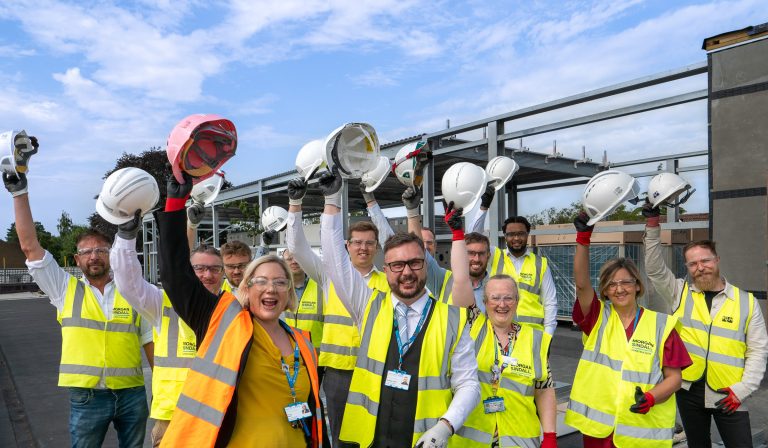
SUFFOLK CONSULTANTS IN RUNNING FOR NATIONAL HEALTHCARE CONSTRUCTION AWARD

Suffolk consultants in running for national healthcare construction award

An Ipswich-based construction consultancy is in the running for a national award for its work in delivering the new Community Diagnostic Centre (CDC) at Newmarket Community Hospital.  Castons Artelia has earned a place on the shortlist in the New Build Project of the Year category at the Healthcare Estates Awards after project managing and quantity surveying for the centre’s construction last year in collaboration with partners KLH Architects, JSH, Morgan Sindall, Sweco and the West Suffolk NHS Foundation Trust (WSFT) The CDC has proven an instant success for WSFT, seeing more than 6,000 patients and completing almost 8,900 examinations in its first 100 days alone. Adam Fuller, Senior Project Surveyor at Castons, said: “We are thrilled to have been shortlisted for such a prestigious award. “The Newmarket Hospital CDC is a project we are truly proud of, bringing together our local partners to deliver a healthcare facility that is already making waves in the way it is revolutionising community healthcare.  “Of course we are hoping for a win – but regardless, the real winners are the people living in and around Newmarket who now have access to first-class diagnostic facilities right on their doorstep, delivered by their incredible local NHS teams.”  The CDC uses equipment at the forefront of technology to provide the highest quality care while tackling waiting times and optimising patient experience. Features include MRI, CT, X-ray and ultrasound scanners, alongside equipment to provide both heart and lung scans. For MRI patients specifically, the centre helped reduce the Trust’s waiting list by 37% in just six months. Nicola Booth, Head of Estates and Development at WSFT, said: “We are delighted that our new Community Diagnostics Centre has been nominated for this award. “It is thanks to the hard work and collaborative efforts of everyone involved that we were able to deliver this project on time, under budget, exceeding exceptional carbon reduction targets in the design and construction.  “We are seeing that this facility is making a real difference, and has helped us improve waiting times and ensure patients get the care they need much more quickly, in a high quality, modern facility.” Hosted every year, the Healthcare Estates Awards recognise excellence in the delivery of healthcare facilities, awarding businesses for their work which showcase originality, innovation and quality.  Representatives from Castons Artelia will join their fellow shortlisted businesses at the awards ceremony in Manchester on October 21.  More information on Castons Artelia and its services can be found at www.castons.com.  Building, Design & Construction Magazine | The Choice of Industry Professionals

Read More »
Thomas & Adamson launch new digital measured survey service with key appointment

Thomas & Adamson launch new digital measured survey service with key appointment

International construction and property consultancy Thomas & Adamson, part of Egis Group, has appointed a lead digital measurement surveyor to spearhead its new geospatial measurement service, further strengthening its capabilities across the UK.  Based in Glasgow, Matthew McQuillian brings over 20 years of experience in surveying and spatial data capture. He previously held the role of principal surveyor at Malcolm Hughes Land Surveyors, where he managed technical teams delivering complex measurement projects for clients in construction, infrastructure, defence and heritage sectors. In his new role, Matthew will lead the rollout of the new digital measured surveys offering, drawing on his expertise in techniques such as 3D laser scanning, drone surveys, and traditional land surveying. The offering includes measured building surveys, topographical surveys, structural monitoring, and the creation of 3D models, all designed to provide clients with more accurate data, quicker turnaround times, and clearer insights to inform decision-making at every stage of a project. For the first time in the UK, Egis and Thomas & Adamson will offer these capabilities in-house and have made a significant investment in cutting-edge technology. By integrating geospatial services with its existing building surveying provision, the firm can now offer clients a more streamlined and efficient approach across the UK. Founded in 1935, Edinburgh-headquartered Thomas & Adamson has a team of over 100 staff across the UK delivering building surveying, project management, cost management and construction safety services. The launch of the collaborative service line with Egis marks the first in a series of moves that will see the two teams work more closely together and bring a wider range of services to clients, following the acquisition of Thomas & Adamson by the global architectural, advisory, construction engineering and mobility services firm last year. Hamish Paterson, director and head of building surveying at Thomas & Adamson, said: “The introduction of a geospatial measurement service is a natural and exciting development for our building surveying team, allowing us to deliver a more integrated, technology-driven approach for our clients. Matthew’s technical expertise and leadership in this area are a real asset. We’re excited to welcome him on board and look forward to seeing the positive impact this investment in technology and talent will have.” Matthew added: “Joining Thomas & Adamson at this stage of its growth is an exciting opportunity. The firm already has a strong client base that can benefit from this service, so the focus now is on raising awareness and demonstrating how high-quality spatial data can improve project outcomes.” Building, Design & Construction Magazine | The Choice of Industry Professionals

Read More »
Gateway 2: what developers and M&Es need to know for high-rise buildings

Gateway 2: what developers and M&Es need to know for high-rise buildings

Gateway 2 is a mandatory checkpoint for higher-risk buildings to comply with the Building Safety Act. While it came into force a while ago, with the timescales involved in planning, many developers and M&Es are only now facing the challenges it brings. Here the experts in providing utilities connections for high-rise and complex projects, Power On, provide an insight into how best to approach the new process.    Stringent rules for high-rise residential buildings, care homes and hospitals  The Building Safety Act introduces a more stringent regulatory framework in design and construction specifically for new high-rise residential buildings, care homes and hospitals, which are 18 metres or more in height, or at least seven storeys. Crucially, it requires developers to submit detailed plans, including fire safety and structural integrity assessments, before any construction work can begin.   Proving compliance prior to construction  Gateway 2 requires a full technical design submission, which includes detailed and dimensioned substation layouts, diagrams of high- and low-voltage networks, cable route and riser layouts. The utilities design team plays a critical role in preparing the technical information and can also assist architects, builders and developers in ensuring they are providing the right initial information to ensure the smooth running and timeliness of the whole process.   Non-compliance risks  The risks of non-compliance with Gateway 2 include delays, refusal of permission to construct or occupy the building and, ultimately, enforcement action. Failure to obtain approval at Gateway 2 can bring a costly halt to construction.   Neil Fitzsimons, Managing Director, Power On, says: “Many M&Es are still sketchy on the precise needs of Gateway 2 when it comes to high-rise buildings. This is not surprising as many are only now going through this process for the first time. Taking expert advice on the requirements from a utilities point of view can enable the process to progress smoothly and efficiently.”  Gateway 2 Enabling Service  Power On works directly with developers and M&Es to ensure they have the required design aspects for fire safety fully in place and is now providing a Gateway 2 Enabling Service to assist developers and M&Es in the process. This includes a system for navigating the deliverables to ensure that all parties are aligned and that timelines will be met.   Ensuring the right information is delivered to the utilities company in the first place, in order to get the right outputs, can prove problematic and may hold up the whole process. Power On’s Gateway 2 Enabling Service ensures the correct input and, therefore, the correct outputs. Depending on required timescales, Power On can at the Gateway 2 stage supply the entire design pack or, the individual parts of the design that are vital to the particular project to enable a fast turnaround on the essential elements.   Neil Fitzsimons concludes: “Put simply, we know what we need from the developer and M&E to enable us to efficiently provide the details to pass Gateway 2. We can make the complex simple.”   For more information on Power On’s Gateway 2 Enabling Service, please enquiries@poweron-uk.co.uk.  Building, Design & Construction Magazine | The Choice of Industry Professionals

Read More »
Virtual Reality (VR) and Augmented Reality (AR): Revolutionising Construction Design, Training, and Client Engagement

Virtual Reality (VR) and Augmented Reality (AR): Revolutionising Construction Design, Training, and Client Engagement

Virtual Reality (VR) and Augmented Reality (AR) have transformed the way construction projects are planned, executed, and presented. By providing immersive, interactive experiences, these technologies allow professionals to visualise designs before construction begins, train teams in safe environments, and present projects to clients with clarity. Their adoption is reshaping workflows, improving communication, and enhancing both safety and efficiency on construction sites. The Role of VR and AR in Design Visualisation Design visualisation has always been a challenge in construction. Physical blueprints and 2D renderings often fail to communicate scale, layout, and flow effectively. VR and AR address these limitations by providing interactive experiences that reveal spatial relationships in three dimensions. With VR, architects and clients can walk through entire buildings before construction begins, testing design choices, materials, and layouts. This approach reduces errors that might otherwise result in costly modifications during construction. AR enhances on-site decision-making by overlaying digital plans onto real-world environments. Site managers can verify that construction aligns with design specifications, detecting misalignments early. The combination of VR and AR encourages collaboration across teams. Clients, engineers, and contractors can engage with the same visual information, improving understanding and enabling faster approvals. These technologies also support risk assessment, as potential clashes in design or structure become apparent before physical work starts. The interactivity of VR and AR shares similarities with online entertainment platforms like online casino sites. Particularly non GamStop casino sites UK, that offer a wide selection of games, each with variations and different return-to-player rates, designed to engage users through immersive experiences. In both construction and digital gaming, precision, attention to detail, and interactive engagement are essential, highlighting the value of technology that allows users to explore and interact with virtual environments. Immersive On-Site Training with VR and AR Training construction workers is often complex and hazardous. VR offers a controlled environment where teams can practice operating machinery, navigating scaffolding, or handling high-risk procedures without exposure to danger. Workers can repeat scenarios multiple times, gaining competence and confidence before entering live sites. AR complements this by providing real-time guidance on site. Safety alerts, step-by-step instructions, and contextual information appear directly in workers’ fields of vision, reducing mistakes and improving compliance with safety protocols. Companies using immersive training report fewer accidents, quicker onboarding, and enhanced skill retention. Several industry case studies demonstrate measurable improvements: teams trained with VR/AR complete tasks faster and with fewer errors than those using conventional methods, making the technologies an investment in both safety and productivity. Enhancing Client Presentations and Stakeholder Engagement Traditional presentations often rely on static drawings or slides, leaving room for misinterpretation and confusion. VR and AR enable clients to explore projects virtually, walking through rooms, inspecting finishes, and visualising layouts before construction starts. Material selections, lighting, and furniture arrangements can all be tested digitally, providing a realistic sense of the final result. Remote collaboration also benefits from immersive technologies. Teams and clients can join virtual meetings, provide real-time feedback, and make adjustments instantly. This transparency accelerates decision-making, reduces revisions, and strengthens client confidence. The clarity offered by VR and AR ensures that stakeholders share a common understanding of project objectives, fostering smoother project delivery and higher satisfaction rates. Challenges and Considerations While the benefits are clear, adopting VR and AR requires careful planning. Initial investments in hardware, software, and training can be significant, particularly for smaller construction firms. Teams must learn to operate these tools effectively to avoid wasted resources. Technical limitations, such as internet dependency and evolving software capabilities, may also affect adoption. Successful implementation involves gradual integration into workflows. Starting with pilot projects or selective applications allows teams to develop expertise and evaluate impact before scaling. Ongoing updates and maintenance are essential, as the technologies continue to improve and expand their applications across construction operations. Future Outlook The use of VR and AR in construction is expected to grow rapidly. Emerging developments such as digital twins, AI-assisted modelling, and advanced simulation tools promise even more precise and interactive project management. Remote collaboration capabilities are likely to expand, allowing global teams to engage with projects in ways previously impossible. Construction businesses that adopt these tools can deliver projects more efficiently, enhance safety outcomes, and provide clients with a more transparent and engaging experience. As the technologies become more accessible and cost-effective, they are poised to become standard practice, supporting innovation while maintaining practical value.

Read More »
Streamlined Yard Solutions for Construction and Property Teams

Streamlined Yard Solutions for Construction and Property Teams

Efficiency is all that matters when it comes to the construction and property management industry. This comes from technology that leverages an approach like the RPA in every task — from equipment and material management to health protocols and project scheduling. A key part of the flow is where tools, vehicles, and resources are stored; operations can be severely hampered if this process is out of order. However, without the right systems, yards can easily become havens for distractions, causing delays, mismanagement, and added costs. That is where a streamlined yard asset management solution comes into play. What if construction and property teams could transform their yards from overcrowded dumping grounds into efficient storage spaces by implementing organized, tech-directed, and structured processes? This blog covers how streamlined yard solutions can benefit construction and property teams.  Why Organized Yard Management Is Important The yard serves a crucial multi-functional role that is much more than just a place to store materials for construction and property teams. It provides the framework for daily activities. Therefore, the yard becomes an essential bridge between planning and execution, with materials, heavy machinery, and vehicles alike passing through it. Yards in a mess mean you waste time looking for tools, your deliveries go to the wrong place, or your equipment cannot move because all the items pile up everywhere. In contrast, organized yards enable faster project completion, minimize safety hazards, and enhance team communication. Having an efficient yard management system allows you to get the right resources in the right place at the right time, so your teams can work smarter, not harder. Opting for Digital Yard Solutions Technology is among the best tools used in yard operations to make it more seamless. With yard management systems from the digital world, teams can closely track equipment, keep track of inventory, and schedule deliveries. These platforms are often integrated with construction project management tools, delivering real-time updates on teams’ resource availability. Cloud-based yard management tools give centralized oversight for property teams managing multiple sites, ensuring that duplication or shortages are less likely to happen. From GPS tracking for vehicles to barcodes for your materials and automated check-in/checkout, ensure accountability and that no unnecessary time is wasted on manual work. Embracing Safety and Compliance In construction and property management, safety is a major concern. Yards are typically bustling locations with idling machinery, heavy lifts, and ongoing deliveries to and from the warehouse. Unlike open warehouses, streamlined solutions reduce risk by establishing clear loading, storage, and pedestrian movement areas. Digital yard tools can help with compliance management by logging inspections, notifying users of overdue maintenance, and ensuring safety protocols are being followed. This increases worker safety and protects an organization from legal matters. An orderly monitored yard is not only efficient but also far more risk-free. Lower Costs Through Better Resource Utilization Poor yard operations = lost revenue. Misplaced equipment needs to be rented, delayed deliveries slow down projects, and poor stock management can incur unnecessary overstock or shortage fees. That is where streamlined yard solutions come in and counter exactly these challenges. Using the space efficiently, having availability in time, and decreasing unnecessary movement would allow teams to save time and money. This mitigates human error, creating less costly mistakes and more accurate forecasting, and also works to streamline the entire process with readily available information. Automation in Yard Management Yard management is an area where automation is becoming increasingly important. Automated gate systems that record vehicle entries and exits, drones that do aerial surveys of large yards: the team’s approach to managing their spaces is becoming increasingly tech-driven. Equipment maintenance reminders, AI scheduling tools, and contractor self-service check-in and check-out kiosks are just a few ways to improve efficiency. Such technologies enable HRs to move their focus from menial and repetitive manual processes to higher and more value-driven processes. Sustainable Yard Solutions  Sustainability is no longer a buzzword—it is a must. The yard is a great place to start when modern construction and property teams are expected to embrace eco-friendly practices. Recycling areas, effective material storage to limit waste, energy-efficient lighting, and equipment will all help to reduce a team’s environmental footprint. Digital yard solutions also reduce paper-based systems, aligning with sustainability objectives as well. Organisations that return to basics and inherently operate sustainably will create enduring value for businesses and the environment. Training and Team Collaboration Not even the best systems will work without a trained and collaborative workforce. Context is key—teams need to know more than just how to leverage yard management tools; they also need to know why they are important. Regular drills, clear protocols, and open lines of communication put everyone on the same page. In addition, collaborative tools embedded in digital yard platforms will also promote effective teamwork. They permit numerous stakeholders to have access to the same information in real time, enabling property managers, contractors, and workers to coordinate seamlessly. Conclusion Modern yard solutions are a necessity, not a luxury, for construction and property teams. By implementing the appropriate combination of organizational, technological, and training-based solutions, yards can evolve from haphazard dump sites to centers of productivity, safety, and efficiency. Digitally re-architecting organisations, automating menial tasks, and promoting sustainability help trim expenditures, increase compliance, and maintain project timelines. On teams where productivity is the currency that pays off results, the yard is the foundation. A more efficient yard will lead to greater operational efficiency, translating into a better client experience and the backbone of a growth-oriented business in the competitive construction and property management industry.


Read More »