

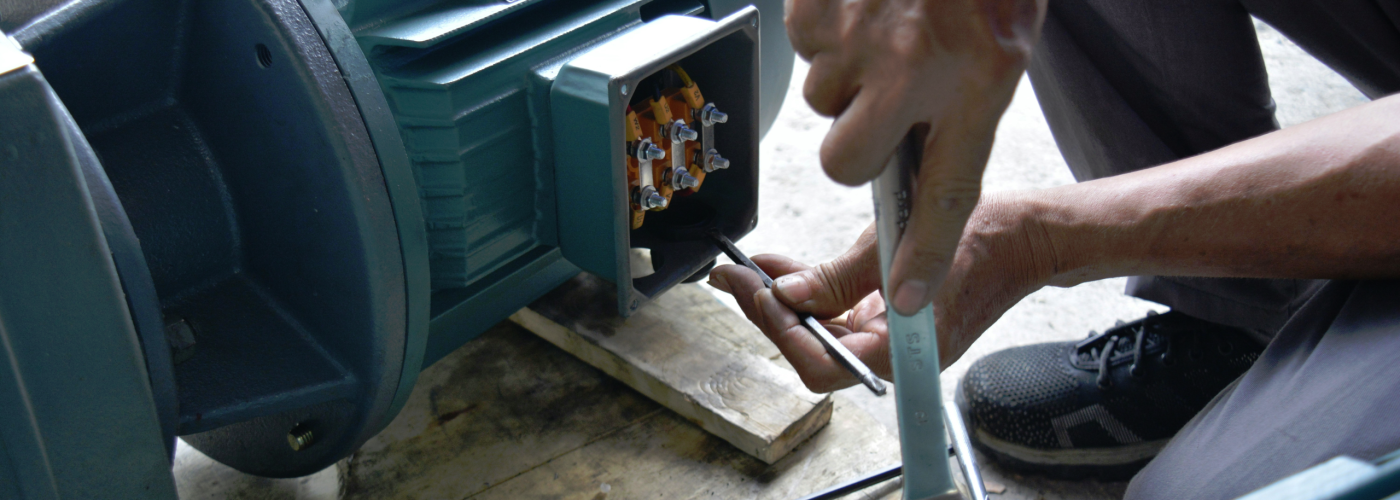


Walk into almost any commercial or industrial site, and you’ll find electric motors quietly doing the heavy lifting. They drive pumps, compressors, ventilation systems, and conveyor belts. They run the machinery that keeps buildings comfortable and production lines moving.
For the most part, nobody pays them much attention right until they stop working. That’s when contractors suddenly find themselves at the centre of a very urgent conversation. Understanding why motor repair is part of the modern contractor’s skill set is no longer optional.
Motor Failures Don’t Announce Themselves in Advance
One of the most persistent challenges for contractors is the unpredictable nature of electric motor failure.
Unlike some components that give clear warning signs over weeks or months, a motor can appear to be running perfectly fine one day and be completely out of action the next. Bearing wear, winding degradation, and insulation breakdown often develop slowly and invisibly, until the system tips over the edge.
This is why contractors who understand the early indicators, like the unusual vibration, rising operating temperatures, and intermittent power dips, are better positioned to manage their clients’ expectations and outcomes.
Recognising when a motor needs attention, rather than waiting for a full breakdown, is the difference between a planned maintenance visit and an emergency callout at an inconvenient hour.
Repair Is Often the Smarter Financial Decision
There’s a common assumption in the industry that replacing a failed motor is always faster and easier than repairing it. In some situations, that’s true. But in many others, it isn’t. And contractors who default to replacement without exploring the alternatives can end up making things harder for themselves and more expensive for their clients.
Professional electric motor repairs, carried out by a competent specialist, can restore a motor to full operational capacity at a fraction of the cost of a like-for-like replacement.
This matters particularly when the motor in question is large, bespoke, or part of an older system where sourcing an exact replacement is genuinely difficult. Contractors who know how to assess whether repair or replacement is the right call add real value to their clients and build the kind of trust that keeps them coming back.
Energy Efficiency Is Now a Commercial Priority
Energy costs have climbed sharply in recent years, and businesses across every sector are scrutinising their consumption more closely than ever. Electric motors are significant contributors to a building or facility’s overall energy use, so their efficiency (or lack thereof) has a direct impact on operating costs.
A motor that has degraded over time, or that was never properly maintained, will typically consume more power than it should for the output it’s delivering.
Contractors who engage with repair and maintenance from an energy-efficiency angle are speaking a language that business owners and facilities managers understand immediately. Framing motor maintenance as a route to lower energy bills, rather than just an operational necessity, makes the conversation considerably easier.
Industrial Operations Depend on Reliable Power Transmission
In industrial operations, the stakes around motor reliability are particularly high. Processing plants, pump skids, and overhead crane systems rely on consistent, dependable power transmission to keep workflows running safely and on schedule. A single failed electric motor in these environments can cause inconvenience and halt production entirely, triggering financial losses that accumulate quickly.
Contractors working in these environments need to understand not just how motors work, but how they fit into wider mechanical systems. Knowing how power is transmitted from motor to load, and what happens to the rest of the system when something fails, helps a contractor diagnose problems more accurately and communicate more clearly with site managers about what needs to happen and why.
HVAC Systems Rely on Motor Health More Than Most Realise
HVAC systems are a major part of the commercial contractor’s world, and electric motors are at the heart of almost every component within them, from circulation pumps and air handling units to cooling tower fans and extract blowers.
When a motor within an HVAC system underperforms or fails, the knock-on effects can be significant: temperature control lost, air quality compromised, condensation problems developing.
Contractors who treat motor health as integral to HVAC maintenance, rather than something to be addressed only when things go wrong, tend to deliver far better outcomes.
Scheduled inspections that include vibration checks, insulation testing, and bearing assessments catch problems before they become serious. It’s a more professional approach, and clients notice the difference.
Diagnostics Are the Foundation of Effective Repair
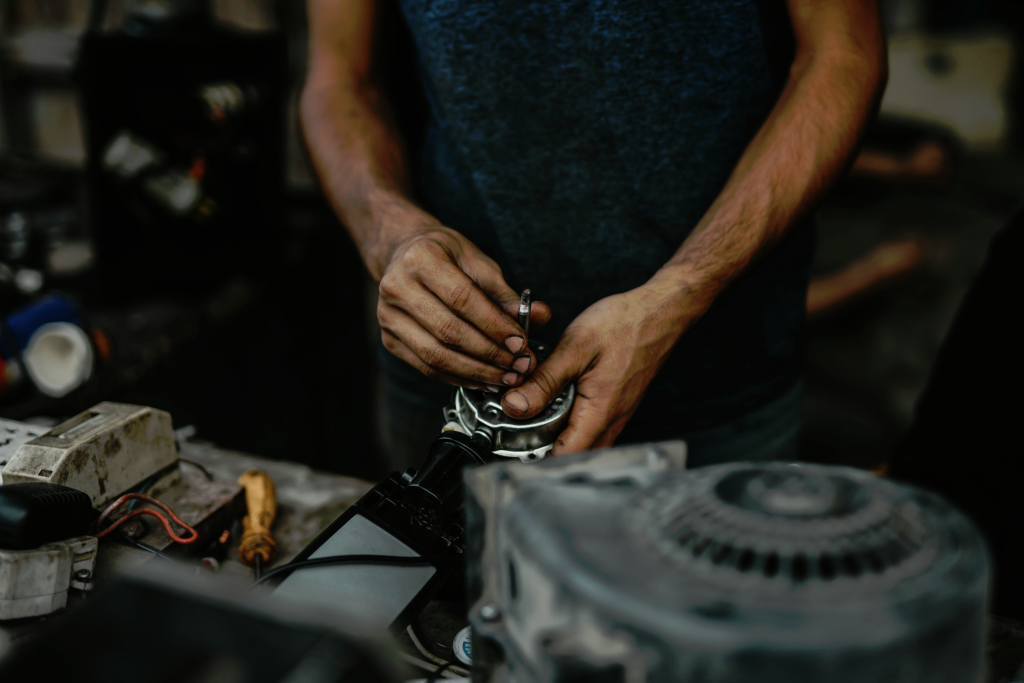
Perhaps the most important shift in modern electric motor repair is the move towards rigorous, evidence-based diagnostics before any repair work begins. Rather than working from guesswork or surface-level symptoms, experienced professionals now use tools and techniques that identify the root cause of a fault with precision.
Vibration analysis can detect mechanical imbalance and bearing faults long before they become critical. Insulation testing reveals winding degradation that would otherwise be invisible to the eye. Dynamic balancing and laser alignment ensure that a repaired motor is reinstalled to a standard that protects it from early re-failure.
Contractors who engage with these diagnostic approaches will deliver repairs that last, rather than fixes that simply defer the problem.
Your Reputation Is Built on How You Handle These Moments
How a contractor handles motor failures says a great deal about who they are professionally. Clients remember the callout that was handled efficiently, the problem that was correctly diagnosed the first time, and the motor that didn’t fail again six months later. They also remember when things were mishandled, when advice was poor, or when a quick fix turned into a recurring headache.
Electric motor repair is one of those areas where doing the job properly—or knowing who to bring in when specialist support is needed—has a direct bearing on a contractor’s standing in the market.
It’s not glamorous work, but it’s consequential. Clients who see their contractor take motor health seriously tend to become long-term clients. And in a competitive industry, that loyalty is worth more than most single jobs.