
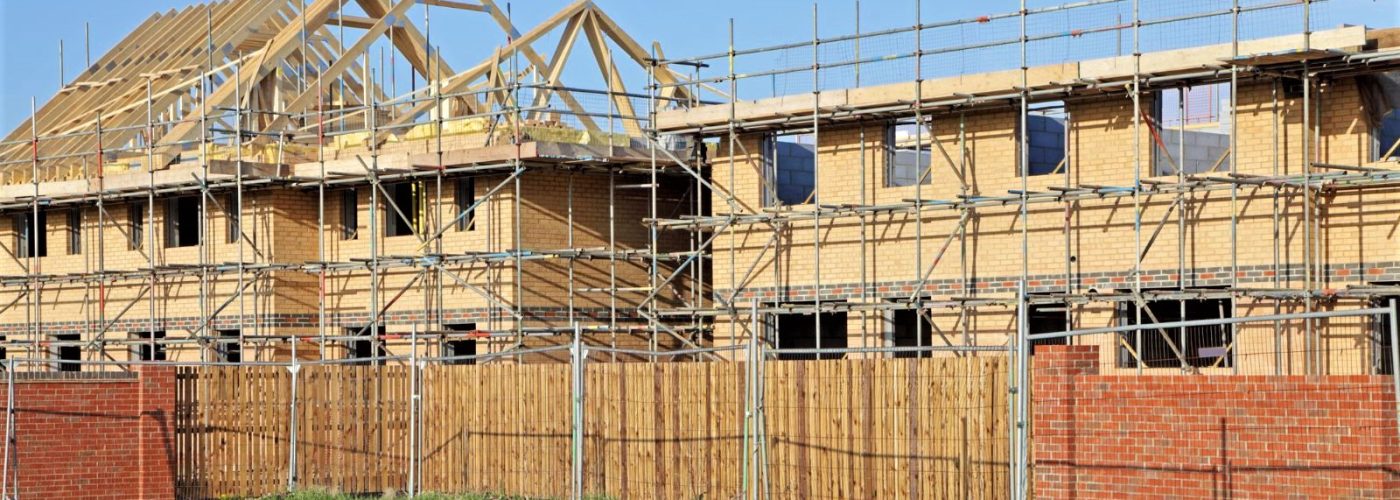


Planning approvals for housing fell for a fourth consecutive year in 2025 to their lowest level since 2019, according to construction analysts Barbour ABI.
The figures sharpen the challenge for housing secretary Steve Reed, whose ‘Build, Baby, Build’ drive and the Government’s pledge to deliver 1.5 million homes is being tested by a weakening housing pipeline.
Residential planning approval value ended 2025 at £35.5bn, down 13% on 2021 and 25% below 2019, even though the wider construction market is up around 20% versus pre-COVID. Fewer approvals today mean fewer sites starting in the months ahead, slowing new supply, keeping upward pressure on prices and rents, and pushing the 1.5 million homes target further out of reach.
“Last year, Steve Reed called on the industry to build, baby, build, but we’re yet to see any reaction,” said Ed Griffiths, head of business and client analysis at Barbour ABI. “The approvals pipeline for new homes has shrunk to its weakest since 2019, while money and momentum have shifted to energy infrastructure.
“We don’t expect to see new housing spend to return to 2022 levels until 2027 and unless we see planning approvals recovering and contract awards broadening beyond a few large schemes, the 1.5 million homes target is looking increasingly impossible.”
Contract awards, a key indicator of market health and future workload that signal the move from planning to delivery, remain broadly flat in housing. The value of residential awards edged up 4% in 2025 but has hovered around £22bn for three years.
It’s a similar picture on applications. With no answer to current viability issues, residential remains stagnant increasing only 5% in overall application value with a 13% drop in the number of applications.
By contrast, the rest of construction is performing. Overall planning approval value across all sectors rose 22% last year to £112bn, even as the number of approvals fell.
Infrastructure is a particular highlight, as planning application value improved 45%, and planning approval value jumped 108% in 2025, powered by government-backed energy investment. Seven of the eight infrastructure projects approved in 2025 above £1bn were in the energy sector.
Last year also saw growth across most regions, driven by high value transport and utility orders and urban regeneration in cities like Leeds and Manchester. Despite ongoing challenges like high costs and planning delays there are signs that private investors are committing to signing off on new contracts. But how quickly these can translate to activity on the ground in 2026 remains to be seen
Building, Design & Construction Magazine | The Choice of Industry Professionals