BDC News Team

Invisible Connections Norwegian Trade Partner Embraces UK Brand

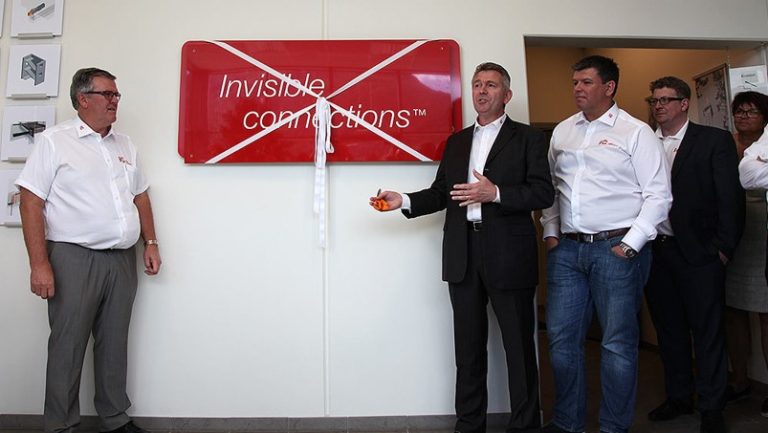
On the 1st of July 2016, Invisible Connections in Norway changed its formal trading name from ‘SB Produksjon AS’ to ‘Invisible Connections AS’. Invisible Connections Ltd is pleased to announce that Norwegian trade partner, SB Produksjon AS, has changed its formal trading name to ‘Invisible Connections AS’.  PHOTO: Norwegian founder

Read More »

Heidelberg/LafargeHolcim: feet of clay

©AFP For most companies, generating returns above the cost of capital is the norm. In the cement business, it is the exception; the achievement merited its very own bullet-point in HeidelbergCement’s annual results statement. There was no such line in the LafargeHolcim’s report, also released on Thursday. A glance at

Read More »

Housebuilders Berkeley and Redrow warn on tax

The high-end housebuilder Berkeley Group, which is set to drop out of the FTSE 100 this week, has launched an attack on government housing policy, saying increased taxes in the sector are a risk to London’s prosperity. In a trading update, the group said changes to the stamp duty regime

Read More »

Report highlights ventilation compliance 'failure'

Report highlights ventilation compliance ‘failure’ Published:  12 April, 2016 BSRIA has expressed its disappointment at the findings of a report that highlights a failure of ventilation systems to comply with Building Regulations. The recently published Zero Carbon Hub report ‘Ventilation in New Homes’ describes a catastrophic failure of ventilation systems

Read More »

MP demands carbon monoxide protection for renters

MP demands carbon monoxide protection for renters Published:  26 July, 2016 Margaret Ritchie MP has tabled an Early Day Motion demanding that the government ensures renters up and down the country are properly protected from carbon monoxide (CO) poisoning. Ms Ritchie’s motion has called for the government to regulate the

Read More »
Latest Issue
Issue 339 : Apr 2026

BDC News Team

Invisible Connections Norwegian Trade Partner Embraces UK Brand

On the 1st of July 2016, Invisible Connections in Norway changed its formal trading name from ‘SB Produksjon AS’ to ‘Invisible Connections AS’. Invisible Connections Ltd is pleased to announce that Norwegian trade partner, SB Produksjon AS, has changed its formal trading name to ‘Invisible Connections AS’.  PHOTO: Norwegian founder and owner, Svein Berg (left) and Invisible Connections UK Managing Director, Derek Brown, cutting the ribbon to reveal their new country-aligned branding strategy On the 1st of July 2016, Invisible Connections in Norway changed its formal trading name from ‘SB Produksjon AS’ to ‘Invisible Connections AS’. This brings operations and marketing much closer together with activities already established at Invisible Connections in the United Kingdom. Invisible Connections AS is the key supply partner of telescopic connectors for Invisible Connections in the UK.  The patented solutions have become more sought after in the European construction industry due to positive feedback from architects and contractors. CEO of Invisible Connections AS, Svein Berg, said: “To date, most of our efforts have been purely focused on our innovative technology and have been less concerned with proactive marketing and sales. This is now something we are keen to progress and we see the rebrand as a positive step and a key stage in our developing our business plan. The name change marks an evolutional shift from a traditional 30-year old mechanical company to a modern, innovative business in the construction industry. It also increases our reach and introduces the products to a broader audience, as the products have received European Technical Approval.’’ The rebrand mirrors the operational and marketing initiatives established within Invisible Connections in the UK. Derek Brown, UK Managing Director, believes that the aligned Norwegian and UK companies have great synergy due to both having innovative engineered solutions, and because the products provide numerous benefits for specifiers and customers. Derek Brown, Managing Director, Invisible Connections UK, said: ‘’We’re delighted we can now clearly demonstrate our aligned marketing strategy. Although the history of the telescopic connectors range dates back some three decades, the more recent evolution towards structures combining in-situ as well as precast concrete means that our products are in ever-increasing demand, due to their numerous advantages (health and safety, speed, aesthetics and cost). The alignment of marketing strategy between Norway and the UK will be clearly aimed at bringing these advantages to the notice of all who benefit – from the client and architect down.’’ Marketing Manager, Espen Lundman Solberg, said: “More and more, we recognise that it is vital for us to be working with specifiers from an early stage, preferably at architectural and design level. We want to showcase that our product solutions do not only provide savings, but also allow a much more elegant design.”  PHOTO: The Invisible Connections factory site, nestled between the spectacular mountains and fjords of Andalsnes, Norway ENDS. About Invisible Connections™Invisible Connections is the registered trademark of Invisible Connections AS (formerly SB Produksjon AS), Norwegian developer and manufacturer of the telescopic connectors range for nearly 30 years. In this time, hundreds of thousands of connectors have been used in construction projects around the world. The ETA-approved telescopic connectors solve two key construction applications; ‘invisible’ connections for precast staircase construction and ‘invisible’ connections for precast beam construction. ProductsRVK TSS Support Inserts http://www.invisibleconnections.co.uk/product/rvk-tss-support-inserts/BSF Support Inserts http://www.invisibleconnections.co.uk/product/bsf-support-inserts/FERBOX (UK only) http://www.invisibleconnections.co.uk/product/ferbox/   Invisible Connections Ltd Unit 6, Thame Forty Jane Morbey Road Thame Oxfordshire, OX9 3RR   01844 266000 sales@invisibleconnections.co.uk www.invisibleconnections.co.uk Source link

Read More »

Heidelberg/LafargeHolcim: feet of clay

©AFP For most companies, generating returns above the cost of capital is the norm. In the cement business, it is the exception; the achievement merited its very own bullet-point in HeidelbergCement’s annual results statement. There was no such line in the LafargeHolcim’s report, also released on Thursday. A glance at the other key points reveals why. Lafarge’s sales were flat in currency-adjusted terms, and operating profit fell — even after adjusting for currency and one-off costs arising from the mega-merger that created the company. There was a SFr3bn ($3bn) impairment of assets and net debt stands at SFr17bn, against a market value of SFr25bn. Over at Heidelberg, profit is rising, debt is falling and the dividend has just been increased by 73 per cent. Since the merger closed last July, LafargeHolcim shares have fallen almost 40 per cent. Heidelberg’s are flat. The obvious conclusion is that Heidelberg is being rewarded for sticking to its knitting while Lafarge and Holcim are paying the price for an empire-building, ego-driven merger that proved difficult to execute. A more cynical argument is that Heidelberg did an equally bad deal when it bought Hanson in 2007 — and is simply further ahead in its financial rehab. Which is right? Buying Hanson was a terrible deal in many respects. Heidelberg paid 12 times earnings before interest, tax, depreciation and amortisation, in cash, just as the cycle peaked (it trades at seven times now). A year later, interest costs were 50 times dividends. At LafargeHolcim, which was, thankfully, an all-share combination, the two are more or less equal even now. Heidelberg is also more exposed to the areas where demand is growing, such as the UK and Africa. Lafarge is suffering from its larger relative presence in Latin America and Asia, where demand growth is sluggish. Overall, cement sales in 2015 were 256m tonnes — 68 per cent of capacity. It is cutting costs, and one day, its results will look like Heidelberg’s do today. But until both companies can create value routinely, rather than now and again, their shares are best avoided. Email the Lex team at lex@ft.com Copyright The Financial Times Limited 2016. You may share using our article tools. Please don’t cut articles from FT.com and redistribute by email or post to the web. Source link

Read More »

Housebuilders Berkeley and Redrow warn on tax

The high-end housebuilder Berkeley Group, which is set to drop out of the FTSE 100 this week, has launched an attack on government housing policy, saying increased taxes in the sector are a risk to London’s prosperity. In a trading update, the group said changes to the stamp duty regime would prevent the capital from meeting its housebuilding targets. “What is increasingly clear is that government policy, which has been helpful outside London, has had a negative effect on the capital,” Berkeley said. “Transaction taxes are now too high and this is restricting both mobility in the second-hand market and the pace of supply and delivery of new homes in London and the south-east.” Berkeley said reservations of its homes had been at least 20 per cent below 2015 levels during the year so far, due to the tax changes as well as June’s EU referendum. But the group reiterated its profit guidance until 2018, saying it still expected to make £2bn of pre-tax profit by the end of April that year thanks to a strong pre-order book. Redrow, meanwhile, a FTSE 250 housebuilder, predicted “another excellent year” in 2017 after clocking up its third straight set of record results in the 12 months to June 30. Redrow proposed a 67 per cent increase in its full-year dividend to 10p a share after pre-tax profits improved by 23 per cent to a record £250m on revenue of £1.38bn, a fifth higher than the previous year. Profits came in higher than the £224.8m expected by analysts. Redrow said it completed 17 per cent more home sales last year and also achieved a 7 per cent uplift in average selling prices to £288,600. The Flintshire-based company said it had entered the fresh financial year with a record private order book of £807m, up 54 per year-on-year. Prices for homes in London’s wealthiest areas have been declining since the former Chancellor, George Osborne, overhauled stamp duty on homes in 2014; an additional surcharge on second homes introduced this year has further damped the market, according to agents. Berkeley and Redrow both said the changes would have broader effects on the housing market across the capital, including the provision of affordable homes that developers are required to include in new schemes. “While these challenges persist, and the barriers to entry for small builders remain high, London will fall well short of its targets for new homes,” Berkeley said. Berkeley said it had taken a “selective” approach to land buying since the Brexit vote, acquiring just two sites. Its shares are still 18 per cent lower than their pre-referendum price. Related article The public is not bovvered about Brexit. Even shares in housebuilders are bouncing back, after losing two-fifths to one-third of their value… The group said this week that it had halted work on a partially completed £20m development in Barnes, west London — a rare move, although people close to the company said this was to allow buyers to customise their apartments, rather than because of sales concerns. The company will pay out a dividend of £1 a share on September 15 and said it still planned to pay out an additional £10 a share over the period to September 2021. Redrow has sought to navigate softness in the top end of the London market — for large houses and luxury apartments in “prime” central London — by focusing on “mid-range” homes and “affordable” flats in the capital’s outer boroughs. “We have made good progress working through our legacy of prime London apartments … and now have very little exposure to this sector of the market,” the company said. Sample the FT’s top stories for a week You select the topic, we deliver the news. Source link

Read More »

Funding available for innovative architecture research with the RIBA Research Trust Awards

Browser does not support script. Contact us The Royal Institute of British Architects (RIBA) is calling for applications from individuals interested in conducting new research into architecture. The RIBA Research Trust Awards has grants of up to £10,000 available to support original independent architecture research by practitioners, academics and recent graduates. The judging committee particularly welcomes applications from new researchers and practice-led researchers, those in collaboration with academia and those not from a traditional research background. RIBA President Stephen Hodder said: ‘The RIBA Research Trust Awards have supported many talented people in the past who have gone on to become skilled researchers both in the academic field and as practising architects. The originality of proposals is always highly valued along with clarity in the methodology and objectives of the research. I eagerly await the results of this year’s awards.’ The deadline to apply is 1 June 2015. For more information, visit http://www.architecture.com/researchfunding ENDS Notes to editors: 1. For further press information, contact Callum Reilly callum.reilly@riba.org 020 7307 3757 2. For more information about the RIBA Research Trust Awards, visit http://www.architecture.com/researchfunding  3. For application queries, contact Hayley Russell hayley.russell@riba.org 020 7307 3678 4. The Royal Institute of British Architects (RIBA) champions better buildings, communities and the environment through architecture and our members www.architecture.com 5. Follow us on Twitter for regular RIBA updates www.twitter.com/RIBA   Posted on Friday 27th March 2015 Search architecture.com just start typing and hit enter again × Browser does not support script. Browser does not support script. Source link

Read More »

Report highlights ventilation compliance 'failure'

Report highlights ventilation compliance ‘failure’ Published:  12 April, 2016 BSRIA has expressed its disappointment at the findings of a report that highlights a failure of ventilation systems to comply with Building Regulations. The recently published Zero Carbon Hub report ‘Ventilation in New Homes’ describes a catastrophic failure of ventilation systems to comply with the requirements of Building Regulations Part F and negate the issues associated with poor ventilation, including indoor air quality, condensation and mould growth. The report visited 33 dwellings across six construction sites during 2015, to see how effectively their mechanical ventilation systems were designed, installed, commissioned and handed over to occupants. According to the report, the Zero Carbon Hub team found issues at many stages of the construction process at every site it visited, with significant underperformance of the systems as a result. At five of the six sites, fans were operating at only half the required flow rates, with other common issues including flexible ducting being installed instead of rigid ducting, and long duct runs with multiple bends reducing performance. Chris Knights, general manager of BSRIA Compliance, said: “Unfortunately, but not unsurprisingly, the report confirms that there is a widespread lack of understanding, at all levels, of the importance of correctly designed, specified, installed and commissioned ventilation systems. “Moreover, the checking of final testing documents appears near non-existent. The report highlights the poor level of testing documentation available. A recent survey by BSRIA of calibration facilities also showed that less than 10% of the thousands of airflow measurements devices in use, by both electrical contractors and commissioning specialists, for ventilation system commissioning and testing, were UKAS calibrated in 2015 in line with the requirements of the Approved Document.” BSRIA agrees with the report, based on its own experience at the commissioning/testing stage, and echoes that appropriate measures must be implemented, including whether voluntary certification schemes are strong enough to be part of the solution. The inspection and enforcement protocols for this ‘notifiable’ work must reviewed. The Zero Carbon Hub report can be downloaded online at http://www.zerocarbonhub.org/sites/default/files/resources/reports/ZCH_Ventilation.pdf. Source link

Read More »

What are the future changes that landlords will face post stamp duty tax hike?

What are the future changes that landlords will face post stamp duty tax hike? It came as no surprise that there was a record number of Stamp Duty Land Tax (SDLT) receipts earlier this year as buy- to-let landlords rushed to beat the deadline for increases in SDLT introduced on 1 April 2016. However, increased SDLT costs on the purchase of additional residential properties is not the only nasty surprise in store for residential property investors.  Stress tests   In March, the Bank of England announced its proposals for much tougher buy-to-let mortgage lending criteria.   The rules will require lenders to carry out stricter “stress tests” on prospective borrowers or those wishing to re-mortgage to ensure that they have sufficient capital to cover repayments if interest rates increase to 5.5%.  Tax relief for finance costs   In the future, there will also be changes to the way that tax relief for interest payments on the purchase of residential lettings will be given in the tax computation.  This will affect individuals, partnerships and limited liability partnerships which let out residential properties.  At present there are no proposals for this restriction to apply to furnished holiday lettings nor to companies with residential lettings.   Currently, rental profits are reduced by any loan interest paid and therefore a top rate taxpayer could receive tax relief at 45% on their finance costs.  Under new legislation the loan finance costs will be relieved by way of a reduction of the tax liability, rather than a reduction in the rental profits, and is restricted to relief at the basic rate of income tax.  Those with substantial rents and interest costs, thus with low net profits, who are currently basic rate taxpayers, could see their income pushed into the higher rate band as the interest costs will be added back to the rental income. For example, an individual whose only income is rents of £50,000 and interest costs of £20,000 would have net income of £30,000, and so within the basic rate tax band. Under the new rules the same individual would be a higher rate taxpayer because their income would be £50,000 with a deduction for interest relief given at the basic rate only. As a result of the way in which the net rent will be calculated those whose income is close to the £50,000 threshold for the withdrawal of child benefit, and those with income near £100,000 for the withdrawal of personal allowance could be adversely affected even though their income has not actually increased.   To “soften the blow” these measures will be phased in gradually over four years and will apply to 25% of the interest costs in the 2017-18 tax year, 50% in the 2018-19 tax year and 75% in the 2019-20 tax year before being implemented in full in the year to April 2021.   If you have a relatively modest portfolio of properties which are let out as residential lettings, it maybe that you will simply have to accept that your income tax liability in respect of those lettings may increase in future as taking any steps to mitigate the interest restriction could be costly.  Sharing income with family members or family trusts may be worth considering but capital gains tax issues will need to be addressed.  Incorporating your business   If you have a substantial portfolio of residential lets you may wish to consider incorporating your business, however, there could be a substantial capital gains tax liability if you incorporate your property portfolio because moving the properties into a company could trigger capital gains tax. However, if you have a large property portfolio that you devote a substantial amount of time to managing, it may be possible to claim capital gains tax roll-over relief on incorporation of a business to mitigate the capital gains tax liability arising.  If you have no gains in your property portfolio it may be possible to transfer the properties into a company without triggering capital gains tax.     However, there is likely to be a substantial SDLT liability on the property transfers to a company, unless specific reliefs are available, and incorporation of a property business should not be undertaken without specialist advice.   It would be necessary to weigh the costs of incorporating an existing property business, including administering a company, against the additional cost of the new interest rules.  Also the new “stress test” rules could see the cost of your borrowings increase.   The residential property investor is entering a whole new world and it remains to be seen if George Osborne’s efforts to help first time buyers onto the property ladder, which is a laudable aim in itself, are helped or hindered by the various measures he has introduced. Source link

Read More »

MP demands carbon monoxide protection for renters

MP demands carbon monoxide protection for renters Published:  26 July, 2016 Margaret Ritchie MP has tabled an Early Day Motion demanding that the government ensures renters up and down the country are properly protected from carbon monoxide (CO) poisoning. Ms Ritchie’s motion has called for the government to regulate the fitting of CO alarms in all rented properties across the UK. The motion addresses the concern that around 50 people a year still die as a result of CO poisoning and highlights the recent research undertaken at Liverpool John Moores University which indicates it is low income households that are most at risk of CO poisoning. All-Party Parliamentary Carbon Monoxide Group (APPCOG) Co-chair Barry Sheerman MP expressed his support, saying that the motion is a timely reminder that more can be done to stop preventable deaths in the UK. “By harmonising regulations for CO alarms across the nations of the UK, we can put an end to the needless suffering caused by CO poisoning,” he said. “The APPCOG has recommended that all homes in the private rented sector are fitted with standard-compliant CO alarms since the publication of our report Preventing Carbon Monoxide Poisoning in 2011, so we very much hope that the government will follow Scotland’s lead and ensure that householders in the English rented sector are provided with equal levels of protection.” The research carried out at John Moores University triggered the motion, as current legislation in England only requires landlords to fit CO alarms in rooms with solid fuel burning appliances. Margaret Ritchie MP has campaigned frequently for better safety and awareness around the dangers of CO and is urging the government, the Welsh Executive and the Northern Ireland Executive to follow the example of the Scottish Government and require all landlords to install carbon monoxide detectors in rented properties. Source link

Read More »