BDC News Team

Graphenano Launches Smart Additives

Graphenano Smart Materials has launched its line of the latest generation concrete additives called Smart Additives. The range is the first in the world to incorporate graphene technology, enhancing its mechanical performances and increasing its service life, resulting in Concrete 2.0 and enabling more resistant and longer lasting constructions. Smart

Read More »

MINING SEARCHES: WHY IT PAYS TO KNOW WHAT’S UNDERGROUND

The UK once played a starring role in producing some of the world’s most valuable fossil fuels and minerals, and while the ‘golden age’ of mining may be consigned to the past, mines continue to leave a legacy on the land. Historic mines have the potential to impact today’s developers,

Read More »

Zoomlion abandons $3.4bn Terex takeover

©Bloomberg China’s Zoomlion has quit its $3.4bn takeover pursuit of Terex, the US construction equipment maker, the latest failed attempt by a Chinese bidder to gatecrash a deal between two western companies. Zoomlion, which also makes heavy lifting machinery, said on Friday that “no agreement can be reached on the

Read More »

Case 391 – Gym reduces opening hours due to health and safety

Issue A gym reduced it’s 24/7 opening hours, closing overnight for health and safety reasons. Panel opinion Whilst there may be some additional health and safety considerations in operating the gym 24/7, they are all easily manageable as thousands of businesses demonstrate in providing round the clock opening. This facility

Read More »

SGB ACCESS SYSTEM SPECIFIED FOR MAJOR MANCHESTER DEVELOPMENT

An integrated access system from the UK’s leading scaffolding and access system provider has been used on a major new residential development in Manchester. A total of 71 mastclimbers have been provided by SGB, for the creation of the Clipper’s Quay project which has been built by Sir Robert McAlpine

Read More »

Gripple Launches Fast Trak Campaign

Gripple, the manufacturer of building services suspension systems, has launched a global campaign that supports its newest time and labour saving trapeze bracket solution, Fast Trak. The campaign offers new and existing customers the chance to get in ‘pole position’ and win tickets to the Formula One Grand Prix events

Read More »

Baumit External Wall Insulation Offers Housing Solution

Baumit supplied its external wall insulation system to a 72 property scheme, based in Carrickmacross, County Monaghan, Ireland and comprising a mixture of social and private housing. The semi-detached, three and four-bedroom homes, designed by Craftstudio Architecture, needed to eliminate instances of cold bridging and increase the properties energy efficiency,

Read More »

Kingspan Light + Air Offers Bright Solution

A popular community primary school located in the heart of Salford, Manchester, has been welcomed into its new home, created with the help of Kingspan Light + Air. The bright facility comprises high performance Kingspan Kapture Prismatic Skylights with climate control glazing, which offers savings of up to 80% on

Read More »
Latest Issue
Issue 340 : May 2026

BDC News Team

Graphenano Launches Smart Additives

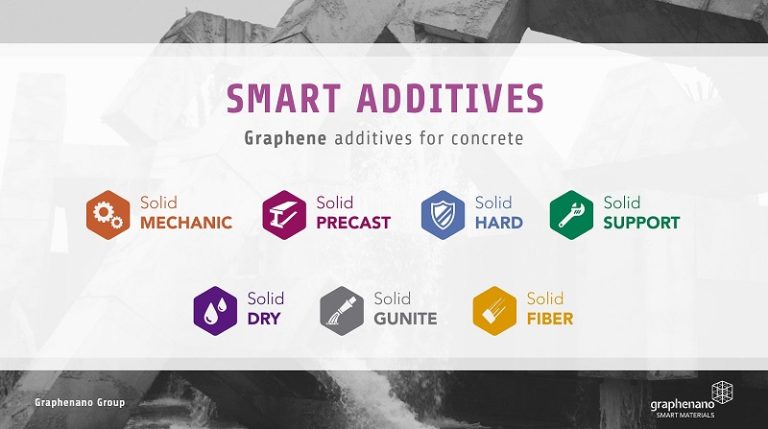
Graphenano Smart Materials has launched its line of the latest generation concrete additives called Smart Additives. The range is the first in the world to incorporate graphene technology, enhancing its mechanical performances and increasing its service life, resulting in Concrete 2.0 and enabling more resistant and longer lasting constructions. Smart Additives consists of seven ranges of additives, all depending on the concrete used and the properties required from it: Solid MECHANIC, used in plant or in ready-made concretes. The result is high performance concretes, with increased quality, resistance and surface finish. 2. Solid PRECAST, which is ideal for the prefabricated world. These additives improve the production process and quality, lowering costs and raising concrete efficiency to the maximum. 3. Solid HARD, which is the best solution for concretes exposed to extremely aggressive environments. The result is a highly durable concrete with low permeability. 4. Solid SUPPORT range, which includes supplements to adjust and modify the Smart Additives product lines. 5. Solid DRY, suitable for manufacturing semi-fry concretes. 6. Solid GUNITE, especially designed for shotcrete production. 7. Solid FIBER, a line of fibres to replace or reduce rebar in wet concrete, which is also compatible with the entire Smart Additives range. These Smart Additives products are now being used successfully in a number of projects both in Spain and abroad, in countries including Mexico, the United States and Morocco. Graphene is ideal as a structural material in the concrete sector, as it acts as a molecular mesh, providing buildings with structural support. Graphene is a nanomaterial based on carbon that is stronger than steel and harder than diamonds, capable of bearing large loads and absorbing energy before it breaks. Constructions built using these concretes containing graphene additives can increase their service life by up to 50 years compared to those containing conventional materials.

Read More »

MINING SEARCHES: WHY IT PAYS TO KNOW WHAT’S UNDERGROUND

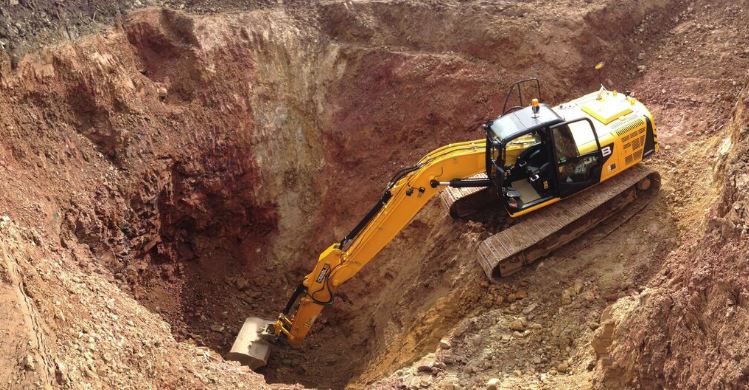
The UK once played a starring role in producing some of the world’s most valuable fossil fuels and minerals, and while the ‘golden age’ of mining may be consigned to the past, mines continue to leave a legacy on the land. Historic mines have the potential to impact today’s developers, property owners and purchasers, and if not identified early on during a project or sale, could wipe thousands off a land or home’s value. Historic mining activity is still affecting the modern property and land development market, and it’s not just in known mining hotspots such as Cornwall, with an estimated 150,000 abandoned mines across the UK – from Lands’ End to John O’Groats. Identifying and remediating mining risks can not only help in the construction of a safe development, property or public area, but can also play a significant role during sale negotiations if a mining search is conducted early enough – potentially saving hundreds of thousands of pounds. Paul Raglan, Managing Director, Mining Searches UK, outlines how and why mining searches are crucial in today’s property and land markets, and while often seen as an inconvenience, can play a vital role in not only mitigating risk and negotiating best price, but can be a fundamental factor during development design. Damage Limitation Mining searches are essential for any piece of land to determine whether there is evidence of historical mining activity beneath it, or in the surrounding areas. This is important even for areas where there are no obvious signs of mining as closed mines leave very little, if any, evidence on the surface, but still have the potential to cause major problems if not investigated. Mine workings commonly run long distances beneath the ground from mine shafts and extend beneath land that is due to be developed – as well as existing residential properties. These shafts and tunnels could potentially cave in if not properly dealt with, causing subsidence and damage to buildings above them – so it’s important that this is addressed before this situation arises to not only save further financial investment in the future, but to also safeguard the lives of those living above. Today, closed mines are capped and filled in to stabilise them and minimise risk, but old mine-shafts were not always dealt with in this way. Cases of old shafts collapsing and causing damage to houses are regularly reported, and while being an obvious risk to safety, can also dramatically reduce the value of land. To ensure land is purchased and sold at the best price, it can prove valuable to know the finer workings of the area in question, given sizeable sums of money are often at stake. Developers aware of land with a known mine, can potentially negotiate value down considerably – but only if they are willing to invest in further investigations and remediation. Once completed, this can potentially propel value up by over 100% dependent on location. Detailed Design There are also environmental issues associated with old mine workings. Topsoil containing dangerous, naturally-occurring elements such as arsenic may be present, which can dictate where various developments can or can’t take place. For example, areas with arsenic present are usually not suitable for home gardens or parks but are safe when surfaced with concrete, and can be used for car parks, playing fields or roads. Identification of these areas is key to not only minimise land wastage, but this information can better inform early development designs and plans, putting every available space to best use. Essential Expertise Before any negotiations, plans or exchanges take place, it is crucial to call the experts in. A team of specialists will check all available archived records of the land and surrounding areas – including Aerial surveys and Ordnance surveys, town plans, estates and maps, as well as using research from mining historians. Using all this information, a full risk assessment and conclusion should be provided as part of a detailed report. Where significant mining features are identified, ground investigation is recommended to clarify any associated risks. In the worst-case scenario, where investigation confirms the presence of mining features, property can be rendered unsuitable for mortgage and available for cash purchase only, often with a commensurate drop in value. It is always wise for developers of new communities to eliminate the risk of this happening from the start by ensuring that thorough mining searches have been conducted on any piece of land due for development, and not just those earmarked for residential areas. Some developers purchase land direct from construction or remediation companies, which have already taken steps to address mining concerns – including remediation – leaving developers free to press on with their plans. However, developers need to ensure that a trusted and industry recognised mining search organisation has been used by the seller, as well as requesting all certificates to ensure that the land is completely safe for commercial or residential construction. Although the results of a mining search can often uncover unwelcome information, knowledge really is power, and it is crucial to detect and fix potential problems before they occur. While many of the UK’s mines closed decades ago, they are still a key consideration in today’s property and development industry. By addressing at the earliest possible stages, developers can not only save time and money in the long term but can also ensure the construction of safe and attractive communities, designed around the best use of the land. https://www.miningsearchesuk.com/


Read More »

Zoomlion abandons $3.4bn Terex takeover

©Bloomberg China’s Zoomlion has quit its $3.4bn takeover pursuit of Terex, the US construction equipment maker, the latest failed attempt by a Chinese bidder to gatecrash a deal between two western companies. Zoomlion, which also makes heavy lifting machinery, said on Friday that “no agreement can be reached on the crucial terms” of a deal with Terex and that it had “therefore decided to terminate the negotiation”. More On this topic IN Construction The Chinese company has pursued Terex since late last year, in a move that would have scuppered the US group’s previously agreed merger with Finnish rival Konecranes. In March, Zoomlion increased an initial $30-a-share offer for Terex by adding a special dividend of $1m. That $3.4bn offer was rebuffed by Terex, which was holding out for a bid worth $32.75 a share. Terex shares were down 16 per cent at $20.36 by midday in New York trading on Friday. In many ways, the Zoomlion offer highlighted the audacious manner in which Chinese groups have made record splashes in the global market for mergers and acquisitions. In several examples, Chinese companies approached groups with cash offers when they were already involved in other transactions. Those include a $14bn bid by China’s Anbang Insurance to break up a planned takeover of Starwood Hotels & Resorts by Marriott International and ChemChina’s late attempt to buy BG Group, the British oil and gas company, which was in the final stages of closing a deal with Royal Dutch Shell when an approach was made last December. Zoomlion’s efforts were partially successful. Terex and Konecranes terminated their plans to merge earlier this month. Instead, Konecranes agreed to pay $1.3bn in cash and non-voting stock to Terex in exchange for a unit of the US company that produces industrial and harbour cranes. That revised agreement included a May 31 deadline for Terex to be able to walk away from the Konecranes deal in favour of a full takeover by Zoomlion, which was advised by Goldman Sachs. Since its interest became public in January, Zoomlion faced doubts over its ability to complete a takeover. The lossmaking, part state-owned company is heavily indebted. Zoomlion’s total debt to earnings before interest, tax, depreciation and amortisation in the year to March 31 was 21.4 times compared with 3.6 times at Terex, according to S&P Capital IQ. Questions were also raised about the chances of Zoomlion gaining approval from the Committee on Foreign Investments in the US, which has the power to review and potentially block transactions that could harm the country’s national security. Zoomlion could not be reached for comment. Shares in the Chinese company, which were down by a quarter since the start of the year, were 0.7 per cent lower in Shenzhen trading. Konecranes shares jumped 4.6 per cent to €24.30 in Helsinki. Panu Routila, Konecranes chief executive, said in a statement that its acquisition of the Terex unit “will enhance our position as a focused and global leader in service and equipment in industrial lifting and port solutions”. Additional reporting by Don Weinland in Hong Kong Copyright The Financial Times Limited 2016. You may share using our article tools. Please don’t cut articles from FT.com and redistribute by email or post to the web. Source link

Read More »

The implications of Brexit on UK energy and environmental policy and what it means for a facility manager

On 23 June, 2016, the UK voted to leave the EU. The two years’ notice period required by the Treaty of Lisbon, for the government to implement this decision, means an actual exit date is very unlikely to be before June 2018. There has been lots of discussion about how this vote will impact on the UK economy in general but what are the likely implications prior and post exit in relation to the UK energy and environmental policy? And more importantly, how will they affect you in your role as a facility manager?   Will we see a rise in energy costs? We are currently seeing stable energy prices on the back of well supplied systems. However, future rates are likely to be volatile due to uncertainties in the sterling and the potential for the increased cost of gas imports. Longer term, the UK will continue to be influenced by the global energy market but Brexit may affect investor uncertainty, with consequences for energy security and investment in generation capacity and the grid. Reducing energy costs will be more important than ever in the coming years.  Will Brexit mean the end of The Energy Savings Opportunity Scheme (ESOS)? As ESOS has been transposed into UK law (implementation of Article 8 of the EU Energy Efficiency Directive), it is reasonable to expect this will continue although its current form may well change.  The government announced in the budget it plans to simplify energy reporting into one single scheme: further information should become available once the Government publishes its much anticipated consultation on the future of business energy reporting  In the meantime, it is safest to keep on top of your existing ESOS requirements until further news is announced to avoid penalties. Could Brexit disrupt HFC phase down? As with ESOS, the F-gas regulation has been adopted into UK law and therefore, without a change to that law, the provisions in it will still apply to the UK even after Brexit. It is unlikely the UK would repeal this legislation, as to do so would be a massive retrograde step, from an environmental perspective. There are also movements on a global scale, such as the HFC phase-out/phase-down under the Montreal Protocol, which are influencing the UK.  The European HFC phase-down, however, is based on a reducing refrigerant volume quota system imposed on EU member states as a whole.  Much will depend on how the UK decides to work with the EU. If the UK pursues the Norwegian model nothing will change but if not then the UK will have to establish its own quota allowance going forwards.   Of more pressing concern, however, will be how Brexit could impact on the price of HFC refrigerants, which will start to rise quite rapidly as the market anticipates the changes. As production of HFCs falls in line with the phase down, prices will rise, and a devalued pound will add further cost pressures on imported refrigerant supplies. In light of these changes, now is the time to review current HVAC systems, and either upgrade them to utilise lower HFC refrigerants or invest in new units, which don’t use refrigerants as a cooling method or can run on extremely low refrigerant levels.  Will Brexit impact on the UK’s climate change policies? It’s unlikely that Brexit will have much impact on the UK’s climate change policies, mainly because the UK government has already gone further than the EU when it comes to reducing carbon emissions with the Climate Change Act which compels governments to cut emissions by at least 80% by 2050. In fact, on 30 June, only a week after the Brexit vote, the UK published its fifth carbon budget. This announcement means that the UK accepts the Committee on Climate Change’s recommendations to reduce emissions by 57% below 1990 levels between 2028 and 2032. This will force many large and medium-sized companies to comply with lower carbon emissions and inform the regulator about their energy consumption and energy efficiency plans. As a Facility Manager, meeting these targets will require a combination of energy saving measures and innovation in technology to ensure your building or buildings are as energy efficient as possible.  What can I do to improve energy management in my building as cost-effectively as possible? Despite the huge amount of work you already carry out to save energy, such as by upgrading lighting technology, excluding draughts, and insulating walls, there is one area that accounts for up to 40% of a commercial building’s energy usage – HVAC systems.  Simple improvements to the efficiency of existing HVAC systems can offer considerable energy and CO2 savings, reduce costs and improve the working environment. Some potential energy efficient upgrades include: EC Fans – Replacing AC fans with EC fans allows optimisation of cooling systems for ultimate energy efficiency, potentially reducing energy usage by up to 70%. Electronic Expansion Valves – The use of Electronic Expansion Valves (EEVs) in cooling units and condensers reduces the need for high head pressure, which can result in an energy efficiency ratio (EER) increase of 30%. EEVs provide stable, fast and precise control of superheat and can be used in all types of unit.  Inverters – Installing inverters to motors allows precise control of motor speeds, which can be ramped up or down to match load requirements. This ensures that the only energy used is that which is needed.  Refrigerant – Refrigerant upgrades help to increase system efficiency which will also save you money. Controls and BMS replacements – Upgrade to the latest software platforms to improve system optimisation. The latest hardware and unit strategy can be installed on existing equipment to ensure system reliability, enhanced performance and increased control. Variable speed drives – Installing variable speed drives allows control of fan and pump speeds which can help to

Read More »

Case 391 – Gym reduces opening hours due to health and safety

Issue A gym reduced it’s 24/7 opening hours, closing overnight for health and safety reasons. Panel opinion Whilst there may be some additional health and safety considerations in operating the gym 24/7, they are all easily manageable as thousands of businesses demonstrate in providing round the clock opening. This facility chose to trump all of the other reasons behind their decision to curtail their opening hours with the health and safety card when they should have had the courage to reveal their full hand. Source link

Read More »

SGB ACCESS SYSTEM SPECIFIED FOR MAJOR MANCHESTER DEVELOPMENT

An integrated access system from the UK’s leading scaffolding and access system provider has been used on a major new residential development in Manchester. A total of 71 mastclimbers have been provided by SGB, for the creation of the Clipper’s Quay project which has been built by Sir Robert McAlpine in Salford Quays. The Clipper’s Quay project includes five blocks of between nine and 11 storeys, incorporating various commercial spaces and over 600 residential units, and it is believed to be one of the largest private rented sector developments outside London. “Scaffolding access was originally considered for this project, but a mastclimber solution proved to be much more cost-effective,” explains SGB’s Business Development Manager, Karl Hancock “We have worked with Sir Robert McAlpine on previous projects, so they were aware of our capabilities in servicing a large project such as this. They also knew that we could supply a range of different mastclimber solutions and associated equipment to suit the different requirements which a project such as this creates.” SGB worked closely with their client over an 18-month period, right from the design stage right through to delivery. “Being involved from a very early stage helps us to design an access solution which meets the client’s specific needs right from the outset, and which is also sufficiently flexible to accommodate any changes or unexpected requirements which arise over time,” adds Karl. “In this instance we created a system which included a combination of single and twin mastclimbers, and this proved to be an extremely practical and cost-effective solution.”   For more details, visit www.sgb.co.uk, call 01372 381 300, follow ‘SGB a BrandSafway Company’ on Linkedin, or @SGB_Brand_UK on Twitter.

Read More »

Gripple Launches Fast Trak Campaign

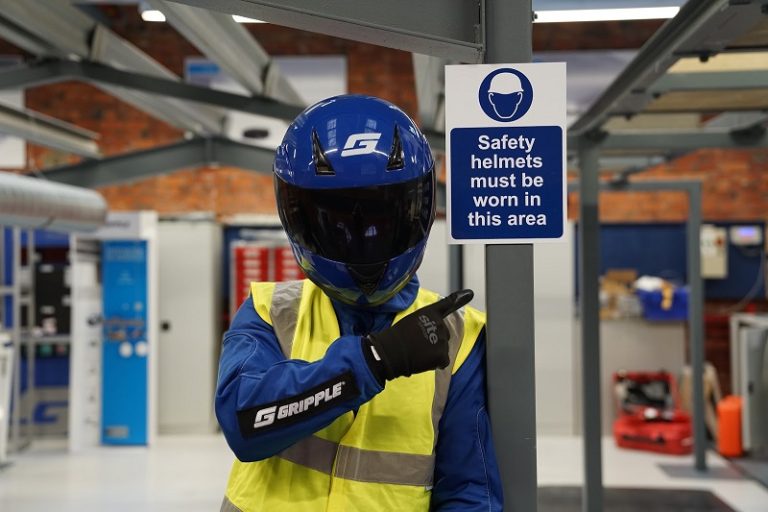
Gripple, the manufacturer of building services suspension systems, has launched a global campaign that supports its newest time and labour saving trapeze bracket solution, Fast Trak. The campaign offers new and existing customers the chance to get in ‘pole position’ and win tickets to the Formula One Grand Prix events in Silverstone, Spa Francorchamps and Austin. “With sales of over £1 million anticipated within its first year, Fast Trak™ is our biggest and most exciting construction product launch since the wire rope kits in 1997. After launching the product last September, Fast Trak™ has become a trusted solution for electrical, mechanical and HVAC installations and this campaign aims to increase that awareness and drive further sales,” explained Mark Kimberley, product manager at Gripple. The Fast Trak campaign includes promotional packaging, branded gifts, a dedicated landing page and social media competitions and will run from the 26th of March until the 5th of June. The second stage of giveaways includes monthly prizes throughout 2018 for the best customer feedback. “The promotion compares the product’s characteristics to motorsport, highlighting its speed, efficiency, safety, performance and of course, Gripple’s world class team! We’ve even introduced a Fast Trak™ character who has already been spotted around various Gripple sites and will be the centre of the campaign, featuring in videos showcasing the benefits,” added Mark. Fast Trak is a prefabricated, trapeze bracket solution that offers speed, flexibility and efficient use of space for the installation of electrical containment, pipework, ductwork and other mechanical services in restricted places. The safe solution comprises metal tracks and mounting brackets, it has tool free adjustments, it creates zero waste and it’s lightweight for ease of delivery and handling on-site. Each system has a 3:1 safety factor and can suspend a maximum weight up to 180kg. The range was recently extended to include new track lengths and further innovative additions, which are scheduled to launch later this year.

Read More »

Baumit External Wall Insulation Offers Housing Solution

Baumit supplied its external wall insulation system to a 72 property scheme, based in Carrickmacross, County Monaghan, Ireland and comprising a mixture of social and private housing. The semi-detached, three and four-bedroom homes, designed by Craftstudio Architecture, needed to eliminate instances of cold bridging and increase the properties energy efficiency, so Baumit’s high quality external wall insulation was selected due to its performance and 10-year warranty. The work on the external wall insulation started in January 2017 and it was jointly installed by Ecoclad and Morrin Building Services, both appearing on Baumit’s approved contractor’s list, thus guaranteeing the quality of work being carried out. The chosen solution was the Baumit EPS, a high performance external insulation with superb thermal properties and high impact resistance. “Baumit’s EPS system was selected for the project due to the inherent cold-bridging issues within the properties’ single-leaf masonry construction. The EPS external wall insulation performed as highly as we’d hoped and resolved these issues,” said Peter Mcgonigle, director at Craftstudio Architecture. The BBA/NSAI-approved system consisted of 100mm expanded polystyrene façade insulation boards in grey graphite that were adhesively bonded to the building’s exterior walls. A reinforcing mesh coat was placed over the boards and once dried, Baumit SilikonTop provided a ready-to-use, resin-bound coat to give a highly-decorative, long-term protective finish. Throughout the application, Baumit’s technical team offered support, including site visits, to assist installers. The EPS system is compatible with any number of products from Baumit’s vast range of finishing renders, including its NanoporTop offering which uses natural daylight to trigger its ‘photokat’ photocatalysis self-cleaning technology to keep facades looking fresh and blemish-free. Completed in January 2018, the Carrickmacross project welcomed its occupants into a property that looks as good as the comfort it provides, with its energy efficiency helping reduce household fuel bills, making it a long term cost effective solution.

Read More »

Kingspan Light + Air Offers Bright Solution

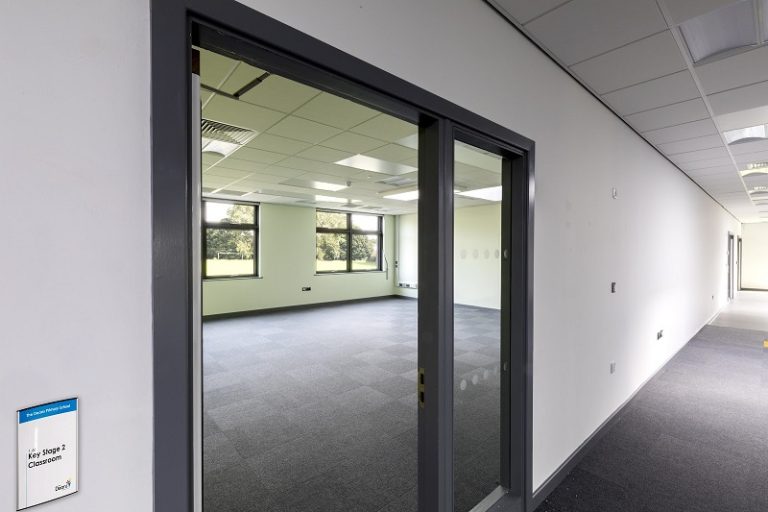
A popular community primary school located in the heart of Salford, Manchester, has been welcomed into its new home, created with the help of Kingspan Light + Air. The bright facility comprises high performance Kingspan Kapture Prismatic Skylights with climate control glazing, which offers savings of up to 80% on artificial lightning energy consumption. The Deans Primary School had to be relocated due to the high demand for school places in the area. The new building has been designed by Atkins, a member of the SNC-Lavalin Group, to offer the best environmental conditions for learning, including high-quality daylighting within the classroom and corridors. It also aims to enable students and teachers to work comfortably within bright spaces that contribute to the overall sense of positivity and wellbeing around the school. “Our vision is to create an environment which is both stimulating and interesting for our pupils, allowing their talents and personalities to flourish. It was important that the new school building embodied and supported this vision. The Kingspan skylights have helped to create a calm ambience throughout the top floor of the building, supporting the learning that takes place there,” commented Stephen Kirkpatrick, head teacher of The Deans Primary School. The technical team at Kingspan Light + Air used climate-based daylight modelling of the proposed building to design a skylight system, comprising Kingspan Kapture Nano-Prismatic Skylights with climate control glazing. The unique contoured form of the Kapture Skylights allows light to be captured at low sun angles such as in the early morning and late evening, ensuring the internal spaces are illuminated all day. Research has shown that exposure to sunlight has considerable physiological and psychological benefits for the learner, improving their attitude, learning rates, health and attendance. Therefore, the Kapture skylights were specified in Kingspan Light + Air’s climate control glazing option as they can achieve a solar heat gain coefficient as low as 0.45, with an overall light transmission of 81%. After installing the products, the team at Kingspan conducted a full site report that confirmed that the Kingspan Kapture Prismatic Skylights achieved a Daylight Factor of 5% in the classrooms and 3.5% in the corridor. The scheme also achieved a uniformity of over 90%, complying with the requirements of CIBSE Lighting Guide 5 Lighting in Schools, and the Education Funding Agency (EFA).

Read More »