BDC News Team

Metsä Wood calls for collaboration in timber innovation

Modular construction, using timber as a key element, is a credible solution to fast and sustainable house building. However, Metsä Wood believes that more needs to be done in terms of sharing knowledge and innovation in wood construction to further advance the use of this material in mainstream construction.   In

Read More »

Rudridge presents Gravesend employees with long service awards

Rudridge has recognised two employees at its Gravesend branch for their long service to the company. Ian Kenward, Assistant Branch Manager, has celebrated 10 years of continued service at the civil engineering and groundwork material supplier. Having joined Rudridge in 2007, Ian was presented with the company’s long service award

Read More »

FINAL CASTLE WHARF DEVELOPMENT SET TO TRANSFORM NOTTINGHAM CANALSIDE

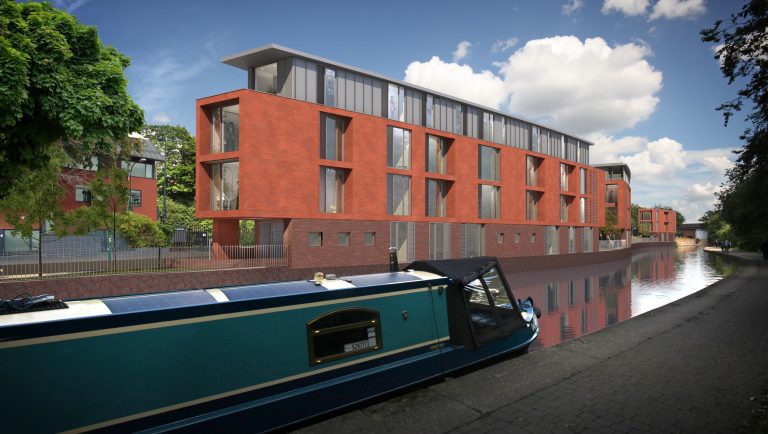
PLANS to transform an area of scrubland into premium student accommodation have been revealed by Leonard Design Architects following the announcement of successful planning permission.  The development, located on the canal edge at Castle Wharf, has been designed by international architecture practice Leonard Design. The Nottingham headquartered firm was appointed

Read More »

PROMOTIONS AND PROPERTIES: BSD’S END OF YEAR REVIEW

Founder and managing director of mechanical and electrical engineering (M&E) consultancy Building Services Design (BSD), David White, talks through 2017, as well as his hopes for the coming year. The past 12 months have been huge for BSD as we celebrated 25 years in business and continued to thrive in

Read More »

REL flies high with new contract win

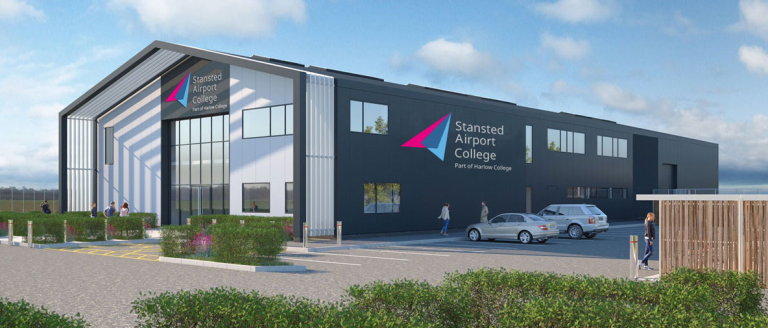
REL has been selected to provide electrical services at an £11m technical skills centre, which is the first of its kind to be located at a major UK airport. Harlow College, in partnership with London Stansted Airport, is bringing forward the two-storey facility, which will be located on land made

Read More »

Olsen navigates challenges for LafargeHolcim

Eric Olsen is frank about the changes he has had to implement at LafargeHolcim since its creation last year. “There are different objectives than the two companies had previously — and one is returning value to shareholders,” he says. It is a pretty punchy judgment on the former leaderships of

Read More »

The Murray Hotel Opened in Conserved Government Building

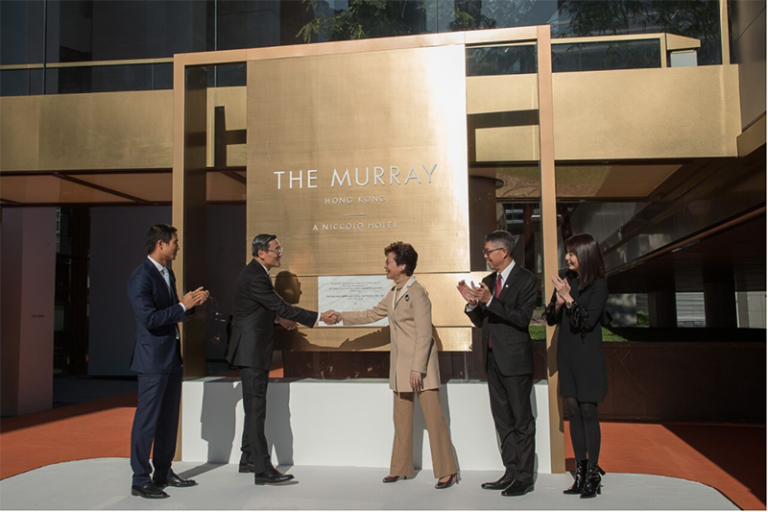
The Wharf Real Estate Investment Company Limited and The Murray, Hong Kong, which is a Niccolo Hotel has held a plaque unveiling in order to mark the completion and preservation of The Murray. The hotel has been created as a part of a conversion project carried out on the previously

Read More »
Latest Issue
Issue 340 : May 2026

BDC News Team

Stantec becomes major infrastructure player in the UK following integration of MWH

Stantec, the leading global infrastructure design and delivery company, is today announcing the integration of MWH UK and MWH Treatment into the business. The completion of the integration now makes Stantec an established key player in the UK infrastructure market as well as marking a further expansion of their combined  service offering in the UK. The change, effective from 1 January, means that MWH UK and MWH Treatment will now be known as Stantec and Stantec Treatment. This follows the merger in March 2016, which saw the creation of a combined business with 22,000 employees globally, across 400 locations, spanning six continents. The union of the two companies presents the UK business with an excellent opportunity to build on its reputation as a leader in the water sector and expand its expertise further into infrastructure, energy and resources, environmental services and buildings. Stantec believes that bringing this diverse technical excellence to bear will help it tackle the biggest challenges facing the utilities, infrastructure and built environment sectors. Stantec has identified four key areas that the industry will need to focus on in 2018 and beyond:   Putting the customer first: designing with the community in mind, so that projects deliver the most benefits for communities and customers. Resilience: safeguarding infrastructure, environments and quality of life to meet the challenges of climate change, operational disruption and future shifts in population. Affordability: developing plans, programmes and solutions that are financially sustainable and affordable in the face of sponsors and regulators need to drive cost effective solutions for business, communities and the customer. Creativity and innovation: ensuring that latest ideas, processes, technologies and best practices are deployed in every project.   Stantec will work with its clients and partners to tackle these four challenges collaboratively over the coming years.   Cath Schefer, UK Managing Director of Stantec UK, said: “The move to Stantec is an important and exciting step forward for our business that has a 150 year history and a rich heritage. Throughout the integration process, it has been clear to all of us that Stantec and MWH values are very well aligned. “With infrastructure development high on the UK agenda, our ambition is to deploy our expertise across multiple sectors and be a part of the many new programmes and projects due to begin over coming years.”   Paul Bresnan, Managing Director, Stantec Treatment, said, “We’ve worked hard to become a leading design & build organisation in the UK water sector, reaching this position by consistently delivering and outperforming for clients. This new development signals our ambition to build on this success. “We are already seeing the benefit of bringing together our combined knowledge and experience and we are confident that this will drive the growth of our UK business.”

Read More »

Metsä Wood calls for collaboration in timber innovation

Modular construction, using timber as a key element, is a credible solution to fast and sustainable house building. However, Metsä Wood believes that more needs to be done in terms of sharing knowledge and innovation in wood construction to further advance the use of this material in mainstream construction.   In order to help facilitate this process, Metsä Wood has launched its Open Source Wood initiative at www.opensourcewood.com. Metsä Wood’s Executive Vice President, Esa Kaikkonen, explains: “Not enough knowledge about modular wood design and building is shared, so wood construction remains niche. There is plenty of innovation but it is difficult to find, so Open Source Wood is our solution. We believe that with open collaboration the industry can achieve significant growth.” The potential of wood is undeniable and today, offsite construction has major aspirations. Prefabricated wood elements enable fast, efficient and environmentally sound design without reducing quality. Reports on the benefits of such a lean approach are compelling: In a study of companies that have applied lean construction methods, 84% report higher quality in construction and 80% experienced greater customer satisfaction.(1) The report also highlights that almost 70% of projects that used prefabricated elements had shorter schedules and 65% had decreased budgets. Timber prefab construction also reduces other inconveniences such as the constant unloading of building materials, as well as the amount of on-site waste and the need to transport it. Innovation in the house building sector is key, and offsite timber construction could be key in achieving the high volume of housing required in the UK. Using new and innovative products like Metsä Wood’s Kerto®LVL (Laminated Veneer Lumber), homes constructed offsite can be turned around in a matter of weeks. Modern engineered wood products can be used for a variety of housing projects ranging from terraced and detached homes through to apartment blocks several stories high. Across Europe, timber prefab construction is already mainstream, yet here in the UK we seem to be slow on the uptake. However, the tide is slowly turning with a greater need to provide affordable, adaptable and ecological homes. Despite signs of progress, more needs to be done to help house builders, developers and planners better realise the potential that modern wood products can offer. It is hoped that the Open Source Wood project will help to highlight some of the innovative projects taking place across the globe and, through a collaborative approach, bring timber construction methods to the forefront of new house building in the UK.

Read More »

Rudridge presents Gravesend employees with long service awards

Rudridge has recognised two employees at its Gravesend branch for their long service to the company. Ian Kenward, Assistant Branch Manager, has celebrated 10 years of continued service at the civil engineering and groundwork material supplier. Having joined Rudridge in 2007, Ian was presented with the company’s long service award and certificate by Regional Director Clive Summerfield. Estimator, Sally Elliott, joined the civil engineering and groundwork materials specialist in 2012 and was presented with the company’s pin and certificate by the Regional Sales Director Duane Long. Clive Summerfield praised Ian and Sally for their dedication and hard work. He said:  “Congratulations to Ian and Sally, it’s a great achievement. I’d like to thank Ian for his help and support with the operations and stock work at our Gravesend branch. Ian’s years of management experience are important in supporting the team and ensuring our high levels of customer service are maintained. “Sally’s experience and determination are key to our sales success and I’d like to thank her for all the support she gives to our tender’s department. Her hard work is vital to the pipeline of future orders and it plays a massive role in ensuring customers continue to choose Rudridge.”

Read More »

FINAL CASTLE WHARF DEVELOPMENT SET TO TRANSFORM NOTTINGHAM CANALSIDE

PLANS to transform an area of scrubland into premium student accommodation have been revealed by Leonard Design Architects following the announcement of successful planning permission.  The development, located on the canal edge at Castle Wharf, has been designed by international architecture practice Leonard Design. The Nottingham headquartered firm was appointed to create three stunning student residences following significant investment from a London-based developer. The scheme is set to be completely car free, making use of the already established network of public transport links and the city’s super-cycle highway which link the universities and the QMC Hospital with the city centre and train station. The plans also offer neighbouring residents direct access to the waterfront for the first time. John Morgan, director at Leonard Design, said: “We are delighted to have secured planning consent for the development. It is a fantastic location for students and will rejuvenate a previously derelict patch of land and help to frame the street and improve this gateway into the city. “The scheme, which draws inspiration from the old canal buildings along the canal network, has been sensitively designed to work as a series of blocks with spaces in-between to enhance the public realm and allows access to the canal side and super-cycle highway. “The three different buildings within the scheme have also been designed so views across the canal are maintained. We worked very closely with the Local Planning Authority to develop a design which was sensitive and appropriate for the site” “Having previously been a resident of Park Rock, I’m particularly passionate about this development and making it a great place to live for both those already based here and those that could move here. Our goal is to create a real sense of community.” Andrew Astin, associate director at Indigo Planning, one of the UK’s largest independent planning consultancies, said: “The site is really interesting as it is a prime location on the canal edge with great surrounding amenities but has been left as scrubland for many years. “Leonard Design has delivered a great vision for the scheme, completely reimagining the site whilst drawing inspiration from the surrounding area to make sure the entire area benefits. They took the time to think about not only what the site needs but what the student residents would want, such as access to the super-cycle highway, and this is what makes the scheme so great.” Ben Tebbutt, director at Nottingham-based Box Property Consultants, said: “This is a very exciting project to be involved in and we are really looking forward to advising the client on their options moving forward now that planning has been confirmed. If any potential parties who require further information then please get in touch.” For further information visit www.leonarddesignarchitects.com or follow @leonard_design on Twitter.  

Read More »

PROMOTIONS AND PROPERTIES: BSD’S END OF YEAR REVIEW

Founder and managing director of mechanical and electrical engineering (M&E) consultancy Building Services Design (BSD), David White, talks through 2017, as well as his hopes for the coming year. The past 12 months have been huge for BSD as we celebrated 25 years in business and continued to thrive in an environment where the next challenge is always just around the corner. As always, we met it head on, overcame it and moved on with added strength and determination. It’s safe to say the industry has changed over the decades, and quite considerably since we opened our first office in Crowland, Lincolnshire, back in 1991. We have since grown nationally, boasting eight offices across the UK – London, Kettering, Birmingham, Manchester, Cambridge, Leicester, Nottingham and Derby – and turning over more than £6 million. This year has been extreme and the roller coaster ride reflects very much the nature of our industry. We have had set backs just like any business, but on the flipside, we have promoted three directors from within, which has strengthened our management team and increased unity within the company – a company culture upon which we were established and have flourished. We started the year by moving into our new Passivhaus head office, based in Kettering, after relocating from our previous headquarters in Corby, where we’d been located for almost 20 years. The carbon neutral building showcases what we do and provides a great working environment for our brilliant team, led by Shaun Gregory. It has exceeded expectations for everyone. We really went above and beyond to achieve the energy efficient building standards because of the benefits both for the environment and staff wellbeing. It’s also estimated we’ll save 60 per cent on our annual running costs. From a personal point of view, our new office is a piece of work that’s been really amazing for me to work on and now work within. It’s the first office space we’ve bought, built and designed ourselves, highlighting a real landmark for us as a business. Promotions have been aplenty, with Mark Dyer, a BSD stalwart of 16 years and Joel Sawyer both becoming directors of the Cambridge and Birmingham offices respectively. Mark and his Cambridge team have made great strides to get us back to our 2012 levels of work – surpassing this year’s targets and gathering real momentum in Cambridge and East Anglia. Joel has been supported in the Birmingham office by Jo Jones, who has also been promoted to associate director – the first woman in the business to take on the senior role. There are very few women in the industry and, at BSD, we are doing all we can to eliminate the stigma attached to construction and engineering being a ‘man’s job’. The Birmingham team are in the midst of relocating to a new, larger suite in Fort Dunlop ready for an extremely busy 2018 so I’m pleased to entrust the team in the safe hands of Joel and Jo. Sean Langton and Charlotte Glover have established BSD in Manchester and we are currently adding to a great team to cope with the new projects the office has secured. Craig Jackson and Eoin Hickey continue to head our London office and continue with their established team to deliver amazing results on a wide range of projects in the capital. As we move into 2018, we are excited by the extent of the high profile projects which are going through design and will enter construction during the New Year. As our reputation grows, we are attracting larger and more complex projects, allowing us to recruit, promote and develop new engineers for the future. Our core business is M&E; I set out to bring something different to the industry, something that wasn’t available in the 1990s – delivering quality, practical, sustainable and commercially-minded designs completed on time and to budget. This hasn’t changed and is something we keep in mind across every job – no matter the size or value. We rely heavily on the relationships we’ve formed over the years and I truly appreciate all of the friends we’ve made in the last 25 years – we’re looking forward to another fruitful year and an active construction industry which is prepared to weather whatever comes its way.

Read More »

REL flies high with new contract win

REL has been selected to provide electrical services at an £11m technical skills centre, which is the first of its kind to be located at a major UK airport. Harlow College, in partnership with London Stansted Airport, is bringing forward the two-storey facility, which will be located on land made available by the airport. It will provide specialist further education tailored to fill skills gaps in engineering, business and finance and airport-related industries such as logistics and hospitality. Willmott Dixon is the main contractor for the new facility, which is scheduled to open in September 2018. Appointed by Kershaw Mechanical Services, REL will deliver all the electrical services, including power, lighting, security systems, access control, and data installation. “We’re looking forward to working with the team to help deliver this unique project, which will build the local skills base and support the airport’s future growth,” said Toby Buckley, REL’s managing director. “We’ve worked on many schools and colleges but this one is one of the most unusual in terms of the design and location. Situated in a former aircraft hangar right next to the runway, there is lots of double height space to contend with and both conventional teaching facilities as well as a workshop area, so power usage will be high.  There will also be no natural ventilation, so all electrical services will need to be carefully co-ordinated with the extensive mechanical elements.” REL is due to start on site in January 2018 with all electrical work scheduled for completion in August 2018 in time for the new academic year.

Read More »

Olsen navigates challenges for LafargeHolcim

Eric Olsen is frank about the changes he has had to implement at LafargeHolcim since its creation last year. “There are different objectives than the two companies had previously — and one is returning value to shareholders,” he says. It is a pretty punchy judgment on the former leaderships of two of the world’s largest cement companies, Lafarge and Holcim, before their €41bn merger in July last year. But it reflects some of the challenges with which the chief executive of the SFr32bn combined company is contending. He inherited a deal which had been dogged — and nearly derailed — by culture clashes between the management of France’s Lafarge, run by Bruno Lafont, and that of Holcim of Switzerland, chaired by Wolfgang Reitzle. Mr Olsen is an old Lafarge hand, having joined the company in 1999, and he acknowledges that his own French and American background has helped him address the cultural issues stemming from the merger. These, though, were not the only problems he faced after taking over 15 months ago. The Zurich-headquartered company has struggled to cut costs and reduce debt amid a global cement glut. LafargeHolcim shares, which were above SFr70 when the merged company started trading, halved to a low of SFr34 in February, and are now at SFr52. Meanwhile, in the aftermath of the deal, Mr Olsen admits pricing suffered at the expense of volume across the company’s operations. Key numbers: LafargeHolcim at a glance Lafarge cement truck in Paris, prior to the merger with Holcim © AFP ● Annual net sales SFr30bn● Geographic reach 2,500 plants in 90 countries● Employees 100,000● Planned disposals SFr5bn by end of 2017 He suggests the former management is partly to blame for the lack of detail on financial performance that contributed to this loss of pricing discipline. “There were some elements of the merger that were not as well prepared as they should have been,” he says in an interview with the Financial Times. “The last six months before closing we had a period where there wasn’t close supervision of our commercial strategy.” Mr Olsen says the “hard choices” consequent on any deal of this size were not taken when they should have been, due to a failure of the companies’ leaderships to work “seamlessly … together”. It was not, he adds with tactful understatement, a “smoothly functioning process”. LafargeHolcim’s latest numbers show some progress has been made on imposing greater pricing discipline, although third-quarter results due out next month will give a better picture of whether this will prove sustainable. Meanwhile, Mr Olsen emphasises the need to rein in the company’s capital expenditure. “We have overinvested,” he says. “We have SFr55bn of capital invested earning a 5 per cent return. That’s not sufficient.” Promised cost savings from the deal are more difficult to track, although Mr Olsen has outstripped the market’s expectations in terms of getting rid of unwanted businesses. LafargeHolcim had promised SFr3.5bn of disposals in 2016, but in August increased the target to SFr5bn by the end of 2017. Mr Olsen says he did not flog off assets on the cheap, but the relative ease with which he achieved the disposal target gives little sense of the size of his task since taking over. He has been running not one, but two companies, and combining operations which spanned 90 countries, 100,000 employees, 2,500 plants, and nearly SFr30bn in annual net sales. Not only was the scale large, but there was operational overlap in countries representing at least a third of LafargeHolcim’s revenues. New hints and tips Read live updates of the latest FT news, the moment the stories are published More tips The integration process, he claims, is now substantially complete. “I would say the work of bringing these two companies together is a big complex task. But it’s done.” If so, it is a significant achievement, particularly given he had never been a chief executive before, and had little of the traditional backing a new top manager should normally expect. Mr Reitzle stepped down as chairman in May, less than a year after the merger, to return to his former employer, Linde, and was replaced by Beat Hess who, although a board member of Holcim since 2010, had no other experience in the cement industry. Meanwhile, Mr Olsen has had the tricky task of keeping his three major shareholders, who all hold board positions, happy. He says Thomas Schmidheiny, of Holcim’s founding family, with an 11 per cent stake, Groupe Bruxelles Lambert with 9 per cent, and Nassef Sawiris with just under 5 per cent, support him and his strategy. Top shareholders in LafargeHolcim © FT Graphic / Getty ● Thomas Schmidheiny (right) 11 per cent stake● Groupe Bruxelles Lambert 9 per cent● Nassef Sawiris (left) 5 per cent One sign of this is that Mr Olsen has been able to replace key members of his executive committee. Some analysts have voiced concerns that he has swept away old Holcim hands and replaced them with his own Lafarge people, but he rebuts the accusation. Some of the problems Mr Olsen faced were not internal but external. LafargeHolcim was created just at a moment when some of its key markets were experiencing sharp slowdowns — notably China and Brazil. There has also been sluggish growth in Europe. At the same time, LafargeHolcim is grappling with an industry that is chronically oversupplied. Mike Betts, analyst at Jefferies, estimates that, outside China, capacity utilisation barely reaches 70 per cent. And LafargeHolcim faces competition not just from the other big global players like Heidelberg and Cemex, but from a plethora of smaller local competitors. Mr Olsen argues that being global — even in a local industry like cement — has its benefits, citing the recent winning of a gold mine contract in Uganda, where LafargeHolcim was able to bring in experts from Canada to clinch the deal. But he knows judgment is very much still pending on the success of the merger. Source link


Read More »

Advantages of Solar Panels for Small-Scale or Commercial Businesses

Businesses stand to benefit from adopting renewable technology to power their needs. It makes sense to switch to renewable solar PV considering that the business sector is the biggest consumer of power in the UK buying up 56% of all electricity according to E.ON. On a commercial scale, solar energy offers attractive benefits providing clean and renewable fuel, reducing operating costs and creating a source of income. As the cost of installing panels becomes cheaper and effective, businesses and offices turn to solar as a source of energy despite the recent energy subsidy cuts imposed by the government. Here are the reasons why. Renewable and a Source of Clean Energy for Good Business Practices Available data from SolarCentury suggests that there are at least 400 commercial PV installations in UK businesses and offices that are ground or roof mounted. These panels generate electricity for commercial purposes. Solar power is a source of clean fuel emitting low to zero carbon emissions that won’t harm the environment. There are nearly 250,000 hectares of (south) facing commercial property in the UK according to the UK PV Solar Strategy. Assuming the installation of solar panels on commercial buildings and roofs, these PV panels could provide up to 50% of electricity demands in the UK (estimates of BRE National Solar Centre). Reduce Maintenance Costs Once installed, solar panels are nearly self-sustaining. They require little maintenance apart from regular annual inspection & testing and cleaning. The average lifespan of a PV is 20 years and the panels are expected to deteriorate at 1% a year (National Renewable Energy Laboratory). Dirt and debris may also collect on the panels and hence,  several times a year, panels are washed to maintain efficiency. Solar PV saves you money on expensive maintenance or repair activities. Installing solar panels also minimises administrative expenses. Source of Revenue Another convincing argument to switch to solar is that the government offers incentives to businesses in the form of Feed-in-Tariffs. Not only is your business going to produce its own electricity but the extra energy you make can be sold back to the grid for a specific price per kilowatt. For small-scale enterprises, the return on investment (ROI) is comparable to gains on a home installation. But if you have the land or space, you could build more solar panels and the ROI is higher. On top of reducing operational costs and making use of roof space, installing clean renewables is also another source of income. PV installations are reliable sources of energy that can power the needs of businesses and offices. Technology is constantly improving making it easy for enterprises to make the switch as costs of installation become cheaper and PV efficiency in energy production increases.

Read More »

It’s all happening in Doncaster, Yorkshire…… and why is ARMANI involved?!

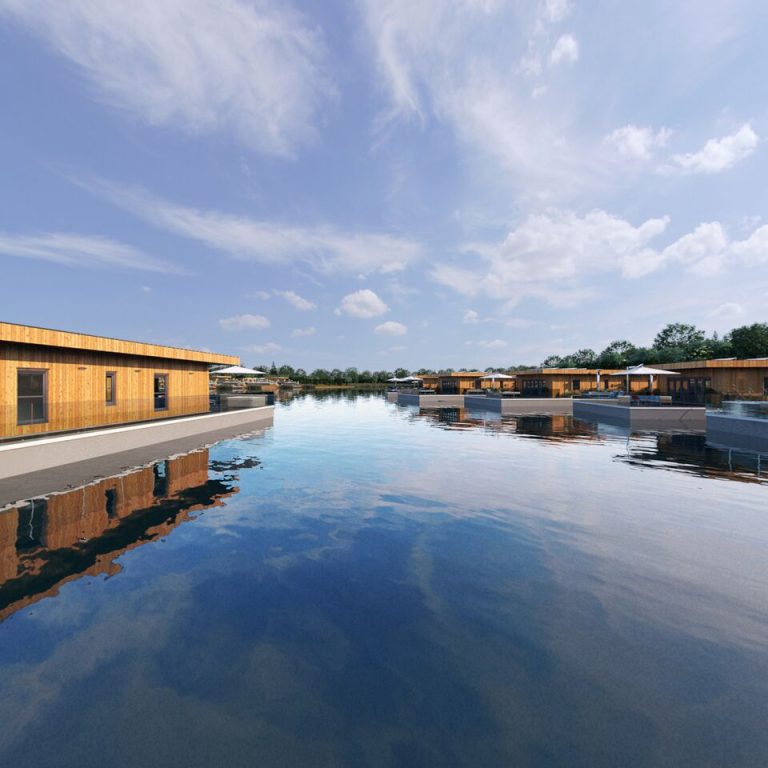
Rothgen Capital UK are proud to announce the launch of the latest funding round for The Tyram Lakes Hotel, Spa and Resort in Hatfield, near Doncaster in Yorkshire UK. As a truly groundbreaking project, Tyram Lakes is utilising the latest cutting edge ecological and eco-friendly innovations as inherent parts of its designs and is the first of its kind, thus of particular interest to energy focussed investors. The Tyram Lakes Hotel, Spa and Resort is set in the heart of the Humberside Peatlands, Hatfield Moor and the National Nature Reserve in South Yorkshire. Plans are already approved for 325 luxury eco-lodges set on and around 65 acres of lakes adjacent to 100 acres of natural woodlands, plus the hotel and spa. Some of the lodges (125) will be floating structures, and the remaining 200 will be set amid the vast woodlands. Ranging from two and three bedrooms, as well as a number of larger four bedroom accommodations, all lodges will blend into the landscape providing a private gateway with natural spaces all around. Their attractions include rooftop gardens fitted with solar panels, decking areas with sunken spa bath and a choice of classic or contemporary interiors. Sitting at the heart of the resort is a planned boutique hotel designed by Den Architecture in association with Baca Architects, specialists in eco-friendly and amphibious projects. This ambitious hotel will feature 104 rooms, conference and meeting facilities, a fine dining restaurant with lakeside views, and indoor pool, leisure club, spa, gymnasium, and a picturesque wedding and party venue. What’s happening? The application to build the green resort was approved by Doncaster Metropolitan Borough Council in December 2016, commencing with the first phase of 50 eco-lodges constructed from timber and incorporating the latest environmentally-friendly technologies providing a tranquil escape in a beautiful natural habitat. Speaking at the time, Daulton Byfield, managing director of Rothgen, the company behind the project, said: “The Tyram Lakes Hotel, Spa&Resort will be the first of its type in the UK. We are planning to invest £25m to create a first class eco holiday village where visitors can relax amongst nature and enjoy a quiet break from hectic modern life.” The scheme comprises four phases of development: Phase1 – 50 Lakeside and floating lodges Phase2 – 104 Bedroom Hotel, Spa, and Leisure Centre Phase3 – 75 Lakeside and floating lodges Phase4 – 200 Woodland retreat lodges …. and embraces the very latest science and technology to create a resort which is designed to function through environmentally accredited solutions that are energy efficient, all of which engage and sustain the local ecosystems. “The scale and ambitious nature of the plans will ensure the resort is one the most luxurious, fun and relaxing holiday destinations in Europe. This green development will be as sustainable as it’s currently possible to build, and be exemplary case study for other developers,” says Baca Associate, Andrew Scrace. Efficient and ecological solutions Geyser Thermal Energy (GTE) was tasked with the design for the heating and hot water system for The Tyram Lakes Resort which focuses on energy efficiency and sustainability. At inception, the site had very limited electrical and water supplies (with no gas supply) and it was crucial that the system would not have a negative impact on the local ecology. GTE devised an innovative approach of using the main lake as a heat source for the lodges, coupled with various (nonchemical) water filtration processes that further reduced energy consumption and the need for chemicals. Such an innovative renewable heating system coupled with highly efficient and ecologically sound water solutions will mean minimal running costs and environmental impact for the development. Physical attraction It may then come as no surprise that the interest attracted by Tyram Lakes is not just from the Green and Eco sectors. Its existing design and sustainability has led to the world famous ARMANI brand becoming involved with the design of a selection of exclusive lodges on the site. This will make The Tyram Lakes Resort & Spa the first ever Armani development inside the UK. Now partnering too with Natural England who have a sizeable park neighbouring Tyram Lakes, and who have agreed to complimentary access for Tyram Lakes guests, providing countless more acres for hiking, trails, exploration and more. And as though these factors aren’t enough to persuade investors, Hoseasons, the UK’s largest park operator, has recently agreed to guarantee the rental on the lodges at the resort, providing evidential balance sheet background for those wishing to invest. Oh, and just down the road the Yorkshire Wildlife Park has recently announced its £50M expansion which will potentially make it a top UK destination. So, it’s all happening in Doncaster, Yorkshire, and The Tyram Lakes Resort & Hotel is inviting investors to play along……

Read More »

The Murray Hotel Opened in Conserved Government Building

The Wharf Real Estate Investment Company Limited and The Murray, Hong Kong, which is a Niccolo Hotel has held a plaque unveiling in order to mark the completion and preservation of The Murray. The hotel has been created as a part of a conversion project carried out on the previously known Murray Building. The plague and the construction work has been carried out as a celebration for the 20th anniversary of the HKSAR. The Murray Building was one of eight historic landmarks that have been worked on under the Conserving Central initiative which has been introduced by the HKSAR government in 2013. The building is a signature piece of architecture that has more than 50 years of history attached, and has been brought back to life with the completion and opening of The Murray. This new luxury hotel looks out over the city’s Central Business District and its serene green surroundings. The ceremony that unveiled the plaque was officiated by the guest-of-honour Mrs. Carrie Lam, who is the Chief Executive of the HKSAR along with Peter Woo, the Chairman of Wheelock Holdings Pte Limited. The Murray Building’s original architect Mr. Ron Phillips was also in attendance at the unveiling of the ceremonial plaque as were the Foster + Partners team who worked as design consultants for the project. The event was also attended by around 200 guests in order to mark this important milestone in the conservation of the city’s architecture. The guest of honour, Mrs. Carrie Lam has said that she has worked in the Murray Building twice over the course of her public service career, and is thrilled to see the building transformed. The building was the homes to a number of government departments for around half a century and will now be used as a home from home for guests from around the world.

Read More »