BDC News Team

Sto HELPS BRING THE WRITTEN WORD TO LIFE ON A MAJOR DEVELOPMENT PROJECT

A ventilated rain screen cladding system from Sto has been used to form the crowning section of a major new library and cultural centre in South Shields. The challenging design of The Word highlights the tremendous versatility of the StoVentec R system, as despite the difficulty of the application, a high standard of

Read More »

NEC3 CONTRACTS: COMMON PITFALLS

INDEPENDENT property, construction and infrastructure consultancy, Pick Everard, has launched a series of new podcasts delving under the skin of the new suite of NEC contracts. The first episode of ‘Perspective’ has now launched, with ‘Common Pitfalls’ now available to download. Partner Alastair Hamilton discusses what listeners can expect from

Read More »

Barnshaws keeps the Polar Express running

Since the dawn of steam, Santa has relied on the Polar Express for essential logistics around his festive distribution centre at the North Pole. It performs a vital role moving presents, wrapping paper etc. for next-day delivery. Like a lot of ageing infrastructure, the Polar Express line was starting to

Read More »

Keyline appoints new National Account Manager

Keyline is delighted to announce the appointment of Andy Rodgers as its new National Account Manager. Having spent 30 years in the industry, Andy joins Keyline’s national contractor team from Cubis Systems where he spent two years as the Rail Business Development Manager. Prior to Cubis, Andy worked at Polypipe

Read More »

City firm undergoes temporary overlay

Unfinished concrete, exposed pipe work and industrial chic; all design tastes symptomatic of a yearning to go back to basics in a world full of complexity. Here, Matt Collins, business development manager at bespoke power distribution equipment manufacturer ide Systems, explains how the company overcame a unique design challenge to

Read More »

Smart cars will spot potholes in Highways England vision

Cars of the future could be programmed to spot potholes on motorways and automatically transmit the information to Highways England to schedule repairs. In a vision of the future outlined today the government company said an intelligent network coupled with connected vehicles would improve the efficiency of road maintenance and

Read More »

Digital transformation at the heart of £600bn infrastructure plan

The government’s Infrastructure and Projects Authority has set out more plans to increase efficiency of the industry in a 43-page document entitled Transforming Infrastructure Performance published today. The document sets out plans to change the way infrastructure is planned, procured and delivered. It follows a commitment in last month’s Budget

Read More »
Latest Issue
Issue 340 : May 2026

BDC News Team

BCF launches PaintSafe initiative at the 2017 National Painting and Decorating Show

The British Coatings Federation (BCF) in association with the Painting and Decorating Association (PDA) and the Scottish Decorator’s Federation (SDF), has launched a new initiative ‘PaintSafe’ which aims to promote the safe use of paint and related products and provide best practice for decorators and other applicators during preparation, application and drying. Working in collaboration with the major paint manufacturers in the UK, the first phase of the campaign focuses on decorative paints, and was launched 28 and 29 November at the 2017 National Painting and Decorating Show. A second phase to promote safe use of industrial paints will be launched late in 2018. Unveiled as part of the campaign includes a tri-fold leaflet, which outlines do and do not points to follow whilst painting, and specific guidelines with regards to lead exposure and preparation. The leaflet is available for download at www.paintsafe.org.uk and will be available via trade outlets across the UK in the first quarter of 2018. BCF’s Chief Executive, Tom Bowtell commented: “Whilst we know most decorators are aware of best practice, it never hurts to be reminded of the best and safest ways to work with paints and coatings particularly when sanding and spraying, or dealing with period houses that may have been previously painted with lead based paints in the pre-1960s period.”  

Read More »

Sto HELPS BRING THE WRITTEN WORD TO LIFE ON A MAJOR DEVELOPMENT PROJECT

A ventilated rain screen cladding system from Sto has been used to form the crowning section of a major new library and cultural centre in South Shields. The challenging design of The Word highlights the tremendous versatility of the StoVentec R system, as despite the difficulty of the application, a high standard of finish was achieved. The Word, National Centre for the Written Word – was designed by international design practice FaulknerBrowns Architects. The building’s circular design and external appearance were inspired by the way the pages of a book fan out as it is opened. StoVentec R was used to create the building’s topmost section, which complements the striking combination of glass and cladding used beneath it. StoVentec board was also used to clad the ground floor of the building. “The insulation and StoVentec R cladding system for the building was designed by the specialist contractor, Aire Valley Exteriors of Shipley,” explains Sto Account Manager, Jim Allan. “However, the curved nature of the walls posed a number of installation challenges, as the StoVentec R system had to be applied to Structural Insulated Panels (SIPS), while still following the curve.” Work to further develop the cladding system design and then overcome the installation challenges involved close liaison between FaulknerBrowns, Aire Valley Exteriors and Sto, who made many site visits and provided technical support to the project. “The lightweight StoVentec boards were fixed to an adjustable stainless steel sub-construction to create a ventilated cavity. This cavity was part-filled with mineral-fibre insulation to provide reliable thermal insulation and create a U-value of 0.26 W/m2k. The cavity also ensures the wall can breathe and remain dry,” adds Jim Allan. “In this case, the sub-construction had to be fixed to the stud members inside the SIPS panels, while also accommodating the position of the building’s existing steel frame, and this involved using some additional brackets. The nature of the roof detailing added yet another dimension to the challenge, but by working together we were able to accommodate all the various factors successfully.” StoVentec boards are manufactured from recycled glass, and although light in weight, are very strong and very flexible. They do not expand or contract with temperature change so there is no risk of cracking. The adjustable sub–construction levels out any unevenness and provides for absolutely perpendicular surfaces. Seamless façades of up to 200m² can also be achieved. The boards were finished with a 1.5 mm coat of StoSilco K, a resin-based plaster that produces a clean, white finish to complement the other aspects of the completed building. The hydrophobic properties of StoSilco help repel rain and moisture and keep the façade cleaner for longer, thus providing great weather-resistance and outstanding protection. Opening on time in October 2016, The Word represents a real paradigm shift in the community library building typology. It is a library for the 21st century, celebrating the dynamic relationship between people, books, traditional media and interactive technologies, in a truly inspiring environment. The building incorporates a library, exhibition space, FabLab with 3D printers and vinyl and laser cutters, television and radio studio, children’s immersive storytelling area, OpenZone IT suite, café, and a rooftop viewing terrace with views out over the River Tyne. The building was commissioned by South Tyneside Council as the first phase of South Shields 365 Town Centre regeneration. The Word is vital to the wider regeneration of the town centre, creating a cultural destination which is promoting footfall and tourism back into the coastal town.


Read More »

NEC3 CONTRACTS: COMMON PITFALLS

INDEPENDENT property, construction and infrastructure consultancy, Pick Everard, has launched a series of new podcasts delving under the skin of the new suite of NEC contracts. The first episode of ‘Perspective’ has now launched, with ‘Common Pitfalls’ now available to download. Partner Alastair Hamilton discusses what listeners can expect from the firm’s first podcast and what the common pitfalls are when using the contracts. Producing a podcast series is a first for Pick Everard and we’re delighted to have launched such an innovative and insightful series which aims to aid discussion and improve understanding, educating those in the industry who may not have yet come into contact with the new suite of NEC contracts. Each episode will feature property and construction leaders – from mechanical and electrical engineers to project managers to surveyors – with a combined experience of more than 100 years. We’re passionate about the industry and I think it really shows. Our first episode looks at common pitfalls that can arise from NEC3 contracts and how best to avoid them. The first potential pitfall highlighted as a potential cause for concern is: not understanding what you’re trying to produce and deliver. It’s imperative that there’s clear understanding among all delivery partners involved in a scheme – as well as the client – as to what they’re looking to achieve; what are the client’s key objectives? Once this has been established this will inform a brief and, ultimately, the contract type. Secondly, understanding the client itself is important as a pitfall can often be a misunderstanding of a company’s structure, its attitude to risk and any potential constraints with regards budget and time. Some clients don’t have a construction background so need and advice and guidance – particularly when it comes to contracts – and, in order to provide this information, a clear understanding of a business is required. Selecting the correct NEC contract is crucial to ensure that it can enable the key drivers for the project and allocate risks appropriately. Failure to select the most appropriate contract will result in a programme of works that simply doesn’t work for anyone – not to mention creating a particularly difficult job for the project manager, having to negotiate a contract that is not aligned to the requirements of the project. The idea of ‘one size fits all’ contracts is a contentious subject when it comes to the introduction of Z clauses. These are put in place to personalise a contract but clients need to be aware that they can create ambiguity and duplication which can potentially promote misunderstanding. At Pick Everard, we have a standard set of Z clauses we use but we adopt a precautionary approach to their use to ensure they do not become contradictory. Finally, the terminology used in NEC contracts can present pitfalls. There are changes to terminology in the new edition, NEC 4, and it is imperative that this is maintained throughout to avoid ambiguity. Failure to maintain consistency means that you risk a subcontractor or client not understanding a contract. This is particularly important with the NEC suite as it is also an important project management tool which is referred to at every stage of a project so needs to be as clear as possible. Small differences in terminology – for example ‘risk registers’ now being referred to as ‘early warning registers’ – can have a large impact on a project if they’re not accurately identified and understood. Getting a clear and accepted programme of work in place is crucial from the outset and, if used correctly, NEC contracts are an excellent project management tool to ensure that this is the case.

Read More »

Barnshaws keeps the Polar Express running

Since the dawn of steam, Santa has relied on the Polar Express for essential logistics around his festive distribution centre at the North Pole. It performs a vital role moving presents, wrapping paper etc. for next-day delivery. Like a lot of ageing infrastructure, the Polar Express line was starting to show its age and this year Santa sent elf envoys to Barnshaws Section Benders for some support. Ash Pan, Chief Stoker Elf aboard the Polar Express, explains: “We only travel in winter, so the Polar Express isn’t immune to some wear and tear. Usually this only amounts to chocolate stains on the seats, but after decades of service it was clear this Christmas that the rails needed some attention. For that we needed section bending, so we contacted Barnshaws to help ensure the Polar Express doesn’t become stationary.” Barnshaws, one of the world’s largest metal bending companies, has a proven track record in providing high quality steel curving to Santa’s operation. Last year, the business helped to avert a candy crisis by bending candy canes, and the year before, rolled new skis for Santa’s sleigh. This year it was subsidiary company Barnshaws Polska that was best able to help deliver the project, due to his North Polish location, and because the business had recently helped to design a new tram system in Poland. In the UK, Barnshaws has also been producing railway wiring gantries to aid with the electrification of older railway lines. Train Driver on the Polar Express, Rayul Way, added: “The Polar Express can hit speeds of over 100 presents per hour (pph), so it was really important to have perfectly curved rails. Barnshaws Polska was able to service this substantial order very quickly, and trust me we know about global logistics. “Thanks to this work, we’ve been able to ensure children from around the world get their presents from Santa, and the new lines which are millimetric perfect, form a solid platform for future success.” Santa was delighted with the work and said… “Ho Ho Ho!” A very Merry Christmas and a Happy New Year from everyone at Barnshaws!

Read More »

Keyline appoints new National Account Manager

Keyline is delighted to announce the appointment of Andy Rodgers as its new National Account Manager. Having spent 30 years in the industry, Andy joins Keyline’s national contractor team from Cubis Systems where he spent two years as the Rail Business Development Manager. Prior to Cubis, Andy worked at Polypipe Civils and Radius Systems, and brings a wealth of manufacturing and utility sales experience. His role at Keyline will see Andy working with national contractors and manufacturers to ensure best solutions and overall value are offered through early engagement with customers and supply chain alike. A focus will be on building partnerships and ensuring a cost-effective, timely delivery of projects. Andy commented: “I’m delighted to have joined Keyline. I’m looking forward to working for a business that is taking the lead rather than following, and using my manufacturing background and industry experience to offer smarter solutions to customers.”

Read More »

City firm undergoes temporary overlay

Unfinished concrete, exposed pipe work and industrial chic; all design tastes symptomatic of a yearning to go back to basics in a world full of complexity. Here, Matt Collins, business development manager at bespoke power distribution equipment manufacturer ide Systems, explains how the company overcame a unique design challenge to deliver a temporary overlay on a building in the heart of London. An architect’s job is often a difficult balancing act between three core concepts: firmness, commodity and delight. A building should primarily be durable, it should then be easy and convenient to use and, finally, it should excite and delight its audience. ide Systems was called into one such building in the London, which faced a growing problem after three decades of use. The firm occupying the building has seen its home become a design icon, because its services, including ducts, lifts and electrical power infrastructure are located on the outside of the building to maximise internal space. While the building has generally stood the test of time, over the course of the last year the building’s electrical services had suffered from water ingress and corrosion. Because the firm generates billions of pounds in revenue a year, it was critical that a continuous supply of power was maintained while repair work was carried out. The facility’s management also faced a secondary problem with free-runners trespassing on the roof of the building, where some of the electrical infrastructure is located, creating a security and safety concern. Finally, because the building has listed status, any solution that was delivered could not be invasive and had to fit onto external gantries running on the outside of the building. This was a challenge because the gantries are only 500mm wide and situated at a height of up to 100m from the ground. Solution ide Systems designed, manufactured and delivered a temporary overlay for the outside of the building. This consisted of a 630A four-pole moulded case circuit breaker (MCCB) and a range of 125A 400V switched interlocked socket outlets, which are designed to be tamper proof, preventing disconnection under load. The accompanying switchgear was placed behind locked windows and ide Systems built the enclosures with an IP65 ingress protection rating, preventing damage from water and dust. So that the units could fit on the narrow 500mm gantries, without damaging the listed building, ide’s engineers redesigned the boards to be tall and narrow allowing them to be manoeuvred into position and bolted down. Future The project has been a success and ide Systems has already secured future work to upgrade other parts of the building, as well as a service level agreement to provide ongoing maintenance and emergency callout services. Facilities managers working in any application where upgrades or repair work needs to be carried out must ensure that the temporary power overlay delivers power continuously and reliably. While industrial chic might not be to everyone’s tastes, a firm and robust design is a necessity for all. Electrical engineers can find out more about the project and the products supplied by downloading the company’s new engineered solutions catalogue from the ide Systems website.

Read More »

Smart cars will spot potholes in Highways England vision

Cars of the future could be programmed to spot potholes on motorways and automatically transmit the information to Highways England to schedule repairs. In a vision of the future outlined today the government company said an intelligent network coupled with connected vehicles would improve the efficiency of road maintenance and at the same time improve safety. In another development drones could also be used to report on incidents, improving response times. In its Strategic Road Network Initial Report, published yesterday (13 December 2017), the company says technology will play an increasingly important role in keeping people moving, and the country connected. It also stresses the importance of keeping existing roads properly maintained, and in a way that minimises disruption to road users and local communities. The report will be used to inform the government’s next road investment strategy which begins in 2020. Highways England chief executive, Jim O’Sullivan, said: “We are delivering a record £15bn of government investment to give people safe, efficient and reliable journeys, and provide businesses with the links they need to prosper and grow. “Because people’s journeys are important to us we are setting out our high level aspirations which will help ensure the network continues to drive economic growth, jobs and prosperity, and keeps traffic moving today, and into the future. “We encourage people to read our report and give feedback through the Department for Transport’s consultation, which is also launched today.” Since it was created in 2015, Highways England has completed 18 major road improvements and has a further 15 under construction. Transport secretary Chris Grayling said: “This government is making people’s journeys better, faster and safer to give people better access to jobs, schools and their community. “We are planning to spend more than ever before to upgrade England’s motorways and major A roads from 2020 through to 2025.” The Initial Report outlines eight aspirations for the next road period: focus on operations, maintenance and renewals; build the smart motorway spine of the network; roll out expressways; undertake transformational investments; deliver a balanced programme; renew focus on small schemes; deliver through refined designated funds; prepare for the future. The Department for Transport has also launched its consultation into Highways England’s Initial Report. The consultation will run until Wednesday, 7 February 2018. The results will be used by the department to help develop the next Road Investment Strategy, which the government is expected to publish in 2019, when details of specific road projects will be outlined.

Read More »

Digital transformation at the heart of £600bn infrastructure plan

The government’s Infrastructure and Projects Authority has set out more plans to increase efficiency of the industry in a 43-page document entitled Transforming Infrastructure Performance published today. The document sets out plans to change the way infrastructure is planned, procured and delivered. It follows a commitment in last month’s Budget and Sector Deal agreement to favour offsite construction on major public projects from 2019. At the heart of the plan is to use “digital technology and innovation to improve the way we deliver and extract maximum whole-life value from infrastructure, including through supporting effective delivery of the Digital Built Britain programme and building on examples of good practice such as smart motorways”. The document also sets out how the IPA will join the Infrastructure Industry Innovation Platform (i3P), and continue to engage with other innovation initiatives, to strengthen its role in identifying and championing good practice. Alongside these papers, the government confirmed a new £600bn pipeline of UK infrastructure projects covering the next 10 years. The productivity plans include creating a new Infrastructure and Projects Authority benchmarking team to “define cost and performance benchmarks” and a focus on procuring projects based on whole-life cost, rather than capital costs. The IPA also vowed to help drive the uptake of offsite construction by identifying “obstacles to faster uptake”. The industry has broadly welcomed the plans. Cast’s Mark Farmer, and author of the Modernise or Die report, said: “This is an important document which if successfully played out by government in partnership with industry will modernise construction in a way we have not seen before. It addresses two major linchpins of change – the physical delivery model and the way we procure In the foreword to the document Andrew Jones MP, exchequer secretary to the Treasury, said: “Transforming Infrastructure Performance is the government’s long-term plan to change the way infrastructure is planned, procured, delivered and operated so we can make the most out of our increased investment. “Through interventions including benchmarking projects and accelerating the use of modern methods of construction like offsite manufacturing, our programme will help us to support economic growth and exploit a £15bn productivity opportunity in construction every year.” The IPA said that the “programme will, over time, change the ways in which infrastructure is planned, procured and delivered. To drive whole-life value from assets, the IPA will look at how whole-life performance of assets can be assessed between sectors.” “Focusing solely on the upfront capital costs of delivering an asset, and not how to deliver best value over its whole operational lifetime, can lead to missed opportunities to deliver better value for money and benefits to consumers and society.” “The government is taking immediate steps to support the Sector Deal objectives. Firstly, it will use its substantial pipeline of construction projects to drive innovation and increase the adoption of modern methods of construction.” Across the Department for Transport, the Department of Health, the Department for Education, the Ministry of Justice, and the Ministry of Defence, this currently represents a potential pipeline for modern methods of construction of around £20bn a year.

Read More »

Concrete company increases productivity through paperless scheduling solution

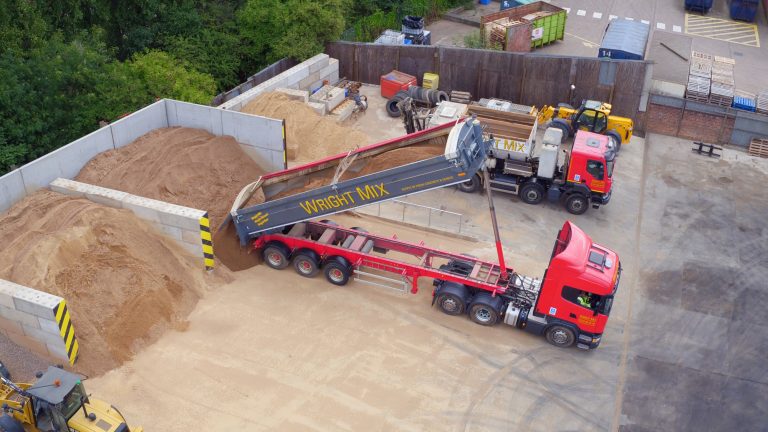
A concrete company has seen its productivity boosted by more than 25 per cent after switching to a paperless system for ordering and job scheduling, underpinned by telematics. Wright Mix, a leading supplier of concrete screed and ready-mix concrete, has been able to complete up to two extra jobs per vehicle each day and reduce administration with help from an integration between the WEBFLEET fleet management solution from TomTom Telematics and routing and scheduling software AGGSMART. This digital system replaced Wright Mix’s previous manual booking and scheduling system, which relied on paper-based records and communication via phone, and enables dynamic job dispatch and workflow, automatic billing, customer ETAs and digital signature capture. Customers place an order and following preauthorisation of payment, the job can be assigned to the most appropriate driver and timeslot within the dynamic scheduling system.  Job details are sent to drivers’ TomTom PRO 8 driver terminals and navigation is automatically provided, giving the driver, office and customer an accurate ETA. WEBFLEET ‘talks’ to AGGSMART throughout whole process. This means that, when arriving onsite with the customer, the driver is able to check the preauthorised payment before dropping the concrete or screed and asks the customer to sign for the delivery on the screen. The exact volume of product delivered to the customer is then recorded in the AGGSMART app, which enables Wright Mix’s accounting system to automatically bill the customer accurately – all without the use of paper or making a phone call. As well as seeing a 25 per cent increase in productivity and removing paperwork processes, the new system has helped streamlined processes, condense administration hours, and reduce ‘bad debt’. Peter Harris, operations manager at Wright Mix, said: “Before we had WEBFLEET and AGGSMART, I was constantly on the phone to customers and our drivers – the days were so frantic.  So much so that I would miss lots of calls during the day.  Now, the office is very calm and I never miss a call.” Phil Wright, owner of Wright Mix, added: “AGGSMART has been a significant addition to our volumetric ready-mix business, creating flexibility, traceability and efficiency in our day-to-day shipping and ordering process.  With a detailed and easy-to-use quotation system integrated to our credit card payment provider, booking jobs has become a seamless process.” The system was implemented by TomTom Telematics partner, FMC FleetTrack.

Read More »

On-Site Slips, Falls, and Injuries: 3 Things You Need to Know About Worksite Accidents

With heavy materials, heavy equipment, and work done from great heights or tricky angles, construction site accidents are going to occur. Every laborer on-site should first follow proper safety procedures, but from there, it’s vital to hold a few key points in mind concerning worksite injuries and accidents. Here are three things to think about before you head out for another day on the job. At fault – It’s not always what/who you think.  So, someone dropped a tool on you from the floor above. You may initially believe the other laborer alone is to blame for your injury, but that’s not always the case. It could have actually been that the tool malfunctioned, and couldn’t be operated as usual. It could be that the scaffolding the laborer was on wasn’t assembled correctly, and they lost their center of balance. It could also be that the laborer wasn’t properly trained by management. Such is the case with many falls and on-the-job accidents; determining fault involves more than just observation. For this reason alone, many cases of worksite accidents don’t play out exactly the way the injured party think it will. In addition, any action taken or benefits the injured party receives will be subject to state laws and regulations, so getting in touch with a construction accident attorney can help clarify what applies to you. How you react counts.  Just as with any accident which spurs legal action or compensation, what you do immediately following the accident matters a great deal. First, stop work immediately. This can ensure that you don’t somehow become responsible for your injury by neglecting it, and in fact further aggravate it by continuing to exert yourself. Next, tell your boss. Report precisely what happened, as you understand it. Then, go straight to the hospital. Before you’re released, get a summary (record) of what occurred on paper. Make sure it shows that you were in the hospital on that time and date, and identifies that you were treated for this injury. Once you’ve reported and recorded the injury, then you can contact an attorney. Everyone is not on your side.  This can be a devastating lesson for those who have been working for the same company for years. Despite the fact that you’re a loyal employee with a history of good performance, things change when someone is expected to take the blame and eventually pay up. In the same vein, OSHA (Occupational Safety and Health Administration) isn’t always looking out for your best interest as well, as they are not a worker’s rights organization. They will not be investigating your injury in order to support your claim; they are looking for a workplace violation. In fact, it’s more likely that they’ll find you were to blame before a third party. In the end, the most important thing is to do what you can to heal from your injury. Afterward, consult with a few different attorneys and learn what options you have for recourse. This way, you can find a professional who is actually interested in collecting evidence and investigating the situation for your benefit.

Read More »