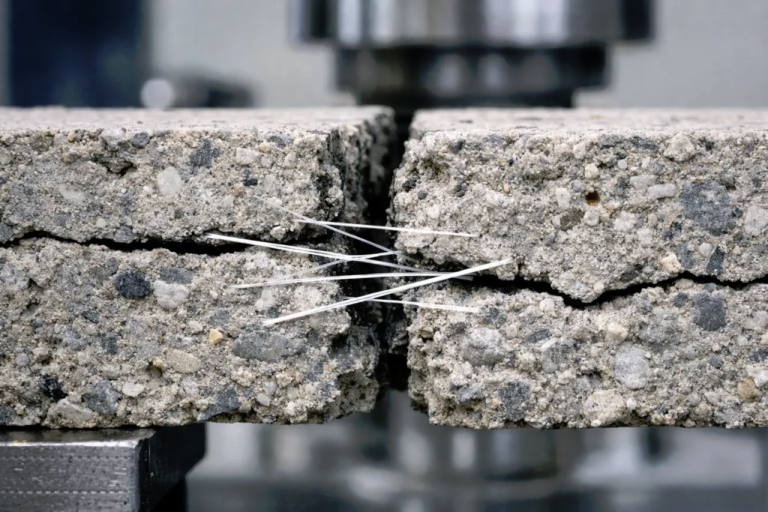
Addressing cracking in concrete surfaces is crucial. Cracks compromise concrete integrity and may lead to higher maintenance costs, but construction professionals can use synthetic fibers to prevent cracking. These materials enhance concrete’s durability and longevity in projects. Understanding Concrete Cracking There are multiple types of concrete cracking. The first is plastic shrinkage cracking, which occurs when fresh concrete develops surface cracks due to rapid moisture loss. Another type is settlement cracking, which results from uneven concrete settlement. It is typically caused by soil compaction under the surface. The last type is thermal cracking, which is prevalent due to significant temperature shifts. Expansion and contraction due to temperature changes cause stress in the concrete. Concrete cracking can result from a variety of factors: How Do Synthetic Fibers Help Reduce Cracking in Concrete? Synthetic fibers are artificial materials like polypropylene and nylon. Multiple industries use them due to their workability and flexibility. In construction, synthetic fibers help reduce cracking by enhancing concrete’s durability and tensile strength. These fibers also adapt well when mixed into the concrete. They can distribute tensile stresses throughout the concrete matrix, which reduces the risk of crack formation. As a result, synthetic fibers help reduce cracking and improve the integrity of the entire mix, but not all of them are made the same. They can vary in factors such as: Benefits of Using Synthetic Fibers There are plenty of positive outcomes construction professionals can expect from adding synthetic fibers to help reduce cracking in concrete. 1. Reduction of Cracking Synthetic fibers are used to reduce cracking in concrete in both structural and non-structural concrete applications. Performance can therefore improve due to the polypropylene fibers’ high tensile strength. 2. Cost-Effectiveness The initial cost of synthetic fibers is offset by their long-term savings potential. Maintenance and repair budgets are significantly lower due to fewer cracks. Additionally, labor costs can be reduced without the need for rebar installation. The risk of corrosion and the safety risks that come along with this installation procedure can also be avoided. 3. Performance in Various Applications Synthetic fibers can be used in different applications. One example is a slab-on-the-ground scenario, which fortifies foundations against cracking caused by soil movement. Adding synthetic fiber to concrete on pavements enhances the long-term bearing capacity. This lowers the chances of surface road failures. Another application is on precast structures. Fibers enhance the durability of precast concrete elements, which are important architectural designs. A Case Study on FORTA-FERRO® There are multiple synthetic fibers available on the market to help construction professionals reduce cracking in concrete. FORTA-FERRO® from FORTA is one of the leading choices in this field. It is thoroughly tested and widely recognized for its superior strength and performance due to its specialized engineering and extensive field testing. Various projects have used FORTA-FERRO® to improve the load-bearing capacity of structures. They are also used to reduce the incidence of concrete cracking. Some of the best qualities of FORTA-FERRO® are that it’s noncorrosive, non-magnetic, acid-proof and alkali-proof. It can be a good alternative to more traditional methods of temperature and shrinkage reinforcement. According to FORTA, “The recommended dosage of FORTA-FERRO typically ranges from 3 to 30 pounds per cubic yard of concrete, with dosages depending on desired performance and application.” The right formula can ensure that construction projects are durable and strong. Applications can range from slab-on-the-ground and overlays to bridge decks and shotcrete. The company has a dedicated engineering team that has continually innovated and addressed common industry issues. Since its foundation in 1978, FORTA has built approximately two billion square feet of fiber-reinforced concrete worldwide. Integrating Synthetic Fibers into Concrete Design Engineers and other construction professionals first need to determine the project’s nature and the site’s environmental conditions. After knowing these factors, they can decide on the synthetic fiber type and its incorporation. The best practice for proper mixing is to ensure even distribution within the concrete matrix. To build with the best possible concrete, management needs to ensure that the synthetic fibers they purchase meet essential performance requirements. Products that meet the American Society for Testing and Materials and the American Concrete Institute standards ensure they are of high quality. Third-party certification verifies the effectiveness of the synthetic fibers. Environmental Impact and Sustainability of Synthetic Fibers Synthetic fibers are increasingly being used in major infrastructure projects, such as highways, bridges and airports. This is due to the need for high loads in these projects. Other uses for synthetic fibers include warehouse floors that need to withstand heavy machinery and retail spaces with heavy daily use. Beyond their functionality, synthetic fibers can be used to advance more sustainable construction practices. They reduce the need for frequent or more drastic repairs and replacements. Waste from these procedures is significantly minimized over time. Extending the lifespan of concrete structures helps preserve precious resources and ensure environmental stewardship without sacrificing the structure’s integrity. Additionally, many synthetic fiber manufacturers adopt eco-friendly principles into their production process. They can accomplish these goals through lower energy consumption and the use of recyclable materials. As a result, construction projects can drastically reduce their carbon footprints. In fact, products such as FORTA-FERRO® have a lower carbon footprint than steel. The U.S. Environmental Protection Agency also limits VOC emissions from synthetic fiber production processes. Strengthening Concrete for a Resilient Future When construction professionals understand how synthetic fibers help reduce cracking in concrete, it ensures the durability of future projects. These fibers provide cost-effective solutions for these issues. Constantly innovating materials and processes ultimately creates more resilient structures for the future.