Kenneth Booth

SAVORTEX® Plays Key Role in Wates Sustainable Redevelopment

As part of an extensive refurbishment of its Leatherhead headquarters building in Surrey, the Wates Group opted to replace its current hand drying system with the EcoCurve 550A. By switching to this smart technology, SAVORTEX estimates that the company will make significant cost and energy savings, including 77.10 tonnes of

Read More »

ELLIOTT SERVES UP CARBON NET ZERO BUILD FOR MCDONALD’S

McDonald’s in Market Drayton, Shropshire, has become the UK’s first carbon net zero restaurant – using the Elliott offsite construction system. Being carbon net-zero means that the wind turbine and solar panel-powered restaurant will produce as much energy as it uses over the course of a year and there are

Read More »

MAJOR FIRE AT RECYCLING CENTRE CAUSES DISRUPTION AND ENVIROMNENTAL DAMAGE

A major fire that destroyed an unsprinklered recycling plant in Nottingham led to disruption in the local area, asbestos warnings and unnecessary damage to the environment. The fire on January 31st at Nottingham Recycling on Abbeyfield Road in Lenton required 60 firefighters, 12 appliances and specialist equipment including aerial ladder

Read More »

HMS Levelling Up Investment in Tech

Leading Repairs and Maintenance contractor, HMS, has been engaged by Cobalt Housing to work with specialists Aico and HomeLINK to incorporate innovative technology into 96 homes within Cobalt’s neighbourhoods. Piloting this environmental technology for the first time in the North West, Cobalt and HMS are strengthening their commitment to futureproofing

Read More »

Innovation is key to net zero success

Showcasing the technologies that will enable the built environment to reach net zero The construction industry is one of the oldest and largest sectors in the world and plays a vital role in industrial, social and economic development. Despite its importance, the industry still uses traditional building techniques and materials

Read More »

House of Parliament Renovation Halted by Asbestos Exposure

Up to nine members of parliamentary staff and even more contractors may have been exposed to asbestos between October and November last year, reports HuffPost UK.   The Health and Safety Executive (HSE) has been called in to help following the possible exposure of parliamentary workers and renovation work at the Houses

Read More »

CSIC partners with AECB to help accelerate Scotland’s journey to Net Zero

The Association for Environment Conscious Building (AECB) is delighted to consolidate our collaboration with the Construction Scotland Innovation Centre (CSIC) as project partners launching the AECB CarbonLite™ Retrofit (CLR) course in Scotland. The long-established AECB course is designed to help accelerate delivery of the CSIC Low Carbon Learning Programme launched

Read More »

Reducing the carbon impact of construction

A new report, Whole Life Carbon Assessment of Homes, published by the Advanced Industrialised Methods for the Construction of Homes (AIMCH), www.aimch.co.uk concludes that using sustainably sourced timber panelised MMC methods to build new homes rather than masonry products can reduce the carbon impact of construction. On a whole life

Read More »
Latest Issue
Issue 343 : Aug 2026

Kenneth Booth

SAVORTEX® Plays Key Role in Wates Sustainable Redevelopment

As part of an extensive refurbishment of its Leatherhead headquarters building in Surrey, the Wates Group opted to replace its current hand drying system with the EcoCurve 550A. By switching to this smart technology, SAVORTEX estimates that the company will make significant cost and energy savings, including 77.10 tonnes of CO2, totalling £14,630 over a seven-year period. Since the redevelopment, Wates has made an overall saving of 20% on its energy consumption by working with sustainable technology suppliers. Dr. Zainab Dangana, Wates Sustainable Technology Services Manager, said: “Wates is committed to the long-term future of the built environment. Businesses are facing increasing pressures to improve their carbon footprint and, as a result, are looking for solutions that can save both energy and operating costs.  “It was important to us that our newly refurbished Leatherhead headquarters building reflected our company ethos and we were extremely impressed with the SAVORTEX® EcoCurve range and the savings it can deliver.” Syed Ahmed, CEO at SAVORTEX®, said: “This partnership with Wates is just one example of how our hand dryers can help businesses improve efficiencies and decrease costs. Our hand dryers have been designed to transform the washroom market by delivering unrivalled levels of sustainability, energy and operational resource savings.”   Using our low energy digital brushless motor, The EcoCurve™ Smart Dryer consumes just 550W, and hygienically dries hands in 11* seconds, offering the lowest cost and carbon per dry of any warm air dryer.

Read More »

ELLIOTT SERVES UP CARBON NET ZERO BUILD FOR MCDONALD’S

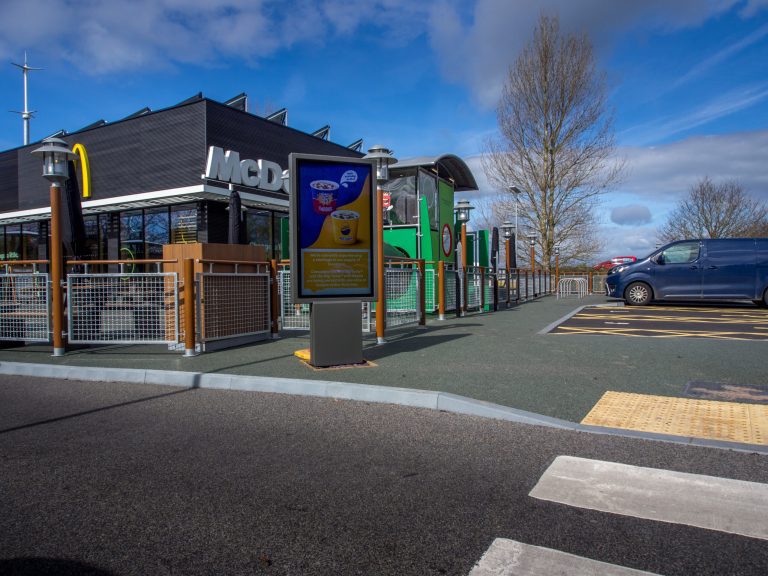
McDonald’s in Market Drayton, Shropshire, has become the UK’s first carbon net zero restaurant – using the Elliott offsite construction system. Being carbon net-zero means that the wind turbine and solar panel-powered restaurant will produce as much energy as it uses over the course of a year and there are only a small number of highly efficient buildings in the UK that meet this criterion. Market Drayton is the first restaurant in the UK to be verified as net zero emissions for construction using the UK Green Building Council’s (UKGBC’s) net zero carbon buildings framework. Elliott was an integral part of the project delivery team, utilising its modular solution which features a large number of incremental improvements that combine to make a huge difference in overall performance.  Minimising environmental impact and achieving a net-zero build were key requirements set out by McDonald’s at the very start of the project. The innovative turnkey solution includes kitchen, servery, offices, storage, dining area and toilets, as well as car park and external landscaping works. McDonald’s carbon net zero restaurant was 80% completed in the Elliott factory before being transported to site, minimising waste and maximising quality control, efficiency and speed of construction. Once on-site, the modules were connected to services and underwent final fit-out ready for handover. As part of a sustainable approach, the building utilises responsibly-sourced and recycled materials throughout, further reducing its environmental impact. The restaurant is designed to allow relocation, reconfiguration or recycling, depending on McDonald’s future requirements. All Elliott offsite modules are designed to have a service life of at least 60 years. Building modules for Market Drayton are constructed using a steel-framed system, a 100% recyclable material sourced from a UK supplier with certified Environmental Policy Declarations. Sustainable features include sheep’s wool insulation instead of fibreglass as well as cladding, ceiling, floor and wall tiles made from recycled plastic, a rainwater harvesting system, wind turbine electricity generation and photovoltaic car park lighting complete with battery backup. The kitchen incorporates a heat exchange that feeds into the dining area. The lightweight structure of Elliott’s steel frame modules minimised carbon intensive foundations. These were completed at the same time as the modules were manufactured, helping to reduce the build schedule by around half compared to an on-site build. Graham Stevenson, Construction Manager at Elliott, said: “This is a landmark project for McDonald’s, the Elliott Group and the building industry as a whole. Achieving a net zero carbon build confirms that the ambitious targets set for the built environment are achievable using our modular and offsite solutions.” McDonald’s spokeswoman Beth Hart said: “We’ve already started to roll out some of these innovations to other restaurants, but what is exciting about Market Drayton is the fact it will act as a blueprint for our future new builds. We believe that our food needs to be served in restaurants that are sustainable for the future. Market Drayton is a big step towards making that a reality.” According to the UK Green Building Council (UKGBC), the built environment is directly responsible for 25% of the total UK carbon footprint, and therefore creating a net-zero carbon build plays a critical role in transitioning to a low carbon economy. To find out more about the McDonald’s Market Drayton carbon net-zero build, visit: www.elliottuk.com/case-studies For more information on offsite solutions from Elliott, visit: www.elliottuk.com

Read More »

MAJOR FIRE AT RECYCLING CENTRE CAUSES DISRUPTION AND ENVIROMNENTAL DAMAGE

A major fire that destroyed an unsprinklered recycling plant in Nottingham led to disruption in the local area, asbestos warnings and unnecessary damage to the environment. The fire on January 31st at Nottingham Recycling on Abbeyfield Road in Lenton required 60 firefighters, 12 appliances and specialist equipment including aerial ladder platforms, high volume pumps from Nottingham Fire and Rescue to tackle the blaze. While there were no reported injuries in the blaze and the surrounding businesses were not in use at the time, the impact on the local community and environment was significant with the closure of a major ‘A’ road, residents forced to close windows and doors due to harmful smoke and a number of measures employed to minimise the impact of pollution to the local environment. What remains of the circa 1700m2 building used to recycle waste cardboard will be demolished and disposed of. The fire at Nottingham Recycling centre was one of many recycling fires in the UK in the past 12 months. All were typified by large numbers of firefighters being required to contain a blaze where there was a presence of a high fire load due to highly combustible materials. Each event developed high volumes of smoke and contained harmful contaminants. Furthermore, fire water run-off needed to be monitored by the relevant agency and there is the environmental impact of disposing of the damaged properties and the costs, resources and materials required to repair and rebuild them. These fires not only pose an obvious danger to the health of those nearby, but they also have major environmental implications and significant costs to businesses due to property loss. Preventing large costly fires is possible through a combination of strategies. One of the most effective strategies is the use of sprinkler systems which contain and control fires before the Fire and Rescue Service arrives. They therefore minimise the wider impact of unmanageable fires, reducing costs to business and the economy as a whole. Importantly, by limiting any fire damage, they allow businesses to resume operations quickly, often within hours of the incident. This was adequately demonstrated by a fire at a Biffa waste site in Irlam in January 2021. Fire sprinklers fitted at the site activated, quickly putting the fire out and minimising the damage caused as a result of the incident. For more information about the BSA visit the www.business-sprinkler-alliance.org

Read More »

HMS Levelling Up Investment in Tech

Leading Repairs and Maintenance contractor, HMS, has been engaged by Cobalt Housing to work with specialists Aico and HomeLINK to incorporate innovative technology into 96 homes within Cobalt’s neighbourhoods. Piloting this environmental technology for the first time in the North West, Cobalt and HMS are strengthening their commitment to futureproofing properties, which is especially important giving the rising cost of energy and the impending zero carbon targets facing the industry. Designed to help manage housing stock more intelligently, HomeLINK provide environmental sensors that monitors a range of data, such as temperature and CO2 humidity levels in properties, to create and maintain safer, healthier and more eco-friendly homes and communities. Being fitted into nearly 100 of Cobalt’s 6,000 homes by HMS’ team of qualified electrical engineers, SmartLINK Gateway will help social landlords monitor properties and keep customers safe by identifying any risks with fire and carbon monoxide alarms, monitoring indoor air quality, risk of mould and how much electricity is being used. Residents will also have access to a personalised app, enabling them to monitor levels within their home, and access advice on making sure they’re doing all they can to keep their home working at optimum performance. Discussing the pilot scheme, Maintenance Director, Alison Brown, said: “As a safety-first organisation, and one with ambitious green targets of our own, this pilot was one that appealed to us on multiple levels. It’s great to partner with such forward-thinking organisations to install technology that will truly help Cobalt and their customers to life in a safer, more environmentally friendly way.” Chris Fray, Technology and Transformation Manager at Cobalt, continued: “HMS have been fantastic to work with on this project, installing devices promptly, effectively and to a high standard. Crucially, HMS has acknowledged the value in sensors and how they will become a significant part of the social housing sector in years to come, becoming a contract that is required and delivered in the same vein as voids, gas and repairs and maintenance. We hope this exposure and experience will be of benefit to them too in years to come.” Jordan Toulson, Product Manager at HomeLINK, said: “This technology promises to be the standard within social housing in the coming years; Cobalt are proving themselves to be ahead of the curve by progressing such a roll-out now and HMS have proven their fantastic capability to install market-leading devices accurately, enabling the data to start flowing from the properties.”

Read More »

Innovation is key to net zero success

Showcasing the technologies that will enable the built environment to reach net zero The construction industry is one of the oldest and largest sectors in the world and plays a vital role in industrial, social and economic development. Despite its importance, the industry still uses traditional building techniques and materials that often gives it a reputation of being slow to innovate. Here, Martin Hurn, event director at sustainable built environment event Futurebuild, explains why this is not the case. In November 2021, COP26 established that we must limit the global temperature rise to 1.5 degrees. Around 40 per cent of global CO2 emissions come from constructing, heating, cooling and demolishing buildings — so innovation in this sector is important now more than ever to reduce the construction industry’s carbon footprint. Innovating the industry doesn’t require futuristic technology that hasn’t been invented yet — it requires us to create change by thinking differently or using technology to solve existing problems in new ways. There are some forward-thinking businesses who are already developing the materials, products and services that are changing the built environment. The innovation trail at Futurebuild 2022 will showcase the companies who already have the tangible solutions that may solve the common challenges that the construction industry faces. The innovation trail Futurebuild’s innovation trail features a range of materials, products and technologies. 540 WORLD, for example, will showcase a variety of Cradle to Cradle Certified® materials including Accoya, a gold certified wood produced from a fast-growing pine. It’s more sustainable to produce than traditional hardwood, is anti-fungus and anti-mildew and does not require sanding or coating, which can be a drain on resources. Drainage and surface water management systems specialist ACO will showcase its new Habitat Matters Mapping System. The new system was developed as part of ACO’s Habitat Matters campaign, which aims to reverse the impact the built environment has had on the natural world. The mapping system is a free tool that enables users to create a digital twin for the habitats and built environment asset they have designed, constructed or simply observed. The public can contribute to Biodiversity Net Gain (BNG) monitoring and record keeping and begin to understand how materials and buildings benefit the habitats around them. Aico, a European market leader in high-quality alarms, aims to address the needs of social landlords and their residents with new HomeLINK Environmental Sensors. The sensors are designed to create better maintained, healthier, more energy efficient homes, by monitoring temperature, humidity and CO2. Worcester Bosch is the UK leader in domestic boiler and renewable technologies. At Futurebuild 2022 Worcester Bosch will showcase its award-winning hydrogen-ready boiler prototype. The boiler can run on natural gas until hydrogen becomes readily available, saving costs all round and enabling homeowners to future proof for when they can switch to hydrogen. C-Probe Systems will showcase its LoCem® Modular Anode Unit (MAU) — an impressed current cathodic protection (ICCP) component that can be attached directly to steel reinforcement in-situ or in the precast factory prior to pouring the concrete. Operators can use the system for repair, protection and monitoring of structural performance, removing future disruption through sustainable futureproofing tracking service life for whole life performance online. At Futurebuild, The Concrete Centre will showcase Concrete Futures — a mix of physical exhibits and case studies that demonstrate how concrete is evolving and innovating to save carbon now and in the future. Visitors can access practical guidance on low carbon concrete, efficient design with concrete and find out how the sector will achieve net zero cement and concrete. INTU Your Home reimagines everyday items, advanced technology to create the essential products for modern homes. Its INTU Evolution hot water taps, for example, are designed with safety, sustainability and speed in mind. The tap systems are not pressurised, which means quicker installation, less damage to the kitchen and reduced energy and water consumption over time. James Latham, one of the UK’s largest independent trade distributors of timber, panels and decorative surfaces, has worked with the BioComposites Centre at Bangor University to develop a carbon calculator. The calculator publishes both the carbon footprint and embodied carbon values of its timber products, enabling specifiers, architects and designers to make more informed decisions when selecting materials.   Kensa Contracting is an award-winning specialist delivery partner and contractor for communal heating with district ground source heat pumps. Kensa’s networked Shoebox ground source heat pump solution will inspire the change needed to propel the construction industry to net zero and help equip new homes with low-carbon heating. Standards organisation MCS certifies low-carbon products and installations used to domestically produce electricity and heat from renewable sources. Futurebuild visitors will see how MCS is shaping the way that low-carbon domestic renewables heat and power our homes, setting the standard for home-grown energy, giving consumers confidence in the vast array of technology available to them. Construction management software provider Procore connects information and teams on one powerful and easy-to-use purpose-built platform. The platform provides full visibility, enabling users to understand exactly what’s going on across the project, make more informed decisions and improve operations, giving stakeholders confidence in their ability to deliver the project on time. While the industry has a reputation for being slow to innovate, it is clear that there are pioneering industries who are already inspiring change in the built environment. The innovation trail at Futurebuild 2022 will demonstrate that by using the technology already at our disposal, the built environment can become more advanced, efficient and sustainable. Visitors can also attend Futurebuild’s new Innovation Stage, sponsored by the Department for Business, Energy & Industrial Strategy, which will host live sessions from the Innovation Partners across the three days. To visit the innovation trail at Futurebuild 2022, register for the event for free here.  

Read More »

Caddick Construction appointed to build distribution warehouse at Trafford Park

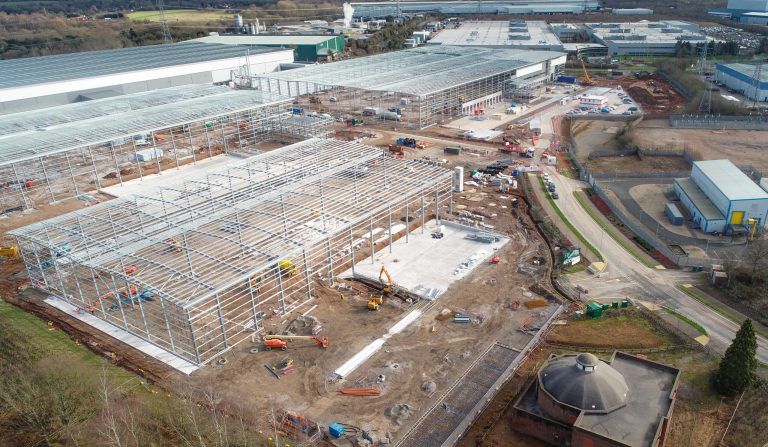
Caddick Construction (North West) has won a £4.3m contract to build a 68,000 sq ft. distribution warehouse at Trafford Park, Manchester, with work already underway on the Richmond Road scheme. The distribution warehouse will be 14.5m high to the parapet and will include two floors of offices, together with a service yard, car parking and landscaped areas. The build contract also covers all drainage and external services. Caddick Construction has a long history of involvement at Trafford Park and the surrounding area, having delivered The Williams Group’s £41m flagship automotive retail centre at TraffordCity and the international headquarters for Regatta on Mercury Way. Trafford Park was the first purpose-built industrial park in the world and, with over 9 million sq.m of business space, remains one of the largest and most successful business parks in Europe. Trafford Park is home to more than 1,330 businesses employing over 35,000 people. Ian Guildford, Contracts Manager at Caddick Construction (NW), said: “Trafford Park continues to go from strength to strength and its popularity as a logistical hotspot for the North West shows no sign of abating. We are delighted to be working at Trafford Park once again, delivering another high quality, industrial unit to help meet growing demand from the logistics sector.” Architect for the build is Liverpool-based Brock Carmichael, with engineering support from Healey Consulting. Project Manager is Black Cat Building Consultancy Limited.

Read More »

House of Parliament Renovation Halted by Asbestos Exposure

Up to nine members of parliamentary staff and even more contractors may have been exposed to asbestos between October and November last year, reports HuffPost UK.   The Health and Safety Executive (HSE) has been called in to help following the possible exposure of parliamentary workers and renovation work at the Houses of Parliament has been paused.  Tim Turney, Global Marketing Manager at industrial hygiene and workplace hazard monitoring expert, Casella, comments “Despite being banned in the UK, asbestos can still be found in older homes and properties, posing a threat to anyone who disturbs the dangerous material.  Left alone, the material is not harmful, but once disturbed or disintegrating, it can release asbestos fibres that infiltrate and progressively damage the lungs. The damage results in multiple health defects, such as the lung disease mesothelioma — a cancer that can take up to 20 years to develop, often proving fatal within five years or less.   Whenever asbestos is removed, it is a legal requirement to use licenced contractors and to ensure strict regulations and guidance are followed to limit the potential release of dangerous, airborne fibres. The guidance, depending on national practice, typically includes personal air sampling and/or static air sampling, to ensure that there is no exposure during remediation work or during the cleaning and clearance processes at a removal site.   In the UK, a four-stage clearance process is used, involving a preliminary check of the site condition and job completeness, a thorough visual inspection inside the enclosure or work area, air monitoring and a final assessment of the post-enclosure or work area following dismantling. Licenced contractors may also take air samples before work is undertaken to establish a background level measurement. Conducting a test before disturbing any materials could save thousands of pounds on decontamination and environmental cleaning fees and help to avoid exposure. Additionally, trained professionals may take air samples during work on or near asbestos to confirm that there is no leakage from the enclosure.    Using air sampling pumps with remote connectivity, such as Bluetooth and a mobile ‘phone app, can help while gathering the necessary measurements. For example, the Casella Airwave App works with the ‘Pro’ version of its Vortex3 high flow pump to enable users to remotely start, pause or stop a measurement run, monitor battery life and memory capacity and check measurement progress direct from a mobile device.   Ultimately, asbestos monitoring has the power to save lives, and innovations in technology can make this process easier and faster than ever before.” 

Read More »

Sodexo appointed to Mayor’s Office for Policing and Crime property services integrator framework

Sodexo has been appointed as the single supplier on the Mayor’s Office for Policing and Crime (MOPAC) new property services integrator framework which is accessible to all other UK public sector bodies, including the Offices of the Police and Crime Commissioners, the Greater London Authority and its functional bodies to buy a range of strategic property-related services. Through the framework UK public sector bodies have access to Sodexo’s expertise and strategic advice through a range of property-related services, including: Strategic property support services Contract management Operational management Financial management Provision and management of IT systems including building management systems Procurement of supply chain services Audit of the supply chain Dan Weiss, Managing Director, Sodexo’s Property Professional Services said: “We are delighted to have been appointed to this framework. Occupiers are now expected to find solutions on how they adapt their portfolios to achieve net zero, make changes to their workplaces to accommodate hybrid working, balancing the imperative to support employee wellbeing, talent attraction and retention whilst also identifying cost savings measures to combat rising inflation. “We look forward to working in partnership with the Mayor’s Office for Policing and Crime to promote the benefits that we can bring to helping the public sector with these workplace and property challenges. “Sodexo is very well placed to work in partnership with organisations who wish to explore the potential this new framework offers.” Over the past three years Sodexo has worked with clients to: Exit PFI and long-term contracts and successfully move to new operating models. Produce tangible strategies, roadmaps, processes and procedures to meet the government’s Greening Government Commitments and Net Zero targets. Complete whole estate detailed condition survey programme. Compile 15-year lifecycle maintenance plan to inform future asset management plans and estate strategy. Develop estates strategies to support clients with their transformation vision. Provide assurance for planned maintenance and statutory compliance moving one client with nearly 1,200 buildings to a position of 65% to 97% satisfactory state of compliance in six months. Develop a conceptual design for a police station of the future. Deliver over 500 capital projects in 2020-21 and £93 million of investment in life cycle works, capital projects and minors works. For more information about the new MOPAC Framework contact: Taz.Arif@sodexo.com

Read More »

CSIC partners with AECB to help accelerate Scotland’s journey to Net Zero

The Association for Environment Conscious Building (AECB) is delighted to consolidate our collaboration with the Construction Scotland Innovation Centre (CSIC) as project partners launching the AECB CarbonLite™ Retrofit (CLR) course in Scotland. The long-established AECB course is designed to help accelerate delivery of the CSIC Low Carbon Learning Programme launched at COP26 in November 2021. The Programme is designed to provide Scotland with the low carbon skills for the future.   The AECB CarbonLite™ Retrofit (CLR) course is the UK industry-leading course for advanced Net Zero carbon retrofit training aimed at construction professionals and contractors familiar with the challenges of repair, maintenance and improvement of existing buildings.   The course aligns with the emphasis on addressing both energy efficiency and good quality building fabric recognised in the Scottish Government’s ‘Heat in Buildings Strategy – achieving net zero emissions in Scotland’s buildings’ (October 2021). AECB is delighted to join strategic partners the Passivhaus Trust (PHT), patrons of CSIC and WARM who run theAECB CarbonLite™ Passivhaus Contractor Training programme in the CSIC Low Carbon Learning Programme.   As a signatory to the United Nations Economic Commission for Europe (UNECE)’s High-Performance Buildings Initiative, the AECB is joining a collaborative global network of 26 international Centres of Excellence of High Performance Buildings (including CSIC) to provide education, training, and other critical resources to regional building industry practitioners, supporting local industry in the rapid development of buildings consistent with the UN Framework for energy efficiency standards in buildings.    Caitriona Jordan, Head of Retrofit Programmes at CSICsaid:    “Skills will be an absolutely critical part of helping the construction sector as well as the UK and Scottish economies move towards a Net Zero future. We want to help construction workers develop their knowledge and expertise of the gold standard for energy efficient homes, and the AECB CarbonLite™ Retrofit (CLR) course assists in gaining a deeper insight into the fields of retrofit and sustainable building standards.”   “More people in the sector with knowledge of these types of building and the skills necessary to deliver solutions will help energy efficiency become mainstream. It will also help ensure we have a workforce fit for the future and could contribute to creating new jobs in the construction supply chain while addressing societal issues such as fuel poverty.”  Trish Andrews, AECB CarbonLite™ Training Manager said:   “The AECB is delighted to work in partnership with Construction Scotland Innovation Centre’s Low Carbon Learning Programme. The AECB is building educational partnerships that work effectively to put the built environment and retrofit skills at the heart of addressing the climate change agenda. We offer industry-leading low carbon retrofit training to the construction sector to meet Net Zero carbon goals. The AECB CarbonLite™ Retrofit (CLR) course addresses the energy crisis we are facing right now.”  The CSIC is launching the course on Tuesday 15th March. The CSIC is running an open competition offering 20 fully funded (FREE) places on an accelerated e-learning AECB CarbonLite™ Retrofit (CLR) course over the coming months completing at the end of July. Funding for the 20 places on the accelerated e-learning AECB CarbonLite™ Retrofit Course is thanks to the Scottish Funding Council and Scottish Government, through the National Transition Fund.  The open competition to secure a FREE place on the accelerated e-learning AECB CarbonLite™ Retrofit Course is online today Thursday 17th February please click here on a strictly first come/first served basis closing on Thursday 10th March. The 20 participants will start the course on Tuesday 15th March with completion required end of July 2022. Students have access to the AECB Knowledgebase, webinars, links to national and international reading material and networking opportunities. They have access to the Low Energy Buildings Database (LEBD) that includes 150 retrofit case studies. On completion, they will join the growing community of UK CarbonLite™ Graduates. 

Read More »

Reducing the carbon impact of construction

A new report, Whole Life Carbon Assessment of Homes, published by the Advanced Industrialised Methods for the Construction of Homes (AIMCH), www.aimch.co.uk concludes that using sustainably sourced timber panelised MMC methods to build new homes rather than masonry products can reduce the carbon impact of construction. On a whole life carbon basis, the study predicts that up to 5t CO2e per 4 bed dwelling, equivalent to 16,500 road miles, could be saved.when using timber panelised MMC methods.* AIMCH is a £6.5m collaborative R&D project which aims to promote and develop industrialised off-site modern construction methods to build homes quickly and viably.  Participating partners are Stewart Milne Group, Barratt Developments PLC, L&Q, the Manufacturing Technology Centre (MTC), the Construction Scotland Innovation Centre (CSIC) and Forster Roofing Services Ltd.    Stewart Dalgarno, AIMCH Project Director and Director of Innovation and Sustainability at Stewart Milne Group said, “The comprehensiveness of this report provides valuable insights into where developers, house builders and the supply chain can make a positive contribution to reducing the whole and embodied carbon contributions of new build homes. “AIMCH commissioned the report to understand the differences in whole life carbon emissions over 60 years, to current building regulation standards, between open and closed panel timber MMC systems and aerated concrete blockwork used in masonry construction. All processes relevant to the construction cycle, in line with the RICS model have been considered — materials, manufacture, transport, usage through to the end-of life and disposal stages. The resulting comprehensive analysis provides invaluable data to inform house builders on the carbon intensity of the two construction methods.” Using the RICS Standard for Whole Life Carbon Assessment, the report represents a rigorous cradle-to-grave assessment of the carbon impact of both types of construction materials and their respective methodologies. 82% of emissions are generated from the homes operational use over 60 years, which is the same for both methods. 14% of emissions are generated from the materials and construction process. A small proportion of emissions are generated at end of life.   The study, authored by green energy consultancy Verco, examined four types of home utilising either: masonry – aerated blockwork and offsite manufactured open and closed panel timber MMC, both with brick cladding. Areas investigated included: · Production stage – raw materials, manufacture, transport · Construction stage – energy, transport, waste disposal during  construction · In use stage – use emissions, maintenance, repair, replacement, refurbishment, operational energy use · End-of-life – demolition, transport, waste processing, disposal Carbon sequestration benefits of timber, in line with RICS protocols, were applied to all methods of construction, for example benefiting masonry homes bult with timber floors and roofs. End of life assumptions used identical 90% recycle/re-use and 10% to landfill ratio across both material types. Cementitious products including roof tiles, concrete blocks, brick cladding, strip foundations and floor slabs, were found generally to have the highest lifecycle embodied emissions. Conversely, timber frame wall elements sent to landfill, were found to produce 0.5 tCO2e emissions at end of life, compared to aerated concrete blocks. Panelised timber MMC construction methods outperformed masonry construction on a whole-life carbon basis, when comparing the direct substitution of various wall elements – external, load bearing and party wall elements. Embodied emissions of these wall elements being as much as 82% less than that of the masonry construction. In addition, timber MMC key properties contributing to reduced emissions  include: ·   Lower embodied emissions of materials ·   Lower emissions from transport to site ·   Less energy and time spent on site ·   Benefits of carbon sequestration during the life of the building Further Research is being conducted, assessing the impact from new building regulations coming into force in Jun 22 and the Future Homes Standard.   A detailed summary of AIMCH Whole Life Carbon Assessment of Homes can be viewed on AIMCH’s website.

Read More »