Kenneth Booth

STEPNELL INVESTS IN MENTAL HEALTH INITIATIVES FOR EMPLOYEES

LIFE-CHANGING support for employees is being provided by complete construction partner Stepnell, through a number of new initiatives and tools to help increase the awareness around mental health in construction and enhance employee health and safety. Stepnell has taken action to address the issues by significantly increasing the number of

Read More »

Bluewater Plumbing’s Boiler ‘Comfort Club’ Subscription Offers the Safest Boiler and Gas Servicing Experience on the Market

After the massive strikes throughout plumbing companies across the UK earlier this year, many homeowners have been left wondering how to handle emergency boiler servicing if it happens again. Bluewater Plumbing, a North London based plumbing and heating company, has a secure and effective solution for these situations. Introduced earlier

Read More »

The history and legacy of Bradford’s manufacturing industry

Despite its unassuming and at times unflattering reputation over the years, the city of Bradford in West Yorkshire was once a northern powerhouse of epic proportions. Not just the most affluent city in West Yorkshire, Bradford was also, at one time, one of the most prosperous cities in the world

Read More »

PICK EVERARD COMPLETES MAJOR £15M EAST MIDLANDS HEART SERVICES RELOCATION

THE £15m relocation of the East Midlands Congenital Heart Centre from Glenfield Hospital to its new city centre home at Leicester Royal Infirmary (LRI) has now completed. National independent property, construction and infrastructure consultancy, Pick Everard has worked in close cooperation with the University Hospitals of Leicester NHS Trust to

Read More »

Doosan Launches New DL420CVT-7 Wheel Loader

New Model in Award-winning DL-7 Series Features Fuel-Saving CVT System As part of the company’s award-winning DL-7 series, Doosan has launched the new DL420CVT-7 Stage V compliant wheel loader equipped with a Continuously Variable Transmission (CVT). With a maximum bucket capacity of 4.5 m3, the Doosan DL420CVT-7 wheel loader is

Read More »

New Community Connections Programme Unveiled

A new, national, engagement programme supporting communities across Scotland to recover from the COVID pandemic through heritage, has been launched by Historic Environment Scotland (HES).  Community Connections is a new unified framework working with community groups and organisations across Scotland todeliver a range of collaborative projects through sharing resources, networks, knowledge, and expertise. The aim is to show how the heritage that matters locally can play a vital role in supporting the post-pandemic recovery – often in surprising and creative ways.   The programme’s initial focus is to develop  projects around the following key areas:   health and

Read More »

Who is responsible for reaching net zero?

UK emissions fell by nearly 50 per cent of their 1990 levels during the 2020 lockdown. According to The Guardian, this positive change will be short-lived. Carbon dioxide emissions are forecast to jump this year by the second biggest annual rise in history to help the economy recover after the

Read More »
Latest Issue
Issue 343 : Aug 2026

Kenneth Booth

STEPNELL INVESTS IN MENTAL HEALTH INITIATIVES FOR EMPLOYEES

LIFE-CHANGING support for employees is being provided by complete construction partner Stepnell, through a number of new initiatives and tools to help increase the awareness around mental health in construction and enhance employee health and safety. Stepnell has taken action to address the issues by significantly increasing the number of mental health first aiders and rolling out mental health awareness training for all of its employees – including stress management, guidance on how to better manage time and advice for improving personal wellbeing. According to the suicide by occupation report from the Office for National Statistics (ONS), 240 suicides have been reported within the construction industry and building trades in England during 2019, significantly outnumbering all other recognised industries and indicating a mental health crisis in the industry. In addition, the Chartered Institute of Building reported in 2020 that 26 per cent of construction workers had experienced suicidal thoughts and 97 per cent had experienced stress over the previous year. Tom Wakeford, joint managing director at Stepnell, said: “As a construction partner, we recognised a direct response was needed to address these troubling statistics. We are now proud to provide a range of mental health support mechanisms to help people in a number of ways. “We take the wellbeing of team members very seriously and recognise our responsibility to always be there for our colleagues and look out for one another. The industry can be stereotyped as a ‘tough’ industry, with middle-aged men working on building sites where people’s feelings are often not spoken about, but in fact it is much more than that and these stereotypes aren’t doing any favours for this challenging sector. “The industry has been hit hard like many industries over the past year, but by implementing these new initiatives we hope it will help to offer support and show that we are listening to our team members. Stepnell has also increased the number of mental health first aiders in the firm and has revised a clear approach for how they can support colleagues, with line managers and all members of the senior team having undergone mental health training.” Follow-up support using online platform Clear Review – an employee engagement software that improves performance and wellbeing – has encouraged employees to have one-to-one conversations with colleagues, with a regular review process allowing for a clear and continual approach to identify and address any concerns. Stepnell has implemented an employee assistance programme for those that require additional support, which gives free access to confidential one-to-one counselling sessions. This is offered through Health Assured, a free helpline for support and guidance on health, legal and financial matters. This includes an app that provides webinars – featuring famous speakers – and a mood calendar to help employees track how they are feeling. Stepnell has also implemented an agile working policy, which includes three days working in the office and two days remotely, with core working hours from 9:00am to 4:30pm to ensure that employees are still able to cooperate on tasks throughout the week, but can also enjoy an improved work-life balance after finishing at 4.30pm. Tom added: “We have experienced great success with the changes to increased flexible working so far, and we have noticed the benefits that this creates for employee wellbeing and productivity. “It is well known that the construction industry suffers from higher levels of mental-health related problems, and through a combination of training and access to counselling, we want to help reduce the stigma surrounding mental health and educate our employees on how, where and when to seek help if they need it.” To find out more about Stepnell visit: www.stepnell.co.uk or join the conversation around mental health in construction at @Stepnellltd.

Read More »

Southerns Broadstock creates digital workspaces for NHS England & NHS Improvement’s Quarry House

NHS England NHS Improvement found that the impact of the pandemic necessitated a new approach to the workplace, with options to support individual preferences. Southernsbroadstock worked closely alongside the NHS England NHS Improvement team to deliver Digital Workspaces for its Quarry House location. Adaptable & versatile interiorsThe concept of Digital Workspaces was created by NHS England NHS Improvement and Innovation to champion its four Cs: Concentration, Contemplation, Connection and Collaboration.Using these principles, Southernsbroadstock worked with the client to design interiors that offered a mix of these spaces. The aim was to provide staff with a range of environments to reflect the type of task being undertaken, or their preferred ways of working. Considered designThe challenge was to ensure that the spaces met the brief set by NHS England NHS Improvement whilst also making sure that it would benefit staff overall. Southernsbroadstock worked closely with NHS England NHS improvement, ensuring the client was completely informed at every stage of the process. This approach gave valuable insight into the needs of the Quarry House team and allowed Southernsbroadstock to amend and refine the design accordingly. Furnishings were chosen in muted blue tones to match NHS branding, with a variety of areas to facilitate quiet work, close communication or larger discussions. This included our Arc Booth, with added canopy, table and power outlet to create a space for concentration. Promoting accessibility There was also a big emphasis on accessibility so a variety of height adjustable desking and meeting tables were added into the design, as well as wheelchair accessible pods which provide step-free areas for meetings and teamwork.Height adjustable desking will help NHS England to increase staff wellbeing by allowing them to change to a more comfortable position. As an added benefit, it also helps to futureproof the work environment by ensuring desking can be adjusted to suit any person. So, no matter what their stature, new staff will always be supported by furniture that can adapt. The result Southernsbroadstock’s ability to mobilise quickly and at short notice made it stand out as a solutions provider. Though the conditions created by the pandemic proved to be challenging, the team successfully delivered the project to the requirements set out by the client. The staff at Quarry House will now be able to make use of a modern and uplifting work environment that offers a space to suit everyone.

Read More »

Orbit launches new RoSPA Safer by Design standards for its new-build homes

Orbit, one of the UK’s leading housing providers, has officially launched its RoSPA approved Safer by Design framework at its Mill View development in Dereham. Helen Moore, Group Director of Orbit Homes, was joined by Errol Taylor, Chief Executive Officer of the Royal Society for the Prevention of Accidents (RoSPA), to showcase the first development where the homes which have been designed to RoSPA approved Safer by Design standards are being built. The RoSPA Safer by Design framework aims to reduce serious accidental injury in new-build homes. In January, Orbit Homes became the first affordable housing provider to adopt the framework for all of its future new-build homes. The framework offers housebuilders and architects easy-to-implement, economically-viable solutions that “design out” potential serous accidental injury in new-  build homes, by concentrating on the most common hazards including, falls, burns, carbon monoxide poisoning, entrapment and poisoning from access to household chemicals. Helen Moore, Group Director of Orbit Homes, said: “RoSPA’s Safer by Design standards go above and beyond building regulations, and as the first affordable housing provider to adopt this framework, we are proud that Orbit is leading the sector on building safety. Many accidents can be avoided through simple and low-cost design changes, which make the home physically safer by eradicating risks. “I am delighted to say that the Safer by Design framework has already been embedded within our design standards at Mill View in Dereham, and I am pleased to be able to showcase our strong commitment to the safety of our customers. “From next year, all of our new-build homes will be built to Safer by Design Gold Standard, ensuring that our homes are amongst the safest on the market and meet the current and future needs of our residents.” In July, Orbit scooped two gold health and safety awards from RoSPA for the third consecutive year. The outstanding accolades endorse Orbit’s ongoing commitment to customer safety and best practice in compliance to deliver customers with a quality service. Errol Taylor, Chief Executive Officer at RoSPA, added: “RoSPA and Orbit share a vision for the homes of the future- they should be safer places to live, work and play in. Here in the heart of Norfolk, at Orbit’s Mill View development, you can see that vision take shape in bricks and mortar. “Every year more than 6,000 people are killed as a result of a home accident- many of which, such as falls on stairs, are preventable. I hope to see more housing providers, follow Orbit’s lead and adopt the recommendations of RoSPA’s Safer by Design framework to make new build homes safer.” Mill View is a collection of two, three, four- and five-bedroom homes, located in the market town of Dereham, often labelled as the “Heart of Norfolk” due to the its central location. The new development can be found opposite the East Dereham Windmill at the end of the popular Greenfields Road. Homes are available to purchase outright, with the Government-backed Help to Buy scheme also  being offered to assist or through Shared Ownership on selected plots. To find out more about Mill View, visit: www.orbithomes.org.uk/mill-view/. For more information on RoSPA’s Safer by Design framework, visit: www.rospa.com/built-environment.

Read More »

Bluewater Plumbing’s Boiler ‘Comfort Club’ Subscription Offers the Safest Boiler and Gas Servicing Experience on the Market

After the massive strikes throughout plumbing companies across the UK earlier this year, many homeowners have been left wondering how to handle emergency boiler servicing if it happens again. Bluewater Plumbing, a North London based plumbing and heating company, has a secure and effective solution for these situations. Introduced earlier this year, Bluewater Plumbing’s ‘Comfort Club’ is designed for savvy homeowners who prefer to identify and prevent potential issues before they become a problem rather than fix emergencies when a crisis suddenly arises. Compared with ordering each emergency repair individually when the need arises, a subscription to the ‘Comfort Club’ programme gives clients more convenient, ongoing assistance, as well as offering more cost-conscious clients greater certainty about the fees involved. By subscribing, clients get considerable time and money savings.  Offering services from all major boiler companies, ‘Comfort Club’ is an annual subscription which makes keeping your boiler and heating systems in check a breeze. ‘Comfort Club’ plans include:  annual boiler service with service parts  flue gas analysis central heating magnetic filter clean  central heating chemical inhibitor gas pressure test repairing the boiler & broken parts heating controls radiators & radiator valves gas and heating pipework Bluewater Plumbing clients also benefit from fast-tracked emergency servicing, as well as special offers for new boiler installations if the old one is beyond repair.

Read More »

The history and legacy of Bradford’s manufacturing industry

Despite its unassuming and at times unflattering reputation over the years, the city of Bradford in West Yorkshire was once a northern powerhouse of epic proportions. Not just the most affluent city in West Yorkshire, Bradford was also, at one time, one of the most prosperous cities in the world with an influence on industry and politics worldwide. Indeed, the strike at Manningham Mill textile factory from 1890-91 which sought to achieve better wages for workers reflected the wider socio-economic situation of the era and saw the introduction of the Independent Labour Party, a precursor to the Labour Party we know today.  But where did it all start? Whilst a modest settlement had existed in the area since the Anglo-Saxon period, Bradford really came into its own during the 19th century and the onset of the Industrial Revolution. The city’s plentiful sources of coal, iron ore and soft water saw its rapid expansion as a manufacturer of textiles, especially wool. Indeed, at one point, Bradford was referred to as the “wool capital of the world”. With the expansion of industry came the population boom and significant investment in the area which can still be seen today in the notable Victorian architecture such as Bradford’s impressive City Hall, the Wool Exchange and St George’s Hall. City status was swift to follow in 1897 as Bradford became one of the UK’s key industrial cities. Sadly, the significant loss of local life during World War 1 – particularly during the Battle of the Somme where so many of the 16th and 18th Battalions of The West Yorkshire Regiment, aka the “Bradford Pals” were lost – and the deindustrialisation of the manufacturing industry across the UK in the mid-20th century saw a decline in the textile industry. A shift in manufacturing towards emerging and developing countries like China who could undercut the UK industries thanks to low wages, lengthy working hours and untapped natural resources and the advent of mechanisation meant former powerhouses like Bradford could not compete or retain vast numbers of workers. Just like the former shipbuilding centres of the North like Newcastle or Sheffield in the wake of its declining steel industry, Bradford was hit hard by the challenges of unemployment and social and economic unrest in the post-industrial era. However, in the wake of this decrease in traditional industry Bradford has managed to pick itself up and dust itself off in recent years to diversify its economy. Whilst there is still a focus on the wool industry in the city, which has been revolutionised by new technological advances, the finance, chemical, electronics, engineering, manufacturing and retail industries have all taken up residence in the city in a big way and both Morrisons and Yorkshire Water now have their head offices in Bradford. This creation of vast numbers of new jobs plus significant reinvestment in the city centre has seen a new renaissance for Bradford, which is even seeking the title of UK City of Culture 2025 alongside its existing accolade of UNESCO City of Film thanks to impressive amenities like the National Science and Media Museum, the Alhambra Theatre, the Salts Mill and Bradford City Park. In addition to Bradford’s already excellent commuters links to nearby Leeds, Halifax, Wakefield, Harrogate and Manchester via the A647, A650, A658 and the M62, there are also plans to introduce a new high speed rail station rather fittingly named the Northern Powerhouse Rail station.   Today, many of the impressive former mills of yester year have also been given a new lease of life and have been converted into spectacular homes for the savvy house buyer. Whether it comes to young professionals wanting to take advantage of Bradford’s great transport connections, empty nesters looking for something completely different or a buy-to-let investment utilising the ready flow of renters in the city – including the 11,000 student population of the University of Bradford – Bradford is a great option when it comes to property. Indeed, property in Bradford is extremely affordable, especially compared to the national average of over £250,000. In Bradford, the average sold price of properties in the last 12 months was £144,774. A significant saving in comparison to the Yorkshire and Humber region (£224,312) and West Yorkshire (£217,982) overall. Particularly sought-after areas such as Scarcroft on the edge of Leeds (£671,638), Huby (£568,667) and Ilkley (£486,585).  Properties in the city of Leeds itself are also more expensive, with an average sold price of £231,734 in the last 12 months. And when it comes to the types of property on offer, terraced house will fetch in the region of £108,000, with semi-detached properties costing around £147,000 and detached properties about £264,000.

Read More »

PICK EVERARD COMPLETES MAJOR £15M EAST MIDLANDS HEART SERVICES RELOCATION

THE £15m relocation of the East Midlands Congenital Heart Centre from Glenfield Hospital to its new city centre home at Leicester Royal Infirmary (LRI) has now completed. National independent property, construction and infrastructure consultancy, Pick Everard has worked in close cooperation with the University Hospitals of Leicester NHS Trust to co locate children’s Congenital heart services in the region within a state-of-the-art setting. The children’s congenital heart service department was previously centred at Glenfield Hospital but has been moved to be part of the larger Leicester Children’s Hospital within Leicester Royal Infirmary. The move is part of the enabling works for the University Hospitals of Leicester NHS Trust plan to transform healthcare in Leicester after winning £450m from the government to build a maternity and children’s hospital. The relocation has taken place over three phases of construction, with the first and largest element being a new-build extension to the Kensington Building to house the cardiac outpatient’s department, new cardiac theatre and new hybrid catheter lab. This extension is an innovative three-storey modular design including a basement level and is designed to achieve BREEAM ‘Very Good’ certification. Pick Everard provided principal designer services for all works, and electrical and mechanical design services for the PICU and cardiac ward. These services were also provided for work on the Kensington Building infrastructure, including phased strip-out, refurbishment and replacement of various features. Our designs also provided new domestic hot and cold-water plant and risers to serve the new extension and new wards, as well as having capacity to serve any future wards that would be accommodated within the building. Joshua Sandbach, project manager at Pick Everard, who was seconded to the client to provide internal support and ensure smooth delivery of the project, said: “We’re really proud to have facilitated such an important project, ensuring a high-spec central treatment centre for congenital heart services. Working within the client’s team has been a real key to the successful delivery of this project due to the pressures and unpredictability brought on by the pandemic and Brexit. “There have, of course, been a number of challenging points, but we have now created a truly considerate facility that meets the users’ needs and exceeds their expectations.” The second phase of work included a new cardiac ward situated on the first floor of the existing Kensington Building. This new ward has been designed with its end users in mind, considering the fact that many parents will wish to remain close to their children during treatment and hospital stays. To facilitate this, the design includes [four] of bedrooms for parent use to make their time at the hospital as comfortable and stress free as possible as well as the provision of fold down beds in patient side rooms. The final phase of work saw the installation of the paediatric intensive care unit (PICU), brand-new to fifth floor of the Kensington Building. As the new heart facility centres around the existing Kensington Building, it was necessary to relocate the services previously housed in this area of the hospital. In order achieve this, a compelling business case had to be created and Pick Everard consequently worked to refurbish two existing clinical areas on the LRI estate to re-house the maternity department and the gynaecology assessment and outpatients’ services. Nigel Bond, deputy director of estates and facilities at the University Hospitals of Leicester NHS Trust, said: “The relocation of EMCHC to the LRI secures this fantastic service for the people of Leicester and the East Midlands area. It also represents the first phase of what will become a standalone Children’s Hospital on the site. The people of Leicester fought a hard campaign to retain the service in this region, they can be proud of what has been achieved. “Having Josh from Pick Everard embedded in our delivery team has been a delight and a significant contribution to the quality of the outcome. He has worked tirelessly with the clinical team, my staff and the contractors to ensure we got the building this service needs and deserves.” Adrian Ceney, partner at Pick Everard, said: “The importance of a healthy and supported start in life for children cannot be understated. We are really pleased to have delivered this particular project, which will provide that all-important start in life for those children born with health conditions, as well as ongoing support throughout their lives. “Given that our head office is based in Leicester city centre, it is with tremendous pride that we have worked with our local NHS Trust to provide the highest quality of heart healthcare in the region, while also improving the environment that our healthcare heroes work within. We are confident that the new-look departments will serve their purpose for many years to come, and we look forward to seeing the services get up and running in the coming months.” Alastair Hamilton, partner at Pick Everard, added: “We’re especially proud of the work we have delivered on this scheme, especially as the Leicester Hospital’s Charity is our head office’s charity of the year. Improving lives in our local region is incredibly important to us as a business, so we’re pleased to be supporting the charity, local health provision and the local business community, being an inaugural member of the charity’s business club, Friends of the Fox.” All works have been delivered following a direct appointment via the NHS Shared Business Services framework, a vehicle that provides business support services to the NHS and public sector. For more information, please visit https://www.pickeverard.co.uk/

Read More »

Doosan Launches New DL420CVT-7 Wheel Loader

New Model in Award-winning DL-7 Series Features Fuel-Saving CVT System As part of the company’s award-winning DL-7 series, Doosan has launched the new DL420CVT-7 Stage V compliant wheel loader equipped with a Continuously Variable Transmission (CVT). With a maximum bucket capacity of 4.5 m3, the Doosan DL420CVT-7 wheel loader is intended to meet a wide range of material-handling needs from loading and transporting granular material (such as sand or gravel) to quarrying, mining, construction, demolition, industrial, waste and recycling applications. A CVT transmission is the result of a permanent combination of a hydraulic technology and a mechanical technology which provides a smooth and continuous speed variation. The CVT design combines the benefits of a hydraulic mechanical transmission and a hydrostatic transmission in the same machine. It allows the DL420CVT-7 to automatically transition from hydrostatic power at low speed to the mechanical system to operate at higher speeds. By combining the two types of transmission, the CVT technology ensures high loads can be carried at low engine speeds with high dynamics for an optimum wheel loader operating cycle.  The DL420CVT-7 therefore provides an increase in machine performance for operators working in digging, loading and lifting applications. For most tasks, operators will utilise the hydrostatic part of the transmission, which offers greater fuel efficiency in low-speed applications. The combination of the two transmissions is automatic and fully transparent for the operator. Up to 15% Additional Fuel Savings The complete driving range, forwards and in reverse, is controlled by the CVT system. Low engine speeds ensure a high efficiency and the highest driving comfort irrespective of the traction speed. The power splitting continuously variable technology facilitates moving off softly and hydraulically. Furthermore, with the CVT, a fuel saving of up to 15% can be achieved. With an output of 240 kW (326 HP) of power at 1800 RPM, the Scania DC09 engine in the DL420CVT-7 provides generous torque at low RPM and meets Stage V emission regulations without the need for exhaust gas recirculation (EGR), through the use of selective catalyst reduction, diesel oxidation catalyst and diesel particulate filter (DPF) after-treatment technologies. The soot cleaning cycle on the DPF has been improved to over 6000 h and the operator is fully informed about the status of the DPF via a soot level indicator on the new touchscreen display in the cab. New Award-Winning Design The new DL420CVT-7 features the same award-winning external design common to all models in the DL-7 series, creating a three-dimensional effect with an innovative cover shape and a vibrant, dynamic image for the range. It has already received great acclaim globally, winning Germany’s 2020 iF Design Award, one of the world’s top three design awards and the ‘Best of the Best’ category in the Korean PIN UP Design Awards. Increased Productivity and Versatility The Z-kinematic lift arm on the DL420CVT-7 delivers high breakout forces and lifting capacities, especially for heavy materials, and a large dump angle for efficiently unloading sticky materials. An optional high lift arm is available where higher dump heights and increased versatility are required. Doosan is also offering a wider choice of options to provide more work tools for a better match with applications, further increasing output. Like all DL-7 wheel loaders, the DL420CVT-7 loader has smooth and responsive hydraulics and auxiliary hydraulic connections. It is equipped as standard with a 3rd spool valve with settable flow and detent function, providing a constant flow for hydraulically driven attachments. Operators can easily and comfortably control hydraulic attachments via the proportional switch on the joystick. Various bias and radial tyre options are also available from leading global manufacturers, to cover the widest possible range of conditions and applications. In addition, the new wheel loader can be ordered with a heavier optional counterweight, depending on the application. Excellent Operator Visibility The new cab on the DL420CVT-7 offers a greatly improved field of vision for the operator, with blind spots around the cab minimized and a 14% larger glass window area compared to the previous DL-5 model. The DL420CVT-7 wheel loader also offers the option of electrically adjustable rear view mirrors for added safety. Full LED working lights are installed on the cab (four on both the front and rear as standard, with the option of six each at the front and rear). For higher pedestrian safety, the LED lights on the rear bonnet have an automatic strobe function to indicate when the wheel loader is reversing. An air compressor with air blower is available as an option – fitted in the cab for easy access, this is a powerful tool that can be used to clean the cab whenever necessary. New Spacious Ergonomic Cab Design Inside the cab, the DL420CVT-7 provides significantly enhanced operating comfort, an enhanced steering system and advanced electronic controls. Using the new Doosan Smart Key system on the control panel in the cab, the operator can start the machine using a keyless device, helping to prevent machine theft. The Smart Key system provides remote door control, door lock and unlock, door release, searching and other functions. The control panel also includes two USB sockets. The new cab has a Grammer Actimo XXL seat with fully adjustable horizontal and vertical suspension settings, a pneumatic lumbar function and seat heating as standard. There is a 3-point safety belt with alarm icons on the new Doosan Smart Touch 8 inch touchscreen monitor and on the gauge panel, which features a new layout and anti-reflective glass. The new EMCV (Electric Main Control Valve) joystick fully integrated in the armrest is another standard feature in the cab, providing the operator with smoother and precise controllability of the lift arm and attachments on the wheel loader. Features available via the EMCV system include Automatic Return-to-Dig, Bucket Tilt Kick-out and the Bucket crowd stop position and shock prevention for higher operator comfort.  Designed to give the operator more precise control with a shorter lever stroke, resulting in less fatigue, the sensitivity of the ergonomic joystick control can be set and altered

Read More »

New Community Connections Programme Unveiled

A new, national, engagement programme supporting communities across Scotland to recover from the COVID pandemic through heritage, has been launched by Historic Environment Scotland (HES).  Community Connections is a new unified framework working with community groups and organisations across Scotland todeliver a range of collaborative projects through sharing resources, networks, knowledge, and expertise. The aim is to show how the heritage that matters locally can play a vital role in supporting the post-pandemic recovery – often in surprising and creative ways.   The programme’s initial focus is to develop  projects around the following key areas:   health and wellbeing    skills and volunteering    creativity     climate change    community and destination regeneration     In addition to exciting opportunities to develop fresh ideas under the programme, participants can also gain access to HES’s vast network of professionals across Scotland  who are looking to help communities recover and thrive.    As well as devising and delivering a range of future collaborative projects, the new, dedicated HES programme will also provide a range of supporting initiatives to benefit local communities. These include a new online ‘Community Connections Forum’ hosting discussions, workshops, and events with HES employees and communities. This will provide an interactive platform for inspiring opportunities and growing collaborations.   The programme will also feature regular online discussion events entitled Scotland’s Community Heritage Conversations,  bringing together volunteers, community groups and heritage professionals. The discussions among a partnership featuring HES, Archaeology Scotland, The Chartered Institute for Archaeologists, Scottish Council for Archives, and the Scottish Community Heritage Alliance, will aim to celebrate resilience within community groups and examine the connections between heritage and wellbeing, arts, and culture.   Elsewhere, Community Connections will also include HES employees delivering interactive talks to community groups, as well as encouraging partnership initiatives, volunteer engagement and community events.  Commenting on the programme, Alison Turnbull, HES Director of Development and Partnership, said: “Although the initial focus will be on helping with COVID recovery, as the prorgramme develops it will be about ensuring communities can confidently and easily access our knowledge and expertise, so we can prioritise our resources to make a positive difference - connecting and collaborating and using local heritage to have a positive impact across the country. “  Stephen Duncan, HES Director of Commercial and Tourism, added: “Our new programme is not just about the heritage sector, as we are looking at how we can provide a contribution to community recovery across a range of different sectors as well as different themes, such as health and wellbeing by using our Properties In Care and sites to inform and deliver activities, such as organised health walks around our green spaces for example.” 

Read More »

Ground source heat pumps eligible under new £160m social housing retrofit fund

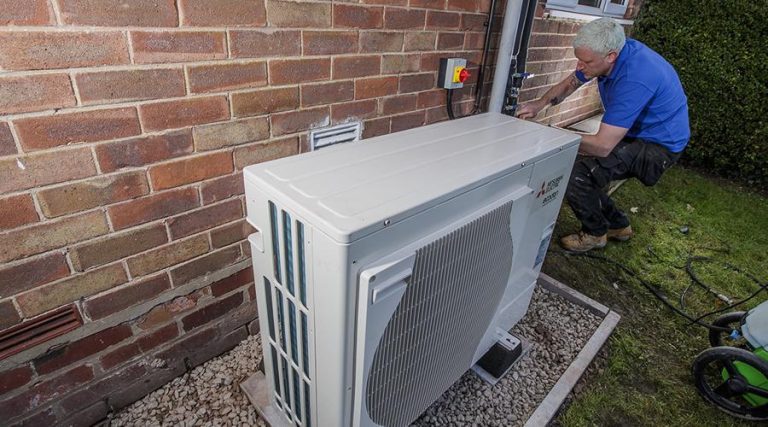
As the Social Housing Decarbonisation Fund (SHDF) opens to applications, Kensa Contracting is urging local authorities and housing associations in England to act now and bid for a portion of the £160m available in 2021/22 to install highly efficient low carbon ground source heat pumps to tackle climate change and protect their tenants from fuel poverty. Ieman Barmaki, Director of Low Carbon Partnerships at Kensa Contracting, says: “We are very pleased to see ground source heat pumps included as a measure in this funding scheme which will help local authorities replace fossil fuel heating systems and deliver warm, energy-efficient homes whilst reducing carbon emissions and fuel bills.   “It is critical that some of the most vulnerable in society can benefit from low cost and low carbon heating systems. There are currently 2.5m households across the UK in fuel poverty who are unable to afford adequate heating. This fund can make a significant impact on fuel poverty if ground source heat pumps are installed as part of the solution to place residents on a net zero pathway.” There is an 8-week application window for the first wave of SHDF funding bids, beginning on 23rd August and ending on 15th October. To help capitalise on this opportunity, Kensa Contracting will be delivering free CPD sessions showcasing the benefits of ground source heat pumps in social housing with large-scale retrofit case studies and demonstrating how the technology is eligible under the scheme. Local authorities are invited to register their interest here: https://kensa.group/shdf-cpd Kensa can also support local authorities in making a bid by delivering desktop feasibility studies of building stock to help identify ‘retrofit-ready’ projects, and providing estimates for the investment budgets and potential grant amounts needed for installing ground source heating systems. The UK government has committed to reducing emissions to net-zero by 2050, and over 10 years, the SHDF fund will potentially provide up to £3.8 billion in subsequent funding waves to encourage local authorities in England to retrofit measures such as low-carbon heating and insulation to increase energy efficiency and decarbonise their housing stock.  The primary objective of the SHDF scheme is to upgrade a significant amount of England’s 4.1m social homes to an Energy Performance Certificate (EPC) rating of C by 2030. Currently, nearly 40% of properties fall below this, with fuel poverty posing a serious risk for residents when high fuel bills mean tough choices between heating or eating. Under the scheme’s guidelines, low carbon heating, including ground source heat pumps, can be installed where a ‘fabric first approach is taken’. Electrically-powered ground source heat pumps are sustainable, non-combustion devices generating no point of use emissions or pollution, and have been highlighted by government as a key part of the UK’s strategy to decarbonise heat, of which 37% of total UK carbon emissions are attributed to. Using freely available heat energy from the ground, a ground source heat pump can deliver 3 to 4 kilowatts (kW) of heat for every 1kW of electricity it consumes, making it highly efficient. While modern condensing boilers can be up to 90% efficient, a ground source heat pump can achieve efficiencies of 400%, without the carbon emissions or air pollution created by burning fossil fuels. The government’s 10-point-plan to put the UK back on track to meet its net-zero carbon target by 2050, states the aim to have 600,000 heat pump installations every year by 2028, and the Committee for Climate Change (CCC) has suggested this figure should even be increased to 900,000. This will require a massive scaling up of ground source heat pump installations, and Kensa believes that a Shared Ground Loop Array infrastructure is the key to achieving this. Shared Ground Loop Arrays are a modern-day renewable alternative to the traditional gas network that allow multiple properties to benefit from communal clusters of boreholes, with individual heat pumps installed inside each property. This approach is perfect for multiple occupancy dwellings such as tower blocks. The retrofit of a three tower-block scheme with Kensa Contracting and Croydon Council has been documented in a recently launched film here: https://kensa.group/shdf-croydon. The Croydon scheme provides a blueprint for the potential low-carbon retrofit of the 1.6 million flats in the UK, representing 41.8% of all households – a portion of which could be fast-tracked to warmer, greener, and cheaper homes through the Social Housing Decarbonisation Fund.

Read More »

Who is responsible for reaching net zero?

UK emissions fell by nearly 50 per cent of their 1990 levels during the 2020 lockdown. According to The Guardian, this positive change will be short-lived. Carbon dioxide emissions are forecast to jump this year by the second biggest annual rise in history to help the economy recover after the pandemic. So, what can we do differently now to make a lasting positive impact on our environment and reduce emissions? Here Martin Hurn, event director at sustainable construction event Futurebuild, asks a group of industry thought leaders — who is responsible for the effective delivery of net-zero? We are aware that any business that interacts with the construction industry, such as architects, builders and material manufacturers, has a legal obligation to take actions that will help the UK reach net zero. In reality, many businesses don’t know what part they should be playing, what actions they must take or how to effectively collaborate with other sustainable businesses to make it a reality. Additionally, who is responsible for ensuring that we do deliver net zero emissions? Before knowing who is responsible for delivering net zero, we need to think about what that entails. For example, what does a client mean when they ask for a net zero building?  According to the Institute for Government, it’s a property that balances the amount of greenhouse gases it produces during construction and day-to-day use with the amount it removes from the atmosphere. Who is responsible? One of the key contributors to reaching net zero in the UK is the government. In 2008, the government introduced the Climate Change Act in a bid to make Britain a low-carbon economy and with this act came environmental responsibility for the government. In April 2021, the government set the world’s most ambitious climate change target, of cutting emissions by 78 per cent by 2035, compared to 1990 levels. The government has introduced initiatives such as the Green Homes Grant  to help homeowners lower emissions, but it is unclear if these made a lasting impact on net zero efforts. The government may have set the industry on the right path with these targets, but how is Britain and the construction industry going to deliver these ambitious targets? “What the government has delivered so far is good, but it is not enough to get us through the next phase of transition,” commented Richard Twinn, Principal Consultant at Cundall. “Influence verses control over emissions are two different things and we need coordinated action.” Legally enforcing a reduction in emissions, rather than making suggestions, forces businesses, especially in the construction industry, to start their net zero journey without clear guidance. Without a large amount of government support to join up these individual companies, the targets will become an unrealistic rather than a reachable goal. Local authorities also have a part to play in educating construction businesses, manufacturers and the general public and help them to turn ambitions in actions. Dr Oliver Jones, Research Director at Ryder Architecture explained that “public and private sectors need to come together to deliver education on what net zero means and how we get there.” Large businesses and small and medium enterprises can play their part by increasing their knowledge and desire to make sustainable changes. “There is a lack of incentive right now to dive in and take charge from smaller businesses,” commented Elaine Lewis, Managing Director at Cadventure. “This is mainly because of the unknown, perhaps the green agenda should place a greater focus on direct benefits to small businesses and their part in future proofing the industry.” Construction materials developers and manufacturers have the opportunity to invest in research and development to help Britain reach net zero. “There is no correct answer as to whether we stick with tradition or look at innovative new materials,” explained Twinn. “Both have their merits and indeed we should embrace both for what they have to offer. Right now, we can’t eliminate the use of concrete for example, but should look to de-carbonise it.” “The increase in development for bio-tech solutions, such as mycelium products is growing exponentially,” said Jones. “This is a whole new world of product development being pioneered by chemists and biologists who are passionate about realising a net zero future.” Claiming the responsibility Ultimately, there is no clear answer about who is solely responsible for reaching net zero, but by working together, the industry will stand a better chance of meeting our net zero carbon targets. Collaborating and investing in innovative technology and educating stakeholders will help the industry see the value in a net zero future and strive towards it in a unified way. If the built environment industry is not united in its attempts to reach net zero, it will never be achieved. Without the government and local authorities, material manufacturers are not incentivised to create innovative materials. If architects do not have the knowledge about newly developed alternative materials, they will not include them in their designs. Construction workers and engineers must have an understanding about how to effectively install the materials to ensure they function effectively. Working together and learning from each other is the key to successfully reaching net zero — this is where Futurebuild comes in. Futurebuild cultivates cross sector collaboration, connecting the specifiers, decision makers and disruptors with innovative brands. This diverse audience makes Futurebuild the essential platform for net zero pioneers to launch disruptive technologies and share new ways of thinking to inspire transformational change and pave the way for a sustainable built environment. To find out more about pioneering construction technology or sign up to our next event, visit our website https://www.futurebuild.co.uk

Read More »