Business : Testing, Certification & Business Tools News

West Midlands Mayor Visits Kite Packaging

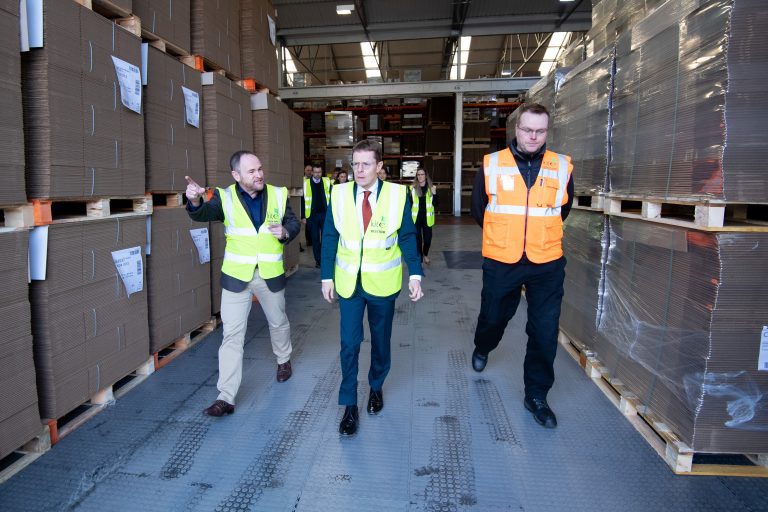
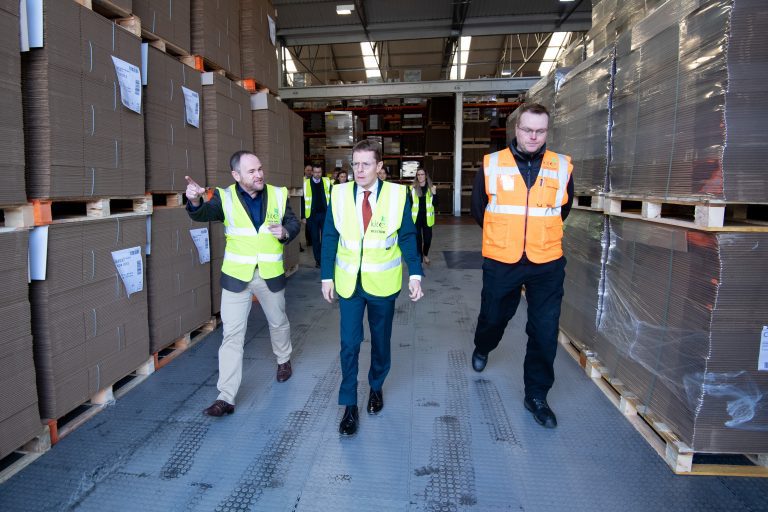
Employee-owned business, Kite Packaging, was pleased to welcome West Midlands Mayor, Andy Street, to its Regional Distribution centre in Coventry this week. The team were delighted to show Mr Street around their day-to-day operations and give him a deeper insight into the Kite brand. “On behalf of all the staff and

Read More »

Why hoarding graphics should be a part of every construction site

As any principal contractor will know, construction site hoardings are part and parcel of almost any building site in an urban, commercial or residential area. Site hoardings are a legal requirement, protecting the public from any potential harm as a result of proximity to the works taking place, and protecting

Read More »

The calm before the storm – Peak Packaging Monday

As the countdown to Christmas well and truly begins, the two landmark dates in the sales world are fast approaching – Black Friday and Cyber Monday. Businesses widespread are gathering resources and getting their strategies ready as two of the biggest dates in the diary loom ahead. A real crucial

Read More »

The Construction Industry Prefers Digital Marketing

A PMW Communications survey has revealed that the construction industry is rapidly moving away from traditional marketing in favour of digital platforms. The survey, conducted at the recent Construction Expo and UK Construction Week exhibition, asked participants to provide a list of construction companies’ marketing priorities. Digital platforms claimed the

Read More »

Are Construction Companies Missing Out On Brand Equity?

Branding used to be about developing the perfect logo or slogan for your business, and while these things are still important, today’s marketing experts take a different view. The prevailing wisdom now is that branding is mostly concerned with how your brand is perceived on a gut level. Does the

Read More »

Kite Packaging’s challenge to reduce plastic usage by 120 tonnes is supported by its plastic focused white paper and mobile packaging test facility

UK based company, Kite Packaging, has launched its sustainable future plastics initiative to reduce plastic levels with the unveiling of its new mobile packaging test facility and the release of their white paper. With the increasing focus on plastics and the harmful impact on the environment, businesses and consumers across

Read More »

4 Ways RFID is Changing the Building Industry

Radio-frequency identification (RFID) technology has been adopted enthusiastically in many different sectors for its ability to track people and items. For the building industry, too, it has a range of applications which help businesses to better manage their assets, materials, workforce and projects whilst also improving safety and security. What

Read More »
Latest Issue
Issue 343 : Aug 2026

Business : Testing, Certification & Business Tools News

The Perfect Property: 7 Key Features You Need to Look for When Choosing the Right Construction Company for Your Building Project

When you’ve found the perfect piece of property for your home or real estate investment, the next step is to find the right construction company. It’s essential to select the right company in order to ensure your initial investment is protected and to give you the best possible future outcome for the project. There are lots of different construction companies out there, but they definitely are not all equal.   Look For a Construction Company With Relevant Experience  First, you should choose a construction company that specializes in the kind of work you need to be done. Construction styles vary greatly between commercial and residential. They also vary greatly between materials used. If you’re looking for a construction company for a commercial steel beam building, you wouldn’t hire a company that’s only done wood residential projects. Similarly, if you have a pole building to construct, you’ll want to hire a construction company with that exact kind of construction experience. Read more here. You can easily narrow down your choices by reviewing the project portfolios of construction companies in your area. Once you find some that do similar work, move on to the following list of seven key features you need to look for when choosing the right construction company for your building project.   1. Longevity In Business  In the construction world, companies come and go. The good ones survive and the other ones go out of business due to poor quality. When choosing a construction company for your building project, look for one that has been in business for as many years as you see fit. It bears repeating that the longer a construction company has been around, the more likely it is that they know what they’re doing and they do good work. Chapman’s Construction has a proven track record of excellence, ensuring top-quality results for all your building needs.   2. Financial Stability  Another key feature to look for in a construction company is financial stability. Construction companies have quite a few expenses to take care of in order to complete a job. They have to payroll, tax payments, equipment lease payments, travel expenses, and all sorts of miscellaneous costs. This all comes out of the company account – or it should. Some nefarious construction companies that aren’t financially stable may rely on the latest client payment to fund older projects. Companies like these don’t manage their finances well and end up using your money to finish off another customer’s job. Meanwhile, when it comes time to start on your project they come up short until they can find yet another customer.   3. Sound Management  The construction company should have a sound management system in place that includes a general contractor, site security personnel, assistant managers, crew supervisors at a bare minimum. Construction companies that try to operate with a skeleton management system often end up disappointing customers because there isn’t sufficient supervision on the job site.   4. Sustainable And Eco-Friendly Work Practices  If eco-construction is important to you, then you should seek out a construction company that is LEED-certified or at least tries to use sustainable materials and eco-friendly construction practices. If you’re going for a building that you ultimately want to be LEED-certified, you will be forced to choose a construction team that is also LEED-accredited. If eco-friendly construction isn’t important to you, it’s safe to not worry about this feature. If you don’t, however, you should realize that there may end up being a lot of material and hazardous waste from the project. Disposal of these materials will most likely come out of your pocket.   5. Insured  Your building permit from the town may be contingent upon you hiring a construction company with a certain minimum insurance coverage. Liability insurance is an important consideration when hiring anyone to work on your property. Typically, a two million dollar liability policy is standard. Be sure to ask for and retain a copy of the certificate, which should name you or your building project company as the covered party.   6. References  Most construction companies will have a website and an online portfolio of completed projects for you to review. However, you should also ask for some references along with contact emails or phone numbers. Contact a handful of past clients to find out how the construction company was to work with. Specific questions to ask include, was the project completed on time, was the budget adhered to, and if there were any issues, did the company satisfactorily take care of them. If the company rep can’t supply at least three references for you to contact, this is a sign that you might want to continue looking elsewhere for a construction company.   7. Good Rapport  Most importantly, you should be able to have a good rapport with any construction company you plan to hire for your project. Communication is the foundation of a successful construction project. Without it, there can be misunderstandings, intimidation, and mistakes that cannot be rectified. Be very certain that there is trust and respect between you and the construction company representative. It’s important that you feel that your opinions are being listened to and that you have input as to how you’d like the final project to come out. Finally, pay attention to how the subordinates at the company respond to the company rep. Do they appear confident in their job? Or do they seem intimidated or frightened of the boss? Frightened workers can be afraid to speak up if they see something wrong on the job site, which is not conducive to a safe work environment.   Once you’ve found the perfect property, the best construction company for the job will be one that meets all or most of the above features. Don’t be afraid to take your time choosing which one. Before going ahead with any home renovation work, we always recommend getting multiple quotes so you can compare the service and price. You’ll be working with whomever you choose for the duration of the project, which could take many months. You’ll be glad you chose a

Read More »

West Midlands Mayor Visits Kite Packaging

Employee-owned business, Kite Packaging, was pleased to welcome West Midlands Mayor, Andy Street, to its Regional Distribution centre in Coventry this week. The team were delighted to show Mr Street around their day-to-day operations and give him a deeper insight into the Kite brand. “On behalf of all the staff and partners at Kite Packaging, we’d like to thank Andy Street for the time he gave us. It was great to be able to talk about the opportunities and difficulties that we all face,” commented Managing Partner, Gavin Ashe. The organisation, which has expanded its Coventry operation and earned a place on the Coventry and Warwickshire Growth Barometer earlier this year, is set for continued growth as it goes in to 2019. With a regional branch network across the UK this Coventry-based business also has sites in Rotherham, Swindon, Letchworth, Sittingbourne Portsmouth and Gateshead, as well as an Environmental Compliance business and a leading ecommerce offering. Coventry and Warwickshire’s Growth Hub’s Strategic Account Manager, Phil Peak, joined them as Mr Street explored Kite’s Coventry base and met with some of its employees. Kite’s key founding principle of a sense of partnership being at the heart of every good long term relationship has laid solid foundations as the Kite brand has grown over its 18 year history. Kite’s hard work and dedication to its sector did not go amiss, with Mr Street describing it as “a hidden gem in the Coventry economy.”

Read More »

Why hoarding graphics should be a part of every construction site

As any principal contractor will know, construction site hoardings are part and parcel of almost any building site in an urban, commercial or residential area. Site hoardings are a legal requirement, protecting the public from any potential harm as a result of proximity to the works taking place, and protecting construction works and staff from any unwanted interference – such as damage or theft – from the general public. But hoardings offer a lot more than that, and are in fact one of the most valuable pieces of marketing collateral for a construction business or other parties involved in a development. By contacting a print supplier, and investing in a series of printed hoarding graphics, contractors & construction companies can transform the impact their sites can have on their business. Site hoardings are essentially a large blank canvas, and while it’s usually not an obligation, hoarding graphics should be on the list of considerations with any project, for all kinds of reasons. Here are some of the most important factors at play, and why hoarding graphics should be a part of every construction site:   Blank hoardings are an unsightly wasted opportunity Blank hoardings, with no graphics installed, are fundamentally unattractive. Built usually from wood or metal, these structures are an imposition on the local community – simply put, when left blank they look fairly ugly. Considering that these installations are a legal requirement, coupled with the fact that visually-appealing dressed hoardings are also now a fairly common sight, there’s also an argument to say that plain hoardings can suggest a lack of care, funds, or pride in a project. People have become used to seeing hoarding graphics, and a scratched, dusty wall of wood in their local community can leave a bad impression. There’s also the fact that when no graphics are installed, a blank hoarding is simply a wasted opportunity. Hoarding graphics can add all kinds of value to a project and to the businesses involved (both those working on the construction, and those involved in the project in a more commercial sense) – and failing to address this fact can mean a missed opportunity for advertising, revenue, community engagement and more.   Hoarding graphics can reduce levels of graffiti While it would be naive to suggest that a hoarding with a set of graphics installed is immune to the spray-paint creativity of vigilante urban artists, there are few things more tempting to those with a penchant for graffiti than a big, blank block of wood. Tagged’ hoardings, laden with graffiti, are unfortunately a fairly common site in inner-city and even rural projects; this can be a problematic and frustrating financial and practical burden for those tasked with its removal – a duty which often falls on whoever is responsible for the hoardings themselves, which often means the contractors. The removal of graffiti can be costly and problematic, and while hoarding graphics don’t negate the potential for graffiti, they can make its removal a lot simpler – and they tend to receive less vandalisation simply due to the fact that they’re already covered in artwork or other visual material. The existence of anti-graffiti laminate also doesn’t hurt!   Hoarding Graphics are one of the best sources of out-of-home advertising  Out of home advertising is a lucrative, competitive industry. Purchasing space on billboards, busses, benches, and other prominent locations in the public eye can be costly, due to the highly sought-after nature of marketing your business or product in front of a large number of people. These kinds of out of home platforms are usually owned or managed through an external company, and due to their finite number, aren’t always hugely flexible in their availability. Construction hoardings, on the other hand, present a transient but lucrative opportunity for some guerilla marketing. The principal contractor for a site, or those responsible for the installation of a set of hoardings, usually have autonomy of what – if any – graphics are installed on them, which means you potentially have final say over how these structures get used. This in turn means you have free reign to take advantage of this, and market your business in a large, highly visible format. There are countless ways that graphics can be used as marketing collateral. From simply displaying the logo, name, address, website and phone number of a business, to demonstrating a bit of creative advertising flair with some unusual or eye-catching artwork, hoarding graphics have near infinite potential when it comes to publicity. They are also often seen by a large number of people, for the entire duration of a project (which can sometimes last for many months), particularly in areas of high foot traffic such as city centres or similar urban hotspots.   Hoardings can act as a source or revenue On occasion, it can also be possible to take on the role of the outdoor advertising provider yourself. With hoardings in place, if you have no desire (or budget) to use the panels as advertising boards, then it can be possible to offer them up to businesses keen to market themselves this way. This will depend on the arrangements the various parties involved with the budgeting of the campaign have with one another, and it will be important to ascertain whether everyone is alright with this. The priority should remain with the businesses directly involved, but provided local council requirements are met and all parties accept, it could be possible to rent the hoardings out and gain some additional revenue for the project’s duration. It will be important to consult with the relevant print supplier about the cost of the production and installation of the hoarding graphics, as this will dictate your own budgeting. Details of the hoarding, including its length, and the height and width of the panels will need to be considered.   Promote community engagement A common hurdle for the businesses involved in the management and organisation of a construction project is the imposition the work can

Read More »

“A hidden gem in the Coventry Economy” – West Midlands Mayor comes to Kite!

The team at Kite Packaging were delighted to show Mr Street around their day-to-day operations and give him a deeper insight into the Kite brand. The organisation, which has expanded its Coventry operation and earned a place on the Coventry and Warwickshire Growth Barometer earlier this year, is set for continued growth as it goes in to 2019. With a regional branch network across the UK this Coventry-based business also has sites in Rotherham, Swindon, Letchworth, Sittingbourne Portsmouth and Gateshead, as well as an Environmental Compliance business and a leading ecommerce offering. Coventry and Warwickshire’s Growth Hub’s Strategic Account Manager, Phil Peak, joined them as Mr Street explored Kite’s Coventry base and met with some of its employees. Kite’s key founding principle of a sense of partnership being at the heart of every good long term relationship has laid solid foundations as the Kite brand has grown over its 18 year history. Kite’s hard work and dedication to its sector did not go amiss, with Mr Street describing it as “a hidden gem in the Coventry economy.” Managing Partner, Gavin Ashe said: “On behalf of all the staff and partners at Kite Packaging, we’d like to thank Andy Street for the time he gave us. It was great to be able to talk about the opportunities and difficulties that we all face.” If you would like find out any more information about Kite Packaging or the services they offer please visit kitepackaging.co.uk.  

Read More »

The calm before the storm – Peak Packaging Monday

As the countdown to Christmas well and truly begins, the two landmark dates in the sales world are fast approaching – Black Friday and Cyber Monday. Businesses widespread are gathering resources and getting their strategies ready as two of the biggest dates in the diary loom ahead. A real crucial characteristic to expect from this year’s notorious Black Friday and Cyber Monday is the heightened emphasis on the ecommerce sector. Last year, it was found that a huge £1.4bn was spent on online sales in the UK on Black Friday which was up 11.7% in comparison with the previous year, according to online retailers trade body IMRG. However in contrast, when looking to the high street, analysis firm Springboard discovered that shopping centres and retail parks footfall figures were down 3.6% to the previous year, showing the evidential shift from bricks to clicks is taking its toll. This last week of partial normality is a time where preparation drives day-to-day business but which sector does it really ramp up the pressure in? Packaging. Everyone wants to be sending their goods inside high quality, reliable packaging that gets them to their destination in the same condition they left the warehouse in. For UK packaging supplier, Kite Packaging, the Monday before Black Friday proves to be most demanding in terms of orders as it acts as the last big order day for most businesses who are getting packing materials in ready to sell and distribute goods on Black Friday. Peak Packaging Monday is where Kite’s team sees the biggest influx of orders, ensuring their efficient pick, pack and despatch process is able to pack and distribute all packaging goods to customer doorsteps in preparation for the big day. Kite’s ecommerce division was introduced in 2004 and has been continuously evolving since. This year has seen Kite’s ecommerce specialists redevelop and evolve the Kite site to offer improved user experience such as better navigation, design advances and improved on site functionality. All of which streamlining service and making ordering on smart devices easy and clear cut for customers widespread. So what sort of packaging is really out there? Kite Packaging has introduced some new peak season additions to its online portfolio to cater for the demand from Black Friday weekend and the lead up to Christmas. Its new white mailing bags, smaller bales of wood wool, capacity book mailers and twist wraps are just some of the many types of packaging they’ve brought in that can be used to send out goods with ease. So if you want to make sure you’ve got everything you need and would like to find out more simply visit www.kitepackaging.co.uk.

Read More »

The Construction Industry Prefers Digital Marketing

A PMW Communications survey has revealed that the construction industry is rapidly moving away from traditional marketing in favour of digital platforms. The survey, conducted at the recent Construction Expo and UK Construction Week exhibition, asked participants to provide a list of construction companies’ marketing priorities. Digital platforms claimed the top three spots in the list. “PMW is celebrating its 25th anniversary this year, so we’re in a great place to see how marketing options have evolved and expanded. The results of the survey reflect the fact that technology has become integral to our daily lives, as we no longer rely fully on adverts in newspapers or magazines, instead choosing to Google, or look on a company’s website or social media platforms for the information we need. It’s therefore now vital for businesses to optimise SEO so they appear on the first page of online searches, or to be engaging with customers over Facebook, Twitter or LinkedIn,” said Peter Sutton, Managing Director of PMW Communications. Delegates at the trade shows were given 10 tokens each, which represented 100% of their marketing budget in 10% denominations. Participants were then asked to place the tokens into six category boxes: social media, traditional advertising, brochures, PR and events, website, and digital advertising. Over 200 people participated in the survey, representing a number of different companies within in the construction industry. The top priority for delegates, with 24% of the vote, was to have a professional and informative website. Digital advertising came second with 20%, and social media completed a digital top three with 19%. Brochure design and PR and events were tied in fourth with a respectable 15%. Traditional advertising methods were the lowest priority picking up 7% of the vote. “Despite the expected growth in digital options, there is still a place for more traditional marketing activities in the construction industry. Creative PR is a really cost-effective way of reaching target audiences, and can offer excellent value in terms of ROI, and events give a company the chance to engage with potential customers in person, which is something the digital world can never replace. It’s difficult to predict what marketing options will be available to construction companies in the next 10 years, but in such a fast paced industry, we’re excited to find out,” Peter Sutton concluded.

Read More »

After another successful year Kite Packaging is expanding its presence into the North East

The employee-owned packaging company has announced plans to extend its network of regional distribution centres to service the North East of the UK, an expansion on their existing presence in the Midlands, North, Thames Valley, South Wales, South Coast and South East.  The company’s existing regional distribution infrastructure and in-house specialist teams will work alongside the local team of experts in the North East to offer practical and cost-saving solutions to local businesses for their packaging. The expertise they offer includes corrugated re-design, a specialist Automotive & Aerospace design team, in-the-box solutions, load stability/stretch film solutions and compliance with the Packaging Regulations, providing customers with a packaging company that can offer them a comprehensive service & solutions capability. This comes after a successful year for the employee-owned packaging group, in which they released two industry white papers: focused on load retention and most recently on plastic packaging and a sustainable future ‘There is no planet B’. The two pieces really demonstrate the expertise that comes from within this highly regarded packaging company. 2018 also saw the launch of Kite’s mobile packaging test facility, the first of its kind in this industry. The truck enables Kite to develop solutions on-site at the customer. It is a fully-equipped mobile testing and demonstration facility in which Kite’s packaging technologists can develop bespoke packaging solutions, carry out stretch film audits for load stability and optimise pack design through QVE/VAVE. Kite’s new North East RDC based in Washington will be staffed by a highly experienced team from the industry with plans to expand the team further in the near future.   For more information on Kite Packaging and its job vacancies, visit kitepackaging.co.uk.

Read More »

Are Construction Companies Missing Out On Brand Equity?

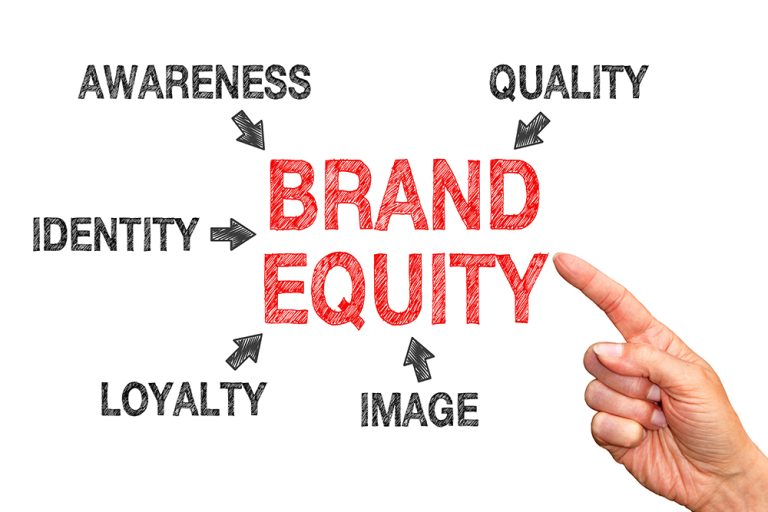
Branding used to be about developing the perfect logo or slogan for your business, and while these things are still important, today’s marketing experts take a different view. The prevailing wisdom now is that branding is mostly concerned with how your brand is perceived on a gut level. Does the mention of a particular brand make you feel happy, safe, indifferent, annoyed or amused? Subconscious positive associations are a powerful tool, especially for construction companies. What if the mere mention of your company could carry an automatic connotation of reliable, high quality, professional construction work? What if the brand equity of your firm could make your customers believe that your company was the obvious, go-to choice for all building contracts? What is brand equity? Brand equity is essentially the concept that a familiar brand will have an advantage over lesser-known competitors due to its customers conflating recognition with quality. Faced with two or more purchase options, the vast majority of consumers will assume that the brand or service they’ve heard of has a reputation for superiority – and there are few industries where perceived low quality is as harmful as construction. Brand equity is related to the psychological cognitive bias called the “halo effect” – the tendency of most people to make strong unconscious assumptions based on unrelated information. For example, studies show that many of us subconsciously assume that attractive and well-dressed people have positive character traits such as kindness and good humour. In branding jargon, the term “halo effect” also has another meaning tied to brand equity – the propensity of a customer to assume that a good experience with one product or item reflects on the entire brand. If you’ve had good experiences with a Samsung phone, chances are you’ll be more likely to assume that their TVs are good, too. This latter definition is less cognitive bias and more common sense, but the message is clear: brand equity can be a powerful asset for putting your business on a pedestal in the customer’s mind. Developing brand equity in construction  The first step, of course, is to make sure your company really does deliver high quality, dependable construction services! If you get a reputation for second-rate construction work, the customers are going to catch on and stop calling, as your business name will become a byword for poor results (this is known as negative brand equity). If you consistently do great work your company will naturally start to develop a reputation for excellence, with a large roster of happy clients and a website overflowing with positive testimonials – but you still need to make sure people have heard of you. An important facet of brand equity is brand recognition. Faced with the choice between a Superdry jacket, or a no-brand coat from a market stall, most people would prefer the familiar brand with its presumed higher quality. In order to leverage this principle, then, you need a widely recognised name. For a construction business, this needn’t be at Coca Cola and Burger King levels of public familiarity. Rather than trying to become a household name for the general public (which would be both unnecessary and nearly impossible), the goal is to become very well-known in certain circles and selected groups. By targeting your marketing efforts at those specific people you want to work with, you can position yourself as the go-to contractor for building work. Clarifying your business values  Brand awareness is a little different of a concept to brand familiarity, although closely related. Whereas brand familiarity means that people recognise your name, brand awareness means that they understand something about who you are and what you do (and what sets you apart from your competitors). Recognising the name Apple is one thing; knowing that they are an electronics company with a focus on innovative design is another. It’s important for any company’s branding that they stand for something, and construction contractors are no different. Do your customers know what your core business values are? Brand awareness is about making sure that they do. Whether you want your message to be that you’re passionate about construction site safety, or that you care about the environment and sustainability, you should seek to clarify your specific ideology. Getting the marketing message out As well as the normal marketing channels – cold communications with potential clients, social media, search engine optimisation and so on – an oft-overlooked marketing opportunity is the hoardings that are legally required to envelop large construction sites in public areas. Why not use these giant boards to communicate something about your brand and your values to the public? The use of large printed hoardings can plant your business name in the minds of hundreds of people who might later not even remember where they saw it – but could cause them to recognise it if they should later look for a construction contractor to help them with a project. Hoardings can essentially be a giant billboards to advertise your firm and its ethos, and by leaving them blank you could be missing out on a great opportunity to develop your brand equity. It’s not unheard of for truly artistic and creative construction hoardings to become something of a tourist attraction in their own right (such as the “melting building” hoarding that was erected in Paris in 2007), so don’t be afraid to go all-out with something bold. In the end, making the most of brand equity could be the key to securing larger contracts and ensuring your construction company is always in demand. Taking the time to consider how your brand is perceived by customers and leverage the power of brand recognition could give you a significant advantage over your competitors. ———- This post was contributed by PressOn, one of the UK’s leading large format digital printers. In addition to producing construction hoarding graphics, they also provide large format prints and banners for some of the UK’s leading retailers and brands.

Read More »

Kite Packaging’s challenge to reduce plastic usage by 120 tonnes is supported by its plastic focused white paper and mobile packaging test facility

UK based company, Kite Packaging, has launched its sustainable future plastics initiative to reduce plastic levels with the unveiling of its new mobile packaging test facility and the release of their white paper. With the increasing focus on plastics and the harmful impact on the environment, businesses and consumers across the country are searching for viable solutions to build a sustainable, circular economy. When it comes to the environment, it is particularly difficult to change our behaviour. In order to help raise awareness across the UK, the Kite team have challenged themselves and their customers to reduce their plastic usage by a huge 120 tonnes by the end of 2019. Kite’s white paper provides businesses and consumers with an essential guide to plastic packaging and offers new alternatives to help people across the country in building a circular economy. The Kite team’s new, fully equipped truck is a mobile testing and demonstration facility in which their packaging technologists can carry out waste minimising packaging audits to determine how plastic packaging can be reduced, as well as offering more eco-friendly packing alternatives. The employee-owned business announced the challenge earlier this month when the team held a plastic packaging conference in the Midlands, at which they launched both the truck and their plastics white paper. For a multitude of businesses, packaging is a substantial part of their day-to-day operation, but often companies are using excess amounts of plastics and are not looking for eco-friendly alternatives. Kite can help businesses explore a range of alternatives to traditional plastic based packaging. Their mobile testing facility enables the scientific analysis and testing of current packing operation whilst incorporating a full suite of alternative packaging systems and solutions. Gavin Ashe, Managing Partner at Kite Packaging said: “Everyone in business is fantastically busy, focusing on running their business and packaging often ends up an afterthought. So we have invested in our mobile test facility to take the solutions directly to the customer, where we can demonstrate, design and even test solutions at the customer’s factory, saving every one time and money. “We really are a packaging company who want you to use less packaging. Join us in saving 120 tonnes of packaging waste this year.” For further information on how to reduce your plastics use, please view our white paper (kitepackaging.co.uk/images/pdf/plastic-white-paper.pdf)

Read More »

4 Ways RFID is Changing the Building Industry

Radio-frequency identification (RFID) technology has been adopted enthusiastically in many different sectors for its ability to track people and items. For the building industry, too, it has a range of applications which help businesses to better manage their assets, materials, workforce and projects whilst also improving safety and security. What is RFID technology? RFID is a technology that enables a microchip to interact with a reader using radio waves. The small RFID chips can be embedded into tags or sticky labels and attached to items. When a chip comes within range of a reader, the information stored on it is read and sent to a central IT system, enabling the item to be located and tracked. Crucially, RFID tags and labels, such as those available from Universal Smart Cards, don’t need their own power source as they are activated by the reader, this makes them ideal for low-cost tracking. Chips can also be embedded into smart cards and wristbands enabling members of the workforce to be tracked as they move around construction sites. Here, we’ll look at four ways RFID technology is changing the building industry. Automated timekeeping and payroll One significant benefit of RFID is that it can automatically log the entry and exit of every member of the workforce on the site. Using fixed readers at the entrance totally eradicates the need for any manual recording of arrival and departure such as signing or clocking in. And there is no potential for workers to forget to sign in or out. This process drastically reduces the administrative burden on construction companies as the time each worker spends on site is automatically recorded. The data collected by the system can also be used to automate payroll reducing costs even more. By placing readers at other points around the site, employers can get further insights into working patterns, tracking the movement of workers and the time they spend in various places on the job site. This can be used to help find more efficient ways of working and to increase productivity. Asset management Building companies have a vast array of expensive equipment that they need to manage. From vehicles to hand tools, it is important to know where these items are on a construction site and who has been using them. By scanning items in and out of storage areas, it is possible to track when they were used, how long for and when they were returned. If RFID access control is used to authorise entry into the storage area, the system also logs the identity of the person who takes the equipment. Using fixed readers on the entrance to the storage area means the worker and the item are logged on the IT system as leaving at the same time. With fixed readers in situ around the site or by using handheld readers, it is also possible to locate any items which go missing. However, if workers know that they have been logged using the item, they are more likely to look after it responsibly and take it back when finished. Materials management A problem for many building companies is having to pay workers to do nothing because it has run out of materials. Not only does this reduce the profitability of each job, it also delays schedules which could be a major issue if another contractor coming on board has to wait for the work to be finished. This can result in contractual problems, fines and reputational damage. RFID can provide a workable solution for these types of problems as it enables companies to keep track of the materials that are in stock. Simply attaching an RFID sticker to items enables them to be scanned, letting site managers know how much of each item is on the site. As supplies begin to get low, orders can be placed with suppliers before materials run out and workers are left at a standstill. Making sites safer Ensuring compliance with health and safety regulations is paramount on any building site. RFID technology can enhance safety for workers, especially in areas where there are potential hazards, as tags embedded in their ID smart cards can be used to trigger safety alarms when they get near. Depending on the nature of the site, this can be sound alarms, flashing lights or both. At the same time, access control systems can be programmed to restrict access to authorised users only. This can be done on an individual basis. This means entry to potentially hazardous areas of the site can be restricted to specific people. If someone without authorisation enters, an alert can be sent immediately to the site manager. Wrapping up RFID tags and sensors provide building companies with more effective ways to manage their assets and materials, improve health and safety, track worker activity and reduce administrative burdens. In doing so, they improve the efficiency of the company, helping it to reduce costs and losses whilst providing insights that can make it even more productive.

Read More »