bdc magazine

Plans approved for 175 new homes in Milton Keynes

Bellway has been given the go-ahead to build 175 new homes in the Whitehouse area of Milton Keynes. The housebuilder has secured planning permission to deliver the new homes at a development to be known as Bellway at Whitehouse Park, with approval for its detailed plans given by Milton Keynes

Read More »

Caterpillar® Operator Challenge crowns best UK & Ireland operators

The victors in the UK and Ireland leg of the Caterpillar® Global Operator Challenge have been confirmed following a set of highly competitive tests at the Caterpillar Visitor Centre in Leicestershire.  Operators demonstrated agility, speed and precision in a variety of challenges using the latest Cat equipment. Amongst a tough

Read More »

WAVIN TEAMS UP WITH BAND OF BUILDERS TO SUPPORT HEREFORD TRADESMAN

Leading plumbing and drainage manufacturer Wavin has completed the first project in a new relationship with Band of Builders to support tradespeople in need. Band of Builders is a registered charity that provides support for members of the construction industry who are facing life-changing health issues. Since it was created

Read More »

5 Things to Know About a Slitter Rewinder

A slitter rewinder is a machine used in the converting industry. The converting industry is an important part of manufacturing, and it’s especially relevant right now, as the U.S. is working to promote more onshoring of manufacturing and similar work.  The following is a guide to the converting industry and

Read More »

Understanding Fluid Catalytic Cracking and FCCU Repairs

Any business that does oil refinement or something similar must know about fluid catalytic cracking and fluid catalytic cracking units, which some in the industry abbreviate as FCCUs. We’ll go over both of those concepts in detail in the following article. What is Fluid Catalytic Cracking? Fluid catalytic cracking is

Read More »

HS2 supports University of East London postgraduates into employment

HS2’s civils contractor Skanska Costain STRABAG (SCS) has formed a partnership with the University of East London (UEL) to support its MSc Civil Engineering graduates into employment on HS2. The partnership, which was cemented last summer, was initially put in place to provide students with an eight-month paid work placement supporting

Read More »

Modular Low-Carbon Affordable Homes Coming to South Downs

Seventeen modular low-carbon homes are to be built in the South Downs National Park in West Sussex – nine of which will be for affordable rent or shared ownership. The homes have already been manufactured offsite in Dorset by offsite building specialists Rollalong and they will be transported and installed

Read More »

Prologis acquires two logistics centres in London 

Prologis, a leading owner and developer of UK logistics real estate, has continued its focus of strategic investments in London and the South East markets with the acquisition of two additional sites at Erith and Croydon.   Totalling over 330,000 sq. ft. on 20.4 acres, the two distribution centres are let to Ocado and Royal Mail and form key parts of their distribution networks, being two of the largest low density last mile logistic facilities inside the M25.  The assets, on Church Manorway, Erith and Beddington Farm Road, Croydon are located

Read More »

New-build price growth outperforms existing homes by 20%

The latest research by Unlatch, new homes progression and aftercare platform for developers and housebuilders, reveals that the annual price growth of British new-build homes has outperformed existing homes by almost 20% in the past year.  Homebuyers and professional property investors alike are keen to buy homes that can promise

Read More »
Latest Issue
Issue 335 : Dec 2025

bdc magazine

Plans approved for 175 new homes in Milton Keynes

Bellway has been given the go-ahead to build 175 new homes in the Whitehouse area of Milton Keynes. The housebuilder has secured planning permission to deliver the new homes at a development to be known as Bellway at Whitehouse Park, with approval for its detailed plans given by Milton Keynes Council on Tuesday 19 July. The development, which will be on two parcels of land off Watling Street, will consist of 122 new homes for private sale and 53 affordable properties for local people through rent or shared ownership. Luke Southgate, Sales Director of Bellway Northern Home Counties, said: “We have worked closely with Milton Keynes Council to ensure that our detailed plans for these 175 new homes meet the needs of local people. “We are very keen to get on with this exciting project and aim to begin groundworks at the end of the month, with a view to releasing the first homes for sale in the autumn. At the development, we will be building two-bedroom apartments and two, three and four-bedroom houses to suit a wide range of purchasers, including first-time buyers, growing families and people downsizing. “As well as providing new homes for private sale, the development will also deliver a selection of 53 affordable properties to allow local people to live in new homes in the area and stay close to their family, friends and places of work.” Bellway has plans to build a total of 452 new homes at Bellway at Whitehouse Park across five plots of land acquired from L&Q last year. Whitehouse Park is part of the Western Expansion Area in Milton Keynes, which is scheduled to deliver a total of 6,500 new homes. Outline planning consent was given for this project in 2007. Luke said: “At Bellway Northern Home Counties we have our divisional headquarters in Milton Keynes and feel a real connection to the town. We are proud to be playing a key role in the ambitious scheme to deliver thousands of much-needed new homes to Milton Keynes. “These 175 new homes represent the first phase of Bellway’s plans to deliver a total of 452 new homes at Whitehouse Park. This is evidence of our ongoing commitment to try to meet the growing demand for new housing in this increasingly popular location.” More information about the new homes coming soon at Bellway at Whitehouse Park is available at https://www.bellway.co.uk/new-homes/northern-home-counties/bellway-at-whitehouse-park.

Read More »

Caterpillar® Operator Challenge crowns best UK & Ireland operators

The victors in the UK and Ireland leg of the Caterpillar® Global Operator Challenge have been confirmed following a set of highly competitive tests at the Caterpillar Visitor Centre in Leicestershire.  Operators demonstrated agility, speed and precision in a variety of challenges using the latest Cat equipment. Amongst a tough field, Finning announced the UK regional winner as Bryan Williamson with an overall time of 6 minutes and 6 seconds and the Irish regional winner as returning 2019 champion Tommy Murphy, with an overall time of 5 minutes and 54 seconds. Both will now go through to the European semi-finals which are being held in Malaga in October. Here they will compete in a series of even tougher challenges against some of the best machine operators in Europe for a place at the prestigious final to be crowned Global Champion in Las Vegas. To find the winners, a host of talented operators from the UK and Ireland competed in three challenges using different machines and illustrating different skills and capabilities. This year’s challenges included working with a Cat Next Generation 313 excavator and a 930 Wheel Loader. Bryan Williamson, UK regional winner said: “I am so pleased to have represented my country well in this challenge, it’s a great achievement. “After competing at the previous Operator Challenge in 2019, my day-to-day work as an operator at Eastern Civils and Construction and a bit of luck prepared me for this year’s challenge.  Although there was some tough competition and challenging tasks, I know it will be fiercer competition at the next stage in Malaga.” Tommy Murphy, Irish regional winner said: “It’s great to see that the stakes are getting higher each year, but a returning win feels incredible.  “After the tough finale in Las Vegas in the last Operator Challenge, I hope this time I will be crowned the champion!” With a two year hiatus since the last event, a new and unique mystery challenge was introduced.  Using the new Cat Command technology, operators were tasked with using a remote console to control a dozer located over 5000 miles away in Arizona. This helped to test the 21st century skills of the operators, whilst demonstrating the huge potential benefits for safety and productivity that Cat Command offers. Tracey Earp, Marketing Manager at Finning said: “We are so pleased with the turnout at this year’s challenge after a two year break during Covid. We have been really impressed with the quality of entrants and how they all took to the range of challenges we had set. So both Bryan and Tommy did absolutely brilliantly to finish in first place.” “Events like this make me so proud of the people we have in our industry and hopeful for the future, with a few female contenders being role models for all women in construction. We are so excited to see who will be awarded European Champion in October and if Bryan or Tommy will progress to compete on the world stage.” Visit Finning’s website for more information: https://www.finning.com/en_GB.html

Read More »

WAVIN TEAMS UP WITH BAND OF BUILDERS TO SUPPORT HEREFORD TRADESMAN

Leading plumbing and drainage manufacturer Wavin has completed the first project in a new relationship with Band of Builders to support tradespeople in need. Band of Builders is a registered charity that provides support for members of the construction industry who are facing life-changing health issues. Since it was created in 2016, it has completed more than 25 construction projects across the UK, bringing volunteers from across the industry together to provide financial and emotional support for tradespeople and their families. Wavin recently supported Band of Builders on a project to help Kyle O’Connor – a multi-skiller from Hereford who had previously worked with the charity as a volunteer and received a cancer diagnosis part-way through an extension on his family home. Band of Builders and its team of volunteers stepped in to complete the work, with Wavin providing all drainage products, including those needed for a wetroom conversion. Lee Frimston, Key Account Manager Independents and Buying Groups, at Wavin UK, said: “Band of Builders is a fantastic charity and shows what can be achieved when people work together in this industry. We’re proud to have supported the team on this project for Kyle, and look forward to continuing to support the incredible work they do.” Tony Steel, Operations Director at Band of Builders, said: “One of the most rewarding aspects of our job is improving the lives of construction workers, and we’re grateful to play our part in unifying the construction industry under this common goal. “Projects such as this, alongside our Big Brew initiative – which is focused on mental health awareness – are examples of how our sector can make tradespeople’s lives better. We are incredibly thankful to Wavin for supplying materials and the volunteers who gave up their time to work on Kyle’s project.” For more information on Band of Builders, visit: https://bandofbuilders.org/ Or, to find out more about Wavin’s products and services, visit: https://www.wavin.com/

Read More »

5 Things to Know About a Slitter Rewinder

A slitter rewinder is a machine used in the converting industry. The converting industry is an important part of manufacturing, and it’s especially relevant right now, as the U.S. is working to promote more onshoring of manufacturing and similar work.  The following is a guide to the converting industry and what the implications are, as well as more specifics about the slitter rewinder, also just known as a slitter.  1. The Converting Industry The term converting industry refers to manufacturing processes and practices that are used to process materials that come in thin layer form. Thin layer-formed materials can include textiles, paper, foil, plastic film, and materials that aren’t woven.  The materials are usually stored and then shipped in their roll form after being wound.  A roll of shipped materials can be just a few inches in diameter, or these materials can be many feet.  The material width can be a fraction of an inch to several feet wide.  Converting processes include painting, coating, and laminating. Other converting processes include slitting, which means making narrow rolls from wider roles, drying, die cutting, packaging, and extruding.  The processes can go from very slow speeds to high speeds of thousands of feet per minute. The processes can be high-tech and sophisticated, and they’re often pretty customized.  A material roll is usually unwound from its roll form in one layer, then they’re processed and rewound into a roll so it can be shipped or processed further. The single material layer is the web that flows through machines or a process.  Basically, the term converting in converting industry means a roll of material is processed and then converted into a roll of something else.  2. Web Handling Web handling is the engineering, equipment, and science that’s needed to bring flexible materials through the different required converting processes. The right kind of web handling, which can be done through the use of the right designed, engineered, and manufactured equipment, can make sure that webs are transported through their converting processes without any defects.  3. The Role of a Slitter Rewinder Slitter rewinders are used for some essential functions that help make the modern soft materials we know today. Slitter rewinders are machines that cut what’s known as a parent or master roll of material to a width that’s smaller.  The materials need to be cut smaller so they can go on to the next step in the production process. A slitter rewinder is a piece of equipment that’s found in a wide range of manufacturing facilities across many global industries.  The majority of these pieces of machinery are built for particular types of material, but they can also be modified, so they’re able to slit different materials.  Along with the roll specifications of the material, most manufacturers want machines that will slit specific materials when they’re choosing them. They also want to consider factors like how easy to use they are, their safety, floor space they would take up, and speed.  A master roll is made to be as large as it can be because that’s cost-effective, which is why it then needs to be slit to the right width.  4. Winding Type Slitter rewinders can be characterized and categorized based on winding type, including: – Center winding: This is the most common method to rewind materials that might have different levels of thickness throughout the roll’s width. The material will go through a nip and anvil roll where it’s then slit using the right method. At that point, it’s rewound onto a core. This rewinding method is used for materials like woven items, foams, foils, films, and tapes. It’s useful for materials that could be sensitive to higher tension settings and compression.  – Turret winding: The method is a variation of center winding. It’s an alternative that can help reduce machine downtime, so multiple shafts are used, and then the machine can keep slitting on an active shaft, while an operator or sometimes automated mechanisms will unload and then reset the finished shift. This method is meant to help reduce changeover times. It’s for consumer goods, paper items, tapes, and high-volume products.  – Surface winding: Also referred to as drum surface winding, in this method, the rewinding materials are usually large in diameter. Non-wovens and paper are the applications of surface winding.  – Center surface winding: in this method, there’s a combination of elements borrowing from traditional surface rewinding and also center winding. The applications for this method include materials that aren’t woven and are slit to a smaller width. As the diameter goes up, the rewinding center shaft will keep the tension.  5. How It Works There are three primary functions of a slitter rewinder which are performed in a fixed order. The process starts with the already rolled paper or material, and it has to be unwound so that it can go through the rewinder in one single layer. As it goes through the machine, it’s slit by one of many available cutting methods into strips of the right thickness.  After the material is slit to its market-ready dimensions, it’s rewound into a roll that’s then sellable.  The cutting can be done in different ways, primarily based on the type of material.  The oldest type of cutting is known as score cutting. With score cutting, the materials between a dull blade and hard surface are cut. This is used for adhesives like tape, with a dry and sticky side.  Another method is razor blade cutting, which tends to be the most cost-effective approach. This uses a blade positioned over the area where the sheet is fed. As the material goes through a drum or set of drums, it’s drawn against the blade.  The method can’t be used for heavy items, rigid materials, or abrasive materials.  Finally, there’s shear cutting which is the most accurate method, and it can be used with rigid, thicker, and heavier materials like laminates and foils. This uses two, typically rotating blades. The material is pulled between

Read More »

Understanding Fluid Catalytic Cracking and FCCU Repairs

Any business that does oil refinement or something similar must know about fluid catalytic cracking and fluid catalytic cracking units, which some in the industry abbreviate as FCCUs. We’ll go over both of those concepts in detail in the following article. What is Fluid Catalytic Cracking? Fluid catalytic cracking is part of the complex, lengthy gasoline production process. If you’re dealing with catalytic particles, you’ll soon discover that they convert long-chain, thick hydrocarbons. These come from crude oil. You’re trying to create gasoline from those because it’s profitable and beneficial for humanity. You’ll need what those in the industry call a riser line. There, you can refine the long-chain hydrocarbons by fluidizing them. You blow them upward at a very high velocity, and as they rise, they react. This produces a coke-coated catalyst. In your reactor, you’ll have two cyclone sets. These work on the hydrocarbons by feeding them into the regeneration section. An air grind fluidizes them. At that point, you can burn off the catalyst particles that you no longer need. The catalyst absorbs the excess heat, and you can control the cracking reaction safely and expediently. This is where FCCUs come into play. What is a Fluid Catalytic Cracking Unit? You’ll need a fluid catalytic cracking unit if you want to make safely refined gasoline and similar products. What you need to do is make sure to take care of these units if you have some in a warehouse or somewhere similar. You must keep a close eye on them because they can sometimes sustain damage during the gasoline refinement cycle. With these units, you’ll have refractory linings in the major vessels and transfer lines. If you look at them after heavy use, you may uncover damage. You can expect that with heavier use unless you examine these units after each refinement process. You must appoint an expert who can examine your FCCUs regularly. That way, you do not risk any costly and dangerous equipment malfunctions. How Can You Repair a Damaged FCCU? If you do see that you have a damaged FCCU, you’ll need to stop gasoline production while you repair it. Once you start learning about these units, you’ll soon find that they have six major components, any of which can potentially sustain damage with heavy use. The six components include the distribution rig, your overhead lines, the slide valves, the internal cyclones we discussed earlier, the regenerator, and the reactor itself. They’re all delicate and costly. If you look at your FCCU and see damage, you’ll need to bring in a company to repair it. Such companies do exist, but you’ll want to locate one that has an excellent industry reputation. You’ll also want one that does not charge an exorbitant price. When you look at an FCCU repair company’s website, you’ll want to see some evidence that they can do the job right. You might look for former client recommendations. You’ll also want to see what training their technicians received. Anyone who examines and tries to fix your FCCU must know what they’re doing. If they don’t, and they’re only faking their credentials, they might make the situation worse and endanger your workers. They can also cost you more production time if they make the unit worse instead of better. What Else Do You Want from Your FCCU Repair Company? When you contact a company to repair your FCCU, you’ll also want one that knows about all the potential problems that these units can develop as time passes. For instance, the company you hire should know how to fix a unit with silica mitigation issues or independent anchoring system problems. You might want a company that can do some IDA and stud welding. You may need hexavalent chrome mitigation instead. Some businesses that do this kind of refinement need hydro-demolition, so the company you hire should know all about that as well. You should know very quickly when you talk to a company representative whether this business entity can repair your FCCU and get it up and running again. They’ll know all the appropriate terminology and have the latest tools and techniques mastered. You can’t fake this knowledge. Additional Requirements As you’re narrowing down the list regarding who should repair your faulty or damaged FCCU, you’ll need to think about availability as well. Maybe someone in your area can fix your FCCU, but they have a long wait time because they’ve got other clients in line ahead of you. That probably won’t work for you. Remember that as a refinery or an entity that uses FCCUs, you probably want to get back to work as soon as possible. If you have to wait weeks for the repairs and new components you need, that won’t do you much good. The repair company you hire should also have the parts you need on hand. If they need to wait for weeks to get someone to ship them those parts, you’ll probably have to go with someone else. Finally, you should establish a rapport with the company you hire. You and the techs they send over won’t be best friends, but they need to have a positive attitude. If you get someone surly who doesn’t seem to want the job, that won’t work. You’re giving this company an opportunity and probably paying them well to get your FCCU up and running again. They should appreciate that and respect you. If they don’t, you should go with another company that can give you prompt service, a fair price, and also has excellent customer service and response time. Once you find a company to service your FCCUs, you might use them for many years to come. If you’re constantly using those FCCUs for refining, you’ll likely need service for them periodically.  You can call the entity you use and get them to send someone every time you need that service. Your two companies can benefit from each other over the years.

Read More »

HS2 supports University of East London postgraduates into employment

HS2’s civils contractor Skanska Costain STRABAG (SCS) has formed a partnership with the University of East London (UEL) to support its MSc Civil Engineering graduates into employment on HS2. The partnership, which was cemented last summer, was initially put in place to provide students with an eight-month paid work placement supporting HS2’s construction. Placements allow students to develop vital hands on industry experience, in a real life setting, whilst progressing the theory element of their studies. Throughout the duration of their placements, the calibre of work delivered by the UEL postgrad students was so high that SCS has now offered permanent jobs to the participants. Ambrose Quashie, HS2’s Skills Manager for Greater London said: “With such a high calibre of talent studying at universities near to our major construction sites, it’s vital that we seize the opportunity to work in partnership and create opportunities for students and graduates to play their part in HS2’s construction. “Ensuring that HS2 leaves a lasting skills legacy is central to the overall success of the project. This initiative is one of many that we are forging across Greater London to ensure that people benefit from the career opportunities HS2 is creating into the next decade and beyond.” The success of the partnership in its first year means that SCS will continue to work with UEL and offer placement opportunities to students throughout 2022 and 2023. James Richardson, Managing Director of Skanska Costain STRABAG joint venture, said: “SCS JV offers unparalleled opportunities for people to develop a career in our industry. We are proud to engage with communities across our route, allowing them to gain practical experience working in complex programme delivery. The diversity of roles available means there are career opportunities for everyone, and we are proud of our relationship with the University of East London that will help shape the careers of our stars of the future.” Postgraduate students bring a wealth of knowledge and experience and forging partnerships with universities along the route of Britain’s new railway will play a vital role in helping HS2 to address the skills shortages the UK is facing. Attracting and harnessing new talent into the construction and rail engineering sectors is vital, not only to HS2’s delivery, but to the pipeline of major infrastructure projects across the UK in the future. Patricia Stevenson, Placements Manager at University of East London said: “Partnering with SCS has been a fantastic development for the University of East London’s Post Graduate Placements programme. Our MSc engineering students have benefited from being placed on leading industry projects such as HS2. That is a significant milestone in itself, but the really good news is that they have all gone on to be offered permanent jobs with SCS’s parent companies and we’ve developed an ongoing relationship that will see us working together to place future students from every cohort.”  Basil Paul, who is now joining SCS as a site engineer said: “I’m thankful to everyone at SCS for their immense help and support. Before finishing my placement, I was offered a full-time job as a Site Engineer on HS2. I was so shocked and extremely happy. “I’ve now started my new job and I can’t wait to learn more, as I know this will really enhance my career” Aravind Chandanathil Narayanankutty has also secured a full-time job on HS2 and said: “I’d like to thank everyone at SCS for being so welcoming and supporting me on my placement. “I really enjoyed the work environment and the collaborative approach to working with stakeholders. I’m so happy to have secured a job working full-time on HS2 as a site engineer.” HS2’s construction is already supporting over 27,000 jobs, with over 2,550 business actively engaged in the supply chain. For information about career opportunities at HS2 visit hs2.org.uk/careers

Read More »

Modular Low-Carbon Affordable Homes Coming to South Downs

Seventeen modular low-carbon homes are to be built in the South Downs National Park in West Sussex – nine of which will be for affordable rent or shared ownership. The homes have already been manufactured offsite in Dorset by offsite building specialists Rollalong and they will be transported and installed on site in the autumn. The site on land south of Heather Close in West Ashling near Chichester is allocated for housing development in the South Downs Local Plan. Planning permission for the development was granted by the Planning Committee for the National Park Authority, following a Planning Committee meeting in October 2020. West Ashling will be a flagship land-led development and Rollalong’s first on behalf of its parent company, the Newship Group, which owns a number of packaging, construction, manufacturing and premium hire businesses. “Modular offsite construction has many benefits compared to traditional builds: it’s faster and less disruptive, it guarantees quality and it reduces costs,” said Steve Chivers, Managing Director of Rollalong. “Modular buildings are precision-engineered in tightly controlled factory conditions and adhere to a ‘right first time’ philosophy, which results in a high-quality, consistent product time after time. “We’re excited to be working on Newship Group’s first land-led housing development and we’re looking forward to breaking ground on the site.” Jamie Turpin, Construction and Development Director at Newship Group, said: “West Ashling is a great rural residential scheme and the perfect development opportunity we’ve been seeking to combine our current ideal blend of scale and location. “There has long been a shortage of modest new homes in the favoured western sector of Chichester and the addition of 17 new homes will help support the local housing needs. “We are currently working closely with South Downs National Park Authority to fine-tune the sustainable approach on construction, material selection, drainage strategy and hard/soft landscaping designs. We look forward to getting the scheme under way in the coming months.”

Read More »

Prologis acquires two logistics centres in London 

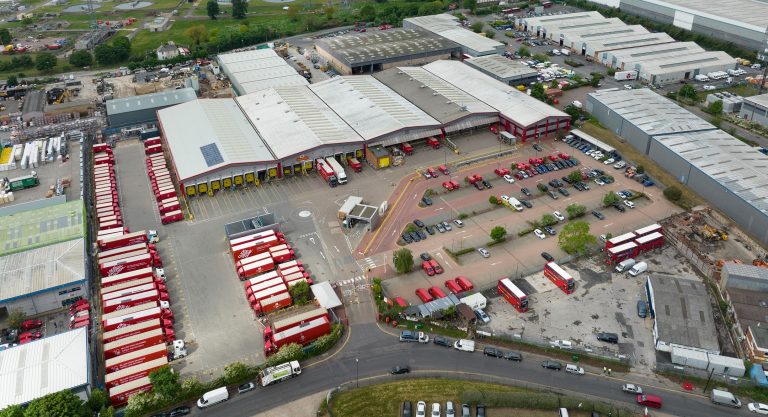
Prologis, a leading owner and developer of UK logistics real estate, has continued its focus of strategic investments in London and the South East markets with the acquisition of two additional sites at Erith and Croydon.   Totalling over 330,000 sq. ft. on 20.4 acres, the two distribution centres are let to Ocado and Royal Mail and form key parts of their distribution networks, being two of the largest low density last mile logistic facilities inside the M25.  The assets, on Church Manorway, Erith and Beddington Farm Road, Croydon are located in two London markets that continue to see excellent customer demand whilst servicing significant, growing conurbations.  Erith is considered a major growth area for jobs, transport and industry, providing easy access to central London and M25 connectivity to the wider motorway network, whilst Croydon is a densely populated south London location popular with a number of last mile delivery customers. The purchases of both assets will add to Prologis’ existing holdings in these markets.  Paul Weston, Regional Head of Prologis UK:   “Our purchase of these two prime distribution facilities shows our continued confidence in the UK’s logistic sector and reconfirms our strategic focus in London and the South East. We welcome Ocado as a new customer and look forward to working with them. It’s great to expand our strong relationship with Royal Mail at a location well known to both parties.”  Erith was acquired from a UK fund, whilst Croydon was acquired from a segregated mandate client of CTI Real Estate. Prologis was advised by JLL on Erith and Knight Frank on Croydon. Gerald Eve and Acre Capital advised the vendors.  Matthew Howard, Fund Manager at CTI Real Estate Partners:  “We are delighted with the sale of Mail Centre Croydon, which continues our client strategy of recycling capital into a more diversified pool of higher yielding assets.”

Read More »

New-build price growth outperforms existing homes by 20%

The latest research by Unlatch, new homes progression and aftercare platform for developers and housebuilders, reveals that the annual price growth of British new-build homes has outperformed existing homes by almost 20% in the past year.  Homebuyers and professional property investors alike are keen to buy homes that can promise good investment returns. So what is their best, most reliable option? Should they be buying new-build homes or investing instead in existing properties? The current average price of an existing home in Britain is £272,851 having increased by 8% in the last year.   At the same time, the average price of a new-build has risen from £330,662 to £422,414, marking annual growth of 28%. New-builds in Britain have, therefore, outperformed existing homes by 19% when it comes to house price performance. But where in Britain do new-builds offer the very best returns when compared to the performance of existing homes? On a regional level, new-builds have performed most strongly against existing homes in Wales. The average new-build home in Wales has seen its value increase by 34% in the past year, rising from £246,740 to £331,159. This growth is 23% higher than that of existing homes which, in the same time period, saw their value increase by 11% from £181,199 to £201,633.  In Scotland, new-build growth of 29% compared to existing property growth of 7% – a difference of 22% – while in the East Midlands, South West, and North East respectively, new-build growth outperformed existing homes by 21%.  In the East of England, South East, Yorkshire & Humber, and West Midlands, new-build price performance is 20% better than existing homes, in the North West the difference is 19%, and in London, it’s 15%.  On a local authority level, new-builds are outperforming older properties by the largest margin in Merthyr Tydfil, Wales, up by 38% in the past year, 18% higher than existing homes which have seen their value increase by 20%.  This is followed by Scotland’s Western Isles where new-build growth of 35% matches against 17% growth for older homes – a difference of 18%. In East Ayrshire, East Lothian, and Glasgow new-build performance is 17% higher than existing properties.  Richmond ranks top in London, where new-build house prices have outperformed existing by 14%, while Bexley (12%), Camden (12%), Hackney (12%) and Tower Hamlets (12%) also rank amongst the highest in the capital. Lee Martin, Head of UK for Unlatch says: “New-build homes are increasingly desirable. Their overall finish and quality has improved dramatically over the past decade and they are vastly better than older properties when it comes to energy efficiency and fuel consumption. In today’s world, this looms large in homebuyers’ minds, even more so since the cost of living crisis kicked in. This is not only true for end users, but also for investors alike. Investors on the whole do prefer to go for a new build property for many reasons, one more being that by the time said investor completes on their purchase, the agent usually already has a tenant lined up to move in; meaning no void periods.  In a fast, frantic, and highly competitive housing market, new-builds also offer more reliability in terms of the actual purchase itself. Fewer sales are subject to falling through as a result of unwanted discoveries during the surveying process, as well as the fact there is no dreaded chain to contend with.  Of course, this heightened attraction does mean that new-builds have seen a far greater level of house price growth when compared to the existing market, but the flip side to this is the fact they also make a far sounder investment.” Data tables Data tables and sources can be viewed online, here.

Read More »

Ox Tools UK Reaps Rewards of Cloud ERP Solution and Recommends Global Strategy to Other Subsidiary Businesses 

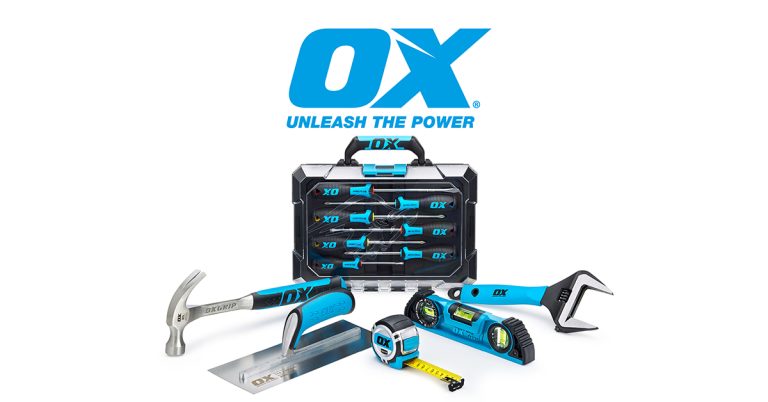
Ox Tools, a world-leading manufacturer of hand tools, diamond tools, workwear and safety products, is delighted with its decision to implement a complex digital transformation project with business software partner BrightBridge, and urges other businesses in a similar siloed position to make the switch. One year after the ‘go-live’ of its cloud-based Enterprise Resource Planning (ERP) solution – NetSuite OneWorld – the firm is not only reaping the rewards of consolidating disparate financial, stock and CRM systems, but also the global firm has visibility over all its subsidiaries. Plus, Ox Tools UK no longer requires significant resource to tend on-premise servers. Donovan Payne, Director at Ox Tools, explained: “By having one central solution – NetSuite – we have naturally benefitted from more automated, slicker and accurate processes and accessing it from smartphones on the move is extremely useful. However, our primary aim was to gain visibility over each corner of the business and be 100 per cent sure that the data painted the true picture – with BrightBridge’s expertise we have certainly achieved that. “The UK subsidiary was previously siloed from the rest of the global business in its architecture; now having spent 12-months having consolidated accounts with the other OX regions we can see, predict and strategically do so much more. I would recommend any companies in a similar position to plan their global platform transformation – it has been a game changer and a move that has become increasingly vital as global economic turmoil and supply chain challenges continue.” Ox Tools’ UK subsidiary is in-part driven by operations, decision making, and in-house software developed in Australia, which is where the company was founded in 1974. Therefore, the design and execution programme for the chosen solution – Oracle NetSuite – required meticulous planning, open communication with teams across the world and reliable connectivity with multiple systems. BrightBridge is the only European partner of both Oracle NetSuite and leading API integration platform Jitterbit, so Ox Tools was confident in its ability to unify all external system data with the cloud ERP solution rapidly. The data assimilation included areas such as pricing and inventory, and Jitterbit negated weeks of intricate coding. Furthermore, BrightBridge has a wealth of experience with resolving rebate challenges through automation and has also developed a custom-made interface for managing multiple shipping carriers within NetSuite; both solutions were integral to streamlining Ox Tools’ business processes, creating greater efficiencies and negating the potential for manual errors. Ox Tools selected Oracle NetSuite because it was already implemented across the other subsidiaries. However, finding the right expert partner to design and execute the sophisticated system was a more demanding process. Ox Tools turned to BrightBridge due to the Leicestershire-based company’s focus on clients within manufacturing, retail and distribution. Donovan added: “We were focused on the solution benefits at the start of our digital transformation project, and the company already had confidence in NetSuite. However, we quickly realised that it was equally as important, if not more, for our UK implementation partner to have specific sector expertise, possess in-depth knowledge about third-party tool integration and be easy to get along with. When we met the BrightBridge team, we simply knew the partnership was the right fit for us.”    Ian Robertson, Sales and Marketing Director at BrightBridge, said: “Ox Tools came to us with a number of specific implementation and integration challenges at a time when they were also feeling the challenge of not being able to find the right solution provider. We were able to quickly illustrate our team’s skills and experience of working on similar projects as well as build that all important rapport, giving them the utmost confidence in our ability to deliver. “Our unique NetSuite app partnerships and own custom-made solutions allowed us to design the architecture rapidly and to confidently drive the project forward for Ox Tools. This digital transformation project is a great example of productivity enhancement and global strategic change we’re delighted Ox Tools are just as happy with the architecture 12-months on.” For more information, please visit www.brightbridgesolutions.com, or follow BrightBridge on Twitter – @brightbridge_uk – or LinkedIn. Learn about Ox Tools by visiting the company’s website, Twitter or LinkedIn.

Read More »