bdc magazine

hyperTunnel to debut at the World Tunnelling Congress and return to BTS

British underground construction innovator hyperTunnel will exhibit for the first time at the World Tunnelling Congress (WTC), 2-8 September 2022, in Copenhagen, Denmark and return to the British Tunnelling Society (BTS) Conference & Exhibition in London on 11-12 October, after formally launching its method to transform underground construction at the

Read More »

A guide to accounting for construction professionals

Accounting will always be a key part of running a business, regardless of the industry you’re in. But when it comes to construction, accountancy might seem like the least of your concerns. When you need to adhere to strict working practices while managing challenging projects that could pose a risk

Read More »

Hayfield Invests in MMC to Accelerate Build Programmes

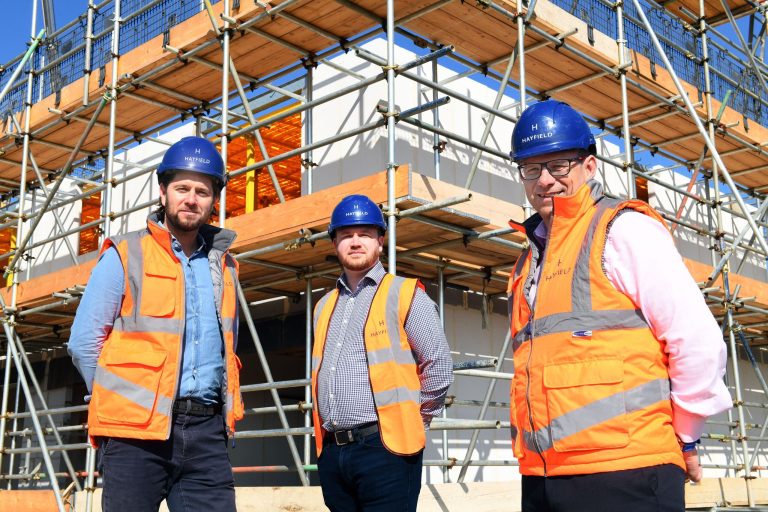
Hayfield has made a significant investment in Modern Methods of Construction (MMC) across six of its live development sites, as the multi-award-winning developer targets a turnover of £150m during 2022. A panelised system utilising large aircrete blocks is being used at five Hayfield developments, while a trial of Structural Insulated

Read More »

£17m zero carbon office retrofit fast taking shape

1000 Aztec West, the South West’s first net zero carbon  in operation  out-of-town development, is fast taking shape. Designed by Scott Brownrigg for CEG, 1000 Aztec West near Bristol is set to become a state-of-the-art working environment which promotes inclusivity, sustainability and wellbeing, creating a new benchmark for office spaces

Read More »

RENDERING: FROM CONCEPTION TO COMPLETION

Meeting a high standing of quality is essential if we are to create buildings that are fit for purpose. While it’s the responsibility of all parties involved in a project to ensure products are installed correctly, it starts with the manufacturer. Matt Allen, Head of Sales at Sika Building Finishing,

Read More »

PERMAGROUP DEBUTS SLICK ROOFING SOLUTION AT UNIVERSITY OF LEEDS

A CHALLENGING roofing project has been successfully completed using a brand new liquid coating system, PermaRoof 500 (P500), developed by leading supplier of innovative building products PermaRoof Commercial, part of PermaGroup. The University of Leeds is the first PermaRoof Commercial client to benefit from the P500 liquid polyurethane overlay –

Read More »

Daisy Park plans go in for planning approval

A formal planning application has now been submitted to West Lothian Council to create a major new park on the site of the historic Winchburgh Brickworks.  Daisy Park, which is part of the approved masterplan for Winchburgh, sits adjacent to the Union Canal and the new marina in the heart

Read More »
Latest Issue
Issue 335 : Dec 2025

bdc magazine

hyperTunnel to debut at the World Tunnelling Congress and return to BTS

British underground construction innovator hyperTunnel will exhibit for the first time at the World Tunnelling Congress (WTC), 2-8 September 2022, in Copenhagen, Denmark and return to the British Tunnelling Society (BTS) Conference & Exhibition in London on 11-12 October, after formally launching its method to transform underground construction at the same event in 2021.  At both shows, hyperTunnel will present a working demonstration of a section of its robot-led swarm construction platform. Visitors will be able to see ‘hyperBots’ working from within an underground pipe to conduct their various programmed tasks as part of a grid. The method, via which complete structures are built according to a digital twin, is designed to be substantially faster, safer, more economical and more environmentally friendly than current techniques.  “Our attendance at both shows reflects widespread industry acceptance of and interest in hyperTunnel’s solutions, from around the world. There is a genuine awakening going on in relation to the use of robots, digital twins and AI in construction – it’s not exclusive territory to hyperTunnel of course, but our advanced integrated package is now established as offering what the tunnelling and construction industries are aiming for in many existing and new applications,” said Jeremy Hammond, co-CEO and co-Founder of hyperTunnel.  hyperTunnel has grown significantly during the past 12 months and enjoyed a string of successes in terms of new investments, industry partnerships, talent acquisition, the completion of a full-size pilot tunnel in the UK.   In June hyperTunnel received a financial investment from VINCI to support business expansion and further develop the hyperTunnel method in practical situations. hyperTunnel was also selected by The European Innovation Council (EIC), Europe’s flagship innovation programme to identify, develop and scale up breakthrough technologies and game-changing innovations, to receive funding of 1.88 million Euros under its EIC Accelerator scheme.   hyperTunnel has been picked by Innovate UK to join its Global Business Innovation Programme. It has also won Startup of the Year at this year’s Construction Technology Awards in Dubai. In 2021, hyperTunnel was highlighted as a Top 50 Contech Startup and was among 10 winners of the global Construction Startup Competition.  hyperTunnel continues to attract outstanding talent to the business: Sven Asmus, formerly Chief Technology Officer (CTO) at MBCC Group, is Director of Chemistry & Materials Development; Tao Xinghui, a leader in the field of data science, and Edge-to-Cloud AI, has been appointed Head of AI & Digital Twin; Sid Shaikh an ex Ocado, GSK and Mars technology innovator has been hired as hyperTunnel’s new Head of Robotics. At Ocado, Sid and his team developed and delivered into production the first three generations of the Ocado Smart Platform, a very similar system in principle, to the hyperTunnel method.  At the forthcoming World Tunnelling Congress (WTC) and the British Tunnelling Society (BTS) events, hyperTunnel will present a working demonstration of a section of its robot-led swarm construction platform

Read More »

A guide to accounting for construction professionals

Accounting will always be a key part of running a business, regardless of the industry you’re in. But when it comes to construction, accountancy might seem like the least of your concerns. When you need to adhere to strict working practices while managing challenging projects that could pose a risk to the health and safety of your workers, it’s easy to push paying your taxes to the back of your mind. However, accounting encompasses much more than simply filing a tax return and a combination of the right tools and a solid organisational system can put your business in good stead to not only survive but succeed. If you’re a construction professional working as a contractor or on the verge of starting your own business within the industry, then this guide to accounting will help you to get started on the right path. The importance of accounting in construction Business structures in the construction industry are variable, with every big project hiring a different combination of contractors and full-time staff. This can make paying the right amount of tax and keeping track of payroll challenging, especially if contractors are being hired on a day-to-day basis and subcontractors are routinely brought in to support with specialised tasks. This level of changeability requires construction professionals to pay close attention to their finances, as failing to maintain their accounts will result in missed payments, cash flow problems and, eventually, debt or shortages in capital. This contractor’s guide to ask for deposits can help professionals mitigate some of these costs, but a robust payroll system is the only real way to prevent shortfalls.  Getting started with accounting The earlier you begin implementing an effective accounting system, the easier it will be to avoid all the challenges that come with working in the construction industry. Some of the basic considerations you must take include: Investing in the right tools Taking a manual approach to accounting in an industry that’s as changeable and multifaceted as construction will result in wasted time and complications arising from human error and ineffective organisation. Digital tools such as accounting software are by far the best way to manage not only your day-to-day finances, but your annual tax return, monthly payroll, and cash flow. Due to the high number of contractors you’re likely to be working with, it’s smart to invest in an accounting solution that can take care of invoicing, send out payment reminders and log the details of every worker for more efficient tax calculations. Not only will this ensure that you are always getting paid on time, but it will reduce the number of queries and complaints from contractors that either haven’t received any money or want to know when they will. If you aren’t sure whether accounting software is for you, you could get started with a builders invoice template, which will help you to improve payment communications through formatting. Over time, you can decide to integrate templates with software for a more seamless process. While accounting software does give you the power to manage your finances yourself, you may also want to consider hiring a bookkeeper or accountant as your business grows. This will help you to make full use of any expenses or allowances that are available to you, saving you tax in the long run. Understanding the regulations The construction industry is often subject to specific tax laws and regulations that can make its accounting processes more involved than they are in other sectors. These will vary depending on the country you’re based in and the type of project you’re undertaking. If you’re primarily carrying out work in the UK, you will need to familiarise yourself with the Construction Industry Scheme, which stipulates contractors are responsible for collecting any tax owed from subcontractors on the government’s behalf. This means that not only are they responsible for paying their own tax, but they also need to calculate and pay taxes for the contractors they hire, not unlike an employer would. In most other industries, contractors or freelancers are responsible for only their own taxes, which lessens their accountancy burden. In addition to construction-specific regulations, you will need to decide on the best structure for your business. The way you file your taxes will change depending on whether you’re a limited company, sole proprietor or part of a partnership. Taking out insurance Insurance might not seem like it’s directly linked to your accounting processes, but it will certainly help you maintain your business’s financial health should anything go wrong. You may need to take out multiple types of insurance in the event that there’s an accident on the construction site you’re working on and a contractor or employee is hurt. It can also be a good idea to insure expensive equipment or machinery for accidental damage. Without insurance, an accident could spell the end of your business, regardless of how well you’ve been managing your accounts and cash flow. Paying attention to your cash flow Many construction businesses have experienced financial difficulties due to a poorly managed cash flow. This is partially due to the amount it takes for some construction projects to be completed. If you’re going to be working on a site for many months or the best part of a year, there’s an increased chance of your client running out of funds, pulling out of the project or even going bankrupt. If you’ve already invested in all the materials and equipment needed to complete the work, you may find it difficult to take on new work if you lack funds after receiving only partial payment. To avoid cash flow issues, it’s important to spread payments across a project, sending invoices to your clients regularly and asking for advance payments instead of investing your own capital to buy equipment and materials. Accounting software will help you to keep track of your income and expenses, highlighting when it’s time to remind your client to make a payment or press pause on ongoing work. Take

Read More »

Balfour Beatty Living Places secures £176 million highways maintenance contract for Buckinghamshire Council

Balfour Beatty Living Places today announces that it has been awarded an eight-year, £176 million contract by Buckinghamshire Council for the maintenance of highways assets across the county. There is an option to extend the contract for a further four years. Balfour Beatty Living Places will work closely and collaboratively alongside the Council to provide a safe and resilient local road network, maintaining over 5,000 kilometres of highways, carriageways, footpaths, and cycle routes. In addition, Balfour Beatty Living Places will also be responsible for delivering winter maintenance services for the local community and travelling public, as well as the operation and maintenance of the county’s street lighting and key community assets including gullies and traffic signals.   The company will harness innovative solutions and materials such as reused rubber asphalt when laying new road surfaces to drive down carbon emissions and reduce waste, as well as installing electric charging points at its depots to facilitate its electric vehicle fleet, in line with Balfour Beatty’s sustainability strategy, “Building New Futures.” To ensure the continuous effective maintenance of highways assets across the county, Balfour Beatty Living Places will also establish an ‘Operational Efficiency Hub’ – a data-driven Hub to monitor all activities in real-time, track progress of works and capture data to drive further efficiencies across the network. Balfour Beatty Living Places will also dedicate 50% of its spend to local businesses, and as part of its commitment to The 5% Club, will ensure a minimum of 5% of its workforce comprises of graduates, apprentices and trainees. Steve Helliwell, Managing Director of Balfour Beatty Living Places, said: “Today’s announcement builds on our longstanding expertise and commitment to providing best-in-class highways maintenance services, whilst offering customer-focused solutions in a collaborative partnership. “Wherever we operate, we go above and beyond for our customers with an unrelenting focus on leaving a lasting positive legacy for the communities we serve; working with local supply chain partners whilst also creating numerous apprenticeship and graduate opportunities.” Councillor Steven Broadbent, Buckinghamshire Council’s Cabinet Member for Transport said: “We are pleased that, after a rigorous selection process, Balfour Beatty Living Places will be working with Buckinghamshire Council to provide a new model of highways services that meets our aspirations for a faster and more responsive service to best meet the needs of residents and road users. With their impressive track record of managing contracts of this nature, we are keen to embrace their expertise and experience, whilst realising their delivery of innovation and quality onto our network. “We know how important the condition of our roads and footpaths is for local residents and this new contract will allow us to map out a detailed strategic plan for the future. We are focused on channelling our resources into making lasting improvements, whilst at the same time standing by our commitment to cut our carbon emissions and take the lead in adopting new and innovative techniques that achieve value for money.” The contract commences on 1st April 2023.

Read More »

How Technology Is Aiding In The Rehabbing of Historic Architecture

Technology is often blamed for destroying historic architecture, but in some cases, it can be used to help preserve and restore these buildings. In this article, we will discuss how technology is being used to aid in the rehabilitation of historic architecture. We will also discuss the benefits of using technology in this restoration project. Helping To Preserve Our Cultural Heritage Rehabilitating historic architecture is a necessary process that helps preserve our cultural heritage. Historic buildings are a valuable part of our built environment and represent an essential part of our collective history. By rehabilitating these buildings, tech expert Mark Stiffler believes we can maintain their architectural integrity and ensure that they will be able to stand for future generations. The rehabilitation of historic architecture also positively impacts the local economy. It can create jobs, revitalize communities, and attract tourists. In addition, the reuse of existing buildings can help to reduce our carbon footprint and conserve natural resources. Therefore, the rehabilitation of historic architecture is a necessary process that helps preserve our cultural heritage. Technology Makes Rehabilitation Easier And More Affordable While many challenges are involved in rehabilitating historic buildings, technology has made many aspects of the process easier and more affordable than ever before. For example, advances in laser scanning and 3D modeling have made it possible to create accurate digital representations of existing structures. This data can be used to develop virtual reality simulations that allow stakeholders to explore different design options and make informed decisions about the project’s direction. In addition, new construction techniques and materials have made it possible to replicate or restore original features with greater precision and at a lower cost than ever before. As a result, technology has played a vital role in ensuring that our shared heritage can be preserved for future generations. Using 3D Printing To Create Replicas Tech expert Mark Stiffler noticed that 3D printing could be used to create precise replicas of missing or damaged architectural elements. This technology can create detailed models of complex shapes, which can then be used to develop full-scale prototypes. Additionally, 3D printing can make molds for casting, which can be used to create exact replicas of the original piece. This process can be used to repair or replace missing or damaged pieces of architecture, such as statues, columns, or other ornamental elements. In addition, 3D printing can be used to create customized facades or other factors that are not readily available. As a result, this technology offers a versatile and precise solution for creating missing or damaged architectural elements. The Use Of Drones In Historic Architecture One of the most exciting applications of technology in historical architecture is the use of drones. Drones are unmanned aerial vehicles (UAVs) that can be equipped with a variety of cameras and sensors. They have been used extensively recently to capture detailed images and video footage of hard-to-reach places. This data can then create accurate three-dimensional models of buildings or sites. In the past, this type of data would have been complicated and expensive to obtain. However, thanks to drones, it is now possible to gather this data quickly and affordably. This information can help plan and execute rehabilitation projects more accurately and precisely. CAD Software Easily Creates Plans And Drawings Architects and engineers frequently use computer-aided design (CAD) software to create detailed plans and drawings for construction projects. However, CAD software can also help restore old buildings to their original condition. By creating a 3D model of the building, CAD software can be used to identify areas that need to be repaired or rebuilt. In addition, CAD software can be used to create accurate plans for restoration work, which can help to ensure that the work is carried out correctly and that the finished product closely resembles the original building. As a result, CAD software can be a valuable tool for those undertaking the challenging task of restoring an old building. Conclusion Rehabilitating historic architecture is a necessary process that helps preserve our cultural heritage. However, it can be difficult and expensive, especially when done correctly. Thankfully, technology has made many aspects of the rehabilitation process more accessible and more affordable than ever before. For example, computer-aided design (CAD) software can be used to help restore old buildings to their original condition. Additionally, drones can capture detailed images and video footage of hard-to-reach places. Technology can preserve our shared heritage for future generations.

Read More »

Hayfield Invests in MMC to Accelerate Build Programmes

Hayfield has made a significant investment in Modern Methods of Construction (MMC) across six of its live development sites, as the multi-award-winning developer targets a turnover of £150m during 2022. A panelised system utilising large aircrete blocks is being used at five Hayfield developments, while a trial of Structural Insulated Panels (SIPs) is underway at another scheme. The introduction of MMC is accelerating Hayfield’s build timeframes, delivering greater programme and cost certainty, while alleviating the risks of material and labour shortages. Andy Morris, Managing Director of Hayfield said: “Making a significant investment in MMC is a fundamental strand of our ESG strategy. We are creating programme efficiencies and reducing CO2 emissions, while continuing to deliver beautiful, handcrafted homes to our customers. Some developers opt for modern exteriors when using MMC, but our architecture is far more traditional in style, as that’s what our customers prefer. “The panelised system we are using at five Hayfield developments is the closest MMC alternative to traditional brick and block masonry construction. It is enabling us to improve build pace by seven weeks. This is not only increasing our production rate and assisting with our growth plans, it is also opening up more land opportunities. To demonstrate our commitment to MMC and offsite construction, I am thrilled to report we have established an internal MMC committee to explore and review further opportunities.” The panelised ‘I-House’ MMC system is being utilised at Hayfield Park in Bromham and Hayfield Lakes in Clophill, which are both in Bedfordshire. It is also being installed at Hayfield’s two live Buckinghamshire schemes; Hayfield Walk in Hanslope, and Hayfield Oaks in Woburn Sands. The fifth live scheme selected for this MMC approach is Hayfield Grove in the Worcestershire village of Hallow, which is the housebuilder’s first EPC-A rated development. An alternative MMC trial utilising SIPs is underway at the final phase of Hayfield Place in the Bedfordshire village of Silsoe.   Hayfield is proactively installing air source heat pumps, underfloor heating, EV fast-charging points, 100% renewable energy, and fibre optic broadband into all new and upcoming developments, in line with its zero-carbon-ready specification. The new investment in MMC is in line with Hayfield seeking to deliver 350 homes during 2022. The company is gearing up to construct 500 homes annually, supported by a portfolio of sites to enable visible production into the future.

Read More »

£17m zero carbon office retrofit fast taking shape

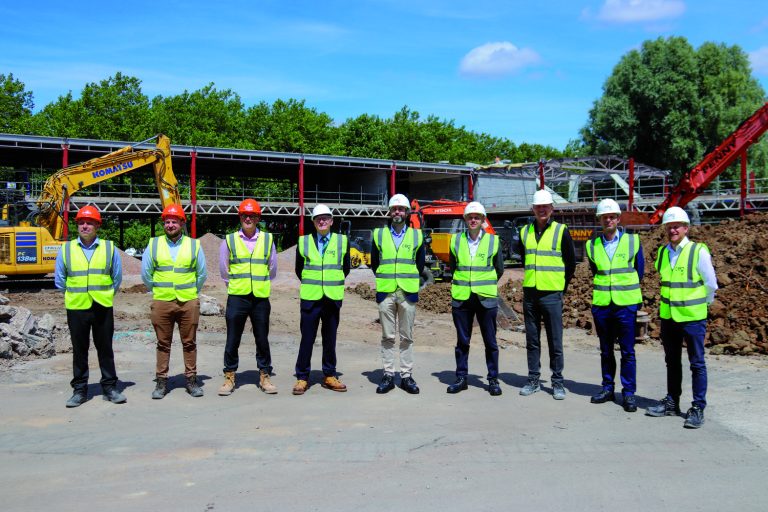
1000 Aztec West, the South West’s first net zero carbon  in operation  out-of-town development, is fast taking shape. Designed by Scott Brownrigg for CEG, 1000 Aztec West near Bristol is set to become a state-of-the-art working environment which promotes inclusivity, sustainability and wellbeing, creating a new benchmark for office spaces in the UK. South Gloucestershire council leader Toby Savage has visited the site to see the rapid progress of the £17m transformation which is being delivered by Beard Construction. The structure’s  existing 1980s footings, frame and building structure  have been  retained,  saving some 1.7 million kg of carbon and creating a pathway to a net zero carbon development. The savings have been made by a clever conversion of the existing steel frame and much of the preparatory work was devoted to shot-blasting a cement fire treatment from the steel, which was then given a rust-proof coating. With the steel skeleton work complete, the existing roof will be removed to create a new floor and roof, which will see the capacity of the building grow from 38,000 sq ft to 80,000 sq ft, creating space for an 850-strong workforce. Councillor Savage, South Gloucestershire Council Leader and cabinet member for the local economy, said: “South Gloucestershire is the economic powerhouse of the West of England  and  is a fantastic place  to live, work and base a business. We welcome CEG’s confidence in this location, which, thanks to its excellent connectivity, is booming. “This building is being re-developed and modernised with sustainability in mind and is in line with our own ambitious goal of tackling the climate emergency by becoming carbon neutral by 2030. The 1000 Aztec West redevelopment fits into a wider picture of significant investment in office, residential and leisure facilities in this part of our district – from the thousands of new homes being built on the former Filton Airfield, to nearby landmark leisure facilities like surfing centre The Wave, Bristol Zoo’s Wild Place and the recently opened ice rink Planet Ice.” Paul Richardson, investment manager at CEG, said: “The development delivers the key requirements of contemporary tenants – environmental sustainability, staff wellbeing, on-site facilities and data connectivity, all of which respond to the requirements of businesses seeking to provide with people with the best  workspace environment.” Ed Hayden, Director at Scott Brownrigg, said:  “It’s great to visit the site with Councillor Toby Savage and see the work progressing on our Aztec 1000 design for CEG. The lakeside setting and carbon conscious design will make this a really exciting new addition to the Park.” Designed to meet BREEAM Excellent and EPC A, 1000 Aztec West will be powered by renewable energy and use energy-efficient heating, cooling and lighting systems. A striking three-storey atrium will be added to the centre of the stunning new, all-glass structure which will include a secure cycle block with male and female showers and changing facilities to encourage sustainable travel. A 1,300 sq ft gym and wellness facility will be the heartbeat of the building, with daily gym and yoga classes to help tenants balance their work and leisure commitments. Attractive indoor spaces will provide places to eat, meet, drink and work, with access to Wi-Fi and plug-in points. Outside,  a new café, decked terrace  area  and rooftop terraces will overlook Aztec West’s existing lake and parkland. Completion  of  the  project  is  expected  in  summer  2023.  More  information  is  available  at: www.1000aztecwest.co.uk

Read More »

RENDERING: FROM CONCEPTION TO COMPLETION

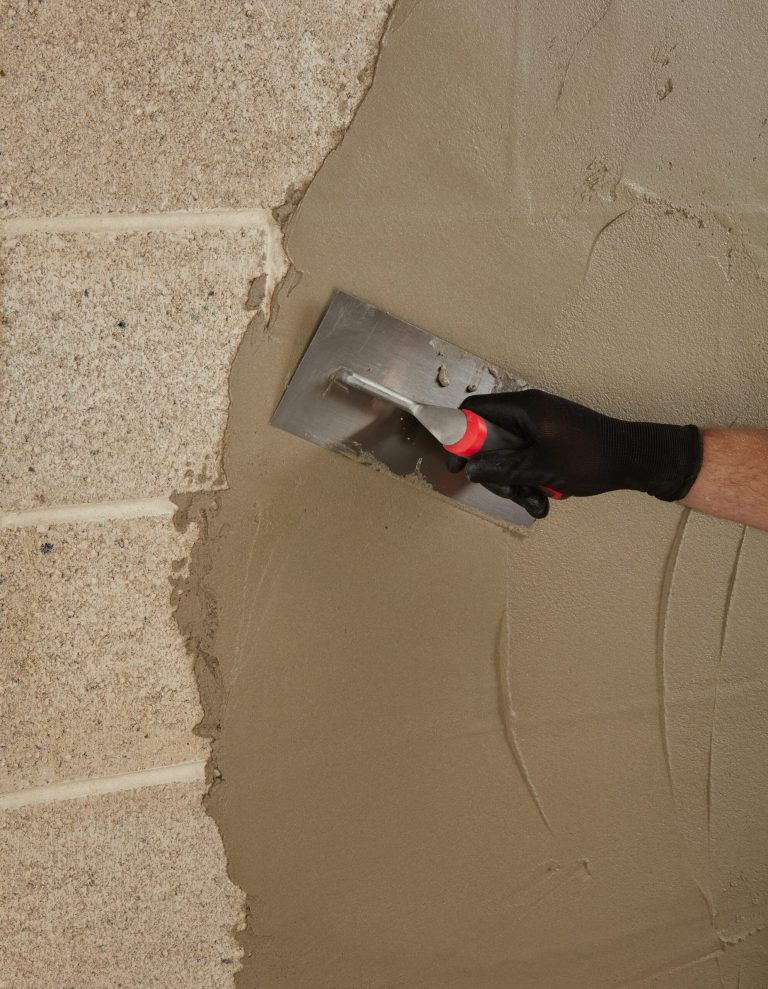
Meeting a high standing of quality is essential if we are to create buildings that are fit for purpose. While it’s the responsibility of all parties involved in a project to ensure products are installed correctly, it starts with the manufacturer. Matt Allen, Head of Sales at Sika Building Finishing, outlines how comprehensive technical support and specification guidance will make the difference when it comes to the installation of render products on site. Regardless of the material, the outer skin of any building is its first line of defence and must maintain long-term performance. When it comes to render, ensuring you choose the right solution is key but equally paying close attention to small details will go a long way to ensure the render remains fit for purpose during its lifetime. It’s why the support and knowledge provided by the render manufacturer – from design to application to issuing warranties – will play a huge part in a successful render application. At Sika Building Finishing, we can guide specifiers on that journey and it begins at the design and specification stage. Our dedicated specification managers are on hand from the start to ensure each individual requirement is met, with site support and training being made available through the entire project journey. We will talk you through any challenges, as well provide a full specification and maintenance guide for any Sika building finishing system on offer, whether it is mineral, lime, thin coat or EWI. At specification, we are able to offer a bespoke application depending on the needs that are identified, and this would then link to location, which will vary based on where the project is located in the country. A good render should be capable of providing weather protection that meets the different zones and different exposures across the UK. For example, the southwest is zone four (very severe weather rating) which will largely require 20mm of render. We can also offer bespoke specifications based on location to ensure a client will get the correct thickness of render. Furthermore, our suite of typical construction details covers a range of standard and non-standard substrates and systems. The skills and expertise of the applicator is also very important, which is why their appointment is a crucial consideration. We can support the client by putting people forward who are approved or accredited to use the Parex systems. Failure to employ a skilled professional can lead to building defects due to poor installation and workmanship. We can also be present at kick-off meetings to provide further visibility and support on the rendering journey. In the case of larger projects, we can visit sites every four to six weeks to assess the progress and answer any questions that are required. On completion, we will be there to issue a warranty on the materials that have been applied subject to approval and acceptance. Available from local Business Development Managers, the Sika Parex Housebuilder Pack outlines the “complete” package to customers and specifiers with industry sector experts available to provide unsurpassed levels of free technical advice, specifications and CAD details. If you partner with Sika Building Finishing, we will take any risk away so that the building you have created will get the desired result. Our comprehensive technical support and specification guidance will ensure a quality specification that meets the very highest standards each and every time.

Read More »

PERMAGROUP DEBUTS SLICK ROOFING SOLUTION AT UNIVERSITY OF LEEDS

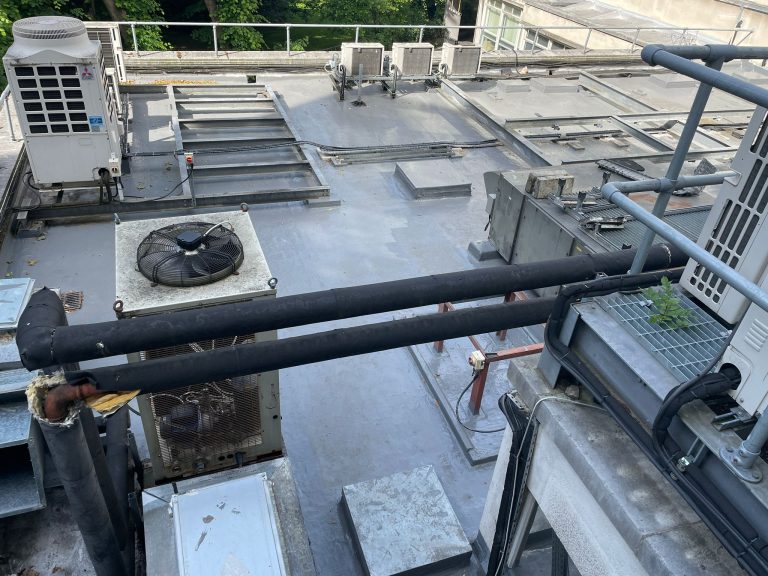
A CHALLENGING roofing project has been successfully completed using a brand new liquid coating system, PermaRoof 500 (P500), developed by leading supplier of innovative building products PermaRoof Commercial, part of PermaGroup. The University of Leeds is the first PermaRoof Commercial client to benefit from the P500 liquid polyurethane overlay – a highly elastomeric waterproofing solution. The project, which was started and completed in June 2022, involved coating approximately 250m2 of the original asphalt roof of the helium recovery suite at the university’s Woodhouse site, due to general weathering causing a number of failures to the roof. Sunny Lotay, national commercial manager at PermaRoof, said: “The P500 system successfully tackled major challenges the roof presented, as there was a high number of plant units and other obstructions, and a complex, uneven surface to contend with. The challenge caused by the increased obstacles meant the liquid coating system was the best choice for the job because of its adaptability to be installed in a single layer with excellent adhesion to all types of surfaces.” PermaRoof Commerical was initially contacted in 2021 by the University of Leed’s technical officer, Chris Wade. Sunny Lotay then undertook a thorough on-site survey, produced a roof condition report and recommended using the P500 system. Sunny also recommended a PermaRoof Registered Installer (PRI) contractor to undertake the works due to the in-depth training received by each PRI member ensuring a guaranteed high-quality installation. The innovative P500 system is a continuous waterproofing membrane that also serves as anti-skid and anti-slip surfacing. Liquid roofing allows for a much better fit within a complex area, and its rapid curing means it is resistant to rain within 30 minutes of application with only one layer applied. Sunny added: “It was fantastic to see the system in use for the first time and I am pleased it provided the ideal solution for our client. The project was completed quickly with minimal issues and the roof now has a life expectancy of 25 years. All roofs should be able to stand the test of weather and time, particularly for important educational and research facilities.” Samuel Moore, managing director at Samuel Moore Roofing, was brought onto the project following a successful collaboration with PermaRoof Commercial previously at the new Hull ICU unit at Hull Hospital. Samuel said: “Following a full roof conditional report and meeting with Sunny and the building developer, Tilbury Douglas, we opted for the P500 liquid system as the best solution for this project. Our installers have undertaken rigorous training to become fully registered and be able to effectively install the system. “We were fully supported by PermaRoof from the outset with Sunny arranging the site surveys,meetings, and keeping us updated every step of the way. Other members of the PermaRoof team ensured delivery was taken care of and that the project ran smoothly. We absolutely loved installing the P500 system – it was so easy to use, and we are already pricing other projects to continue using it.” For more information on PermaRoof Commercial, please visit permaroofcommercial.co.uk or call 01773 608839.

Read More »

Brett Martin to cut buildings’ carbon footprint with products based on used cooking oil with ISCC certified product

Brett Martin is set to reduce the carbon footprint of buildings around the world with a remarkable new Polycarbonate glazing product largely based on bio-circular attributed material such as used cooking oil, produced in a ISCC Plus certified mass balanced approach. Called Marlon BioPlus, the new sheet offers a major carbon footprint reduction by cutting the use of fossil-based material by 70%. This raw material delivers an 84% decrease in carbon emissions and in addition Brett Martin achieves further reductions in carbon by producing the sheet using 100% renewable energy, generated at its own site. Marlon BioPlus has already achieved International Sustainability & Carbon accreditation with ISCC Plus certification. ISCC PLUS is a globally recognised sustainability certification program for bio-based and bio-circular (recycled) raw materials with a focus on the traceability of raw materials within the supply chain. What makes Marlon BioPlus unique is the combination of this certification and Brett Martin’s 100% onsite renewable energy which together represents a huge step towards a zero-carbon polycarbonate sheet. As the UK’s largest producer of polycarbonate roofing and facades Brett Martin supplies high profile projects as diverse as London’s Royal College of Art or Manchester’s Old Trafford stadium as well as a wide range of commercial and industrial buildings. This new low carbon alternative retains all the physical and performance properties of the company’s other Polycarbonate ranges and will be available to be specified in any Brett Martin’s Marlon polycarbonate multiwall, corrugated or flat sheets for use in roofs and walls. Employing over 1,000 people in total and with sales of £220million, Brett Martin is already one of Europe’s largest plastic sheet producers for the construction industry, and the new range is expected to create strong demand from a construction market eager to reduce its environmental impact. Brett Martin Director, Paul Martin said: “The drive for sustainable, carbon neutral plastic materials is progressing well, and our launch of Marlon BioPlus is the latest milestone in our journey to that end. Our extensive investment in renewable energy at our Mallusk site is unique in our industry and an important part of our plan. We extrude the sheet using energy generated from our own wind turbine and dedicated solar farm at Mallusk.” “This development of this new product reflects the newest technology in the plastic industry to introduce bio-based material. The process, known as mass-balancing, certifies the input of the material through the production system, similar to the way renewable energy enters the power grid. Importantly, the material is a recycled source and therefore the bio-based content does not compete with food production. “And because the substitution occurs at the earliest stage of the resin production process, all the visual and mechanical properties of the finished sheet remain completely unchanged. So, we anticipate strong demand for the product which is soon to be available to the market globally and we will begin to see it being used in all kinds of buildings soon,” he adds. www.brettmartin.com

Read More »

Daisy Park plans go in for planning approval

A formal planning application has now been submitted to West Lothian Council to create a major new park on the site of the historic Winchburgh Brickworks.  Daisy Park, which is part of the approved masterplan for Winchburgh, sits adjacent to the Union Canal and the new marina in the heart of the Winchburgh community.   The designs for Daisy Park have been heavily influenced by the local community. They   respect and reflect the historic brickworks as well as retaining major areas of biodiversity. The park will also include a wild learning garden and viewing points across to the Forth bridges.   Daisy Park will become a central meeting place for and provide connections across the whole of the community by footpaths and cycle paths. Connecting directly onto the Union Canal, it can be easily used as a stop-off for those cycling the wider canal network.   John Hamilton, Chief Executive, Winchburgh Developments Ltd, commented: “This isn’t just another new park for the community. Its design has been significantly influenced by the community too. The plans have been subject to extensive consultation and the proposals that are going in for approval reflect the feedback that we had from many Winchburgh residents.   Some of the locals still remember the brickworks when it was operational and we know many of them are looking forward to seeing the old industrial site take on a new lease of life.”  The planning application can be viewed by searching for ‘daisy’ on the West Lothian Council planning portal. The extensive public consultation report detailing the full engagement and feedback activities are part of the submission.  As part of the plans, Winchburgh will welcome adventure waterpark operators, Wild Shore, to the site.   Wild Shore – which already operates in Dundee, Delamere (Cheshire), Liverpool and New Brighton – is set to develop a new facility within the park and create a major water-based visitor attraction. The people behind Wild Shore also operate Foxlake Adventures in East Lothian.  The park will become home to award-winning water adventure activities including cable wakeboarding, stand-up paddleboarding, swimming and for the first time in Scotland – their unique floating ropes course over water – Aqua Chimp. The facilities will also include changing rooms and a café.  Callum Mark, Director, Wild Shore, said: “‘We are delighted that the planning application has been submitted. The community consultation has been an invaluable exercise in gaining a unique insight into the village’s history, exciting future and the strong community driving expansion and change. We have been blown away by the support the project has received and can’t wait to start working with local schools, youth groups, voluntary organisations and the wider community to create a truly special facility for Winchburgh and beyond.”  Wild Shore Winchburgh will manage the quarry water under a 30-year agreement with Winchburgh Developments. It will be easily accessible within one hour for more than half of the Scottish population, especially with new junction connecting local roads with the M9 expected to be completed early next year.   Spanning 352 hectares, Winchburgh is one of the largest placemaking projects currently underway in the UK delivering at least 3,800 homes, improved transport links, employment opportunities, schools and outdoor spaces.   Any enquiries should be directed to Penny Lochhead, Community, Sports and Greenspace Manager on 07802 500991 or penny@winchburghdevelopments.com.   Callum Mark, Director, Wild Shore Winchburgh, 07507 331535 callum@wildshore.co.uk  Planning application: https://planning.westlothian.gov.uk/publicaccess/applicationDetails.do?activeTab=summary&keyVal=RFEYCYRJH4I00  The full design boards from the consultation can be seen at www.winchburghgreenspaces.co.uk  The artist impressions are courtesy of Optimised Environments Ltd (OPEN). 

Read More »