November 26, 2025
Clegg Construction bid manager receives Rising Star Award

Clegg Construction bid manager receives Rising Star Award

Clegg Construction bid manager Cian Webb has received a shining accolade after being highlighted as a Rising Star at the Considerate Constructors Scheme Awards. Cian, 24, who joined Clegg Construction six years ago as an apprentice, received his award at a gala evening held at the Natural History Museum in

Read More »
6,000 Years of History Unearthed Beneath the Houses of Parliament

6,000 Years of History Unearthed Beneath the Houses of Parliament

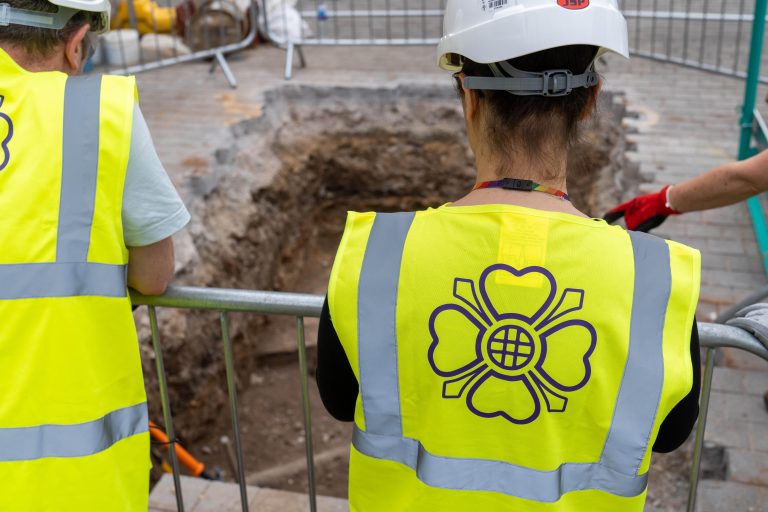
Archaeologists working at the Palace of Westminster have uncovered evidence of human activity dating back nearly 6,000 years – over a millennium older than the earliest earthworks at Stonehenge. The discovery includes more than 60 struck flint flakes, including one worked tool, likely dating to the late Mesolithic or early

Read More »
Challenges and Solutions in Oil and Gas Logistics Management

Challenges and Solutions in Oil and Gas Logistics Management

Efficient oil and gas logistics management is critical to ensuring smooth operations across exploration, production, and distribution. The sector faces unique challenges such as complex global supply chains, high operational costs, regulatory pressures, and limited visibility. Managing transportation, storage, and delivery in remote or offshore locations further complicates logistics planning.

Read More »
Latest Issue
Issue 335 : Dec 2025

November 26, 2025

Driving culture change in building safety and working effectively with the regulator

Driving culture change in building safety and working effectively with the regulator

By Vanessa Brandham CFIOSH, Health and Safety Director, Rendall & Rittner As the UK’s building safety landscape continues to evolve at pace, staying informed and responsive has never been more important. In my role at Rendall & Rittner, I see first-hand how the new regulatory environment is reshaping expectations across the property management sector and how vital it is that we all adapt to the changes with clarity and confidence. Delays within the Building Safety Regulator (BSR) are causing growing frustration throughout the industry. With one of the country’s largest portfolios of high-rise residential buildings, we have a unique vantage point on how these issues affect developers, landlords, leaseholders, RMCs, RTM companies, residents and managing agents. That is why we recently submitted evidence to the House of Lords inquiry examining how the regulator can overcome operational challenges and deliver greater consistency and efficiency. The BSR was established to ensure that higher-risk buildings are designed, constructed and managed with safety at the forefront. While the intent is clear and essential, its implementation has been far from straightforward. The combination of delays, inconsistent feedback and evolving requirements has resulted in uncertainty and added cost across the sector. A system with the capacity to assess safety cases and applications in a timely and consistent manner is urgently needed if we are to support the development of a genuinely safety-first culture. At Rendall & Rittner, we have invested significantly in our in-house safety capability so that we can guide clients through the complexities of the regime. Our experience across hundreds of buildings enables us to identify patterns, highlight inefficiencies and propose practical solutions. Working with the regulator in practice Higher-risk buildings of 18 metres and above must now pass through three gateways for new builds — planning, pre-construction and pre-occupation — while existing buildings require detailed safety case reports and a Building Assessment Certificate (BAC). However, in practice: • Gateway 2 applications are facing delays far beyond statutory timeframes, often 20–30 weeks or more, with a high proportion of submissions being rejected.• Safety case reports for existing buildings are receiving inconsistent or contradictory feedback, making it difficult for duty-holders to understand exactly what is required. Fewer than 50 BACs have been issued nationally out of more than 1,400 buildings called forward.• Day-to-day works requiring BSR approval in high-rise buildings are also subject to lengthy delays, with some applications exceeding 40 weeks. These challenges stem from the scale of change required. The BSR is a new organisation created in response to Grenfell, and the sector as a whole is still adjusting to the expanded obligations. Guidance has often been issued late, leading many stakeholders to act without full clarity. Limited public sector resource has further slowed reviews and approvals. Confusion around recoverable costs, the classification of emergency works and leaseholder protections has also resulted in complaints and uncertainty. Impact on housing delivery The gateway system is also having a direct impact on the delivery of new homes. High-rise buildings play a critical role in meeting national housing targets, but uncertainty in the process — coupled with delays to key building information submissions — has stalled sales, slowed construction and created further barriers for developers. Combined with the Act’s enhanced competency requirements across the supply chain, the impact is being felt at every stage of development. How we are supporting clients Recognising the scale of change, we developed one of the sector’s largest specialist health and safety teams, comprising 32 experts in building and fire safety. This enables us to prepare safety cases, oversee remediation projects and manage gateway submissions with consistency and rigour. Our structured approach — using standardised documentation and close collaboration with our panel of consultants — has enabled us to meet every regulatory deadline to date. Where the BSR’s feedback has been inconsistent, we adapt quickly and apply learning across our portfolio, ensuring clients receive the most up-to-date and practical guidance. We are also actively engaging at a national level. By providing detailed evidence to the House of Lords inquiry and offering direct feedback to the regulator, we are helping to highlight operational issues and influence improvements that will ultimately benefit the industry and residents alike. We are proud to be among the first managing agents to secure BACs for clients’ buildings, and progress on cladding remediation is accelerating as Homes England’s updated processes take effect. Looking ahead The regulatory landscape will continue to evolve. Recent announcements on shifting the BSR from the Health & Safety Executive to a standalone body sponsored by the Ministry of Housing, Communities and Local Government point to further structural reform — a move that may help unlock some of the delays and provide clearer accountability in the future. While the system remains complex and at times challenging, our commitment at Rendall & Rittner is clear: to provide clients with expert guidance, reliable compliance and the assurance that their buildings are being managed with the highest levels of safety and professionalism. By investing in specialist capability, sharing learning across a large and diverse portfolio and contributing actively to national discussion, we are helping to drive cultural change and strengthen safety standards across the sector — ultimately contributing to safer homes for all residents. Building, Design & Construction Magazine | The Choice of Industry Professionals

Read More »
Clegg Construction bid manager receives Rising Star Award

Clegg Construction bid manager receives Rising Star Award

Clegg Construction bid manager Cian Webb has received a shining accolade after being highlighted as a Rising Star at the Considerate Constructors Scheme Awards. Cian, 24, who joined Clegg Construction six years ago as an apprentice, received his award at a gala evening held at the Natural History Museum in London. MD of Clegg Construction Michael Sims said: “In his time at Clegg Construction, Cian has made a remarkable impact that sets him apart as a potential future leader in the construction industry. “He exudes the energy, curiosity and integrity that define a true rising star. He inspires others through his work ethic and commitment to excellence. It’s rare to find someone who combines talent, humility and drive the way Cian does. “We’re thrilled that he has been recognised in the national Considerate Constructors Scheme Awards as a Rising Star and congratulate him on his success.” After joining Clegg Construction’s Nottingham head office, Cian undertook a fully funded part-time Construction Management degree course at Nottingham Trent University. He quickly progressed from construction trainee to assistant site manager before making the move into the pre-construction department as an assistant bid manager. Following completion of his undergraduate degree in 2024, he was promoted to bid manager. Since then, Cian has contributed to all aspects of Clegg Construction’s tender submissions, working closely with key specialists in his team to develop robust and transparent tender proposals. Over the past 12 months he has been involved in successful bids totalling more than £100m. Clegg Construction pre-construction director Christian White said: “Since I have known Cian, he has poured himself into every opportunity and grown into someone we all rely on. His bids are always delivered to the highest standard and his natural drive to win sets him apart. Promoting Cian wasn’t just recognition of his skills – it was recognition of his character. I’m proud to see how far he has come and to have him on our team.” The Considerate Constructors Scheme Awards recognise exceptional companies and individuals who have demonstrated remarkable leadership, innovation, and contributions to the construction industry. Actor Stephen Mangan hosted the CCS gala awards. With its headquarters in the Lace Market, Nottingham, Clegg Construction is a Midlands, East Anglia, and Yorkshire-based construction firm specialising in the delivery of public and private sector projects. The company works with organisations of all sizes and specialities across a comprehensive range of sectors. For more information visit www.cleggconstruction.co.uk Building, Design & Construction Magazine | The Choice of Industry Professionals

Read More »
6,000 Years of History Unearthed Beneath the Houses of Parliament

6,000 Years of History Unearthed Beneath the Houses of Parliament

Archaeologists working at the Palace of Westminster have uncovered evidence of human activity dating back nearly 6,000 years – over a millennium older than the earliest earthworks at Stonehenge. The discovery includes more than 60 struck flint flakes, including one worked tool, likely dating to the late Mesolithic or early Neolithic period (around 4300 BC). The discovery is part of a phased three-year programme of archaeological investigations led by the Houses of Parliament Restoration and Renewal Delivery Authority. The findings will help shape future design and construction decisions as part of the Palace’s restoration.  The flints were found in undisturbed sand deposits that once formed part of Thorney Island, an area where prehistoric communities are thought to have fished, hunted, and gathered food. These rare finds offer a glimpse into early human life in what is now central London.  The Lord Speaker, Lord McFall of Alcluith, said:   “The history of Westminster is long, fascinating and well-documented. Discoveries such as these allow us to add to our knowledge of this ancient site. These archaeological investigations are an important part of the preparation work for the restoration and renewal of the Victorian building.”   Judith Cummins MP, Deputy Speaker of the Commons and R&R Programme Board Chair: “As we prepare for the restoration and renewal of the iconic Palace of Westminster, a huge amount of work is going on to understand more about the building and the thousands of years of history underneath the home of Parliament as we know it today.”  In addition to the flints, the investigation has uncovered a rich and varied collection of artefacts that shed light on the people who lived, worked, and passed through this iconic location over the centuries. Highlights include: Chair of the Houses of Parliament Restoration and Renewal Delivery Authority Board, distinguished historian, archaeologist and heritage restoration expert, Dr Simon Thurley CBE, said:  “The Palace of Westminster has been a central part of our national story for a thousand years; the location of momentous events that have shaped the UK’s history. As we plan for the significant restoration and renewal of Parliament, we must tread softly on the history beneath our feet, to protect it, and to learn from it. Last year that process of discovery began with the first trial excavations which have already revealed things we didn’t know, as well as confirming things we suspected. It is the start of a fascinating and important journey of discovery.”  A Major Medieval Discovery – the Lesser Hall  In a major archaeological breakthrough in August 2025, substantial remains of the medieval Lesser Hall, also known as the White Hall, were uncovered.   Dating back to 1167, the two-storey hall originally served as a royal dining space and later played host to key moments in Parliamentary history. Over the centuries, it housed the Court of Chancery, the Court of Requests, and even the House of Commons and House of Lords at different times.  Long thought to have been destroyed in the Great Fire of 1834 – which is believed to have started in the furnace room of the hall’s basement – new archaeological evidence, supported by historical records, reveals that sections of the hall’s medieval stone walls not only survived the blaze, but were restored, re-roofed, and continued in use until the building’s final demolition in 1851. Remarkably, parts of these walls also withstood a nearby WWII bomb strike decades later. This is the most significant discovery of the current archaeological investigations and provides vital insights into the layout and survival of historic structures beneath the modern Palace. The findings will help shape future design and conservation decisions as part of the Restoration and Renewal Programme. Head of the Government Historic Estates Unit at Historic England, David Brock said:  “The initial finds from archaeological investigations confirm the richness of Westminster as a site. They testify to the variety of human experience on this site. The locating of the Lesser Hall walls is particularly exciting. As this work continues, we hope it will further expand our understanding of the surviving Medieval buildings, especially Westminster Hall, and that the discoveries will enrich our knowledge of this World Heritage Site. It must also pave the way for a sensitive response to the site’s past when proposals are made for the restoration and renewal of the Palace.” Archaeological investigations are currently being carried out by MOLA (Museum of London Archaeology), commissioned by the Restoration and Renewal Delivery Authority. These investigations span nine key locations across the Palace of Westminster estate, including Black Rod’s Garden, Royal Court, Speaker’s Court, Speaker’s Green, Cromwell Green, Old Palace Yard, Victoria Tower Gardens, New Palace Yard, and the Thames Foreshore and River. These areas have been carefully selected in line with current design proposals, targeting locations where future ground disturbance is expected. The Palace sits within a Tier 1 Archaeological Priority Area, an official designation that reflects the site’s exceptional archaeological significance and sensitivity. Its grounds have been a centre of royal and political life for over a millennium. In the 11th century, King Canute established a royal residence on what was then known as Thorney Island. Later, between 1045 and 1050, Edward the Confessor built a royal palace on the site while commissioning the first Westminster Abbey, laying the foundations for the Palace of Westminster’s enduring role in British history. So far, the team has uncovered, recorded, and reburied evidence of structures and features from the medieval Palace, later Parliamentary buildings, and the Victorian-era reconstruction. These early-stage works are helping to build a clearer picture of the site’s rich and layered history. Specifically, these ongoing investigations will: By the end of this phase, specialists will have dug 14 trial pits, drilled 10 geoarchaeological boreholes and surveyed the river foreshore. Archaeological investigations will continue through to 2026, with a full report of the findings to be published 2027.  Archaeology lead at the Restoration and Renewal Delivery Authority Diane Abrams said:  “These exciting discoveries and finds are all contributing to the national story

Read More »
How Skilled Trades Training Is Helping Solve the Construction Labour Shortage

How Skilled Trades Training Is Helping Solve the Construction Labour Shortage

Construction today faces a simple problem that’s proving hard to solve: projects keep getting bigger, but the pool of qualified workers keeps getting smaller. Across many regions, the demand for things like new roads, homes, and facilities has outpaced the number of people trained to build them. Older tradespeople are leaving faster than replacements arrive, creating real pressure on schedules and budgets. However, with increased skilled trades training, talent can be built for those sectors that need skilled tradespeople the most. Trade Schools Bring Skills Back to the Forefront Skilled trades training offers a grounded way to rebuild the workforce that the construction industry now struggles to find. These programmes centre on practical skills, workplace safety, and steady career growth, giving learners the confidence to step directly into demanding roles. Vocational institutions shape this shift through flexible learning options and local employer ties. A good example comes from South Texas Vocational Technical Institute. Its six Texas campuses focus on classes that provide practical instruction with real-world application. Trade schools can help reduce labour shortages, strengthen regional economies, and keep major building projects on track. Hands-On Learning Creates Job-Ready Talent Practical training remains one of the most effective ways to prepare new workers for construction careers. Students who learn by doing build confidence and skill faster than those limited to classroom instruction. They practise the same techniques and problem-solving methods that they will use on active projects, developing accuracy and awareness through repetition. This approach carries weight across every trade, from electrical systems to welding and HVAC repair. Instructors guide learners through realistic tasks, helping them master both technical precision and safety habits. Graduates then enter the workforce with experience that translates directly to site conditions. Employers benefit too, gaining dependable staff who require minimal adjustment time, keeping schedules tight and reducing the risk of delays or costly mistakes. Industry Partnerships Strengthen Local Economies Strong links between training providers and employers create real results. When trade schools and construction firms work together, students gain a clear view of what the job truly demands and companies shape a pipeline of reliable new talent. This cooperation also helps training centres update their teaching to match modern tools and standards. Regional partnerships often go further, supporting local economies through steady employment and skill development. Businesses invest in these collaborations because they cut recruitment costs and improve productivity. And communities benefit as graduates stay local, earning stable incomes and filling essential roles. Through shared planning and practical input, these partnerships turn training from a classroom exercise into a workforce solution that sustains both industry growth and economic stability. Technology Reshapes Traditional Trades Digital tools now play a central role in how trades are taught and performed. Construction has moved far beyond purely manual methods, with technology improving precision, safety, and efficiency across nearly every role. Training programmes mirror this shift, introducing learners to software, sensors, and automated systems that define today’s worksites. For instance: Each example shows how technology strengthens skill rather than replaces it. Trade training that embraces innovation prepares workers for a changing industry. It produces professionals who can adapt quickly, troubleshoot confidently, and meet the growing technical expectations that modern construction demands. Building a Sustainable Future Workforce Long-term stability in construction depends on how well the next generation is prepared to take over. Many young people still overlook skilled trades, often unaware of the career security and progression they offer. Changing that perception requires early education, visible success stories, and consistent support from both industry and government. Vocational training centres play a major role here, creating clear entry routes and mentoring systems that keep learners engaged. Flexible schedules, short courses, and financial assistance open the door for career changers and school leavers alike. When more people see trades as modern, respected professions, interest grows naturally. This steady flow of trained workers ensures that construction remains equipped to meet demand and adapt to future challenges. The Takeaway Skilled trades training restores balance to the construction workforce, creating capable professionals who keep projects moving, strengthen communities, and build a sustainable foundation for future industry growth worldwide.

Read More »
Challenges and Solutions in Oil and Gas Logistics Management

Challenges and Solutions in Oil and Gas Logistics Management

Efficient oil and gas logistics management is critical to ensuring smooth operations across exploration, production, and distribution. The sector faces unique challenges such as complex global supply chains, high operational costs, regulatory pressures, and limited visibility. Managing transportation, storage, and delivery in remote or offshore locations further complicates logistics planning. To stay competitive, companies must embrace digital transformation, sustainability, and data-driven decision-making. By adopting advanced technologies, strengthening supplier collaboration, and improving risk management, the industry can overcome logistical bottlenecks and achieve greater efficiency, reliability, and resilience throughout the oil and gas supply chain. Understanding Oil and Gas Logistics Management Oil and gas logistics management is a complex process that involves the coordination of materials, equipment, and personnel across the upstream, midstream, and downstream sectors. From drilling sites and refineries to distribution terminals, logistics ensures that every part of the value chain operates seamlessly. Effective logistics management in oil and gas industry is not just about moving goods—it’s about maintaining reliability, safety, and efficiency in some of the world’s most demanding environments. This process includes the transportation of drilling equipment, fuel, chemicals, and pipelines, as well as storage and distribution. Because operations often take place in remote areas or offshore, the supply chain management in oil and gas industry must address logistical, regulatory, and environmental challenges that are far more complex than in most other sectors. Major Challenges in Oil and Gas Logistics Management 1. Complex and Global Supply Networks The logistics in oil and gas industry spans across multiple continents, involving a vast network of suppliers, contractors, and logistics providers. Managing these globally dispersed networks requires tight coordination and communication. Each operation—whether upstream extraction or downstream distribution—depends on precise timing. Remote and offshore projects add another layer of difficulty. Transporting equipment to offshore rigs or desert pipelines demands specialized vessels, cranes, and storage facilities. Delays at any stage can halt production, leading to millions in lost revenue. For oil and gas supply chain companies, aligning all stakeholders across time zones and compliance standards is a persistent logistical challenge. 2. Transportation and Infrastructure Constraints Oil and gas transportation and logistics rely heavily on specialized routes, including pipelines, ports, and rail systems. In many regions, especially developing markets or harsh terrains, infrastructure is limited or unreliable. Harsh weather, inadequate road networks, and congested ports can lead to severe bottlenecks. Additionally, moving heavy and hazardous materials requires strict adherence to safety protocols. A single misstep in handling or documentation can result in delays, fines, or accidents. Infrastructure upgrades are slow and capital-intensive, forcing many companies to depend on temporary or makeshift solutions, which further complicates transport efficiency. 3. High Operational Costs and Price Volatility Volatility in oil prices directly affects logistics budgets. When oil prices drop, projects are postponed or scaled down; when they rise, the costs of transportation and materials surge. Managing this constant fluctuation is a core challenge in oil and gas supply chain operations. Fuel costs alone account for a large portion of logistics spending. As prices rise, so do the expenses associated with moving materials, parts, and personnel. In such a dynamic market, optimizing routes, consolidating shipments, and improving asset utilization become crucial for maintaining profitability. 4. Health, Safety, and Environmental Compliance The oil and gas sector is governed by strict health, safety, and environmental (HSE) regulations. Compliance failures can lead to operational shutdowns, hefty fines, and reputational damage. Managing HSE compliance in logistics operations—especially in regions with different legal standards—demands constant monitoring and training. Environmental sustainability is also under scrutiny. With growing emphasis on ESG (Environmental, Social, and Governance) performance, companies must adopt cleaner transportation methods, minimize emissions, and ensure safe waste disposal. The push toward sustainable logistics requires balancing operational efficiency with environmental responsibility, a task that many operators find challenging. 5. Lack of Supply Chain Visibility A major pain point for oil and gas supply chain companies is the lack of real-time visibility. Many organizations still rely on outdated manual processes or fragmented systems. This lack of integration creates data silos, delays decision-making, and increases operational risks. Without a unified system for tracking shipments, equipment, and inventory, managers struggle to anticipate delays or disruptions. The inability to see the full picture—from procurement to delivery—results in inefficiencies and higher costs. In an industry where downtime can cost thousands of dollars per minute, poor visibility is a costly problem. 6. Disruptions and Risk Management Geopolitical instability, natural disasters, and global events such as pandemics have exposed vulnerabilities in global supply chain management in oil and gas industry. Disruptions can halt transportation, restrict access to materials, and cause severe financial losses. Creating resilient logistics frameworks is essential, yet challenging. Many companies are rethinking their sourcing strategies, diversifying supplier bases, and investing in risk analytics. However, implementing these changes requires long-term planning and substantial investment, which smaller operators may find difficult to manage. Strategic Solutions for Overcoming Logistics Challenges 1. Digital Transformation and Automation Technology is reshaping oil and gas transportation and logistics. By integrating IoT, AI, and machine learning, companies can automate tracking, scheduling, and predictive maintenance. These technologies provide insights into equipment conditions, shipment status, and potential delays before they happen. Full-stack supply chain visibility platforms, such as those offered by Agistix, enable real-time monitoring across all logistics activities. This level of transparency helps managers make data-driven decisions, improve accountability, and reduce inefficiencies. Adopting digital transformation is no longer optional—it’s a necessity for competitive advantage. 2. Advanced Transportation Management Systems (TMS) Modern Transportation Management Systems (TMS) play a vital role in streamlining operations. These systems optimize routes, schedule shipments automatically, and manage multi-modal transport efficiently. When integrated with ERP platforms, TMS solutions offer end-to-end visibility across procurement, warehousing, and distribution. With automation, logistics teams can plan routes that minimize fuel consumption and travel time, significantly cutting costs. TMS also provides digital documentation for compliance, ensuring seamless movement of hazardous goods while reducing administrative overhead. 3. Data-Driven Decision Making In the digital era, data is one of the most valuable assets for oil and gas supply chain companies.


Read More »