January 27, 2026
How Silver Mining Supply Chains Shape Global Availability

How Silver Mining Supply Chains Shape Global Availability

Silver occupies a distinctive position within the global precious metals landscape because its availability is shaped less by market sentiment and more by the physical realities of mining and processing. Unlike metals that are primarily extracted for their own sake, silver production is embedded within complex, multi-metal supply chains that

Read More »
From Concrete to Comfort Football Has Changed Spectator Expectations For The Better

From Concrete to Comfort Football Has Changed Spectator Expectations For The Better

For much of football’s modern history, the relationship between stadium and spectator was unapologetically transactional. Grounds like the old Highbury, the original Santiago Bernabéu, or pre redevelopment Anfield prioritised density and proximity over comfort. Concrete terraces were efficient, durable and cheap. The assumption was simple. If the football mattered enough,

Read More »
Latest Issue
Issue 337 : Feb 2026

January 27, 2026

How Silver Mining Supply Chains Shape Global Availability

How Silver Mining Supply Chains Shape Global Availability

Silver occupies a distinctive position within the global precious metals landscape because its availability is shaped less by market sentiment and more by the physical realities of mining and processing. Unlike metals that are primarily extracted for their own sake, silver production is embedded within complex, multi-metal supply chains that begin long before refined metal reaches industrial or investment markets. Decisions made at the level of geology, mine planning, metallurgical recovery and refining capacity ultimately determine how much silver becomes available globally, and when. Understanding these upstream constraints is essential for investors assessing precious metals exposure alongside assets such as gold bullion, as it highlights why silver supply can remain structurally inflexible even during periods of heightened demand. By examining silver through the lens of mining supply chains rather than price movements alone, a clearer picture emerges of the forces that govern long-term availability. Silver’s Position Within Global Mining Supply Chains Silver occupies an unusual position within global mining supply chains because it is rarely the primary economic driver of extraction. In most cases, silver is recovered incidentally during the mining of lead, zinc, copper or gold ores, meaning its production volume is dictated by the economics and output decisions of entirely different metals. This structural dependency places silver within a layered supply chain where availability is influenced by base metal demand, mine life planning, capital allocation and metallurgical compatibility rather than direct silver market conditions. As a result, silver supply is inherently less responsive to changes in price than metals produced from dedicated primary mines. This supply-chain positioning also explains why refined silver availability cannot be quickly increased in response to shifts in investment or industrial interest. Even when silver-bearing ores are economically viable, extraction must align with the processing requirements and throughput of the host mining operation, followed by downstream smelting and refining capacity. By the time silver reaches a form suitable for fabrication or investment, such as silver bars, it has already passed through a sequence of operational constraints that limit flexibility and timing. These upstream realities anchor silver availability to mining fundamentals rather than short-term market signals. By-Product Dependency and Its Impact on Silver Availability A defining characteristic of global silver production is its reliance on by-product recovery rather than dedicated extraction. The majority of newly mined silver originates from operations primarily developed to produce lead, zinc, copper or gold, with silver recovered during ore processing where it occurs naturally within polymetallic deposits. This reality means that silver output is effectively subordinated to the production decisions, cost structures and lifecycle considerations of other metals. When base metal demand weakens or projects reach maturity, silver supply can contract regardless of conditions within the silver market itself. This dependency introduces a structural rigidity into silver availability that is often overlooked. Even sustained interest in silver cannot rapidly incentivise new production unless it coincides with favourable economics for the host metals, appropriate ore grades and viable processing infrastructure. For investors evaluating exposure to constrained supply chains, this dynamic is central to understanding the role of UK silver investments within a broader precious metals strategy. Rather than responding elastically to demand, silver supply reflects long-term mining and capital decisions made upstream, reinforcing its sensitivity to industrial production cycles rather than price signals alone. Extraction, Processing and Metallurgical Constraints The quantity of silver ultimately delivered to the market is shaped not only by mine output, but by the technical limits of extraction and processing. Silver-bearing ores vary widely in composition, and recovery depends on metallurgical compatibility with flotation, leaching or combined processing circuits designed primarily for other metals. Lower ore grades, complex mineralogy and declining head grades can all reduce recovery efficiency, meaning that increases in mined tonnage do not necessarily translate into proportional increases in refined silver. These constraints are inherent to the physical properties of the ore and cannot be resolved through pricing mechanisms alone. Beyond the mine site, additional losses and limitations occur as material moves through concentrate production, smelting and refining stages. Concentrates must meet specific quality thresholds, while smelter capacity, energy availability and refining throughput impose further ceilings on output. Each step introduces time delays and operational friction, reinforcing the reality that silver supply is governed by industrial processes rather than market immediacy. These metallurgical and processing constraints ensure that global silver availability remains structurally bounded, even when underlying demand conditions appear supportive. Refining Capacity and Geographic Concentration Once silver-bearing concentrates leave the mine site, availability becomes increasingly shaped by the location and capacity of downstream refining infrastructure. Silver refining is geographically concentrated, with a limited number of facilities equipped to process polymetallic concentrates at scale. These refineries operate within specific regulatory, energy and environmental frameworks, all of which influence throughput and scheduling. Where refining capacity is constrained or disrupted, mined silver can be delayed in transit or stockpiled, reducing the volume of refined metal reaching end markets within a given period. Geographic concentration also introduces logistical and geopolitical considerations into the silver supply chain. Transportation distance, border controls, energy pricing and regulatory compliance can all affect refining timelines and costs. Unlike metals refined close to extraction sites, silver frequently traverses multiple jurisdictions before final purification, amplifying exposure to non-market risks. These factors further reinforce why silver availability reflects the stability and resilience of global refining networks, rather than simply the volume of ore extracted at source. Cost Pressures Across the Silver Mining Supply Chain Cost structures play a decisive role in shaping silver availability because they influence production decisions long before refined metal reaches the market. Silver mining and processing are energy-intensive activities, with electricity and fuel costs affecting extraction, crushing, milling and refining stages. In addition, operations rely on specialised reagents, skilled labour and consistent water access, all of which introduce variable costs that can fluctuate independently of silver prices. When these inputs become more expensive or less reliable, mining operators may prioritise efficiency or defer expansion, limiting incremental silver output even where deposits remain viable. These pressures are particularly pronounced given silver’s

Read More »
From Concrete to Comfort Football Has Changed Spectator Expectations For The Better

From Concrete to Comfort Football Has Changed Spectator Expectations For The Better

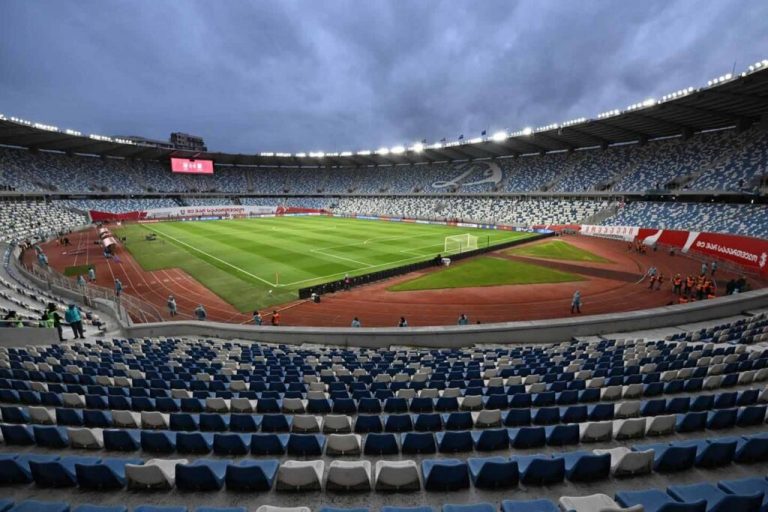
For much of football’s modern history, the relationship between stadium and spectator was unapologetically transactional. Grounds like the old Highbury, the original Santiago Bernabéu, or pre redevelopment Anfield prioritised density and proximity over comfort. Concrete terraces were efficient, durable and cheap. The assumption was simple. If the football mattered enough, the audience would endure the rest. That assumption has steadily collapsed. The modern-day spectator of football requires more than just a view of the pitch. They require clarity of movement, comfort, and a sense that the edifice has a comprehension of how people behave. This is not a trivial change; it is one that is architectural, cultural, and unstoppable. It is not an evolution that has been driven by luxury. It has been driven by regulation, safety, and an understanding that stadiums are civic spaces first and sporting spaces second. The requirement to have all-seaters has forced architects to rethink the rake and the view. Suddenly, it is not just about capacity; it is about how people sit, stand, queue, and exit. As modern stadiums like the Allianz Arena or the Tottenham Hotspur Stadium are reviewed in terms of their place within the football economy, it is quickly realized that stadium design has been driven by behavior, industrial promise as well as behavior. Football and the stadiums built have long accommodated champions league betting not for its capacity, but rather the atmosphere and social connection to sport gambling. The stage where the scene is set for gambling always begins within the great architectural seats of spectator halls in great stadiums. Architecture that moves with the crowd In modern-day stadiums, the movement of people within the stadium is not just an afterthought; it is a fundamental component of the architecture. Traditionally, fans have been marshaled through corridors during brief intervals of play. However, modern-day stadiums have moved beyond this. One of the most notable examples of this is the Tottenham Hotspur Stadium. The corridors are expansive, allowing fans to congregate freely. It is possible to see the pitch even when one is deep within the stadium, thus keeping one engaged with the game even when one is not seated. Similarly, the Emirates Stadium has designed a ring circulation system, thus dispersing fans evenly. These are not design decisions; they are architectural decisions made with the movement of fans in mind, considering the duration of stay and usage of space. Comfort as backbone Comfort is not an extravagance in stadium design; it is an essential part of the structure. The design of the seats, including their width and angle, determines the duration of stay. For example, the Aviva Stadium in Dublin has steep seating areas that are intimate but also meet the criteria of comfort. The partially enclosed roof reduces the wind while keeping the sound out. This is an environment where comfort does not detract from the atmosphere but enhances it. This is an important distinction. The best stadiums are those where comfort is used to enhance the atmosphere, not replace it. If done incorrectly, the environment is boring. If done correctly, the fans linger, focusing on the game. Atmosphere is a design element The atmosphere is no longer left up to chance. It is designed. The slope of the roof, the permeability of the façade, and the seating area heights all use design to keep sound inside. Signal Iduna Park has come to be synonymous with iconic stadiums in Germany. Whether it is the newest elements or the steepness of the seating areas, Signal Iduna Park will create an atmosphere and provide a safe and comfortable environment for fans.. The point is simple: atmosphere is not generated from discomfort; it is generated from spatial compression. Newer stadiums increasingly apply these principles deliberately. The noise is not left to chance. It is shaped. Accessibility as a Design Ethic Modern football architecture has also redefined accessibility. Older grounds often treated inclusive access as an afterthought. Contemporary venues integrate it from the outset. Wembley’s redevelopment set a standard by distributing accessible seating throughout rather than isolating it. Lifts, ramps and amenities are woven into the building’s logic, not appended to it. This signals a broader shift. Comfort is no longer selective. It is universal. For architects, this represents a philosophical change. The stadium is designed for varied bodies, varied needs and varied paces. That inclusivity reshapes everything from gradient tolerances to restroom provision. Technology Shapes the Shell Digital infrastructure now influences architectural decisions early in the design process. Camera positions, broadcast sightlines and data cabling routes are structural considerations. The Wanda Metropolitano illustrates this integration. Its roof supports lighting rigs, speakers and broadcast equipment seamlessly. The building is designed for a global audience as much as a local one. This duality affects materials, geometry and servicing strategies. Technology also feeds back into comfort. Cashless systems reduce queuing. Mobile connectivity allows spectators to move without missing information. These systems demand space, power and redundancy, all of which must be designed in rather than retrofitted. Stadiums as Civic Assets Perhaps the most significant architectural shift is how stadiums relate to their surroundings. Modern football grounds are increasingly embedded within mixed use developments. The Johan Cruyff Arena operates year round, hosting offices, retail and events. Tottenham’s stadium anchors a wider regeneration project. These buildings are no longer dormant for six days a week. Comfort, therefore, must extend beyond matchday. This changes material choices, durability requirements and maintenance strategies. A stadium that functions daily must age gracefully. Comfort becomes long term rather than episodic. An Architectural Maturity What football stadiums now reflect is a maturing understanding of spectatorship. People are not passive occupants of seats. They are users of complex environments. Comfort is not indulgence. It is functional. The move from raw concrete to considered comfort does not weaken football’s intensity. It sustains it. A spectator who feels physically at ease can focus emotionally on the game. That is not dilution. It is refined. Why Expectations Will Not Recede Once comfort becomes expected, it cannot be


Read More »