



The UK construction sector enters 2026 facing a challenging mix of cost pressures, labour shortages, and regulatory change, but also opportunities to adapt through technology, sustainability, and operational resilience.
“This year will be defined less by headline growth and more by how firms manage risk and deliver reliably,” says Laura Capper, Head of Construction at NatWest Group.
Public projects anchor the market
Infrastructure, healthcare, education, and energy projects continue to provide a stable foundation for construction activity. While private housing and industrial sectors are recovering, commercial demand remains uneven.
“Government commitments give firms a pipeline, but converting this into work on site requires flexibility and careful planning,” Capper explains.
This balance between public stability and private sector caution will shape investment, scheduling, and workforce planning throughout 2026.
Cost pressures remain elevated
Rising labour, material, and energy costs continue to challenge firms. Contractors are embedding contingencies into contracts and improving cost management to maintain margins.
“Managing inflation isn’t just about pricing,” Capper notes. “It’s about planning, risk management, and execution on site.”
Long-duration projects are particularly exposed to cost fluctuations, making accurate forecasting and early-stage procurement more important than ever.
Workforce and skills under the spotlight
Labour shortages remain a structural issue. Skilled trades, technicians, and supervisory roles are in short supply, with demographic trends and reduced migration inflows intensifying competition.
“A future-ready workforce combines technical ability with flexibility,” says Capper. “Apprenticeships, retraining, and flexible working are essential to keep projects on track.”
Retention and succession planning will be crucial for SMEs and larger contractors alike, ensuring continuity in delivery and operational performance.
Digital and AI tools support delivery
Technology is being adopted pragmatically, with BIM, digital twins, drones, IoT monitoring, and AI-assisted planning helping firms reduce risk, improve safety, and enhance efficiency.
“Technology is about smarter delivery, not growth,” Capper explains. “Firms that use digital tools effectively can make better real-time decisions and avoid costly rework.”
Digital integration across design, planning, procurement, and on-site operations is gradually becoming a differentiator.
Sustainability as a delivery requirement
Carbon reduction, energy efficiency, circular design, and whole-life carbon assessment are increasingly embedded in project planning.
“Sustainability is now part of operational delivery,” says Capper. “Low-carbon materials, energy-efficient designs, and retrofit initiatives are expected by clients and increasingly enforced by regulators.”
This is particularly true in public sector and infrastructure projects, where environmental compliance is closely monitored.
Client expectations are evolving
Clients are demanding more transparency, reliability, and speed. Contractors who can deliver on time, on budget, and with reduced environmental impact will stand out.
“Predictable outcomes, strong communication, and responsiveness will define success in 2026,” Capper adds.
Collaboration with supply chains and digital reporting tools are helping contractors meet these expectations while managing risk.
Looking ahead
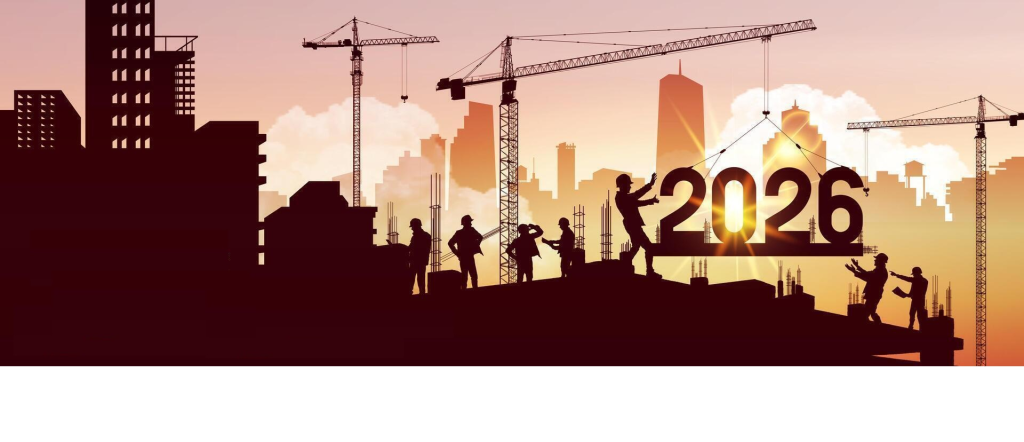
2026 is set to be a year of practical resilience, not headline expansion. Firms that combine strong planning, workforce development, digital adoption, and sustainability compliance are best positioned to navigate uncertainty.
“Adaptability is the sector’s greatest strength,” Capper concludes. “Those who focus on delivery, risk management, and operational performance will maintain stability and reputation in a challenging year.”
Building, Design & Construction Magazine | The Choice of Industry Professionals