
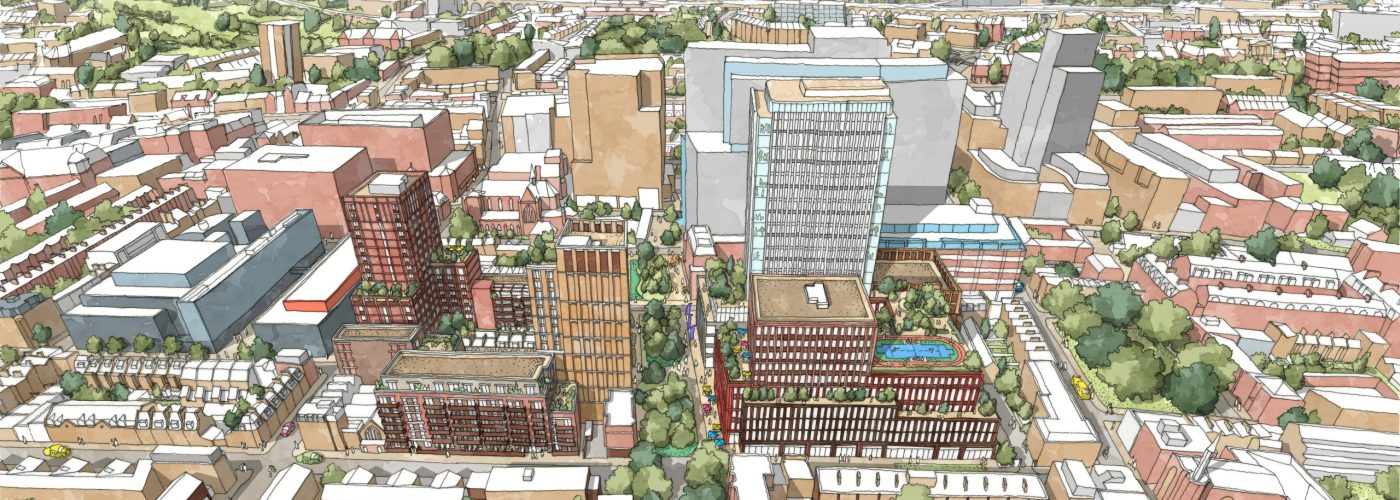


A major new integrated healthcare and research campus is planned for Whitechapel, designed to meet NHS needs, deliver affordable homes for key workers, and unlock new green spaces for the local community. The 1 million sq. ft scheme sits within the Barts Life Sciences Cluster and is projected to add £1bn annually to the UK’s Gross Value Added (GVA). It represents a £0.75bn investment into Whitechapel and is expected to create 1,325 new jobs – a significant boost at a time of minimal national economic growth.
A planning application has been submitted by a collaborative team led by BGO in partnership with Barts Health NHS Trust, including PLP Architecture, dMFK, DSDHA and BD Landscape Architects, with Avison Young, Sweco, AKT II, DP9 and GIA. The proposals introduce a new model for co-locating NHS services, research and local amenity within the life sciences cluster covering Whitechapel.
In due course this development could release extra space for The Royal London, one of the capital’s busiest hospitals. It envisages a new 64,427m2 facility, designed by PLP Architecture. Alongside public-sector services, this building would oSer flexible workspaces – 10% of would be affordable – for health-tech, diagnostics, AI and robotics companies, fostering collaboration between clinicians, researchers and private-sector innovators.
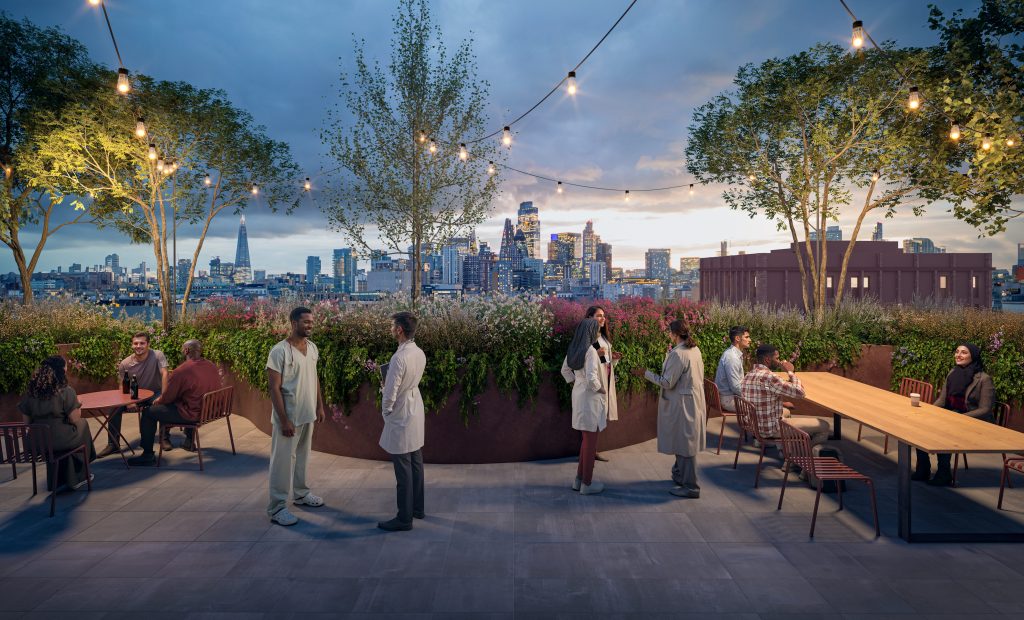
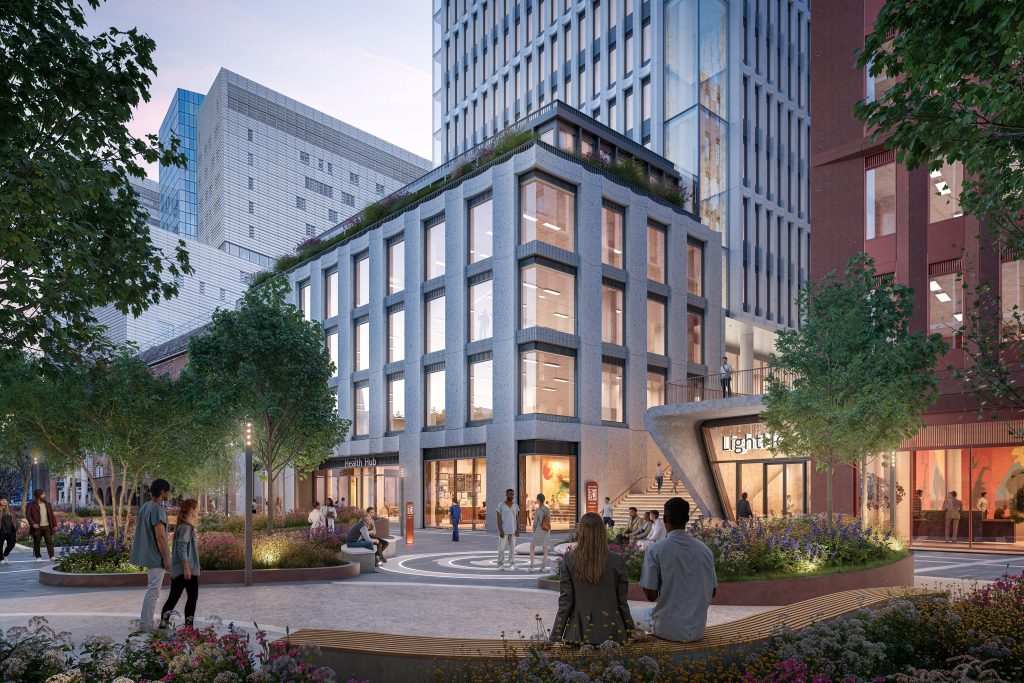
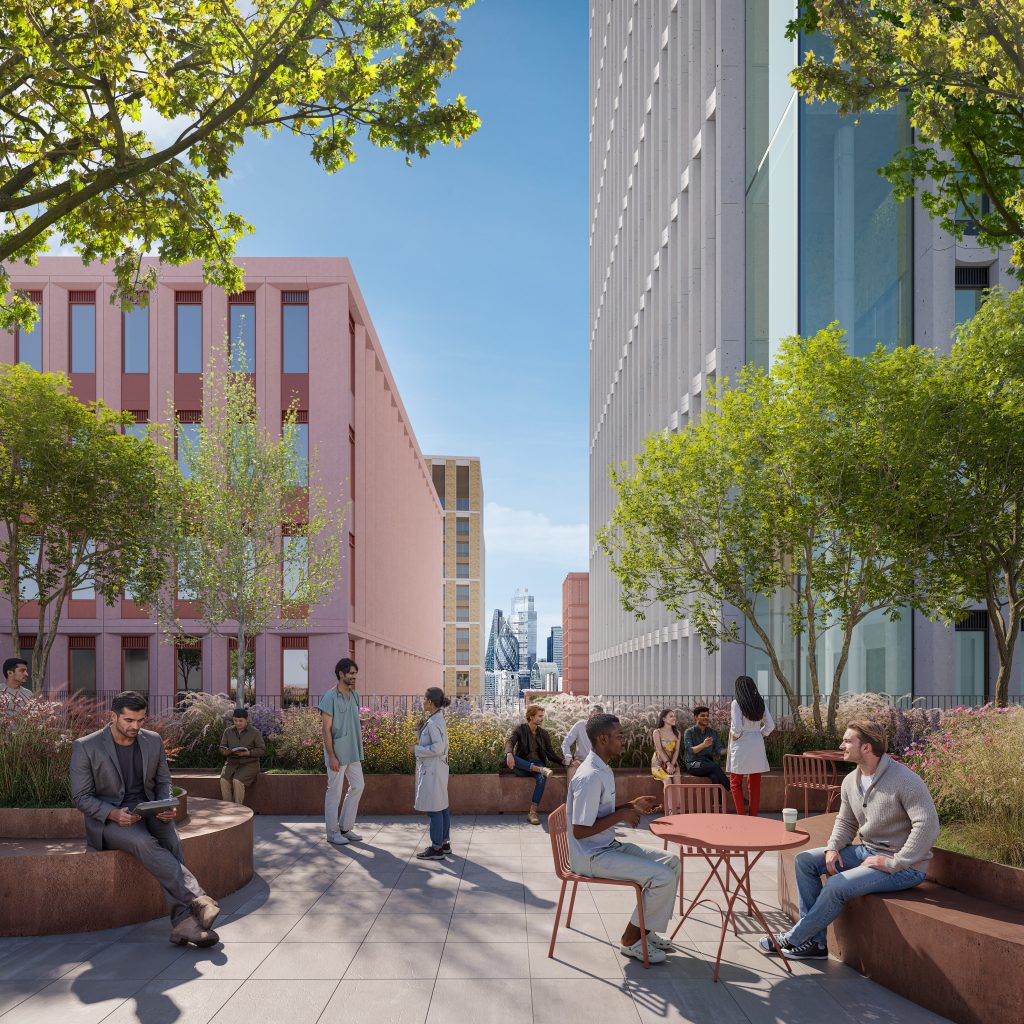
The ground floor would be publicly accessible, with a large foyer and café leading to a flexible 800m² event space for up to 500 people – designed for exhibitions, community use and as a space to demonstrate MedTech innovation and research. The ground floor also includes amenity spaces for NHS staff and a proposed new home for the Royal London Hospital Museum. At roof level, a terrace for building users and staff from the Royal London Hospital would feature a 100m running track, sports pitch and panoramic views across London – a space for rest, reflection and social connection.
Across five new residential buildings and refurbished terrace housing, the development would deliver a mix of private apartments, open-market shared living, affordable family units, and specialist accommodation for key workers. 53% of housing will be affordable social rent homes. Eligibility for 167 homes prioritised for key workers, will be salary-capped to target those most in need. A further 61 private homes will also be delivered at a time when new housing supply remains low.
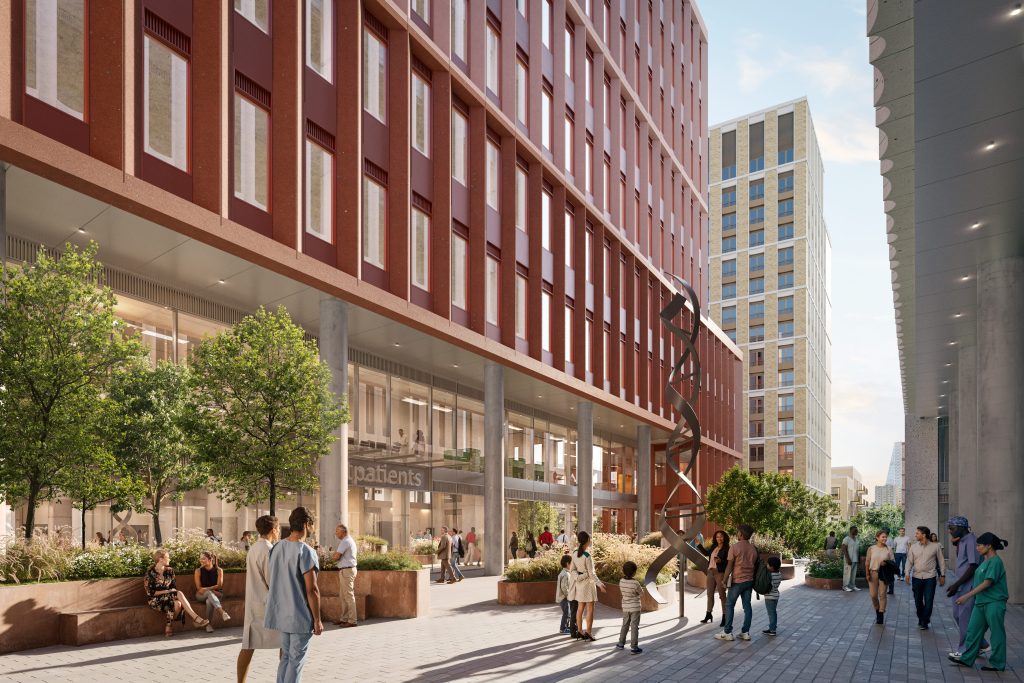
A generous new public realm strategy, rooted in the historic grain of Whitechapel, will create a permeable, accessible environment. The upgrade of Philpot Street into a welcoming green garden and the reopening of Walden Street will restore an east–west pedestrian route through the site. A 3,600m², 275m long fully revamped landscaped public realm and new open central courtyard in the heart of the main building will deliver fully publicly accessible gardens and amenity areas, planted with 200 new trees. These spaces are designed to support hospital workers, local residents and school pupils, while contributing positively to ecology and biodiversity.
Shane DeGaris, group chief executive of Barts Health NHS Trust said: “This is an exciting example of how we are working with local partners to bring much-needed investment into Whitechapel and regenerate the area around our flagship teaching hospital, The Royal London. The potential benefits for our staC, patients and their local communities are enormous. We will continue to work closely with BGO and others in the Barts Life Sciences Cluster to attract industry and turn our research into life-changing clinical practices and products for our patients.”
Merrik Baggallay, Managing Director at BGO, commented: “People living in Whitechapel and wider Tower Hamlets experience some of the poorest health outcomes in London. Life expectancy remains significantly below the London average, and the borough has high levels of deprivation, long-term health conditions and chronic disease. This development responds directly to that context, delivering essential NHS infrastructure, enabling space for care, and establishing an inclusive campus that reflects the social, clinical and cultural needs of the city. I am incredibly proud of BGO’s involvement in this groundbreaking and significant masterplan and look forward to working with the Cluster and local stakeholders as we move through delivery.”
Building, Design & Construction Magazine | The Choice of Industry Professionals