




By James Crow – National Director of Place
Long term sustainable infrastructure and facilities on a development that are essential to support communities to thrive. Two fundamental questions we regularly ask ourselves are: what happens when a developer hands over control and oversight of a site and who is best positioned to take ownership of it?
These are questions MHCLG are aiming to solve through its ongoing consultation on residential management arrangements.
The issue of unadopted amenities on residential developments has become increasingly prevalent and it is particularly challenging for large scale schemes. Inherently, these often have more communal facilities and shared space, and infrastructure like a village which require long term maintenance and investment.
Amenities like country parks and local centres, together with infrastructure such as roads and drainage systems, are essential to create places where communities can grow and evolve, and generation after generation can thrive. Historically, parish councils, local authorities and utility providers rightfully took on management responsibilities. They would typically adopt roads, green spaces and other areas open to the wider public. However, times have changed, in part driven by local authority budget pressures, and new ways of managing shared spaces have come to the fore.
One question MHCLG asks, is whether mandatory adoption is the answer? At a principal level, we support adoption and whenever we are designing a stewardship strategy for a development the first question we ask ourselves is “can this be adopted”? But we are all aware of local authority budget pressures and the competing demands on scarce resources, often local authorities simply won’t or can’t adopt. And where they do, commuted sums can be hyper aggressive. In recent examples we have been quoted by local authorities, a 100-year multiple of maintenance costs, undiscounted, to be used as the basis of calculation. And yet, ironically, payment of a commuted sum does not guarantee that money will be spent on maintenance of that infrastructure at that development. Such are local authority budgetary constraints and political pressures; it is possible these monies could be channelled into higher priority areas leaving estate management underfunded.
New developments should always contribute positively towards community infrastructure and most developers remain willing to do so. But in recent years the growing demand on developers has crossed into an unsustainable path; with s106 payments, covering aspects like affordable housing, education, healthcare, highways and open spaces, the community infrastructure levy, biodiversity net gain, the residential development property tax, the building safety levy, the landfill tax and so on. It is also likely to once again hit developments disproportionately in lower value areas where house prices simply cannot support this collective ask. Viability is an existing challenge many developers are already facing and the introduction of commuted sums on mandatory adoption is only likely to render yet more developments unviable, slow the delivery of housing further with the inevitable impact being to push houses prices further out of reach of many.
Is there a better option? Yes, we believe so, but firstly, is the current system really broken? Whilst there are unfortunately some examples of poor practice where residents have received disproportionate bills for the quality of service they receive, our experience is this is not the norm across the industry and remains in the minority. Many estates are well maintained and often to a higher standard than they would have been under local authority management regimes. They have also allowed for more freedom in design, creating more natural landscapes and beautiful places.
Another key proposal MHCLG are currently consulting on is around enhanced protections for homeowners on freehold estates. This is something we support and most of the recommendations made are practices we have been operating across our estate for a number of years. These reforms if implemented as proposed, may help tackle those minority cases so that further measures such as mandatory adoptions are simply not required.
However, there are a range of models – some well-established and others more nascent – that could help resolve that stewardship debate. .
Residents at the heart of communities
In any utopia it would be residents and local communities managing these amenities, but pressures of modern living, fractured households and mixed tenures manifest the requirement for a maintainer of last resort. It’s widely recognised that when residents have a meaningful role in shaping their own environment, developments transform from just housing and workspaces to true communities.
I have seen this personally and have seen it in the work we do at Harworth, where we have supported residents in setting up community councils, or launching sports clubs and societies that form the genesis of onward community cohesion.
For example, at our flagship site in South Yorkshire, we’ve established Waverley Community Council – a Parish Council set out to carry a range of duties to support and improve experiences for all in the community. It’s been successful in growing the community at Waverley and will continue to have a significant impact in shaping the site moving forward.
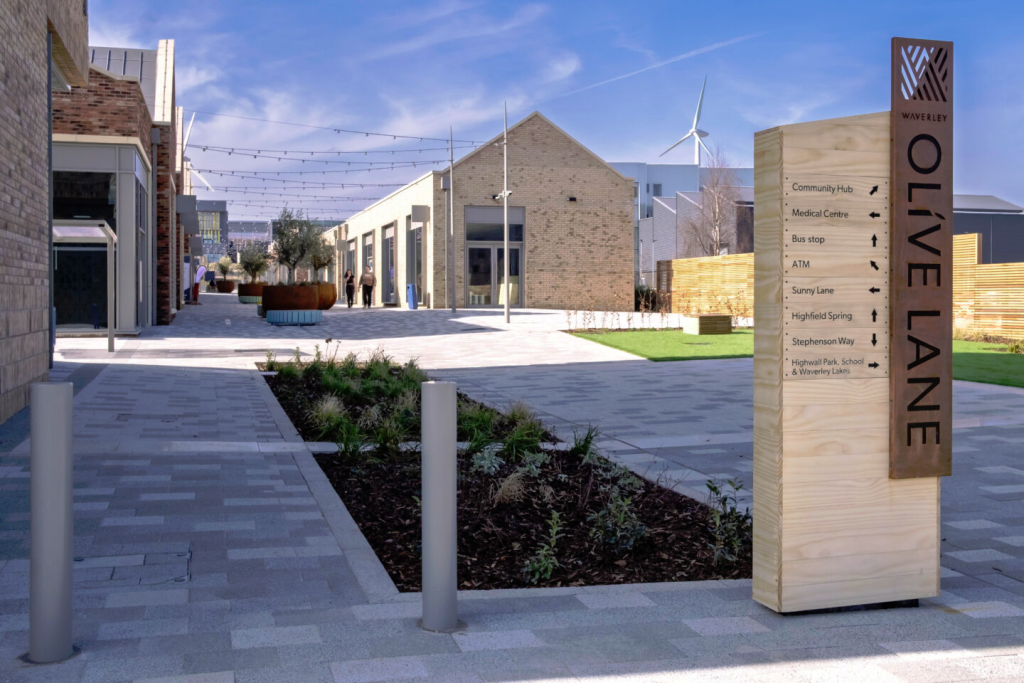
At the same time, as master developers, we are regularly thinking about how to design a scheme to provide longevity for decades to come.
Having residents involved in the management of estates is therefore critical, but should residents be the sole voice? It is often assumed bringing developments under residential control is in the best long-term interest of the estate, but in perpetuity is a very long time. We often find that residents are most focused on reducing their estate service charge. But as the service charge is there to look after the estate in perpetuity, it is key that it is well maintained together with an appropriate sinking fund regime in place to be able to renew and replace aging infrastructure spreading the cost over time, as opposed to the burden simply falling on future residents or worse, falling into disrepair such as the sink estates of the 1960’s. For large-scale developments like Waverley, having professional expertise and third-party stakeholders sit alongside and in support of residents, may provide a better long-term commitment to maintain and manage communal spaces and essential infrastructure than residents alone, as that ideological utopia rarely exists.
Exploring solutions that work
Residential management companies (RMCs) are a common approach for doing this currently. They can take on the role of maintaining amenities and facilities, are well understood and provide for residents to take on control upon completion of a development. We have a number of RMCs where we are currently preparing to do exactly that – transfer control. But we have also found that whilst they can work well, they can also have their challenges and limitations, especially in their capacity to cater to large developments containing several or large communal amenities such as country parks. And in recent years have faced challenges of recruiting volunteers to take on the responsibility of running these increasingly complex estates.
Our Cadley Park development in Swadlincote, Derbyshire, is home to Coronation Park, a 50-acre country park. It has become the heart of the community – hosting a regular Park Run and being a source of local pride after receiving a Green Flag Award last summer in recognition of its quality and environmental sustainability, is managed in close collaboration with the local council and all this combined with an estate service charge that is much lower than the national average. It’s a shining example of good estate management, yet it is not run by an RMC, but a professional management company, a structure that might soon by legislated against.
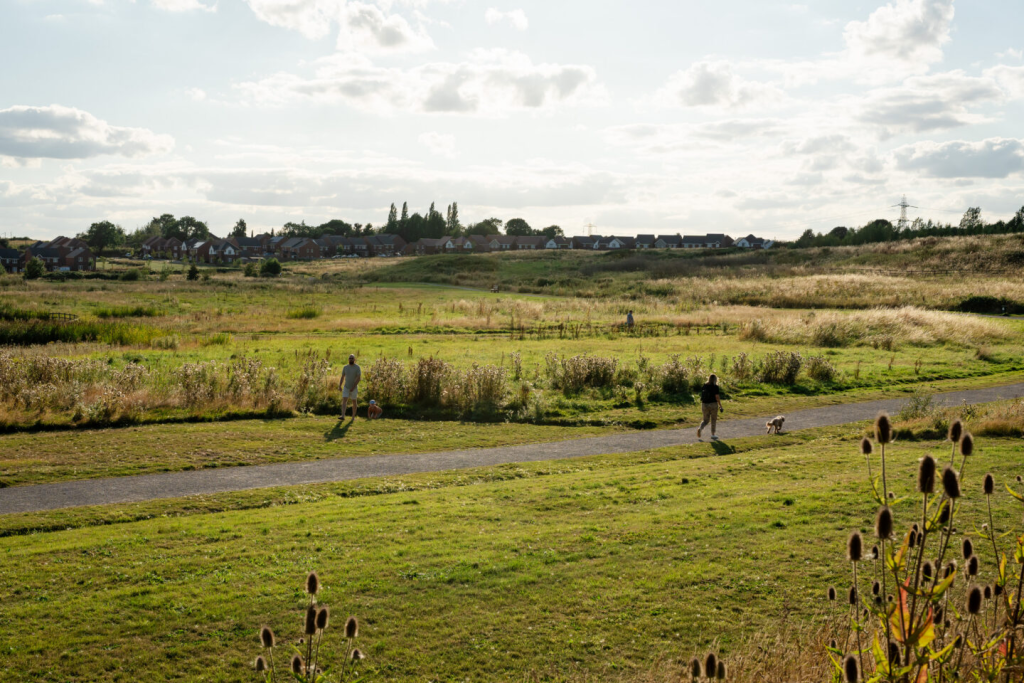
Maintaining this standard for future generations to enjoy means finding a solution that works in the long run. If RMCs have their limitations and professional management companies may soon not be permitted, what are the alternatives that can fulfil the requirements with equivalent, if not, better outcomes?
One approach starting to gain traction is community management trusts. Operated by a specialist third party, they combine professional expertise with insights and direction from residents and the local community. In being community-led, they offer transparency and local accountability – further empowering residents with a voice on how their development is managed.
Similarly, Community Infrastructure Companies (CIC), set up for the purpose of running an estate, can also provide a not-for-profit structure whereby professional resources can be brought in to remove the burden from residents, whilst being bound by clear goals to the benefit of both residents and the long-term interests of the estate.
However, these structures can be more expensive to set up and operate than a standard residential management company and require economies of scale to be efficient so are unlikely to be suitable for smaller estates.
These are models that may initially come with increased costs but presents an opportunity to lay the groundwork for communities to take control of managing the spaces they use and can enjoy, with a clear governance structure and accountability. And it maybe that multiple smaller estates could be run by a single Trust or CIC to provide those efficiencies, potentially either at a regional or national level, in a similar fashion to how multi academy trusts operate with schools.
Starting early
In finding solutions for managing developments, we must also be mindful of how participation from relevant stakeholders in solutions time horizons. Who should pay for the upkeep of the estate, how should this be paid and over what time period? What governance arrangements can be put around this and how can we ensure that there is accountability?
The stewardship strategy should be developed from the outset and embedded in the design process, designers have a duty to consider the long term maintenance arrangements and costs for what it is they are designing. The stewardship strategy should be set out at the planning stage, not bolted on post-completion. This means setting clear expectations in local plans that are recognised positively by local planning authorities, including Section 106 agreements and designing governance structures alongside physical infrastructure – and also helping to instil confidence and greater transparency in the social benefits a new development could bring to the existing wider community.
Many of our schemes at Harworth have been developed on brownfield sites – land transformed from deindustrialised empty spaces to become valuable assets to the communities living there. This process is complex and subsequently can take years to fully develop – but by introducing plans for their upkeep from the outset whilst bring mindful of making any market driven adjustments, developers can help local communities feel reassured that the new amenities they contain will be well kept and improved for years to come.
Ultimately, every area and development is unique. What is clear is there is no singular utopia, nor one size fits all when it comes to managing estates. What matters most is finding appropriate methods that cater to the scale,size and complexity of a development, and the people living there, recognising that somebody ultimately has to pay for the long term upkeep of estates and that the developer cannot be responsible for that in perpetuity. Do we have all the answers for finding a perfect solution? No, not yet. It’s what we are trying to find, and what the government through its consultation is trying to solve too.
Building, Design & Construction Magazine | The Choice of Industry Professionals