May 21, 2026
ROCKWOOL’s full UK and Ireland range completes CCPI marketing integrity assessment

ROCKWOOL’s full UK and Ireland range completes CCPI marketing integrity assessment

Leading insulation manufacturer ROCKWOOL has announced that its entire product range has passed Code for Construction Product Information (CCPI) assessment, making it the broadest set of construction products by a single manufacturer to be assessed to-date. The successful assessments cover ROCKWOOL’s complete range of non-combustible stone wool insulation products, including

Read More »
Finning engineer takes on tuk-tuk challenge

Finning engineer takes on tuk-tuk challenge

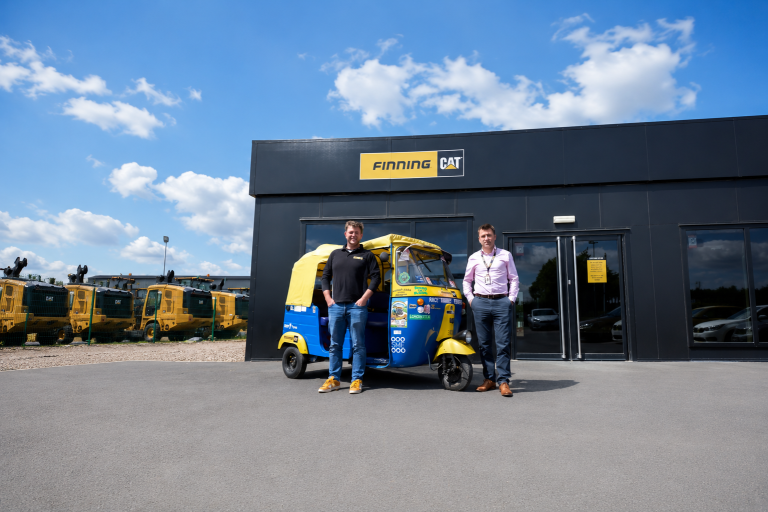
Finning engineer Chris Bee is taking on a 194 mile tuk-tuk drive from Skegness to Blackpool, raising funds for Race Against Dementia.  The coast to coast challenge will take place over four days, 22nd to 25th May. With a top speed of only 35mph the journey will present a genuine

Read More »
Smarter tool choices to keep sites moving all summer

Smarter tool choices to keep sites moving all summer

The long days of summer should mean maximum output — but heat, fatigue and stretched schedules can just as easily grind productivity to a halt. Here’s how the right kit transforms the season’s challenges into your biggest opportunity.  Summer is a double-edged sword on any construction site. Daylight runs from

Read More »
Latest Issue
Issue 340 : May 2026

May 21, 2026

ROCKWOOL’s full UK and Ireland range completes CCPI marketing integrity assessment

ROCKWOOL’s full UK and Ireland range completes CCPI marketing integrity assessment

Leading insulation manufacturer ROCKWOOL has announced that its entire product range has passed Code for Construction Product Information (CCPI) assessment, making it the broadest set of construction products by a single manufacturer to be assessed to-date. The successful assessments cover ROCKWOOL’s complete range of non-combustible stone wool insulation products, including roofing, façade and fire protection solutions, as well as the company’s in-house fire-stopping range, known as FirePro. Introduced as a direct response to Dame Judith Hackitt’s Independent Review of Building Regulations, the code’s methodology has been designed to provide a holistic assessment of product information and marketing to provide reassurance throughout the construction supply chain, and ultimately to building residents and occupants. Nick Wilson, Managing Director of ROCKWOOL UK and Ireland, said: “We are immensely proud of this achievement. ROCKWOOL has long prided itself on its rigorous approach and high standards – securing assessment across our full range reflects our firm commitment to providing clear, accurate and trustworthy product information and the robust ways of working across our expert and dedicated team.” Against the backdrop of the Building Safety Act and live Government proposals to raise the bar for construction products and fire safety guidance, professionals including specifiers, architects and contractors need high-quality products supported by robust testing and information that they can trust. Undertaking a CCPI assessment includes in-depth evaluation of a company’s culture, processes and product information by an independent third-party verifier, and confirmation of each product’s assessment sits alongside clearly accessible product safety and performance data on ROCKWOOL’s website. Tim Vincent, ROCKWOOL’s Head of Technical, added:  “As a leading supplier, ROCKWOOL is committed to supporting construction professionals to deliver building safety and performance, whether through our CCPI assessed product ranges, our technical tools and support, or our growing education offering including our new Training Academy, where we run hands-on best practice training.” Moving forward, any new ROCKWOOL product sets will be CCPI assessed as they are introduced to the market. Details of all ROCKWOOL’s products and their associated CCPI assessments can be found on the company’s website at www.rockwool.com/uk/products/. Building, Design & Construction Magazine | The Choice of Industry Professionals

Read More »
Finning engineer takes on tuk-tuk challenge

Finning engineer takes on tuk-tuk challenge

Finning engineer Chris Bee is taking on a 194 mile tuk-tuk drive from Skegness to Blackpool, raising funds for Race Against Dementia.  The coast to coast challenge will take place over four days, 22nd to 25th May. With a top speed of only 35mph the journey will present a genuine endurance challenge, with a route planned that avoids all motorways. The tuk-tuk has been imported from India for the occasion and has been fitted with VisionLink™ telemetry software by Finning UK & Ireland, enabling Chris’ colleagues to remotely monitor his journey. The VisionLink software, which can be fitted as both new or retrofit software, is usually reserved for tracking, optimising and monitoring the performance of heavy machinery and can be accessed via Cat central, allowing operators to enhance onsite efficiency. In this instance it will allow Chris’ colleagues to track his progress and support him as he travels across the country. Taking on the challenge with friend Rick Martin, and with help from a support team from Tuk-Tuk UK, Chris’s journey will begin at the RNLI station in Skegness and finish the first day at Lincoln Cathedral.  Day 2 will present the biggest test of Chris’ endurance as the journey takes him through Worksop and Sheffield via the A57 to stay overnight in Hyde. The final day of the challenge will see Chris travel around Manchester on the A56 towards Bolton, up to Darwen and then on to the finish line at the RNLI station in Blackpool.  Chris has committed to this challenge to raise money for Race Against Dementia after his mother was diagnosed with frontotemporal dementia. The charity, founded by Sir Jackie Stewart OBE, funds early career researchers to help accelerate progress towards a cure for dementia.  Chris said: “Dementia is a disease that affects a lot of people and over the past few years it has impacted my family following my Mum’s diagnosis. I have been trying to raise as much money as I can over the past few years and this year myself, Rick and our families wanted to step it up by completing our biggest challenge yet.” Some of Chris biggest supporters have been his colleagues at Finning UK & Ireland who helped to fit the tuk-tuk with VisionLink software during a visit to the company headquarter in Cannock, Staffordshire. “We know this won’t be an easy challenge but have already been blown away by the level of support we have received. Finning has been really generous in fitting the tuk-tuk with VisionLink so my colleagues can support me remotely. It will be really motivating to know they are watching my progress, and I am thrilled to operate what could be one of the world’s first telematics-enabled tuk-tuks!”  Kathryn Palmer, Digital Manager at Finning UK & Ireland said: “Everyone at Finning is immensely proud of what Chris has already achieved in raising money to help Race Against Dementia in their fight against this life-changing disease. We are proud to support him on his tuk-tuk challenge and will be watching our telemetry data closely to monitor his progress.  “On behalf of everyone at Finning UK & Ireland, we wish Chris, Rick and their families the best of luck as they take on this incredible challenge.” Building, Design & Construction Magazine | The Choice of Industry Professionals

Read More »
Smarter tool choices to keep sites moving all summer

Smarter tool choices to keep sites moving all summer

The long days of summer should mean maximum output — but heat, fatigue and stretched schedules can just as easily grind productivity to a halt. Here’s how the right kit transforms the season’s challenges into your biggest opportunity.  Summer is a double-edged sword on any construction site. Daylight runs from before five in the morning to gone nine at night in parts of the UK and Ireland, and every hour of that window is an invitation to get ahead. But ask any site manager who’s lived through a heatwave in July or watched a team of groundworkers wilt by noon on a south-facing plot, and they’ll tell you the gains only come if you plan for them. “We hear the same thing every September from contractors who’ve had a good summer,” says Darren Binns, National Sales Manager at Jefferson Tools. “The ones who made the most of the long days weren’t working harder – they’d just made sure their kit matched their ambition. The ones who struggled were still running the same setup they use in February.” Light the edges of the day Early starts and late finishes are summer’s greatest gift, but they only pay off if the site can actually see. Temporary or inadequate lighting doesn’t just slow work – it creates risk. Jefferson Tools’ new 7,000-lumen portable site light is built precisely for this kind of flexible working. It runs off mains or directly from major power tool batteries — Milwaukee, DeWalt, Bosch, Makita — meaning no generator dependency if your crew is working at the far end of a plot before the compressors are running. The tripod extends from 800mm to 2,400mm, the head swivels 280 degrees and tilts 90 degrees, and it doubles as a power bank for phone charging. For tighter spaces or interior work, the 4,500-lumen runs on internal battery or mains, has six lighting modes including warm and cool colour temperatures, and fits into a storage pouch when the day’s done. “The battery compatibility was a deliberate decision,” says Binns. “If your crew is starting at five-thirty, you don’t want them waiting on a generator. Plug straight into the battery pack on the van and you’re lighting the job before the kettle’s boiled.”  Keep air moving, keep people working Heat fatigue is one of the most underestimated productivity killers in construction. Once core body temperature starts climbing, concentration dips, decision-making slows, and the risk of accidents rises sharply. The HSE is unambiguous on the duty of care and the practical answer on most sites isn’t air conditioning, it’s airflow. “People underestimate how quickly heat affects performance,” says Binns. “A good industrial fan on a confined site or in a welfare unit costs very little against the risk of someone making a bad decision at two in the afternoon in thirty-degree heat.” Jefferson Tools’ industrial rotomould drum fans are built to handle the dust, debris and rough handling of a working site. Available in 24-inch and 36-inch diameters in both 110V and 230V, the 36-inch model moves up to 16,200 cubic metres of air per hour, and units can be hooked together for combined airflow where a single fan won’t cover the area. For smaller enclosed spaces – welfare units, plant rooms, mezzanines – the 24-inch high-velocity drum fans offer a more portable option at an accessible price point. Compressors: Built for the long shift Summer is peak season for continuous compressor use. Pneumatic tools run longer, more operatives are on site simultaneously, and there’s less tolerance for an unexpected shutdown. This is not the moment to be running a machine beyond its duty cycle. Jefferson Tools’ V-pump compressors are designed for sustained output. The 270-litre tandem unit pairs two 3HP motors for large-volume air generation, while the screw air compressors, available with integrated refrigerated dryers, are engineered for high-capacity continuous industrial use. The refrigerated dryer matters more in summer than any other season: warm air carries more moisture, and that moisture in compressed air lines causes real damage to pneumatic tooling over time.  Pressure washers: Don’t let grime dictate the schedule End-of-day cleaning, plant washdown, surface preparation – summer brings more of all of it, and a pressure washer that can’t keep up with demand quickly becomes a bottleneck. Jefferson Tools’ petrol-powered range covers everything from daily site tidying to serious plant cleaning. The 7.5HP is the bestseller for good reason: 3,200psi maximum pressure, a direct drive triplex pump, and a turbo nozzle delivering up to 3,600psi effective cleaning power. Step up to the 13HP with an Annovi Reverberi triplex pump and 15 litres per minute flow rate for the heavy-duty work that larger sites demand. Both models collapse for storage and transit — a small detail that matters when every cubic foot of a van or welfare unit is accounted for. The Bigger Picture None of this is complicated kit. What it represents is the infrastructure that allows a site to actually use the hours summer provides rather than losing them to heat exhaustion, poor visibility, equipment failure, or slow cleans. “The sites that finish early and finish on budget in September are almost always the ones that got the basics right in May,” says Binns. “It’s not glamorous – fans, lights, a decent compressor setup. But that’s what keeps a programme moving when everyone else is struggling.”  Building, Design & Construction Magazine | The Choice of Industry Professionals

Read More »