

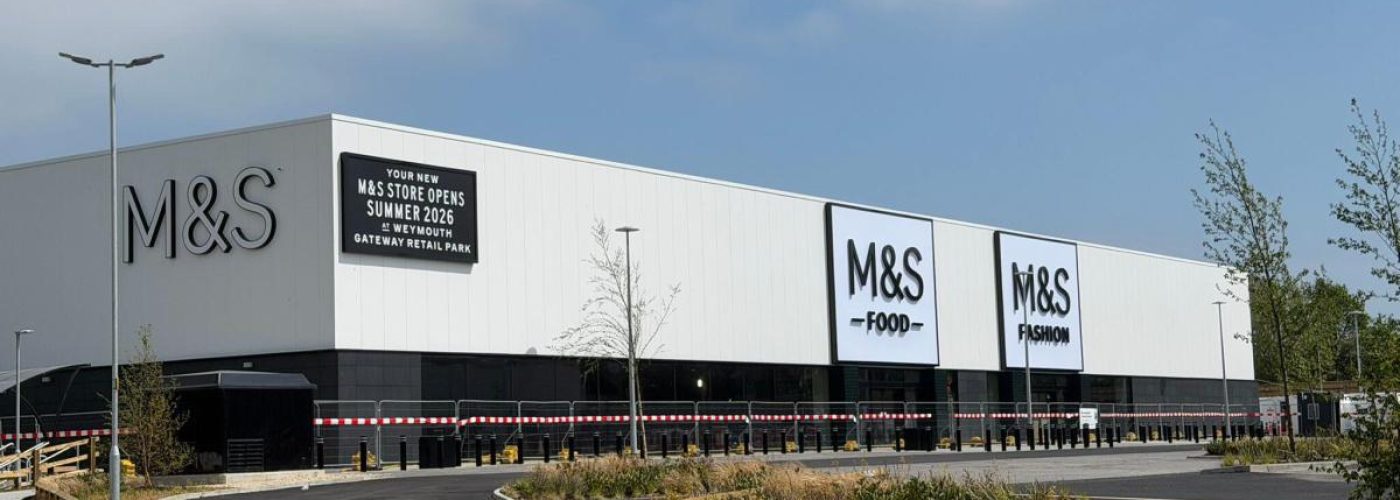


Marks & Spencer has continued its nationwide investment programme with the opening of 15 new stores over the past year as the retailer pushes ahead with plans to modernise its estate and strengthen long-term growth.
In its preliminary results for the year ending 28 March 2026, M&S confirmed it had opened 12 new food stores alongside three new full-line locations as part of its wider store rotation and expansion strategy.
The retailer said it is entering the 2026/27 financial year with a renewed focus on three core investment areas — supply chain modernisation, technology transformation and upgrading its store portfolio — with a strong pipeline of larger, high-volume stores now planned.
The expansion reflects M&S’s ongoing strategy to reposition its estate around modern retail formats, stronger food-led locations and more efficient, digitally enabled operations designed to improve customer experience and long-term trading performance.
Despite challenging market conditions, the business said it remains committed to investing in both quality and value while accelerating the pace of transformation across the company.
M&S reported an adjusted pre-tax profit of £671.4m for the year, representing a year-on-year decline of 23.8%.
Chief executive Stuart Machin said retailers continue to face a “triple whammy” of pressures, including increased taxation, greater regulation and ongoing global instability. However, he stressed that M&S remains focused on long-term investment and operational improvement rather than short-term challenges.
Machin said the company’s priority is to “protect the magic of M&S while modernising the rest”, highlighting the momentum now building across the business.
The retailer’s investment programme comes amid wider change across the UK retail property market, where major occupiers are increasingly prioritising modern, high-performing locations capable of supporting omnichannel retailing, operational efficiency and evolving customer expectations.
M&S has continued to invest heavily in store upgrades, food hall expansion, digital infrastructure and logistics improvements as part of its long-term growth strategy.
The company’s latest openings also reflect continued confidence in physical retail, particularly in high-footfall locations and convenience-led food formats, despite ongoing pressures across the wider retail sector.
Building, Design & Construction Magazine | The Choice of Industry Professionals