September 1, 2026
Costain welcomes next generation of talent with record apprentice intake

Costain welcomes next generation of talent with record apprentice intake

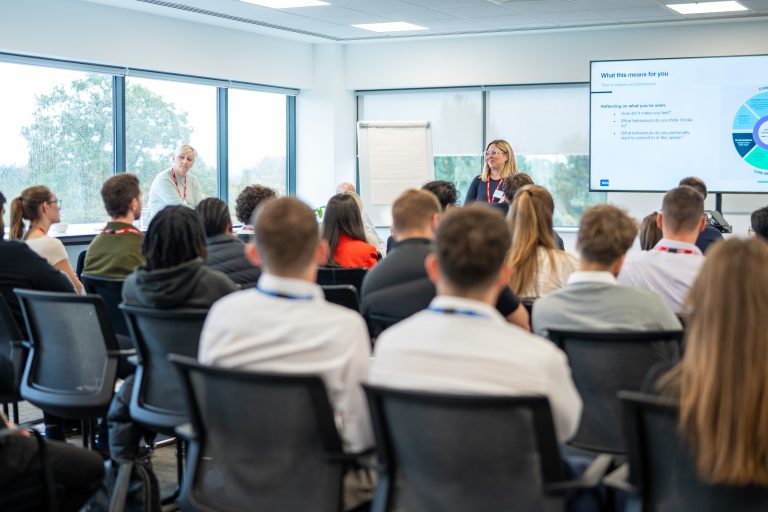
50 apprentices are beginning careers at Costain across its infrastructure projects Costain, the infrastructure solutions company, is welcoming a record number of apprentices in 2026 to support its delivery of critical national infrastructure across the UK. Costain is onboarding 50 apprentices this year, doubling last year’s intake in response to

Read More »
Latest Issue
Issue 343 : Aug 2026

September 1, 2026

Costain welcomes next generation of talent with record apprentice intake

Costain welcomes next generation of talent with record apprentice intake

50 apprentices are beginning careers at Costain across its infrastructure projects Costain, the infrastructure solutions company, is welcoming a record number of apprentices in 2026 to support its delivery of critical national infrastructure across the UK. Costain is onboarding 50 apprentices this year, doubling last year’s intake in response to growth in its volume of long-term infrastructure projects and commitment to building a growing pipeline of talent, offering them rewarding and fulfilling long-term careers. The hiring activity is taking place across all of Costain’s infrastructure sectors, which include road, rail, integrated transport, energy, water, and defence and nuclear energy, and in a variety of disciplines, such as civil engineering, electrical and mechanical engineering, quantity surveying, finance and project management. Costain offers all levels of apprenticeship in the UK, including degree-level, and each apprentice will ‘earn and learn’, completing a programme of training which lasts from 12–60 months, depending on the level of study. Costain also recruits for graduates, internships and university placements across its sectors and has a Graduates and Apprentices (GRaAPS) network to support professional development. Costain’s apprentices will join some of the UK’s most important infrastructure projects. These include delivering the London tunnels section of HS2 as part of the Skanska Costain Strabag joint venture, strategic water infrastructure through long-term AMP8 frameworks with Southern Water and United Utilities, and critical utilities infrastructure upgrades for Sellafield. More details on Costain’s planned early careers and apprenticeship intake for 2027 and how to apply will be released in November. Catherine Duffy, Chief People and Sustainability Officer at Costain, said: “I’m extremely proud to be welcoming a record number of apprentices into Costain. The industry requires more skilled workers than ever to deliver critical infrastructure for a more prosperous, resilient and decarbonised UK, which makes it a hugely exciting time to enter the sector. “Our apprentice programme underscores our commitment to offering vocational routes into employment. It is designed to help apprentices earn while they learn and gain qualifications with real-world experience to help them build a meaningful, long-term career.” Ella Williams, Apprentice Project Controls Engineer and member of the GRaAPS network at Costain, said: “It’s hugely exciting to be part of a growing group of like-minded, ambitious early careers professionals. Throughout my apprenticeship at Costain I have been fortunate enough to work on complex infrastructure projects which have given opportunities to learn, develop and apply myself in a collaborative, stimulating environment.” Apprentice intake at Sellafield to support skills development and regional prosperity Costain’s apprentices hired to work at Sellafield’s west Cumbria site will gain experience in complex infrastructure works through roles in engineering, project controls and health and safety. They will support the delivery of services through the Infrastructure Delivery Partnership (IDP), where Costain is providing critical utilities upgrades under a minimum nine-year contract worth up to £1bn. The hiring activity by Costain has been informed by detailed analysis of where skills gaps have historically existed in the region and supports Sellafield’s commitment to create a thriving and sustainable local community. This involves developing a skilled labour pool, which local businesses can also access, providing opportunities for early careers professionals and individuals from disadvantaged backgrounds across Cumbria. The activity also means that Costain is exceeding a commitment for apprentices to comprise 10% of its workforce for IDP. Claire Gallery-Strong, Project Director at Costain, said: “Together with Sellafield and our IDP partners, we’re committed to offering high-skilled learning and development opportunities for young people in Cumbria and the wider region, supporting a more prosperous, thriving local community and growing the pool of home-grown talent. We’re welcoming a fantastic group who will be delivering against the identified skills gaps and be provided with a range of experiences and guidance from senior colleagues to set them up for success.” Darcy Williamson, Safety, Health and Environment (SHE) Apprentice at Costain who has recently joined the IDP programme, said: “Joining Costain as an apprentice has already been a hugely positive experience. I’ve been made to feel incredibly welcome and as I build my career in SHE, I’m excited to learn from my team, develop my skillset and make the most of the opportunities across Costain and IDP.” Building, Design & Construction Magazine | The Choice of Industry Professionals

Read More »
The Evolution of Safe Construction: Working Without 'Hot Works' Permits

The Evolution of Safe Construction: Working Without ‘Hot Works’ Permits

Every time a torch lights on a British site, paperwork starts. A Hot Work Permit, a safety briefing, a marked-out zone, and at least an hour of continuous fire watch after the work stops. None of this is box-ticking: insurance cover for most large contractors is tied directly to compliance. The trade has spent the last decade moving away from open flame wherever it can, and press-fit technology is one of the clearest drivers of the shift. Understanding ‘Hot Works’ and Their Inherent Risks Hot work covers any task that involves open flame, heat or sparks. Welding, cutting, soldering, grinding and torch-applied roofing all fall under that heading. On site, any such activity normally needs a Hot Work Permit. It’s issued by an authorised person before the shift begins and sets out the location, the cleared zone, the extinguishers on hand and the named fire watch. The regulatory backdrop has several layers. HSE’s HSG168 (third edition) expects designers to consider flameless alternatives at the planning stage, alongside CDM 2015. The Joint Code of Practice (JCoP, tenth edition), drawn up by the FPA and RISCAuthority with insurer backing, applies to projects valued at £2.5m and up. It requires at least an hour of continuous fire watch after work stops, with checks every twenty minutes for the next hour and up to three hours on higher-risk jobs. The numbers explain the strictness. CE Safety, drawing on ONS data, recorded 381 hot-work fires in England across 2023/24 and 2024/25, with welding and cutting accounting for 85%. The most damaging recent case struck Selsey Academy in West Sussex in 2016: losses near £20m, ignition traced to a gas torch during roof repairs. Figures like these underpin the case for flame-free systems such as press fit fittings, where joints go together without a torch or a permit. The Industry Shift Toward Flameless Construction Technologies HSG168 puts it plainly: design hot work out wherever you can. If you can’t, look at flameless alternatives first. NFRC carries the same principle into roofing through its Safe2Torch initiative. The reasoning is practical. Every job done without an open flame saves a permit, a fire watch, an insurance exposure and downtime on site. Flameless covers a family of methods, not one technology: For internal plumbing and heating, press-fit is now the de facto standard on commercial sites and is spreading fast into residential work. How Press Fit Fittings Revolutionised Pipe Installations The story begins in 1963. Swedish engineer Gunnar Larsson introduced the first range of pressfittings for copper, steel and stainless tubing, alongside the hydraulic press tool. Mannesmann AG ran the system until 2004 when the business passed to Geberit. The contour seal, brought in around the turn of the millennium, was the turning point. It took press-fit into the mainstream British market and bedded it into the trade. Large commercial contractors took it up first, but the picture has shifted sharply over the last ten to fifteen years. Sole traders and small crews are investing in press tools because the payback on two or three big jobs is obvious. Today’s choice is broad: Geberit Mapress, Viega Profipress, Conex B Press, alongside M-Profile own-label ranges from UK distributors. Sourcing for a specific job (potable water, gas, heating) goes through specialist trade suppliers, and on most tasks M-Profile covers the full 15mm to 108mm range. Time and Cost Efficiency in Modern Projects Speed comes up first in nearly every conversation. Manufacturers and trade publications cite 50 to 80% time savings against soldered joints. Viega quotes a single connection in “under twenty seconds” and an 80% cut in installation time across a full system. On site the gap is often wider. On the Trade Legends podcast, Rothenberger UK’s spokesperson described jobs that used to take two or three days wrapping up in three hours. Speed isn’t the only saving. A pressed joint takes pressure immediately, with no cooling-down period eating minutes off every connection. Consumables drop out too: flux, solder, cleaner and tape are no longer needed. Assemblies can be prefabricated on or off site, and pressure tests can run with water already in the lines, which suits retrofit work. The biggest operational shift comes back to fire safety. No open flame, no permit, no fire watch, no breach of insurance terms, no stoppages while a fire officer inspects the job. The evolution of safer construction comes down to more than one technology. But the move from soldering to pressing is one of its clearest chapters. Less paperwork, less risk, more output per shift.


Read More »