September 20, 2026
Schedule, stamped drawings and expansion: why low-rise developers keep choosing pre-engineered steel

Schedule, stamped drawings and expansion: why low-rise developers keep choosing pre-engineered steel

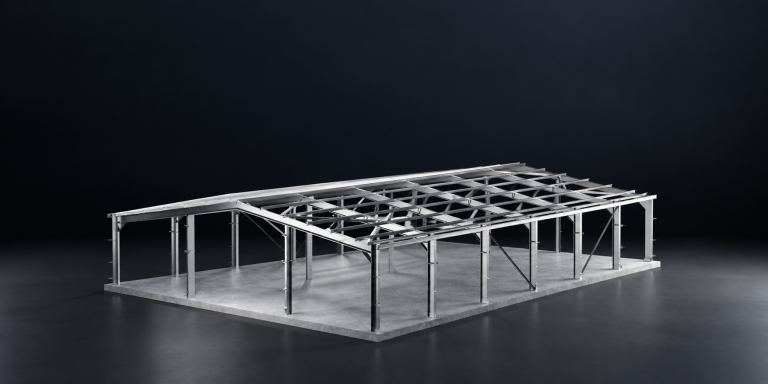
Pre-engineered steel is taking share in low-rise commercial development because it moves structural engineering, fabrication and quality control off the site and into a factory, which shortens the critical path and puts a code-ready, stamped drawing set in the developer’s hands earlier than conventional construction usually manages. Metal building systems

Read More »
Latest Issue
Issue 344 : Sep 2026

September 20, 2026

Schedule, stamped drawings and expansion: why low-rise developers keep choosing pre-engineered steel

Schedule, stamped drawings and expansion: why low-rise developers keep choosing pre-engineered steel

Pre-engineered steel is taking share in low-rise commercial development because it moves structural engineering, fabrication and quality control off the site and into a factory, which shortens the critical path and puts a code-ready, stamped drawing set in the developer’s hands earlier than conventional construction usually manages. Metal building systems account for a substantial share of new low-rise, nonresidential floor area in the United States, a position the Metal Building Manufacturers Association follows through its industry trends reporting, and that share was built up over decades on warehouses, light industrial units, retail shells, offices and mixed-use blocks of two or three storeys. The model is less familiar to UK developers, but the reasoning behind it travels, and so does the main procurement trap inside it. Most published comparisons of pre-engineered steel lead with cost. That framing is the least useful one for a developer, because price is the output of a specification that has not been written yet. The four things worth examining before that point are schedule sequencing, the engineering documents, how expansion gets designed in, and who you are actually buying from. The schedule argument is a sequencing argument The schedule gain in a pre-engineered steel building comes from parallel work, not from fast erection. While the primary frames, secondary framing and cladding are being fabricated in a plant, the site is doing groundworks, drainage and foundations, so two long-lead activities run side by side instead of end to end. Erection is quick once the steel lands, but erection was never the part of the programme that hurt. That parallel sequence only holds if the design is frozen early. A pre-engineered system prices and fabricates against a fixed geometry, load case and opening schedule, so a decision to move a roller door or add a mezzanine after release to fabrication costs far more programme time than the same change would in a steel-frame build detailed on site. Developers who do well out of the format tend to be the ones who run their tenant conversations before release, not after. Weather exposure is the other schedule variable that changes shape. Factory fabrication in controlled conditions removes a large block of field labour from the programme, which matters more in a wet winter than any theoretical erection rate does. The site crew is bolting together finished members rather than cutting, fitting and welding in the open. Stamped drawings are the part developers underestimate Engineering documentation is the quiet reason pre-engineered systems clear approvals faster. A genuine manufacturer produces the anchor bolt plan, reactions, frame cross-sections and erection drawings as part of the order, sealed by a professional engineer licensed in the project’s jurisdiction, so the building official and the developer’s own structural consultant are reviewing a coordinated set rather than assembling one. The practical value shows up at two moments. The first is permitting, where a complete stamped package tends to attract fewer requests for information. The second is foundation design, because the manufacturer’s reaction data is what the geotechnical and foundation engineers need before anyone pours anything, and late reactions stall the site while the steel sits in a plant yard. Ask at tender stage when the stamped drawings arrive, who seals them, and whether design changes after approval trigger a re-seal. The answers differentiate suppliers more sharply than any brochure claim about steel grade. Expansion has to be engineered before the first bolt goes in Expansion in a pre-engineered steel building is cheap if it was planned and awkward if it was not. A frame ordered as expandable gets a rigid endwall rather than a bearing endwall, with the foundations, bracing and reactions sized for the future bays, so adding 60 or 80 feet later means unbolting the sheeting and continuing the line. A frame ordered without that provision needs the endwall rebuilt and the foundations reworked, which is a different project. Developers holding land for phased delivery, or letting to tenants with growth clauses, should specify the expansion case in the original enquiry even if they never use it. The design cost of an expandable endwall is modest at order stage and effectively unrecoverable afterwards. Bolted steel frames also come apart, which matters for exit strategy and for planning arguments about circularity. UK guidance on recycling and reuse of structural steel records recovery rates for structural sections at the top end of construction materials, and a bolted, documented frame is considerably easier to demount and reuse than a welded or composite one. Manufacturer or broker is the question that decides the rest Much of the pre-engineered steel market is sold by brokers, dealers and kit resellers who do not own a plant, do not employ engineers and pass the order to whichever fabricator quotes best that month. The distinction is invisible in marketing and very visible in a dispute, because a reseller cannot reseal a drawing, cannot reschedule a fabrication slot and cannot answer a technical query without relaying it. Developers who buy on schedule certainty should be establishing, in writing, whether the counterparty manufactures. Buying manufacturer-direct compresses the chain to one accountable party for engineering, fabrication and delivery. Universal Steel of America, a Peachtree Corners company founded in 1995 that manufactures pre-engineered systems for low-rise projects only, runs that model across its commercial steel buildings work, with in-house engineering, PE-stamped drawings, and a stated plant network covering every region of the United States that ships directly to site from the closest plant. The point for a developer is not the brand but the structure of the relationship: when the engineer, the fabricator and the shipper answer to the same company, a mid-project change has one owner rather than three. Third-party accreditation helps test the claim. IAS AC472 accredits a metal building manufacturer’s design, fabrication and inspection programme, and a building official may accept that accreditation as evidence that the manufacturer qualifies as an approved fabricator under Chapter 17 of the International Building Code, which can remove duplicate in-shop inspections. One detail gets misread often: AC472


Read More »
Who can quote for your new water connection: accredited contractors serving Hertfordshire and London

Who can quote for your new water connection: accredited contractors serving Hertfordshire and London

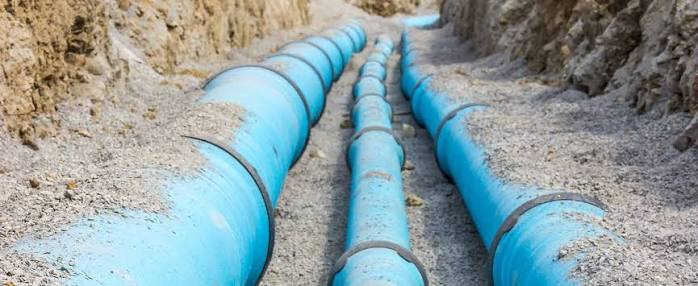
A new water connection in Hertfordshire or London can be priced by two kinds of organisation: the incumbent water company, which will be Affinity Water or Thames Water across most of the region, or an independent contractor holding WIRS accreditation under the Water Industry Registration Scheme. Both routes end with the same adopted asset on the same network, which is why a developer is entitled to put the two prices side by side before committing. Ofwat’s guidance on self-laying a connection sets out that choice in plain terms, and most water company quotations in the region are issued as convertible quotes that show what happens if an accredited self-lay provider does the constructible work instead. The providers below were selected on two tests only: they hold current WIRS accreditation, which can be checked on the LRQA WIRS provider search, and they publicly state that they work in Hertfordshire, London or both. They are listed alphabetically rather than ranked, because the right provider for a 40-plot residential site in Hemel Hempstead is rarely the right provider for a single 63mm commercial supply in Hackney. What part of the job is actually open to competition Only the contestable element of a new water connection can be priced by anyone other than the water company. Contestable work typically covers excavation, the laying of the new main and services, pressure testing, and reinstatement of the highway. Non-contestable work, which includes the final tie-in to the live main, network commissioning and certain water quality activities, stays with Affinity Water or Thames Water or their authorised agent. Two charges sit outside the competitive part altogether and should appear on any honest quote. The infrastructure charge is payable per connection regardless of who lays the pipe, and income offset is no longer available on new agreements entered into from 1 April 2025, so a quote that still deducts it is either legacy or wrong. Affinity Water publishes both in its developer charging arrangements, and Thames Water publishes the equivalent through its developer services pages. Six accredited contractors serving Hertfordshire and London 1. McFadden Utilities McFadden Utilities is a family-run utility contractor based in Welwyn Garden City, trading since 1980, with WIRS accreditation, WIAPS registration, ISO 9001, 14001 and 45001 certification and Constructionline Gold. The firm holds direct contracts with Affinity Water and Thames Water and is a confirmed HS2 supplier, which means the crews pricing a developer’s connection are the same crews working on the adopting company’s own network. That combination of clean water specialism, 24/7 standby capability and reinstatement carried out in-house rather than sublet is the practical reason developers ask new water connection contractors in Hertfordshire for a competing price once the water company’s quotation lands. On new connections the developer makes first contact with the water company and McFadden works alongside from that point, reviewing the water company’s design and delivering the contestable works through to adoption. 2. Aquamain UK Ltd Aquamain is a WIRS-accredited self-lay provider operating across the south of England, with a business built almost entirely around water network delivery rather than multi-utility packages. Developers who want a water specialist rather than a generalist coordinating four services at once tend to shortlist firms of this shape. Aquamain’s published coverage is regional rather than county by county, so confirm at enquiry stage that your specific Hertfordshire or London postcode falls inside its working area. 3. Cascade Water Services Ltd Cascade Water Services works from Little Wymondley near Hitchin and covers Hertfordshire, Bedfordshire and London, which makes it one of the few genuinely local options for sites in the Affinity Water region. Its LRQA-registered WIRS scopes cover construction of mains and services, routine mains connections and routine under pressure connections, alongside WIRS and WIAPS listings and the usual Achilles and Constructionline memberships. Cascade is a younger company than several on this list, incorporated in 2023, so ask for project references at a comparable size to your own. 4. Green Frog Utilities Ltd Green Frog Utilities is a multi-utility connections provider holding both WIRS and GIRS accreditation, with LRQA listing it in the South East region. The combined water and gas accreditation is the reason it appears on developer shortlists, because a single provider handling two services can compress the programme on a phased site. Its operational base is in Tamworth rather than the Home Counties, which is worth weighing if the job involves frequent short visits or reactive attendance. 5. Kilkern Ltd Kilkern is a civil engineering and utilities contractor that secured WIRS accreditation covering mains and services construction and routine mains connections, and appears on the LRQA register with the South East among its operating regions. The firm’s background in larger civils packages means it suits developments where the water connection sits inside a wider earthworks and infrastructure scope rather than standing alone. For a single service connection, a smaller specialist will usually price more keenly. 6. Utility Solutions Provider Ltd Utility Solutions Provider holds WIRS, WIAPS, NERS and GIRS accreditations and markets itself specifically at London and the Home Counties, working with Thames Water on new mains, service connections, adoptions and diversions. The four-scheme accreditation stack makes it a reasonable fit where electricity, gas and water all need to arrive on the same plot on the same programme. Ask how the water element is resourced internally, because multi-utility firms vary widely in whether water crews are directly employed or subcontracted. What a competing quote should contain before you compare it A self-lay quote and a water company quote are only comparable when both are broken down the same way, and most disputes in this market come from comparing two documents that count different things. Use the following checklist when the second price arrives. The WIRS scope matches the work. Construction of mains and services, routine mains connections and routine under pressure connections are separate accreditations, and a provider without the relevant scope will have to subcontract the part it cannot self-deliver. Contestable and non-contestable work are split on the page,

Read More »