


Casino architecture has always been about more than flashing lights and gaming floors. To architecture enthusiasts and industry professionals, these buildings are statements of ambition, culture, and technical achievement. Across the globe, some casinos have become architectural landmarks, drawing visitors just as much for their structure as for what happens inside. From historic European icons to futuristic towers in Asia, these venues show how design can elevate an entire experience.
Few structures capture timeless elegance quite like the Casino de Monte Carlo. Built in the 19th century, its ornate façade, grand staircases, and richly decorated interiors continue to define luxury in its purest form. The building reflects Monaco’s reputation for wealth and refinement, with architectural details that feel more like an opera house than a gaming venue. Large windows frame views of the Riviera, allowing the surrounding landscape to become part of the experience rather than a backdrop, inspiring admiration for enduring beauty and craftsmanship.
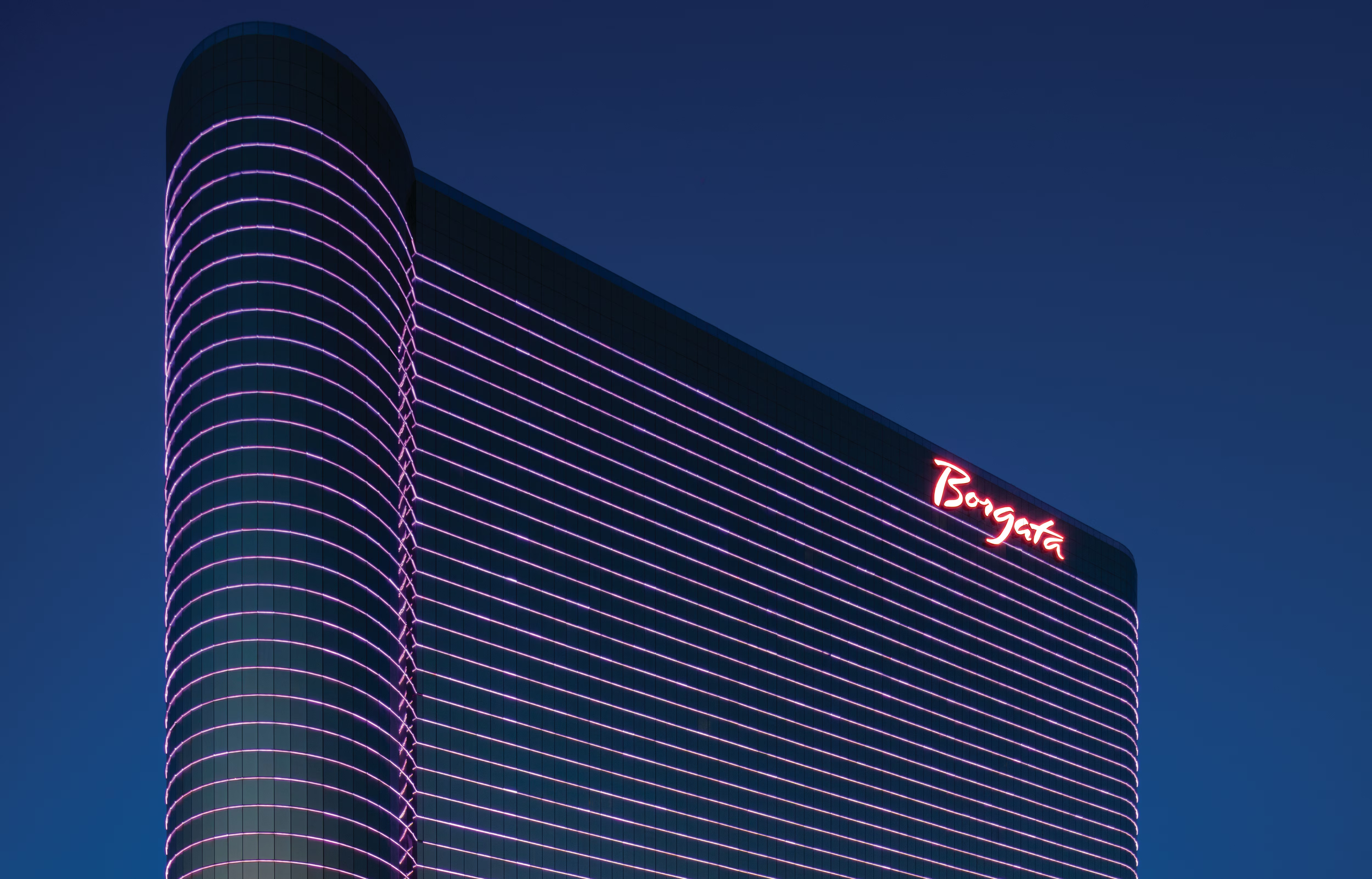
In contrast, Atlantic City’s Borgata Hotel Casino and Spa represents modern resort-scale design. Inspired by Tuscan architecture, its reflective gold-glass tower dominates the skyline and can be seen from miles away. Originally developed as a health retreat, the site has evolved into a vast multi-purpose complex combining hospitality, retail, and entertainment under one roof. It is a clear example of how contemporary casino design prioritises scale, flow, and versatility, which perfectly complements all the best casino games and creates one of the most memorable experiences.
Las Vegas, unsurprisingly, remains a powerhouse of architectural creativity. The Bellagio stands out not only for its instantly recognisable exterior, but for how it integrates landscaped gardens into an urban casino environment. Covering thousands of square feet, these gardens are meticulously maintained and continually refreshed, blurring the line between built structure and natural design. It is this balance that makes the Bellagio as appealing to architects and designers as it is to casual visitors.
Moving east, the Morpheus Casino in Macau pushes engineering boundaries even further. Designed by the late Zaha Hadid, the building’s futuristic exoskeleton and dramatic void through its centre create a sculptural form unlike anything else in the city. Rising 42 storeys, Morpheus is as much a structural experiment as it is a destination. Its complex geometry required advanced construction techniques, helping cement Macau’s reputation as a global centre for bold architectural statements, inspiring awe and curiosity in architecture enthusiasts.
For a quieter but equally impressive approach, the Baden-Baden Casino in Germany offers architectural refinement over spectacle. Set against the Black Forest, the neoclassical building emphasises proportion, craftsmanship, and locally sourced materials. Rather than overwhelming visitors, the design invites them to slow down and take in their surroundings. Its subtlety proves that powerful architecture does not need excess to leave a lasting impression.
Together, these casinos highlight how structural design continues to shape the identity of destinations worldwide. Whether through historic grandeur or daring modern forms, they demonstrate the enduring value of architecture that is built to be remembered.