

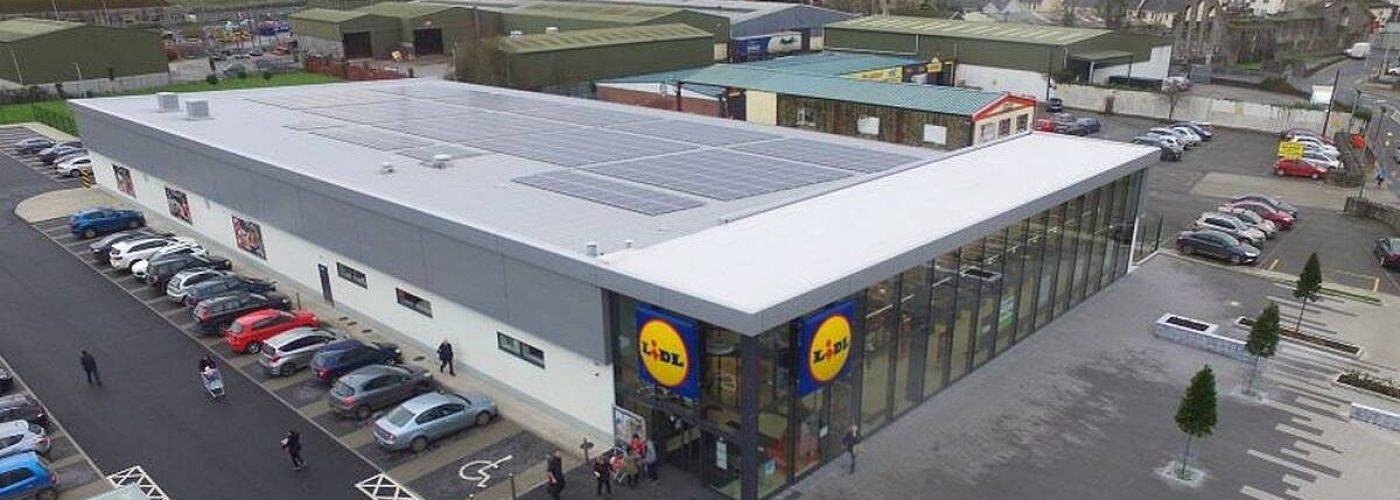


The middle aisles of discount supermarkets can be a treasure trove of unexpected bargains, from bagpipes to wetsuits – and now solar panels may soon join the list.
German supermarket giant Lidl is among the organisations working with the government to support the roll-out of plug-in solar panels. Within the next few months, shoppers could find low-cost solar kits in Lidl stores that can be set up on balconies or in outdoor spaces, helping households start saving on their energy bills.
Lidl GB’s corporate affairs director, Georgina Hall, said the move reflects the retailer’s commitment to making sustainable living more affordable. She welcomed efforts to modernise UK regulations, describing the changes as an important step in enabling households to take control of their energy use while supporting the country’s net zero ambitions.
Plug-in solar technology is already widely used across Europe. In Germany alone, around half a million units are installed each year. These systems allow users to generate free solar power and feed it directly into their home via a standard mains socket, avoiding installation costs. As a result, households can reduce their reliance on grid electricity and lower their bills.
The government believes this simple, accessible technology could help many households cut energy costs while reducing the UK’s dependence on global fossil fuel markets. The push for solar has been accelerated by rising energy prices linked to ongoing conflict in the Middle East.
Alongside this, the government has published its long-awaited Future Homes Standard. While largely in line with previous expectations, it includes a stronger emphasis on solar panel installation in new homes. Under the updated Building Regulations, most new properties – with some exceptions such as high-rise buildings – will be required to include on-site renewable electricity generation, most commonly through solar panels.
The standard also mandates low-carbon heating systems, such as heat pumps and heat networks, in all new homes.
Energy Secretary Ed Miliband said the government is focused on supporting households through rising energy costs while strengthening the UK’s energy security. He emphasised that expanding access to clean energy, whether through solar panels on new homes or plug-in systems available in shops, is key to reducing reliance on volatile fossil fuel markets.
Greg Jackson, founder and chief executive of Octopus Energy, said public interest in clean technologies has surged in response to global instability. He noted that demand for solar panels has risen sharply, alongside growing uptake of heat pumps and electric vehicles.
He added that generating electricity at home allows households not only to cut bills but also to sell excess energy back to suppliers. Combined with technologies such as heat pumps and electric cars, this can significantly reduce the cost of heating and transport in ways that traditional gas and petrol cannot.
Building, Design & Construction Magazine | The Choice of Industry Professionals