
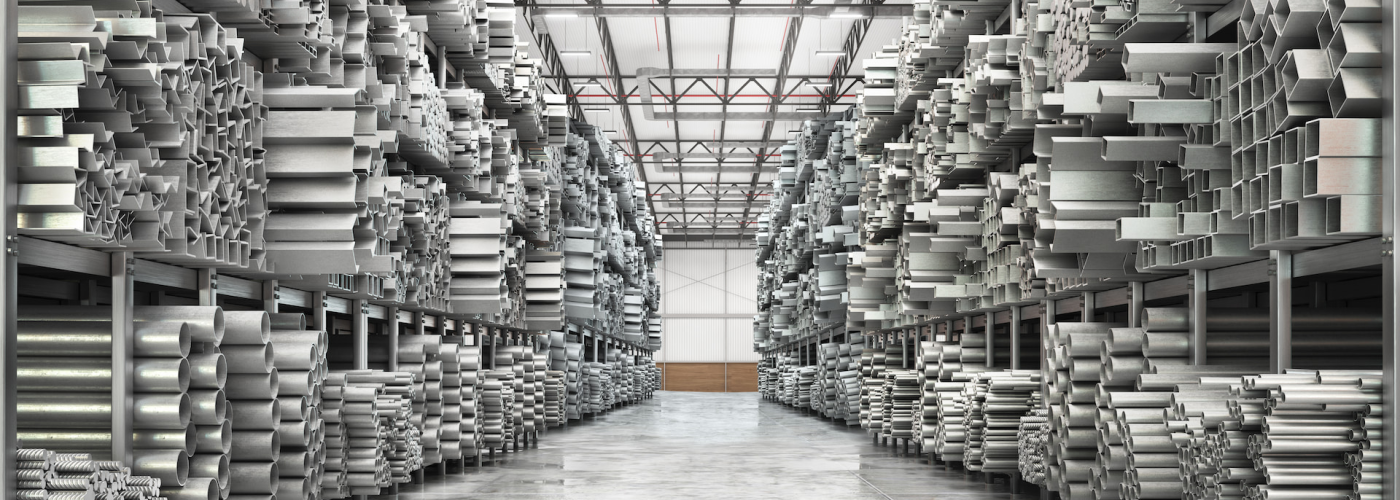


Aluminium extrusions are created through a precise manufacturing process that shapes aluminium by forcing it through a die that creates cross-sectional profiles. It’s widely used in modern product design due to its versatility, lightweight strength and cost efficiency. Designers can achieve complex shapes with minimal waste, making it ideal for industries seeking durable, scalable and sustainable solutions.
What Are Custom Aluminium Extrusions?
Custom aluminium extrusions are uniquely designed profiles made by forcing heated aluminium through a specially created die to achieve a specific shape. The process involves heating a solid billet and pushing it through a mould or a die, resulting in a continuous section with a uniform cross-section. Once fully formed, the material then cools down, is cut to the required length and is then finished to suit its intended use.
The “custom” aspect comes from the design stage itself, where profiles are engineered to meet exact requirements. This gives designers the ability to control dimensions, strength and functionality, making the final product far more efficient and purpose-built.
By contrast, standard extrusions are ready-made shapes like aluminium angles, channels, tubes, or simple aluminium sheets, that are produced in bulk. These are ideal for general applications, while custom profiles provide greater flexibility and are better suited to more complex, specialised or even bespoke designs.
Benefits for Product Design
Custom aluminium extrusions are a popular choice across multiple industries as they offer significant advantages for modern product design. Thanks to their exceptional flexibility, designers can create complex geometries that would otherwise be difficult or too costly to achieve through other manufacturing methods, allowing for more innovative and efficient products. This freedom also makes it easier to tailor components to exact specifications.
Another key benefit is weight reduction. Aluminium is a naturally lightweight material with superior strength. Arguably, it has the best strength-to-weight ratio available. This enables designers to minimise overall product weight without compromising structural integrity. This is especially valuable in industries where performance and efficiency are critical.
Custom extrusions also allow multiple functions to be integrated into a single profile. Features such as channels, grooves and mounting points can be built directly into the design, reducing the need for additional parts and assembly.
Last but not least, aluminium also offers excellent thermal conductivity and corrosion resistance. This improves heat dissipation in technical applications and ensures long-lasting performance, even in demanding environments.
Design Optimisation Strategies
Effective product design that uses custom aluminium extrusions has a significant focus on manufacturability from the get-go. Profiles should be designed with simplicity and balance in mind, as consistent wall thickness and smooth transitions make the extrusion process more reliable and cost-efficient. Overly complex or certain uneven shapes can lead to continued production challenges and increased expenses, both long- and short-term.
Another key strategy of this method is in the reduction of created material waste. By refining the cross-sectional design to use only what is necessary, manufacturers can lower costs and improve sustainability. Smart design decisions at this stage can significantly impact overall efficiency.
Limiting secondary machining is also important. Features such as slots, grooves or fixing points can often be incorporated directly into the extrusion, reducing the need for additional processing and speeding up production.
Lastly, the final tolerances should be carefully considered. Allowing for practical manufacturing limits helps maintain consistent quality while avoiding unnecessary precision that can drive up costs.
Cost Efficiency Considerations
Custom aluminium extrusions often involve an initial investment in tooling, but this upfront cost can deliver strong long-term value. Once the die is created, production becomes faster, more consistent and less wasteful. This is found particularly during larger manufacturing runs where unit costs decrease over time.
They also help cut down on assembly and labour expenses. By integrating multiple design elements into a single profile, fewer components are needed, which simplifies assembly and reduces manual work. This not only saves time but also improves overall production efficiency.
Over the full product lifecycle, aluminium extrusions can offer additional savings. Their corrosion resistance, combined with durability and low maintenance requirements, means that the final product itself lasts far longer and will require fewer repairs or replacements over its lifecycle.
Collaboration with Extrusion Experts
Choosing to outsource and engage with extrusion specialists early on into the design phase can make a significant difference to the overall success of a project. Their input can help to ensure that all designs are practical to manufacture while still meeting performance goals, reducing the risk of costly changes or problems later on down the line.
Prototyping plays a crucial role in this process. Producing sample profiles allows designers to test how the extrusion performs in real-world conditions and confirm that it meets expectations before scaling up production.
Continuous refinement is also important. By working collaboratively throughout development, designers can make incremental improvements, ensuring the final product is both efficient to produce and fit for purpose.
Common Mistakes to Avoid
A frequent issue in extrusion design is the temptation to add unnecessary complexity. While the process does allow designers to make highly detailed shapes and even features that have no clear benefits. These needless designs will increase production difficulty and cost without improving performance.
Another mistake is failing to consider the practical limits of extrusion. Ignoring factors like minimum wall thickness or achievable tolerances can result in manufacturing problems or compromised quality.
Making changes too late in the process can also be costly. Alterations after tooling has been finalised often lead to delays and additional expenses. Addressing potential issues early helps maintain efficiency and keeps projects on track.
Conclusion
Custom aluminium extrusions offer a strategic advantage in product design for multiple industries and projects. This is down to the combination of flexibility, efficiency and long-term durability. Incorporating extrusions into your design process from the outset is key for optimisation of designs, improved product performance, issue mitigation and reduced product costs.