
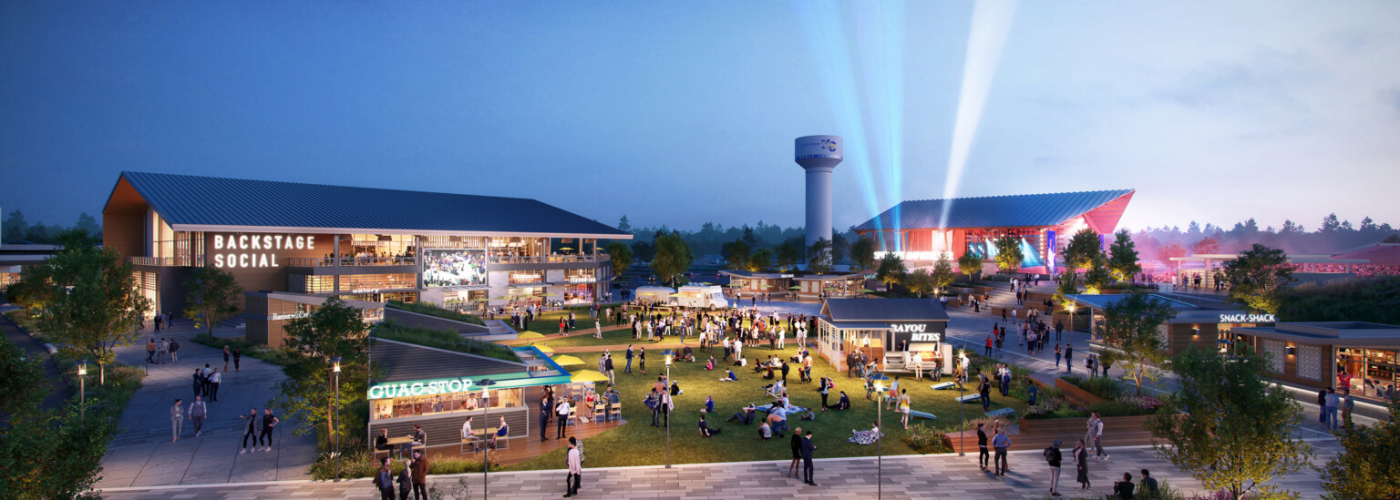


Walk through any newly opened mixed-use scheme in a British city and a curious thing becomes obvious: the leisure offering is no longer an afterthought bolted on once the flats have sold. It sits at the heart of the masterplan. Developers have worked out that residents do not just want somewhere to sleep and a desk to work from. They want somewhere to spend an evening, meet friends, eat well and be entertained, all within a short walk of the front door. The ground floor cinema, the rooftop bar and the boutique gym are now as much a part of the pitch as the kitchen specification.
That shift has quietly broadened what “entertainment” means within a single development, and digital leisure has become part of the mix alongside the physical. Among the online options residents reach for on a quiet night in are non gamstop casinos, a category of UK-facing gaming sites that operate outside the Gamstop scheme and have built a following heading into 2026. Reviewers tend to compare them on the strength of their game libraries, the breadth of payment methods including crypto, the welcome offers on the table and the overseas licensing that governs them. For some British adults they are simply another form of at-home entertainment, sitting in the same evening rotation as a streaming series or a takeaway, and developers designing for modern leisure habits cannot afford to ignore how people actually spend their downtime.
The Death of the Single-Use Block
For decades, the property industry built in silos. Offices went up in one zone, housing in another, retail parks somewhere off the ring road. The result was places that emptied out the moment the working day ended, leaving dead frontages and quiet streets. Planners and developers have spent the past decade unpicking that logic, and the mixed-use model is the answer most have settled on.
The thinking is straightforward enough. Put homes, workspace, shops and leisure in the same footprint and the area stays alive across the day and into the night. King’s Cross in London is the textbook example, where Coal Drops Yard turned a set of Victorian rail buildings into a destination that pulls in residents, office workers and visitors alike. Manchester’s NOMA and Birmingham’s Smithfield regeneration follow similar instincts, treating culture and leisure as the glue that holds the wider scheme together rather than a commercial unit to be filled at the last minute.
Why Leisure Sits at the Centre
There is a commercial reason developers lean so heavily on entertainment, and it has to do with footfall and value. A scheme with a buzzing food hall, an independent cinema and live music space commands higher residential prices and longer commercial leases. People pay a premium to live somewhere that feels lived-in.
The high street’s long struggle has only sharpened this. As traditional retail has retreated, debate has raged over what should fill the gaps, and much of the discussion in property circles echoes the BBC’s analysis of how the high street became a window on wider social change. The answer increasingly involves experience over transaction. A unit that once sold mid-market clothing now houses a climbing wall, a competitive socialising venue or a wine bar with a programme of events. Leisure, in other words, is doing the heavy lifting that retail used to manage on its own.
The Digital Layer Inside the Physical Place
Here is where things get genuinely interesting for designers. The leisure people consume inside a mixed-use scheme is no longer only the venues on the ground floor. A large slice of it happens on a sofa, on a phone or a laptop, in the privacy of a one-bedroom flat several storeys up.
This matters for how buildings are specified. Residents who stream in 4K, play online with friends across the country or dip into online gaming sites in the evening expect connectivity that simply works. Full-fibre infrastructure, robust in-building mobile coverage and communal spaces that double as informal lounges are now baseline expectations rather than luxuries. The smart developer treats the digital entertainment habits of residents as a design brief, not a happy accident. The physical and the online have stopped competing and started complementing each other: a resident might watch a match at the communal screening room one night and game alone the next.
Designing Communities, Not Just Buildings
The best mixed-use schemes understand that leisure is ultimately about belonging. People stay where they feel part of something. Planning documents have caught up with this, too. The proposals for the Land East of High Street in Sevenoaks read as a study in this approach, weaving community and amenity into the residential offer rather than treating them as separate concerns.
What emerges from these schemes is a more honest picture of how British adults actually spend their leisure time. Some of it is social and public: the rooftop terrace, the supper club, the comedy night. Some of it is solitary and digital: the box set, the video game, the online flutter after the dishes are done. A development that designs for only one half of that equation will feel incomplete, no matter how handsome the architecture.
What This Means for the Industry
For developers, contractors and architects, the message is clear enough. Leisure can no longer be the line item that gets value-engineered out when budgets tighten. It is the thing that turns a collection of flats into a place worth living in, and it spans both the venues you can walk to and the entertainment that arrives through the broadband. The schemes that thrive will be the ones that take both seriously, building communities where an evening out and an evening in are equally well catered for.