

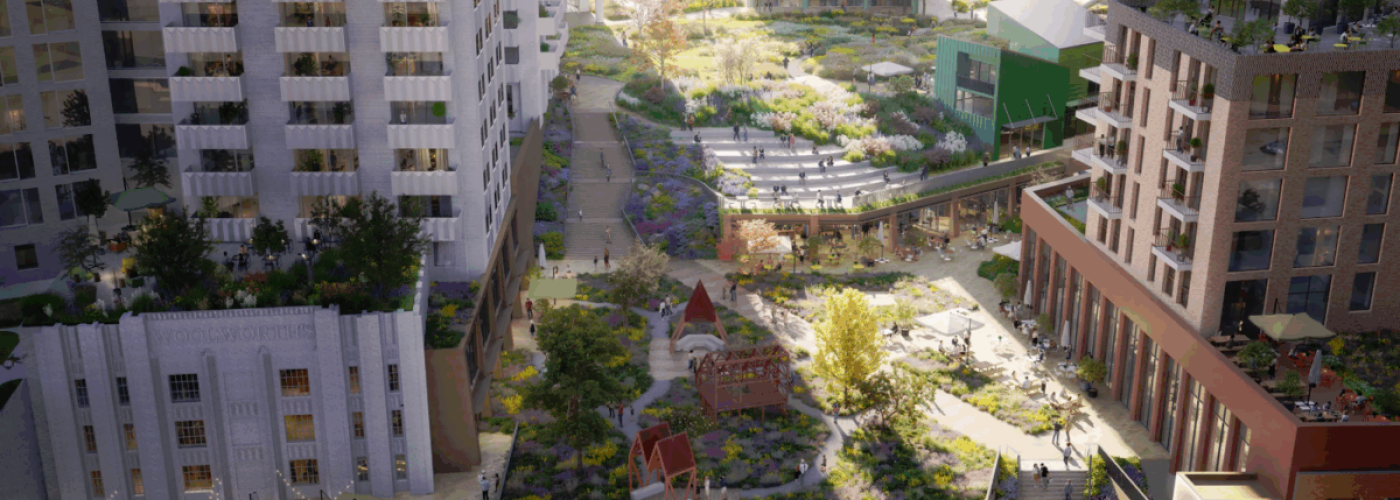


Landsec has suspended plans for its £1.5 billion transformation of Lewisham Shopping Centre, dealing a major setback to one of south east London’s largest residential-led regeneration projects amid rising construction costs, development viability pressures and disagreements over affordable housing provision.
The developer has confirmed that it no longer sees a sufficiently certain route to delivering the ambitious mixed-use scheme, which would have replaced the existing 1970s shopping centre with a new retail district, residential towers, student accommodation and extensive public amenities.
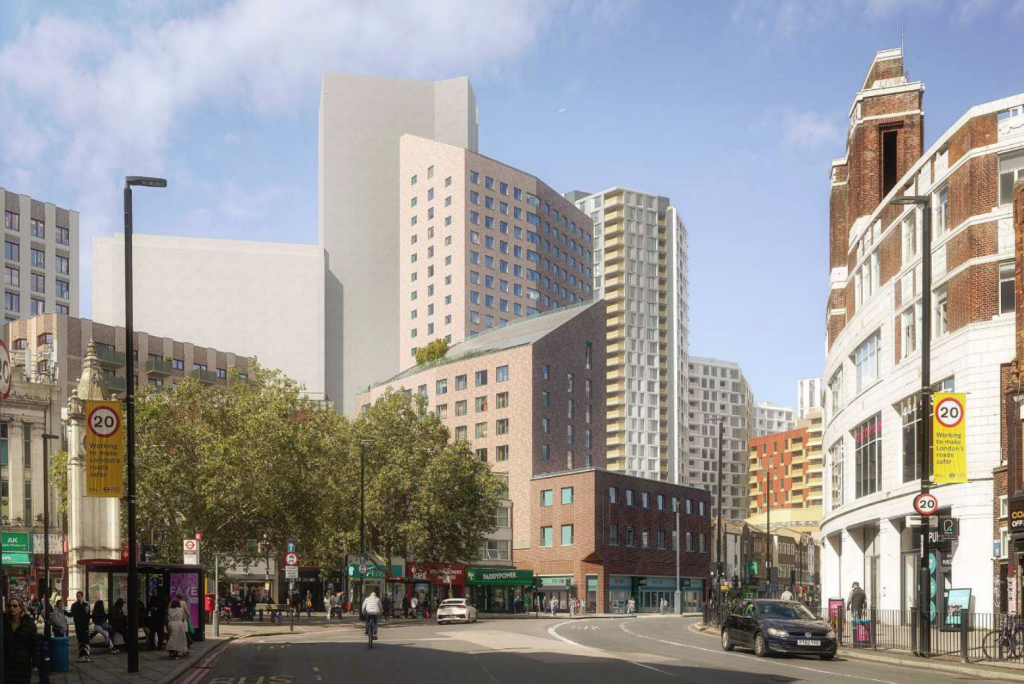
Construction had been expected to commence in 2027, with the masterplan proposing buildings rising to 35 storeys and a substantial new residential neighbourhood in the heart of Lewisham.
The redevelopment would have delivered 1,744 homes, alongside 660 purpose-built student accommodation beds and 445 co-living rooms, creating a high-density mixed-use destination combining residential, retail, leisure and cultural facilities.
Plans also included a 500-capacity music venue and a rooftop meadow, introducing new green space and community facilities as part of a comprehensive redesign of the town centre.
However, the project’s delivery depended on securing additional land, including the neighbouring former Citibank office building, Lewisham House.
Landsec had sought support from Lewisham Council to progress the necessary land assembly arrangements, but the borough’s new Green administration declined to support the next stage without a substantial increase in affordable housing.
Although the redevelopment had secured planning approval under the previous Labour administration, the new leadership has maintained that the proposed level of social rented accommodation was insufficient.
The consented scheme included 98 social rent homes and 231 discounted rental properties intended for key workers, forming part of the wider 1,744-home residential development.
Mayor of Lewisham Liam Shrivastava, who had previously supported a campaign opposing the proposals, reiterated the administration’s position on affordable housing.
“This administration is laser focused on delivering genuinely affordable housing and I’ve consistently said the level of social rent homes in this scheme needed to increase,” he said.
However, the Mayor also acknowledged the wider challenges affecting major regeneration projects.
“The fact is the conditions for such projects are simply not favourable right now.”
For Landsec, the requirement to substantially revise the housing mix comes against an increasingly challenging economic backdrop for large-scale development in London.
The company pointed to higher interest rates, construction cost inflation and additional building regulatory requirements as significant factors affecting the financial viability of the redevelopment.
Increasing the affordable housing provision would require material changes to the approved proposals, introducing further uncertainty around project costs, funding and delivery.
In a statement, Landsec said: “This position, combined with the exceptionally difficult economic conditions, mean that we no longer see a sufficiently certain route to delivery and have taken the difficult decision to deprioritise the redevelopment of Lewisham Shopping Centre.”
The decision highlights the difficulties facing major urban regeneration schemes, particularly those combining substantial residential development with the replacement of existing retail infrastructure.
Projects of this scale frequently depend on complex land assembly arrangements, substantial upfront investment and a carefully balanced development mix to make construction financially viable.
In Lewisham, the proposed transformation would have represented a fundamental change to the existing shopping centre, introducing a new urban district designed around residential growth, commercial activity and public space.
The scheme had already begun influencing the existing retail environment, with Boots relocating in preparation for the anticipated redevelopment and NatWest also announcing plans to move.
Despite shelving the regeneration proposals, Landsec has confirmed that it will continue operating and investing in Lewisham Shopping Centre, which it has owned for more than two decades.
The existing retail destination will therefore remain operational while the developer reassesses its longer-term options for the site.
For the wider construction and property development sectors, the decision underlines the growing pressures surrounding the delivery of major mixed-use schemes in London, where affordable housing requirements, construction inflation and increasingly complex regulatory obligations must be balanced against commercial viability.
While the £1.5 billion masterplan has been deprioritised rather than permanently abandoned, there is currently no confirmed timetable for restarting the redevelopment.
The future of the Lewisham site will now depend on whether a financially deliverable regeneration strategy can be established that satisfies both the developer’s investment requirements and the Council’s ambitions for increased affordable housing.
The setback leaves one of south east London’s most prominent town centre regeneration opportunities facing an uncertain future, despite the scale of residential, commercial and community investment originally envisaged.
Building, Design & Construction Magazine | The Choice of Industry Professionals