BDC News Team

TRICO Flood Management Scheme Trialled for New Development Proposals

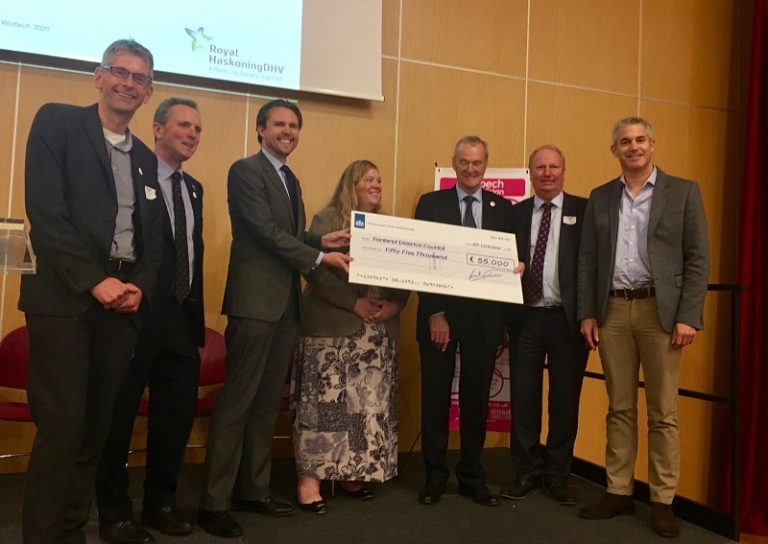
The world’s first implementation of new flood modelling technology has taken place at the Wisbech Garden Town Project. On the 26th October, it was announced that the Royal HaskoningDHV’s TRICO approach has been chosen for a pilot scheme that will investigate the flood management the 10,000 home Garden Town that

Read More »

Welsh government backs £80m Newport convention centre plan

The Welsh government has agreed to support the development of an international convention centre on the grounds of the Celtic Manor Resort in Newport. Above: Computer generated image of how the new centre should look The proposed £80m facility, designed by architect Scott Brownrigg, will be able to seat 5,000

Read More »

Accord BTL announces cuts to five-year fixed range

Accord BTL announces cuts to five-year fixed range Accord Buy to Let has announced this morning that it has reduced rates across its entire five-year fixed rate range by up to 0.30%. The intermediary-only lender has also reduced selected three-year fixes at 60% and 75% LTVs. Highlights include a 2.89%

Read More »

Chubb Breaks Ground on New High-Performance Blackburn Development

Chubb Fire & Security Limited, a leading provider of security and fire-safety solutions for businesses and industry, held a groundbreaking ceremony for a new high-performance workspace in Blackburn. The project will transform Chubb’s existing Blackburn office campus into an advanced, integrated and sustainable space for Chubb, as well as UK

Read More »

Turkey: Active construction projects valued at $350bn

Turkey’s construction market is in a position of significant health. Growth has been steady and sustained, with the industry’s turnover increasing by 4.6 per cent year on year in 2014, while overall production climbed by three per cent over the same period. Further evidence of the market’s strength can be

Read More »

New STEAMhouse Under Construction in Birmingham

The Construction work on the first phase of the new creative innovation centre at Birmingham City University started work this week. The construction work began on Monday, the 30th October and will lead to the creation of STEAMhouse. This project will also include the refurbishment of a former car dealership

Read More »
Latest Issue
Issue 340 : May 2026

BDC News Team

TRICO Flood Management Scheme Trialled for New Development Proposals

The world’s first implementation of new flood modelling technology has taken place at the Wisbech Garden Town Project. On the 26th October, it was announced that the Royal HaskoningDHV’s TRICO approach has been chosen for a pilot scheme that will investigate the flood management the 10,000 home Garden Town that has been planned for the area of Wisbech. This pilot flood management project has received the backing of the Dutch Government, who have awarded a €55,000 grant from the Partners for Water programme. This Partners for Water programme has been set up in order to offer support and funding for a number of innovative projects around the world. TRICO, or the Toolset for Rapid Interactive Collaborative Optioneering was developed through a partnership with Nelen & Schuurmans, Deltares and TU Delft. The Toolset has been awarded the innovation award in 2016’s Defra flood management and modelling competition. TRICO uses the innovative and revolutionary hydraulic modelling tool 3Di as well as the interactive Map Table in order to offer the opportunity for full stakeholder collaboration when developing flood management options. The new town planned as a part of Wisbech 2020 offers an exciting but challenging opportunity for the area. The new town’s agreed location on the floodplain means that there are a range of exceptional and innovative approaches needed in order to make sure that the development is kept safe, is sustainable and manages to gain planning consent. It is great news for the partnership that TRICO can be put to good use on a nationally significant project. The contribution from the Dutch government from their partners for Water fund will be vital to making a difference to the pilot project. The scale of the flood management challenge that is faced by those who are involved in the design of Wisbech has been illustrated in the close attention that has been given to the pilot by people on a regional and national scale.

Read More »

Maber Celebrates 10 year Anniversary in Leicester with VIP Tour of Project

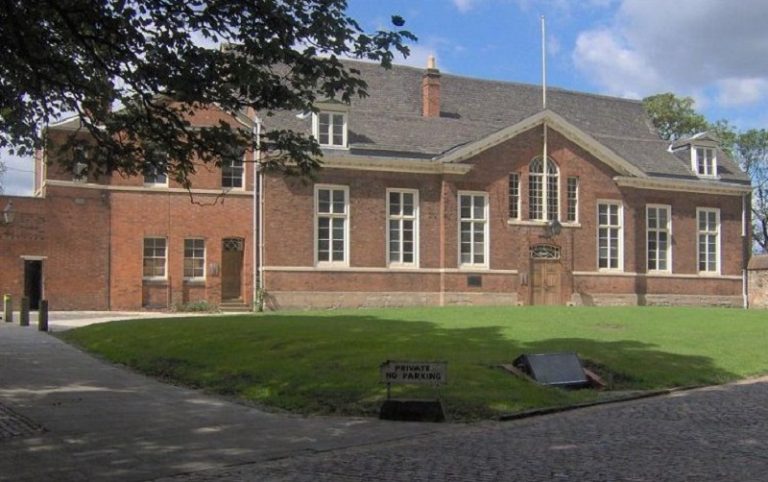
Maber, the Midlands-based Architectural practice has announced that they will be celebrating their tenth anniversary with a VIP tour of one of their latest projects. Architects practice will be giving a tour of the restoration and refurbishment work that has been worked on by the company at the Great Hall of Leicester Castle. This VIP tour will celebrate the latest work of Maber’s Leicester office, which has been open for ten years. The Architectural firm has roots that extend back over 30 years. The company employs 70 people across a number of offices in the Midlands and London. Since the Leicester office was first opened in 2007, it has managed to expand, and now employs ten people in the city. The Leicester office of Maber has been responsible for the design of some of Leicester’s best known buildings as and architectural work. One of the Directors of Maber, Ian Harris, is the head of the Leicester office and is proud of the success that has been achieved by the branch over the course of the last ten years. The hard work that has led to this milestone, and the work and reputation that has been developed has been attributed to the long-term relationships that have been formed with their clients as well as the amazing talent shown by the team working at the practice. The Guests at Maber’s anniversary celebrations will have the opportunity to take a tour of the newly-refurbished Great Hall, which is thought to be the largest medieval hall of its kind in Europe. The space has been converted into a new Business School to be used by De Montfort University and utilised many different skills from Maber’s team, including architecture, interior design, landscape design and conservation. As well as having the opportunity to tour the Great Hall, the birthday celebrations will have the chance to experience some of the latest technology used by Maber, including Virtual reality, 3D design and 3D printing.

Read More »

What are the legal options for those who are injured in oil fields?

The reason that many environmentalists favor looking for alternative forms of energy to oil is not just the disruption that drilling has on the atmosphere but also the danger that it poses for those who work in the oilfield industry every day when they go to work. Due to the extreme danger of working in the oil fields themselves, it is one of the few industries left where employees are allowed to sue their employers. Not covered by workers’ compensation insurance in the same manner, if you are injured in a gas industry accident, then you and your family are entitled to specific rights that other business workers are not. Those who suffer an injury in an oil field or offshore accident are allowed to sue for personal injury. The compensation that they are entitled to covers both economic damages like medical bills and expenses and lost wages for work. They are also entitled to have non-economic damages, like pain and suffering, covered. There are several different types of offshore and oil-field accidents These are the most common types of accidents that an offshore or oil field employee can be compensated for. Collisions – If a worker is involved in a traffic accident that leads to a job-related death or injury, OSHA, or the Occupational Safety and Health Administration, states that workers are entitled to have their damages paid for. There are a lot of processes in offshore and oilfield operations that require the workers to transport materials that are both hazardous and have to be transported through roads that might not be constructed well. If someone working in the field suffers from an injury, they can sue for their damages, which can be extremely dangerous. Struck by or caught between something – In the offshore industry and oil fields, there are often times when workers operate heavy machinery and equipment. Things that they use are machines like derricks, cranes, forklifts, pipes, catheads, rotating wellhead equipment, high-pressure lines, and cables, which pose high risks to the employee. Fires and explosions – When working in the offshore industry and oil fields, flammable gasses and vapors can easily ignite, leading to burn injuries and explosion deaths. The high-pressure nature of the oilfield lines can easily burst, which can also lead to explosions and fires that endanger everyone on the site. Falls – The nature of the rigs makes it necessary for workers to be elevated frequently, which can predispose them to falls. Many falls that happen in the oilfield and offshore industry are not minor, resulting in serious injury and deaths. Additionally, working with oil makes surfaces slick and slippery, which can predispose workers to slips and fall injuries. Ergonomic dangers – Working in the offshore and oil field industry requires a lot of strength. When pushing, pulling, twisting, and reaching over the boat, workers are exposed to extreme conditions that can put them at increased risk of a severe injury. Why are offshore workers’ injuries different?

 A worker who is injured in an offshore accident is entitled to be compensated according to Maritime Law. The Jones Act, an act created over a century ago, is still in effect and allows those who work offshore to file a claim using it, instead of going through an employer’s workers’ compensation insurance. Those who are eligible are any “seamen.” This involves not just those who work at sea, but those who work in the drilling and oil industry. Maintenance and cure is a component of Maritime Law that makes those who work in the offshore industry eligible for having their daily bills and living expenses maintained through their employer until they reach the maximum medical advancement possible. For offshore rig workers, the Longshoreman and Harbor Workers Compensation Act applies and provides similar benefits including medical expenses and workers’ lost wages. The Death On The High Seas Act is a law that helps to provide aid to those families who have lost someone in an offshore oil rig accident. It provides death benefits to anyone who was injured within three miles from the shore. The Jones Act also applies to those who are aboard Mobile Offshore Drilling Units and provides compensation for those injuries that happen as a consequence of working on a vessel. The compensation not only includes medical bills but also noneconomic recovery for damages like pain and suffering. Many dangers come from working in the offshore and oilfield industry. If you are injured while on the job, then you do have recourse to recover for your damages, including those which are noneconomic, through the Jones Act. Different from workers’ compensation, it is important that you have personal injury Houston lawyer on your side to navigate the complexity of your injuries so that you are awarded what is rightly yours.  

Read More »

Welsh government backs £80m Newport convention centre plan

The Welsh government has agreed to support the development of an international convention centre on the grounds of the Celtic Manor Resort in Newport. Above: Computer generated image of how the new centre should look The proposed £80m facility, designed by architect Scott Brownrigg, will be able to seat 5,000 people and have a total floor space of 20,000 m2. Excavation work to enable construction is expected to begin in September 2016 and the new convention centre could be completed and ready for use in 2019. Welsh economy minister Edwina Hart has agreed a deal in principle for the Welsh government to form a joint venture with Wesley Clover, the parent company of Celtic Manor Resort, to move the scheme forward. She said: “The new convention centre will provide a considerable economic boost to Wales. The 2014 NATO Wales Summit and the 2010 Ryder Cup demonstrated that Wales and the Celtic Manor Resort have the ability to host events on a global scale. We need a world-class convention centre in order to capitalise on Wales’ growing reputation in this area, to host international events and conferences on a regular basis.”     Newport City Council leader Bob Bright said: “We have been working with the Celtic Manor since the original facility was completed to progress this great opportunity to host an international convention centre here in Newport. We are delighted with this latest announcement of a new joint venture company to bring the plans to reality, and look forward to the many benefits this facility will bring to the City of Newport.”     Further Images This article was published on 6 Apr 2016 (last updated on 6 Apr 2016). Source link

Read More »

Accord BTL announces cuts to five-year fixed range

Accord BTL announces cuts to five-year fixed range Accord Buy to Let has announced this morning that it has reduced rates across its entire five-year fixed rate range by up to 0.30%. The intermediary-only lender has also reduced selected three-year fixes at 60% and 75% LTVs. Highlights include a 2.89% five-year fix at 60% LTV, available to remortgaging landlords which comes with a £800 fee and the choice of free standard valuation and standard legal fees, or £300 cashback on completion and free standard valuation. A three-year fix at 2.39% is available to remortgaging landlords with a 40% deposit, and comes with a £800 fee and the choice of free standard valuation and standard legal fees, or £300 cashback on completion and free standard valuation. Chris Maggs, Accord’s Buy to Let Commercial Manager, said: “The buy-to-let mortgage market is providing landlords with some favourable deals at the moment. The cuts to our fixed-rate mortgages, coupled with some great incentives, make our buy-to-let offerings highly competitive. We believe that it’s important to tailor our mortgages around landlords needs, and provide them with good value for money options. We have recently launched a range of tracker mortgages with no early repayment changes to give landlords flexibility should their circumstances change over the next two years.  We hope all our new offerings will appeal to both brokers and landlords looking to get the most from a mortgage.” Source link

Read More »

2015 RIBA Stirling Prize for the UK's best new building – shortlist announcement

The shortlist for the prestigious 2015 RIBA Stirling Prize for the UK’s best new building, now in its 20th year, has been announced today (Thursday 16 July). The six exceptional shortlisted buildings will now go head-to-head for architecture’s highest accolade, to be awarded by the Royal Institute of British Architects (RIBA) on Thursday 15 October 2015. The 2015 RIBA Stirling Prize shortlist features the bold and characterful Burntwood School; a confident and highly-crafted new affordable housing development at Darbishire Place in east London; the modest and calm Maggie’s cancer care centre in Lanarkshire; the structurally-impressive luxury housing towers at NEO Bankside on London’s south bank; an ambitious new library and teaching building at theUniversity of Greenwich and the highly-original extension and refurbishment of The Whitworth art gallery in Manchester. The shortlist for the 2015 RIBA Stirling Prize is: Burntwood School, Wandsworth by Allford Hall Monaghan Morris Bold, characterful new campus buildings with light-filled rooms and corridors add to a sense of this being a very collegiate school. Darbishire Place, Peabody housing, E1 by Niall McLaughlin Architects Dignified new 13-home Peabody apartment building, with refined proportions and details. Maggie’s Lanarkshire by Reiach and Hall Architects Modest, low building that gathers a sequence of domestic-scaled spaces. Visitors enter via a quiet arrival court, defined by the low brick walls and two lime trees. At once, a sense of dignity and calm is encountered. NEO Bankside, SE1 by Rogers Stirk Harbour + Partners New luxury housing towers with exo-skeleton and external lifts on London’s South Bank – a well-mannered example of a structurally expressive architecture. University of Greenwich Stockwell Street Building, SE10 by Heneghan Peng architects Located in a UNESCO World Heritage Site, this delightful building houses the main university library and the departments of Architecture, Landscape and Arts. The Whitworth, University of Manchester by MUMA Extension to the 19th century Whitworth Gallery – carefully crafted spaces emerge seamlessly from the existing as an integral yet individualistic part of the whole assembly. The shortlist features projects by previous RIBA Stirling Prize winners Rogers Stirk Harbour + Partners (Barajas Airport, 2006 (RRP); Maggie’s cancer care centre, London, 2009) – the Richard Rogers Partnership has previously been shortlisted four times (88 Wood Street, 2000; Lloyd’s Register of Shipping, 2002; The Senedd, 2006). AHMM has previously been shortlisted (Westminster Academy, 2008; The Angel Building, 2011), as have Niall McLaughlin Architects (Bishop Edward King Chapel, 2013) and Heneghan Peng Architects (Giant’s Causeway Visitor Centre, 2013), This is the first year MUMA and Reiach and Hall Architects have been shortlisted for the prize. The RIBA Stirling Prize shortlist features exceptional buildings designed for every stage of our lives: housing projects, a school, university, cultural and health buildings have all made the grade and show why the UK’s architectural talent and ambition is famed around the world. The two education buildings – a suburban secondary academy and a slick new university building on a UNESCO site – will inspire any student lucky enough to learn in them. At the University of Greenwich, the new library, architecture and landscape school is a glamorous and flexible space – it lives harmoniously with its community who can enter the generous gallery, shop and cafe. Burntwood Academy is a huge south London girls’ school; AHMM, arguably the UK’s best schools architects have created a university-like campus building with light-filled classrooms and generous corridors. This project is built to last and adds huge value to the attainment and behaviour potential of its students. This is a model in secondary education design and shows why schools need the best architectural thinking – well-designed schools add long term value and inspire all those who attend and work in them. On the shortlist are two highly successful dense and compact housing schemes on brownfield sites in London – a Peabody social housing apartment block on a former bomb site (Darbishire Place) and five luxury housing towers on the site of old warehouses (NEO Bankside). Both projects provide the highest-quality housing for the capital’s diverse and growing community. The final two buildings on the shortlist are highly sensitive and inclusive projects: Maggie’s Lanarkshire cancer care centre is an oasis of calm retreat created in a previously alienating and unsympathetic environment – the corner of a hospital car park. The Whitworth is a tour de force; the extension and adaptation of a 19th century gallery; the project has created an art gallery of truly international standard. Speaking about the shortlist RIBA President Stephen Hodder, the first ever winner of the RIBA Stirling Prize (for the Centenary Building at the University of Salford, 1996), said: “The RIBA Stirling Prize is awarded to the building that has made the biggest contribution to the evolution of architecture in a given year. “Every one of the six shortlisted buildings illustrates why great architecture is so valuable. It has the power to delight, inspire and comfort us at all stages of our lives; to improve a student’s potential to learn, to provide a family with a decent home, and to create a sensitive and uplifting healthcare environment. In the shortlist we have six model buildings that will immeasurably improve the lives and wellbeing of all those who encounter them. “The shortlisted projects are each surprising new additions to urban locations – hemmed in to a hospital car park, in-filling an east London square, completing a school campus – but their stand-out common quality is their exceptionally-executed crafted detail. From the simple palette of materials used on the Maggie’s Centre, to the huge repeating facades of Neo Bankside, every detail on every building, both internally and externally, is well-executed.” “Not only are these the best new housing projects, school, university, cultural and health buildings in the country today, they are game-changers that other architects, clients and local authorities should aspire to. The RIBA Stirling Prize judges have an unenviable task.” The winner of the 2015 RIBA Stirling Prize will be announced on the evening of Thursday 15 October at the Royal Institute of British


Read More »

Chubb Breaks Ground on New High-Performance Blackburn Development

Chubb Fire & Security Limited, a leading provider of security and fire-safety solutions for businesses and industry, held a groundbreaking ceremony for a new high-performance workspace in Blackburn. The project will transform Chubb’s existing Blackburn office campus into an advanced, integrated and sustainable space for Chubb, as well as UK affiliates of Otis Limited and Carrier Controls Limited, and serve as a showcase for the capabilities of all three brands. Chubb is a part of UTC Climate, Controls & Security, a unit of United Technologies Corp. (NYSE: UTX). Alastair Reynolds, managing director of Chubb Fire & Security said, “This is an exciting day for our company. With this new building we are creating a safer, smarter and more sustainable environment that will be a great place for our employees to work, and an asset to the local community in terms of our efforts to blend in with the local environment, and also the investment in Blackburn.” The building will be constructed by Lancashire-based nationwide contractors, investors and developers, Barnfield Construction, and has the full backing of Blackburn with Darwen Council. Councillor Phil Riley, Blackburn with Darwen Council’s Executive Member for Regeneration, said, “This is great news for the borough, securing jobs and opportunities for local people. Blackburn with Darwen is home to many national and international companies which are bringing more investment and prosperity to the area and I look forward to seeing this development start.” Steve Riley, contracts director of Barnfield Construction said, “On behalf of us all at Barnfield we’re delighted to have been awarded the contract to construct the brand new 55,000 square foot offices for such a prestigious company. The first of the three former buildings has already been demolished to make way for Chubb’s brand new facility.” The development, which will involve the demolition of three existing Chubb buildings on the Shadsworth Business Park and temporary relocation of employees whilst work is undertaken, will result in a modern and a high-performance building for hundreds of employees working in information technology, finance, supply chain and customer service. It will also be the new home for Chubb Systems and Chubb Community Care, including their research, development and engineering teams. “This development demonstrates our commitment to green building technology – it will incorporate a number of the most modern and eco-friendly technologies possible to provide our employees with an environmentally responsible, smart and energy-efficient workplace for them to enjoy. We are aiming for a completion date of summer 2017,” added Reynolds. “This is the culmination of many years of hard work for the Chubb team of which I am immensely proud.”

Read More »

Turkey: Active construction projects valued at $350bn

Turkey’s construction market is in a position of significant health. Growth has been steady and sustained, with the industry’s turnover increasing by 4.6 per cent year on year in 2014, while overall production climbed by three per cent over the same period. Further evidence of the market’s strength can be found in a new report from online projects tracking service MEED Projects, which reveals that the value of Turkey’s major active construction works stands at almost $350 billion. Reasons for Turkey’s building industry growth According to MEED, the current expansion of Turkey’s construction market can be partly attributed to two key factors: the country’s burgeoning economy, and its increasing population. GDP growth for 2014 stood at 2.9 per cent, despite the challenges facing some of the world’s major economies. What’s more, it increased by 2.3 per cent in the first quarter of 2015, beating the 1.7 per cent predicted by analysts in a Wall Street Journal survey. Furthermore, Turkey’s population is on the up, creating greater demand for housing and infrastructure, while also meaning the country has more consumers than ever before to earn and spend money. Its population has almost tripled since 1960 to 75.8 million, while annual growth stood at 1.2 per cent by the end of 2014. This is at a time when many developed markets are seeing their populations shrink. Government support spurs building activity While growth in population and GDP are undoubtedly attractive reasons for developers – both local and international – to build in Turkey, they are far from the only factors. Another key incentive is the positive climate for investment cultivated by the Turkish government. The majority of large construction projects are carried out as public-private partnerships, allowing contractors to invest on a long-term concession basis and reduce their exposure to risk. Ed James, director of content and analysis at MEED Projects, explained: “The combination of a large and liberalised projects market along with transparent tendering processes makes Turkey an immensely attractive proposition for contractors, consultants and suppliers alike, who are concerned about a potential slowdown in project activity in the Middle East caused by lower government spending on the back of falling oil revenues. “For companies looking to diversify and enter new markets, Turkey is an ideal opportunity, especially given its proximity and cultural affinity with the region.” Examples of major projects driving the Turkish building market The biggest and most high-profile of Turkey’s active construction projects is Istanbul New Airport. Costing $11 billion for the first phase alone, this project includes the construction of six runways and four terminals, giving it enough capacity to serve 150 million passengers a year – and with the potential to increase this number to 200 million in future if demand is high enough. Another major development is the planned Istanbul International Financial Center, a $2.6 billion initiative to build what has been dubbed “Istanbul’s Wall Street”. Comprising 4.2 million sqm of office, residential, retail, conference, hotel and park space, it is intended to establish a sustainable finance centre that combines a global outlook with Turkish ideals. Part of the plan involves the construction of supporting infrastructure, including a dedicated subway line and station. Arabian Gulf investors have also been keen to finance projects in Turkey. A prime example is Dubai-based Emaar Properties, which is building a hotel, shopping centre and more than 1,000 homes at its Emaar Square development in Istanbul. With nearly $350 billion of major projects already underway and a government seemingly committed to ensuring ongoing growth in the construction industry, Turkey clearly represents a sizeable opportunity for international building materials suppliers.  

Read More »

Drone Major Group Promoting Use of Drones in Construction Industry

The launch of the Drone Major Group in September was seen as a significant turning point for the drone industry. Newly launched company works to deliver a range of critical connectivity services for the drone industry. The Drone Major Group have created a Drone Major portal that can be utilised to help improve the sale of drones related to the construction industry. The portal has been created to offer to help inform a range of potential buyers about the widespread applications that are available for drones. It has been well reported that Britain is in need of more homes, and the sooner they are delivered, the better. From the social housing sector to the private housing stock, more and more people are struggling to find somewhere to live, being faced with long waiting lists and endless red tape to fight through. However, it would appear that developers and the public sector are starting to pay attention to the demand. However, the pace of construction has been one of the main hindrances to change. In order to combat this, companies are using drones to help construction firms to help take on the housing crisis. The use of drones has had an influence on cost efficiency of site surveying as well as speeding up the overall delivery time of the projects. Those who work on a construction project in order to deliver the development and maintenance of the nation’s infrastructure are also seeing significant benefits from the use of drones on the project. An example of this is West Sussex County Council has been using drones in order to survey the county’s bridges in partnership with a leading international infrastructure group. This use of technology is another example of the improvements that can be made to efficiency, speed of delivery and cost reduction for a range of different tasks in the construction industry. Grone Major Group has been working to connect a number of key players with the creation of one worldwide drone revolution involving any industry from private operators to manufacturers. The Drone Major portal is a central part of this idea and allows for industry connectivity.

Read More »

New STEAMhouse Under Construction in Birmingham

The Construction work on the first phase of the new creative innovation centre at Birmingham City University started work this week. The construction work began on Monday, the 30th October and will lead to the creation of STEAMhouse. This project will also include the refurbishment of a former car dealership in Birmingham’s Digbeth area in order to house a new centre and marker space. The intention behind this development is to connect STEM subject areas, Science, Technology, Engineering and Maths to the Arts. It is thought that STEAMhouse will be able to offer support to 200 sole traders as well as start-ups and local businesses and deliver access to expertise and finance for growth. The refurbishment at the Birmingham site is being carried out by Paragon Interiors Group. The contractors will open a test-bed that will be used for the submitting of ideas for next year. This test-bed will run up to September 2019. The multi-million-pound partnership arrangement has been created with Birmingham arts organisation, Eastside Projects. The organisation works to support and encourage the promotion of the Arts in line with STEM subjects. The new development is encouraging a closer working relationship across the different disciplines and industry sectors. This initiative will inform a later second phase of the STEAMhouse project. This second phase, currently in the pipeline has already received £14 million from the Government that was allocated in the 2016 Budget. This phase of the project will seek the creation of incubation and office spaces with teaching facilities, co-working and marker spaces and artists’ studios on the new site, when construction work is completed. The new STEAMhouse pilot phase will combine academics, entrepreneurs, designers, makers, future talent and organisations to foster a greater innovation, develop a range of new products, and support economic growth with a programme of business support.

Read More »