Cristina Diaconu

Asbestos: How to protect yourself

If you’re a construction worker and you fall off a ladder then you’re going to know instantly that you’re injured. But if you’re exposed to asbestos on site, you probably won’t realise the damage to your health for many years. As Simon Clark explains in this new film, it took

Read More »

Skills Minister outlines new plans for vocational education

Skills Minister outlines new plans for vocational education Published:  20 July, 2016 Skills Minister Nick Boles has unveiled a new plan for Post-16 education based on 15 routes into technical education, in order to “harness [the nation’s] talent”. Under the new Post-16 Skills Plan, which follows recommendations made in a

Read More »

Pay rise for construction workers announced

Hundreds of thousands of construction workers are in line for a pay rise and a raft of other benefits over the next two years, it has been announced. Contractors and unions reached the Construction Industry Joint Council (CIJC) agreement following long-running talks. More than 400,000 construction professionals will see their

Read More »

Tenants beware: Inflation can imapct on your rental deposit

Tenants beware: Inflation can imapct on your rental deposit New research from sales and lettings firm KIS has revealed the impact of inflation on the value of deposits when they are returned to renters at the end of their tenancy with many renters being left as much as £420 out

Read More »

Myanmar marks historic power handover

©EPA Myanmar has sworn in its first civilian-dominated government for more than 50 years in the latest chapter of an extraordinary story of political and economic change at the heart of Asia. The military-backed transitional administration handed over power on Wednesday to a successor led by Aung San Suu Kyi’s

Read More »

Ibstock buoyant thanks to strong brick demand

Brick maker Ibstock has reported healthy pre-tax profits in its first financial results announcement since its October 2015 stock market listing. Statutory revenue was £358.3m and statutory profit before tax was £94.7m in the period from 28th November 2014 to 31st December 2015. Adjusted revenue for the year ended 31st

Read More »

Building Industry Investments in Doubt

The result of the EU referendum has tipped the tables with regards to what the future holds for the building industry in terms of growth and stability. Whilst a number of trading and building companies have signed lucrative deals and partnerships to increase their revenue and plans for investment in

Read More »

Popular Options of Food For Builders Working on Sites

A survey is currently being conducted to determine what are the most popular options of food for builders working on sites in and around the country. Whilst this might be an easy answer to determine (sandwiches, duh!) this is not always the case and it is quite evident that the

Read More »
Latest Issue
Issue 343 : Aug 2026

Cristina Diaconu

Asbestos: How to protect yourself

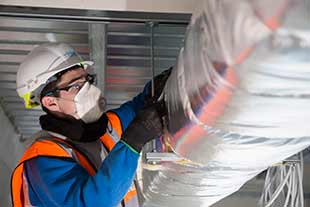
If you’re a construction worker and you fall off a ladder then you’re going to know instantly that you’re injured. But if you’re exposed to asbestos on site, you probably won’t realise the damage to your health for many years. As Simon Clark explains in this new film, it took 35 to 40 years after his apprenticeship for his symptoms to appear.   Around 5,000 asbestos-related illnesses are reported each year. Even though there are now preventative measures in place to reduce asbestos exposure and, in turn, the number of people affected by it, unfortunately this number is increasing. Why? The latency period: the fact that an asbestos-related illness can lie dormant for several years without any symptoms.   Exposure to asbestos can affect the lungs and cause serious illnesses (for example mesothelioma, lung cancer, asbestosis and diffuse pleural thickening). Buildings constructed prior to 2000 almost certainly have asbestos in some shape or form and there is no such thing as ‘safe asbestos’. In the past there was a lack of awareness about the health hazards the material can cause. Now, thankfully, the industry has stringent preventative measures to reduce exposure. Mandatory training ensures that current and future construction workers are aware of the dangers and how to protect themselves and employers are aware of the regulatory safety requirements. As employers, in order to keep staff safe from asbestos, you are expected to: Ensure that information about the location of asbestos is made available to the workforce and others who may be affected Provide staff with suitable training, relevant to the level of work being carried out Develop suitable control measures to manage exposure and provide appropriate personal protective equipment (PPE) where required (for example, helmets, visors, hoods or other forms of respiratory protective equipment) Arrange for medical surveillance, where legislation or policy requires it Provide supervision to make sure the control measures are being used properly. In turn, employees should: Follow any system of work that the employer has in place Wear their PPE correctly Stop work, keep away and warn others if they think they have discovered asbestos Never assume that all of the asbestos located in a building has been found Attend surveillance, if requested to do so by their as and when employer requires. Personally, I think company culture is the key to continuing to stamp out asbestos-related illness. A crew I know was working on a refurb in a commercial building when they saw an asbestos removal crew coming in. A member of the refurb crew soon noticed fibres and reported them to the site manager. The crew were immediately told to drop their tools and get off site. Stories like this show just how important it is to make sure all workers feel empowered.Asbestos awareness, coupled with the self-assurance to stand up and say when something doesn’t seem quite right, really can save lives. To find out more about asbestos-related illness and how to prevent it please visit: http://www.hse.gov.uk/asbestos/ The find out about the CITB CDM Wizard App, to help keep you and your workers safe, please our Construction (Design and Management) Regulations pages.  Source link

Read More »

Skills Minister outlines new plans for vocational education

Skills Minister outlines new plans for vocational education Published:  20 July, 2016 Skills Minister Nick Boles has unveiled a new plan for Post-16 education based on 15 routes into technical education, in order to “harness [the nation’s] talent”. Under the new Post-16 Skills Plan, which follows recommendations made in a report into technical education chaired by Lord Sainsbury, 16-year-olds will have to choose between 15 high quality routes rather than the 20,000 they are currently faced with. Despite the high number of courses currently provided by 160 different organisations, the report argues young people have no clear indication of which course will give the best chance of a job. They will now have to decide between academic options and technical ones aimed at a set of skilled occupations, with standards being set by employers. Each course will be offered by a single course provider – the winner of an exclusive license in a competitive process. Lord Sainsbury’s report found that the current system is confusing and failing to deliver the skills required by the country’s employers, with significant implications for the UK’s productivity, economy and competitiveness. It has been announced that the first routes will be made available from 2019 – a claim that has been dismissed by critics as “wildly optimistic”. Mr Boles said: “Britain has all the ingredients needed to compete with other skilled nations, but we must create a technical education system that can harness that talent. This cannot be the government’s job alone; we must work with employers and post-16 providers to unlock the potential in this country. “The skills plan is the next step towards that goal, building on the progress we have already made by investing in apprenticeships, and creating a skilled workforce that is the envy of every other nation. This won’t just help our young people get the best jobs but it will also boost our economy, benefitting us all.” Graeme Dryden, head of technical at APHC, commented: “We are pleased that government has recognised the need for an urgent shake-up of vocational education. Recent research by APHC revealed that 86% of people believe that school leavers should be encouraged to consider an apprenticeship as an alternative to higher education. By not providing young people with this option we are failing the next generation as well as disadvantaging the wider economy. Whether 2019 is a realistic target for the implementation of these changes remains to be seen.”   Source link

Read More »

Pay rise for construction workers announced

Hundreds of thousands of construction workers are in line for a pay rise and a raft of other benefits over the next two years, it has been announced. Contractors and unions reached the Construction Industry Joint Council (CIJC) agreement following long-running talks. More than 400,000 construction professionals will see their pay rise by 2.5% from July 25 this year and by an extra 2.75% in June 2017. This is significantly higher than inflation rates, which were measured at 0.3% in May. The two-year pay deal secured increases in industry sick pay and subsistence allowance. In addition, construction workers will be able to take an extra day’s holiday from 1 January 2017. Changes are also to be made to the way that travel allowances are calculated. The system will now look at the number of miles travelled, rather than kilometres. Unions GMB, Ucatt and Unite welcomed the deal, but added that they would now be working on securing additional benefits for workers. Areas they are now set to work on include the London Living Wage, rates of pay, and the impact on supply chains. Gary Lean, employer’s secretary to the CIJC, said the agreement stands to benefit all parties involved. He said: “We have concluded a most robust series of negotiations which have resulted in another two-year agreement which is not only good for all of those who work in the industry but also for clients and employers. “All parties now have certainty for the next two years and employers and unions have maintained a harmonious relationship. We regard this as good news for all parties.” To find out more about the rewards and benefits of working in construction, head to GoConstruct. Source link

Read More »

Tenants beware: Inflation can imapct on your rental deposit

Tenants beware: Inflation can imapct on your rental deposit New research from sales and lettings firm KIS has revealed the impact of inflation on the value of deposits when they are returned to renters at the end of their tenancy with many renters being left as much as £420 out of pocket by their tenancy deposits – even in the 97% of cases when they are returned to them untouched. According to the research, the cost of living is currently rising at a rate of 1.6% a year in the UK, so a national average tenancy deposit of £1169 will be worth £19 a year less in real terms at the end of a standard two-year tenancy – a loss of £38 to the renter. However, those who rent in the capital are left worst off, with their deposit of £2499 losing £76 in value over the course of a two-year tenancy. With the average person buying their first property at the age of 31 an average renter stands to lose the equivalent of £204 from the value of their deposit before becoming a home owner – rising to £420 in London. Deposits in KIS’ native North East are currently losing £13 of value a year, with renters in the region standing to lose £124 over the course of a decade. The same amount of money invested instead in a saving account at an annual interest rate of 3% meanwhile would have earned an average renter £355 in the same period – £670 in London and £246 in the North East.  This would mean a London renter losing out on £1090. Ajay Jagota, anti-deposits campaigner and founder of KIS and Dlighted responded to the figures:  “In 97% of cases landlords and letting agents return deposits to their tenants untouched, but inflation means the cash they get handed back isn’t worth the same as the cash they handed over. That might only mean renters losing a few pounds a year – but over the course of the decade the majority of people live in privately-rented housing it all adds up. And when you compare those loses to the money they would have earned by investing that money in a modest savings account they’re left hundreds of pounds worse off – or in the case of Londoners, thousands of pounds worse off.   Our estimates are of course a little rough as without a crystal ball we’re working on unlikely premise that rents continuing to rise at their current rate of 3% a year and inflation staying unchanged for the next decade – but the point stands. When more than nine out of ten deposits end up being utterly unnecessary, what is the point of them, especially when they’re costing faultless renters a considerable amount of cash.”  Source link

Read More »

Myanmar marks historic power handover

©EPA Myanmar has sworn in its first civilian-dominated government for more than 50 years in the latest chapter of an extraordinary story of political and economic change at the heart of Asia. The military-backed transitional administration handed over power on Wednesday to a successor led by Aung San Suu Kyi’s National League for Democracy, more than a quarter of a century after the Nobel Peace laureate launched her campaign against junta rule. More On this topic IN Asia-Pacific Emotions ran high for some on a day filled with reminders of how far Myanmar has come — and also of the stiff task the NLD faces to work with the still-powerful military to tackle problems ranging from mass poverty to regional insurgency. “In my life, it is a very historic moment,” said Zin Mar Aung, an NLD MP who spent 11 years in jail under the military for her political activism. “It’s the very first step to move forward to be a fully democratic civilian government.” Nevertheless, the army still holds a quarter of the parliament’s seats, a majority on a powerful security committee and crucial ministerial posts. Ms Suu Kyi launched a bittersweet series of ceremonies by arriving for a joint sitting of parliament with Htin Kyaw, the man who has become president because she is constitutionally barred from doing so. Military officers in green uniforms congregated together in their quarter of the chamber’s seating, leaving the rest of the room to the signature orange shirts, headscarves and traditional sarong-like “longyi” favoured by many NLD MPs. The handover ceremony confirmed that Ms Suu Kyi would be taking on no fewer than four departmental portfolios in the new administration — foreign affairs, energy, education and the president’s office. Her aides say this is only a temporary arrangement, rather than what critics say is an autocratic style and a reluctance to delegate. A large turnout of ambassadors highlighted the international backing for the transition, which some in Washington promote as a success story to contrast with post-Arab spring conflict in the Middle East. Since the junta stepped down in 2011, Myanmar has drawn investors from across the world to its resources ranging from hydropower to gems, and its largely untapped consumer market of more than 50m people. The proxy president Mr Htin Kyaw spoke for only a few minutes, outlining NLD priorities such as national reconciliation and constitutional change. He also acknowledged the authority of his party leader, who has openly said she will make all the important decisions herself. You need JavaScript active on your browser in order to see this video. “The new parliament and new government is formed in accord with the policies of the National League for Democracy led by Aung San Suu Kyi,” he said. “I have the obligation to work toward achieving a constitution that has democratic norms and is suitable for the nation.” His remarks signal a likely escalating battle over the constitution’s block on Ms Suu Kyi becoming president because her two sons by her late British husband have foreign passports. The provision can only be changed by a 75 per cent plus one parliamentary supermajority, which is impossible to achieve should the military MPs oppose it as a bloc. Than Aung Soe, an NLD MP, said it was a “priority” to change the constitution. Asked if that was realistic given the military’s continued influence, he laughed. “We will try step by step to reduce the military percentage,” he said. Copyright The Financial Times Limited 2016. You may share using our article tools. Please don’t cut articles from FT.com and redistribute by email or post to the web. Source link

Read More »

Ibstock buoyant thanks to strong brick demand

Brick maker Ibstock has reported healthy pre-tax profits in its first financial results announcement since its October 2015 stock market listing. Statutory revenue was £358.3m and statutory profit before tax was £94.7m in the period from 28th November 2014 to 31st December 2015. Adjusted revenue for the year ended 31st December 2015 was £412.8m (2014: £373.2m) and adjusted EBITDA was £107.0m (2014: £65.0m). In February 2015 Ibstock Group, comprising Forticrete, Supreme, Ibstock Brick and Glen-Gery, was sold by CRH to Bain Capital before floating on the London Stock kExchange in October 2015. The UK businesses, which account for 81% of the group (19% is in the USA), saw revenue increase 9.0% to £336m and adjusted EBITDA up 71% to £99.0m. “This improvement in revenue and profitability reflects a strong pricing environment for clay bricks and good pricing for other products,” said chief executive Wayne Sheppard. “Despite the release and reduction of brick stocks held by some housebuilders, total UK industry brick demand continued to exceed reported annual domestic production during the year.” With 19 manufacturing plants Ibstock Brick has the largest brick production capacity in the UK.  It also operates 23 active quarries. Ibstock Brick has begun construction of a new stock brick manufacturing plant in Leicestershire that is expected to add approximately 100 million bricks to its annual brick production capacity – a 13% increase. This new plant is expected to be commissioned in the second half of 2017. Ibstock has also invested in a new concrete roof tile line at Forticrete’s Leighton Buzzard facility, which is expected to be commissioned during the second half of 2016. Wayen Sheppard said: “Our major capital investment projects are progressing to plan and we anticipate another year of progress in 2016. The fundamentals supporting our business remain strong.”     This article was published on 10 Mar 2016 (last updated on 10 Mar 2016). Source link

Read More »

The Future of Health and Safety Conference 2016 – Salford, 17 Nov 2016

Date and location Thursday 17 November 2016, Adelphi House, University of Salford, the Crescent, Salford M3 6EN Conference overview Health and Safety is likely to undergo a significant evolution in the wake of the Government publishing their new 2016 Help Great Britain Work Well strategy. There is a new focus on streamlining health and safety processes, making them smarter rather than simply creating more. Businesses will be required to have broader ownerships of health and safety issues, which is expected to boost productivity, but will also bring a new array of challenges. Join us for the Third Annual: Future of Health and Safety Conference for exclusive insights from industry experts on the following topics: Maintaining the gains made in safety, whilst ensuring health has the same priority. Taking broader ownership of health and safety issues to boost productivity, whilst protecting workers. Joined up action by everyone in the system to help ‘Great Britain Work Well’. Come along for a unique opportunity to engage with cutting edge presentations, quiz business leaders in keynote discussion panels, discover state of the art technologies to help streamline your business, and network with key players in the field. Why attend? Take away expert advice from key professionals who have successfully delivered long-term change Stay abreast of the latest industry thinking, innovations and technologies Gain valuable insights from up to 300 likeminded professionals Engage in networking, interactive discussion and debates Meet with over 20 suppliers committed to helping you improve your productivity and effectiveness What did delegates say about the 2015 conference? “The Conference gave me valuable insights into numerous areas of interest and left me with new areas to explore“, “Some outstanding presentations, interspersed with a great opportunity to network with likeminded people“, “It was a great learning exercise and was the most worthwhile Conference that I have attended in a long time“. Information and booking For full conference information and online booking details visit the Future of Health and Safety Conference 2016 website or email enquiry@onecpd.co.uk. Book on this conference for £199 VAT via booking online or email eleanor@onecpd.co.uk or call 0161 295 0115 to book. Source link

Read More »

New Implementations of Health and Safety Operations Have Been Put Into Place

Workers all over the country need to be made aware of the various methods and new implementations of health and safety operations that have been put into place for them. It was reported by the Health and Safety Executive recently that a total of 144 people working on building sites were killed at work between 2015 and 2016. This is a very alarming statistic that betrays the dangers of working companies in this country that do not take into consideration enough the wellbeing of their workers and it is a sign that more and more businesses in the construction industry need to get with the program and put the safety of their workers first. Whilst the number of workmen dying on-site has decreased in the 21st Century from the previous ones in Britain, it is a worrying sign in these times to still see that a considerable number are being reported to have died on site. It is clear, for example, that putting unobtainable targets before the safety of working contractors does result in them having to put their health and safety at risk. With the amount of increased investment and lucrative contractual deals being won every day by companies, more needs to be done to relieve the pressure off workers that can distract them from remaining in a safe working environment. Indeed, every worker in this country ought to have the right to not have to put their very lives at risk in the jobs that they carry out and this is also true for those committing to work in the building design and construction enterprises in this country. The statistics of people dying on building sites is something that needs to be significantly lowered as the years go by and it is hoped that the Health and Safety Executive will have less to report in the future on this particular matter.

Read More »

Building Industry Investments in Doubt

The result of the EU referendum has tipped the tables with regards to what the future holds for the building industry in terms of growth and stability. Whilst a number of trading and building companies have signed lucrative deals and partnerships to increase their revenue and plans for investment in the future, a number of members of the building industry have been concerned that the effects of leaving the European Union will have a negative impact on their plans for growth. It is evident that companies around the country will be affected in one way or another through the impact of the referendum result and businesses in the construction industry will need to brace themselves for what to expect in the near future: the unexpected. Whilst it is a good idea for building companies to have an action plan for the frustrating and uncertain years ahead, there will need to be reshuffles among many for what has been a tumultuous past few months in the shoddy world of English politics. Indeed, the fact that the government does not have a plan to pave the way forward and has not yet reassured companies that they are safe and held in high regard by them demonstrates that the future is extremely uncertain and building companies will need to remain vigilant throughout the next few months and keep their eyes and ears open for new developments that are due to take place. Whilst it is easy for enterprises within the industry to ignore the possibilities of what could happen to them and simply assume that there will be no discernible effects, it is absolutely necessary that the members of the construction industry be careful now more than ever before. Similarly, the constant contractual signings that ensure the growth of these building businesses needs to continue and more relationships between companies need to be developed in order to ensure the future of the building industry in this country.

Read More »

Popular Options of Food For Builders Working on Sites

A survey is currently being conducted to determine what are the most popular options of food for builders working on sites in and around the country. Whilst this might be an easy answer to determine (sandwiches, duh!) this is not always the case and it is quite evident that the answer to this perplexing question is not an easy one. Indeed, if it is a sandwich, what kind of filling does it have? What sort of sauce is most favoured by our country’s hard-working men? Being a ketchup and chicken man myself, that is what I would automatically choose to have if I were working on a building site. But I don’t. On the other hand, it is quite clear that there are a range of answers that are available to this question and it will be very interesting to find out what snacks and lunches are favoured as compared with others. Of course, it will also help to determine whether or not eating healthily is on the agenda for workers all around the country. It is also quite clear that the choice of food also varies on the kind of project or contractual deal that is under way. Indeed, one doubts whether cucumber sandwiches would be the right option if one was on a high building site, the temptation to drop it from a high height being incredibly tempting for someone to do. In a similar way, it is also clear that assessing eating habits in any industry is a good idea because it draws awareness to one’s own eating and drinking habits which could also sometimes be called into question. (He said as he reached for another donut, the twentieth of that evening.) It is hoped that the results collected will be of good use and will help us to clarify what it is that most tickles workers’ fancy on building sites dotted all around the expanses of this country.

Read More »