Kenneth Booth

Machinability of CNC Steel

The ability of a material to be cut with a cutting tool is known as its machinability. A material is called more machinable if it can be cut or drilled with the least amount of force and it does so without being deformed. In actual use, using machinability-friendly materials offers many

Read More »

CITB funds mental health first aiders for construction apprentices

CITB is investing £90,000 to fund a pilot scheme which will provide mental health support for apprentices from the start of their construction industry careers.  Optima UK Ltd will train further education construction tutors to be Mental Health First Aiders so they can support construction apprentices during their learning. Apprentices

Read More »

The Affordable Homes Programme since 2015

The Department for Levelling Up, Housing & Communities (DLUHC) forecasts that it will spend £20.7 billion on new grant funded homes through three rounds of the Affordable Homes Programme between 2015 and 2032.1 However, the Department could be more ambitious in how the Programme supports wider government objectives, such as

Read More »

Residential development accounts for 1% of total land area

The latest research by Unlatch, the new homes sales progression and aftercare platform for developers and housebuilders, has revealed which local authorities have seen the highest level of house building when it comes to residential development as a percentage of total space available. Unlatch analysed each area of England based

Read More »
Latest Issue
Issue 335 : Dec 2025

Kenneth Booth

NO TOWN LEFT BEHIND: KEEPING SIGHT OF LEVELLING UP AND NET ZERO GOALS

IT IS clear that the pandemic has exacerbated equality problems that already existed in many areas, meaning that levelling up is arguably even more important in those places, which construction has a key part in driving. With this in mind, levelling up cannot be on the back burner for the newly appointed Prime Minister, Liz Truss, and her new cabinet office. Adrian Ceney, partner at leading independent property, construction and infrastructure consultancy Pick Everard, discusses the need to keep long-term challenges on levelling up and our journey to net zero front and centre. The UK is relatively small geographically, yet highly populated and very diverse concurrently, especially when it comes to economics with productivity and GDP still being very focussed in the south-east. LOCALISATION, ADAPTATION AND RATIONALISATION Throughout the country, lots of town centres have suffered through the pandemic due to low footfall – and now thanks to changing working practices, that footfall is not back at pre-pandemic levels. The drivers for bringing people into some towns have altered – meaning that more careful investment is needed in high streets. And business cases put forward today may need to look very different to pre-2020 to reflect the new normal – for example transportation patterns and requirements have changed, and thus infrastructure requirements along with them. Keeping a focus on levelling up creates opportunities for organisations to work together to deliver better for communities – with consultants like Pick Everard and the wider supply chain supporting local authorities and council bodies with the schemes they need to make a difference. And indeed, we can also be involved in their applications for funding packages, making sure they have the insight and information included in their bids to secure much-needed funds. Elsewhere, clients will be examining their assets and where they might need adapting to suit new ways of operating. This is particularly prevalent across the office sector, with rises in hybrid working meaning that many organisations have a reduced need for large physical spaces, but a greater demand for high-quality and flexibility. Meanwhile, in the public sector, lots of organisations are scrutinising and rationalising their estates to ensure they are managing their budgets – which in some cases are extremely tight – as best they can. As consultants, we make sure that valuable budgets – whether from allocated funds or not – are spent in the most effective way possible for any client. This goes beyond simple build costs to working on a whole-life cost basis – particularly as the country is facing inflation drive by rising energy prices, which impacts everything from operational overheads to material costs, which continue to rise thanks to inflated manufacturing costs. INVESTING IN THE LONGER-TERM In recent years, there has been a large effort to link London and the south-east with the rest of the country – largely focusing on the West Midlands – to bring job markets closer together in a time sense. These longer-term projects – particularly infrastructure-based ones – are going to have a really important role to play in the future. This does not just mean the finished developments will have that role to play. Large-scale infrastructure schemes are highly beneficial for the construction industry and its related sectors, providing a degree of stability over a longer period of time. They also have strong social value implications, with the benefits during the development and building process being also very valid to the end result. Whether it’s direct employment for people building the scheme, investment in training and skills, local spend on supply chains, materials and labour, or connecting people with more opportunities when complete, these large schemes allow project teams to collaborate to deliver the highest value possible to a client, end users and the local community. With large-scale operations comes even bigger opportunity to create change – social value is a hugely important part of this, allowing us to capture both quantitative outcomes, but also the qualitative ones that play into levelling up goals too. NET ZERO MUST BE AN ATTITUDE Our journey to net zero must also remain a key driver for us as an industry – but again this means working closely with clients on cost versus value elements, examining and advising clients on whole-life cost. A recent revision of the government’s Construction Playbook reflects this, with updates providing practical resources aimed at helping public sector clients and the sector at large manage carbon reporting and improve the environmental performance of projects and programmes. The revision also emphasises the importance of digital and offsite manufacturing technologies, which can go a long way in shortening on site programmes, feeding into further reduced carbon footprints. With the built environment creating a significant portion of the UK’s carbon output, consultants have a responsibility to embed sustainability at the heart of schemes. Sustainability is much more than a design function, and early engagement on projects positions us to advise on strategic sustainability elements – including a shift change when it comes to processes and practices. So, while the government is undergoing another round of leadership changes, we must as an industry keep our aims and goals firmly in the crosshairs to achieve better together.

Read More »

Leading data specialist reports 12% drop in UK construction companies in 12 months

Leading data specialists, Insight Data, reveal construction industry insolvencies have spiked in 2022. From looking closely at the total number of companies registered on the organisation’s unique Construction File database, which contains large construction firms with a turnover of over £5million, Insight Data found there has been a 12% drop this year, compared to August 20211. Research from the Office of National Statistics also supports these findings as it reported that construction industry insolvencies were 58% higher in March 2022, when compared to pre-pandemic levels2. Alex Tremlett, Operations Manager at Insight Data, said: “The construction industry has faced unprecedented times in the last few years, and unfortunately companies like Midas and many more were unable to survive the fallout caused by the Covid-19 pandemic. “Whether a company has folded, restructured, merged or changed strategy to stay ahead, suppliers who are active in the new build or commercial markets may find their well-established relationships could be disappearing. “Companies may find themselves unknowingly wasting time, money and resources marketing their products and services to decision makers who have changed role or organisations that may have ceased trading or merged with someone else. So, it’s more important than ever that companies use reliable prospect data to help make informed business decisions.” For those companies operating with the construction sector supplying building products, equipment, training or business services, Insight Data has developed a specialist database to make it much simpler to pinpoint high-quality prospects during these challenging times. The Construction File database has comprehensive information on over 5,000 senior decision-makers in 1,100 organisations of the UK’s largest construction firms including property developers, house builders, main contractors and property maintenance companies. To guarantee the Construction File continues to be the most reliable and accurate database ever developed for the UK building and construction industry, Insight Data’s dedicated research team work tirelessly to continuously research, update and validate the data. In fact, they make over 20,000 calls each month to ensure users have access to the latest company details, business locations, contact details for senior decision-makers as well as the most relevant website and email addresses. Insight Data is one of the UK’s leading business-to-business data providers who specialise in the wider construction sector. Its unique market intelligence enables companies to create highly targeted marketing campaigns for prospective customers and helps to build a more successful, profitable and valuable business. For more information on Insight Data and its specialist Construction File database, visit: https://www.insightdata.co.uk/marketing-data/construction-database-file/

Read More »

Machinability of CNC Steel

The ability of a material to be cut with a cutting tool is known as its machinability. A material is called more machinable if it can be cut or drilled with the least amount of force and it does so without being deformed. In actual use, using machinability-friendly materials offers many advantages. Compared to components created from difficult to machine materials, they can be produced more rapidly. Long-term usage of easily machinable materials results in less wearing of tools and the longer tool life, which ultimately saves the money spent on machining. CNC steel has excellent machinability because it is a strong, hard material that is easy to cut and shape. It is also resistant to wear and tear, making it ideal for use in high-speed machining applications such as milling steel. Steel is the primary material of choice for many parts in industries requiring great performance and durability, such as those in the automotive, locomotive, aerospace, and the fastest-growing robotics sectors. Steel and aluminum have extremely distinct physical properties and pricing ranges, steel is much stronger than aluminium and aluminum is also costlier than steel. So, determining which material is ideal for a given work is crucial, when machining metal parts, milling steel may be a more appropriate material choice than aluminum. Factors should be considered when choosing CNC steel for your project Consider the thickness of the material. CNC steel is available in various thicknesses, from thin sheets to thick plates. The thicker the material, the more difficult it will be to machine. However, thick materials are also more durable, so it is important to find the right balance for your project. The type of steel is the second thing you should consider for CNC steel parts. There are two main types of CNC steel – stainless and carbon. Stainless steel is more difficult to machine but is more resistant to corrosion. On the other hand, carbon steel is easier to machine but is more susceptible to rust. After deciding the type, you have to choose the best steel for machining. If you consider stainless steel for your CNC steel parts, you have to choose the perfect grade. The most common stainless steel for machining is 303, 304, 316L, 410, and 416. The surrounding environment also affects the CNC steel machining. Even the best steel for machining can produce bad parts if the temperature, humidity, and dust level are not under control. Operating Environment of CNC Steel CNC steel has high strength, hardness, toughness, and ductility. As a result, this material can withstand high cutting speeds without deforming, making them ideal for CNC machining. However, other materials, such as aluminum and brass, can also be machined using CNC technology. The main difference between machining steel on a CNC machine and other materials is the speed and accuracy of the cuts. The properties of CNC steels allow them to be used in applications where other materials would crack or break under similar conditions. CNC machines are able to make very precise cuts at high speeds. This is due to the fact that CNC machines are controlled by computer programs that can be programmed to make very precise cuts. Other materials, such as aluminum and brass, are not as strong as steel and, therefore, cannot be machined at the same speeds. Additionally, these materials are not as easy to cut as steel and require more time to produce a finished product. While machining CNC steel you have to lubricate the machine properly. Lubricants such as oil, grease, and water are needed to prevent friction during cutting. Dimensional Stability and Tolerance The dimensional stability of CNC steel is a measure of how well the steel can maintain its dimensional accuracy and integrity under different conditions. Dimensional stability is important for CNC steel because it ensures that the steel will retain its dimensional accuracy during the machining process. This dimensional accuracy is known as tolerance. If machining steel is done properly, the tolerance of CNC steel parts can be +/- .5 inches.  If the dimensional stability of the CNC steel is poor, the steel will expand or contract during the machining process, leading to inaccuracies in the final product. There are a few things that can cause steel to warp during machining and hamper the dimensional stability, including: Cutting too deeply into the material Removing too much material at once Using a tool that’s too small for the material Material Costs The cost of CNC steel depends on a number of factors. The type of steel is the most important factor. The different types of steel include: Low-carbon steel: This is the most common type of steel used in CNC steel manufacturing. It is very strong and durable. Low-carbon steel is less expensive than high-carbon steel. High carbon steel: This type of steel is more expensive than low carbon steel. It is also stronger and more durable. High-carbon steel is often used for high-end products. Stainless steel: This type of steel is more expensive than both low carbon and high carbon steel. Stainless steel is very strong and resistant to corrosion. The quality of the steel is another important factor that affects the cost. The higher the quality of the steel, the more expensive it will be. The size of the steel is also a factor. The larger the size of the steel, the more expensive it will be. The quantity of steel is the last factor that affects the cost. The more steel that is needed, the more expensive it will be. Conclusion The machinability of CNC steel has made it a very popular material for many industries. But before you pick a machining steel company you should know their details and working experience. Because CNC steel machining is not an easy thing to do, and it needs years of experience. And a good company can suggest to you the best steel for machining according to your project’s requirement.

Read More »
Ayrshire Hospice appoints Principal Supply Chain Partner for capital build project

Ayrshire Hospice appoints Principal Supply Chain Partner for capital build project

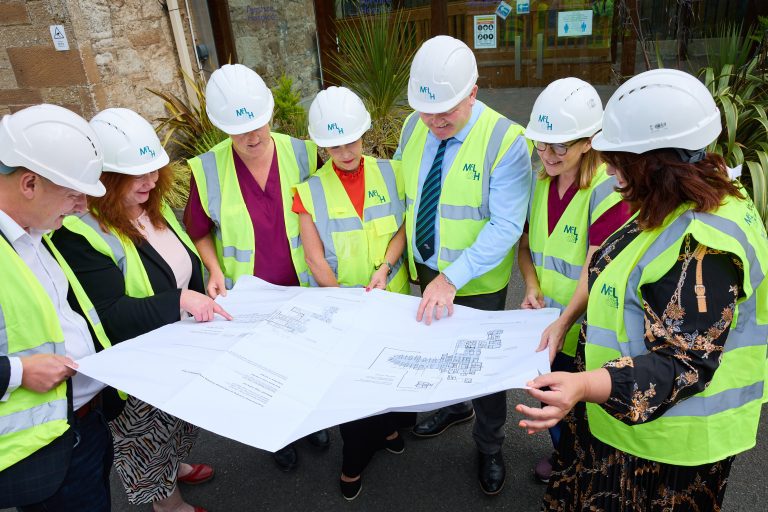
The Ayrshire Hospice is pleased to announce the appointment of McLaughlin & Harvey as the Principal Supply Chain Partner (PSCP) for the organisation’s capital build project. The ambitious multi-million-pound project will see the traditional home of the Hospice at Racecourse Road in Ayr be redeveloped over the next two years with a re-opening of the site scheduled for Summer 2024. John McClintock, McLaughlin & Harvey Operations Director – Healthcare, commented, “We are delighted to have been appointed as main contractor for this meaningful project for Ayrshire Hospice. To be awarded this project is a testament to our reputation and experience in the healthcare sector for delivering high-quality builds. This is our first project under Frameworks Scotland 3; a framework managed by Health Facilities Scotland, a service under NHS National Services Scotland. We look forward to collaborating with Ayrshire Hospice and starting work on-site next year.” Julia Connelly, Ayrshire Hospice Capital Build Project Manager said “this is a flagship project as the Ayrshire Hospice is the first non-NHS organisation to procure a contractor through the ‘Frameworks Scotland 3’ model. This extremely robust selection process has brought us an experienced Tier 1 Principal Contractor who will carry out a sympathetic restoration of our listed buildings while delivering the highest standards of construction for the new-build elements.” Tracy Flynn, Chief Executive of the Ayrshire Hospice said, “we are delighted to partner with McLaughlin & Harvey and excited about our plans and vision for the Ayrshire Hospice as a centre of excellence for palliative and end of life care. This becoming a reality through the redevelopment is very important for our teams and our community.” “I would also like to take this opportunity to reiterate how grateful the Hospice is for the community’s response towards our ongoing capital fundraising campaign. It is a privilege to have support from the people of Ayrshire & Arran as we undertake this milestone project for the Ayrshire Hospice.” Building, Design & Construction Magazine | The Choice of Industry Professionals

Read More »

CITB funds mental health first aiders for construction apprentices

CITB is investing £90,000 to fund a pilot scheme which will provide mental health support for apprentices from the start of their construction industry careers.  Optima UK Ltd will train further education construction tutors to be Mental Health First Aiders so they can support construction apprentices during their learning. Apprentices will also be given mental health awareness training in bite size four hour sessions. This will mean the apprentices have the knowledge and education during learning, at the start of, and throughout, their career in construction. There will also be one-to-one support.   The team at Optima UK are all set to go and will begin training both instructors and apprentices in September.  The courses will be run by trainers accredited by Mental Health First Aid England and deliver 29 courses, all with 16 delegates, to hubs of colleges across the UK. In the space of a year, they will have trained 464 tutors and 464 apprentices, as well as offered one-to-one support to around 100 apprentices.  The CITB investment comes after a study compiled by the Lighthouse Construction Industry Charity and CITB, highlighted the toll poor mental health is taking. Research* showed 26% of construction workers had experienced suicidal thoughts and 91% felt overwhelmed. Tragically, two construction workers take their own lives each day.  CITB CEO Tim Balcon, said: “We need to make sure everyone is at ease talking about their mental health and this comes down to a culture of making it OK to speak up… giving apprentices the confidence to do that from day one, will hopefully make them feel supported in the industry. When staff are supported and happy in their work, and in my view, they will stay in the industry longer.”It has already been proven that having an open approach to mental health as a core value in your firm can save lives. At scaffolding firm CASS UK, a culture of mental health support played a major role in giving two young staff members the confidence to come to the aid of a vulnerable person they realised had climbed up on scaffolding on a site they were working on in Exeter. Karl and Kieran (pictured below) were quickly aware that something was not as it should be when they saw someone trying to climb the scaffold. They stopped what they were doing and took the time to speak to this individual who was obviously troubled. They managed to talk him down and stayed with him until help arrived.  Kieran said: “We knew that what we were seeing wasn’t normal, and there was no doubt that we wanted to help this young man. We didn’t see it as being an act of kindness or wanted any credit for what we did, we just didn’t want this person to do anything that we could stop or help with.   Karl said: “We are aware of the rise in mental health especially in the construction industry and we wouldn’t hesitate to help anyone again in this situation.”  Tim Balcon added: “CITB funding with help foster this positive attitude to mental health from day one of your construction career and we don’t expect everyone to be hero like these two young men but the knowledge it is good to talk will foster a healthy attitude and in turn save lives.” Larraine Boorman, CEO of Optima UK, said: “Optima is so proud to be involved in this ground-breaking project.  “The CITB is to be congratulated, first for its research into a major issue in the industry, and secondly for then taking action by launching this pilot project. As we can see, the statistics show there is a real problem in the sector, but with the right training, education, and support, we can make a real difference to people’s lives.” This UK-wide pilot scheme will aim to understand how mental health education and support can contribute to improved retention for individuals during their apprenticeship in construction, as well as reducing their likelihood of experiencing mental health issues.  Working with CITB, Optima UK will be rolling out an awareness campaign aimed at colleges, tutors, and apprentices, with materials based around the questions, Are We Ok? Are You OK? Look out for the campaign launching week commencing 12th September 2022. CITB has already partnered with Laing O’Rourke, the Lighthouse Club and Samaritans to train 8,000 mental health first aiders in the workplace making mental health information and support, accessible and relatable to small and medium construction employers. 

Read More »

Two new logistics centres at Prologis RFI DIRFT to increase capacity by nearly one million square feet

Prologis UK, a leading logistics property company, has announced it will speculatively develop two new logistics centres at Prologis RFI DIRFT in Northamptonshire – a park recognised as the most successful intermodal road-rail hub in the UK. Designed to best-in-class sustainability standards, both buildings – DC327, with a floorspace of 327,044 sq. ft.  and DC628, with a floorspace of 627,707 sq. ft. – will be net zero in construction. They are also  targeting a BREEAM “Excellent” accreditation, an achievement less than 1 percent of  new non-domestic buildings in the UK manage to achieve. In operation, both units will achieve an EPC A rating, including solar PV array installation which can flex to meet customers’ energy needs. Due to complete in summer 2023, the construction of these new logistics centres follows the development of a third rail terminal, linking to the existing DIRFT infrastructure and the West Coast Mainline railway. The site enjoys close proximity to the M1 and M6 motorways and to the A14 and A5 trunk roads. “This building is the exciting next step in our speculative development programme,” said Sally Duggleby, Vice President of Capital Deployment and Leasing, Prologis UK. “Our customers rely on us to provide modern, high-quality facilities in prime locations, and we work hard to anticipate their requirements.” The popularity of rail freight as part of a balanced, sustainable and resilient supply chain has grown over the past decade and today, over 6,500 trains – the equivalent of 200,000 freight containers – pass through the park each year. DIRFT is already home to household brands, such as Sainsbury’s and Tesco, and  Prologis UK has recently built a new landmark facility for Royal Mail site, which serves as the company’s largest parcel hub in the UK.

Read More »

The Affordable Homes Programme since 2015

The Department for Levelling Up, Housing & Communities (DLUHC) forecasts that it will spend £20.7 billion on new grant funded homes through three rounds of the Affordable Homes Programme between 2015 and 2032.1 However, the Department could be more ambitious in how the Programme supports wider government objectives, such as how it contributes to the government’s net-zero commitments, according to the National Audit Office (NAO). DLUHC intervenes in the housing market to try to ensure there is sufficient supply of affordable housing. The Affordable Homes Programme (the Programme)2 provides grant funding to housing providers in England to support the costs of delivering affordable homes. There are two main iterations of the Programme that are running concurrently, the 2016 programme and the 2021 programme. The NAO found that the Affordable Homes Programme’s targets have a focus on the number of new homes built. The 2021 programme has clear targets about the tenure (e.g. for rent or for sale) of housing it wants housing providers to provide, but there are few targets based on wider factors such as the quality or size of homes or environmental standards. DLUHC has not fully defined the wider outcomes it wants from the Programme, such as reductions in fuel poverty and the creation of mixed communities or set out what success would look like. There is a forecast shortfall of 32,000 in the number of homes to be delivered compared with published targets for the 2016 and 2021 programmes, as at May 2022. Under the 2016 programme, DLUHC forecasts it will achieve 96% of its target for housing starts, but some of these homes will not be built until 2032. DLUHC’s forecast is that Homes England and the Greater London Authority (GLA) will collectively achieve 241,000 starts, against a target of 250,000 starts, by March 2023 (this target includes some homes not directly funded through the Programme).3 Under the 2021 programme, DLUHC expects 157,000 new homes will complete by the time the programme has ended in 2028-29 compared with its target of ‘up to 180,000 should economic conditions allow’.4 It does not expect to meet sub-targets for supported homes (homes with support, supervision, or care provided alongside) and is at high risk of not meeting a sub-target for rural homes. There is also a risk that fewer homes are completed than currently forecast because of building cost inflation, a shortage of materials and labour and other challenges. The NAO found that DLUHC had inadequate oversight of the GLA in the 2015 and 2016 programmes. DLUHC receives performance reports from the GLA, but these contained insufficient information on GLA’s management of the Programme, for example lacking information on spending. In October 2021, DLUHC found that between April 2015 and October 2021, it had given the GLA £1.8 billion of funding which the GLA had committed but not yet used to pay housing providers. DLUHC accepts these payments were a basic error of programme management. DLUHC has started to make improvements to its governance and oversight of the Programme, including in data and performance reporting. There is a lack of strong incentives for housing providers to deliver affordable homes in areas of high housing need or in the most unaffordable areas. The Programme is not delivering a high proportion of affordable homes in areas that the Department assesses have high general housing need. In addition, housing providers are delivering fewer homes in more unaffordable areas, measured by the difference between local house prices and wages. The Programme could bring greater value to other parts of government. When designing the 2021 programme, DLUHC considered how it could generate cross-government benefits in relation to housing benefit spend, the number of people in temporary accommodation and adult social care. However, it did not include savings in temporary accommodation or adult social care costs from providing supported housing in its economic modelling. Potential savings in these areas are not factored into the way DLUHC allocates the Programme’s funding and the kind of homes delivered. If DLUHC used the Programme to deliver more affordable homes in London, this would lead to significantly higher savings on future housing benefit costs (including the housing element of universal credit). DLUHC and Homes England did not include any specific targets relating to reducing emissions under the 2021 programme. Before the end of 2022, the NAO recommends that the DLUHC should develop plans to mitigate the risk that the objectives for delivering affordable homes may not be achieved, and continue to improve its oversight of the Programme. For the next iteration of the Programme, DLUHC should consider what information it needs to improve its understanding of housing need in local areas, and review how the programme sets and monitors the Programme’s targets and sub targets and be clear how the Programme is contributing, when feasible, to wider government objectives, such as net zero and savings for other departments and local government. Gareth Davies, the head of the NAO, said: “Since 2015, the Department for Levelling Up, Housing & Communities has made improvements to the running of the Affordable Homes Programme, but there are still areas it needs to address. “It should reassess targets to ensure the Programme is delivering affordable homes in areas that need them the most. It should also use the Programme to bring about greater value to other parts of government, and advance wider efforts around net zero.”

Read More »

Building services firm celebrates topping out of latest phase of London’s £150 million-pound Hallsville Quarter development

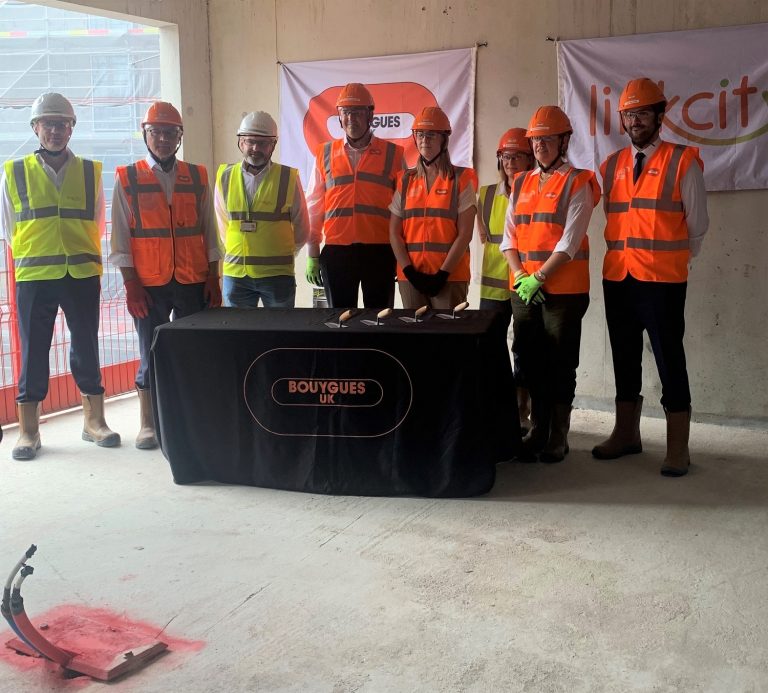
Building services and engineering consultants FHP has celebrated the completion of a key phase of a £150 million residential development in London with a ‘topping out’ ceremony. The move sees the end of work on phase 3 of the Hallsville Quarter in Canning Town, which is a mix residential development consisting of 620 units across four blocks and varying in storey heights from nine to 14 floor levels. Part of a wider £3.7bn urban regeneration programme, the Hallsville Quarter is a new £600m town centre for Canning Town being created in conjunction with Linkcity, Newham London Borough Council and other project partners. It’s part of an ambitious project by the main contractor Bouygues UK that aims to regenerate and transform the broader East London area. Completion of phase III will also deliver a range of new healthcare facilities and provide 378sq. m of new offices, over 1,500 sq. m of leisure and community space, 259 car parking spaces and extra public spaces and landscaped gardens. FHP has provided a comprehensive range of mechanical, electrical design and plumbing (MEP) 3D Revit services for RIBA Stages 2 – 6 of the scheme. This has involved design work to ensure the building and its occupiers will benefit from the highest levels of air quality and reduced levels of noise. Heating and domestic hot water for the building will be provided from the already completed first phase of the development, through an intermediate plate heat exchanger sub-station located in the building’s basement to serve all blocks.  Each building was constructed using Bouygues continental frame method with all party walls and external façade being formed in reinforced concrete, and as such the small power and heating services having to be imbedded within the concrete structure.  As the project was designed in 3D Revit, FHP was able to provide construction setting out information early in the design and build process with the knowledge that all imbedded services and recessed outlets were in the correct position at the time of the concrete pour. The topping out ceremony was attended by FHP managing director Tony Hewitt along with the developer Linkcity and its main stakeholders One Housing Group and Grainger, and Hawkins Brown Architects, Sweco Structures and the Bouygues construction team – marking the final stages of major construction work on a building due to fully open in 2024. Tony Hewitt said: “We are delighted to celebrate this topping out milestone for the Hallsville Quarter development. We are proud to serve as building consultants on the project from concept to completion for this complex project. It showcases the best of workplace design and the knowledge and understanding, which spans both buildings and the design and construction process, that we can bring to flagship projects.”

Read More »

Glencar announces expansion of Midlands team with the appointment of new Operations Director

Mark Green joins from ISG and assumes the role of Operations Director working out of Glencar’s expanding Midland’s office. Glencar, a leading UK construction company that was recently ranked amongst Europe’s fastest growing businesses has today announced that it has hired Mark Green into the role of Operations Director. Mark will be based at Glencar’s expanding Midlands office based in Solihull, Birmingham. Mark joins from Construction Services Company ISG after more than 21 years with the business. He initially started out at ISG Pearce as Operations Manager and more latterly held the position of Divisional Operations Director based in Bristol, where he was also Account Lead for Tesco. In his role at ISG Mark oversaw leading programs of work along with large individual projects on the Tesco retail account together with several large multi-million Amazon distribution schemes. Speaking about the announcement Glencar CEO Eddie McGillycuddy said: “We are delighted to welcome Mark into the business who brings significant experience and expertise which will strengthen our Midlands office significantly. We continue to experience extremely strong growth right across the Midlands market and industrial/logistics sector so this appointment will not only strengthen and expand our team but enable growth through increased resources and customer partnerships. Talking about his appointment Operations Director Mark Green said: “I’m absolutely thrilled to have this opportunity with Glencar and very happy to be joining during a time of such rapid growth and regional expansion with many exciting projects under construction across the Midlands and in the pipeline. I have worked in the construction industry for many years and my values reflect those of the company; working as a team to put the customer first and grow strong, strategic partnerships. I look forward to working with the Midlands team to build repeat business and further growth.”

Read More »

Residential development accounts for 1% of total land area

The latest research by Unlatch, the new homes sales progression and aftercare platform for developers and housebuilders, has revealed which local authorities have seen the highest level of house building when it comes to residential development as a percentage of total space available. Unlatch analysed each area of England based on the total land area in hectares and what percentage of this land area has been attributed to developed use for residential properties.  The research shows that the nation’s grand total land area is estimated to cover almost 13.3m hectares. Just 152,380 hectares of this land is also estimated to have been utilised for developed residential use, equating to just 1.1% of total land area.  In the majority of regions this land usage for residential development remains fairly consistent with the national average, with the South West home to the lowest level at 0.7%. Outside of London, the North West and South East are home to the highest levels at 1.4%, but in the capital itself, this climbs to 10.1%. No surprise then, that the capital’s boroughs account for the most built up property markets in the nation. In Kensington and Chelsea, 22.3% of the borough’s total land area has been utilised for residential development.  Islington isn’t far behind, where a fifth of the borough has been developed for residential homes, with Lambeth (18.2%), Hackney (17.6%) and Hammersmith and Fulham (17.4%) also ranking amongst the highest.  Outside of London, Luton is the most developed local authority with respect to residential properties, accounting for 10.1% of total land area, followed by Leicester (10%), Blackpool (9.8%), Watford (9.8%) and Worthing (9.6%).  The least developed area? Eden, where land developed for residential use sits at just 268 hectares, 0.1% of the area’s total land area.  At 0.2%, Ryedale, Richmondshire, Craven, West Devon and Northumberland are also some of the least developed areas where residential property is concerned.  Lee Martin, Head of UK for Unlatch says: “There seems to be a common misconception amongst the public that the nation is bursting at the seams when it comes to the number of homes already built and that we simply have no available land left to address the current housing crisis.  This simply isn’t the case and, in fact, land utilised for residential development currently accounts for just over one per cent of the nation’s total land area.  Of course, in major urban areas, this percentage is far higher, particularly in London, where the demand for housing is greater due to a larger population.  However, in some areas, residential development accounts for a tiny fraction of total land available and it’s ironically in these areas where current homeowners are often most passionately against the construction of new homes.” Data tables Data tables and sources can be viewed online, here.

Read More »