Business : Testing, Certification & Business Tools News

Kite Packaging’s challenge to reduce plastic usage by 120 tonnes is supported by its plastic focused white paper and mobile packaging test facility

UK based company, Kite Packaging, has launched its sustainable future plastics initiative to reduce plastic levels with the unveiling of its new mobile packaging test facility and the release of their white paper. With the increasing focus on plastics and the harmful impact on the environment, businesses and consumers across

Read More »

4 Ways RFID is Changing the Building Industry

Radio-frequency identification (RFID) technology has been adopted enthusiastically in many different sectors for its ability to track people and items. For the building industry, too, it has a range of applications which help businesses to better manage their assets, materials, workforce and projects whilst also improving safety and security. What

Read More »

How to Prevent Procurement Corruption

Edward Quigg, the director and head of procurement at Quigg Golden, speaks about the policies that every company should have in place in order to be guarded against procurement corruption. With this form of corruption still alive and well in the construction industry, it is important for companies to know

Read More »

RizkMcCay Talks About the Importance of Branding

The construction industry contributes to the UK economy with nearly £90 billion, which represents 6.7% of the wider total. Site developers and building firms know how important branding is to keep up those numbers and to offer further understanding in this matter, Helen Andrews, account director at RizkMcCay, a creative

Read More »

One Broker Ltd Reports Success of One Guarantee Launch

One Guarantee has had a successful first 3 months. Since launching the company has had a significant impact in the insurance and construction industries. The team has managed to quote more than £200 million worth of commercial development. These developments are located throughout the UK and cover projects from single-storey

Read More »
Latest Issue
Issue 335 : Dec 2025

Business : Testing, Certification & Business Tools News

Kite Packaging’s challenge to reduce plastic usage by 120 tonnes is supported by its plastic focused white paper and mobile packaging test facility

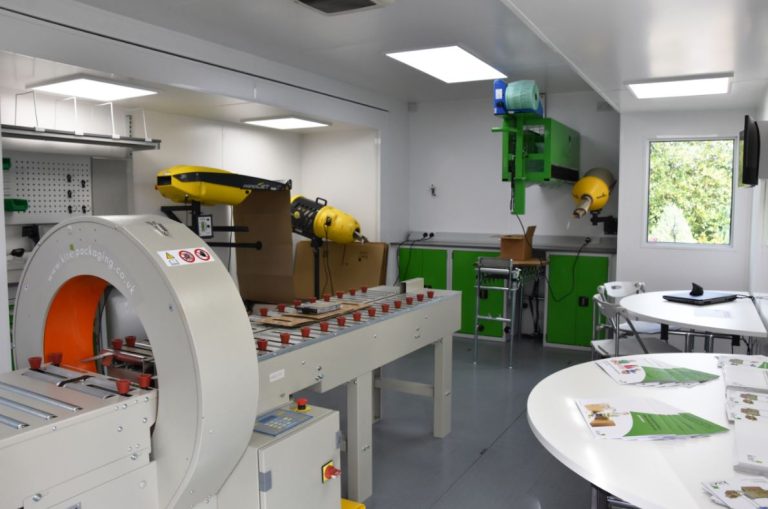
UK based company, Kite Packaging, has launched its sustainable future plastics initiative to reduce plastic levels with the unveiling of its new mobile packaging test facility and the release of their white paper. With the increasing focus on plastics and the harmful impact on the environment, businesses and consumers across the country are searching for viable solutions to build a sustainable, circular economy. When it comes to the environment, it is particularly difficult to change our behaviour. In order to help raise awareness across the UK, the Kite team have challenged themselves and their customers to reduce their plastic usage by a huge 120 tonnes by the end of 2019. Kite’s white paper provides businesses and consumers with an essential guide to plastic packaging and offers new alternatives to help people across the country in building a circular economy. The Kite team’s new, fully equipped truck is a mobile testing and demonstration facility in which their packaging technologists can carry out waste minimising packaging audits to determine how plastic packaging can be reduced, as well as offering more eco-friendly packing alternatives. The employee-owned business announced the challenge earlier this month when the team held a plastic packaging conference in the Midlands, at which they launched both the truck and their plastics white paper. For a multitude of businesses, packaging is a substantial part of their day-to-day operation, but often companies are using excess amounts of plastics and are not looking for eco-friendly alternatives. Kite can help businesses explore a range of alternatives to traditional plastic based packaging. Their mobile testing facility enables the scientific analysis and testing of current packing operation whilst incorporating a full suite of alternative packaging systems and solutions. Gavin Ashe, Managing Partner at Kite Packaging said: “Everyone in business is fantastically busy, focusing on running their business and packaging often ends up an afterthought. So we have invested in our mobile test facility to take the solutions directly to the customer, where we can demonstrate, design and even test solutions at the customer’s factory, saving every one time and money. “We really are a packaging company who want you to use less packaging. Join us in saving 120 tonnes of packaging waste this year.” For further information on how to reduce your plastics use, please view our white paper (kitepackaging.co.uk/images/pdf/plastic-white-paper.pdf)

Read More »

4 Ways RFID is Changing the Building Industry

Radio-frequency identification (RFID) technology has been adopted enthusiastically in many different sectors for its ability to track people and items. For the building industry, too, it has a range of applications which help businesses to better manage their assets, materials, workforce and projects whilst also improving safety and security. What is RFID technology? RFID is a technology that enables a microchip to interact with a reader using radio waves. The small RFID chips can be embedded into tags or sticky labels and attached to items. When a chip comes within range of a reader, the information stored on it is read and sent to a central IT system, enabling the item to be located and tracked. Crucially, RFID tags and labels, such as those available from Universal Smart Cards, don’t need their own power source as they are activated by the reader, this makes them ideal for low-cost tracking. Chips can also be embedded into smart cards and wristbands enabling members of the workforce to be tracked as they move around construction sites. Here, we’ll look at four ways RFID technology is changing the building industry. Automated timekeeping and payroll One significant benefit of RFID is that it can automatically log the entry and exit of every member of the workforce on the site. Using fixed readers at the entrance totally eradicates the need for any manual recording of arrival and departure such as signing or clocking in. And there is no potential for workers to forget to sign in or out. This process drastically reduces the administrative burden on construction companies as the time each worker spends on site is automatically recorded. The data collected by the system can also be used to automate payroll reducing costs even more. By placing readers at other points around the site, employers can get further insights into working patterns, tracking the movement of workers and the time they spend in various places on the job site. This can be used to help find more efficient ways of working and to increase productivity. Asset management Building companies have a vast array of expensive equipment that they need to manage. From vehicles to hand tools, it is important to know where these items are on a construction site and who has been using them. By scanning items in and out of storage areas, it is possible to track when they were used, how long for and when they were returned. If RFID access control is used to authorise entry into the storage area, the system also logs the identity of the person who takes the equipment. Using fixed readers on the entrance to the storage area means the worker and the item are logged on the IT system as leaving at the same time. With fixed readers in situ around the site or by using handheld readers, it is also possible to locate any items which go missing. However, if workers know that they have been logged using the item, they are more likely to look after it responsibly and take it back when finished. Materials management A problem for many building companies is having to pay workers to do nothing because it has run out of materials. Not only does this reduce the profitability of each job, it also delays schedules which could be a major issue if another contractor coming on board has to wait for the work to be finished. This can result in contractual problems, fines and reputational damage. RFID can provide a workable solution for these types of problems as it enables companies to keep track of the materials that are in stock. Simply attaching an RFID sticker to items enables them to be scanned, letting site managers know how much of each item is on the site. As supplies begin to get low, orders can be placed with suppliers before materials run out and workers are left at a standstill. Making sites safer Ensuring compliance with health and safety regulations is paramount on any building site. RFID technology can enhance safety for workers, especially in areas where there are potential hazards, as tags embedded in their ID smart cards can be used to trigger safety alarms when they get near. Depending on the nature of the site, this can be sound alarms, flashing lights or both. At the same time, access control systems can be programmed to restrict access to authorised users only. This can be done on an individual basis. This means entry to potentially hazardous areas of the site can be restricted to specific people. If someone without authorisation enters, an alert can be sent immediately to the site manager. Wrapping up RFID tags and sensors provide building companies with more effective ways to manage their assets and materials, improve health and safety, track worker activity and reduce administrative burdens. In doing so, they improve the efficiency of the company, helping it to reduce costs and losses whilst providing insights that can make it even more productive.

Read More »

How to Prevent Procurement Corruption

Edward Quigg, the director and head of procurement at Quigg Golden, speaks about the policies that every company should have in place in order to be guarded against procurement corruption. With this form of corruption still alive and well in the construction industry, it is important for companies to know how to protect themselves. As stated on the Action Fraud website, procurement fraud is a criminal offence and is regarded as “any frau relating to a company purchasing goods, services or commissioning construction projects from third parties”. The fraud can occur at any point during the procurement and contract management processes, including price fixing, market sharing and bid rigging. Procurement fraud could cost a construction business millions of pounds and damage its reputation; therefore Edward has created a list of eleven preventative actions: As part of the risk management process, acknowledge that fraud and corruption is a business risk, include it in the corporate risk register, assess the likelihood of risk occurring, have it on the board meeting agenda and establish an operational strategy to minimise such risk. Increase the awareness of all members of staff and the supply chain in counter-fraud and anti-bribery and make sure they are aware of the consequences at corporate and personal levels. Have clear conflict of interest, anti-bribery and confidentiality internal policies and get all involved in the procurement to sign a statement that they will comply with them. Ensure that the internal policies and processes are transparent to enable you to detect and investigate any suspected fraud and bribery. Ensure that procurement procedures are in line with best practice. Exclude suppliers on the grounds of mandatory and discretionary exclusions in accordance with the Public Contracts Regulations 2015. Do not let one person make the decision because it is much harder to bribe a team of three. Include a covenant provision in employment contracts to prevent employees using the knowledge they have if they move to a possible supplier or client. Regularly audit, scrutinise and improve resilience of the internal fraud prevention process. Run an effective whistleblowing arrangement to encourage fraud and corruption reporting. If fraud and bribery is suspected, escalate it to the management level and take action immediately to secure evidential records against removal or alteration.

Read More »

Discovering the customer journey with the emergence of the ‘Marketing Suite’

A new study commissioned by Foxtons estate agent has revealed that after viewing a property online, it takes home hunters an average of just eight minutes to decide whether to physically view the home[1]. As first impressions are important to purchasers, the interior design within the show home is a crucial element to selling homes. However, what about the interiors and use of marketing suites? In the last 10 to 15 years, there has been a huge shift in the use of the marketing suite, with developers keen to add value to the customer experience. With 20 years’ experience, Suna Interior Design, a boutique design consultancy based in London, have witnessed first-hand this change – and have been instrumental in moving developers away from a portakabin to a fully immersive experience for potential buyers. Helen Fewster, Director at Suna Interior Design comments: “Fifteen years ago, most marketing suites were simply sales offices and were often in a cabin on site or in the dining room of the show home. The sales offices were generally designed to be functional, providing a practical space rather than considering the potential aesthetic impact. However, in recent years there has been fundamental changes to this and today we are seeing the residential property sector recognise that marketing suites are an important part of the customer journey. When a purchaser views a development, their experience in the marketing suite is often their first impression. This presents house builders with an opportunity to give the purchaser an insight into the aspirational lifestyle that comes with the homes they are selling and it is important to make this first impression count. We have seen lots of clients investing in state of the art, purpose-built marketing suites in order to deliver a bespoke customer experience.” “At Suna Interior Design some of the main questions we ask ourselves before we begin work is ‘who are our clients selling to?’, ‘what do they want their purchasers to see and feel’ and ‘how does that affect the customer journey?’ From high end luxury to modern urban locations, all our marketing suites combine the developments own unique brand, with the aspirations and unique requirements that reflect the local market. Meanwhile, we also ensure all functions are considered to make sure the end result is a practical working environment. For example, plan in enough storage space, plentiful desk areas with room to hide things away, meeting rooms or offices for private conversations, even down to the back of house considerations such as kitchens and WC facilities. Depending on the nature of the Marketing Suite this can all be achieved in an informal and relaxed environment, more akin to a nice café than a sales office or it could be more like the ambiance of a high-end hotel entrance and residents lounge.” For example, Helen continues: “We created a bespoke two-storey statement marketing suite at London Square’s The Star and Garter development on Richmond Hill, which was designed to reflect the luxury brand and lifestyle being offered to purchasers. Once completed the developer even used some areas of the marketing suite to hold events such as art gallery exhibitions, which encouraged potential purchasers to revisit the development. We even incorporated a champagne bar into the design which provided an impressive focal point and came in handy during these events!” Helen concludes: “Tech has certainly influenced marketing suites, rather than plans on walls which would you have seen 10 years ago, everything is interactive including models and fly through CGIs. In the future we expect to see this develop even further with virtual reality headsets in suites, so purchasers can enjoy a fully immersive experience.” For more information on the work of Suna Interior Design, please visit www.sunainteriordesign.com.

Read More »

RizkMcCay Talks About the Importance of Branding

The construction industry contributes to the UK economy with nearly £90 billion, which represents 6.7% of the wider total. Site developers and building firms know how important branding is to keep up those numbers and to offer further understanding in this matter, Helen Andrews, account director at RizkMcCay, a creative design and strategic marketing business with a proven track record of helping organisations in the built environment achieve their business objectives, will offer some insight. The ultimate goal of a site developer, whether it is in housing development, town centre regeneration, new retail offering or educational facilities, is to attract further investment. To do so, solid branding and marketing are key in making a project stand out in the competitive market. As an example, Helen mentions the regeneration projects and the always-asked question of ‘Does the site need a name?’ The answer is simple; if you want your project to be taken seriously then you need to give it a name. For a regeneration project, the aim is to show the public and the stakeholders the benefits it will bring to the local, regional and wider economy. In order to develop a strong brand concept, always think about the importance of the scheme to the local area. This process is done backwards, starting with the analysis of the various stakeholders involved and further developing a set of values. Important questions include: Why are they passionate about this development? What makes it different from the others? How is it going to change people’s lives? Wherever possible, try and humanise the brand so that people understand exactly why this development is happening in their town or city and how it will benefit them. Having a strategic marketing plan and robust brand in the built environment can go a long way to not only making a site a success but also to winning people over where developments are tricky or slightly contentious.

Read More »

One Broker Ltd Reports Success of One Guarantee Launch

One Guarantee has had a successful first 3 months. Since launching the company has had a significant impact in the insurance and construction industries. The team has managed to quote more than £200 million worth of commercial development. These developments are located throughout the UK and cover projects from single-storey care homes to more expansive hotel casinos. The company has been featured in Insurance Age and has also presented One Guarantee products for a range of industry events. The team working for One Guarantee has managed to build on their reputation for providing structural warranties. The company has also had an impressive few months after receiving positive feedback from both clients and established brokers who have expressed an interest in forming a relationship with the new warranty market entrant. The One Guarantee scheme has also been praised for its swift response time as well as offering a personalised and friendly service to clients and competitive premiums offered for a wide range of comprehensive AA-rated policies. Looking ahead, the team at One Guarantee are wanting to build on their first few months. There are plans to grow the technical services offered by the team as well as introduce their own residential warranties at some point next year. One Guarantee is a service that has been offered by One Broker Ltd, and the company has expressed their delight in regards to the progress of their commercial building warranties. These warranties have managed to make it into the latent defect market. Those working on One Guarantee have managed to form a number of promising relationships over the course of a very short period of time. Going forward it will be essential for the company that they consistently evolve their product offering to offer their clients and potential clients a service that suits their requirements.

Read More »

Project Consultants Trivandi Chanzo to work on 5th Asian Indoor Martial Arts Games

The project consultancy company, Trivandi Chanzo has managed to increase their team working on the site of the 5th Asian Indoor Martial Arts Games for more than 700 members. As the event gets closer, the project consultants have increased the size of their team, with more than 300 staff with Games experience from 20 different countries have been mobilised to be involved with the preparation at Ashgabat over the course of the last year. The international experts have also been working recruit and train more than 400 national staff through the Ashgabat 2017 Games Academy in order to make sure that there is a human legacy of event professionals for Turkmenistan. Trivandi Chanzo Limited, the project consultancy company has been appointed as the Operator for the Games Planning and Delivery in June 2016. The combined international and national team working for Trivandi on this event is thought to be the largest ever outsourced solution used for a major event planning and operations. The 5th Asian Indoor and Martial Arts Games will be help in the city of Ashgabat, in Turkmenistan. The event will take place in September and over 6,000 athletes and officials will take part in the events. The athletes will be travelling from 65 delegations in Asia and Oceania. The Martial Arts Games will consist of 351 medals events across 21 sports in 15 venues. In the past the project consultants have been involved with a number of high profile projects. Trivandi Chanzo, is a joint venture that was first founded by two of the former members of the London 2012 Organising Committee. Trivandi has been co-founded by former London 2012 Venues and Infrastructure Director, James Bully. Chanzo was founded by the HR and Workforce Director for London 2012, Jean Tomlin. Chanzo delivers the expertise in HR, Workforce, Volunteering and international recruitment that is required for major events such as the Asian Indoor and Martial Arts Games.

Read More »