Products & Materials : Building Trade Materials News

Zinsser, Perfecting Paints and Primers for 170 years

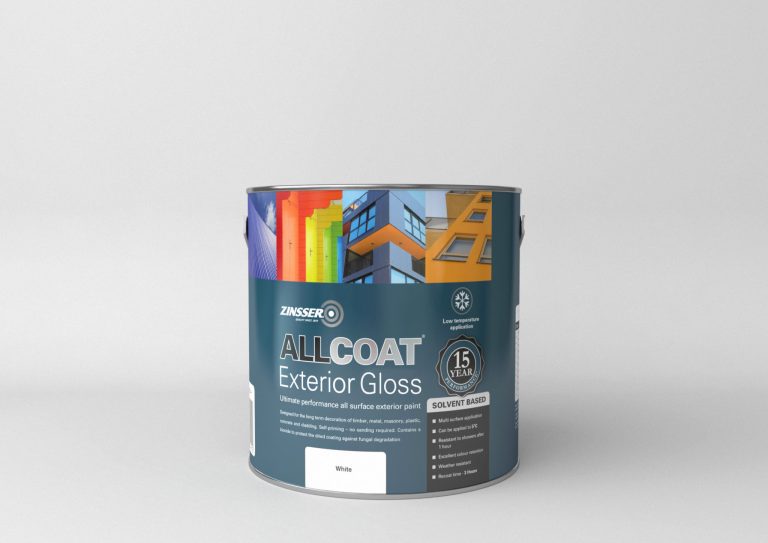
Zinsser, the brand famous for solving painting and decorating problems, celebrates 170 years of producing industry leading paints, primers and removal solutions. The Zinsser brand was originally created in 1849, when William Zinsser set up the United States’ first shellac beaching plant on Manhattan’s west side and introduced shellac paint

Read More »

What’s the Difference Between Plastering & Rendering?

For those who sit outside of the plastering trade, a question that gets commonly asked is ‘what is the difference between plastering and rendering?’ While some may just want to seem more in-the-know when they’re talking to the plasterer, others may be struggling to distinguish between what are two very

Read More »

Cavanna Homes Invests in Artisan Bricklayer

Traditional, handcrafted building styles have made way for more cost-effective and less time-consuming modern-day methods as the homebuilding industry works hard to deliver the government’s ambitious target of 300,000 new builds each year. In the Westcountry however, fourth-generation family firm Cavanna Homes is investing in the skills of an artisan

Read More »

Södra investing in next-generation construction

Södra has decided to invest in an additional CLT facility at Värö and aims to become a leader in the Nordic region.   “Society’s driving forces for reducing greenhouse gas emissions are strong, and the interest in sustainable construction is growing in the market. A higher rate of timber construction

Read More »

Scandinavian-style rebrand hopes to elevate Cibes to new heights

Cibes Lift UK has unveiled its new global rebrand to demonstrate how the company has changed since it was established in the 1940s – as well as hinting at its intentions for future expansion.   Its old logo featured a man flexing his muscles, which the company say successfully communicated its former focus on manufacturing

Read More »

Water Borne Paints Sales Surge in 2018

Dulux Trade is reporting a significant shift in buying behavior from trade professionals with sales of water-borne paint up and solvent-borne paints down across the total paint market in 2018. The latest market data to the end of 2018 shows a rise of 13% in the sales of water-borne paint

Read More »
Latest Issue
Issue 339 : Apr 2026

Products & Materials : Building Trade Materials News

Government to Give £200m to Replace Grenfell-Style Cladding: Is it Enough?

The government has confirmed that it will allocate £200 million to fix private tower blocks that are wrapped in combustible aluminium composite material cladding, the same kind that sent the Grenfell Tower block up in flames back in June 2017, claiming the lives of 72 people. This decision is a response to the anger over freeholders and developers that have refused to fund the costs of replacing the hazardous cladding in their buildings. Whilst many have praised the funding as a “step in the right direction”, there are concerns that the amount is just not enough. Two Years Since Grenfell On 14th June 2017, a fire broke out in the 24-storey Grenfell Tower block of flats in North Kensington, West London. It was the deadliest structural fire in the UK since 1988 and the worst residential fire since World War II. The fire was started by a malfunctioning fridge-freezer on the fourth floor and spread rapidly up the building’s exterior. The devastating spread of the fire that claimed so many lives and injured many more was attributed to the building’s cladding. Grenfell’s exterior cladding was aluminium sandwich plates with polyethylene core and insulation made of PIR (polyisocyanurate) foam plates. According to the police, both of these materials later failed fire safety tests that were conducted after the fire. It was later discovered that the project team for Grenfell chose the cheaper, combustible material despite the nationwide warning that the combustible insulation used should only be used with cladding that does not burn. There are estimated to be 600 high-rise blocks of flats in the UK that have similar cladding to that in Grenfell. In October 2018, the government announced plans to ban flammable cladding on newly built buildings, however, it has been argued that it should be banned in its entirety, also applying to existing buildings. Leaseholders Facing a Crisis Thousands of people across the UK reside in tower blocks that use the same kind of cladding as Grenfell. As a result, residents have been suffering bouts of stress, depression and suicidal feelings; living in unsafe homes is taking a serious toll on people’s mental health. Whilst some landlords have stepped up and vowed to replace their building’s cladding with safer materials, others have refused to pay. Some leaseholders have been forced to start their own 24-hour patrols of their buildings to ensure that fires don’t break out, whilst other’s homes have become unsaleable. For developers refusing to pay for cladding replacement, the costs have been passed onto their leaseholders who have been footed with the bill. This has caused a deadlock between leaseholders who cannot afford to pay, and developers who say they are not obliged to pay under law. Leaseholders are facing bills of tens of thousands each to fix the buildings. In Burton Place in Manchester, the residents were told that they would be facing a bill of £80,000 each for repairs to replace wooden cladding, combustible insulation and missing fire breaks. Of the recent funding announcement, Prime Minister Theresa May said: “It is of paramount importance that everybody is able to feel and be safe in their homes. That is why we asked building owners in the private sector to take action and make sure appropriate safety measures were in place. “And we’ve seen a number of private building owners doing the right thing and taking responsibility, but unfortunately too many are continuing to pass on the costs of removal and replacement to leaseholders.” People fearing another disaster on the scale of Grenfell are looking to their representatives for answers. It is clear that there is mass confusion as to why, after widespread acceptance that fire safety remediation is needed, two years later thousands have been left to live in homes that are unsafe, and so far, very little has been done. The safety threats of living in buildings with unsafe cladding combined with the financial stress of not being able to afford to the costs of replacement is said to be ruining lives. How Far Will £200 Million Go? The £200 million in funding comes after lobbying from leaseholders who said the unsafe cladding in their buildings was making them fear for their lives in their own homes. And after the government’s preferred solution of asking building owners to do the right thing and pay for the work has failed, this funding is a much needed welcome. However, the UK Cladding Action Group that launched a campaign back in March to secure the funding for residential properties have stressed that the money, whilst welcomed, will not cover the costs of removing all the cladding. One of the founders of the group, Rituparna Saha, lives in Northpoint block in Bromley, where leaseholders are facing combined costs of £3.5 million for cladding replacement alone. She claims that news sets up a “cladding lottery”, as the funding will only cover aluminium composite material (ACM) panels which helped spread the fire in Grenfell, but combustible non-ACM cladding would not be covered. Latest figures show that, of the 176 buildings identified as having ACM cladding since the disaster, 166 of those have yet to have had any work started on them. The funds will be made available to remove the cladding from these high-rise buildings across England. Building owners will have three months to claim the funds, with the condition that they take “reasonable steps” to recover the costs from those responsible for the cladding’s presence, citing that the Government has “committed to cover the cost temporarily”. Grenfell United, a group of survivors and the bereaved, have praised the news as offering hope to people who feel at risk at home.   This article was written by Stephen Horin, Managing Director at Bushbury Cladding. Bushbury Cladding are a family run business who have been supplying corrugated steel roofing sheets and wall cladding sheets for many years.

Read More »

Zinsser, Perfecting Paints and Primers for 170 years

Zinsser, the brand famous for solving painting and decorating problems, celebrates 170 years of producing industry leading paints, primers and removal solutions. The Zinsser brand was originally created in 1849, when William Zinsser set up the United States’ first shellac beaching plant on Manhattan’s west side and introduced shellac paint products to the US market. Zinsser now manufactures its range of UK products in County Durham and has remained true to William Zinsser’s principals of quality and innovation by continuously producing world-class, professional quality and fast-drying formulas that make problem solving simple. Whether you’ve got graffiti to cover up, fire damage, or a big issue with mould and mildew, Zinsser products are the muscle you need to wipe out all decorating nightmares in the home or on commercial projects, quickly and for good. The Zinsser range of products include professional coatings for interior and exterior use and each of Zinsser’s paints, primers and removal solutions can be depended upon to do the job right, making the brand a must-have in any decorators van and a top-seller for paint merchants. One of Zinsser’s most popular products which has never been matched or bettered is B-I-N®, the original shellac-base primer-sealer. This “silver bullet” primer, sealer and stain killer offers unparalleled adhesion to glossy surfaces, dries in just 15 minutes and is recoatable in 45 minutes, saving both time and money. B-I-N’s unique formula gives it unsurpassed stain-killing power and covers everything unwanted, from water damage, to fire damage and more. It’s the best primer for sealing interior wood and is the “go to” for spot priming knots or sap streaks inside and out, making it a key staple in any decorators van. A newer customer favourite in the range is Zinsser AllCoat Exterior, available in Matt, Satin and Gloss finishes. This clever paint offers resistance to mould, cracking, blistering and flaking as well as rain and severe weather. Suitable for use with all exterior surfaces, such as wood, metal, masonry, plastic concrete and cladding, it forms a low-maintenance water-shedding coating in one hour and can be painted with a second coat after one hour. This self-priming paint is another superior product that enables jobs to be completed quickly, efficiently and brilliantly. As Zinsser AllCoat Exteriorpaint can be matched to any RAL / BS or NCS colour reference, including designer colours. Alongside an outstanding problem solving product range, Zinsser also ensures decorators and DIYers are armed with the correct knowledge to use products efficiently, ensuring each job is competed correctly. The Zinsser Pocket Guide, which is available as an app and printed book, is packed with expert advice on primers and finishing substrates, with detailed guidance and specialist product recommendations. Zinsser’s UK-based Technical Support team are on hand to answer any questions and offer expert advice. They can quickly tell you which product is best suited to a job, give advice on the best method of application and help establish how much paint is needed. Zinsser’s UK based specification service is also available free of charge, often working with professional specifiers, architects, maintenance managers, FM companies, property owners and professional on-site spray contractors to solve a wide variety of painting problems. The experienced team helps at every stage of a project, from initial survey through to specification and application of coatings, providing on-site advice, training and technical assistance.

Read More »

Use and Applications of Expanded Metal and Wire Mesh for Industry and Architecture

Expanded metal is obtained by cutting and simultaneously ironing the sheet metal. This process creates diamond-shaped openings in the material that allow the free flow of air, fluids or light.  This type of metal is produced from a sheet of any solid metal, including stainless steel, aluminum, galvanized steel, titanium or copper. Expanded Metal, a versatile product Expanded metal includes diamond shaped openings, which distinguish it as a versatile and commonly used product in areas such as platforms, walkways, conveyor belts and railway fences, and others. It can also be retrofitted to existing gratings, floors or diamond sheets and in many areas is a cost-effective solution. Here are four common types of expanded metal.   The most common forms of use of expanded metal for Industry are circles, squares and diamonds, of which diamonds are the most requested forms because of the form’s ability to absorb energy and resist mechanical deformation after installation. Other aspects of construction are represented by the dimensions and angles of the shapes, which also influence the way in which the metal absorbs energy and the point where the energy spreads throughout the expanded metal. Wire cloth can be used in many specific applications and is available in many fabric and material versions. This type of product is an element that allows the use of different types of protection, support and custom applications. The metallic fabric is braided together with a manufacturing process specialized in industrial production factories. Expanded Metal as durable material for construction Expanded metal is commonly used for the construction of fences, walkways and grids, as it is a very robust and durable material. Wire mesh, on the other hand, is lighter and also less expensive. Thanks to the small openings of the material, it is possible to pass through air, water and light, while maintaining a mechanical barrier to larger objects. A further point in favour of using expanded metal, unlike simple metal, is that the exposed edges of expanded metal offer greater adhesion, which has led to its use in walkways or drainage covers. Metal mesh screen is a particularly ductile material for use in many applications. Flexible, individual, resistant and eco-sustainable, the decorative wire mesh is available in different models.   Expanded metal in the Construction Industry Expanded metal is used by the construction industry as metal strips to support elements such as plaster, stucco or adobe in walls and other structures.   Expanded Metal in Modern Architecture In the field of modern architecture, expanded metal or steel mesh are an exposed or screen material that can be transformed into simple or complex decorative forms. Photographic images can be printed on the surface, creating textures or large graphic images that allow light to filter through the external surface of a building.   Wire Mesh for Industry Wire mesh is widespread in the industrial, transport, agricultural, horticultural and food sectors. The characteristic that makes wire mesh such a versatile product is that it can be produced in an unlimited number of specifications. Depending on the manufacturing possibilities, there are almost countless possibilities for combinations of aperture sizes and wire diameters that can be achieved, depending on whether we are talking about woven or welded construction.   Wire Mesh in Modern Architecture Wire mesh has significant benefits for conventional architectural materials leading to greater freedom of modern and flexible design. Its very nature allows it to be used in a very wide range of architectural projects, starting from the interior and ending with the exterior and external applications. You can create impressive visual effects while being strong, durable and flexible.  Whether it is a single part or a combination of parts, the wire mash can be tailored to any architectural project or construction.

Read More »

What’s the Difference Between Plastering & Rendering?

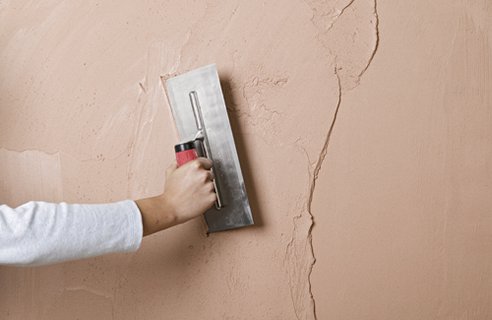
For those who sit outside of the plastering trade, a question that gets commonly asked is ‘what is the difference between plastering and rendering?’ While some may just want to seem more in-the-know when they’re talking to the plasterer, others may be struggling to distinguish between what are two very similar practices. Fundamentally, the two main differences lie in their use and their composition. In terms of practical use, rendering is the coating of external walls, whilst plastering is the coating of interior walls. Whilst both are composed primarily of cement, sand, water and lime gypsum, render features a much heavier composition. Here, we discuss the purposes of both so you can help separate the two once and for all. The Purpose of Rendering Rendering is the process of coating the exterior surfaces of buildings; a process used to waterproof and fireproof the exterior, as well as enhance the aesthetics. Render material is made up of the same ingredients as plaster but features a much heavier cement base, which makes it fit for external purposes. Fine sand and lime gypsum are utilised in the mixture in order to provide a smooth finish. Render represents the final layer on exterior walls, and can be finished as smooth, flat, textured or patterned, depending on the requirements of the client. The Purpose of Plastering Plastering is the process of coating the interior walls and ceilings of a building, so they’re fit for painting or wallpapering. The mixture contains less cement than that of render and utilises less coarse sand, which provides a lighter, smoother finish than its external counterpart. Whilst both are mortar coatings that rest on top of blockwork, plaster is not weather resistant, offering more of a decorative function that is water repellent and easily cleaned. It also holds fireproofing qualities, particularly in older buildings that are constructed from mud or clay. Of course, both share strong similarities. Their makeup includes the same ingredients, and their functional purpose is more or less the same. The important point to distinguish is their differing anti-abrasion properties. For a new house build, it’s essential the exterior is comprehensively rendered to avoid damage and potential collapse from moisture build up. When plastering, make sure to leaves freshly laid plaster for anywhere from a week to a month to dry before beginning painting or wallpapering. Naturally, such jobs are best carried out by a professional, so search for ‘local plasterers near me’ to find a quality, good value tradesmen to do the job for you.

Read More »

Cavanna Homes Invests in Artisan Bricklayer

Traditional, handcrafted building styles have made way for more cost-effective and less time-consuming modern-day methods as the homebuilding industry works hard to deliver the government’s ambitious target of 300,000 new builds each year. In the Westcountry however, fourth-generation family firm Cavanna Homes is investing in the skills of an artisan bricklayer to help define the character of its homes and developments, in turn, helping to keep the ancient craft of stonemasonry alive. Born and bred in the South Hams, Terry Newman currently spends his three-day working week as a subcontractor for West Country Brickworks Ltd on projects for Cavanna Homes, which has its headquarters in Torquay and is in its 96th year. Cavanna Homes incorporates stonemasonry in its developments to reflect a local vernacular and to make a new scheme look more mature so it immediately fits into its existing surroundings. Work incorporating traditional stonemasonry skills is intricate and time consuming: a three-metre stone panel takes around a day to build, while the same sized panel in bricks takes half-a-day, or a couple of hours for concrete blocks, plus wet weather can prolong a job involving stone work because the materials must be kept dry. “Nowadays, time and cost are big factors in the house building industry,” says bricklayer Terry. “So if a developer includes stonemasonry in its schemes, they’re adding time, and time is money! I take my hat off to those firms including stonework at their new developments; it not only adds character and charm to modern buildings but it’s keeping the tradition alive.” Terry trained as a bricklayer at South Devon College in the late 1970s when stonemasonry was included in the course, completing an apprenticeship with a local firm which “happened” to include stonemasonry in its remit. Nowadays, there are no colleges offering stonemasonry courses west of Bath and Weymouth, and you’ll be hard-pressed to find a construction or bricklaying course which offers even a hint of stonemasonry. But Terry has used the skills of his industry’s forefathers ever since his teens. At Cavanna’s Dartington developments, Origins and Yarners Mill, Terry created stone walls and panels to add historic charm to the homes in-keeping with their position in the picturesque Dart Valley, and one of his most recent tasks has been the construction of a 30-metre wall at the entrance of Cavanna @ Wolborough Hill – a collection of 26 luxury-style homes in Newton Abbot – to replace the original wall. Also on his immediate list of pending jobs is replacing the coping (the top of a wall which acts like a lid, keeping the rain out) at Palstone Meadow – Cavanna’s 26-home development in South Brent – and building a wall at Kings Orchard – Cavanna’s emerging 53-home scheme in Stoke Gabriel. Traditionally, stone doesn’t tend to travel very far after it’s excavated, so where the job is determines what type of stone Terry works with. “In Cornwall it’s always shillet which is quarried there and has been used for building for centuries,” he says. “And in South Devon I often work with Stoneycombe, Glendinnings, Yennadon and Mill Hill Quarries stone, excavated on the doorstep.” Type “stonemasonry” into Google and you’ll find numerous glossaries explaining the terminology, which is often linked to the geography as well as the stones themselves. Take the style of the coping at the wall at Cavanna @ Wolborough for example. Bricklayer Terry describes it as “cock and hen” (where vertically placed stones run along the top of a wall). “I don’t know why it’s called cock and hen,” laughs Terry. “That’s what we call it down in the Westcountry.” Elsewhere, it’s known as “buck and doe”. Terry also describes using a method called “snail creep pointing” on the walls at his son’s house in Ivybridge. The effect can be achieved by using the handle of a metal watering can, cut in half. “It looks lovely when it’s finished,” Terry says, offering an insight into the intricacies of his craft, which includes being resourceful. Around a century ago it was typical for stonemasons to wade into rivers to collect stones. In the 90s, at a private residence in the South Hams, Terry found himself thigh-deep in a river which ran through the grounds, collecting stones to make sure the buttress he was building blended with the existing structure. Terry explains that stone can either be left in its natural state, known as rustic stone, or can be cut, so the face of the stone (the part which faces out, forming the side of the wall) has a smoother finish. Terry prefers the former and describes working with “random rubble”, the technical term for a mixture of different sized and shaped stones, which makes his job rather like a giant 3D jigsaw puzzle. Stonemasonry involves a huge variety of different styles and techniques and there is also far more to the pointing (or jointing) work (the joining together of the stones) than merely cementing between bricks. “At Origins I had to keep the jointing quite flush and create an indent of about half-an-inch between the stones,” he explains. “So instead of the surface being flat, the stones protrude a little. Usually the style will be down to the architects who designed the buildings, although often it will be the site manager who decides the finish.” For the wall at Cavanna @ Wolborough, bricklayer Terry said his biggest challenge was finding stones with “good faces”. “With slate or shillet you’ll use a larger quantity of stone but because of their shape it’s almost like stacking them on top of one another, whereas with random rubble a lot goes to waste because you have to have stones with good faces and which sit up well to create a wall with them. Although sometimes they won’t do either!” Although building in stone can be costly and slows down the build process, when completed to a high standard it gives a far higher quality finish.


Read More »

Ibstock Brick Wins Regional Business Award for its Commitment to Sustainability

Ibstock Brick has been announced as a winner in the category of Most Ethical / Sustainable Manufacturer of the Year at the 2019 at the Made in the Midlands Awards. The awards, coordinated by leading business publisher, INSIDER Media, took place in Birmingham on May 2nd 2019. They celebrate excellence and achievement from businesses based in the Midlands region. Ibstock was recognised for its commitment – through its products and processes – to ‘forging a more sustainable future for the company and region’. The judges were impressed by Ibstock’s demonstration of its social and environmental concerns – and the way this has become part of its wider business strategy. As the UK’s leading brick manufacturer, Ibstock Brick is proud to be at forefront of responsible manufacturing – both in the Midlands region and elsewhere in the UK. Sustained investments in energy efficient plant, clean technologies and performance improvements are coupled strong commitment to skills-building and community engagement. The judges cited the company’s unique People First approach to sustainability – commenting that this methodology set Ibstock apart from the other shortlisted businesses. As winner of the Most Ethical / Sustainable Manufacturer of the Year category, the Ibstock team will take part in the INSIDER Media National Finals in June 2020. Commenting on the Made in the Midlands award win, Michael McGowan, said: “This is the latest in a long line of high-profile award wins that recognise the positive impacts we are making in terms of sustainability and we are absolutely delighted to receive it. Our win is very much testament to the hard work of our colleagues across the business. Sustainability is embedded within our business culture and we could not be prouder to lead the way both in the Midlands and further afield.” Ibstock Brick was also shortlisted in the category of Manufacturer of the Year (Over £25M).

Read More »

Södra investing in next-generation construction

Södra has decided to invest in an additional CLT facility at Värö and aims to become a leader in the Nordic region.   “Society’s driving forces for reducing greenhouse gas emissions are strong, and the interest in sustainable construction is growing in the market. A higher rate of timber construction is playing a key role in the growing bioeconomy. It is also an important step in our mission to process the wood raw material delivered by our 52,000 forest-owning members,” said Lars Idermark, President and CEO.   The development of cross-laminated timber (CLT) for structural building components is about to change the construction market. Industrialisation and prefabrication enable faster on-site installation, and environmental impacts can be halved by using timber frames for the construction of multi-storey buildings instead of other material. Another benefit is that timber is perceived to promote a better indoor climate for residents.   Södra Building Systems’ comprehensive offering includes building systems and products such as building components and fasteners, as well as new digital services to simplify and gain better control over the construction process. The focus is on driving the development of timber-based solutions in the construction and residential sectors.   “With our technical and digital solutions for both production and finances, we are now creating the conditions for next-generation construction. We will be offering a complete product portfolio to the market, enabling us to grow together with our customers and partners,” said Jörgen Lindquist, President of the Södra Wood business area.   The new facility will be established at the combined plant in Värö, where Södra’s first CLT facility has already been co-located with Södra’s pulp mills and sawmills.   “Two production lines will create both delivery reliability and flexibility for our customers. Södra’s total production capacity for CLT will eventually be about 140,000 m³ per year, equivalent to 5,000 apartments. We are now creating opportunities to make a climate-conscious choice in the housing market,” said Jörgen Hermansson, President of Södra Building Systems.   For further information on Södra Wood, please visit www.sodra.uk

Read More »

Scandinavian-style rebrand hopes to elevate Cibes to new heights

Cibes Lift UK has unveiled its new global rebrand to demonstrate how the company has changed since it was established in the 1940s – as well as hinting at its intentions for future expansion.   Its old logo featured a man flexing his muscles, which the company say successfully communicated its former focus on manufacturing goods lifting equipment.  But bosses say it didn’t represent the current business offering of providing lift solutions to increase access in buildings across private dwellings and commercial buildings.  Gary Sullivan, Head of Sales and Marketing, said: “The strongman logo was a great symbol for Cibes when the company manufactured lifting equipment for the Swedish industry.   “Seventy years later, times have changed. Today we are making lift solutions for the different needs of our customers across the world.  “Cibes’ new logo combines the simplicity of Scandinavian design with the vertical movement of a lift.   “The ascending ‘e’ is a playful allusion to the movement during lift travel – but also a tribute to a company on the up.”  The company decided to stick with its trademark orange for recognition and says that the bottom segment of the ‘e’ – which appears at the top of the logo – is to demonstrate the joy of bringing people together through its lifts.  Over the past few years Cibes has expanded rapidly into various global markets and within the next five years the Cibes Lift Group – of which Cibes Lift UK is part – aims to grow revenue from €100m to €223m.   The new logo is designed by the Dutch company Matisse.  It’s been a busy start to 2019 for Cibes Lift UK – another key achievement was gaining two ISO certifications: Health and Safety Management standard ISO 45001:2018 and Environmental Management standard ISO 14001:2015.  For more information about installing a Cibes Lift UK lift at your business premises – in a fuss free and efficient way – visit https://www.cibeslift.com/gb/. 

Read More »

Water Borne Paints Sales Surge in 2018

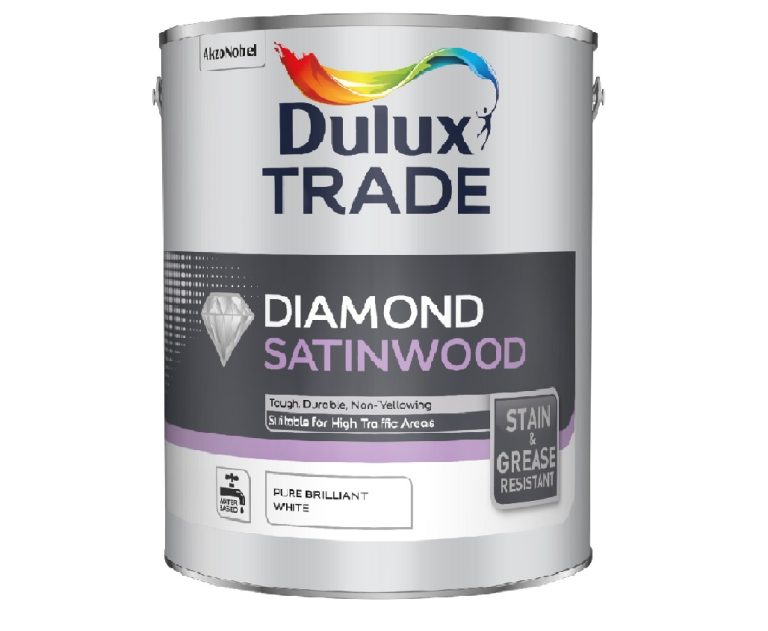
Dulux Trade is reporting a significant shift in buying behavior from trade professionals with sales of water-borne paint up and solvent-borne paints down across the total paint market in 2018. The latest market data to the end of 2018 shows a rise of 13% in the sales of water-borne paint year-on-year twinned with a decline in sales of solvent-borne paints by 3%. The surge in sales reflects the significant improvements to water-borne formulations that have been achieved by the research and development teams at manufacturers, including AkzoNobel, as they identify sustainable solutions that don’t compromise on the quality of the finish. “The science and technology behind water-borne paints has come a long way in the last few years. Now, our focus is on upskilling the trade to be able to get the best out of these products when they’re on the job. Commercial specifiers and homeowners are becoming increasingly aware of the sustainable alternatives that are available to them when specifying for a project – this shift is going to continue and the trade needs to be ready,” explained Karen Wilkinson, Dulux Trade Lead at AkzoNobel. The new water-borne formulations are durable, quick drying, none (or less) yellowing, low odour and easy to clean from used brushes and equipment. The shift in market is indicative of the increasing number of specifiers making a switch to specifying water-borne paints to comply with Green Building Standards such as BREEAM, LEED and The Well Building Standard. “Our recently launched water-borne Dulux Trade Diamond Satinwood has great flow and can be applied using a range of techniques including spray, allowing trade professionals to achieve a high quality finish in a fraction of the time. It is also very durable, offering excellent stain and grease resistance, which means it is particularly beneficial for woodwork in high traffic areas such as corridors, stairways and internal doors, and is non-yellowing for long-lasting whiteness, so every job can be finished with brilliance,” added Wilkinson. “We expect sales of water-borne paints to rise again over the next twelve months as product innovation continues with new advances in formulation technology, and more and more specifiers and decorators become aware of the benefits, gaining the confidence to switch to water-borne for good,” she concluded.

Read More »

VIVALDA INVESTS £300,000 IN NEW ‘CLEAN FLEET’ TO BEAT ULEZ FINES

Vivalda, the UK’s largest distributor and fabricator of architectural cladding systems, has acquired six new ULEZ-busting HGVs to ensure it meets tough new emissions laws due to be introduced in London from April this year. Investing more than £300,000 in five Mercedes Benz Actros 2532L models and a DAF CF330 truck, the business has acted decisively to ensure unhindered access to sites across the capital. All the vehicles in Vivalda’s new, fully liveried fleet are Euro VI compliant, meaning that they will be exempt from tough new emissions fines levied on all cars, vans and lorries that fail the new Ultra Low Emission Zone standard for central London. Ben Jayes, managing director of Vivalda Group, which also includes the PURA Facades brand, said: “As a responsible business, these new regulations have been on our agenda for some time now, which has enabled us to plan ahead and invest in our new fleet. Obviously, the environment is important to us all, but so is business continuity and maintaining a competitive cost base for our customers. “It is concerning that so few businesses have apparently prepared for the ULEZ in London and similar schemes in other UK cities,” he continued. In fact, a survey carried out by the BVRLA (British Vehicle Rental & Leasing Association) last year highlighted the fact that more than half of SMEs in the South East were unaware of the impending low emission laws. Given such timing, this is going to cause many businesses real issues serving customers in London and other affected cities. Vivalda’s new liveried fleet will also futureproof the business from potential fines expected to be levied on polluting vehicles entering other UK cities, such as Birmingham, Leeds, Nottingham, Derby and Southampton, all of which have been mandated by the Government to introduce Clean Air Zones. Vivalda takes its environmental responsibility seriously, recently introducing a packaging recycling scheme to handle waste from the cladding fabrication process.

Read More »