Products & Materials : Building Trade Materials News

AluFoldDirect Brings ‘Everything Aluminium’ to Build Show

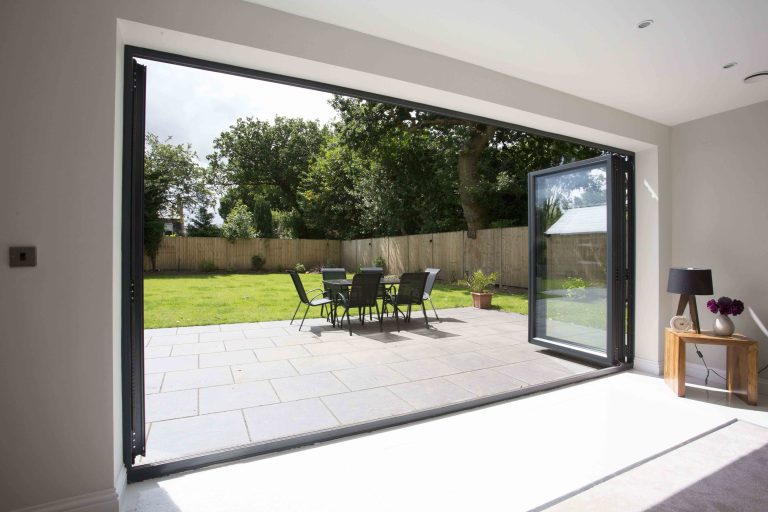
AluFoldDirect will be proving to the entire construction industry that aluminium glazing can be problem-free by featuring ‘Everything Aluminium Without the Pain’ on the PiGS Product Pavilion at The Build Show, part of UK Construction Week. “The aluminium glazing market is more buoyant than ever which is why it’s crucial

Read More »

Connected lighting project at brick factory saves 50% on energy costs

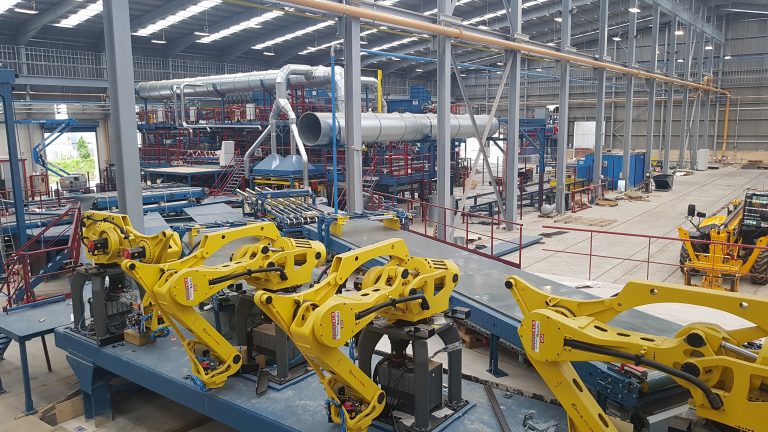
Abtec Building Technologies (Abtec BT) has recently completed a project to install a connected lighting system at a newly constructed brick factory in the East Midlands. Ibstock Brick, an Ibstock PLC company, has built a new factory capable of producing 100 million bricks a year, helping to address the UK’s housing shortage.

Read More »

Timber marketing summit to focus on health and wellbeing

The timber industry is invited to take on the health and wellbeing agenda this autumn at the Wood for Good Marketing Summit. Aimed at timber marketing and communications professionals, the event ‘Marketing Timber for the Health and Wellbeing Agenda’ will take place on Thursday 20 September at Headspace in Farringdon,

Read More »

3 Troublesome Building Materials from Around the UK

Have you fallen in love with a historic property? Are you curious about how period homes always seem so quirky and unusual? The secret is usually woven into the building itself, thanks to construction techniques that have become unconventional to use today. While strange-looking façades help old buildings stand out

Read More »

NEW BUILDINGS OR OLD, SIKA HAS THE WATERPROOF SOLUTION

The waterproofing of existing below ground structures, particularly ageing ones, needs as much careful planning as a new-build project in terms of materials and process. System options, however, tend to be more limited when it comes to putting a watertight seal on a basement or a belowground solution area already

Read More »

Vivalda Group plc sees 19% growth in 2017

The UK’s leading supplier of rainscreen cladding systems, Vivalda Group plc, has confirmed strong growth for the year ending December 2017, with its turnover increasing by 19% to £31m. Despite the chronic under performance of the construction sector, the Grenfell Tower tragedy, Brexit and the impact of the Carillion collapse,

Read More »

M P PLASTERING WORKING WITH SAINT-GOBAIN WEBER FOR COTSWOLD HOMES LTD

Experienced rendering contractor M P Plastering of Somerset excels with the use of high performance, technically advanced products manufactured by Saint-Gobain Weber.  As a specialist applicator, M P Plastering has a wealth of experience in the application of sprayed renders and external wall insulation.  Projects range from one-off domestic applications

Read More »

ADOPTING NEW INNOVATIONS IN CONSTRUCTION

Every industry faces its own challenges when it comes to grappling with emerging innovations & technologies, even the construction sector. Although many whom work in the industry would say the construction world embraces change, inevitably, there are more pressing realities which can disrupt this idyll; including financial cost, ‘value engineering’

Read More »

Construction Products Manufacturing Is Starting to Catch-up

The £56 billion UK construction products manufacturing industry has started its catch-up activity lost during the first three months of the year due to adverse weather conditions, show the Construction Products Associaton’s (CPA) State of Trade Survey for 2018 Q2. “These results fit the profile of construction catch-up from a

Read More »
Latest Issue
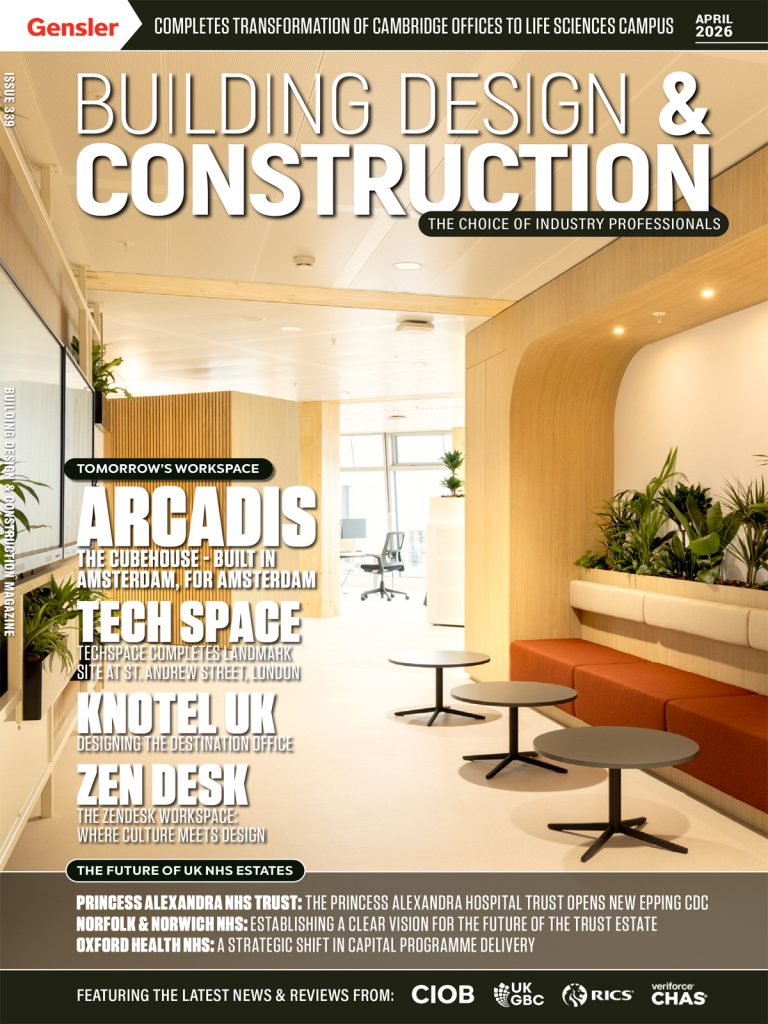
Issue 339 : Apr 2026

Products & Materials : Building Trade Materials News

AluFoldDirect Brings ‘Everything Aluminium’ to Build Show

AluFoldDirect will be proving to the entire construction industry that aluminium glazing can be problem-free by featuring ‘Everything Aluminium Without the Pain’ on the PiGS Product Pavilion at The Build Show, part of UK Construction Week. “The aluminium glazing market is more buoyant than ever which is why it’s crucial to offer installers Everything Aluminium without the pain, so that installers can take advantage of the sector. By going to The Build Show, we can show more people in the construction industry how we have perfected our manufacturing processes to deliver aluminium glazing right first time, every time,” said Craig Miller, Managing Director at AluFoldDirect. “The range of visitors to The Build Show also means that we can talk to local builders, specifiers and architects about our range, fast delivery times of 1 week for unglazed and 2 weeks for glazed, Aluminium Glazing Design Centre and the new AluFoldDirect Aluminium Installer Training Academy,” he added. AluFoldDirect is one of ten companies featuring on the PiGS Product Pavilion, which is sponsored by Balls2 Marketing. The PIGS Product Pavilion at the Windows, Doors and Glass Show has been created after feedback from visitors to The Build Show 2017 saw lots of requests to see more glazing products. AluFoldDirect is the perfect company to feature on the pavilion, to show visitors how they can get ‘Everything Aluminium Without the Pain’ and make the most of the ever-growing aluminium glazing market. Visitors can find AluFoldDirect and learn about its Everything Aluminium range of products on Stand B515 in Hall 10 at The NEC between Tuesday 9 October and Thursday 11 October 2018.

Read More »

Connected lighting project at brick factory saves 50% on energy costs

Abtec Building Technologies (Abtec BT) has recently completed a project to install a connected lighting system at a newly constructed brick factory in the East Midlands. Ibstock Brick, an Ibstock PLC company, has built a new factory capable of producing 100 million bricks a year, helping to address the UK’s housing shortage. With lighting such a fundamental part of any manufacturing facility, the company wanted to install the latest technologies to help save on costs, energy consumption and CO2 emissions. Ibstock Brick is the UK’s market leader in brick manufacture with 20 factories across the country and a total annual capacity in excess of 750 million bricks. In addition, the firm employs almost 1400 people, with a substantial number in the local Ibstock and Ellistown areas in Leicestershire. Despite the impressive output figures, the UK as a whole is suffering from a housing shortage that is not helped by a lack of bricks. To address the shortfall, it is estimated that a further 400 million bricks will be required annually; a demand that is currently met by imports from continental Europe. In response, Ibstock Brick is increasing its output by constructing one of the most modern brick factories in the world. In fact, the company estimates that the new £54 million facility will increase its production capacity by a further 100 million bricks per annum.   Total connectivity All modern factories call for connectivity, and this includes services such as lighting, for which the company was keen to ensure the latest technologies were utilised. “We were introduced to the project by Siemens as we are a solutions partner for their building technologies division,” explains Dave Watkins, director of Abtec BT, a specialist in bringing cost-saving intelligence to buildings. “After an initial chat with Ibstock, at which we had the opportunity to put forward our ideas, we were asked to tender formally for the project, which we duly won.” The solution proposed by Abtec BT was based on a number of class-leading technologies, including LED sources, open platform functionality, sustainability and, of course, connectivity. This proposal contrasted notably to the original brief, which was based on fluorescent lighting. “We had to justify the technology and why Ibstock should go for it,” states Mr Watkins. “However, the advantages of the proposal were pretty apparent and the company soon placed the order.”   Demonstrating the payback Abtec BT’s alternative to traditional lighting and controls facilitated the potential to build an energy-efficient building management system. Significant payback on the proposed solution was demonstrated, along with CO2 savings to match. In terms of the actual choice of lighting, the nature of the environment within the factory made this task especially challenging. Specialist conditions meant that the system not only had to be energy efficient, but had to be installed to a very specific standard, a factor that called for careful thought in the design of the concept, as well as consideration for future maintenance requirements. “We proposed DALi light fittings, which were rated to a high IP (ingress protection) with no metal exposed,” explains Mr Watkins. “This is important as a combination of brick dust and moisture in the atmosphere can cause incorrectly specified light fittings to corrode. In addition to their suitability for the operating environment, the use of DALi lighting would also provide the control and feedback needed at the management graphics end of the system.”   300 light fittings In total, Abtec BT calculated the need for 300 light fittings above the 295 x 86m factory floor in order to maintain the necessary lux levels. Contamination from the brickmaking process will of course affect lux levels over time, but the nature of the connected lighting solution proposed by Abtec BT means it is possible to account for this eventuality. “At installation, new lights can be dimmed to counter the fact that they will probably emit lux levels that are too high,” says Mr Watkins. “However, as time passes and the lights get contaminated from factory production processes, so we can dim up accordingly. Having a high understanding of issues such as these helped us to secure the Ibstock contract.” The installation undertaken by Abtec of the electrical elements such as the busbar also had to be carefully selected and installed. Due to the challenging height of the building (over 17m), the sensors used and the location required close scrutiny.   Effective energy management Abtec BT’s system has all the elements necessary to provide effective energy management, including presence detection from sensors mounted throughout the factory, automated function and duration testing of emergency lighting, constant daylight control and some scene setting. “Constant light control means that we monitor natural light levels across the whole factory and adjust the DALi lighting accordingly,” says Mr Watkins. “For instance, if the sun comes out and natural light levels improve we can slowly dim the lights [not noticeable by the naked eye], thus generating savings.” In total, energy savings of around 50% are anticipated in comparison with a traditional lighting install, along with an annual CO2 reduction of 170,041 kg. When coupled with the automated emergency testing, further savings are expected, leading to an estimated project payback of less than two years.   Open platform “The system installed is open in its approach to technology; KNX has been used for the field based sensors, BACnet for integration to heating and ventilation, and MODBUS to bring in the metering data,” explains Mr Watkins. Importantly, the entire system links to Abtec’s integrated building energy management system, HYDRA, which allows users to easily navigate and visualise logged events. Built on the latest vector graphics platform (HTML5), HYDRA helps users zoom in to the information they need, whether on a PC, laptop, tablet or smartphone. The HYDRA system, with its supervisor control and data acquisition functions, is a window into the heart of a building, as well as a proactive tool giving information to managers so they can make informed business decisions. HYDRA supports OPC, ModBus and BACnet, and allows integration with third-party systems. Data aggregation


Read More »

Timber marketing summit to focus on health and wellbeing

The timber industry is invited to take on the health and wellbeing agenda this autumn at the Wood for Good Marketing Summit. Aimed at timber marketing and communications professionals, the event ‘Marketing Timber for the Health and Wellbeing Agenda’ will take place on Thursday 20 September at Headspace in Farringdon, London. Health and wellbeing, indoor air quality and the use of healthy building materials are becoming increasingly important in construction and the marketing summit will assess the market potential, demand and drivers for healthy building products. The event will cover innovative approaches and best practice in marketing for the health and wellbeing agenda. An interview style panel debate with speakers including Harry Knibb, principal consultant and healthy buildings expert at WSP, and Olga Turner, director and co-founder of Ekkist. This will be followed by an open audience discussion allowing for speakers and delegates to establish requirements for healthy building products and how to meet them. Christiane Lellig, Wood for Good campaign manager, said: “We’ve had discussions with organisations such as the Construction Products Association, Savills and Legal and General and they’ve all shared that there is currently no particular focus or research on health and wellbeing trends in residential buildings. “To date the focus has been on office buildings with the intention to increase employee retention and performance, but we want to know what the key challenges are for timber marketing and communications professionals catering for the wider health and wellbeing agenda. “For example, how does everyone describe a healthy building material? This is an opportunity for us to come together and unite in our messaging and gain a better understanding of healthy building standards and material databases, so we can communicate this effectively and accurately.” The marketing summit, taking place the day before the Timber Trade Journal Awards, is an essential opportunity for anyone responsible for communicating about timber products and allows for networking with like-minded professionals. The final session on the day will be exclusively for Wood for Good supporters to discuss the main focus for 2019, receive a brief update on 2018 performance, and learn about the new funding strategy. Tickets are free to Wood for Good supporters and a 25% discount is available for British Woodworking Federation and Timber Trade Federation members. Numbers are limited so register for tickets now: https://www.eventbrite.co.uk/e/wood-for-good-marketing-summit-autumn-2018-tickets-48237635065 Subscribe for the latest e-news on timber in design and construction here: www.woodforgood.com/info/sign-up

Read More »

3 Troublesome Building Materials from Around the UK

Have you fallen in love with a historic property? Are you curious about how period homes always seem so quirky and unusual? The secret is usually woven into the building itself, thanks to construction techniques that have become unconventional to use today. While strange-looking façades help old buildings stand out from the crowd, they often come with a plethora of very specific problems. Wattle and Daub Wattle and daub is one of the most traditional property constructions found around the UK. It’s made up of thin wooden strips that are woven into panels (the wattle) and are then coated with a mixture of soil, clay, sand, straw and animal dung (daub). The low-cost, sustainable nature of wattle and daub has meant that, despite being used for at least 6,000 years, it’s seeing a resurgence in popularity as a construction material. Why can wattle and daub be troublesome? Well, as historic building materials go, it’s actually fairly resilient. The slightly flexible nature means that walls can tolerate considerable structural movement and its sturdiness will even support a failing timber structure where other types of infill would not. However, since it became fashionable to leave both the internal and external sides of these timber frames exposed, the performance of wattle and daub walls has been compromised, letting in draughts and occasionally water. This can cause a wider problem with damp, if left untreated. Ideally, the exposed side of the wall should be coated each year with limewash (killing off bacteria and filling in any small cracks), while the other side should be covered in render or weatherboard. The worst thing you can do with a wattle and daub construction – or any timber-framed building – is to cover the historic fabrics with a modern, impermeable material. These prevent the buildings from “breathing”, causing a build-up of moisture and decay. Bungaroosh Bungaroosh (spelled in various ways, including ‘bungarouche’ and ‘bunglarooge’) is a composite material comprising of building site scraps that would be mixed into hydraulic lime. Broken bricks, flint, pebbles, bits of wood and other miscellaneous pieces would be mixed in with a mortar and poured between shuttering to set. Bungaroosh was used almost exclusively in Brighton and Hove, East Sussex, in the 18th and 19th centuries, although some buildings in the nearby towns and villages have bungaroosh features too. If you visit Brighton today, you can see still countless Regency townhouses with an immaculate cream render, many of which are hiding bungaroosh beneath the surface. Although it was a cost-effective way of using up materials, Bungaroosh is not the most reliable building fabric. The mis-mash of textures means that Bungaroosh is generally very porous. This means that it can become brittle when exposed, either becoming too dry crumbling with little resistance, or getting wet and causing solid materials to become loose. Drilling into Bungaroosh is very difficult and can cause serious structural damage. Although many buildings used to feature designated wooden fixing points within bungaroosh walls, these are typically either covered up or in undesirable positions today. Mundic Similar to bungaroosh, mundic (also described as mundic block), is a type of concrete that utilises local waste as an aggregate. In this case, rather than debris from the surrounding building site, mundic is mixed with the leftover materials from nearby mines. Popular between 1900-1950, you will almost exclusively find mundic in Cornwall, although there are areas in West Devon with properties that have been built using mundic materials too. The major problem with mundic is that it’s hard to work out exactly what has been mixed into the wall, and in what quantities. If the aggregate has a high ratio of certain minerals or chemicals from the mine, this can actually degrade the concrete over time and cause serious structural issues. As any surveyor in Devon or Cornwall will explain, this has a huge effect on local property values. All buildings that are suspected to contain mundic will need to be tested, and if the percentage of mundic material is too high, mortgage lenders may refuse to support the purchase.   Sometimes it’s just interesting to know about these unusual construction methods from the past. However, if you’re planning to buy a historic home that might be built using wattle and daub, bungaroosh or mundic, exercise caution. These quirky materials can certainly lend charm and character to your home, just make sure a local surveyor inspects their condition before you commit to a purchase – you could end up with a very expensive pile of rubble!

Read More »

NEW BUILDINGS OR OLD, SIKA HAS THE WATERPROOF SOLUTION

The waterproofing of existing below ground structures, particularly ageing ones, needs as much careful planning as a new-build project in terms of materials and process. System options, however, tend to be more limited when it comes to putting a watertight seal on a basement or a belowground solution area already in use. In general, two systems are up for consideration as far as waterproof refurbishment is concerned. A Firstly a waterproof render solution, such as BBA approved Sika-1 Pre-bagged Structural Waterproofing System, is one popular option. This consists of a 3 coat render system for use on walls and overhead surfaces, and a screed system for use on the floor. Sika-1 pre-bagged ensures specifiers meet the requirements of a waterproofing project without the need for ongoing maintenance. The pre-bag system is factory-controlled quality, with each layer to the optimum mix ratio. Site batched versions should not be considered as the quality cannot be relied upon. Cavity drain systems are also popular with retrofit waterproof installers. Sika® CD – Cavity Drainage System, for instance, controls water after it has penetrated a structure. Loose-laid  for flooring applications and attached to a wall with surface plugs in vertical installations, Sika® CD – Cavity Drainage System directs penetrating water into a drainage system and a collection sump before using a pump to discharge water from the building. This is also a proven, reliable system, but unlike the pre-bagged option, the cavity drainage system requires maintenance programme which at a minimum is annual A combination of both is also an option often used. Early intervention Existing fissures and cracks in the structure should be addressed at the earliest opportunity. Left untreated, defects could potentially lead to greater issues and costly, time-consuming repair. Failure to make good the structure at the earliest stage of deterioration could also affect the overall structural integrity of the building, which in-turn may adversely affect any waterproofing system installed. For manufacturers, a key aspect of retrofit waterproofing is interaction and compatibility between different waterproofing interfaces. It’s a challenge Sika is able to meet, as it offers Type A, B and C systems – A (barrier protection); B (structurally integral protection); C (drained protection) – each of which can connect to form the highest-quality waterproof solution. As a full range provider, Sika is able to offer unbiased advice and tailor the solution to the requirement, thus avoiding specifying solutions unsuitable for the product. As for contractors, the challenge is to ensure installation teams are sufficiently-skilled to correctly fit the waterproofing system. Through toolbox talks and site visits, Sika is able to offer full, technical support to installers. This is a value-added service which comes at no extra cost. In addition, contractors are able to obtain official recognition of their skills by becoming a ‘Sika-approved’ installer of as the  Sika-1 Pre-bagged system where candidates are vetted, trained and assessed before being given registered status. As well as having access to on and off-site technical support.  Only Sika 1 Registered contractors benefit from the Sika guarantee on the Sika 1 pre-bag product. With Sika Cavity drain systems, it is always best to use a specialist waterproofing contractor, but if the works are being done by a general contractor, Sika do offer site tool box talks and on site support as part of the guarantee process. At your service In terms of the specifier, the biggest challenge is ensuring the specified waterproofing product is fit for purpose and meets the required performance level. This is where – once again – Sika’s service offering comes to the fore. The company not only provides a range of watertight solutions for a host of concrete applications, its CSSW-qualified specification managers have a wealth of experience to offer expert guidance to ensure products are fit for purpose, specified and installed correctly. This helps ensure projects are completed successfully. Sika can also recommend specialist contractors for a particular scheme, whilst its guaranteed BBA-certified products assure users that they are in possession of goods of the optimum quality.

Read More »

Cairnrobin Commercial Park cements relationship with building materials supplier Keyline

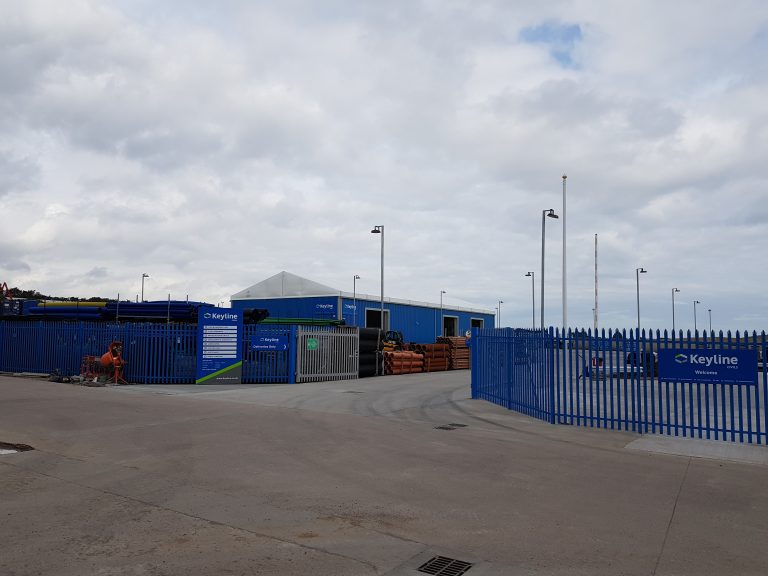
DM Hall, one of Scotland’s largest independent firms of chartered surveyors, has secured the presence of leading UK-wide building materials business, Keyline, an arm of the Travis Perkins group, at Cairnrobin Commercial Park, Aberdeen.  Keyline has relocated from its Miller Street depot in Aberdeen to the purpose-built 2 acre site which it has leased for an initial 10 year term. Keyline complements the existing tenant mix of trade occupiers including, Nationwide Platforms, HSS Hire, AT-PAC and West End Glazing.  Cairnrobin Commercial Park is strategically located 5 miles south of Aberdeen city centre between Cove and Portlethen. The site allows for easy access to the A90 Aberdeen to Dundee Trunk Road and is located just 1.5 miles from the Charleston Junction of the Aberdeen Western Peripheral Route.  DM Hall’s Kevin Jackson, a director in the firm’s Aberdeen office, said: “Cairnrobin Commercial Park is a former pipe yard site which has seen heavy investment by its current owners and has evolved naturally, as it has improved, into a commercial park popular with trade park operators.   “As part of the deal with Keyline our client carried out significant site works including laying over an acre of concrete, fencing and lighting the site and laying foundations for the various Keyline buildings.  “The letting reflects a renewed confidence in the Aberdeen industrial market which is showing signs of recovery after a prolonged period of reduced activity.”  Accessed through an electronically operated security gate, the site extends to a total of 14.65 acres of which around 3 acres remains available. An adjacent surfaced storage yard of up to 10.23 acres is also available on flexible lease terms. The site benefits from a full CCTV system, security fencing and patrolled security outside of working hours. Gary Anthony, Regional Director of Keyline said “We are delighted with the relocation of our Aberdeen depot to Cairnrobin Commercial Park. It provides us with a superb, cost- effective new facility in the perfect location for distributing our products to Aberdeen and the North East”.  Wright Buchanan acted on behalf of Keyline in the transaction.   For further information, please contact kevin.jackson@dmhall.co.uk or lisa.cowie@dmhall.co.uk Tel: 01224 594172, DM Hall LLP, 259 Union Street, Aberdeen, AB11 6BR

Read More »

Vivalda Group plc sees 19% growth in 2017

The UK’s leading supplier of rainscreen cladding systems, Vivalda Group plc, has confirmed strong growth for the year ending December 2017, with its turnover increasing by 19% to £31m. Despite the chronic under performance of the construction sector, the Grenfell Tower tragedy, Brexit and the impact of the Carillion collapse, Vivalda has continued to grow its business via a twin track strategy of unrivalled product quality and service to satisfy the needs of the expanding off-site fabrication market. The business, which now boasts eight locations throughout the UK and Ireland, took the decision last year to stock only fully certified cladding products – providing assurance and building trust among specifiers and contractors. The company has also invested more than £250,000 in new technology, enabling it to supply finished products to the fast-growing off-site building fabrication sector. Vivalda’s chairman, Peter Johnson, said: “Given ongoing challenges facing the building industry the past 18 months have not been easy for many businesses. “And yet despite this – by sticking to our strategy of investing in technology, people and our customers – we have continued to grow our company by nearly 20% year on year. At the same time, we have also been pleased to see our PURA Facades business go from strength to strength, on the back of sustained demand for its range of natural cladding products using stone, terracotta and glass reinforce concrete.” Voted in 2018 by the London Stock Exchange as one of the ‘1000 Companies to Inspire Britain’, Vivalda has not been afraid to innovate and invest to differentiate itself from other rainscreen cladding distributors. While the company’s turnover has continued to increase, so has the productivity of the business. Based on its 2017 accounts, Vivalda’s value added per employee* comes in at £94.300, which according to the UK Industry Performance Report (2016) is more than £30,000 above the construction sector average of £63,700. Johnson concluded: “While a healthy top line figure is always good to see, this is only the tip of the iceberg as far as business performance is concerned. During 2017, we worked hard to improve our productivity and accuracy, while reducing our waste. We’re very much behind the focus of the government’s new Construction Deal and believe that the attention on efficiency and productivity is vital to the long-term health of this vital UK industry.”

Read More »

M P PLASTERING WORKING WITH SAINT-GOBAIN WEBER FOR COTSWOLD HOMES LTD

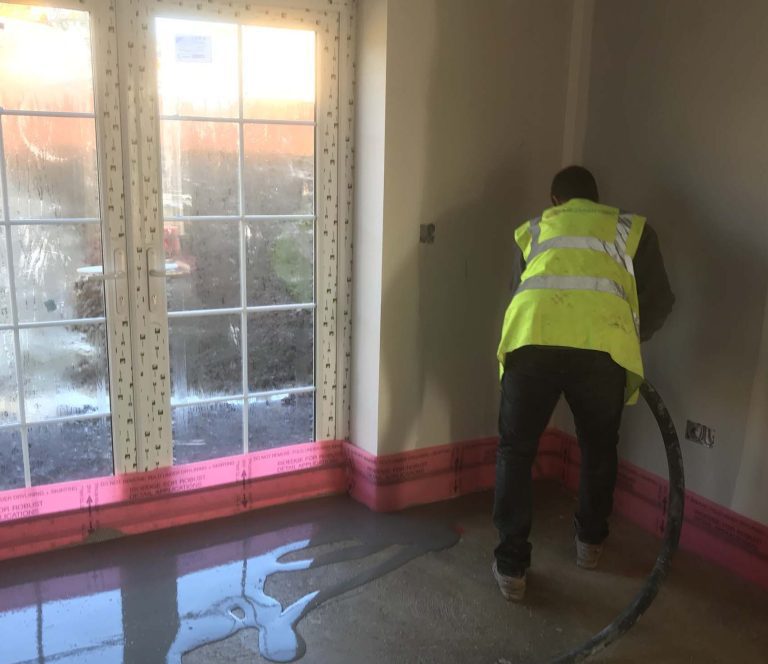
Experienced rendering contractor M P Plastering of Somerset excels with the use of high performance, technically advanced products manufactured by Saint-Gobain Weber.  As a specialist applicator, M P Plastering has a wealth of experience in the application of sprayed renders and external wall insulation.  Projects range from one-off domestic applications to large new-build developments for NHBC registered property developers. Training plays an important role at M P Plastering and managing director Mark Pickthall personally invests in regular training for himself and his expanding team.  “All our jobs come with written specifications and guarantees so it is essential that we ensure exemplary standards of craftsmanship if we are to be considered for more work in the future.” In maintaining these standards Mark and members of his 35-strong team have undertaken on-site training provided by Saint-Gobain Weber to install floors using their existing render pumps to apply screed to floors.  They have also undertaken training in floor screed application at the Saint-Gobain Technical Academy in Flitwick. “Expanding the services we can offer has given us the opportunity to tender for both rendering and flooring contracts on some of the bigger projects,” says Mark.  A perfect example is the contract M P Plastering has won from Cotswold Homes Limited, a prestigious property developer dedicated to delivering quality new homes in the South West, at their Corsham Rise development in Bath. Guy Edge, head of construction, Cotswold Homes, comments: “We’ve got a great relationship with Mark Pickthall of M P Plastering.  He and his team have been involved in some outstanding render applications over the years; while he champions the Weber brand, Cotswold Homes share this opinion.” The concrete floors in the kitchens and bathrooms required perfect levelling in preparation for a tile covering.  Here weberfloor 4716, an acrylic primer for use with Weber’s flooring systems and products, has been brush applied to the concrete substrate.  M P Plastering then followed with a pump-applied application of weberfloor 4150 fine flow at an average thickness of 10mm.  This levelling compound, designed for application at thicknesses between 2 to 30mm, is formulated to combine consistent and reliable drying characteristics with strength and durability. It is supplied as a pre-blended dry powder and designed specifically for renovation of existing solid floors in domestic and commercial applications. “The reason we got involved with Weber for the floor preparation is that we are constantly looking to achieve as perfect a finish as is possible before we cover them with beautiful tiles.  Mark enthusiastically recommended Weber’s pump applied floor screeds and, without a doubt, both the application and the quality of the product has been a great success.  We’ll be using Weber’s screeds again,” says Guy Edge. weberfloor 4150 fine flow is suitable for covering with a wide variety of finishes including tiles, carpets, flexible floor coverings and parquet flooring.  weberfloor 4150 fine flow has excellent spreading and smoothing characteristics, has low alkalinity and low emissions during drying, is casein-free and manufactured to BSI Quality Assurance Scheme ISO 9001 in the UK. Weber’s floor screeds have been developed for optimum speed, durability, strength and smoothness, essential for allowing early access by following trades that contribute to project efficiencies and the fastest possible completion times.  Here the use of proven, pumpable screeds, that harden rapidly and are self-smoothing, will achieve durable surfaces that are ready for foot traffic in just 2 to 4 hours after application.  “In this project the floors were ready for light foot traffic in 4 hours and ready for covering a week later,” comments Mark.  “weberfloor 4150 fine flow is probably the most straight forward product we have worked with and is proving successful every time.” “My real love is using render as you can see it and admire it for years to come.  With floor screed it is hidden by a variety of coverings and completely hidden from sight, that’s the nature of the product.” For more information about this project, or for technical support including award winning training courses and the new RIBA-Assessed Flowing Floor Screeds CPD, please contact Saint-Gobain Weber on 08703 330 070, or visit www.netweber.co.uk. A free download of the Weber App for iPhone and iPad users is also available from iTunes and from Google Play for Android smartphones and tablet users.  Follow Saint-Gobain Weber on Twitter @SGWeberUK for the latest company news and updates.

Read More »

ADOPTING NEW INNOVATIONS IN CONSTRUCTION

Every industry faces its own challenges when it comes to grappling with emerging innovations & technologies, even the construction sector. Although many whom work in the industry would say the construction world embraces change, inevitably, there are more pressing realities which can disrupt this idyll; including financial cost, ‘value engineering’ and tight timescales. At large, the construction world steady, both in terms of commercial and residential builds. To ensure the sector doesn’t swamp itself in its own projects, new technologies (aka methods and products) are becoming more necessary in order to lighten workloads. One of the biggest challenges in the construction industry is miscommunication, where new innovations are a potential solution to reducing this issue. Not just exclusive to construction, miscommunication draws out projects and can cause problems to arise. Some examples of miscommunication in construction include: the wrong product is ordered as a contractor misread an illegible hand, or the product information might be completely at odds with what was specified originally. Building Information Modelling (BIM) is doing a great job tackling these examples. With BIM, different contractors working on a single project can share and access product information all through a 3D model of the construction. Whilst mistakes do happen, it is high time that technologies such as BIM are implemented across the board to prevent the likelihood of mistakes occurring through miscommunication. Necessitating these approaches is all well and good, providing the technologies are cost-efficient. Contractors are more than happy to adopt the new advancements as long as they are a worthwhile investment. This means that the products themselves should be made to ensure longevity, sophistication, and cost-effectiveness in equal measure. Contractors are more likely to use new products if they meet the above criteria. Should contractors be expected to pay a little more for a product, then the benefits must be recognisable. For instance, if a contractor has to choose between a cheap, slow application process or a more expensive, weather-resilient and faster application process, , then they will go for the latter, particularly as the more refined adhesive will save time and labour costs. To an extent, it is important to look at the larger picture when buying new products. Products including Sika-Trocal® Spray Adhesives cost a little more than traditional methods but save time on labour, balancing out project costs. That means contractors get the more premium product for the job whilst still saving hours. Sika-Trocal® Spray Adhesives, including C-400, are less labour-intensive and reduce wear-and-tear on the operative, making for an easy and less time-consuming application. Using new products and technologies for the first time can be alienating. In order for clients to get the best out of their products, Sika-Trocal® provides comprehensive training courses at site and management levels. For the construction industry to keep pace with exponential building demands, quick-drying but cost-effective products are a complete priority. Sika-Trocal® ensures all angles are covered when creating new technologies, ensuring clients have a full understanding of how to maximise the potential of great products.

Read More »

Construction Products Manufacturing Is Starting to Catch-up

The £56 billion UK construction products manufacturing industry has started its catch-up activity lost during the first three months of the year due to adverse weather conditions, show the Construction Products Associaton’s (CPA) State of Trade Survey for 2018 Q2. “These results fit the profile of construction catch-up from a weather-affected Q1. As we’ve moved from a freezing Spring to a hot Summer, groundworks and work on external structures has been able to resume, and this has been reflected in increased sales for heavy side manufacturers,” said Rebecca Larkin, CPA senior economist. Acting as an early indicator of wider activity in the supply chain, construction product sales are very important and the results of the survey signpost to a rise in total construction output levels over the next 12 months. An increase in activity was also reported by heavy side manufacturers, with sales in Q2 rising for 40% of firms, following two previous quarters of falling sales. A decrease of 29% was reported by the light side manufacturers, which was the weakest performance since 2012 Q3. This reflects the lagged impact of the industry’s decline in Q1, as light side products such as insulation, boilers, glass and lighting tend to be used at the end of the building process. “The disruption in Q1 is likely to have delayed interiors and finishing works starting on site, which is evident in the decline in light side sales during Q2,” said Rebecca. “Manufacturers’ product sales, capacity utilisation and new hiring are all still expected to increase over the next year, but price pressure is coming from all directions across fuel, energy, raw materials and labour, which is likely to be felt throughout the construction supply chain.” A return to growth is anticipated by manufacturers, with 43% of heavy side firms and 27% of those on the light side expecting an increase in sales over the next 12 months. Input cost inflation continues to persist, however, particularly for the energy-intensive heavy side, which is experiencing the pass-through of rising global commodity prices on fuel and energy costs.

Read More »