Products & Materials : Furniture, Fixtures & Fittings News
Tork issues “Washroom Guide” to unlock hidden business value

Tork issues “Washroom Guide” to unlock hidden business value

Tork, the global leader in professional hygiene and an Essity brand, has released new guidance aimed at industrial businesses – manufacturing, processing, packaging and plan and equipment businesses – to help transform their washrooms into assets to enhance user satisfaction and benefit business performance. Based on research which shows that

Read More »
How to Choose Restroom Signs for Commercial Spaces

How to Choose Restroom Signs for Commercial Spaces

Renovation programmes often reach signage late, yet washroom doors must be correct on day one. Teams juggle build schedules, accessibility duties, and brand presentation while budgets tighten. A clear method for choosing restroom signs reduces rework, call backs, and tenant complaints. Many project managers start with a short list of

Read More »
McLaren Construction appointed to remodel Brettenham House

McLaren Construction appointed to remodel Brettenham House 

Helical has appointed McLaren Construction as the main contractor for the £90 million transformation of Brettenham House, an iconic Art Deco building on London’s north bank, into a state-of-the-art sustainable office and retail hub. Originally built in 1932 and located within the Savoy Conservation Area, Brettenham House is set to

Read More »
HIMACS takes a bow

HIMACS takes a bow

James Latham provides HIMACS® bringing style and strength to Lichfield Garrick Theatre’s stunning new ticket desk and bar areas The show begins long before the curtain rises at Lichfield Garrick Theatre. First impressions matter, and the theatre’s public spaces play a crucial role in shaping the audience’s experience. So, when architectural

Read More »
Beyond the Classroom: A New Dimension in Education

Beyond the Classroom: A New Dimension in Education

Education is constantly evolving, and the exciting potential of immersive learning spaces is at the forefront of this transformation.  Two UK colleges have taken a bold leap into this future by partnering with WindsorPatania to turn vision into reality. Eastern Education Group, with its state-of-the-art XR Lab, and USP College,

Read More »
Latest Issue
Issue 338 : Mar 2026

Products & Materials : Furniture, Fixtures & Fittings News

Cost, speed and AI set to shape the building trade, says new Häfele research

Cost, speed and AI set to shape the building trade, says new Häfele research

Almost a fifth of kitchen fitters, electricians, and small residential builders say AI will be among the top three trends shaping their roles over the next two years, according to research from Häfele UK. Over a quarter of respondents (26%) said rising material and tool costs will have the biggest impact on their industry in the next one to two years, closely followed by labour shortages (21%) and client expectations around speed of delivery (20%). However, AI ranked fourth among the likely trends to influence the building industry in the near future, with 19% selecting it as one of their top three. Häfele UK undertook research with 500 kitchen fitters, electricians and small residential builders to understand the pressures and opportunities facing the building trades in the coming years. The findings point to a sector expecting continued strain from rising costs and labour shortages, while also preparing for growing customer demands and the influence of artificial intelligence (AI). As well as exploring the trends most likely to impact the sector, the research also examined how the challenges will affect different trades specifically, recognising that experiences will be affected by the types of work, customer demands, and the skills their businesses rely on. For kitchen installers, customer expectations around speed ranked highly (26%), with the profession feeling particular pressure to turn jobs around more quickly. For electricians, however, the standout issues were the declining number of skilled tradespeople (25%) and the impact of increased workload, with 34% saying their biggest challenge will be managing burnout. Carpenters and joiners reported different experiences. While cost pressure remains a concern (36%), it is closely followed by rising client expectations around speed (35%), with just one percentage point separating the two. Conversely, builders reported a broader set of pressures. While increasing costs ranked as the trend most likely to impact their sector (30%), finding consistent work (32%) and customer financial pressure (30%) ranked highest in the top three challenges, by some margin. Commenting on the results, Rachel Tuckey, Chief Product and Marketing Officer for Häfele UK, said: “These findings show that trades are under pressure from multiple angles. While challenges with tool and material costs are long-standing and ever-present for tradespeople, customer expectations around speed of service and technologies like AI are also quickly shaping the building landscape. “Now, more than ever, tradespeople need services, products, tools and support that help them save time and improve efficiency. That’s why we’ve developed our new Trade Hub, bringing together more than 25,000 products into one place, from fixings and consumables to tools, lighting, storage and fittings. It gives trades a single dependable route to the essentials they need, alongside next-day delivery, product guarantees and simple returns.   “And for trades feeling the squeeze on time and labour, we also offer a broad range of services.” Through the Trade Hub, users can access Häfele’s Service+ options, all designed to make installation faster, easier, and more profitable. Services include pre-assembled and custom wooden drawers, cut-to-size lighting and plinth panels, and custom sanding belts. Häfele UK has also launched a new Lighting Configurator to help customers save vital time with their room and furniture lighting designs. Rachel continued: “By bringing these services and systems together, Häfele is helping trades respond to the current and emerging pressures on their roles. Whether the need is to save time, reduce preparation work, simplify sourcing, or offer customers more personalised designs, faster, the tools are there to support a smoother, more predictable way of working in the years ahead.” For more information, visit www.hafele.co.uk/trade-hub Building, Design & Construction Magazine | The Choice of Industry Professionals

Read More »
Tork issues “Washroom Guide” to unlock hidden business value

Tork issues “Washroom Guide” to unlock hidden business value

Tork, the global leader in professional hygiene and an Essity brand, has released new guidance aimed at industrial businesses – manufacturing, processing, packaging and plan and equipment businesses – to help transform their washrooms into assets to enhance user satisfaction and benefit business performance. Based on research which shows that 73% of people will not return to a washroom after a bad experience, Tork’s “Washroom Guide”, available on its website, provides recommendations on improving inclusive hygiene, environmental sustainability and operational efficiency. “Our data shows that when washroom users and cleaners’ needs aren’t met, a business can suffer,” said Olivia Slater, Commercial Director, Professional Hygiene at Essity. “With three in four people concerned about washroom hygiene,[1] and one in two likely to face barriers to meeting their needs, small, targeted updates to the washroom – the most visited room in a facility – can make a substantial difference for both users and cleaning staff.” Recommendations: Washroom users said that when the following “must have” elements are provided, which exemplify inclusive hygiene, the majority (59%) of people say a business can improve its positive image: The washroom is an overlooked place for reducing environmental impact by businesses, yet 67% of people want washroom managers to prioritise environmental sustainability.[2] Tork recommends the following actions: Investing in washroom features and supporting cleaning staff can improve business revenue. To empower cleaning staff, many of whom feel unsupported1 and enhance user experiences, Tork recommends: Olivia continued “By addressing these critical aspects, industrial businesses can help washroom users and cleaners meet their basic needs and deliver an experience that meets the needs of as many as possible. Investing thoughtfully in inclusive hygiene, sustainability and operational support meets evolving user expectations.”   Tork helps businesses realise the benefit of sustainable hygiene with a focus on four key areas materials & packaging, use & waste, carbon and hygiene for all. It also provides free training and educational assets. Building, Design & Construction Magazine | The Choice of Industry Professionals

Read More »
How to Choose Restroom Signs for Commercial Spaces

How to Choose Restroom Signs for Commercial Spaces

Renovation programmes often reach signage late, yet washroom doors must be correct on day one. Teams juggle build schedules, accessibility duties, and brand presentation while budgets tighten. A clear method for choosing restroom signs reduces rework, call backs, and tenant complaints. Many project managers start with a short list of suppliers before design freezes. That is a smart start, since ranges vary by material, size, and fixing method. Catalogues like Safety Sign Depot’s public toilet signs give a fast view of layouts, pictograms, and contrast options that suit varied sites. Keep that reference close while you match products to code points and daily use. Meet Accessibility and Building Guidance First Compliance is the floor, not the ceiling, for any facilities brief. In the UK, Approved Document M sets expectations on accessible routes, door hardware, and user information. It links to best practice that affects sign location, height, and tactile features. Review the guidance while you sketch the door schedule, not after procurement freezes the package. You can start with the government’s portal for Approved Document M, then apply your project’s access strategy. Accessible washrooms need signs that people can read from sensible distances in varied light. That means clear text, easy pictograms, good contrast, and simple language. Tactile and Braille additions support visitors who read by touch, and they age well across a long maintenance cycle. Place the sign where a hand does not conceal it, and aim for consistent heights along a corridor. Code points form a checklist you can share with the contractor and the client. Use it to confirm mounting height, character size, and whether a tactile layer is needed. Confusion happens when door furniture and signs compete for the same space. A short site walk with your access notes prevents that problem before installation day. Match Materials to Traffic, Cleaning, and Light Restroom doors live a hard life in commercial buildings. They collect bumps, fingerprints, steam, and aggressive cleaning agents. Pick materials that tolerate that mix without ghosting, warping, or fading. Aluminium, stainless steel, and high pressure laminate work well in corridors with heavy footfall. Acrylic and composite plastics are fine for quieter offices, provided the finish resists scratching. Think about cleaning early. Soft cloths and neutral detergents keep satin finishes looking new, yet many teams use stronger products. If the janitorial spec includes bleach or alcohol sprays, confirm the sign face will not haze or craze. Ask for a cleaning compatibility sheet, and store it with your operations manual. That single page cuts guesswork for night staff and extends the life of the set. Light levels also shape readability. A glossy face can glare under downlights, which makes icons hard to read from oblique angles. A matte or satin face avoids that issue with little cost change. If your corridor has daylight from one side, test a sample at the actual height during late morning. Your eyes will tell you more than a brochure ever could. Vandal resistance is a quiet requirement in some mixed use buildings. In those settings, look for mechanical fixings rather than weak adhesives. Tamper resistant screws stop casual removal and keep your wayfinding intact over long weekends. Small choices like this save time for the facilities team month after month. Get Readability Right, Then Standardise Across Floors Readable signs share common traits that make life easier for visitors and staff. Focus on legibility, contrast, and consistent placement more than decorative flourish. You can still respect brand style while keeping text simple and symbols plain. Test your draft on a phone camera from five metres to simulate a quick corridor glance. A simple checklist helps teams converge fast: Placement consistency cuts confusion on busy levels with split cores. Contractors often adjust by feel during fit out, which leads to drift. Mark reference heights on the drawings and the door frame, then photograph the first bay as a template. That record helps later crews copy the standard when teams rotate. Add tactile and Braille only where it helps, and specify durable methods. Surface applied beads can peel under heavy cleaning. An integrated tactile layer or recessed bead remains readable after thousands of wipes. Ask for a sample and rub it with a cloth to judge durability. Small practical tests reveal early where a product may fall short under daily service. Plan Procurement, Fixings, and Future Replacement Even simple signs slow projects if procurement misses a detail. Order against a matrix that lists door numbers, rooms served, material, finish, size, fixing, and any tactile layer. Share that matrix with the site manager and the supplier so everyone speaks the same language. The same sheet becomes your asset register after handover. Fixing choice depends on door skin and wall conditions. Adhesive pads speed installation on smooth laminate doors but struggle on textured paint. Mechanical fixings hold better on timber or metal, and they allow easy removal for refinishing. Ask the supplier for backing details and screw lengths that suit your doors, and avoid guesswork on site. Carry spares in the project crate so replacements do not wait for a courier. Think beyond day one. Tenants may request gender neutral signs, language variants, or floor icon updates later. A modular system lets you swap face plates without drilling new holes. Request a small buffer stock and store it in the building’s maintenance room. A five minute swap keeps floors consistent and avoids patchy corridors. Bulk ordering helps on campuses and multi building estates. You gain price stability and visual consistency across phases, even when teams change. Use a single sign schedule and refresh it before each phase rather than starting over. That habit also reduces mismatched fonts that creep in over long programmes. Bringing It All Together On Site Restroom signs are a small spend, yet they strongly affect daily user experience. Choose materials that tolerate traffic and cleaning, and pick finishes that cut glare under real light. Keep wording simple, pictograms clear, and placement consistent along every corridor. Confirm access notes early, then


Read More »
McLaren Construction appointed to remodel Brettenham House

McLaren Construction appointed to remodel Brettenham House 

Helical has appointed McLaren Construction as the main contractor for the £90 million transformation of Brettenham House, an iconic Art Deco building on London’s north bank, into a state-of-the-art sustainable office and retail hub. Originally built in 1932 and located within the Savoy Conservation Area, Brettenham House is set to undergo a major refurbishment that will modernise the building’s interior while preserving and restoring its distinctive historical features. The 128,716 sq ft office building will be reconfigured to meet the highest sustainability and wellness benchmarks, targeting BREEAM Outstanding, NABERS 5*, EPC A, and WELL Platinum ratings. The project will also expand the outdoor terrace space to 6,600 sq ft and introduce generous communal areas at each entrance to foster collaboration and social interaction. The basement will be upgraded to replace car parking with modern cycling amenities and improved end-of-journey facilities. The building’s services and glazing will be comprehensively replaced and enhanced. Externally, the redevelopment will focus on restoring the building’s original façade detailing, particularly at ground level on Lancaster Place, where it faces Somerset House. Missing heritage elements, such as the distinctive bronze lanterns that once marked the main entrance, will be reinstated, while unsightly service louvres and grilles on Savoy Street will be concealed behind decorative openwork panels. Matt Redgrove, Senior Development Executive for Helical, said: “We are very pleased to be partnering with McLaren to revitalise this Art Deco icon. Along with sensitively restoring the building, we will be bringing the specification up to modern day sustainability and amenity standards with the terracing across the building providing unrivalled views along the River Thames.” Darren Gill, Managing Director for London & South at McLaren Construction, added: “This monumental building at the top of Waterloo Bridge will be a familiar landmark to so many of London’s workers and visitors and we will all enjoy seeing it restored and revitalised. It’s not so long ago that it would have seemed like a tall order to bring a 1930s building up to the standards of a brand new office, but that’s become a far more familiar and achievable task.” Building, Design & Construction Magazine | The Choice of Industry Professionals

Read More »
HIMACS takes a bow

HIMACS takes a bow

James Latham provides HIMACS® bringing style and strength to Lichfield Garrick Theatre’s stunning new ticket desk and bar areas The show begins long before the curtain rises at Lichfield Garrick Theatre. First impressions matter, and the theatre’s public spaces play a crucial role in shaping the audience’s experience. So, when architectural practice Design Unlimited was tasked with redesigning the venue’s busy box office and bar area, two of the venue’s most high-traffic spaces, they needed a solution that was both visually striking and built to last. To meet the challenge, the team partnered with Medlock FRB and James Latham, one of the UK’s leading independent distributors of timber, panels and decorative panels. Together, they chose HIMACS, an advanced solid surface known for its design flexibility and durability, to bring their vision to life. Let’s take a closer look behind the scenes at how this transformative project came together… The essential warm-up act The Garrick’s bold brand colours, including vibrant yellows, blues, greens, and pinks, meant any new addition to the space needed to hold its own, but not compete.  To balance the scheme, Designs Unlimited opted for a calm, neutral backdrop for the new box office. At the heart of this vision was a sculptural reception desk specified to be understated yet impactful. For this, Designs Unlimited was set on using HIMACS in Arctic White. Sourced through James Latham and crafted in collaboration with Medlock FRB the solid surface material was key to realising their concept. HIMACS’s ability to be seamlessly joined and its thermoformable properties made it possible to create a fluid, continuous surface, allowing for a subtle dropped section to accommodate wheelchair users. This thoughtful detail blends effortlessly into the overall design, reflecting the theatre’s commitment to inclusivity without drawing attention to accessibility features. As Jo Heyse-Moore, lead interior designer on the project explains, “The box office is the first stop for most visitors, so we wanted it to be instantly recognisable, which is why we used plain tones that contrast with the expressive colours that feature elsewhere. The ability to cut, bend, twist, and shape the HIMACS sheets meant that we could be far more playful with the furniture’s structure, giving it its own identity. It immediately stands out as a prominent feature, performing an artistic purpose as well as a functional one, much like material itself.” HIMACS Bar None HIMACS wasn’t just chosen for its sleek aesthetic, it ticked every box when it came to performance. With excellent impact and scratch resistance, a non-porous surface, and the ability to seamlessly join sheets, it’s hygienic, durable, and easy to maintain, making it an ideal choice for the bustling bar areas of the theatre. Designs Unlimited selected HIMACS in Ebony Concrete for the back-of-bar workspaces, where the surface must withstand constant use, from food prep, and drink spills, to the occasional broken glass. Its durability is matched by long-term value, too, thanks to a 15-year limited warranty that extends the refurbishment cycle, reducing the need for frequent repairs or replacements. “Designing for bar areas is a unique challenge,” explains Heyse-Moore. “They need to look inviting to customers, but the working areas behind the bar see heavy use and require frequent cleaning. That puts pressure on the materials we specify, especially for surfaces.” She adds, “Stainless steel is a popular choice, but it scratches and dents easily. Timber is beautiful but needs a lot of upkeep to stay that way. HIMACS offered the best of both worlds – robust performance with a premium finish. And the colour range is impeccable. While we stuck to neutrals for this space, the bold shades open up exciting possibilities for future projects.” To find out more about HIMACS, click here. To find out more about James Latham and its extensive catalogue of premium décors click here. Building, Design & Construction Magazine | The Choice of Industry Professionals

Read More »
Zentia wins prestigious if Design Award 2025 for innovative Sonify ceiling system

Zentia wins prestigious if Design Award 2025 for innovative Sonify ceiling system

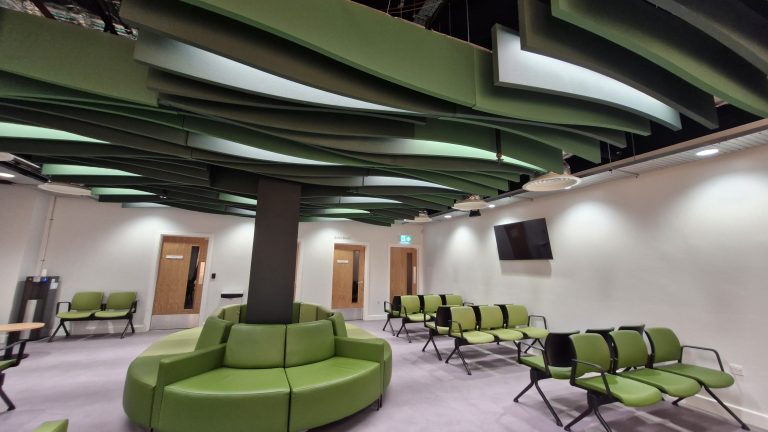
Zentia, the UK’s market leader in complete ceiling systems, is proud to announce that its groundbreaking Sonify range has been awarded the internationally renowned iF DESIGN AWARD 2025. The award, a global symbol of design excellence, is presented by iF International Forum Design GmbH, one of the world’s oldest and most respected independent design organisations. The Sonify innovation won in the Product Discipline, Building Technology Category, distinguishing itself from nearly 11,000 entries submitted from 66 countries. This prestigious recognition affirms Zentia’s dedication to innovation, functionality, and aesthetic excellence in architectural design. Sonify by Zentia redefines the possibilities in acoustic ceiling solutions. At its core is a patented fastening system that delivers unprecedented precision in rafts and baffles alignment while reducing installation time by up to 50%. This design breakthrough ensures a faster, more efficient construction process without compromising design quality. Sonify empowers architects and designers with complete planning reliability, from concept to completion. Produced in the North East of England, the system offers exceptional lead times and a wide range of customisable shapes and colour options, allowing for total creative freedom. Whether for educational, commercial, or cultural environments, Sonify adapts to diverse architectural needs while maintaining acoustic performance and visual impact. “Winning the iF Design Award 2025 is a tremendous honour and a proud moment for everyone at Zentia,” said Gert Van Doormalen, Managing Director, at Zentia. “Sonify represents our unwavering commitment to pushing the boundaries of design, innovation,acoustic performance and ease of installation. From its inception, our goal was to create a system that not only meets technical requirements but elevates the sensory experience of a space, how it sounds, how it feels, and how it inspires. Receiving this recognition is a proud milestone for our team, whose hard work, creativity, and belief in what Sonify could achieve has truly paid off. What’s even more exciting is seeing Sonify already in use on a diverse range of real-world projects, bringing dynamic, design-led acoustic solutions to life. This award is more than a celebration; it’s a validation of our vision and a powerful motivator as we continue to support architects and designers across the UK and beyond in rethinking what ceilings can do.”” The international jury, composed of 131 independent design experts from across the globe, praised Sonify’s blend of technical sophistication, user-focused design, and architectural versatility. The award reinforces Zentia’s position at the forefront of ceiling innovation and celebrates its ongoing commitment to elevating interior environments through smart, sustainable solutions. Building, Design & Construction Magazine | The Choice of Industry Professionals

Read More »
Weber and CMS Danskin Acoustics launch new acoustic floor systems incorporating REGUPOL

Weber and CMS Danskin Acoustics launch new acoustic floor systems incorporating REGUPOL

Saint-Gobain Weber and REGUPOL in partnership with CMS Danskin Acoustics have collaborated to develop, test and launch a suite of new impact sound insulation floor systems designed to reduce sound transmission.  The new ‘weberfloor acoustic systems’ can be used to meet challenging acoustics targets across both new construction and refurbishment projects, including residential, healthcare, commercial and leisure schemes. Aimed at making acoustic floor system specification more straightforward for architects, acousticians, contractors and installers who are designing and delivering developments where controlling impact sound is required or desired, the new weberfloor acoustic systems work with most floor finishes, such as LVT, sheet vinyl, laminate, timber, ceramic tiles and carpet. The collaboration draws together Weber’s flooring screed expertise developed over more than 40 years, REGUPOL’s cutting-edge acoustic product technology and the strengths of leading acoustic insulation supplier CMS Danskin Acoustics.  The capabilities of the three respected brands have been combined to offer the construction market this new, wide range of fully tested acoustic flooring options. Fully tested for compatibility, the weberfloor acoustic systems unite Weber screeds and smoothing/levelling compounds with REGUPOL impact sound insulating membranes for both under screed and over screed applications to reduce noise transmission.  Each component of the system is equally important in achieving the specified acoustic performance. Acoustic under screed and over screed system product selectors are clearly outlined in Weber’s new Acoustic Flooring Solutions brochure, which can be downloaded at https://www.uk.weber/weberfloor-acoustic-systems. The systems are also shown on CMS Danskin Acoustics’ website at https://www.cmsdanskin.co.uk/weber/ . Product specific technical data sheets are available from Weber and from CMS Danskin Acoustics. “In today’s construction landscape, where noise pollution is a concern, the need for effective sound insulation is critical.  This is where weberfloor acoustic systems will come into play by offering solutions designed to improve the acoustic quality of spaces,” says Ian Dennis, Weber’s National Flooring Manager. “With three market leaders at the heart of these new acoustic systems, this is a significant development,” explains UK REGUPOL consultant Jamie Symons. “The market can be assured of the compatibility and integrity of the weberfloor acoustic systems, making product selection much simpler.”  Andy Hayes, technical manager at CMS Danskin Acoustics and Associate Member of the IoA, adds, “The extensive development and testing work at the foundation of these systems means that, when specifying the weberfloor acoustic systems, the market can be confident in achieving both effective acoustic performance and excellent loading performance with minimal construction height.” The weberfloor acoustic systems are supported by a fully trained team of specification and technical managers who can guide clients throughout their specification and installation journey. Training, including CPD modules for architects and installers, will be announced shortly. https://www.uk.weber/weberfloor-acoustic-systems Building, Design & Construction Magazine | The Choice of Industry Professionals

Read More »
P&A Projects provides bespoke lighting solutions for the Express Building, Manchester

P&A Projects provides bespoke lighting solutions for the Express Building, Manchester

UK designers and manufacturers of lighting equipment, P&A Projects, have completed a successful commercial project at the Express Building in Manchester.  The Express Building is renowned for being the original Daily Express newspaper offices in Manchester. This Grade II listed building was designed by engineer Sir Owen Williams in 1939, and features a futuristic, space-age design with curved surfaces and glass finishes.   Today the building is used as a modern workspace in a vibrant neighbourhood in Manchester. The Express Building is home to a visitor reception, cafe, and business lounge, while the top fifth and sixth floors provide access to a dedicated terrace area with striking views across the city centre.   P&A Projects were appointed to the project by electrical contractor CSK Electrical to supply lighting features throughout the offices and meeting rooms. The brief was to provide a custom, alternative solution to the specified globe pendant luminaires and design a solution for the canopy luminaire.  Due to its glass fronted design, the expansive floors are flooded with natural light and the new lighting scheme makes the most of this, by accompanying it with a layered scheme featuring meticulously selected luminaires.  P&A Projects supplied 60 400mm Dia Globe luminaires with a bespoke decorative top cap, two 900mm Dia POLO pendant luminaires, a bespoke Art Deco exterior canopy luminaire, and various Subspace 70 linear luminaires varying from 1197mm to 3344mm in length. POLO and Globe are spherical suspended architectural luminaires, which draw the eye to their dynamic design, while the Subspace fixtures provide each area with comfortable general lighting.   Philip Ascroft, Managing Director at P&A Projects said: “We were thrilled to work on this innovative project, demonstrating how our bespoke lighting solutions can transform a space to meet the unique vision of the client. The Express building is a renowned architectural feature in Manchester and we were honoured to provide a custom lighting scheme that reflects this.”  Project credits: Electrical Contractor – CSK Electrical  Lighting Partner: – Palace Lamps Company  Photography: Mike Dinsdale Building, Design & Construction Magazine | The Choice of Industry Professionals

Read More »
Dakota Group Limited Announces Official Opening of New Distribution Centre in Halifax

Dakota Group Limited Announces Official Opening of New Distribution Centre in Halifax

New UK Distribution Centre to Enhance Support and Stock Availability for Customers in the UK and Ireland Dakota Europe Srl is pleased to announce the official opening of Dakota Group Limited, a new UK distribution centre in Halifax, West Yorkshire. This strategic expansion will strengthen Dakota’s presence in the UK and Ireland, providing local stock availability and enhanced support to existing customers and distribution partners. Located in a prime logistics hub, Dakota Group Limited will serve wholesale and retail distributors in the building construction, drainage, landscaping, and civil engineering sectors. By ensuring faster delivery times with a broader range of stock readily available in the UK, the new warehouse will help meet growing demand and streamline supply chain operations for UK and Irish customers. “We are excited to establish a dedicated distribution centre in the UK, reinforcing our commitment to supporting our valued partners with reliable stock availability and exceptional service,” said Michele Cipriani on behalf of Dakota Europe Srl. “This expansion marks a significant milestone in our growth strategy and our ongoing dedication to serving the needs of the construction and engineering industries. We are looking forward to establishing new partnerships with agents and distributors in our industry sectors.” Dakota Group Limited will offer a comprehensive range of products, including essential solutions for building and construction professionals. As a market-leading manufacturer, Dakota specialises in Channel Drains and Catch Pits; Levelling and safety systems for floating floors, decks, and patios; Gravel Grids and permeable solutions for Landscaping; Floor and wall tile spacers and levelling systems. We will also be offering, for the first time in the UK, WPC and other products from the Dakota Living range which includes composite decking, fencing and cladding systems in a broad range of stylish finishes and colours. Dakota is dedicated to sustainability, reducing waste and addressing environmental challenges by using recycled and recyclable materials for their products wherever possible. The addition of permeable safety and floating floor systems to help combat the effects of increased rainfall is a proactive approach that could play a significant role in mitigating flooding and improve water management as climate change leads to more extreme weather events. For more information about Dakota Group Limited and its UK operations – please visit dakota.co.uk Building, Design & Construction Magazine | The Choice of Industry Professionals

Read More »
Beyond the Classroom: A New Dimension in Education

Beyond the Classroom: A New Dimension in Education

Education is constantly evolving, and the exciting potential of immersive learning spaces is at the forefront of this transformation.  Two UK colleges have taken a bold leap into this future by partnering with WindsorPatania to turn vision into reality. Eastern Education Group, with its state-of-the-art XR Lab, and USP College, with its trailblazing USP Immersive Theatre, both spaces were designed to challenge the norms of traditional teaching and deliver deeply engaging, real-world-ready learning environments. Designing the Future with USP College At USP College, the goal was ambitious: to build a flexible immersive theatre that could seamlessly incorporate VR and provide an experience far beyond conventional classrooms’ limits. In an interview with Dan Pearson, USP College CEO, he quoted saying “we have a vision of what we want the space to be able to do. A strategic vision about… future purpose and ensure we stay ahead of time. We knew that the architects that we chose have to be somebody that deliver, someone that can come and give it the wow factor.” WindsorPatania Architects was the chosen entity and led the charge from day one. “Design information was presented in a format that enabled both the client and building user to easily understand how the physical space was going to be utilised,” said John Blundell (MCIOB) from TJEvers. This early alignment helped everyone involved see the vision. As the Architect Director of this project, my main challenge, as usual, is to keep everything together. All these orders, requests, as well as the budget constraints, the timeline. And we’re really pleased to say that we managed to achieve our great results.” The team tackled key design requirements such as adaptability, future-proofing, and ease of use well before construction. Their early involvement ensured that the physical environment would serve the evolving needs of students and staff alike. Our Development Director, Ryan Windsor notes that when we’re thinking about what we’re doing to the space and how we’re gonna transform it, we often think about assets. We want to create an asset for the College or Universities. We want to inspire the students. James McInroy, USP College Executive Director shared that- “What we’ve done is… provided brand-new facilities which are modern, state-of-the-art, and conducive with the current climate and reflect the external employment environment.” One of the most significant breakthroughs came from how the people involved used VR during the design phase. “The ability of the VR technology to quickly model on ‘Site Survey’ and ‘As Built’ information greatly assisted design change, coordination of M&E services, and installation of FF&E elements,” Blundell added. Despite the project’s technical complexity, the group completed the immersive theatre fit-out in 12 weeks—a testament to Windsor Patania Architects streamlined design and integration process. Chris Murgatroyd, USP College Vice Principal Academic added, “previously, the space was drab, it was old, it was tired, it was slightly depressing to walk into.” WindsorPatania Architects’ task was to come in and build that wow factor. We decided to go for a really minimalistic look for everything, such as old tribunes, the sitting area, the monitor, and we just decided to emphasize the ceiling as the main feature of the space. Dan Pearson commented that -” the transformation was outstanding”. After seeing the complete transformation of the spaces. While Chris Murgatroyd added a compliment as “Now, when we come into the area, it’s engaging, and it’s exciting.” Steven Hendy, USP College CFO, expresses his desire to have an environment that is available to all USP College students. He is proud that the investment has paid off. When you design a beautiful space with a wow factor, you also have to think about how you get to the space from outside. So, in the case of the immersive theatre, we found the opportunity to create feature corridors, like a portal that leads you to a new dimension. As you’re walking into the new space, you feel like something beautiful is going to happen. And as you open the doors and enter, your expectations are fully satisfied as you see a stunning masterpiece bought together by a collaboration of experts with a feature of a delicate and illuminated ceiling which highlights the area. The main aspect of the T-level labs to make them successful as a design was to channel all the requests and the brief from the college itself into a functional layout. Creating Connection with The XR Lab At Eastern Education Group, the vision was clear: build a space that removes the barrier of geography and brings education closer to the real world. The result was the XR Lab—an immersive environment where students don’t just learn about their subjects, but they live them. Learners can use the XR Lab in a wide range of subjects: health, counselling, chemistry, engineering, renewables, maths, logistics, and more. “There are so many examples,” Tom Lloyd shared. Every Friday, our health and applied science students come into study using a specific piece of software that our team has created.” Staff also receive training and hands-on support. “As part of every personal development day, all staff get the chance to work and better understand the capabilities of the XR lab,” Tom Lloyd said. “The XR team are [sic] available to offer significant support to them every time they want to use the new technology.” Designing this space meant considering how students of all learning styles and abilities would interact with the technology. Ethical use, community engagement, and preferred learning styles were all factored into WindsorPatania’s thoughtful and inclusive design approach. “We wanted to create a cutting-edge space that would remove the barrier of geography and close the gap between industry and education,” said Tom Lloyd from Eastern Education Group. The impact has been transformational. “It increases engagement in our experience. It also stimulates excitement to learn and supports knowledge and skill acquisition. The data captured backs this up,” Tom Lloyd added. The immersive nature of the lab boosts student motivation, and early data trends point to better learning outcomes

Read More »