Trades & Services : Fire Prevention News

Fire safety in construction: Setting the agenda

Ryan Simmonds, Sales Director for Framing at voestalpine Metsec plc, explores the importance of only specifying framing materials that have been fire tested or assessed and the options available to the industry Fire safety is high on the agenda for all of us in the construction industry – and rightly

Read More »

Housing association launches £2.4bn fire safety framework

Framework Initiative will be made available to public bodies across England and Wales. A London housing association has launched a £2.4bn framework for public bodies to use for fire safety remediation works. Hyde Fire Safety Works and Services Framework, which is being procured by Hyde Housing Association, will cover a range

Read More »

SimScale Launches FDS

The Fire Dynamics Simulator (FDS), an explorative preview program, has been launched by SimScale, the provider of the world’s first cloud-based engineering simulation solution. The program is a solver developed by the National Institute of Standards and Technology (NIST) of the United States Department of Commerce, in cooperation with VTT

Read More »

Nexus Fusion Launched by SIDERISE

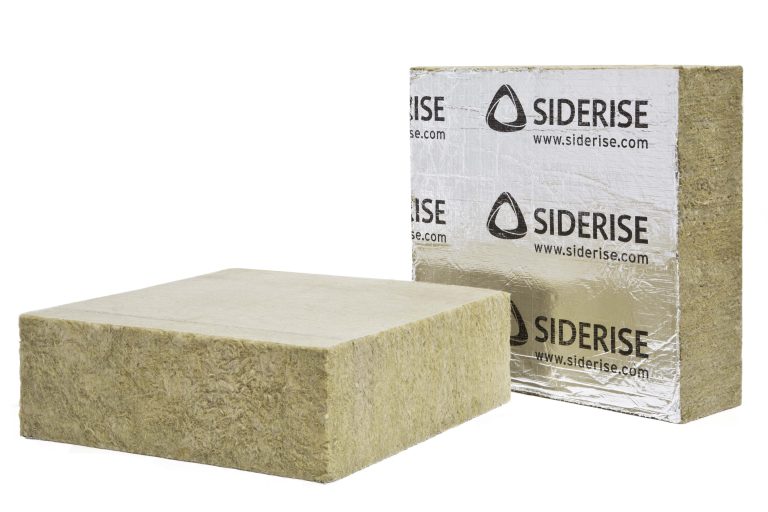
SIDERISE Nexus Fusion has been designed for use with glass spandrel panels in curtain walling and bespoke glazing systems, providing specifiers with a high strength, robust insulation core that offers an unequalled combination of fire, thermal and acoustic performance. It is a robust European Fire Class A1 lamella board that

Read More »

ceda and FIA launch ‘Interface between fire-fighting systems and other systems in commercial kitchens’ Guidelines

ceda are proud to announce the launch of their latest catering equipment industry technical document, ‘Interface between fire-fighting systems and other systems in commercial kitchens’, jointly published by the Fire Industry Association (FIA). The document is intended to offer guidance to suppliers of catering equipment who are often required to

Read More »

PRESS-FIT COULD UNLOCK LIFE-SAVING POTENTIAL OF RETROFIT SPRINKLER SYSTEMS

Press-fit technology on modern sprinkler systems can save lives by facilitating quicker, easier and less disruptive installations in existing buildings, says Geberit, despite Dame Judith Hackitt’s omission of mandatory sprinkler installations in her review of Building Regulations and fire safety laws. The Hackitt Review has been criticised for its failure

Read More »

Wrightstyle introduces leaf and half leaf fire resistant door system

One of Europe’s leading advanced glazing system suppliers has introduced an innovative leaf and half leaf fire resistant door system. The new system complements Wrightstyle’s existing unlatched door range, which was the first unlatched advanced glazed system on the UK and international markets. The doors, which have leafs of different

Read More »

BUREAU VERITAS CONSIDERS THE IMPACT OF THE HACKITT REVIEW

As the long-awaited ‘Independent Review of Building Regulations and Fire Safety’ by Dame Judith Hackitt was published last week, prompting much debate amongst the media, general public and industry alike, Bureau Veritas considers the long-term repercussions of the recommendations and calls for more to be done from a technical perspective.

Read More »

Fire at facility could have been ‘potential nightmare’

A huge fire which broke out at a recycling plant facility for the second time in two month was “an accident waiting to happen”, according to a councillor. The Daily Post reports that David Wisinger, Flintshire county councillor for Sandycroft and Queensferry, said that had the wind been blowing in

Read More »
Latest Issue
Issue 343 : Aug 2026

Trades : Fire Prevention News

Fire safety in construction: Setting the agenda

Ryan Simmonds, Sales Director for Framing at voestalpine Metsec plc, explores the importance of only specifying framing materials that have been fire tested or assessed and the options available to the industry Fire safety is high on the agenda for all of us in the construction industry – and rightly so. It was reported last month that the number of tenders for fire safety work issued by the public sector has soared 56% in the 12 months since the Grenfell Tower fire. There were 687,476 incidents attended by fire and rescue services in Great Britain in 2016-17, with the recent Hackitt Report on the Grenfell Tower tragedy concluding that indifference and ignorance led to a “race to the bottom” in building safety practices, with cost prioritised over safety. The number of councils tendering for fire safety work has shot up in the year since the Grenfell disaster, according to the latest figures – local government buyers publishing twice as many fire safety tenders in the last 12 months compared to the previous year. With concerns about public safety rising, the Government has called for independent reports to analyse building regulations and fire safety in greater detail. We may well see regulations tightened and enforcement of building standards move to a higher level. The building industry as a whole will need to deliver solutions to the required performance specification, while we can expect a higher level of scrutiny of the installation and performance of products and systems, whether or not it is a high-rise project. Many of us in the construction industry have already turned the microscope on ourselves, examining in detail fire safety provision across product ranges and projects. One issue already emerging from the Grenfell Tower tragedy is that focusing on the performance of one standalone product in a fire is too simplistic and does not address all the risks involved. What is needed is consideration of the myriad of other factors that can allow a fire to spread. For any future building project, full system testing and fire safety are paramount to any organisation within the construction supply chain. End clients are calling for additional reassurance and we in the construction industry are being urged to ensure that all components used have been designed and developed in line with the latest fire and safety guidance. Striking this balance can be a challenge for the industry – but achieving this won’t happen overnight. Having led the market for more than 20 years, we recognised the need to increase the efficiency of steel framing system (SFS) products, which led to the development and launch of the innovative new SFS range. This includes lighter, more cost-efficient and sustainable design options, as well as robust fire solutions, enabling more efficient wall construction performance. Months of research, design and stringent fire testing were invested to develop our new SFS range of sections and, with the introduction of more product options to reduce over-specification, we are putting our stake in the ground with regards to where the industry needs to move to, if it is to evolve. The aim of the new range is to combine best value and quality for installers and end users, as well as have a substantial impact on the green credentials and sustainability of any project where our new SFS solution is implemented. Our SFS range now has more system testing data than ever before, in fact over 200 wall and floor solution combinations. With our fire performance data tested or assessed by the UK’s leading test centre – the BRE, we also calculate acoustic and thermal data to give complete peace of mind. Metsec’s new range provides a greater selection of sections, giving architects the capability to create more efficiently designed projects, using the exact product sizes needed. SFS is available in a variety of options including infill, continuous and high-bay walling and an SFS load-bearing system. The new range is BIM Level 2 compliant, with BSI Kitemarks for both BIM projects and BIM objects. Features include new fire-tested solutions based on British Gypsum, Siniat and Knauf plasterboard; thermal and fire performance solutions using Rockwool insulation; fire performance solutions using RCM Y Wall and Euroform Versaliner sheathing boards. Quality and fire safety do not have to be sacrificed in the name of cost – and should never be. The construction industry should lead the future fire safety debate, and work with regulators to ensure all parties involved – from contractors to building occupants – view the sector as standard bearers for both quality and safety. Visit www.metsec.com/sfsframing for more information and to download our brand new technical manual. Please note: this is a commercial profile voestalpine Metsec plc Tel: +44 (0)121 601 6000 metsec@metsec.com www.metsec.com

Read More »

Housing association launches £2.4bn fire safety framework

Framework Initiative will be made available to public bodies across England and Wales. A London housing association has launched a £2.4bn framework for public bodies to use for fire safety remediation works. Hyde Fire Safety Works and Services Framework, which is being procured by Hyde Housing Association, will cover a range of works, goods and services relating to fire safety. The framework, which is open to public bodies across England and Wales, is divided into 11 lots covering different types of remediation works to help make buildings more fire safe, with each of the lots being worth around £200m. The framework covers everything from supply and repair of fire doors, to the installation of sprinklers, to cladding remediation works. Each lot will run for four years, with between two and 10 bidders expected to be invited to tender. Firms can submit bids for all lots. Companies have until 5 August to register their interest, with shortlisted firms expected to be invited to tender on 18 August.   Hyde Fire Safety Works and Services Framework Lots Lot 1 – Supply, installation, removal, and repair of fire doors Lot 2 – Supply, installation, removal, and design of fire safety signage Lot 3 – Supply, installation, removal, and maintenance of fire alarm, detection and suppression systems. (Lot 3 is split in to Lot 3A and Lot 3B to differentiate between fire detection and fire suppression systems) Lot 4 –  Supply, installation, removal, and maintenance of emergency lighting Lot 5 – Design, supply, installation, removal, and maintenance of sprinkler systems and dry/wet risers. (Lot 5 is split in to Lot 5A and Lot 5B to differentiate between Dry Risers and Wet / Charged Risers.) Lot 6 – Provision of fire proofing and stopping works and services Lot 7 –  Provision of cyclical and reactive electrical testing, servicing, and maintenance services Lot 8 – Remedial Works, upgrades, installations, and testing of electrical systems Lot 9 – Removed from framework Lot 10 – Design, supply, installation, removal, and inspection of cladding Lot 11 – Incident Management and provision of Business Continuity Planning advisory services to mitigate and plan for potential threats Lot 12 – Management Contractor to manage any of Lots 1 to 11 for clients and/or direct delivery

Read More »

SimScale Launches FDS

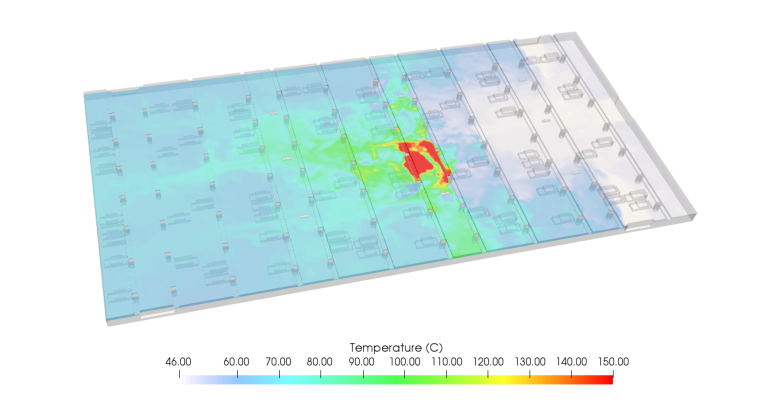
The Fire Dynamics Simulator (FDS), an explorative preview program, has been launched by SimScale, the provider of the world’s first cloud-based engineering simulation solution. The program is a solver developed by the National Institute of Standards and Technology (NIST) of the United States Department of Commerce, in cooperation with VTT Technical Research Centre of Finland. The aim of FDS is to solve practical fire problems in fire protection engineering, while at the same time providing a tool to study fundamental fire dynamics and combustion. FDS has been created as a response to many customers requesting a program that combines the maturity and reliability of FDS for modelling fire and smoke with the convenience and scalability of SimScale’s cloud-based simulation infrastructure. Most of these customers include AEC (architecture, engineering and construction) companies that work on projects that require performance-based design, fire reconstruction, test planning, compliance with fire-related codes and standards, dispersion, calculation of smoke venting systems or indoor air quality. “SimScale’s CFD capabilities that are in production today, along with its seamless deployment, collaboration functionality, and scalability, have made it the tool of choice for many AEC companies. SimScale already helps these companies—including ARUP, WSP, Aqseptence Group among others—tackle engineering projects in the space of thermal comfort, industrial ventilation, building wind loads and pedestrian comfort. The request from these customers to extend SimScale’s feature set to also cover fire and smoke scenarios seems like a natural next step for our development,” said David Heiny, CEO and co-founder of SimScale. The FDS preview program will explore and validate an offering of a simple workflow-driven interface for quick and robust modeling and visualization of complex fire scenarios in buildings, particularly parking garages and tunnels. Interested engineers and companies can apply for the program giving them a chance to shape the future workflow and user interface of the FDS integration, while in the meantime having their fire management-related simulation projects solved by SimScale’s engineers.

Read More »

Nexus Fusion Launched by SIDERISE

SIDERISE Nexus Fusion has been designed for use with glass spandrel panels in curtain walling and bespoke glazing systems, providing specifiers with a high strength, robust insulation core that offers an unequalled combination of fire, thermal and acoustic performance. It is a robust European Fire Class A1 lamella board that meets the performance requirements of curtain walling systems replacing the use of compressible or combustible insulating materials. Through precision manufacturing and tight tolerances, Nexus Fusion comprises high strength stonewall lamella with a uniform vertical fibre structure. This unique feature means that Nexus Fusion boards can be fitted avoiding the risk of slippage due to building movement, and without gaps or slumping of the insulation.     Moreover, due to it being inherently non-combustible, mechanically strong and dimensionally stable, the insulation provides the best possible consideration for maintaining the systems fire integrity at the junction between the building structure and the curtain wall, with the fire resistance remaining primarily dependent on the curtain wall or frame specification. “Nexus Fusion will ensure the integrity of the interface between the insulation and the firestop is not compromised and effective compartmentation is maintained. Our firesafe solution eliminates the costly option of creating a bespoke metal tray lining system,” said William McDowell Business Development and Product Manager of SIDERISE. Tested as part of a curtain wall assembly to EN 1364-3 in Fire Rated Façades for 30 minutes without failure, Fusion boards tested in their end use application have been rated as European Fire Class A1. Available in a range of standard thicknesses between 20mm and 200mm, the product is foil faced on one side with an open filament net on the other side to facilitate bonding to glass. This negates the need for pins and washers, simplifying installation and reducing costs. SIDERISE Nexus products use a unique patented process to produce a true structural lamella board with optimal fire, thermal and acoustic performance. Specifiers and building owners can then be certain these products will continue to perform after insulation, offering the best environmental conditions for those living and working in buildings, and to reliably protect in the event of fire.

Read More »

ceda and FIA launch ‘Interface between fire-fighting systems and other systems in commercial kitchens’ Guidelines

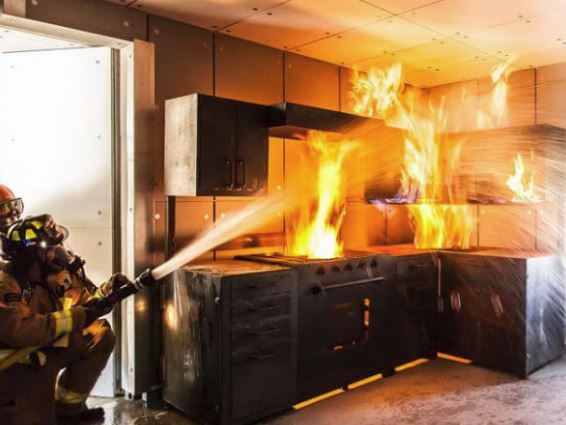
ceda are proud to announce the launch of their latest catering equipment industry technical document, ‘Interface between fire-fighting systems and other systems in commercial kitchens’, jointly published by the Fire Industry Association (FIA). The document is intended to offer guidance to suppliers of catering equipment who are often required to provide fire protection systems and regularly have problems in ensuring that connections are made between the controls of the fire protection system and other systems, such as building management systems, kitchen extract fans and fuel supplies. There is a concern that the suppliers of other systems are reluctant to make the connections for several reasons including, fear of setting off the fire protection system, fear or reluctance to work in another contractor’s control box and communication, resulting in a lack of understanding of the relevance and importance of inter-connections between systems. ceda’s technical support advisor, Peter Kay wanted to provide ceda members with a guidance document that they can incorporate as part of their contracts not only with fire suppression system subcontractors but also their contracts with their clients. He explains, “Fire Suppression Systems are normally supplied with volt free contacts to trigger other systems such as fire alarms, gas interlocks, etc., however, it is not uncommon to find that these are never used simply because it was unclear as to who was responsible for making the connections.” “After some investigation it was felt that we should involve the Fire Industry Association with a view to publishing a jointly branded document. “This is the first time that ceda has worked in partnership with the Fire Industry Association and I find it encouraging that they welcomed our suggestion of a joint document”. Most suppliers of Fire Suppression Systems as well as Fire Alarm Systems and Building Management Systems are members of FIA and therefore will be advised to operate in accordance with the guidelines. The document is available as a download from the “Standard Documents” page on the members’ section of the ceda website, along with a guidance document that has been issued to ceda members which gives guidance on good practice relating to the provision of Fire Suppression Systems and also on the use of the ceda/FIA document. Non-ceda members who wish to view the document can request a copy from the ceda office by emailing fiona@ceda.co.uk.

Read More »

PRESS-FIT COULD UNLOCK LIFE-SAVING POTENTIAL OF RETROFIT SPRINKLER SYSTEMS

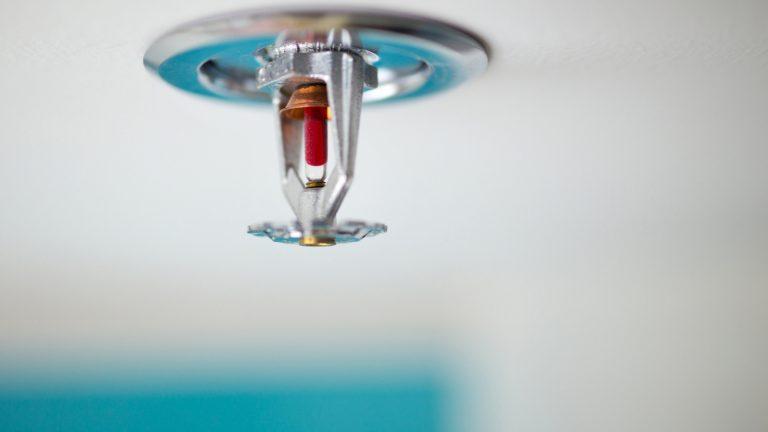
Press-fit technology on modern sprinkler systems can save lives by facilitating quicker, easier and less disruptive installations in existing buildings, says Geberit, despite Dame Judith Hackitt’s omission of mandatory sprinkler installations in her review of Building Regulations and fire safety laws. The Hackitt Review has been criticised for its failure to recommend a ban on combustible cladding products or the mandatory installation of sprinkler systems or automatic fire suppression systems in all new domestic buildings and existing tower blocks. Both measures had been proposed by RIBA as part of its recommended baseline prescriptive requirements ahead of the Hackitt Review’s publication in May. Now Geberit has highlighted the benefits of innovative press-fit technology in a new guide, designed to help specifiers, contractors, developers, engineers and local authorities to overcome the perceived challenges of retrofit installations. Geberit’s guide includes a foreword from Ann Jones AM, the Welsh Assembly Minister who successfully campaigned for sprinkler systems to be installed in all new build domestic properties in Wales. Covering a summary of existing legislation and perceived challenges to retrofit installations, it breaks down the barriers and presents press-fit technology as a viable solution that can help improve the safety of existing buildings – with or without mandatory installations. Antony Corbett, product manager for Geberit piping supply systems, said: “Sprinkler systems save lives but for too long the construction industry has had this perception that retrofit installations are messy, disruptive, unattractive and most importantly too expensive to ensure viability. “With press-fit systems this simply isn’t the case. Contractors and their customers can benefit from fast, reliable connections, with no hot works, lightweight piping and a clean finish. There are cost savings too – BSRIA calculates that the installation efficiencies of press-fit can deliver cost savings of approximately 27 per cent when compared with screwed steel pipework. “It was disappointing that Dame Judith Hackitt didn’t include mandatory sprinkler installations in her review in light of the Grenfell disaster, but the fact remains that sprinklers offer a viable, cost-efficient and proven fire suppression system which can and will save lives in the event of a fire. “We wanted to produce something that would help the industry to overcome any perceived barriers, highlight the benefits of press-fit and enable specifiers and contractors to confidently sell the benefits of modern sprinkler systems, even for retrofit installations.” Writing in the document, Ann Jones AM, Labour Assembly Member, Vale of Clwyd, said: “Often fire safety is seen as reacting to events rather than leading debate in order to avoid such dreadful tragedies and that is why a document like this is vital to keeping the conversation going and also offering learning experiences, building on those who have already taken steps to retrofit sprinkler systems into homes. “There can be no doubt that the installation of a sprinkler system offers a degree of security, protection of one’s home and many precious memories, it has a good environmental footprint and also reduces the burdens on public sector funding. But above all, no one has ever died from a fire related incident where a sprinkler has been installed. “This document will play an important role in helping to educate, agitate and hopefully organise those who have it in their power to fit sprinkler systems into existing properties.”  Download the guide To download Geberit’s free white paper, ‘Pressing matters: Breaking the barriers to retrofitting sprinkler systems in existing building stock’, and to learn more about the potential of retrofit sprinkler installations, visit https://www.geberit.co.uk/campaign/pressing-matters.  

Read More »

Wrightstyle introduces leaf and half leaf fire resistant door system

One of Europe’s leading advanced glazing system suppliers has introduced an innovative leaf and half leaf fire resistant door system. The new system complements Wrightstyle’s existing unlatched door range, which was the first unlatched advanced glazed system on the UK and international markets. The doors, which have leafs of different sizes, provide integrity and insulation, for either 30 or 60 minutes (EI-30 and EI-60). There can be several reasons for having a double leaf door with different leaf sizes – for example, where the opening is restricted in width, or for other ascetic, design or space restriction reasons. The system therefore allows for easy pedestrian traffic using one operating leaf, with the other leaf coming into operation if bulkier equipment is being moved through the doorway. One leaf (the master) is the access door that is used for pedestrian traffic, into and out of the building or offices and can either be latched or unlatched. The other smaller leaf (the slave) is a fixed door held closed by flush bolts at the top and bottom, but which can be opened to make a wider opening for furniture and equipment to pass through. Wiltshire-based Wrightstyle used 23mm Pyrostop glass for the EI-60 test, in a very large master leaf of 1472mm wide x 2450mm high, to cover for all configurations. This latest door system follows the introduction of a series of thermally broken fire doors earlier this year, and which are fully compatible with Wrightstyle’s SR60 curtain walling system, to provide 90 minutes of integrity and insulation (EI90). Together, they add further options to Wrightstyle’s already extensive range of fire and smoke resistant doors, which include unlatched doors in double or single leaf format – a breakthrough fully-glazed fire door system. All Wrightstyle’s unlatched doors are therefore now available in single or double leaf format, or leaf and half leaf, and fully glazed using non-selective door leaf push/pull technology, offering a wide range of surface finishes including stainless steel. Wrightstyle was the first company to develop a glazed unlatched door system, and has since raised concerns with government about the inadequate enforcement of fire specifications contained within the Approved Document B and the usage requirements of certification data. “We have first-hand experience of unlatched doors with untested or incompatible fire-resistant glass are being accepted as fire doors within the regulatory definitions despite the fact that they are clearly not within the permissible limitations of their supplied test certification,” said Denis Wright, Wrightstyle’s chairman. “Our new door system means that we now offer a complete range of fire doors, for internal and external use, and which are fully tested and compliant,” he said.

Read More »

BUREAU VERITAS CONSIDERS THE IMPACT OF THE HACKITT REVIEW

As the long-awaited ‘Independent Review of Building Regulations and Fire Safety’ by Dame Judith Hackitt was published last week, prompting much debate amongst the media, general public and industry alike, Bureau Veritas considers the long-term repercussions of the recommendations and calls for more to be done from a technical perspective. Andy Lowe, director of building control at Bureau Veritas, comments: “The publication of the Hackitt Review comes as we approach the first anniversary of the Grenfell Tower fire and alongside the commencement of the public inquiry into the tragedy; the scenes from which have displayed that the pain of all those affected has not dampened. For many, the Hackitt Review did not deliver what they had hoped and sparked somewhat of a public outcry due to the unexpected conclusion not to impose an outright ban on combustible cladding. Instead, the recommendations of the review focused on the need for a new regulator and a series of proposals to make high-rise flats safer to live in. “From a building control perspective, the Hackitt Review makes interesting reading. Many of the recommendations are encouraging in ensuring a more robust approach is taken to fire safety in the construction industry in the long-term and across all stages of development, from planning and construction to the occupational phases. However, the recommendations are aimed specifically at changes to the overall system rather than relating to the specific technical aspects of a building. The aspects of cladding in particular and the technical measures used to ensure that a holistic approach to fire safety in high rise buildings is achieved, needs to be addressed sooner rather than later. Key aspects such as the use of non-combustible cladding, sprinkler protection and the provision of two staircases for example, are of critical importance in achieving much-needed public confidence, as well as the need to address the existing building stock situation. “It is reassuring then that since the publication of the review, the Government has announced that it is considering going further than the recommendations put by Dame Judith Hackitt and will indeed look to ban the use of combustible materials in cladding on high-rise buildings. Based on the near universal response to the review, this would surely be met with overwhelming support and we are eager to see how the situation evolves in the coming weeks and months.” Bureau Veritas is a leading testing, inspection and certification company with a vast experience of the building control sector. Bureau Veritas Building Control UK combines technical expertise and market-leading systems with unrivalled industry experience to deliver building control services to some of the biggest names in construction. Through effective teamwork, a consistent approach and commitment to excellence, Bureau Veritas’ solutions go beyond just compliance – they can help to reduce costs and manage risk throughout the building lifecycle, from design stages through to site inspections and final certification – whilst giving designers confidence that the project will comply with Building Regulations and all relevant legislation. For further information, call 0345 600 1828 or visit www.bureauveritas.co.uk

Read More »

Tamlite Lighting urges the lighting industry to show strong leadership in wake of Grenfell Fire

Dame Judith Hackitt’s report on Building industry Regulations and Fire Safety: Building a Safer Future, due out this week, will expand on the December 2017 interim report which found that, “The current regulatory system for ensuring fire safety in high-rise and complex buildings is not fit for purpose. This applies throughout the life-cycle of a building, both during construction and occupation, and is a problem connected both to the culture of the construction industry and the effectiveness of the regulators.” The interim report identified six key areas for urgent action: regulation and guidance; roles and responsibilities; competence; process, compliance and enforcement; residents’ voice and raising concerns and Quality Assurance and products. Colin Lawson, Head of Product Development, Sales & Marketing, Tamlite Lighting comments: “There cannot have been anyone in the UK whose heart did not go out to the victims and the families of those killed in the Grenfell Tower fire on 14th June 2017. It will take many years to recover from the effects on the community, residents and the emergency services. It also deeply affected those in the construction industry and supply chain who share responsibility for the safety of our homes and places of work, along with local government, regulators and legislators. “At Tamlite Lighting we are most concerned with how the lighting industry can play its part in using its influence to ensure the highest levels of safety and accountability. Dame Judith’s interim report said that “primary responsibility for ensuring that buildings are fit for purpose must rest with those who commission, design and build the project”, but what does that mean in practice for the lighting industry? “The industry must play its part; it can’t sit back and wait for central government to legislate. We must come together with our colleagues across the lighting and construction supply chain to share knowledge, encourage ongoing training and testing, adopt best practice behaviours, and develop a fully-accountable system for the life-cycle of buildings as a whole and not just for our own separate areas of ‘responsibility’. We can’t just aim for minimum compliance, but provide leadership especially regarding responsibility and competence. “While the lighting industry already adheres to stringent Quality Assurance standards in which products are properly tested and certified, there needs to be clarity on where ultimate responsibility lies – with the designer, specifier, installer or building owner.” In addition the industry must be more proactive to ensure oversight of the quality of installation. According to the interim report “This is one area where England and Wales appears to be lagging behind many other parts of the world that require key personnel throughout the system to be properly trained, assessed and in many cases licensed to carry out specific roles.” Mr Lawson concludes, “It is up to all of us in construction, to play our part, to build a culture of responsibility, of doing more than cutting costs to the bone, or simply complying with the relevant regulations on safety or sustainability. As we near the first anniversary of this tragedy, it should go without saying that the events of that awful night in June 2017 should never be repeated.”

Read More »

Fire at facility could have been ‘potential nightmare’

A huge fire which broke out at a recycling plant facility for the second time in two month was “an accident waiting to happen”, according to a councillor. The Daily Post reports that David Wisinger, Flintshire county councillor for Sandycroft and Queensferry, said that had the wind been blowing in a different direction, it could have been a “potential nightmare”. Around 60 firefighters battled the blaze at 300 Recycling Ltd in Flintshire. The site lies next to CamGas, a company which supplies gas bottles and bulk tanks for domestic gas, commercial gas, holiday park gas and autogas. It burned into the night, sending huge plumes of black acrid smoke across residental areas and affecting motorists. The blaze came just over seven weeks after another huge inferno which took hold of the same plant earlier this year. Cllr Wisinger, who told the Daily Post in March that he was “extremely concerned” by the blaze, said following Tuesday’s fire: “It was an accident waiting to happen. “I’ve had complaints from people working in the area and residents phoning me up saying they could see the danger. “The site is right next to a gas storage facility, which is very worrying. “They’re concerned about the sheer amount of plastic and tyres, which are highly flammable. “If this fire would have happened on a hot summer’s day and the wind would have been blowing towards the gas cylinder company next door, it could have been a potential nightmare.” Council chief executive Colin Everett said: “This incident was dealt with effectively on a multi- agency basis. “The council has no specific controlling planning powers over the site, but North Wales Fire and Rescue Service has provided advice on the site owner’s requirements to comply with the Regulatory Reform (Fire Safety) Order 2005. “Our Streetscene Teams provided assistance as required to North Wales Fire and Rescue Service yesterday and today as they dealt with the incident. “Officers from the council’s Public Protection Service will provide any appropriate advice, if requested, to Natural Resources Wales as they undertake their investigations of the site. “As public sector partners, we will work with the company to help prevent future incidents in the interests of public safety.” Original source Daily Post

Read More »