Trades & Services : Property & Facilities Management News

Savills Development Team Scoops Award

Savills development team has picked up the award for Residential Property Consultancy of the Year at the Midlands Residential Property Awards. The real estate services provider scooped the prize at the first ever Midlands Residential Property Awards ceremony last week at Birmingham’s Metropole Hotel. The gala dinner celebrated the achievements

Read More »

Featuring Hoare Lea: Interview With Head of Compliance Gwyn Davies

A Mature Approach to Health and Safety (The Following is a Promoted Article) Good health and safety practice starts at the very beginning. Long before a project hits the construction site, risks must be limited and potential hazards documented and flagged. Hoare Lea, which enjoys an international presence providing expert

Read More »

Scottish Cargo Firm Fined After Worker Suffers Serious Injury

An Aberdeen-based cargo handling firm has been fined after one of its workers sustained a serious injury. The Aberdeen Sheriff Court heard that the cargo handling group North East Stevedoring Company Limited (NESC) was carrying out work at Clipper Quay, Aberdeen Harbour. It was revealed that on the morning of

Read More »

OFTEC Launches New Course After Industry Requests

The Oil Firing Technical Association (OFTEC) has responded to requests throughout the industry by extending what it offers with the launch of a new course. The new scheme will cover the commissioning and servicing of bigger multi-stage burners, as fitted in several medium and light commercial appliances. The course is

Read More »

Plumbing problems weigh on Travis Perkins

Builders’ merchant group Travis Perkins saw its profits nosedive in 2016 after reorganisation of its plumbing & heating operations. Above: PTS – a Travis Perkins brand Travis Perkins’ 2016 revenue was up 4.6% for the year to 31st December 2016, reaching £6,217m. Pre-tax profit was down 67% to £73m (2015:

Read More »

Fujitsu Launches New Dublin Training Centre

Fujitsu has launched a new training centre at its offices in Dublin dedicated to the air conditioning sector. The opening of the new facility enhances the firm’s commitment to its training services and Ian Carroll, the company’s Sales and Marketing Director, commented that Fujitsu is fully committed to raising industry

Read More »

‘Central Heating for Cities’ to Receive £320m Investment

£320 million is to be pumped into the UK’s heat network schemes over the next five year period in order to supply homes and businesses with low carbon heat. Currently, the government is consulting on the best ways to deploy the £320 million fund which was allocated to heat network

Read More »

UK Construction Workers Share Alcohol and Drugs Concerns

The majority of UK construction industry workers are concerned about the effects of alcohol and drugs on the industry’s workforce, according to the results of the Considerate Construction Scheme’s (CCS) latest survey. In a bid to increase awareness of the effects of alcohol and drugs on the industry workforce, the

Read More »
Latest Issue
Issue 336 : Jan 2026

Trades : Property & Facilities Management News

Savills Development Team Scoops Award

Savills development team has picked up the award for Residential Property Consultancy of the Year at the Midlands Residential Property Awards. The real estate services provider scooped the prize at the first ever Midlands Residential Property Awards ceremony last week at Birmingham’s Metropole Hotel. The gala dinner celebrated the achievements of the residential sector in the Midlands and was hosted by former politician Gyles Brandreth in front of a packed house. The award for Residential Property Consultancy of the year went to the Savills Midlands development team, coming out on top above rival firms Bilfinger GVA and Knight Frank. The firm’s superb joint ventures particularly impressed the judges, along with its expertise in both urban and rural projects. Savills Nottingham Development Director, Ben Glover, collected the award on behalf of the Midlands team and commented: “We are delighted to have won Residential Property Consultancy of the Year, demonstrating our strength and unity as a team. For Savills, it’s not just about development, but about creating aspirational places where people want to live and gaining recognition for our efforts makes it all even more worthwhile.” Head of the Midlands development team, Barry Allen, said that the award was a great testament to the dedication and hard work of their Midlands team which covers the breadth of the West and East Midlands from their offices in Birmingham and Nottingham. “I would like to take this opportunity to congratulate them all on this success,” he added. Meanwhile, last month Savills strengthened its UK management team with the acquisition of Chainbow Ltd, a specialist residential management business. The company’s Chairman and Chief Executive Officer, Roger Southam, established Chainbow in 1989 and now employs 28 staff members, all of whom will now move to Savills with immediate effect. Chainbow specialises in the build to rent, private rented and residential block management sectors, and provides consultancy services and property management services to a number of clients including Westrock, Englander Group and Taylor Wimpey.

Read More »

Featuring Hoare Lea: Interview With Head of Compliance Gwyn Davies

A Mature Approach to Health and Safety (The Following is a Promoted Article) Good health and safety practice starts at the very beginning. Long before a project hits the construction site, risks must be limited and potential hazards documented and flagged. Hoare Lea, which enjoys an international presence providing expert mechanical, electrical and public health engineering design, acknowledges that its role prior to a project breaking ground is vital in the management of risk. That’s why a significant proportion of its work is to design-out risk in accordance with CDM regulations to aid the health, safety and welfare of staff when construction begins. Hoare Lea’s successful national and international growth is testament to its ability to provide solutions that not only meet the exacting standards of its clients’ needs but enables projects to be delivered safely. It’s part of the firm’s rewarding combination of knowledge, experience and attention to detail that continues to distinguish it amongst its peers. This is highlighted by a long-established holistic approach to quality, health, safety and environmental management which remains compliant with ISO 9001, ISO 14001 and BS OHSAS 14001. It’s evidence of a very mature system, says Head of Compliance Gwyn Davies, who oversees the firm’s ongoing management of health and safety internally. While Hoare Lea ensures its staff have a safe working environment in which to operate within its offices, much of the business’s risks derive from its work outside of these carefully controlled workspaces. This includes travel between offices and client bases and, of course, site visits where staff may be located during active construction works. It is this aspect of Hoare Lea’s work that demands the most attention. “We have to focus on our staff when they go to site because the environment in which they inhabit outside our offices is out of our control. We support this focus through our Site Visit Risk Assessment, which takes into account site-specific hazards in order to mitigate risk,” explains Gwyn. “It’s about making sure we discharge our obligations under the Health and Safety at Work Act in order to provide our staff with a safe environment in which to work and that includes work in our office, travel between offices and out on site.” While the firm doesn’t provide a supervisory role onsite, engineers may be tasked to monitor or inspect an installation to check the development is being carried out in accordance with the design and specification produced by Hoare Lea. At these times, it is critical to have completed a site-specific risk assessment. The value placed upon health and safety within the organisation is obvious. Certification to BS OHSAS 18001 is a clear status of intent as well as an indication of the compliance levels achieved by the business. Accreditation to CHAS, a prerequisite when tendering for many projects these days, is another example. Hoare Lea also recognises health and safety at the very top of its management structure with representation at executive level, while a culture of communication, led by regional representation provides a voice for the grassroots level. “We will soon have 12 offices throughout the UK and each has a health and safety representative,” explains Gwyn. “We meet every quarter to review the effectiveness of our policies, share ideas, air concerns and ultimately seek ways to enhance our management system. These meetings also give us a chance to prepare for external audits as part of our commitment to BS OHSAS 18001, for example, and apply any changes where needed.” Regular review is key to remaining proactive and supporting an approach bred on continuous improvement. This is complemented by ongoing training. “Just yesterday I was at our London office delivering awareness training on the CDM regulations,” adds Gwyn. A Chartered Engineer, he himself has now acquired the NEBOSH National General Certificate in Occupational Health and Safety. Meanwhile, the regional representatives overseeing health and safety all complete a RoSPA two-day training course. The challenge of compliance has been compounded by the company’s increasing work overseas. Hoare Lea now boasts offices in the Middle East and India with its presence continuing to increase on the international stage. To mitigate risk, the business’s Integrated Management Group has worked collaboratively with Human Resources to develop systems that safeguard the welfare of staff when working abroad. There are also legislative challenges in remaining compliant in each of the jurisdictions in which Hoare Lea operates. It is more difficult to navigate the intricacies of the legal systems employed in Abu Dhabi and Qatar, where the firm has bases, as compared to the common law system operated in India (where the business is based in Pune), which has more in common with our own jurisdiction here in the UK. Thankfully, says Gwyn, “our robust system means that if we apply those principles internationally we will remain compliant with local laws.” Ultimately, health and safety is embedded throughout Hoare Lea – from senior executive level to grassroots. Training is ongoing and co-ordinated through the firm’s equally mature Professional Development and Human Resource Groups. The business has also ensured workforce welfare is ingrained within its professional development scheme where young engineers are nurtured towards Chartered status. With a sizeable budget allocated to continuous improvement, it is obvious that no short cuts will ever be taken. After all, Hoare Lea has understood for a significant amount of time the value of health and safety to a successful, sustainable and profitable business. http://www.hoarelea.com/ Tel: 020 3668 7100 (London)

Read More »

Scottish Cargo Firm Fined After Worker Suffers Serious Injury

An Aberdeen-based cargo handling firm has been fined after one of its workers sustained a serious injury. The Aberdeen Sheriff Court heard that the cargo handling group North East Stevedoring Company Limited (NESC) was carrying out work at Clipper Quay, Aberdeen Harbour. It was revealed that on the morning of June 13, 2013, that a forklift truck operated by an NESC employee was transporting stows (containers) which held loose pipes from Clipper Quay to the quayside within reach of a crane. One of the Euroline Shipping Company Limited’s shipping agents who oversaw loading operations, Christopher Smith, was on his way to the vessel which the pipes were to be loaded onto when the cargo being transported struck him on the lower back. As a result of the accident, he suffered fractures of several vertebrae, as well as a left elbow fracture and has not gone back to work since the incident. The Health and Safety Executive’s (HSE) investigation revealed that NESC had neglected to make sure that the required separation between pedestrians and vehicles was in place. They failed to provide pedestrian routes and as a result they were not excluded from the work area. The report found no evidence of a safe working system in place at Clipper Quay. The court heard how NESC must take ultimate responsibility for the safety of its workers and the arrangements of their work site. NESC, based at the Streamline Terminal in Aberdeen’s Blaikies Quay, was fined £12,000 after it pleaded guilty to a breach of Section 17 (1) of the Workplace (Health, Safety and Welfare) Regulations 1992. Following the hearing, Sarah Liversidge, HSE inspector, commented: “The law states duty holders must ensure the workplace is organised in such a way that pedestrians and vehicles can circulate in a safe manner. “NESC failed in that undertaking, there was insufficient separation between vehicles and pedestrians within the loading area at the Quay that resulted in Mr Smith sustaining serious injury that has prevented him from returning to work.”

Read More »

OFTEC Launches New Course After Industry Requests

The Oil Firing Technical Association (OFTEC) has responded to requests throughout the industry by extending what it offers with the launch of a new course. The new scheme will cover the commissioning and servicing of bigger multi-stage burners, as fitted in several medium and light commercial appliances. The course is called ‘OFT10-201 Servicing & Commissioning of Multi-Stage Burners’ and offers a variety of both practical and theory based assessments for two and three stage pressure jet burners connected to water heating and space appliances. Along with commissioning and servicing, the course will also cover the topics of appliance installation, knowledge of oil storage and supply, OFTEC procedures, safe electrical isolation, regional requirements, fire valve installation and health and safety. David Knipe, Training Manager at OFTEC, said that they have already received extremely positive feedback from technicians who have attended the course. Knipe commented: “Those new to commercial appliances have said it’s equipped them to confidently tackle the servicing and commissioning of light commercial appliances, whilst experienced commercial technicians have found the details on commercial oil storage, risk assessment and procedures very helpful.” OFTEC says that they are able to offer more support to their technicians’ business growth by covering both domestic and commercial applications through their assessment offering. The group says it will continue to listen to and respond to the ever-changing industry needs as they strive to provide the top level in advice and progressive services in the future. Currently, there are nine centres throughout the UK and Ireland which offer the OFT10-201 course, which is set to be introduced in more centres across the country over the next few months. Last month, OFTEC’s Director General, Jeremy Hawksley, said that the industry has enjoyed a period of sustainable growth thanks to falling heating costs over the last three years and as a result sales in oil condensing boilers have reached their highest point in almost 10 years.

Read More »

Featuring G A Smith: Interview with Claire Trusty, Health and Safety Officer

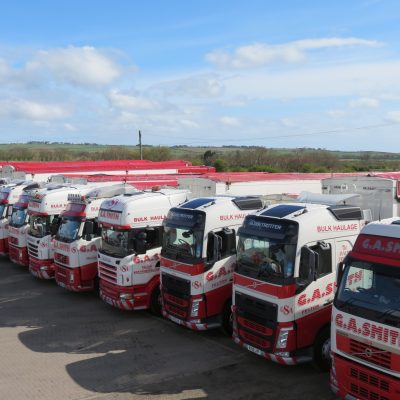
G A Smith – Reputable in Construction (The Following is a Promoted Article) Undoubtedly, one of the greatest – if not the greatest – challenges faced by plant hire firms is managing health and safety. Owing to its power and size, plant equipment is intrinsically dangerous and thus proper risk management is a fundamental part of haulage business’ operations. Beginning with just one wagon in 1987, G A Smith has since grown into specialist plant hire firm of multiple vehicles and multiple areas of expertise. Operating out of three depots in Birtley, Cramlington and Felton, and with four core areas of business – plant hire, bulk haulage, bulk handling and earthworks – the firm functions as a one-stop-shop in loading, conveyance and handling. Through diversification, the firm has established a leading reputation with its construction industry clients and is favoured for its technically-competent and professional services. Although the weight G A Smith places on health and safety is then perhaps unsurprising, the firm’s success in managing risk is somewhat remarkable. Training has been key for the firm; by providing operatives with the most up-to-date advice, knowledge and skills, risk of injury by human error or misdemeanour can be mitigated. With several SMSTS-trained site managers, a number of SSSTS-trained site supervisors and all operatives having undergone CPCS training or an equivalent, G A Smith leaves nothing down to chance and has built up a level of competence that, for the most part, prevents accidents from happening altogether. More than simply providing opportunities for training however, G A Smith has taken the decision to carry out some specialist training in-house rather than sourcing courses from an external supplier. Claire Trusty, Health and Safety Officer at G A Smith, says the benefits of internal training are manifold: “Taking a hands-on approach to training has enabled us to provide operatives with exactly the qualifications and skills they needs for each specific job. What’s more, we’re also able manage operatives’ practice more attentively and make sure not only that they have the right knowledge and the right skills to perform but, equally, that they’re effecting what they’ve learned in training on a day-to-day basis.” Conducting training in-house is also well-suited to the often unpredictable schedules and working hours of G A Smith’s operatives, and thus prevents the company from having to take time away from either site works or the customer. Training provided includes: manual handling, basic working at height and fire awareness. In addition, all operatives have recently benefited from a Self-Study Environmental Awareness with a view to easing G A Smith’s transition to a ISO 14001-accredited firm. Indeed, following recent audits, the company is now accredited with ISO 14001, ISO 18001 and ISO 9001, the successful achievement of which, Trusty highlights, will prove invaluable during tendering in the future and, more generally, reinstates G A Smith’s commitment to quality and corporate responsibility. ISO accreditation is just another seal of approval for the company which also possesses a number of highly-regarded industry accolades, including SafeContractor, Constructionline and CHAS accreditation. In respect of just what CHAS membership provides the business, Trusty echoes her sentiment on ISO accreditation as well as stressing that the principles of CHAS are, in many ways, commonsense. “When we first started to invest in health and safety, changing the business in line with the requirements CHAS, it was actually much more simple and much more intuitive than it first seemed. Ultimately, CHAS mandates that businesses recognise their responsibility to provide a safe working environment for operatives and mitigate risk to the public. When you look at it like that, there’s very little to dispute.” In terms of how those ambitions are actualised on site, G A Smith issues all operatives with an up-to-date health and safety policy and PPE during induction, reviewing potential risks and hazards on a site-by-site basis and making amends as necessary. Risk assessments, method statements and COSHH assessments are all completed internally and, likewise, reviewed regularly so as to identify any changes or emerging matters of address. With profound emphasis on health and safety, G A Smith continues to excel in the bulk haulage and handling industry, proving that the – whilst the industry may be characterised by risk – it need not be defined by accident or injury. And with express commitment to maintaining such high standards evident in the company’s recent successful audit for ISO accreditation, G A Smith can only grow in prominence.


Read More »

Plumbing problems weigh on Travis Perkins

Builders’ merchant group Travis Perkins saw its profits nosedive in 2016 after reorganisation of its plumbing & heating operations. Above: PTS – a Travis Perkins brand Travis Perkins’ 2016 revenue was up 4.6% for the year to 31st December 2016, reaching £6,217m. Pre-tax profit was down 67% to £73m (2015: £224m), primarily due to an impairment charge of £235m recognised against goodwill and other intangible and tangible assets in City Plumbing, PTS, F&P, bathrooms.com, Solfex and Tile Giant. The plumbing & heating market (which contributed £1,359m to Travis Perkins revenues in 2016) has been flat over recent years, Travis Perkins said, with declines in the social housing sector offset by growth in private new build and more modest growth in repair & maintenance work.  “Both the contract and local installer markets are increasingly competitive, with the traditional plumbing merchant channels under pressure from the significant expansion of online, fixed price multichannel operators and strong local and regional independents,” Travis Perkins said. “As a result of these market changes, conditions may worsen in 2017.” The company’s plumbing & heating division has already been reorganised in the past couple of years and further restructuring is ahead. The social housing boiler and heating replacement market has remained difficult with traditional merchants competing aggressively on price for business impacting PTS. The PTS management team developed a lower cost branch operating model in the year and trialled the model in a small number of locations. Chief executive John Carter said: “2016 was another solid year for the Group, with continued strong performances from the Consumer, Contracts and General Merchanting divisions, which together contributed 90% of Group adjusted operating profit. These businesses continued to benefit from the investments made in the branch network and customer propositions over the last three years, which provides a strong base for future growth. “It was a much more difficult year for the Plumbing & Heating division driven by structural challenges for traditional merchant businesses in this segment. Whilst the network restructuring work carried out in 2014 and 2015 created a more focused branch network, further work is required and over the next six months we will be exploring all routes to enhance returns. There are improvements we can make to the ranges we offer to our customers, our availability, our online presence and our service proposition. “The macro-economic outlook of the UK is mixed. The sharp decline in the value of sterling since June 2016 has created cost pressures on imported goods and materials, and the expectations for secondary housing market transactions and growth in the RMI market have weakened. We have a proven track record of managing our cost base and took decisive action in October 2016, announcing a restructuring programme to close underperforming branches and improve supply chain efficiency. We enter 2017 with a strong balance sheet and will continue to invest selectively in our leading businesses to further strengthen our competitive advantages which will enable us to continue to outperform and drive shareholder value over the medium term.”   This article was published on 2 Mar 2017 (last updated on 2 Mar 2017). Source link

Read More »

Fujitsu Launches New Dublin Training Centre

Fujitsu has launched a new training centre at its offices in Dublin dedicated to the air conditioning sector. The opening of the new facility enhances the firm’s commitment to its training services and Ian Carroll, the company’s Sales and Marketing Director, commented that Fujitsu is fully committed to raising industry standards through training schemes having already pumped a significant investment into a similar state of the art training facility in Elstree. Even though the centre is yet to be officially opened, it has already started running courses due to the demand for training, with the firm’s highly skilled in house engineers teaching the courses due to their many years of experience working with Fujitsu products. The company has developed a specific series of courses which are created and designed to develop the engineers’ knowledge in the installation and design of Fujitsu air conditioning products and the best way they can be applied. Among the current range of courses on offer are VRF system installation and commissioning, mini VRF installation, commissioning and troubleshooting and VRF central controllers installation and commissioning. The courses are already proving popular with many contractors in the area being impressed with the training facilities. Martyn Ives, Training Manager at Fujitsu, said that the new Dublin based training facility is a much needed asset that will provide the required training that is needed to support the well-established product range. He added that all the courses are available throughout the year and are offered free of charge, with each delegate receiving a completion certificate and a full set of technical manuals. Last month the company assured the UK that it will continue its operations in the country following the UK’s decision to leave the European Union, reiterating its commitment to UK employees and customers.

Read More »

‘Central Heating for Cities’ to Receive £320m Investment

£320 million is to be pumped into the UK’s heat network schemes over the next five year period in order to supply homes and businesses with low carbon heat. Currently, the government is consulting on the best ways to deploy the £320 million fund which was allocated to heat network investment in the Spending Review. Labelled as ‘central heating for cities’, heat networks are already being used throughout cities in Scandinavia to heat homes in winter. The government believes that heat networks could reduce heating costs by over 30% in some households, with the investment being dubbed as “exciting news for towns and cities throughout the country” by the Department for Energy & Climate Change (DECC). Instead of each building having individual heaters, a heat network will comprise of one big central heat source (or more than one central source) of which heat is then piped into several buildings. A number of sources can take the heat such as large heat pumps, combines with power and heat plants and geothermal plants, which take heat from underground rocks miles below the earth’s surface. Then, it is pumped around businesses and homes, which will potentially bring down energy bill costs while also helping to cut carbon emissions. DECC thinks that the heat produced by waste incinerator plants can also be used in this way and distributed to nearby businesses and homes. Secretary of State for Energy and Climate Change, Amber Rudd MP, said that this is a crucial next step in the development of more home grown energy, which is a key part of the government’s plan to ensure affordable energy and long term security for the country’s business and families. She added that the funding under consultation at the moment will allow these schemes to provide thousands of businesses and homes throughout the country with affordable low carbon energy.

Read More »

Featuring Gill Group House: Interview with Mark Jordan, Group HSQE Manager

Gill Group House  – Delivering Excellence (The Following is a Promoted Article) An end-to-end service is highly regarded in the construction industry. If businesses are able to carry out all works in singular rather than necessitate the cooperation of multiple parties, it represents the significant de-risking of a contract from the perspective of the client – both financially and in terms of health and safety. Founded in 1988 with just one civil division, Gill Group House has since grown into a multidimensional (and multimillion pound) organisation with no less than eight different companies under its group header, including: Gill Civil, Cello Aviation, Titan Plant Hire and Gill Aggregates. Each strand compliments the next and, indeed, Gill Group House carries out most projects without the help of subcontractors owing to the sheer breadth of its expertise and competencies. One such area of expertise and competence in which Gill Group House is well-versed is health and safety and, in view of both the frequency and urgency with which health and safety issues arise within the construction industry specifically, such emphasis is to be lauded. In terms of what that drive translates as, the company places priority on training, employing a complex training matrix in order to identity specific training requirements and keep up-to-date with renewals. With so many companies and divisions, the matrix spans across anything from traffic management and Rubber Duck training (Wheeled Excavator360 Above 10 Tonnes) for HGV operators to working at height and site supervisor training. Mark Jordan, HSQE Manager at Gill Group House stresses the importance of having mechanisms which are both proactive and ongoing, specifically highlighting the value of strong communication. “Providing that linkage between supervisors and operatives is essential,” he says. “To get the best out of the team and achieve the greatest results, you have to maintain strong communication every day: reinforcing what’s required and also highlighting the specifics of each job and each client.” Those aims are realised by regular, on site toolbox talks led by project managers and contracts managers as well as daily briefings on the day’s itinerary and its accompanying procedures and hazards. On the rare occasions where Gill Group House works alongside sub-contractors, such as a recent 24-month project at Felixstowe where multiple parties were appointed by the principal contractor, the company extends briefings to all operatives on site, endeavouring to promote collaboration rather than separatism. Whilst such interest in health and safety is primarily concerned with improving the working environment of operatives and mitigating risk to the public, Mark Jordan highlights that strong corporate ethics can dramatically improve the attractiveness of a firm as well as speeding up the tendering process. Talking specifically about accreditation, he insists, “Strong health and safety values and practices are frequently becoming a key part of customers’ method statements and CHAS and ISO accreditation are a means of evidencing those ethics.” With ISO14001 and BS OHSAS 18001 as well as ISO9001, there is little question as to Gill Group House’s keen ethics on not such health and safety but quality and the environment, too. And continuing to go much further than simply compliance, the company only grows in stature and, in many respects, represents the pinnacle of excellence to which all should strive.

Read More »

UK Construction Workers Share Alcohol and Drugs Concerns

The majority of UK construction industry workers are concerned about the effects of alcohol and drugs on the industry’s workforce, according to the results of the Considerate Construction Scheme’s (CCS) latest survey. In a bid to increase awareness of the effects of alcohol and drugs on the industry workforce, the CSS launched a new ‘Spotlight on…’ campaign which included conducting a survey of over 1,300 people who work in the industry which found that 59% have concerns on the issues. Conducted last month, the survey also discovered that 35% of industry workers have witnessed their colleagues working under the influence of alcohol or drugs, while a quarter believe that the consumption of alcohol or drugs has caused people to be tired in the workplace. 65% of respondents said that they have never been tested for any substances, while almost 40% think that their workplace should be tacking the issues in a better way. A number of contractors, industry clients and suppliers undertake regular and thorough measures to get to grips with the issue including random testing and a zero tolerance policy, as well as providing information on the effects of alcohol and drugs at work through toolbox talks, on-site posters and site inductions. Several scheme-registered contractors, including Mick George, Interserve and Ardmore Construction Ltd, have put forward case studies on the ways they tackle the issue, which are all available to view on the CCS Best Practice Hub. CCS Chief Executive, Edward Hardy, said that the maintenance of a safe workplace is of pivotal importance for all employers and is something that applies to both the workforce and the surrounding public who may also be affected. He added that the ‘Spotlight on…alcohol and drugs’ is essential reading for everyone and, given that almost 60% of survey respondents agree that it is a problem, it is clearly a pressing issue of concern.

Read More »