bdc magazine

GMI to build stand-out £32 million residential development for HBD in Birmingham

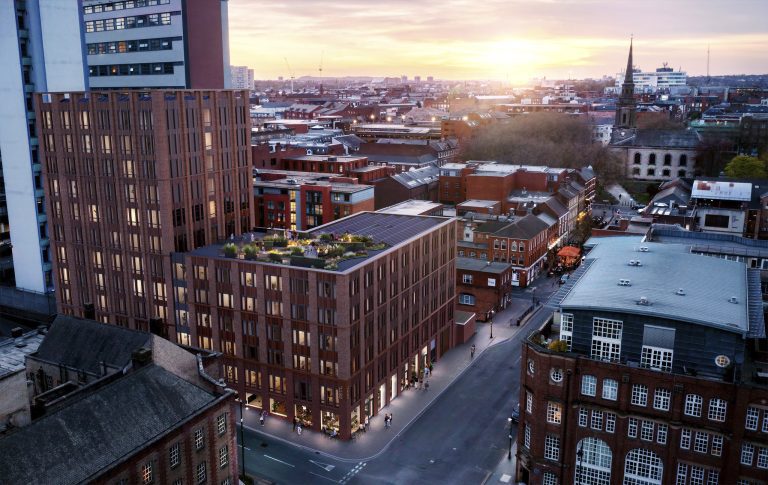
New ‘SETL’ contemporary living canal side development situated in Birmingham’s iconic jewellery quarter will feature 101 apartments together with 2,350 sq. ft. of ground floor commercial space. GMI Construction Group PLC an established and successful UK contractor and construction services company providing specialist design and build capabilities spanning multiple sectors

Read More »

African explosions send refrigerant warning to the world

A spate of fatal accidents linked to faulty repair work on refrigeration and air conditioning equipment in Nigeria should prompt a swift response from the international community, according to the Building Engineering Services Association (BESA). Seven people died and several more were injured in at least five explosions across the

Read More »

GRAHAM awarded Busway Bridge works for Belfast Transport Hub

Civil engineering specialist GRAHAM has been appointed to deliver the new Busway Bridge as part of the Belfast Transport Hub. The project will see alterations to the existing Translink Busway route which runs into the Europa BusCentre and will also enable the Belfast Transport Hub’s main works contractor to construct

Read More »

GT3 ARCHITECTS EXPLORE DESIGNS FOR THE FUTURE OF NEWCASTLE FOOTBALL CLUB

Sports and leisure specialist GT3 Architects has led an internal design review, reimagining a state-of-the-art training academy and community-driven stadium for Newcastle United. Building on the company’s ‘people architecture’ ethos, the project is the first of several in-house design reviews, exploring how people-centric design can tackle cultural and socio-economic challenges,

Read More »

Final resurfacing work to start around the Corn Exchange and New Briggate

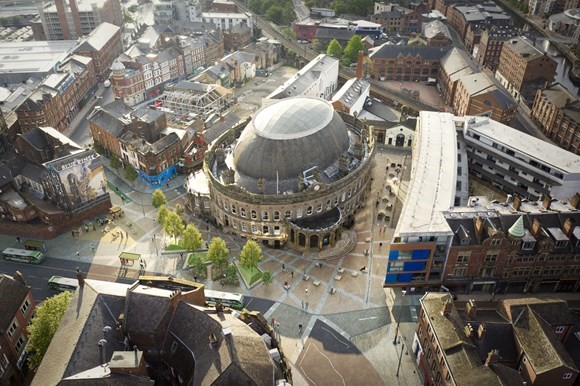
The Connecting Leeds £25million transformational Corn Exchange project is due to complete following resurfacing works which are happening later this month. Once fully complete, the area around the Corn Exchange will see restrictions to general traffic, allowing for bus priority measures, enhanced bus stop signage and facilities, safer cycle tracks

Read More »

SAVORTEX® Plays Key Role in Wates Sustainable Redevelopment

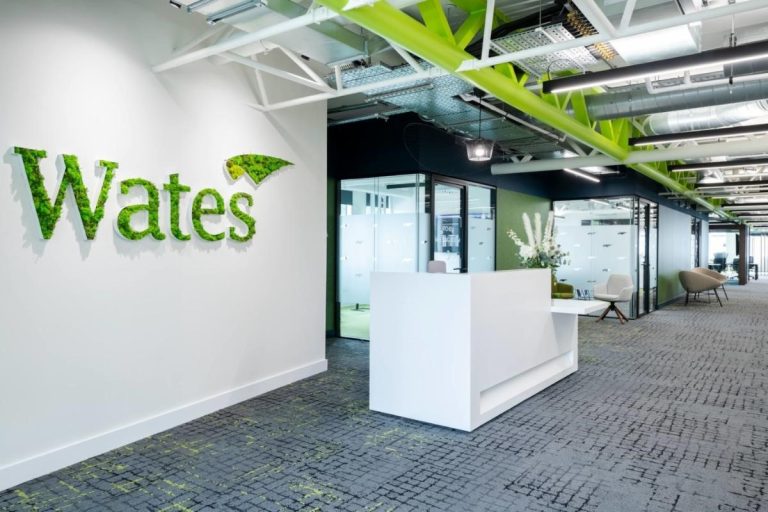
As part of an extensive refurbishment of its Leatherhead headquarters building in Surrey, the Wates Group opted to replace its current hand drying system with the EcoCurve 550A. By switching to this smart technology, SAVORTEX estimates that the company will make significant cost and energy savings, including 77.10 tonnes of

Read More »

ELLIOTT SERVES UP CARBON NET ZERO BUILD FOR MCDONALD’S

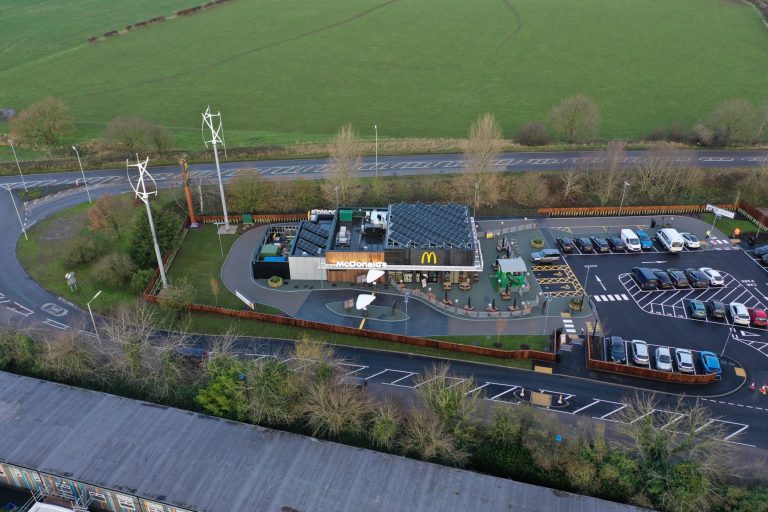
McDonald’s in Market Drayton, Shropshire, has become the UK’s first carbon net zero restaurant – using the Elliott offsite construction system. Being carbon net-zero means that the wind turbine and solar panel-powered restaurant will produce as much energy as it uses over the course of a year and there are

Read More »

MAJOR FIRE AT RECYCLING CENTRE CAUSES DISRUPTION AND ENVIROMNENTAL DAMAGE

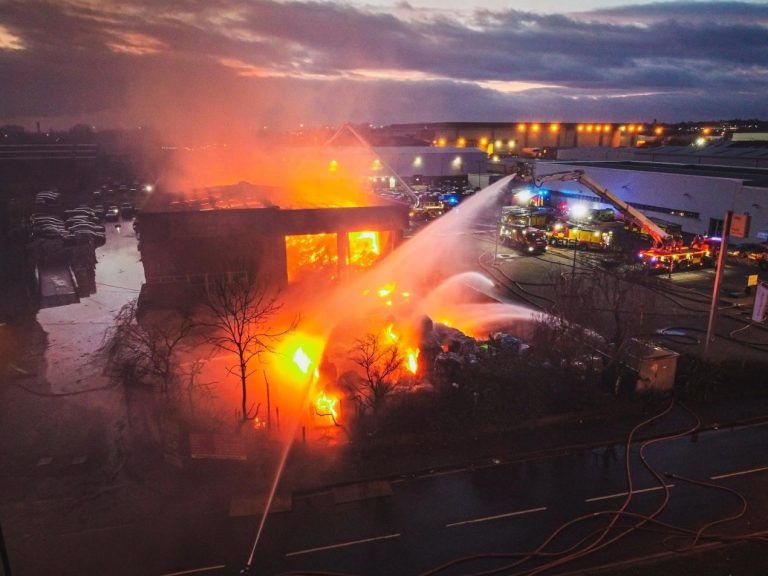
A major fire that destroyed an unsprinklered recycling plant in Nottingham led to disruption in the local area, asbestos warnings and unnecessary damage to the environment. The fire on January 31st at Nottingham Recycling on Abbeyfield Road in Lenton required 60 firefighters, 12 appliances and specialist equipment including aerial ladder

Read More »
Latest Issue
Issue 342 : Jul 2026

bdc magazine

GMI to build stand-out £32 million residential development for HBD in Birmingham

New ‘SETL’ contemporary living canal side development situated in Birmingham’s iconic jewellery quarter will feature 101 apartments together with 2,350 sq. ft. of ground floor commercial space. GMI Construction Group PLC an established and successful UK contractor and construction services company providing specialist design and build capabilities spanning multiple sectors has today announced that it has been appointed by leading property developer HBD to construct a new residential-led scheme in Birmingham’s iconic Jewellery Quarter. The development, titled ‘Setl’ is HBD’s first city centre development in Birmingham and has been designed by leading architects BPN, based in the jewellery quarter. 101 apartments will be accompanied by an array of residential amenities and 2,350 sq. ft. of ground floor commercial space.  The scheme will feature a courtyard, workspace, a lounge and a gym, along with a rooftop garden on the upper floors of the six-storey building. Speaking about the announcement Andy Bruce, Divisional Marketing Director GMI Construction Group said: “We are very much looking forward to seeing this contemporary new development coming out of the ground, which will transform a redundant site into a modern, attractive development right at the heart of Birmingham’s iconic jewellery quarter. “GMI is proud to be have been trusted by leading developer HBD to deliver its first city centre development in Birmingham in an area with such a strong commercial history.” GMI continues to make good strides in Birmingham and the Midlands with over £100M of projects secured in our order book with new and established customers including HBD, St Modwen, Graftongate and St James Securities and across multiple sectors including residential, industrial/logistics, commercial, hotel and student. Simon Raiye, Director at HBD, said: “Setl is one of the city’s most exciting new developments, creating high-end, design-led apartments in one of Birmingham’s most sought after areas. We look forward to working with GMI to bring our vision to life.”

Read More »

AEI Cables sends out message to building owners on Category 3 Control fire performance cables

Owners of high-risk buildings are being warned of the dangers of not using approved cabling under a new British Standard Code of Practice by cabling leader AEI Cables. The systems powered by these cables – including smoke and heat extraction systems – assist fire services in firefighting and a safe evacuation in the case of life safety. Installations and types of buildings which come under the new Code of Practice include evacuation alarms for the disabled in care homes and emergency voice communications systems and voice alarm systems in tall buildings, office spaces, hospitals, shopping malls and stadia. Stuart Dover, General Manager of AEI Cables, said: “There isn’t a lot of widely available information on this issue. Building owners need to be aware of the dangers of not using approved cabling in these applications and ask their contractor what type of cable they are installing. “If these systems fail because the cable is not able to function properly the consequences could be critical. Lives and property are at stake here. Category 3 Control fire performance cables reduce harmful smoke, toxic gases and flame spread in the event of a real fire. “Our customers are seeing the peace of mind of installing approved cables which provide continuity of power for these systems, and we think building owners should be aware of the same information.” The wider fire safety industry and professionals have also welcomed the message including the professional fire safety membership body the Institution of Fire Prevention Officers (IFPO). AEI Cables is the only supplier in the UK with independent approval from LPCB for BS8519 Category 3 Control fire performance cables with a fire survival time of up to 120 minutes. AEI Cables’ Firetec Enhanced cabling has been approved and certified by LPCB to BS8519 (Annex B), Category 3 Control in addition to Category 2 Control. The BS Code of Practice under BS8519 contains six categories of cables, three for power cables and three for control cables each covering survival times of 30, 60 or 120 minutes. All AEI Cables’ products are supplied with approvals from independent bodies including BASEC and LPCB. It also holds approvals from organisations including Lloyds, the MoD, Network Rail and LUL and works to international

Read More »

African explosions send refrigerant warning to the world

A spate of fatal accidents linked to faulty repair work on refrigeration and air conditioning equipment in Nigeria should prompt a swift response from the international community, according to the Building Engineering Services Association (BESA). Seven people died and several more were injured in at least five explosions across the city of Abeokuta, according to reports in the Cooling Post. As a result, local officials have banned refrigerant sales and shut down the industry’s service and maintenance operations. Initial reports suggest the explosions may have been caused by counterfeit or damaged cylinders, contaminated gas and human error; and the state authorities have issued dire warnings to anyone who ignores the ban. Two engineers were killed while reportedly recharging an air conditioning unit and a young child was among the victims of another incident when a technician was trying to repair a domestic fridge. It is thought that in some cases engineers were putting the wrong gas into the units. BESA’s head of technical Graeme Fox said these reports were probably “the tip of the iceberg” and called for a concerted response from the “worldwide refrigeration and air conditioning community”. Fox, who is a former president of the Air Conditioning and Refrigeration European Association (AREA), was instrumental in setting up an international ‘Refrigerant Driving Licence’ scheme for safe refrigerant handling on behalf of the United Nations Environment Programme (UNEP). EmergingWhen the project launched six years ago, UNEP was growing increasingly concerned about the lack of understanding and training to improve safety in many emerging markets. The idea was that the developed nations would share their expertise with emerging industries to improve safety and professionalism. “These latest reports from Nigeria emphasise just why this scheme is so important. It was delayed because pandemic travel restrictions prevented the experts from training the trainers in each pilot country,” said Fox, who is also head of technical for the UK’s main F-Gas register REFCOM. “It now needs to be restarted without delay. Accidents are happening daily, and it is a miracle we have not had more deaths especially with the growth in use of new alternative gases, many of which are flammable.” The phase-out of HCFCs and ongoing phase down of HFCs has led to the development of alternatives with lower global warming potential – some of which operate at higher pressures and some of which are toxic and/or flammable. Many manufacturers have warned that some are being used as ‘drop-in’ replacements for their equipment when they are not appropriate or safe. “In the UK, we enjoy the support of the long-established refrigerant handling registration scheme REFCOM that has helped to drive up professional standards across our industry. We have a moral duty to share that expertise with other countries – and save lives,” said Fox. He also warned against complacency in the UK and Europe pointing out that there was a recent near miss here when an engineer vented flammable R290 (propane) in a kitchen served by a grease extract system that could easily have ignited and caused severe damage. “The growing amount of flammable gas being used by our industry means we must up our game on competence training – something we are focusing on strongly through the BESA Academy. Getting our own contractor base trained up is clearly a priority, but we should be simultaneously sharing our knowledge with our colleagues around the world. “The demand for refrigeration and air conditioning equipment continues to grow rapidly worldwide and we should be extremely proud of the important role our industry plays in every aspect of modern life. However, greater commercial success also brings greater responsibility,” said Fox.www.refcom.org.uk

Read More »

GRAHAM awarded Busway Bridge works for Belfast Transport Hub

Civil engineering specialist GRAHAM has been appointed to deliver the new Busway Bridge as part of the Belfast Transport Hub. The project will see alterations to the existing Translink Busway route which runs into the Europa BusCentre and will also enable the Belfast Transport Hub’s main works contractor to construct the new integrated bus and rail infrastructure. This important Busway Bridge project will see GRAHAM’s civil engineering team install a new weathered steel bridge. The multi-million-pound Belfast Transport Hub regeneration project is a NI Executive Flagship project. Once complete, it will see the transformation of an 8-hectare city-centre site, delivering a modern high-quality integrated transport hub to enhance local and international connectivity with bus, coach, and rail links across Northern Ireland and beyond. It will also have a key environmental role in helping to attract more people to public transport, reducing congestion and air pollution in the region. The project will be a key driver of social, economic and environmental wellbeing for Belfast and Northern Ireland and will be at the heart of a new city neighbourhood called ‘Weavers Cross’ with imaginative mixed-use development proposals. Discussing the contract award, GRAHAM’s Contracts Director Andrew Henry said: “We’re pleased to have been awarded this additional package of works on the Belfast Transport Hub scheme, which will facilitate the wider construction of the Hub. “We have an excellent existing relationship with our client Translink, having successfully collaborated on several high-profile schemes including a new train maintenance facility at Adelaide Depot and the new Portrush Train Station, which have both brought major benefits to the areas they serve. “As experts in the field of civil engineering our teams will be on hand to deliver the new busway bridge safely and efficiently and to support the completion of the new train and bus deport by the main works contractor. We’re looking forward to playing our part in this transformational scheme and leaving a lasting legacy for transport in the city of Belfast. “ Lisa McFadden, Programme Manager, Belfast Transport Hub, said: “We are looking forward to working with GRAHAM on the construction of the Busway Bridge, an integral part of the exciting new Belfast Transport Hub Project. “Completion of this package of work will enable us to deliver our next stage of bus and rail infrastructure, future proofing our facilities, enhancing operational and passenger experience, creating smarter sustainable transport options and ensuring that Translink continues to be first choice for travel, for today, for tomorrow.”

Read More »

GT3 ARCHITECTS EXPLORE DESIGNS FOR THE FUTURE OF NEWCASTLE FOOTBALL CLUB

Sports and leisure specialist GT3 Architects has led an internal design review, reimagining a state-of-the-art training academy and community-driven stadium for Newcastle United. Building on the company’s ‘people architecture’ ethos, the project is the first of several in-house design reviews, exploring how people-centric design can tackle cultural and socio-economic challenges, such as driving inward investment and economic footfall, getting more people active, supporting an aging population, and achieving net-zero targets. Paul Reed, associate director and R&D lead, explains. “As a proud Geordie practice that specialises in sport and leisure, the recent takeover of NUFC sparked much excitement in our Newcastle studio. With my background in designing and delivering stadia and training academies – previously being involved in the design of Manchester City Academy Stadium and Training Ground, London Olympic Stadium and Parc Olympique Lyonnais – imagining the potential opportunities now open to the club seemed like a fantastic way to kick-off GT3’s latest design series. “As with all things GT3, we wanted to imagine a design that placed people – the players, the academy, the fans, the club employees, the local community – at the heart. We reviewed academy and training facilities built across the UK and Europe within the last five years and found them to be largely insular; team facilities are typically segmented, separated by level of play, while fans are granted limited or no access. This provides the privacy and security required by the players, but also acts as a barrier between their fanbase and local community. “Using the motif of public vs private, our concept uses a rising scale of privacy and naturally rich and textured materials to break down barriers between elite sport and the local community, reuniting players and people in a facility that is welcoming to all. “The overall effect is one of warmth and inclusivity, offering a home for the first-team training, women’s team, and academy team, while providing a unique and exciting space for a new generation of fans to fall in love with the club.” A Community Stadium – Bringing the Club Back to the Fans “Unsurprisingly, this project attracted our practice’s NUFC fans, each of whom hold memories of walking up to St James on match day or joining the masses to watch the Keegan-era train. This sense of local pride and club inclusion is the cornerstone of our community stadium design, which – in addition to providing a home for women’s and academy teams – also offers valuable community space. The resulting design is a 7,000 seat open community stadium, with the potential to include safe standing area, integrated groundskeeper storage and elevated grassy bank, offering an informal viewing platform for families, plus a Wembley Way style access route with additional retail opportunities. “Within the stadium itself, we’ve included 3,000m2 studio and classroom space, which could be used by the Newcastle United Foundation and local schools/ colleges. There’s also dedicated meeting and event spaces, open for community use and offering additional revenue opportunities. “On the other side of the stadium is a semi-private media suite, offering another media hub to the club, plus a private commercial suite for NUFC staff. This could offer staff an alternative work location and allow the stadium to operate in tandem with St James. “Externally, there are 13 full-size external grass, hybrid and artificial pitches, each orientated north to south to maximise daylight hours, with a portion allocated for community use. Fitness trails including repurposed hill-climbing areas (relandscaped from soil produced in construction), suitable for community and player use are also integrated into the landscaping.” State of the Art Training Academy – Recognising the Player Journey  “The training academy element of the design is a private campus-style building, offering world class training facilities for all parts of the club under one roof. A key design concept for the training academy itself was in recognising the importance of a player’s individual journey; as youth and academy players progress through the ranks, they physically move across a bridge separating the academy wing from the first team wing. “Facilities include a timber diagrid ETFE transparent roof, designed to maximise daylight to the training pitch, inward-looking and protected massing to provide safety and privacy, and a 60-bed hotel, offering on-site accommodation and living spaces for academy players, along with more temporary living space for visiting teams and families. “We’ve included state-of-the-art player facilities; changing rooms, fitness suites, physio rooms and training facilities, including hydro pools, hyperbaric chambers and relaxation areas. “There are private meeting spaces with views over surrounding woodland and green areas, a man-made lake and private access routes and underground parking for first-team privacy. “As architects and masterplanners, our goal is to tackle the challenges facing communities through people-focused design. Our design proposal embraces the three different elements of football for Newcastle: first team training, academy training, and women’s football, while capitalising on a clear opportunity to support and engage with the local community. “Building a bond between the club and the community, all while providing the resources needed for elite sport, is difficult, but it’s a challenge we’ve loved addressing. We wanted to break down barriers and design a facility that would benefit not only the athletes that train there, but the people who make the club a success – the fans, the future players, the people of Newcastle. “We’d like to encourage people to get in touch with their thoughts, including football fans, sports and leisure experts, fans of the club, and NUFC themselves. This design is a conversation starter and we’d love to be part of that dialogue.” GT3 Architects is an award-winning and ambitious architecture practice with studios in Newcastle and Nottingham. Known for delivering expertise across sectors including sports and leisure and using their people-focused approach, they have a proven track record in translating bold concepts into elegant technical details and successful project delivery. For further information visit www.gt3architects.com or join the conversation over on Twitter @_GT3Architects 

Read More »

Scaffolding Association concerned that 1 in 3 employers have not talked to staff about their mental health over the past year.

New research by the Advisory, Conciliation and Arbitration Service (ACAS) has found that over a third (35%) of British employers have not spoken to their staff about their mental health and wellbeing over the past year. A survey conducted on ACAS’s behalf by YouGov, asked businesses in Britain about whether they had personally talked to their staff about their mental health in the last 12 months. The poll found that: Robert Candy, Chief Executive of the Scaffolding Association said; “Businesses must do more to support employees with their mental health and wellbeing. It is inevitable that the pandemic will have exacerbated pre existing concerns. It will have also created new mental health and wellbeing issues among individuals and employees. The easiest thing a business can do is to talk with their staff, so it is concerning that over a third have not taken this basic step”. Office for National Statistics (ONS) figures show that more than 2,000 construction workers took their own lives in the UK in the decade to 2017 which is more than four times the number of construction workers killed during the course of their duties for the same period. The Scaffolding Association recently established a Health and Wellbeing Committee which aims to help employers in the sector improve the support they provide in relation to mental health and to encourage employees to talk with employers and colleagues. For more information on the latest ACAS research visit: 1 in 3 employers have not talked to staff about their mental health over the past year | Acas

Read More »

Final resurfacing work to start around the Corn Exchange and New Briggate

The Connecting Leeds £25million transformational Corn Exchange project is due to complete following resurfacing works which are happening later this month. Once fully complete, the area around the Corn Exchange will see restrictions to general traffic, allowing for bus priority measures, enhanced bus stop signage and facilities, safer cycle tracks and pedestrian crossings. There will also be a new public realm space created directly outside the Corn Exchange, more greenery and wider pavements, making room for al-fresco dining on Lower Call Lane. Also part of the scheme, New Briggate will now be partly pedestrianised with upgraded cycle tracks. Traffic has been removed from this route onto Vicar Lane which allows the creation of outdoor opportunities for the growing restaurant and bar sector in the area. The resurfacing, which is due to happen later this month, involves removing 50mm of existing road surface, re-setting drainage covers and manhole lids and re-painting white lines and other road markings. Night-time closures will be in place, with roads closing at 8pm to general traffic and re-opening at 5am each morning. The pavements will still be open to pedestrians and businesses in the area will be open as usual. Buses will be temporarily diverted, and signs will be placed at bus stops with information on alternative stops. Work is scheduled in the following locations and dates: Kirkgate, Crown Street and New York Street: Sunday 27 February, 8pm – Thursday 3 March, 5am Call Lane: Monday 7 March, 8pm – Wednesday 9 March, 5am Meadow Lane (near old Asda filling station): Monday 7 March, 8pm – Tuesday 8 March, 5am Meadow Lane and Hunslet Road cycleway: Thursday 10 March, 8pm – Friday 11 March, 5am Call Lane (near Blue Rinse): Wednesday 9 March, 8pm – Thursday 10 March, 5am Lower Briggate cycleway: Wednesday 9 March, 8pm – Thursday 10 March, 5am New Briggate: Sunday 13 March, 8pm – Thursday 17 March, 5am New Briggate cycleway: Monday 21 March, 8pm – Tuesday 22 March, 5am The work is weather dependent and any adverse weather conditions will mean that it will need to be rescheduled. All works on this scheme are due to be complete by the end of spring and form part of the Leeds Public Transport Investment Programme which will see £173.5million investment into public transport and road improvements in Leeds. The improvements to the public realm around the Corn Exchange is funded by West Yorkshire Combined Authority under the Government’s Getting Building Fund. It involves £8.6million of match funding which is part of Leeds’ £12.2million Grey to Green programme. While resurfacing work is taking place, the council is urging people to plan journeys in advance by visiting the Connecting Leeds website or visiting the WY Metro website for bus diversions. Councillor Helen Hayden, Leeds City Council’s executive member for infrastructure and climate said: “It’s exciting to see the final resurfacing works happening on this scheme. It gives these historic streets and buildings the surroundings it deserves whilst increasing opportunities for active travel and providing extra public space in the city centre. “We appreciate this next phase of work will be disruptive, but our contractors will make every effort to keep noise to a minimum and carry out noisy works as early on in the shift as possible. We would like to thank people and businesses for their patience while this project has been ongoing and ask that people continue to plan ahead to experience minimal disruption to their journey.”  Tracy Brabin, Mayor of West Yorkshire said:   “The Corn Exchange is a real gem and is a beacon of culture and creativity, so it’s fantastic to see these changes, which will make the historic landmark more welcoming to the people of Leeds and visitors from far and wide.    “Improving cycling, walking and public transport provisions form a key part of my pledge to tackle the climate emergency, so I’m also delighted that we are part of this scheme that will see more green spaces and provisions for active travel.”  

Read More »

SAVORTEX® Plays Key Role in Wates Sustainable Redevelopment

As part of an extensive refurbishment of its Leatherhead headquarters building in Surrey, the Wates Group opted to replace its current hand drying system with the EcoCurve 550A. By switching to this smart technology, SAVORTEX estimates that the company will make significant cost and energy savings, including 77.10 tonnes of CO2, totalling £14,630 over a seven-year period. Since the redevelopment, Wates has made an overall saving of 20% on its energy consumption by working with sustainable technology suppliers. Dr. Zainab Dangana, Wates Sustainable Technology Services Manager, said: “Wates is committed to the long-term future of the built environment. Businesses are facing increasing pressures to improve their carbon footprint and, as a result, are looking for solutions that can save both energy and operating costs.  “It was important to us that our newly refurbished Leatherhead headquarters building reflected our company ethos and we were extremely impressed with the SAVORTEX® EcoCurve range and the savings it can deliver.” Syed Ahmed, CEO at SAVORTEX®, said: “This partnership with Wates is just one example of how our hand dryers can help businesses improve efficiencies and decrease costs. Our hand dryers have been designed to transform the washroom market by delivering unrivalled levels of sustainability, energy and operational resource savings.”   Using our low energy digital brushless motor, The EcoCurve™ Smart Dryer consumes just 550W, and hygienically dries hands in 11* seconds, offering the lowest cost and carbon per dry of any warm air dryer.

Read More »

ELLIOTT SERVES UP CARBON NET ZERO BUILD FOR MCDONALD’S

McDonald’s in Market Drayton, Shropshire, has become the UK’s first carbon net zero restaurant – using the Elliott offsite construction system. Being carbon net-zero means that the wind turbine and solar panel-powered restaurant will produce as much energy as it uses over the course of a year and there are only a small number of highly efficient buildings in the UK that meet this criterion. Market Drayton is the first restaurant in the UK to be verified as net zero emissions for construction using the UK Green Building Council’s (UKGBC’s) net zero carbon buildings framework. Elliott was an integral part of the project delivery team, utilising its modular solution which features a large number of incremental improvements that combine to make a huge difference in overall performance.  Minimising environmental impact and achieving a net-zero build were key requirements set out by McDonald’s at the very start of the project. The innovative turnkey solution includes kitchen, servery, offices, storage, dining area and toilets, as well as car park and external landscaping works. McDonald’s carbon net zero restaurant was 80% completed in the Elliott factory before being transported to site, minimising waste and maximising quality control, efficiency and speed of construction. Once on-site, the modules were connected to services and underwent final fit-out ready for handover. As part of a sustainable approach, the building utilises responsibly-sourced and recycled materials throughout, further reducing its environmental impact. The restaurant is designed to allow relocation, reconfiguration or recycling, depending on McDonald’s future requirements. All Elliott offsite modules are designed to have a service life of at least 60 years. Building modules for Market Drayton are constructed using a steel-framed system, a 100% recyclable material sourced from a UK supplier with certified Environmental Policy Declarations. Sustainable features include sheep’s wool insulation instead of fibreglass as well as cladding, ceiling, floor and wall tiles made from recycled plastic, a rainwater harvesting system, wind turbine electricity generation and photovoltaic car park lighting complete with battery backup. The kitchen incorporates a heat exchange that feeds into the dining area. The lightweight structure of Elliott’s steel frame modules minimised carbon intensive foundations. These were completed at the same time as the modules were manufactured, helping to reduce the build schedule by around half compared to an on-site build. Graham Stevenson, Construction Manager at Elliott, said: “This is a landmark project for McDonald’s, the Elliott Group and the building industry as a whole. Achieving a net zero carbon build confirms that the ambitious targets set for the built environment are achievable using our modular and offsite solutions.” McDonald’s spokeswoman Beth Hart said: “We’ve already started to roll out some of these innovations to other restaurants, but what is exciting about Market Drayton is the fact it will act as a blueprint for our future new builds. We believe that our food needs to be served in restaurants that are sustainable for the future. Market Drayton is a big step towards making that a reality.” According to the UK Green Building Council (UKGBC), the built environment is directly responsible for 25% of the total UK carbon footprint, and therefore creating a net-zero carbon build plays a critical role in transitioning to a low carbon economy. To find out more about the McDonald’s Market Drayton carbon net-zero build, visit: www.elliottuk.com/case-studies For more information on offsite solutions from Elliott, visit: www.elliottuk.com

Read More »

MAJOR FIRE AT RECYCLING CENTRE CAUSES DISRUPTION AND ENVIROMNENTAL DAMAGE

A major fire that destroyed an unsprinklered recycling plant in Nottingham led to disruption in the local area, asbestos warnings and unnecessary damage to the environment. The fire on January 31st at Nottingham Recycling on Abbeyfield Road in Lenton required 60 firefighters, 12 appliances and specialist equipment including aerial ladder platforms, high volume pumps from Nottingham Fire and Rescue to tackle the blaze. While there were no reported injuries in the blaze and the surrounding businesses were not in use at the time, the impact on the local community and environment was significant with the closure of a major ‘A’ road, residents forced to close windows and doors due to harmful smoke and a number of measures employed to minimise the impact of pollution to the local environment. What remains of the circa 1700m2 building used to recycle waste cardboard will be demolished and disposed of. The fire at Nottingham Recycling centre was one of many recycling fires in the UK in the past 12 months. All were typified by large numbers of firefighters being required to contain a blaze where there was a presence of a high fire load due to highly combustible materials. Each event developed high volumes of smoke and contained harmful contaminants. Furthermore, fire water run-off needed to be monitored by the relevant agency and there is the environmental impact of disposing of the damaged properties and the costs, resources and materials required to repair and rebuild them. These fires not only pose an obvious danger to the health of those nearby, but they also have major environmental implications and significant costs to businesses due to property loss. Preventing large costly fires is possible through a combination of strategies. One of the most effective strategies is the use of sprinkler systems which contain and control fires before the Fire and Rescue Service arrives. They therefore minimise the wider impact of unmanageable fires, reducing costs to business and the economy as a whole. Importantly, by limiting any fire damage, they allow businesses to resume operations quickly, often within hours of the incident. This was adequately demonstrated by a fire at a Biffa waste site in Irlam in January 2021. Fire sprinklers fitted at the site activated, quickly putting the fire out and minimising the damage caused as a result of the incident. For more information about the BSA visit the www.business-sprinkler-alliance.org

Read More »