bdc magazine

The Economic Contribution of Logistics in the Northern Powerhouse

The logistics sector across the Northern Powerhouse region has the potential to achieve transformational growth and create an additional 174,000 jobs by 2050 if key barriers are addressed, according to research by logistics developer Tritax Symmetry and planning and development consultancy Turley. Areas identified as needing ‘substantial improvement’ to achieve

Read More »

Atlas Copco takes the factory into the field with smart battery nutrunner range

Delivering safer, faster, more cost-efficient and traceable high torque bolt tightening for critical applications in the energy sector are the key objectives of a new range of cordless smart battery nutrunners, launched by Atlas Copco Tools and Industrial Assembly Solutions. Previously expensive and time-consuming installation and maintenance processes carried out

Read More »

Suburban Taskforce announces ‘Call for Evidence’

Parliamentary Taskforce will investigate key opportunities and challenges facing UK suburbs. The cross-party Suburban Taskforce has today launched a public ‘Call for Evidence’ to help chart a course towards a suburban renaissance across the country. The Taskforce draws politicians from both Houses of Parliament to review evidence of the state

Read More »

Supporting affordable housing with modular construction

~ Euramax releases infographic on benefits modular construction brings to housing market ~ Yorkshire based window and door manufacturer, Euramax, has released an infographic that outlines the UK’s current struggles to create enough affordable homes for first time buyers. Following the UK government’s recent creation of a First Homes scheme,

Read More »

Work Radar arrives to support tradespeople and ‘build, build, build’

Work Radar, a new platform connecting individual tradespeople, micro businesses and social enterprises with leading contractors, has launched today. The service will help thousands of construction workers find local work and supports the government’s plan to progress shovel-readyprojects in response to the impact of the Covid-19 pandemic. Work Radar has

Read More »

119,500 SQ FT INDUSTRIAL DEALS COMPLETE AT 62 LEEDS

CBRE Global Investors Buys 3 Units At Leeds Logistics Park CBRE Global Investors has acquired 3 units totalling 119,500 sq ft from CDP Marshall at the flagship 62 Leeds logistics hub, demonstrating the continued high level of demand for prime mid-box units in the regional industrial sector. The acquisition includes

Read More »
Latest Issue
Issue 343 : Aug 2026

bdc magazine

The Economic Contribution of Logistics in the Northern Powerhouse

The logistics sector across the Northern Powerhouse region has the potential to achieve transformational growth and create an additional 174,000 jobs by 2050 if key barriers are addressed, according to research by logistics developer Tritax Symmetry and planning and development consultancy Turley. Areas identified as needing ‘substantial improvement’ to achieve the region’s growth potential include: supply of sites and premises, infrastructure investment and development, closing the North’s skills gap and delivering planning policy reform. The Gross Value Added (GVA) of the logistics sector in the North of England is £15.3 bn a year and is estimated to rise to £20.9bn a year by 2039. The research looked at numerous reports including the 2016  Northern Powerhouse Independent Economic Review which identified the potential growth of the logistics sector under a ‘transformational growth’ scenario. Under this scenario, the sector is identified as having the potential to achieve growth of 174,000 jobs (11%) and £29.6 billion GVA (8%) between 2015 and 2050. Split evenly by year, this equates to an average of 4,970 jobs and £845 million GVA growth per annum, resulting in an estimated annual salary increase of £5.3bn and a total additional 29,190 professional positions. The ‘transformational’ scenario would require in the region of 130 million sq ft of floorspace across 3,000 ha of land. Based on existing ratios of warehouse floorspace to homes, the three regions of the Northern Powerhouse are currently under-delivering logistics floorspace in comparison to housing growth. Commenting on the findings, Matt Claxton planning director at Tritax Symmetry said: “The potential for transformational growth is only achievable if the logistics sector is able to operate effectively and grow so we need to address these issues as a matter of priority. “If these are resolved we have the potential to increase productivity and employment in the North, closing the prosperity gap between it and the rest of England. Logistics is an economic enabling sector, and if this growth is stymied or not supported, then the growth potential of other sectors will likewise be curtailed.” David Diggle, director, planning at Turley continues: “Over the three years to 2018, 15,000 logistics jobs were created in the Northern Powerhouse which is already in line with the ‘transformational scenario’ outlined so it would certainly seem that the Northern Powerhouse is capable of achieving this potential but we need to tackle these areas to ensure we maximise the opportunity for growth.” Speaking about the report’s recommendations Amy Gilham, director, economics at Turley said: “Based on our findings, we have made six key recommendations which will support growth in the logistics sector. The recommendations which include a holistic consideration of logistics space within urban centre development, the quick adoption of strategic spatial plans and ensuring appropriate and adequate allocation of sites for B8 uses, will enable transformational growth of the Northern Powerhouse. “ The Northern Powerhouse region is already home to 25% of the UK’s logistics businesses employing more than 263,000 people. With 12,350 warehouse properties (31% of all properties in England) totalling 538m sq ft (32% of all in England) it has seen an 80% business growth in the five years to 2019. Some of the report’s key findings include: Supply While the North West has the second largest supply of large units of the UK’s regions, the five year average take up of grade A space indicates that there is just 1.45 years left of supply in this area. Speculative development has continued in the region for units over 100,000sqft though generally there is a limited development pipeline of larger units. In Yorkshire and the North East, a record level of take up in 2018 has led to a decline in available supply.  In South Yorkshire demand for medium-sized units has increased and activity for larger units has been driven by single transactions such as Amazon at Doncaster iPort. There is a shortage of supply of units under 20,000 sq ft and limited availability of mid-sized units. In West Yorkshire there is supply of around 1.7m sq ft for units over 50,000 sq ft due to continued take up and limited speculative development. The North East is seeing a decline in the supply of large units, particular Grade A, given limited development activity. Skills The logistics industry is made up of many different parts that perform very different functions, and this results in a variety of employment opportunities, both skilled and unskilled, on a full time and part time basis. As the logistics sector becomes increasingly automated there is a need for a greater range of skills within the sector, including IT and engineering. Some steps are already being taken to address the skills gap with developers, occupiers and further/higher education providers working together to develop logistics-specific curriculums as part of the delivery of large new logistics sites. Logistics developers are also working closely with LPAs, local business groups, colleges and skills and training organisations to deliver Training and Employment Management Plans, in order to ensure jobs, training and work experience opportunities are realised for the local area for the lifetime of the development. Leaders of the Northern Powerhouse will need to continue to work with skills and training providers to ensure that the workforce’s skills are well matched to employer requirements. Infrastructure The northern ports are facing a number of challenges around finding suitable land for expansion of existing operations, particularly in relation to port access via road and rail. Digital connectivity (high speed broadband) and power supply are commonly cited by logistics operators as barriers in seeking new sites and premises from which to operate. Improvements to routes which join ports to national transport networks are also required. These include road and rail which at present can be slow and unreliable, further reducing competitiveness. Dedicated air cargo services are currently limited which means that much of the air freight which arrives or departs from the North of England is moved by road. Introduction of dedicated cargo services, or a greater number of long haul passenger services, will help generate

Read More »

Interior Design of Chic Burger Joint, Surround in Riyadh, Saudi Arabia created by H2R Design

H2R DESIGN, was appointed as the interior design firm for Surround in Riyadh, Saudi Arabia. The award-winning design firm was tasked to create a fun and playful space with sophistication for the foodies of Riyadh to gather, have great food and to really celebrate life together. Primarily a chic burger joint, with other indulgent quality foods, the interior design of Surround is colourful, vibrant and an engaging space full of quirky design features which displays the character of the space. The brief was to create a fun and easy-going dining concept, where friends and like-minded people get together, catch up and relax over good food and good company. The venue is conceptually divided into two spaces: the workshop (open kitchen) the playground – is the restaurant area, depicting the recess scene at school, where groups of friends would congregate to catch up while enjoying a bite. H2R Design worked closely with the client to execute their vision for Surround which resulted in the minimal yet playful restaurant inspiring the sense of community. “We focused on making Surround a spirited ‘playground’ for adults, whilst retaining the elegant side. This can be seen in the wall grid, taking us back to school graph paper, with quirky sketches and ‘doodles’ that create a nostalgic language. As there is so much boldness on the higher level of the space with pink taking prominence, we wanted to keep it quite cool and neutral as we worked our way down”, explained Hasan Roomi, Co-founder of H2R Design. “Our methodology was to combine the different ways of harmonising the playfulness with the cultured. We didn’t want to scare people off by being too childlike, and we didn’t want it to feel too sophisticated either. The pink perimeter paint was initially alarming for the client, as it was so protruding. But once all the other materials and furniture coalesced, they loved it! As designers, we always have to remind everyone to be patient until the end, to really see the design as one holistic experience and to believe in it,” Husain Roomi, Co-Founder of H2R Design continued. The interior design features distinct use of materials and unusual amalgamations. For example, concrete micro topping was incorporated as a neutral canvas, and the space was built up with different tiles, marble and white, cut in different shapes and angles. Brave colours in the furniture on the higher level form the sense of boldness and fun, while the use of wood and rattan add a bit of temperateness. The bold colours were influenced by the original branding, in pinks and greens. H2R Design aimed to develop the identity of Surround holistically between the brand identity and the location. The space encourages each visitor to use it differently, as if it were an adult ‘recess’ area where guests can sit in a big group, as a pair or as an individual. “Whether it is the brazen pink paint, the tabletop grouting, or the concrete painted walls creating a cleansed canvas, the overall design skews sharply away from the expectation of what a burger joint in the middle of Riyadh should be. We believe we have pushed the boundaries by creating a more feminine orientated design that is loud and proud. We wish we could share the number of times and the comments we received from women walking past the venue during our site visits. They were very much drawn in by the identity, and really curious to know when it was going to open. This was a clear indication of the appetite for change and the new in the city,” Hasan Roomi, Co-founder of H2R Design said. Notable design features include:                                                                                                                                              Colours The colour pink plays a pivotal role in Surround. It gives the space its bold identity, while the timbers and rattans to bring it back down to earth. The colours in the furniture portray a fresh feeling with variations of pinks and greens to reflect the branding. These assortments of colours are highlighted throughout the furniture and fabrics, the grouting on the tabletops, and the wall finishes as a datum.    Tabletops Made of all square tiles, that tabletops are with pink grout, making the food and the packaging really pop out once laid on the tables. Graph Board Wall & Doodles Diners will discover quirky doodles playing on the school for kids’ nostalgic references. The stencil doodles throughout the space engage the guests and remind them of the fun and playfulness they once had at school.    Lighting In addition to the wooden elements, warmth is activating with the terracotta wall and pendant lighting that are in line with the pinks and green. They are simple and warming. The pendant lights frame the central communal table and the perimeter banquette seating while the ones on the walls tie the elements together and create variation. Greenery The use of greenery in the suspended shelving gives the space a down to earth aura mirroring the other side where bookshelves have been placed above the high table. Guests are welcome to grab a book and enjoy consuming it while spending time at the concept. Open Kitchen The kitchen slot offers diners the transparency to see where the food magic happens increasing the ambience in the whole dining experience at Surround. Key materials used in the design include:                                                                                                                             Tiles The tiles do a of the talking for the space. They vary from glossy to matte and come in different shapes as diners walk through the space. H2R Design wanted to make it an apparent feature in the space so many variations were added. Oak Timber & Rattan These elements were added to give the space some warmth and a slight touch of sophistication. Marble Carrara marble can be found on the entrance walls and communal tables which create an elevated feel for guests walking in. Metals The brass in the furniture detail adds notes of elegance to the overall design. Black metal was used to add contrast between the pastel palette.

Read More »

North East consortium in the running to secure £50million to boost regional economy

A consortium of North East organisations renowned for driving transformation in the global construction market have been shortlisted for the chance to secure up to £50million to boost the region’s economy. Led by Northumbria University, Newcastle, the International Centre for Connected Construction, known as IC3, is one of just 17 projects from around the country that will receive £50,000 in seed corn funding. The funding, announced today, will enable the project team to prepare a detailed bid for up to £50million from UK Research and Innovation’s flagship Strength in Places Fund – a competitive scheme to support significant local economic growth using a place-based approach to research and innovation funding. Bringing together a wealth of expertise from across the North East, IC3 is designed to attract more investment, skills, and jobs to the region. It proposes to provide a range of interventions to build on the impressive reputation of the North East as a hotbed of innovation in digital construction. IC3 will be a global hub for the creation and dissemination of knowledge and understanding about connected construction. The IC3 team will curate a selection of key building projects regionally, nationally, and internationally to demonstrate the expertise of the partnership, and the value of new ways of working to inspire the sector. It will work as an accelerator to nurture and catalyse new commercial businesses and ideas that solve major challenges in the industry; as well as leading an intensive industrial research programme designed to develop new products, services and processes from the region. Encompassing both Northumbria and Newcastle universities and various public sector organisations, the IC3 consortium is dominated by industry representatives including NBS, Ryder Architecture, Arup, Cundall and Dynamo North East – the region’s digital network. These strong links between higher education, public sector and industry are critical to its success, and represent a key differentiator for the Centre. Professor Andrew Wathey CBE, Vice-Chancellor and Chief Executive of Northumbria University said: “Today’s government announcement highlights the critical role the North East region will play in leading a digital revolution in the construction industry. The scale of activity planned by IC3 will place the region at the forefront of excellence for digital construction with global impact. “We are delighted to play a leading role in this consortium, which brings together some of the region’s foremost organisations. IC3 will use innovation, research and development to open up global market opportunities and ultimately bring jobs and investment to the North East. “This is particularly important as we move into regeneration following the COVID-19 pandemic, and IC3’s success here demonstrates the important role our region has to play in the national and global recovery.” Pat Ritchie, Chief Executive of Newcastle City Council, said: “The North East is renowned as a world-leading centre of innovation and we are proud to be part of the IC3 bid which will place our region at the cutting edge of global construction. “The city is poised to get started on a number of construction projects and this project will provide a welcome boost to business and job creation in the wake of the coronavirus pandemic; laying the foundations for us to develop and retain local skills and attract further investment to the region.” In response to immediate and arising challenges facing the industry, IC3 will focus on three main areas to underpin more effective and collaborative ways of working that lead to better outcomes for businesses, occupants, society, and the environment. It will transform the way buildings are procured to ensure lifetime value in social and environmental terms rather than lowest cost, and implement recommendations from the post-Grenfell Hackitt Review that stipulate all buildings must have up-to-date digital records to ensure assurance and traceability, and ultimately safety. It will also improve the performance of buildings to ensure they are sustainable, healthy and safe places to live and work. Rob Charlton, CEO of Space Group and co-founder of BIM Show Live, the original show dedicated to Building Information Modelling launched in Newcastle, said: “The North East has, for a long time, punched way above its weight when it comes to the impact on the global construction market. “The close proximity of key industry players has driven a unique ecosystem here where even the biggest competitors come together to make positive changes. But we’re at a critical stage where other destinations are catching up, and we need a mechanism to support and boost what we have already created. “IC3 is the perfect vehicle for that, and now, as the industry looks to build back better post-COVID-19, is the perfect time.” IC3 plans to work with partners across the construction ecosystem over the next five years to bring to life 15 demonstrator projects that incorporate and exemplify the digital technologies and processes developed through IC3. These will encompass a range of building projects from tourism and leisure, to social housing and hospitals and infrastructure. Alongside this, IC3 will provide innovation support to around 100 businesses in its first three years and will work to create up to 20 new businesses in the same period, helping to develop new products, services, processes, and spinouts. The consortium will also lead on collaborative research projects between industry and academia and will work towards reforming and revitalising education for construction, through the creation of new programmes that will upskill the existing workforce and inspire the next generation. Dame Kate Barker, chair of the Strength in Places Fund panel said: “The Strength in Places panel was pleased to recommend this bid for early stage funding. It provides evidence of excellent research that meets business need and great potential for collaboration, by bringing together a consortia to contribute to increased growth and productivity in areas of local economic activity.” The IC3 consortium is led by Northumbria University, in partnership with Arup, BIM Academy Cundall, Dynamo North East, NBS, Newcastle City Council, Newcastle University, North East Local Enterprise Partnership, North Star Ventures, Ryder Architecture, Space Group, Waterstons and Womble Bond Dickinson. Find out more about IC3 and


Read More »

Atlas Copco takes the factory into the field with smart battery nutrunner range

Delivering safer, faster, more cost-efficient and traceable high torque bolt tightening for critical applications in the energy sector are the key objectives of a new range of cordless smart battery nutrunners, launched by Atlas Copco Tools and Industrial Assembly Solutions. Previously expensive and time-consuming installation and maintenance processes carried out using hydraulic wrench methods, on wind turbines for example, have been made much faster and more cost-effective, as a result of Atlas Copco’s proven tensor motor technology, which delivers the world’s most productive output. Enhancing safety and comfort further, the ergonomically optimised SRB HA smart battery nutrunner is the only product of its type on the market equipped with a dual trigger, designed to minimise the risk of finger pinch injury.  The single operator tool has a torque rating of up to 4000Nm and an internal torque transducer for maximum control and reliability.  Clear operator feedback is provided with multi-functional LEDs, displaying OK/NOK status messages based on torque and angle readings. With three models available, the entry level SRB HA Digital version has a ‘Set and Go’ function, so it’s ready for use straight out of the box.  The Smart and Connected models feature an internal WIFI server, allowing the tools to be linked to any mobile device.  This enables torque, angle and batch data collection without the need for additional software.  For the ultimate in functionality and process control, the SRB HA features an accessory bus for a barcode scanner and can also be integrated into overlying systems for live data feed and analysis. Commenting on the launch of its new smart nutrunner range, powered by Lithium-Ion 36V battery technology with charging and health indicators, James McAllister, General Manager, Atlas Copco Tools and Industrial Assembly Solutions, said: “By combining market-leading safety and performance with mobile connectivity, the SRB HA enables operators to take the smart factory into the field, making it the world’s most advanced and productive battery nutrunner.  Being able to control and measure torque in real time with precise accuracy adds significant value to customers operating in challenging environments, as it not only improves safety but also reduces time spent on tasks and saves money.  This frees up operators to work on different applications and we believe some companies could save over £40,000 per year in direct costs alone. “Atlas Copco’s launch of the SRB HA range represents an innovative addition to our portfolio of smart tooling solutions, in pursuit of zero defect assembly and maintenance.  This superior level of traceability and data-driven insight is a real asset in helping companies improve both human and business performance, which is all the more compelling in the current economic climate.”

Read More »

Suburban Taskforce announces ‘Call for Evidence’

Parliamentary Taskforce will investigate key opportunities and challenges facing UK suburbs. The cross-party Suburban Taskforce has today launched a public ‘Call for Evidence’ to help chart a course towards a suburban renaissance across the country. The Taskforce draws politicians from both Houses of Parliament to review evidence of the state of Britain’s suburbs and then make recommendations to the Government on policy initiatives to enhance them. The Taskforce, which is co-chaired by Dr Rupa Huq MP and David Simmons MP, aims to support the long-term sustainability of suburban areas. It was announced in March 2020, following a commitment by Jake Berry MP (formerly Minister of State for the Northern Powerhouse and Local Growth) that the Government would consider its recommendations.  The Taskforce will seek to identify national trends but, in first phase, have particular regard to London. When identifying solutions, it will pay attention to current circumstances (social, economic and environmental) as well as policy tools available (taxation, investment and the planning system).  It will be supported by UCL’s Bartlett School of Planning, the All Party Parliamentary Group for London’s Planning and Built Environment, and an expert Advisory Board. Commenting on the launch of the Taskforce’s Call for Evidence its Co-Chair of the Taskforce, Dr Rupa Huq, MP for Ealing Central & Acton stated:  “Our Suburbs are the home of the majority of our population and at risk of being overlooked and neglected. It is net curtains for representatives who ignore the plight of suburbia; the majority of those in parliament represent precisely such constituencies.” “The traditional vision of the Suburbs as an ideal balance between town and country is being challenged conceptually, visually and operationally. Suburbs have been considered unproblematic and left by themselves under the pressures of austerity and are now facing the problems of inequality and underfunding whilst still being under pressure to expand or intensify.” “This Taskforce draws those from all political backgrounds to focus on the suburbs, seeking to understand what ‘suburban’ really means in modern Britain. Now, as we emerge from a pandemic which may well redefine our relationship to the places in which we live, work and play is the right time for that.” Chair of the Advisory Board, Jonathan Manns, added: “The recent pandemic has reminded us of the importance of our suburbs and the Taskforce is a key step towards giving these areas the attention they deserve to ensure they are sustained and enhanced in the future.”  “I wish to encourage those from all backgrounds, whether individuals or organisations, whatever their experiences or expertise, to actively support this important work and respond to this ‘Call for Evidence’. The more data and perspectives received, the more effective the Taskforce can be in considering the issues and opportunities facing these crucial parts of our towns and cities.”   Academic Advisor, UCL’s Dr Lucy Natarajan, commented: “The purpose of this consultation is to hear from suburban areas about the challenges and opportunities facing them. This is vitally important to the Taskforce, in order to work towards a shared understanding of the unique situations facing suburbs in the UK today and what this means for achieving aspirations of equality.” www.suburban-taskforce.org

Read More »

Supporting affordable housing with modular construction

~ Euramax releases infographic on benefits modular construction brings to housing market ~ Yorkshire based window and door manufacturer, Euramax, has released an infographic that outlines the UK’s current struggles to create enough affordable homes for first time buyers. Following the UK government’s recent creation of a First Homes scheme, many hopeful homeowners still remain uncertain that they will have enough funds to make it onto the property ladder. In order to create enough homes to meet demand, the government has predicted that over 300,000 homes must be built each year until 2025. A lack of housing is not the only factor affecting the UK housing market. Many first-time buyers are unable to get onto the property ladder due to the high cost of an initial deposit. To help first time buyers, the government announced the First Homes scheme in February 2020. The scheme, which has been prioritised for key workers such as those in the Armed Forces, police and teachers, will offer a 30 per cent discount on new homes. However, analysis by homeless charity Shelter has found that 96 per cent of average earners would still not be able to afford a home under this scheme. Modular construction has become a standout method in the construction industry. Builds can be completed quicker and because fewer resources are required in their construction, they are usually cheaper to build and buy. This could offer a more affordable solution for the first time buyers struggling to get onto the property ladder. Euramax originally supplied windows for narrow boats and the static and touring caravan market, before expanding into the modular and offsite construction sectors in 2019. “Though Euramax has not supplied into the modular sector as long as it has caravans, assessing the industry and connecting with professionals has helped us to gain a strong insight into the potential of modular construction”, said managing director, Nick Cowley. “We now supply our products to a number of modular home manufacturers across the country. “Modular constructions can be built up to 50 per cent faster than traditional brick and mortar homes. This quick completion time has recently helped to build emergency hospitals and additional wards, as well as school classrooms. Modular builds can be completed quicker because the build is prefabricated offsite, in a factory-controlled environment. “Unlike traditionally built homes that require extensive site preparation before construction can commence, fabrication of the modules can start right away. Because a modular build is predominantly constructed offsite, there is little disruption from factors such as the weather and quality checks can be carried out beforehand. “It’s clear to see that a lot more must be done to help more first-time buyers enter the property market. That’s why we are dedicated to supporting this industry and recently supplied modular home manufacturer Ilke Homes, with windows and doors for 2,000 of their modular homes,” added Cowley. To learn more about how Euramax’s range of PVCu windows and doors and composite doors can support the modular industry, visit the website.

Read More »

UK homeowners spend over fifty billion on renovation during lockdown as they prepare to stay home for the long term

British homeowners have spent an average of £4,035.70 each on renovations as they expect to stay home for the long term Home pub makes post-pandemic pad wish list alongside garden studio and indoor gym as emerging social areas look set to add value to homes Garden is the most popular lockdown refurb for homeowners and veg patches make a comeback  With most of the nation stuck indoors due to lockdown restrictions, homeowners across the UK are investing in lockdown makeovers, new research reveals. The 2020 Renovation Nation Report, by mortgage comparison site money.co.uk, has found that UK’s homeowners have invested an average of £4,035.70 each on home renovations, since the lockdown began in March. And it seems that Brits are sacrificing more than ever for their perfect pad as the prospect of more time at home becomes the new normal. Garden upgrades (34%) top a list for the most popular lockdown renovation projects, closely followed by the living room (23%), bedroom (22%) and kitchen (22%) as together the nation’s homeowners invested £55bn* in their properties. The findings by the personal finance experts at money.co.uk, also suggest that homeowners have abandoned all hopes of a holiday. Almost a quarter (24%) stated they have used money originally intended for a holiday to finance their new home improvements, which is second only to general savings (26%). Some even admitted to sacrificing their ‘big day’ as 4% of Brits revealed they used savings originally intended for a wedding or engagement ring. When asked why they chose to invest in their home, over a quarter (27%) of homeowners cited adding value to their home as a reason. Zoom has also played its part. Approaching half (40%) of British homeowners admitted to ‘Zoombarrassement’ over the appearance of their homes. Keen to make the most of staying home, green-fingered Brits have also been turning their hand to growing their own vegetables, with just over one in five (21%) homeowners investing in a greenhouse or vegetable patch during the pandemic.  Salman Haqqi, personal finance expert at money.co.uk, said: “While many have struggled with the impact of lockdown restriction on their finances, our research found that having to spend more time at home has inspired almost two-thirds (65%) of homeowners to invest in renovations to their properties. “Almost three quarters (73%) of the property owners we spoke to said they will continue to stay home as much as possible even with lockdown easing, it looks like the trend for investing in homes looks set to continue. “For those looking to renovate or improve their homes, they will need to balance short term wishes with long term gain. The financial impact of investing in your home should always be a concern and ensuring you add value to your home through the work you do to the property is essential.” Pandemic changing Brits renovation dreams – but will they add value?   When asked which home project Brits would consider investing in as a direct result of the pandemic, garden projects again reigned supreme: ●        Over a third (34%) said they wanted a garden summerhouse/studio ●        Over fifth (21%) are craving a greenhouse/vegetable patch ●        14% dream of raising their glass to their own pub. Inside the home, work and leisure are on the wish list: ●        indoor gyms (17%) and bike storage (9%) ●        offices (16%) ●        leisure rooms (17%) ●        and even classrooms (2%) making the list. Property expert, Adam Parson, Area Supervisor (SE) Andrews Property Group commented: “During these unprecedented times what has become immediately noticeable is the lack of attention people had previously given to the most social areas of the home i.e. garden and living room. “As we emerge from lockdown the perception of importance has changed, and the specialist areas will be seen as an asset rather than a novelty. Areas such as a garden studio, leisure area or pub/bar area that add a point of difference, escapism or an improvement to well-being will be seen as a necessity. Going forwards, we believe that the home buyers in today’s market will take more notice of these areas which increases their potential to add value to the overall property.” For more information on what post pandemic renovations will add value to your home and ways to finance them can be found in the 2020 Renovation Nation report at money.co.uk.

Read More »

Work Radar arrives to support tradespeople and ‘build, build, build’

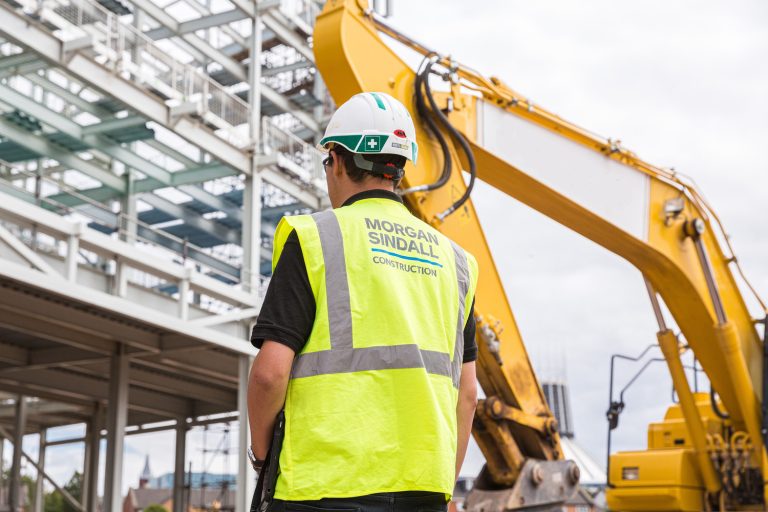
Work Radar, a new platform connecting individual tradespeople, micro businesses and social enterprises with leading contractors, has launched today. The service will help thousands of construction workers find local work and supports the government’s plan to progress shovel-readyprojects in response to the impact of the Covid-19 pandemic. Work Radar has been developed by Local Supply Chain, acloud-based supply chain platform, which is already used by thousands of organisations, including Work Radar founding partner Morgan Sindall Construction. The accessible and easy to use platform allows small businesses and individual operators to access work opportunities on specific projects in their region, while simultaneously enabling large construction firms to develop their local supply chains and improve their social value outputs. Contractors will instantly be able to review the health and safety certifications of potential supply chain members and regularly monitor KPIs. Work Radar’s aim is to contain the details of projects around the country being undertaken by large contractors, which will specify what services and trades are required on their schemes. Tradespeople, social enterprises and micro businesses (firms with less than ten employees and a turnover of less than £1.5 million annually) will receive alerts to opportunities in their area. When an opportunity matches they can then express an interest in delivering the work. The platform helps address some of the most pressing issues in construction such as the skills shortage and will support the reduction of unemployment through healthy supply chains. The platform’s ability to connect workers with local projects in an efficient and timely manner will enable the reduction of carbon emissions and will also improve the diversity of supply chains by creating a level playing field for all those seeking work Morgan Sindall Construction has launched the scheme with projects currently listed on Work Radar including the £18 million Eden Girls Leadership Academy and the £6 million Kings Heath Boys Secondary School, both in Birmingham. Work Radar is funded by subscriptions from contractors, and is free-to-use for all organisations registering interest in finding work. Richard Ratcliffe, CEO of Local Supply Chain, said: “We’re very proud to launch Work Radar, a high quality, innovative tool that will allow contractors to develop increased efficiencies in their procurement processes in a manner which will enhance their ability to support social value outputs within their wider operations. For microbusinesses, social enterprises and SMEs, it offers a streamlined way to register interest in work opportunities on their doorstep. “Through increased access to social enterprises through Work Radar, construction firms can ensure that their procurement processes are benefitting the communities in which they work – both through engaging with social enterprises that support the needs of local people, and by developing ties with local workers that will help create sustainable procurement practices in the long term.” Gavin Jamieson, Head of Supply Chain for Morgan Sindall Construction said: “At Morgan Sindall Construction, we are committed to increasing the diversity of our supply chain and helping communities improve their resilience in these challenging times. “As a founding partner of the Work Radar scheme, we see it as a refreshing and engaging way of helping tradespeople gain work on projects local to them. Many of these tradespeople have been disadvantaged by recent events, and we are now deploying Work Radar across our projects to help them to gain employment. “I’d like to encourage my colleagues across the built environment to join us on Work Radar. These are uncertain times for us all, and its incumbent upon us to work together to ensure not just a sustainable future for construction industry itself, but to improve outcomes across the economy and society – we believe Work Radar is an effective tool to help do just that.” Minister for Employment Mims Davies MP said: “Ensuring our workforce is agile and importantly can meet the needs of employers is vital to our pandemic recovery, so it’s great to see Morgan Sindall Construction and Local Supply Chain come together to provide an effective route into construction.  “By providing integrated support in local communities, much like we’re doing across our nationwide network of jobcentres, we’re helping people get into key sectors and find new employment allowing us to build back better and stronger.” In addition to Morgan Sindall Construction, other registered firms already posting their projects on Work Radar include Chesterfield-based Melfort Construction Services Ltd and Derby’s M J Robinson Structures Ltd. Paul Goodwin, director at Melfort Construction Services Ltd said: “Melfort is looking forward to supporting this initiative. As a company we always strive to support local businesses and recruit local labour as we find this is always beneficial to the project, especially in helping to reduce carbon footprint and travel times for both labour and materials. Work Radar will help us to identify opportunities which will be mutually beneficial for all.” Richard Fry, commercial and sales director, MJ Robinson Structures Ltd said: “We’re are excited with the opportunity to work and support local projects, communities and micro businesses through Work Radar. Our use of Work Radar will allow us to integrate fully with local supply chains, social enterprises, reduce our carbon foot print and further strengthen our commitment to invest in local apprenticeship schemes and create work experience opportunities for local students.” In order to register or book a demonstration, please visit: https://www.localsupplychain.co.uk/work-radar.

Read More »

119,500 SQ FT INDUSTRIAL DEALS COMPLETE AT 62 LEEDS

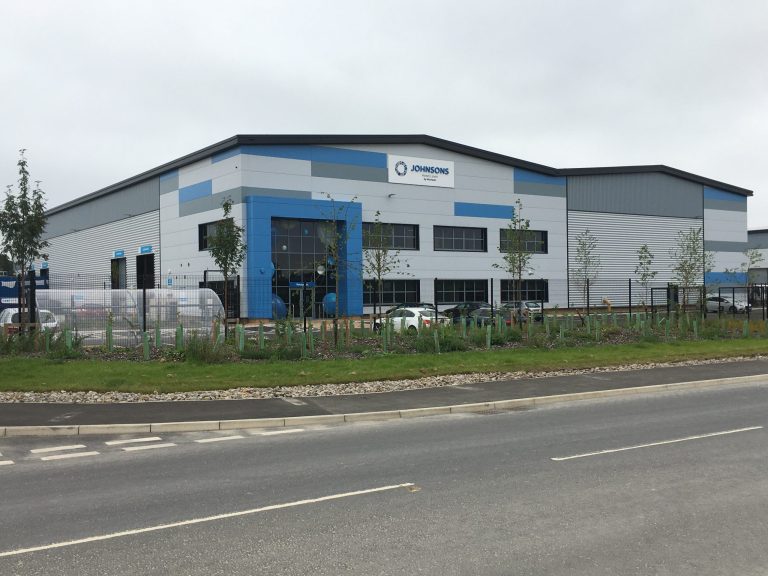
CBRE Global Investors Buys 3 Units At Leeds Logistics Park CBRE Global Investors has acquired 3 units totalling 119,500 sq ft from CDP Marshall at the flagship 62 Leeds logistics hub, demonstrating the continued high level of demand for prime mid-box units in the regional industrial sector. The acquisition includes the investment of the 42,000 sq ft Unit 5 which is let to Johnsons Apparelmaster Ltd for 15 years, along with the 57,500 sq ft Unit 6 and the 20,000 sq ft Unit 7 which are both currently under construction and scheduled for completion in September 2020. 62 Leeds is an established industrial/warehouse development on Geldard Road by J27 of the M62 and is home to high-profile occupiers including Lidl, Unitrunk, Johnsons Dry Cleaners and Turners Accident Repair Centres. CBRE Global Investors was advised by Carrick Real Estate and the joint agency team of CBRE and Carter Towler represented CDP Marshall in the transaction. Sophie Angus, Associate Director at CBRE Leeds, said; “CBRE GI’s acquisition at 62 Leeds reflects the strength and confidence in the regional industrial and logistics market and prime detached warehouse units such as these are in very short supply. As such, the new units becoming available in September will be extremely well received by the occupier market.”

Read More »

HelloFresh grows UK operation with Goodman at new Nuneaton production facility

HelloFresh signs lease for 230,384 sq ft distribution warehouse New production facility to enable UK growth for the world-leading meal kit company Prime location to provide access to 55.9 million consumers in four-hour drivetime1   The leading global provider of fresh food at home, HelloFresh, has leased 230,384 sq ft of high-quality logistics space at Goodman’s Nuneaton 230 development. Headquartered in Berlin, the company produces and delivers meal kits that allow consumers to cook home-made, healthy meals with no preparation, shopping or hassle.   Its new Nuneaton site will become HelloFresh’s second UK production facility, supporting its continued success in the UK. With strong results in the market pre-COVID-19, the exponential growth of food deliveries during lockdown and a growing demand for fresh meals to enjoy at home has accelerated expansion.   The location will receive produce and packaging from local and national suppliers, assembling the fresh ingredients in the meal kits and distributing these to consumers across the country. The site’s excellent connectivity, which places 55.9 million consumers within a four-hour drivetime, makes the location ideally suited to national fulfilment and fresh food delivery.  HelloFresh delivered more than 280 million meals in 2019, reaching over four million customers in the last quarter. It is one of the largest players globally in the meal kit market, now operating in thirteen countries across three continents.  It joins a number of leading retailers, manufacturers and third-party logistics providers at this established industrial and distribution hub – including supply chain specialists XPO and Unipart, automotive manufacturer Renault Trucks, and food and drink wholesaler Bestway.  Nigel Dolan, Development Director at Goodman, said:  “We’re proud to welcome HelloFresh to our Nuneaton 230 development. Its innovative business model leads the way in both the healthy home cooking and subscription service revolution and we’re pleased to be able support the growth of its UK production and fulfilment network.” In line with HelloFresh’s commitment to the highest quality fresh produce, the facility will provide frozen, chilled and ambient storage capacity, and highly flexible warehouse space to suit its production and packing methods. Nigel continued:  “With the development now complete, we look forward to seeing HelloFresh benefit from the property’s best in class specification, combined with its excellent transport links and local employment opportunities. These include a large labour pool consisting of three million people within 20 miles of Nuneaton town centre, with Bermuda Park railway station directly serving the site and providing a great option for employees to travel to and from work.”  Councillor Julie Jackson, Leader of Nuneaton & Bedworth Borough Council, said:  “We’re thrilled to see Goodman welcome HelloFresh to this prime logistics development at Bermuda Park, living up to its promise of delivering a quality space for business that takes advantage of our excellent connectivity.  “The development supports our Transforming Nuneaton initiative with Warwickshire County Council, geared at driving economic growth, attracting additional investment and realising new business opportunities for the local area. We’re excited to see HelloFresh benefit from the rich employment opportunities and prime position of Bermuda Park.” 1 Source: Esri and Michael Bauer Research, 2019

Read More »